
One of the 28 surviving members of the Japanese garrison on Attu. He’s seen here with several other POW’s after being captured by Soldiers of the 7th Infantry Division.

One of the 28 surviving members of the Japanese garrison on Attu. He’s seen here with several other POW’s after being captured by Soldiers of the 7th Infantry Division.
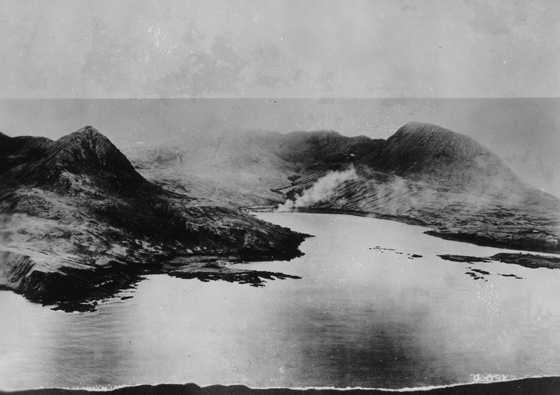 Following the capture of Attu Island in the Aleutians at the end of May 1943, the 7th Infantry Division discovered a treasure trove of documents, diaries, letters, photographs and film among the items captured during the campaign. Some of the only film sequences we have in the West of the Japanese carrier force came from footage found on Attu. Stills were taken from the footage, which included the final moments of the HMS Exeter and HMS Cornwall, two Royal Navy heavy cruisers sunk by Japanese carrier aircraft in the Dutch East Indies and the Indian Ocean in the spring of 1942.
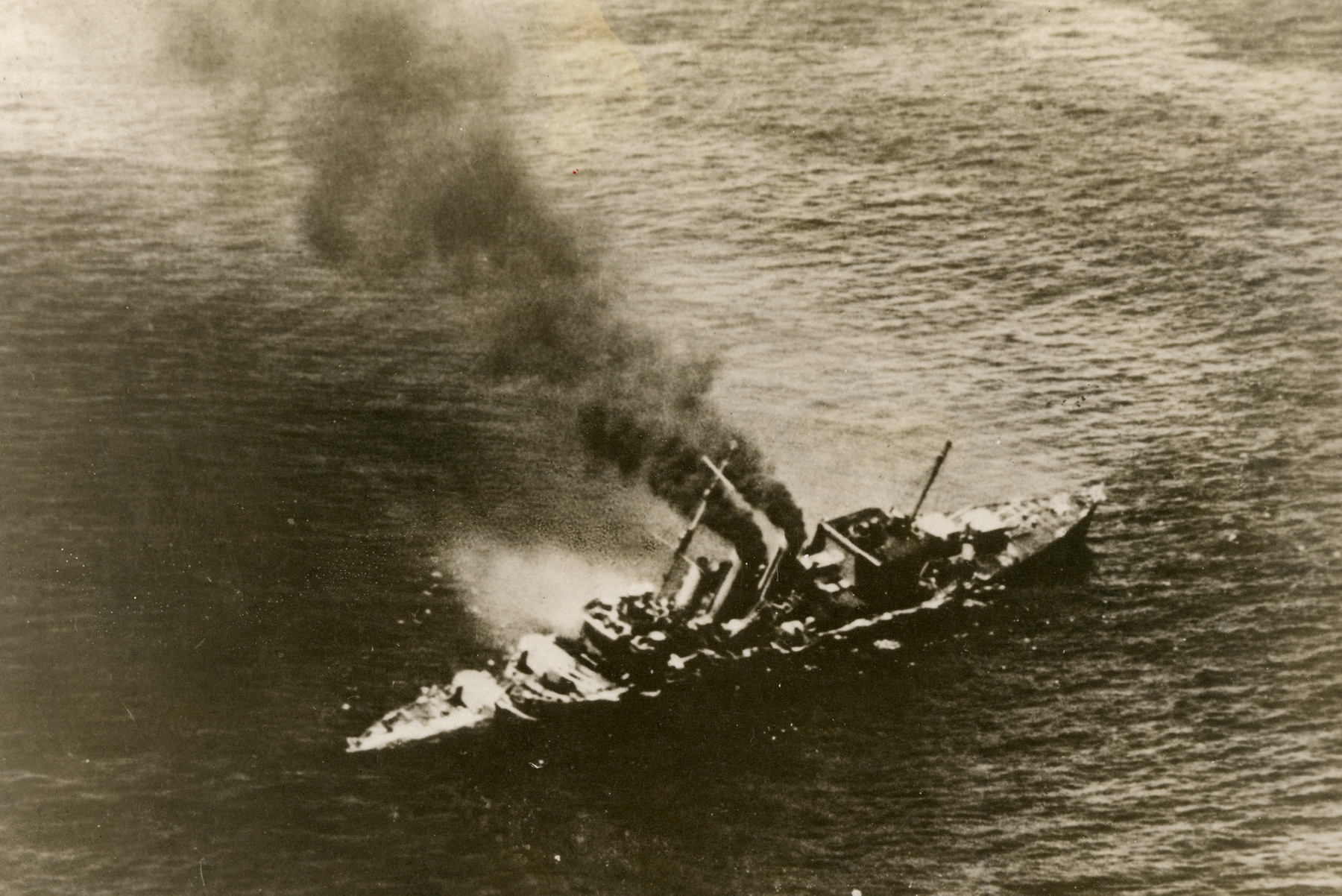
HMS Cornwall sinking after being dive bombed by Japanese carrier aircraft during the Indian Ocean Raid in the spring of 1942.

HMS Exeter’s last moments off Java.
The letters, diaries and documents provided insight into the experience of the Japanese Soldier and Sailor, and showed a streak of fatalism as they realized the hopelessness of their situation in the Aleutians. The material was translated by U.S. Navy and Army intelligence units, and some of those translations have survived at the National Archives in College Park, Maryland.


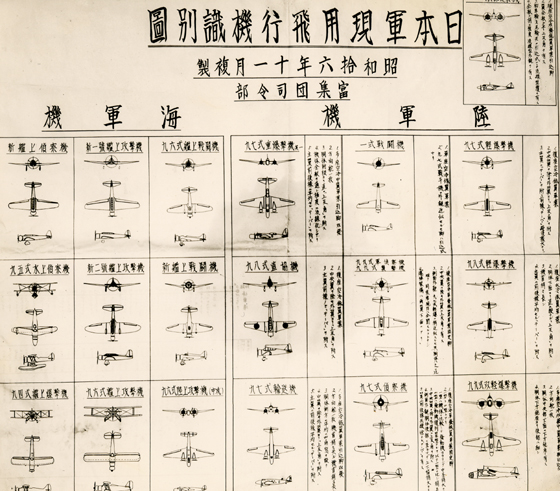
On Attu, considerable weaponry, equipment and even wrecked float planes fell in American hands. The gear helped give the U.S. Army greater insight into the organization and capabilities of the Japanese military, information that was put to good use later in the war.
The information gathered on Attu, along with similar intel gleaned from the Solomons and New Guinea, was compiled into a technical manual on the Imperial Japanese Army that covered everything from weapons employed, artillery tactics and infantry TOE’s to what typical bunkers and fortifications looked like. The manual was widely distributed during the war, and has subsequently been reprinted.


Soldiers of the 7th Infantry Division examine a wrecked Nakajima “Rufe” float plane fighter captured on Attu.
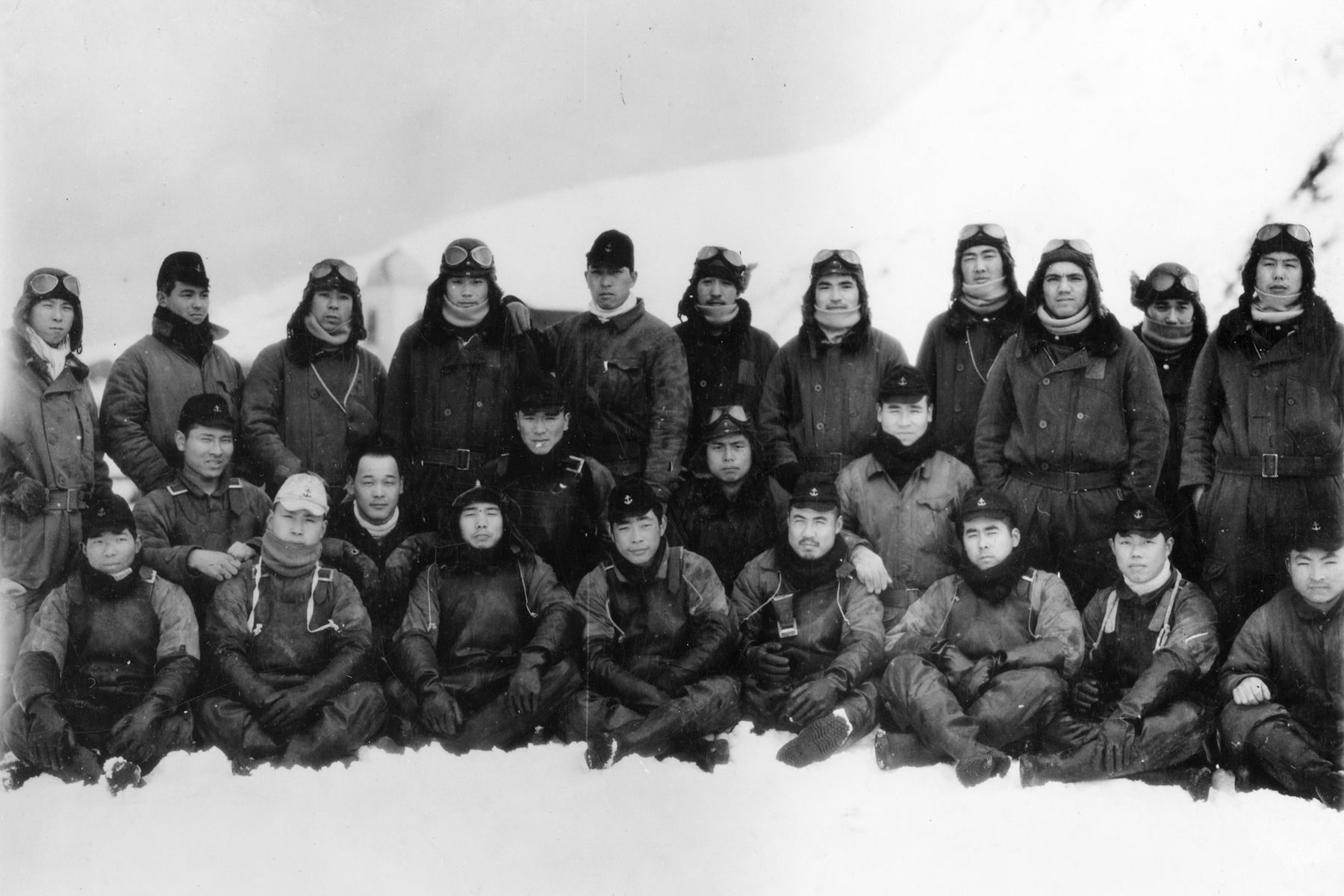
The pilots of a Japanese float plane squadron based on Attu. The photo was part of the intel trove captured on the island.

A Japanese gas mask found on Attu attracted the interest of U.S. intelligence. It was taken to Adak, examined and photographed only a few days after its capture in May of 1943.
See the U.S. intel teams in action in this short film clip:
Scenes from the 7th Infantry Division’s fight for Attu, May 1943.

On May 11, 1943, the 17th Infantry Regiment, 7th Infantry Division, undertook its first amphibious operation of World War II. Landing at Massacre Bay, Attu Island in the Aleutians, the 17th encountered no resistance on the beach, but subsequently found the Japanese deeply entrenched on the high ground further inland. The Arctic conditions, narrow beaches and a shortage of landing craft complicated the effort to get ashore and keep the troops supplied. Without adequate cold weather gear, hundreds of men from the 7th ID suffered exposure-related injuries, including frostbite.
On May 29, 1943, the surviving Japanese troops launched one of the largest banzai charges of the Pacific War. They overran some of the front line units and poured into the 7th ID’s rear. The fighting in places devolved into hand-to-hand combat, and it took most of the 29th and 30th to restore the situation. Small groups of Japanese continued to hold out afterwards, but the destruction of the banzai attack ended effective resistance on the island. The 7th Infantry Division lost over 500 men killed in action, plus another 1,150 wounded. The Japanese garrison of 2,800 was wiped out. The Americans took only 28 prisoners by the end of the campaign.
The 7th Infantry Division went on to play a key role in the Central Pacific Campaign, taking part in the landings in the Marshall Islands. Later, the 7th fought on Leyte Island during the Philippines Campaign, and on Okinawa during the last land battles of the Pacific War.

 The American Warrior