
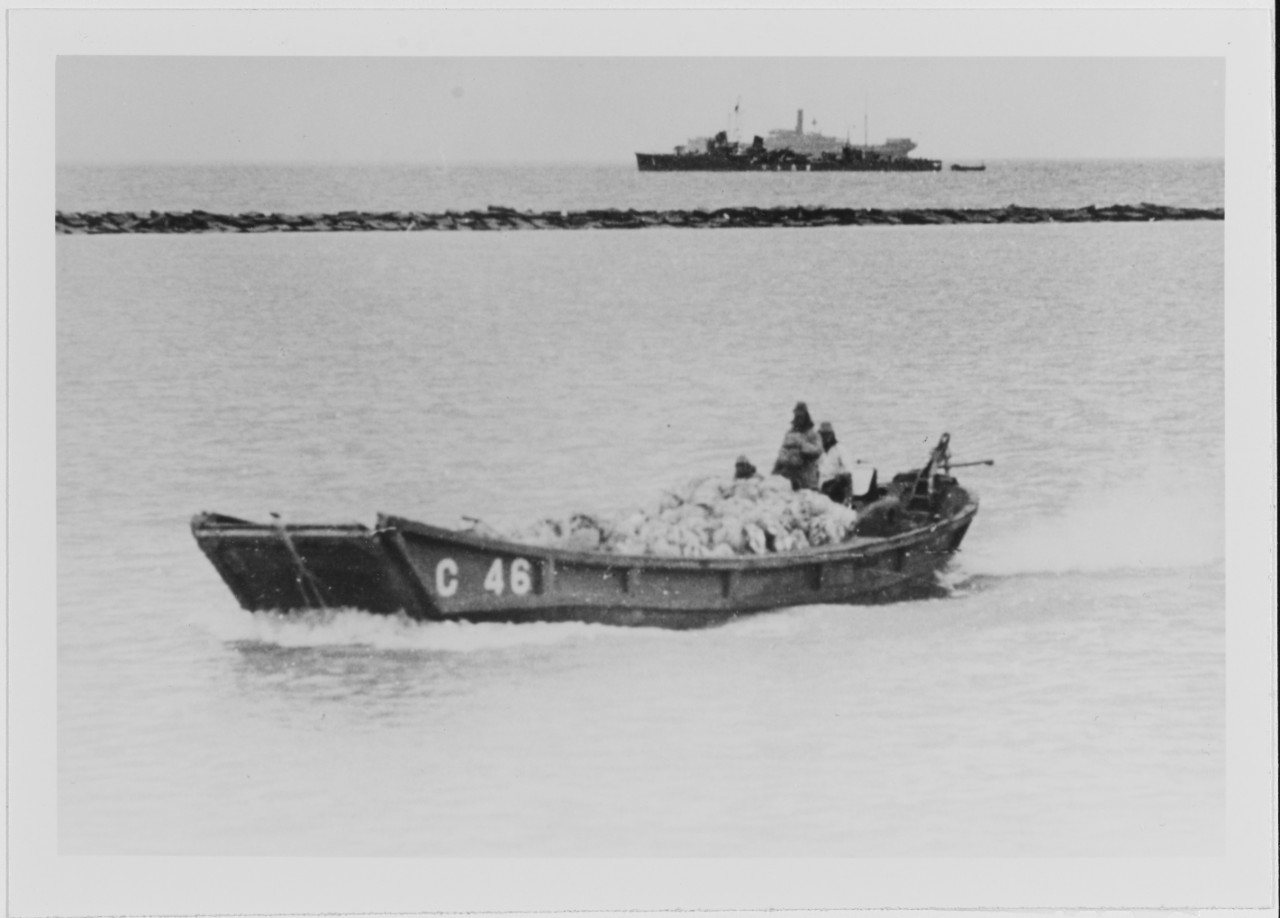
In early September 1942, the Japanese attempted to reinforce Guadalcanal using a technique dubbed “Ant Freight.” This required carrying troops to the Central Solomons aboard destroyers or transports, transferring them to tiny LCVP-like Daihatsu landing craft, or barges, and sending them hundreds of miles through rough seas down the Slot to Guadalcanal.
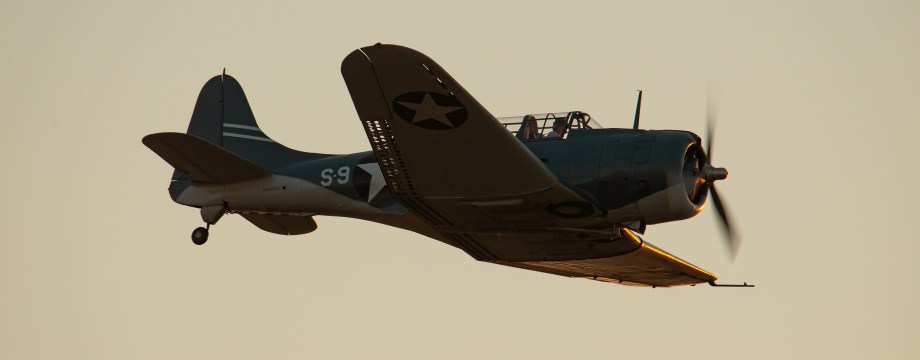
The SBD Dauntlesses of VMSB-232 and Flight 300 played a pivotal roll in disrupting these barge convoys. With most of their forward-firing .50 caliber machine guns non-functional, Richard Mangrum’s men used a “wagon wheel” tactic that required orbiting the convoys at low altitude while their rear gunners hammered away at the boats with their flexible mount .30 caliber Brownings. this required facing continuous light AA fire from the barges, and sustained fire on a target to do any real damage.
When Mangrum returned to the States, one of the things he hoped to see was a new generation of USN and USMC attack aircraft with plenty of functional forward-firing guns that could wreak havoc on such Japanese surface vessels.
As it was, day after day on Guadalancal, the SBDs, P-400s and F4Fs (when available), would hammer these slow moving vessels. It is estimated around 300 Japanese soldiers were killed in the attacks, and the barge convoys with hundreds more men ended up scattered, disorganized and devoid of supplies. One thousand men of Kawaguchi’s brigade of veterans finally did reach Guadalcanal, but were put ashore on the West side of the Marine perimeter, while the bulk of Japanese forces on the island were to the east and moving south with Kawaguchi to hit Edson’s Ridge.
Had those men reached Guadalcanal with the rest of their brigade in time for the Battle of Edson’s Ridge, the outcome of the campaign might very well have been a Japanese victory.

 The American Warrior