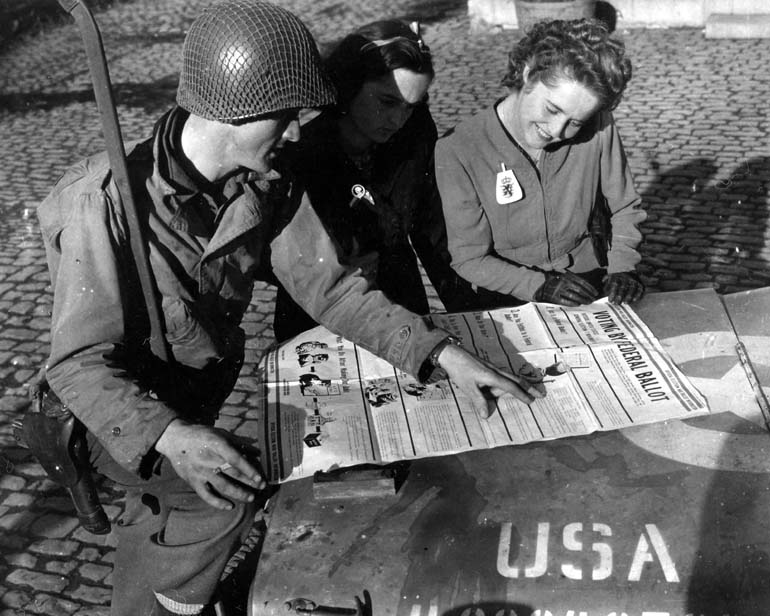
Voting in France, 1944

Voting in France, 1944

Ford Island, Pearl Harbor following the December 7th attack.
Born in Germany right after the Great War, Chuck Baggarley’s father served as a soldier in the American Expeditionary Force. He met Chuck’s mother while on occupation duty in the months following the Armistice. The family moved back to the United States in the early 1920s, where they ultimately settled down on a Washington wheat ranch.
Like so many of his generation, Chuck fell in love with the romance of flight as a young boy. While working on the family farm, he’d occasionally catch sight of the biplane that delivered mail in the area. He later made friends with one of the pilots, whom the kids just called Casey, and resolved to get into the air himself one day. Even Case’s subsequent death in a plane crash failed to curb Chuck’s enthusiasm for flying.
After high school, he joined the Navy in February of 1940. After training, he joined Patrol Squadron 22 (VP-22) in October of that year. Flying PBY Catalinas, long-range maritime reconnaissance was VP-22’s primary function. At first, the squadron assigned him to ground duties, but he eventually found his way onto a flight crew where he really wanted to be.
A year later, Chuck endured the Pearl Harbor attack, then later went with VP-22 to the Dutch East Indies, where the squadron joined PatWing 10.
The start of the Pacific War found Patrol Wing 10’s squadrons scattered throughout the Philippines. After brutal losses, the wing’s surviving PBY’s withdrew south to take part in the defense of the Dutch East Indies. During that desperate struggle to slow the Japanese juggernaut, PatWing 10’s pilots and crews endured repeated air attacks while hopping from base to base to keep from getting overrun.
The story of PatWing 10 is the story of American aviators struggling courageously to carry out their duties in the face of enemy air superiority. Looking back on his three months in the Dutch East Indies, Chuck remarked sardonically, “I was lucky to live through it, that’s for sure.”
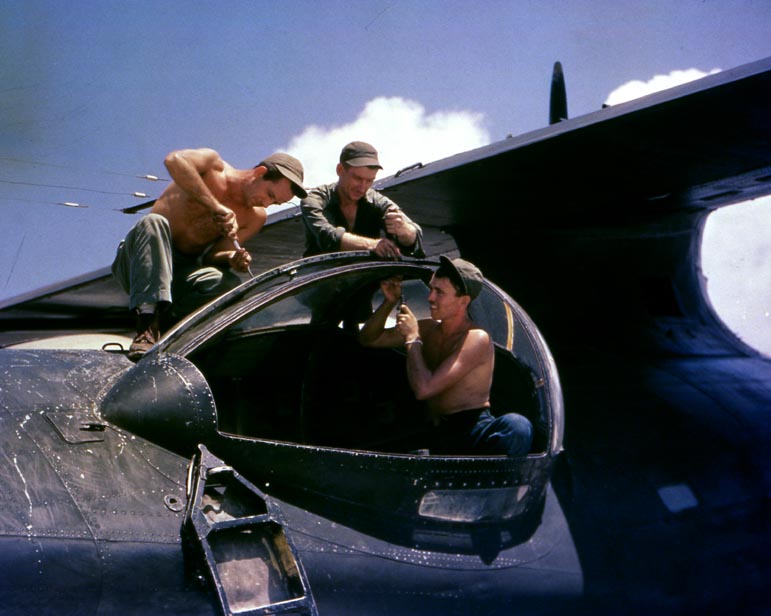
USN crew works on a PBY’s waist blister.
I went out to Pearl Harbor in October of 1940 to join VP-22. I rode a big troop transport to the islands, and I remember being seasick almost the entire time. Later, I discovered that I sometimes got airsick when I started flying with the squadron.
I had gone to aviation ordnance school in San Diego only a few weeks before, so when we reached Pearl Harbor, I was assigned to the ordnance shack. I made slicks for bombing practice for awhile, but I used to watch our PBY’s as they were being launched and I knew that’s what I wanted to do. I made it known I wanted to get onto a flight crew, so they finally took me out of the shack and put me on a beaching crew.
At the time, the squadron was flying the PBY-3. These were Catalina flying boats with no landing gear as the -5A models later had. The pilots would land in the water and taxi across the water towards the seaplane ramp at Ford Island. When they got in close, the beaching crew would go out and attach wheels to the side of the hull so they could get up onto the ramp.
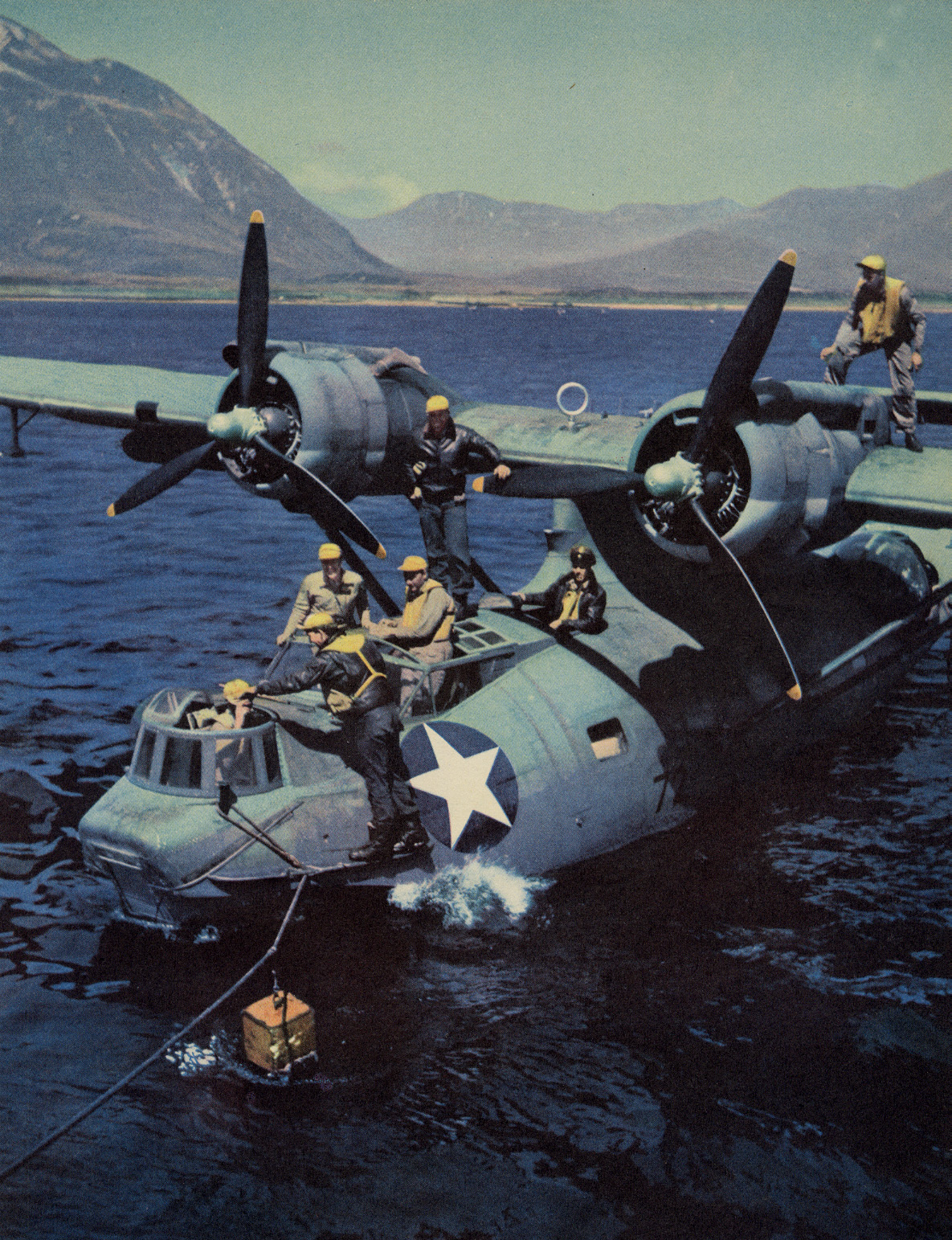
Bringing a PBY ashore.
I wanted to get on a flight crew as one of the mechanics. I later took and passed the third class exam and was put on a crew. I was a 2nd Mech at first. Each PBY carried twelve men, including two mechanics and three pilots. During our long patrols, we’d switch off responsibilities to keep everyone as fresh as possible. The mechs were basically flight engineers. We sat up in a little compartment where the fuselage joins the wing. In there, we monitored the engines and could control the fuel mixture, among other things. When not up there, we’d man one of the waist guns. Our PBY-3’s didn’t have those glass blisters the later -5’s did, just an opening for the guns. We didn’t even have permanent mounts for the .50 caliber machine guns. They were very difficult to unstow and get into action as a result. The -5 fixed all that, though.
Consolidated designed the PBY for long range patrols. Inside the hull, we had a sleeping birth with canvas cots. We also had a toilet and a small kitchen. We could stay up for hours, cruising at about 90 knots.
Our primary duty was flying patrols around Pearl Harbor. But we also practiced bombing from 10,000 feet. We’d spend three or four hours dropping water filled bombs with our Norden sight, then fly home. One time, we even dropped torpedoes. We laid a smoke-screen once as well. Mainly, though, we patrolled out of Pearl Harbor from our base at Ford Island.
We would also go out to some of the atolls in the area. We often went out to Johnston Island to practice night flying. We also went to Midway and Wake. In
fact, we flew to Midway in October of 1941 and operated from there until Friday, December 5th.
In early December, we started carrying live bombs under the wings of our PBYs. We found out that Admiral Halsey had gone out with the Enterprise to deliver some planes to Wake Island and had put us all on a war footing.

We flew back to Pearl on December 5th. We were all ready for liberty after having been out on Midway for so long. On Saturday, I went looking for a friend named Marie-she was a waitress in Honolulu. I shot the breeze with her for quite awhile that night, then went looking for a place to spend the night ashore. No luck. I actually thought about sleeping at the Locker Club that night, but changed my mind and went back to Ford Island. I didn’t get into the barracks until about 3:00 that morning. I had intended to sleep in.
At 0755, I awoke to the sound of machine gun fire and airplane engines. At first, we thought the Navy had laid on another drill. I looked out the window and saw planes zooming down the runway at Luke Field, near our barracks. The planes had little red dots on their wings and at first we couldn’t believe what we saw. These were Japanese! That’s when we knew this wasn’t a drill.

Pearl Harbor in flames.
I got dressed with the other guys and briefly went up onto the roof. I could see planes making torpedo runs on battleship row. Some came in so low they were below the level of the barracks. I thought I’d better go find out what to do, so I headed down the stairs for the front entrance. On the way, an explosion rocked the building and blew some of the windows out. When I got to the first floor, broken glass littered the floor. The windows in the front doors had been shattered, but this appeared to be a gathering point. Sailors and men were milling around, and I heard some of them talking about the torpedo attacks going on against our battleships. A couple minutes later, I saw one of our chiefs. As he passed by me, I asked him, “Hey Johnny, what are we supposed to do?” He shouted back, “Get down to the hangar!” It was three blocks towards the south end of Ford Island and away from battleship row. As I ran down towards our planes, I couldn’t see the attack on our ships, but I could see planes still swarming around right on the deck. Others were higher overhead, in perfect formation despite the anti-aircraft shell bursts exploding around them. We were fighting back at least. I stayed as close to the buildings as I could, watching out for strafing planes. After what happened in the barracks, I half expected a bomb to land right on me.

Battleship Row after the attack. The Oklahoma’s turned turtle.
I reached the hangar after the worst of the first attack was over. Our ramp was a scene of utter destruction. The Japanese bombed our hangar right at the beginning of the attack. One bomb exploded inside, setting one of our PBY’s on fire. Two of our men were inside the hangar at the time, but somehow they escaped injury. Another bomb hit right in the middle of the ramp, making a big crater. All around, our planes were just a mess. My plane, #10, had taken a direct hit before I arrived. When I got there, only the wing floats and tips were left of her.
We started clearing the burning planes off the ramp as best we could. Wreckage was everywhere blocking our one remaining plane which had not been damaged. Other men climbed pulled the guns out of our destroyed planes and started setting them up all around the hangar and the ramp.
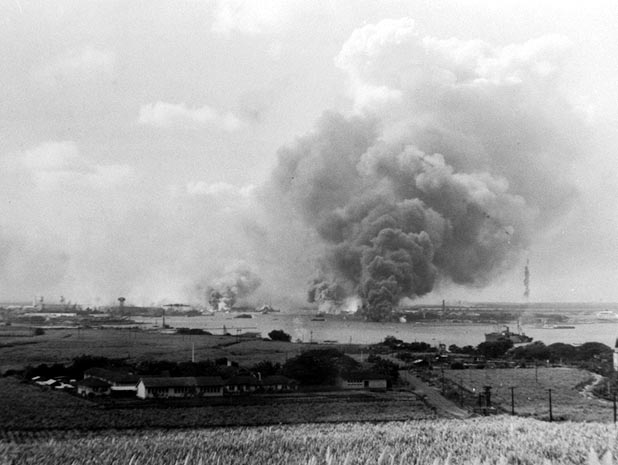
Flames and smoke from Battleship Row could be seen for miles.
That’s what we were doing when the Japanese second raid hit us. I dove into a ditch along one side of our ramp. Our machine guns opened up as planes passed over us, and I looked up to see that the guns in #13 had not yet been removed. It had been hit in the first raid, and the PBY’s fuselage was canted at an angle on the ramp, but I thought that I could get one of the waist guns working. At first, I wondered if they were manned or not, and I didn’t really want to leave the ditch by myself to find out. I turned to the guy next to me and asked him to come with me to #13. He wouldn’t leave. I really didn’t want to cross that open ground alone, so I stayed put. Finally, another sailor said to me, “Come on Baggarley, let’s go over to that plane.”
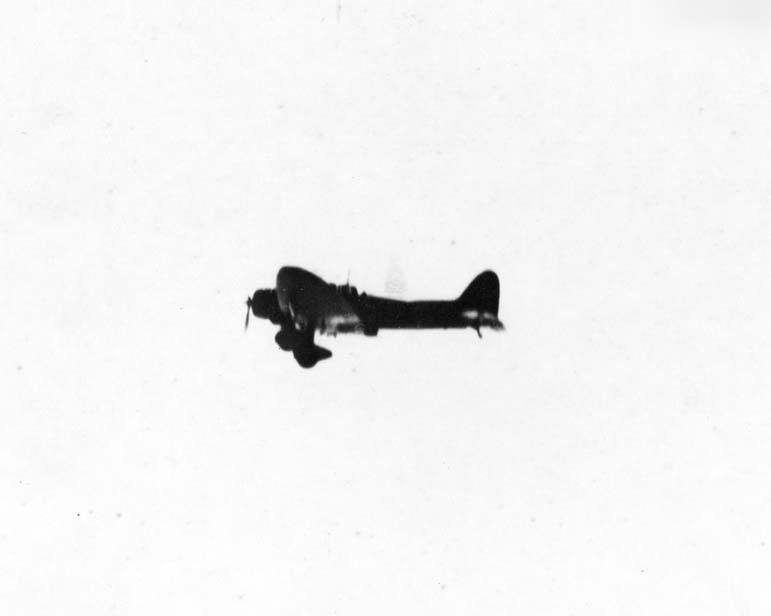
A Japanese Aichi D3A “Val” dive bomber hit during the attack on Pearl Harbor.
We ran to across the ramp to it and found it was in bad shape. The hull was sprung and wrinkled by a near miss, and the .50 caliber guns in the waist were in the bilges. The sailor I was with took the bow gun and quickly got it working, but I had a hard time with the .50s. Finally, I managed to get one unstowed and ready for action, but I discovered I couldn’t shoot at anything. The fuselage was canted at such an angle that I couldn’t bring the gun to bear on any of the planes passing overhead. Guns in the other wrecked PBY’s were blazing away, as was the guy in the bow position in #13, but I couldn’t shoot.
About this time, the USS Shaw exploded in a floating dry dock across the harbor at the Navy Yard. It was a spectacular explosion, and I felt the blast even inside #13.

The USS Shaw explodes in dry dock.
Then the USS Nevada tried to get out of the harbor. She started running down the channel, every anti-aircraft gun aboard firing at the enemy planes she attracted. Dive bombers hit her repeatedly, then pulled out right over our ramp. Our guys were firing away with everything they had as well.
As Nevada passed by us, and boy was she an impressive sight. I could see bombs splashing all around her, kicking up tremendous plumes of waters. Through it all, the Stars and Stripes flew from her fantail. On Sundays, the ships flew a much larger American flag than the one used during the rest of the week. As she steamed past, I could see her huge flag fluttering proudly in the breeze despite all the carnage around her. Those of us watching her so wanted to see that ship and its gallant crew survive-and win.
As I think back over that scene, the Nevada fighting for her life as every gun in the harbor tried to help her out and knock the dive bombers down, I think I can relate to what Francis Scott Key must have felt during the bombardment of Ft. McHenry. I understand the inspiration behind the Star Spangled Banner, and when I think about those words “whose broad stripes and bright stars….” well, it always evokes an emotional response in me. Every time I hear our National Anthem, or witness the presentation of the colors, I think about the Nevada and her brave crew. Home of the brave? You bet. I saw the bravest that day.

The Nevada aground after her legendary run through the harbor.
The Japanese failed to sink her in the channel. That would have been a disaster for us if that had happened. Instead, the Nevada’s crew beached her across from us at Hospital Point.
The second attack ended, and we set about clearing more wreckage and fighting the fires around our ramp. Meanwhile some of the men from our squadron who’d spent the night in town showed up with all sorts of stories. Some of them were strafed trying to get back to the base in their cars. Others talked about sailors forced to swim through wide swaths of burning oil on the surface of the harbor in an effort to escape from their sinking ships.
We continued to work, but no words can possibly express how we felt, especially after hearing those stories. More guns were stationed around the ramp while a civilian bulldozer showed up to help push the wreckage out of the way. We had one PBY left out of 13 in the squadron. The other patrol squadrons were in similar straits. By bombing our PBYs, the Japanese had destroyed our ability to find their carriers.
Later that afternoon, we ate our first meal of the day. Somebody brought sandwiches down to us, along with a cup of water each. The water came from our swimming pool, as when the California settled to the bottom, she severed the water pipeline to Ford Island.
When we returned to our barracks, we found it crowded with wounded sailors and the families who lived on Ford Island. The wounded men came from Battleship Row. It was an indescribable scene. Later, after dinner, we went back to the hangar where some officers called us together. They told us that there were still a few JRS amphibians still flyable and that they were going to be sent out to find the Japanese fleet in the morning. They needed gunners to help man these planes and asked for volunteers. After what we’d seen, there was no shortage-about 20 of us volunteered.
The JRS was a twin-engined amphibian that normally didn’t carry any guns. We assumed that during the night, they’d mount .30 cals on them. Why else would they need experienced gunners?
They woke us before daylight the next morning. The local gunners had the jitters and would occasionally open fire on a start. Earlier in the night, some planes from the Enterprise came into the harbor and just about every gun opened up on them. Several were lost.
We received our plane assignments, and then they handed each of us an old bolt action Springfield .303 rifle and two bandoliers of ammo. Nobody had put machine guns on our planes. The rifles were the sum total of our defensive strength. Thus armed, we took off after a Japanese fleet that had inflicted so much damage to our own. It never crossed our minds that this was a suicide mission, but I do remember thinking that I hoped we didn’t have to use the guns we had. When you’re that age, you just don’t think about consequences. We considered ourselves immortal.
We flew twice that day and never saw a thing. If we had, I wouldn’t be here today.


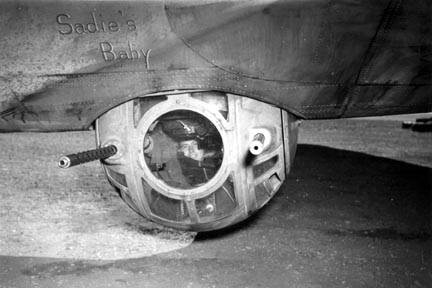 During the Second World War, the USAAF instituted its own version of a suggestion box and queried combat crews returning home as to what changes they would like to see in the aircraft they flew. Some of the answers have survived in an old and long forgotten file at the Air Force Historical Research Agency.
It includes such gems as this one:

Which begs the question: What’s all over the Memphis Belle’s ball turret here:

Or do we not want to know.

Being a ball turret gunner had to have been one of the worst aircrew jobs of the Second World War. They were cramped, difficult to get into and out of, and could jam and trap the gunner inside. It required an exceptional level of grit to get into one in Europe, where at 20,000 feet or higher, the gunner would be suspended in a plexiglass pod below his aircraft, surrounded by terrifying scenes of aircraft going down, flak bursts spraying the sky with shrapnel all as German interceptors made slashing attacks through their formations.
But on top of all that, this young gunner points out that a design flaw would sometimes coat his plexiglass with frozen urine–that just takes the cake. Here’s to hoping a document exists somewhere at Boeing, or in these archives, detailing the changes to the relief tube system to ensure the ball turret did not get a whiz bath on long missions.

 On July 28, 2004, 3rd Platoon, Bravo Company, 2-162 Infantry, Oregon National Guard had just completed a meet & greet in a small village in Iraq’s infamous Sunni Triangle. The Oregonians had handed out water and supplies to the families, and the medic with them that day had treated some of the Iraqis who presented injuries to him.
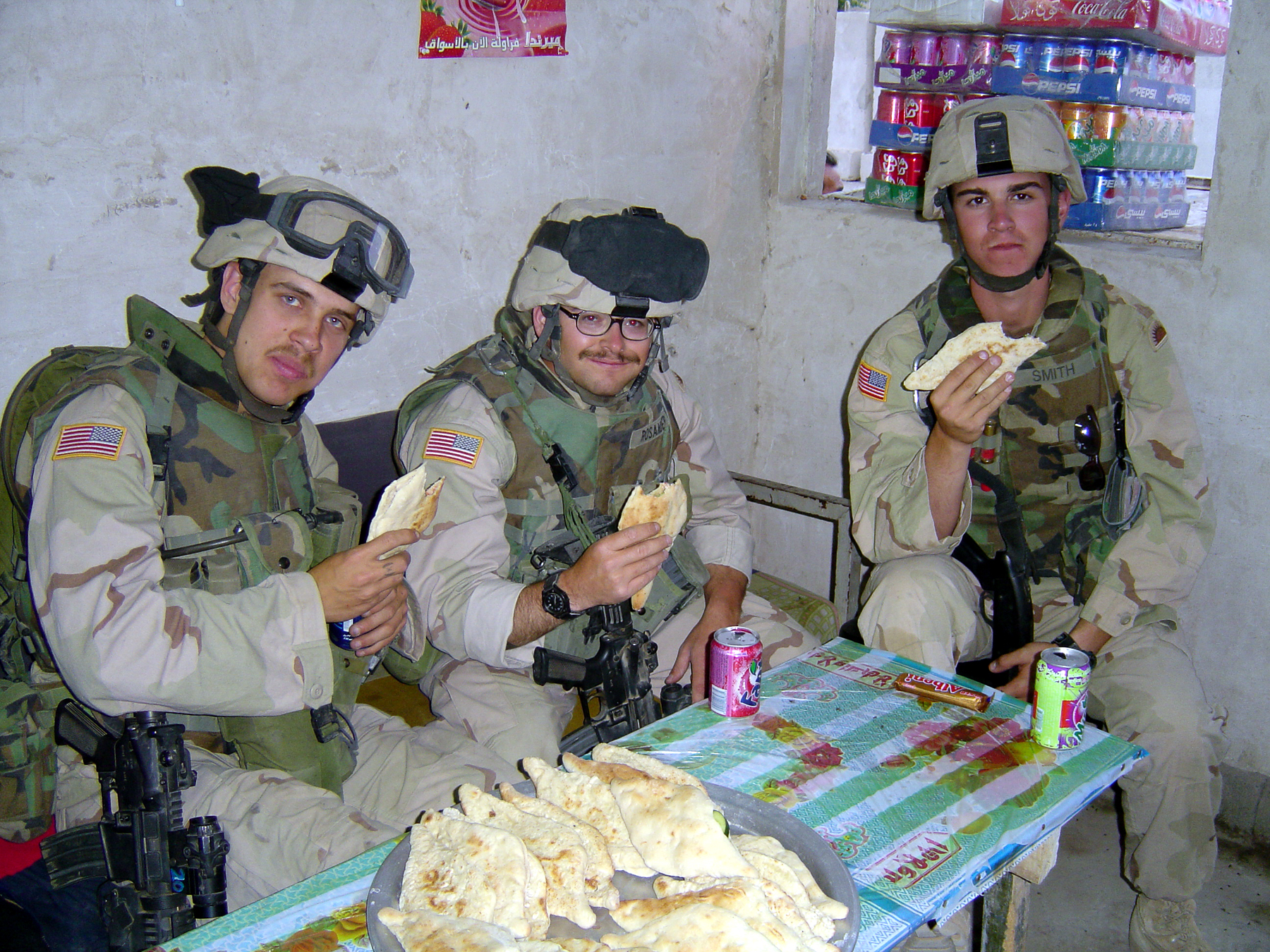
Kenny with John Rosander and Doc Josh Smith, 2004
Moments after leaving the village, a massive IED detonated under one of the platoon’s 1114 armored Humvees. The blast was so powerful that it blew the Humvee dozens of feet into the air. It crashed back to earth on the driver’s side with three men trapped inside it. The platoon medic had been ejected from the blast, his legs badly wounded, and was found lying in the road dozens of meters from the wreck. The driver, 19 year old Specialist Ken Leisten Jr., was killed instantly. His platoon sergeant, SFC Vince Jacques, was trapped inside the wrecked, badly burned and concussed. He was found dangling upside down, his legs pinned under the remains of the dashboard. The gunner, SPC Ben Ring, was gravely wounded by shrapnel, and the platoon’s ‘terp was slightly wounded.
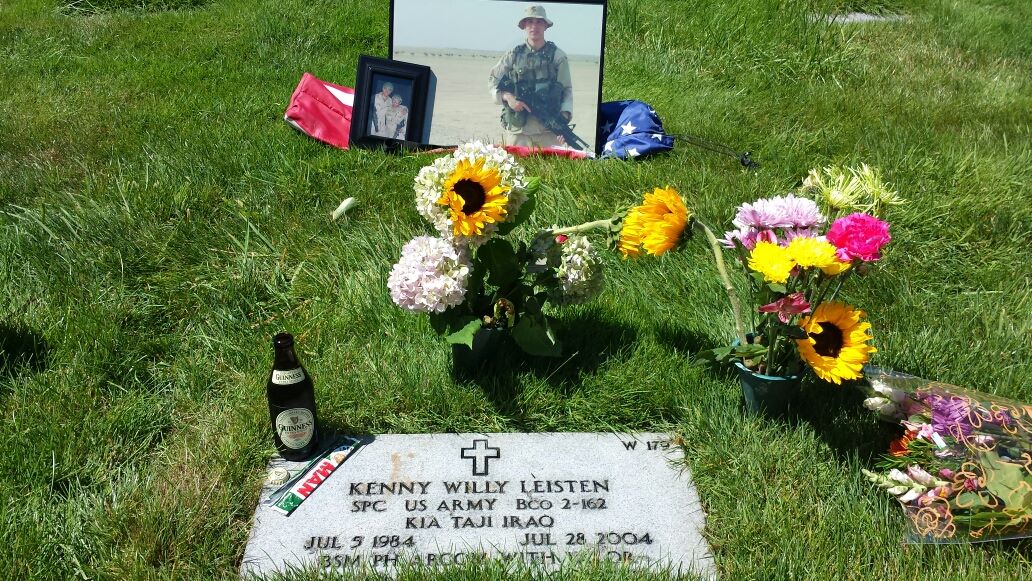
On July 28, 2005, the platoon (freshly returned from their deployment) met at Willamette National Cemetery at Kenny’s grave site to honor and remember their fallen brother. That first meeting established a tradition that has since grown into a summer ritual for those touched by Kenny’s life. Each year, Kenny’s dad and members of Bravo Company gather to share their memories of their service together, tell tales about Kenny, drink whiskey on his behalf and smoke a cigar or two. The bond the men share transcends the trauma of loss and the combat they experienced together. It goes deeper than anything in any other unit I’ve ever seen. No matter what everyone is doing, no matter how far the men of 3rd platoon wander from the Pacific Northwest during the year, they all know a reunion is waiting for them every July. Over the years, the ritual has renewed those bonds and has kept the men and their families in close contact. Kenny’s last gift to his Brothers was to ensure they would have a grounding point when they came home, a moment when the daily grind of life at home can be put aside, and these warriors return to their own under a summer sun. 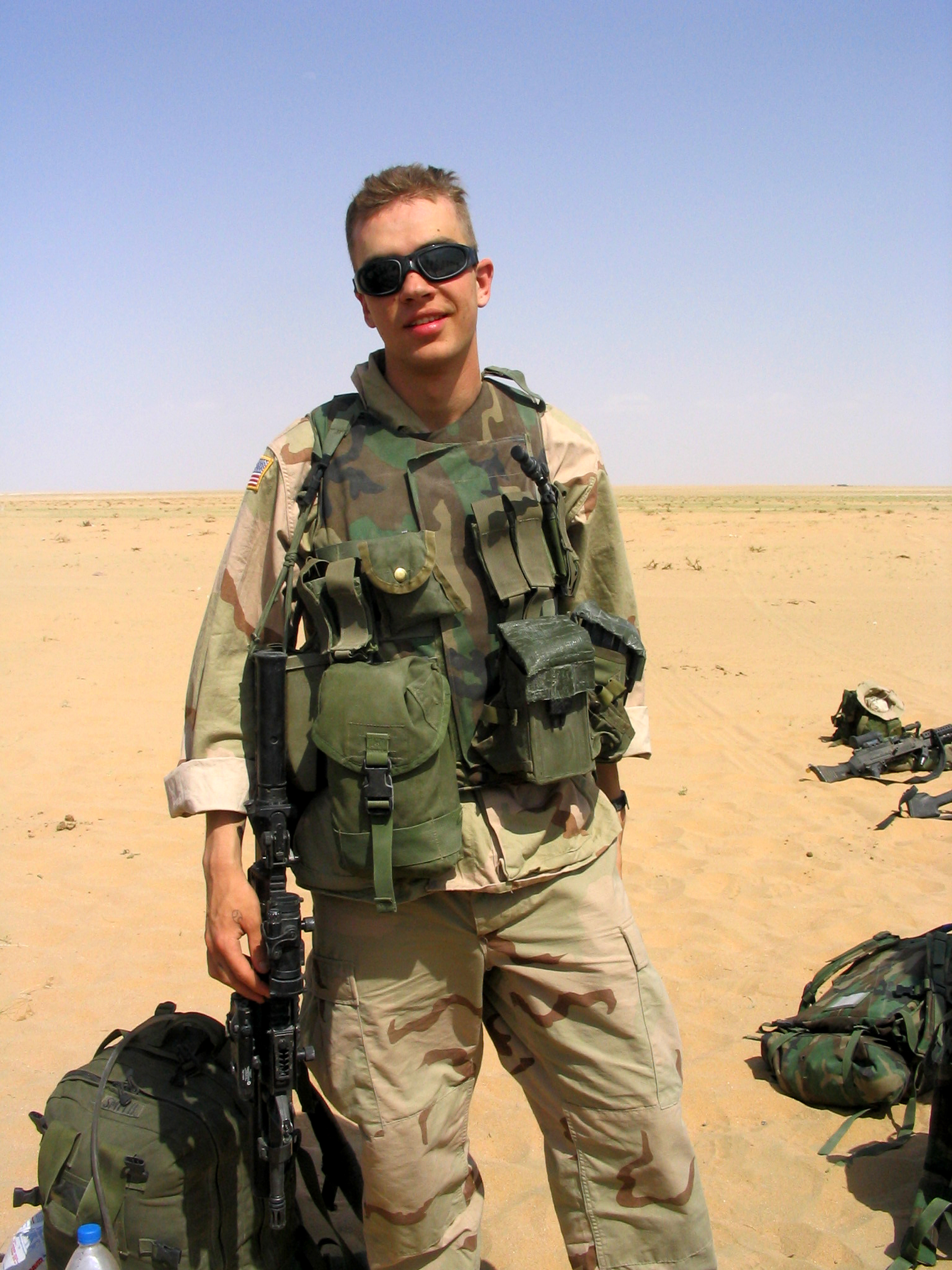
The Day They Became Veterans
Born in 1920, Phil Shriver became interested in flying while attending Pacific University in Forest Grove, Oregon, where he received his pilot’s license through the college’s CPT (Civilian Pilot Training) program. The lure of good pay drew him to the Army Air Force. He graduated with class ’41H at Luke Field October 31, 1941. While part of his class, including Besby Holmes, received orders sending them immediately to Hawaii, Phil went first to the 54th Pursuit Group in Washington, then later detached for service in the Southwest Pacific. In the summer and fall of 1942, Phil participated in the desperate defense of Port Moresby as a member of the 35th Fighter Group. Hopelessly out-class in their quirky P-39 and P-400 Airacobras, the 35th and 8th groups formed the only defense the USAAF could offer in New Guinea at the time.
Phil Shriver took part in some of the most desperate attritional warfare seen the the Southwest Pacific. He arrived at a time when the Japanese still held air superiority. The AAF deployed the 8th and 35th to challenge Japan’s control of the air, a challenge ultimately paid for with the lives of Phil’s squadron mates.
I interviewed Phil back in the late 1990’s, the following is an excerpt from those interviews.
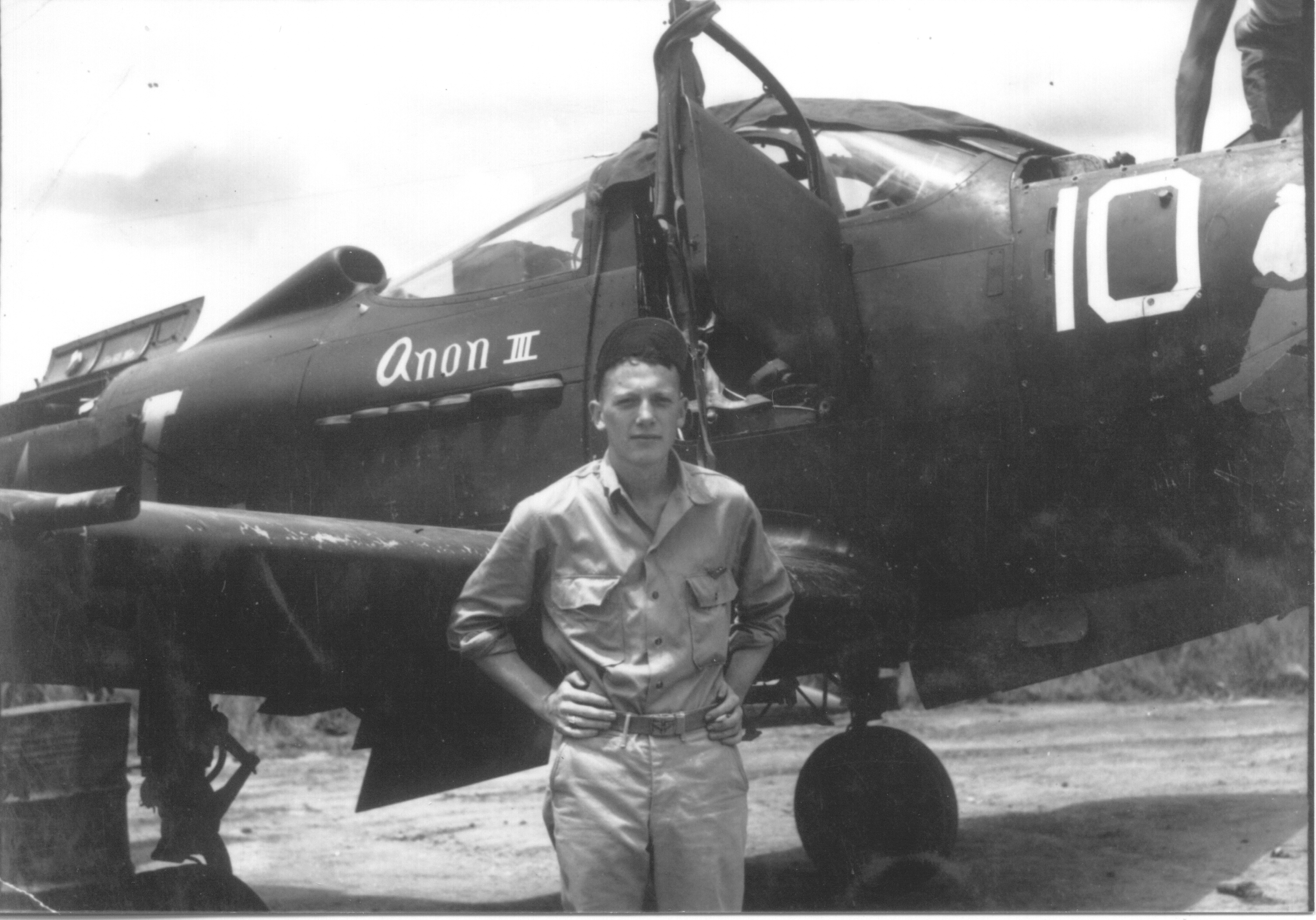
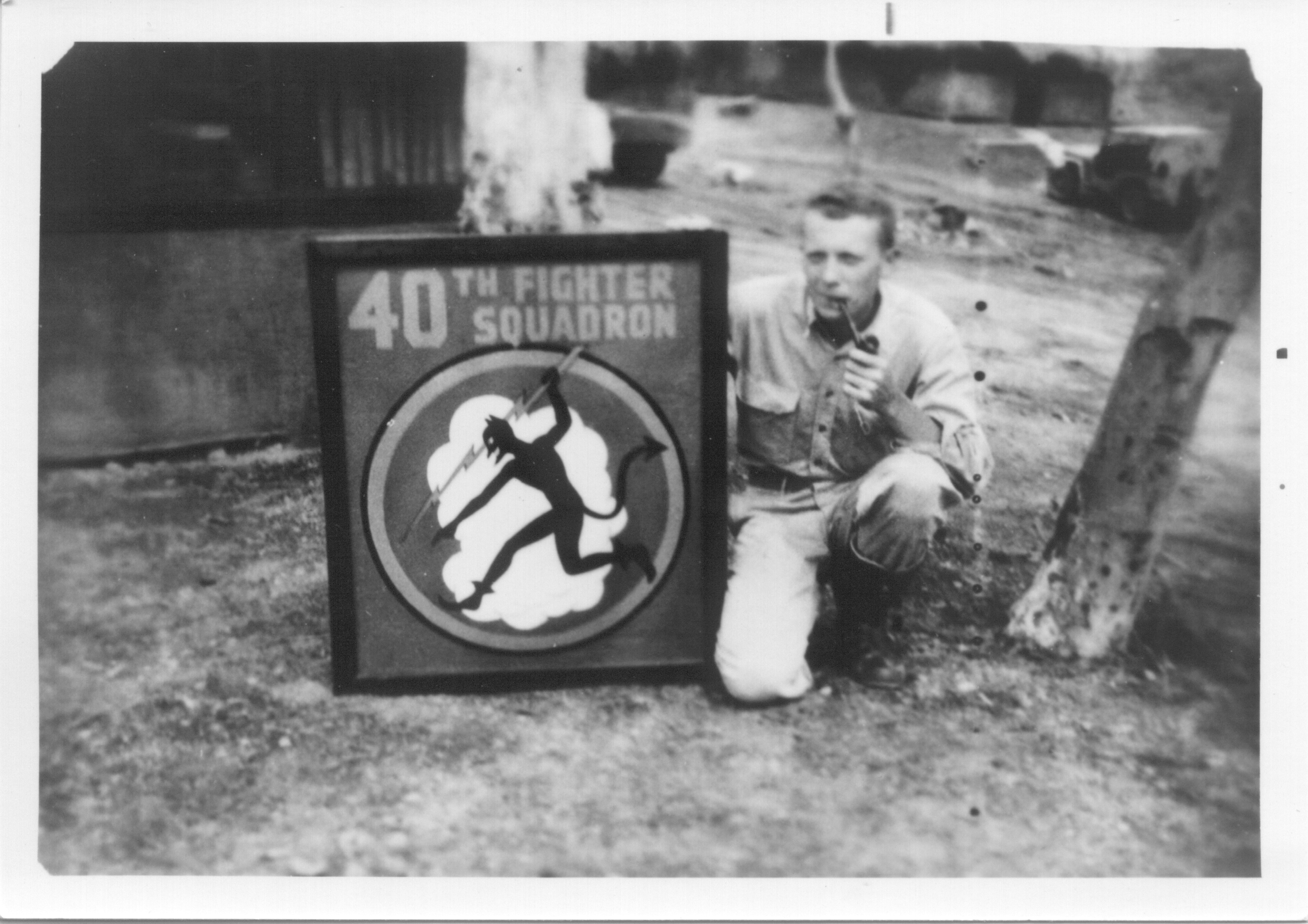
Phil Shriver stands in front of his 40th Fighter Squadron Airacobra.
When the war started, most of the squadrons on the West Coast were asked to supply men for immediate service in the South Pacific. I was with the 54th up at Paine Field at the time, fresh from flight school. I think I had six hours in P-40s. I think what the squadrons did was detach their most inexperienced pilots as naturally they wanted to hang on to their best men.

The 54th Fighter Group later deployed to the Aleutians and flew missions against Japanese-held Kiska in the fall of 1942.
We went down to Hamilton as part of a large, thrown together group of pilots. There must have been about 125 of us-and I don’t think any of us had much fighter training. None of us were assigned to any group. They just put us on a ship and sent us out to war.
We landed at Melbourne, Australia. For awhile, we were at loose ends while the Air Corps waited for a shipment of P-40s to arrive for us. We waited and waited, but every time a batch of planes arrived, somebody else got them. We moved around a lot. It was a pretty confused mess at the time. In March of 1942, I was finally assigned to the 40th Fighter Squadron, 35th Group.
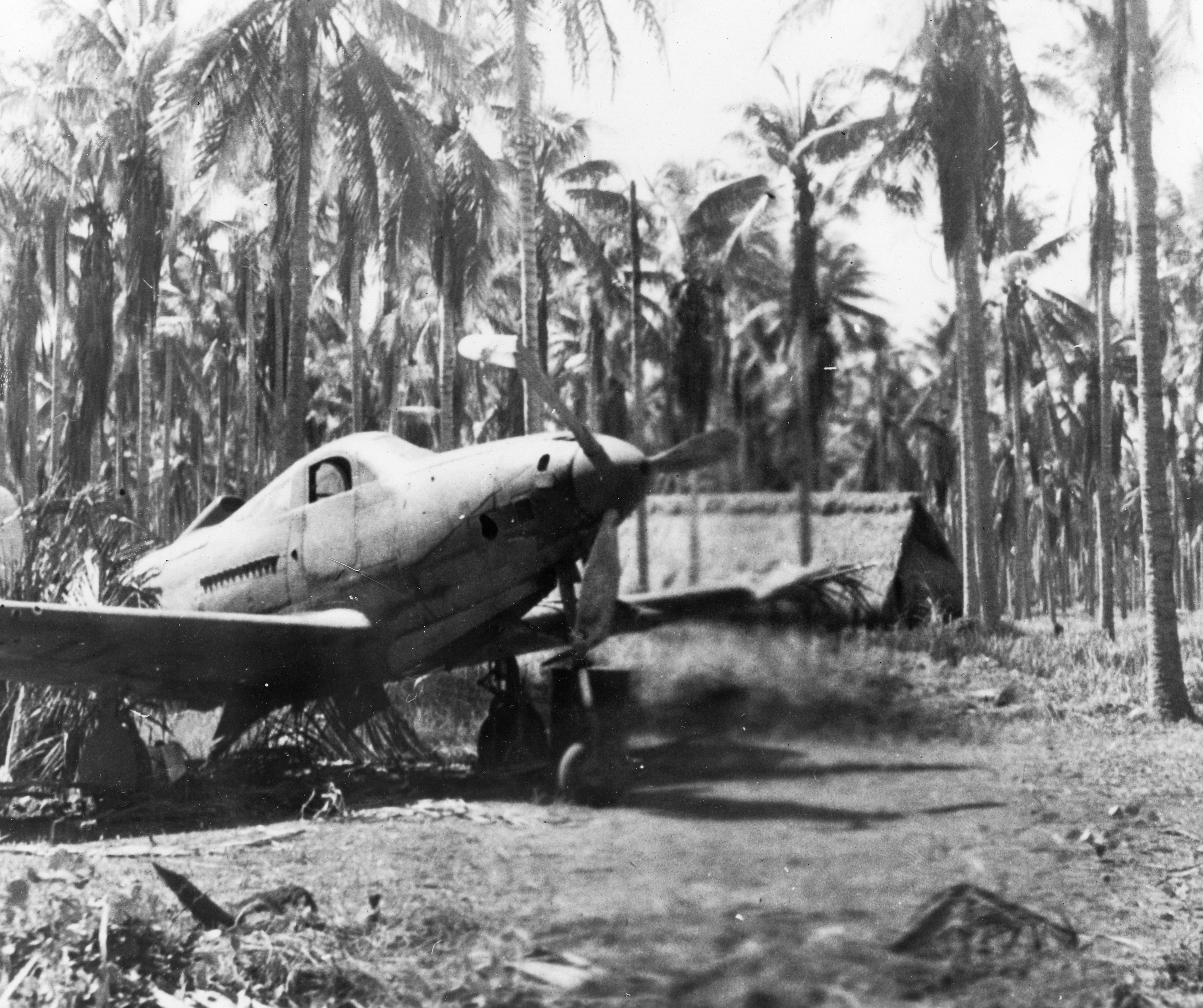
We had P-400’s–the export version of the P-39 that the RAF didn’t want. The only differences were that the P-400’s had an electrical propeller system instead of the P-39’s hydraulic one and they carried a 20mm cannon in the nose instead of the P-39’s usual 37mm. That 37 was a complete failure. If you got three rounds out of it before it jammed, you were lucky. The P-400 was one of the first planes to get into combat up in New Guinea. Another group, the 8th, was formed about the time we were. They used a mix of P-39’s and P-400’s. Initially, our group had nothing but P-400’s.
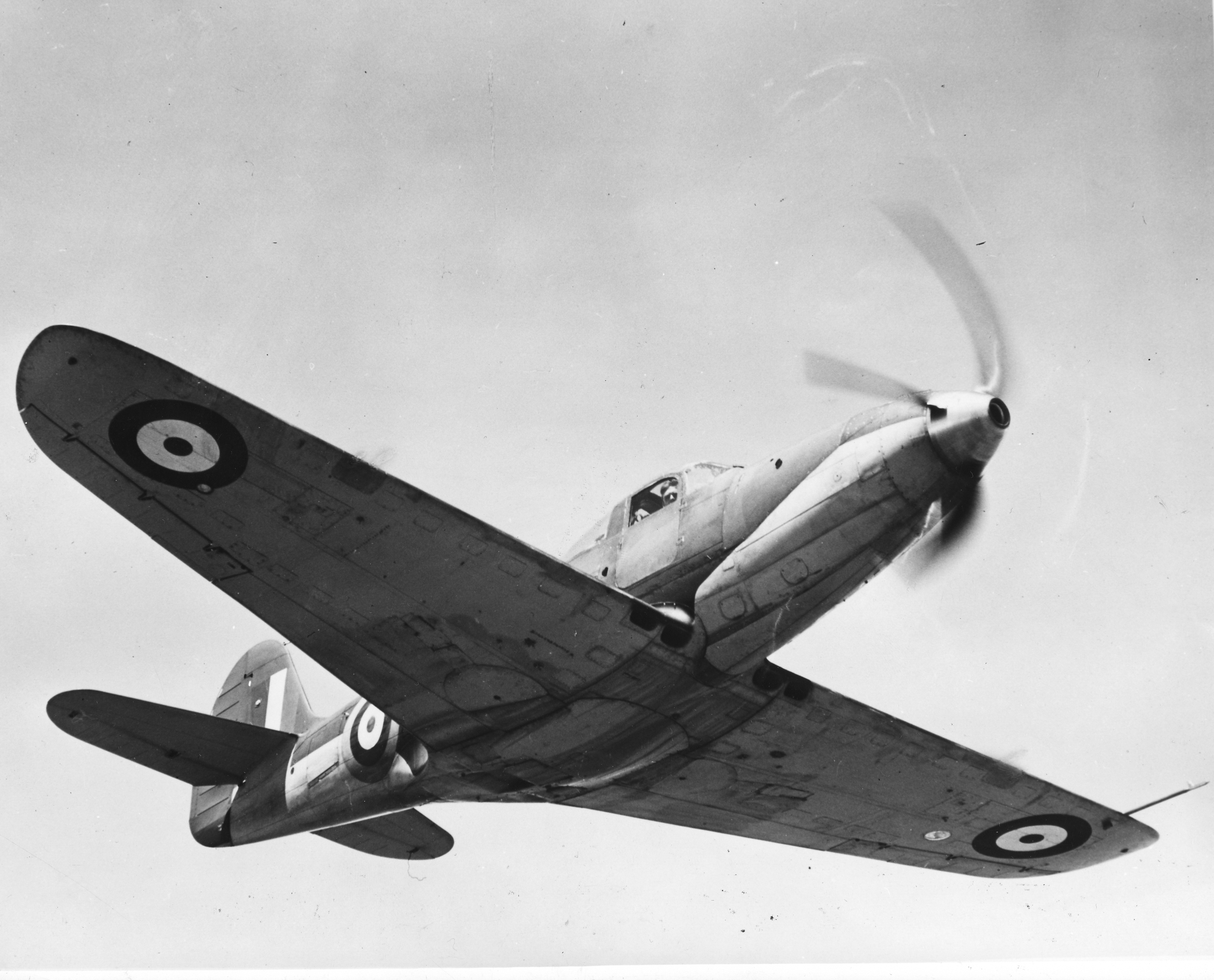
The P-400 was the Airacobra variant built specially for the Royal Air Force. The Brits found it totally unsuitable for combat and rejected them. Desperate for planes, the USAAF took them over and sent them to the Pacific.
Our P-400 carried British markings since the RAF had turned them down and given them back to the Air Corps. We used our Allies’ cast-aways, planes not fit for the Royal Air Force.
I preferred the P-39 because of its prop system. The electrical system on the P-400 failed all the time and the prop would flatten out. You’d lose control of the RPM’s and you’d have a heck of a time getting back home in that condition. It happened to me, but never in combat. When it happened, you’d lose altitude fast. I learned to flip the circuit breakers as that sometimes got things working again.
All the same, it was a sturdy little airplane, and I liked it. Even after we found out about all the things that were wrong with it, well, I had fallen in love with it. It got me home every time.
The squadron stayed in Australian for a couple of months until a group of us went to Port Moresby. I arrived at Port Moresby on the 1st of June, 1942. We had planned to arrive on the 30th of May, but as we neared our assigned field-Seven Mile Drome–we saw that it was under a bombing attack. We turned around and flew back to Australia. We got in two days later.
The field was always in bad shape. It was bombed practically every day. An engineering division cleared the field every day so we always managed to take off and land only a few hours after these raids. They never really put us out of commission. Seven Mile Drome was Port Moresby’s main strip, but we were the only fighter unit up there at that time. Bombers would fly in and use it, but we were the only air defense unit. We had relieved one of the squadrons of the 8th Group, and our two outfits rotated back and forth every few months or so.

Mechanics worked in primitive conditions trying to keep the Airacobras flying.
There were no facilities there like in the States-or Australia for that matter. We had no hangers. We hired native workers to build our alert and operations shacks. Both were basically grass huts. For our living quarters, we secured some five-man pyramid tents which we set up a few miles from the field. At morning and in the evening, we traveled between our tents and the airfield in two ton trucks. This way, if the Japanese bombed the field at night, our camp area was far enough away to avoid some of the action.
The day after we arrived, my squadron flew its first mission. My own first combat flight took place the following day on June 3rd. Through most of our first tour, we used our P-400’s as interceptors, though we sometimes escorted transports to Wau, a base north of us.
As interceptors, the P-400’s were just about useless. We could never climb fast enough or high enough to catch the Japanese bombers. The P-400 operated effectively to 15,000 feet. After that, its performance died. If you could get to 25,000 feet, the plane’s max speed would be somewhere around 125 mph. The wings would be flopping around-you couldn’t do anything but wallow.
Did I mention that the Japanese were always at 25,000 feet?
The quality of the Japanese pilots we faced went downhill fast from sheer attrition, a fact we noticed over the six months we flew in New Guinea. In December of ’42, our squadron finally scored its first big victory. We had been escorting transports to Wau, when some Zeroes from Lae intercepted us. Our guys shot down 12 planes that day-more than any other during our two tours up to Moresby. Those Japanese who intercepted our squadron just weren’t very good. We could tell they weren’t very good by the fact that we were beginning to get victories.
At the start of our tour, though, we didn’t do well. The Japanese fighters were always above us, giving them the advantage in nearly every engagement. Worse, we soon learned that we could never dogfight with the Zeroes in our P-400’s–the Airacobra was just too inferior. To survive, we could only one pass, then dive away. The Zeroes couldn’t keep up with us that way. It was our only escape. The P-400 was a rugged little airplane and would dive like mad.
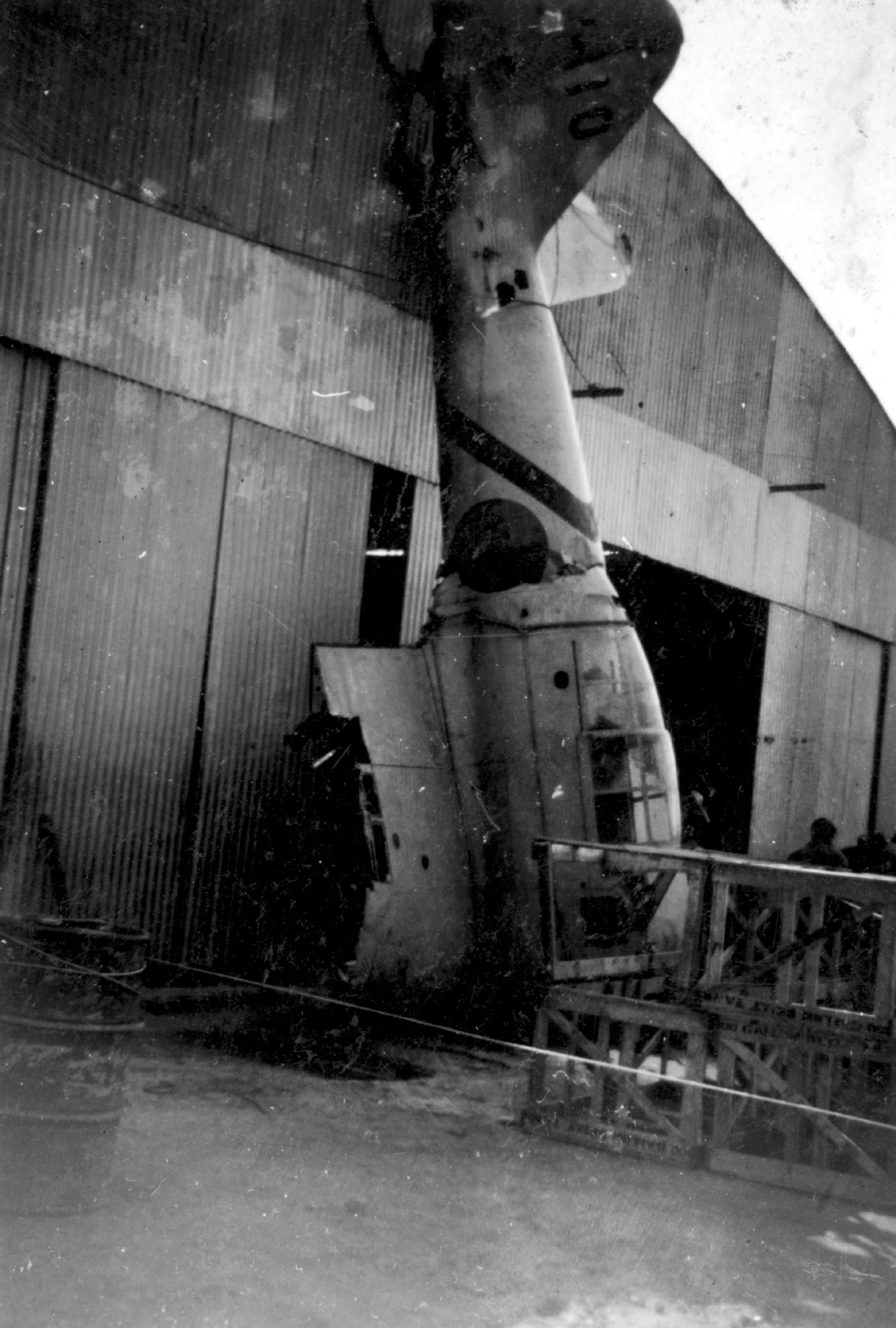
A Tainan Air Group Mitsubishi A6M Zero shot down over Port Moresby in 1942. It is seen here after it was recovered by the Allies. –John R. Bruning collection.
We learned the hard way how to fight the Japanese, though Buzz Wagner helped us out quite a bit when we first arrived. Buzz, who was one of America’s first aces, taught us how to fight the Zero. He had flown in the Philippines then taken glass shrapnel in his eyes. The Air Corps took him out of combat flying and sent him to Australia. He went from squadron to squadron sharing his experiences and knowledge. To us, he became our guardian angel and we looked up to him and listened to him. He told us to never dogfight with the Japanese. Later, we heard that from other pilots, too. But Buzz Wagner was the one we all respected. He could do things in a P-39 that were just unbelievable.

Boyd “Buzz” Wagner, seen in a pre-war portrait.
He even came up to talk to us while we were at Seven Mile Drome. He stayed in the operation hut and filled us with information. He never flew combat with us, though he did with the squadron we had relieved.
The first contact with the Japanese that I occurred on the 16th of June. We had the full squadron up and our c/o was leading us that day. I’m sure we looked real good–we were all in formation at 12,000 feet. That was until the Japanese showed up. I glanced up and at about 20,000 feet I could see probably 20 Zeroes. I remember thinking how colorful they were. They had big red dots on their wings, and their cowlings were painted black. They went into a Lufberry circle, just like they were playing a game. They started chasing each other around, going through all sorts of little antics. They were quite good no question about it. And they were a cocky bunch, doing all those aerobatics above us like that. They knew they were going to kill us even before they attacked.

A Mitsubishi A6M Zero over Mt. Fuji. The Zero proved a deadly adversary to the Americans piloting the P-39’s and P-400’s in defense of Port Moresby. –John R. Bruning collection.
On the other hand, we didn’t know what was going on-half the time we never did. Neither did our squadron commander.
All of a sudden, they peeled off out of that circle one at a time. They came down right through us. There wasn’t a whole lot we could do. We were too low to dive, so we scattered. I saw one P-39 flying straight and level with a Zero behind it. Pieces were just falling off his airplane-good God, it was a terrible experience, one we were not too proud of. We should have done a lot better. I went into a handy cloud and got away. We lost three pilots in that one attack. It wasn’t a good show for the Americans.
We should have pulled up into them. At least that way we could have gotten a few shots off, but we didn’t. They just decimated us. We became veterans that day.
The Japanese never gave us a break. We were bombed constantly, day and night. In between, we’d go up and try to intercept them. Sleep was hard to come by, that’s for sure.
The first bombing raid I experienced took place the second day we were there. It was kind of funny in the way it happened. I’d never seen Japanese bombers or Zeroes before. They were very high as usual. I stood out on the field watching them since I knew they hadn’t released their bombs yet. The engineers on our field that did all the work keeping it operational were black. So there I was watching all the Zeroes and bombers when one of the engineers runs by and shouts, “Come on boss! Them bombs ain’t marked black or white!” I wised up fast.
We learned not to be too afraid of the bombing raids. They usually hit the strip, and our alert shack was a ways away. We had slit trenches we could get into, but we didn’t worry too much about the bombs. The Zeroes were another matter.
On that first tour, one other mission stands out. The Japanese Betty bombers had just hit Port Moresby. They were escorted by Zeroes, but there were some B-17s in the area flying en route to bombing Rabaul. The Zeroes pulled off away from the Betties and went after the B-17s. Saburo Sakai, in his book Samauri! talks about the mission that day, so I know the Tainan Air Group–the best Japanese outfit of the war–was involved.
The Betties were only at 15,000 that day, and only a few Zeroes stayed with them. That gave us the best tactical set-up we’d ever seen. Three miles out of Moresby, 12 of us attacked them. We shot down three bombers and a Zero and lost one pilot. For a change, we were slightly above the Japanese, and off to one side. That day, I was in a P-39. I dove on their formation and made an almost 45 degree run on one Betty. When I opened fire, I could see the tail gunner get hit by my bullets. I got two rounds out of my 37mm cannon before it jammed. I pulled up without seeing what happened to my target. I rolled back in and made another pass. Later, three Betties were found on the ground and I was given credit for one.
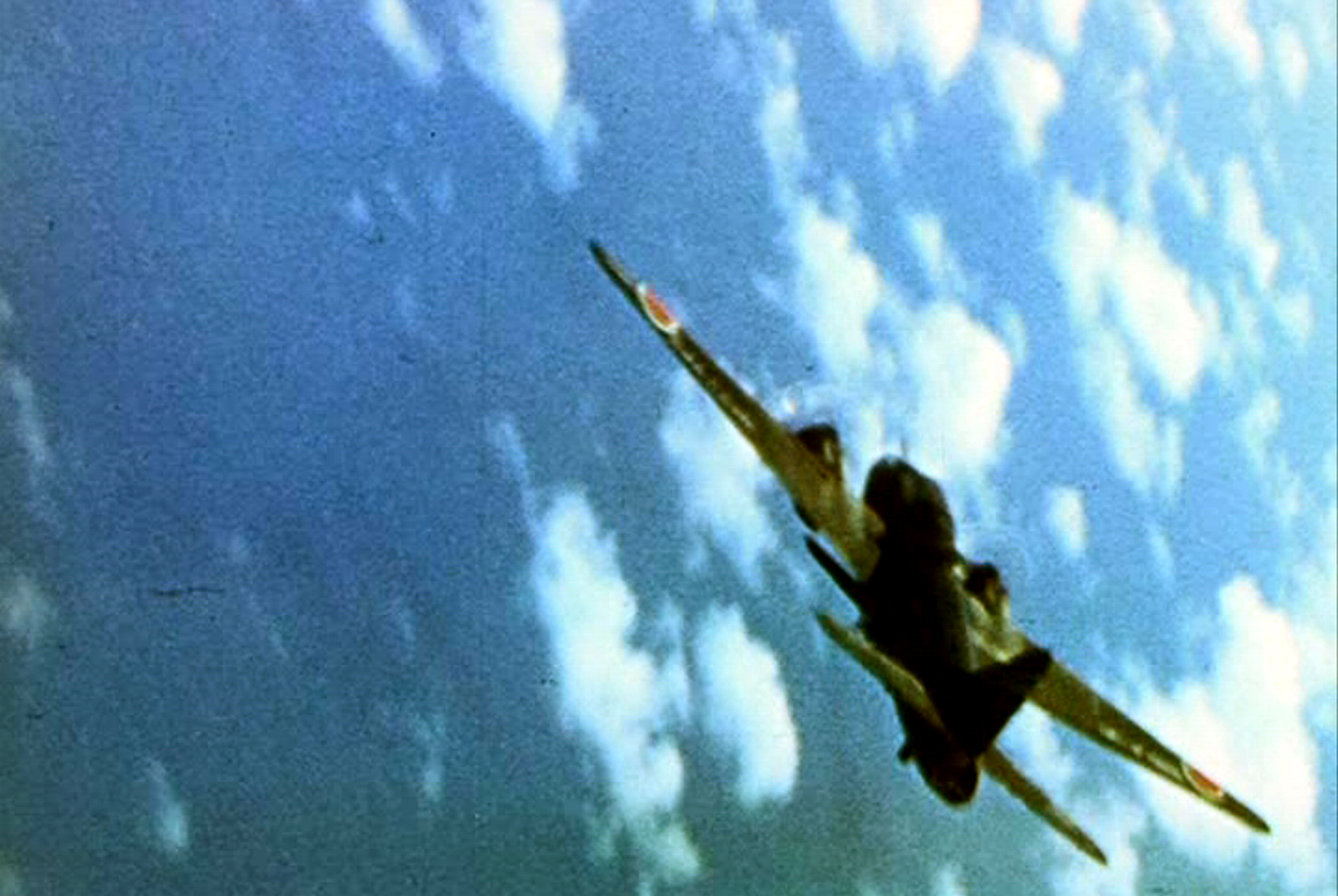
A late-war G4M Betty bomber about to be short down by a VF-17 Hellcat during a raid on the U.S. fast carrier fleet. This one is carrying an Ohka piloted rocket bomb under its fuselage. The Betty was used throughout the war by the Imperial Japanese Naval Air Force.
In our first month, we lost ten pilots. As a result of all the losses, morale in our squadron was very low. To tell you the truth, we were a pretty scared bunch of guys. We were getting beat up good. To keep morale up, while we were on alert we played volleyball down near the flight line. We also had chess tournaments going, but that was about it. We just waited around for the word to scramble. We had a field telephone wired up in the alert shack. Whenever it rang, our hearts would stop. We knew what it meant. Somebody would hollar, “Take off!” We’d all jump into a truck or jeep and race down to our aircraft. There was an alert board in the shack which listed who were the flight leaders, who were the element leaders and who flew in which flight for the day. It also listed what planes we were assigned to. As our trucks and jeeps passed our planes, each pilot would jump off and run to it. Our airplanes were about 300 yards apart, parked back in the jungle. Originally, we had them on the field itself, but the Japanese hit them by bombs so we quit doing that.
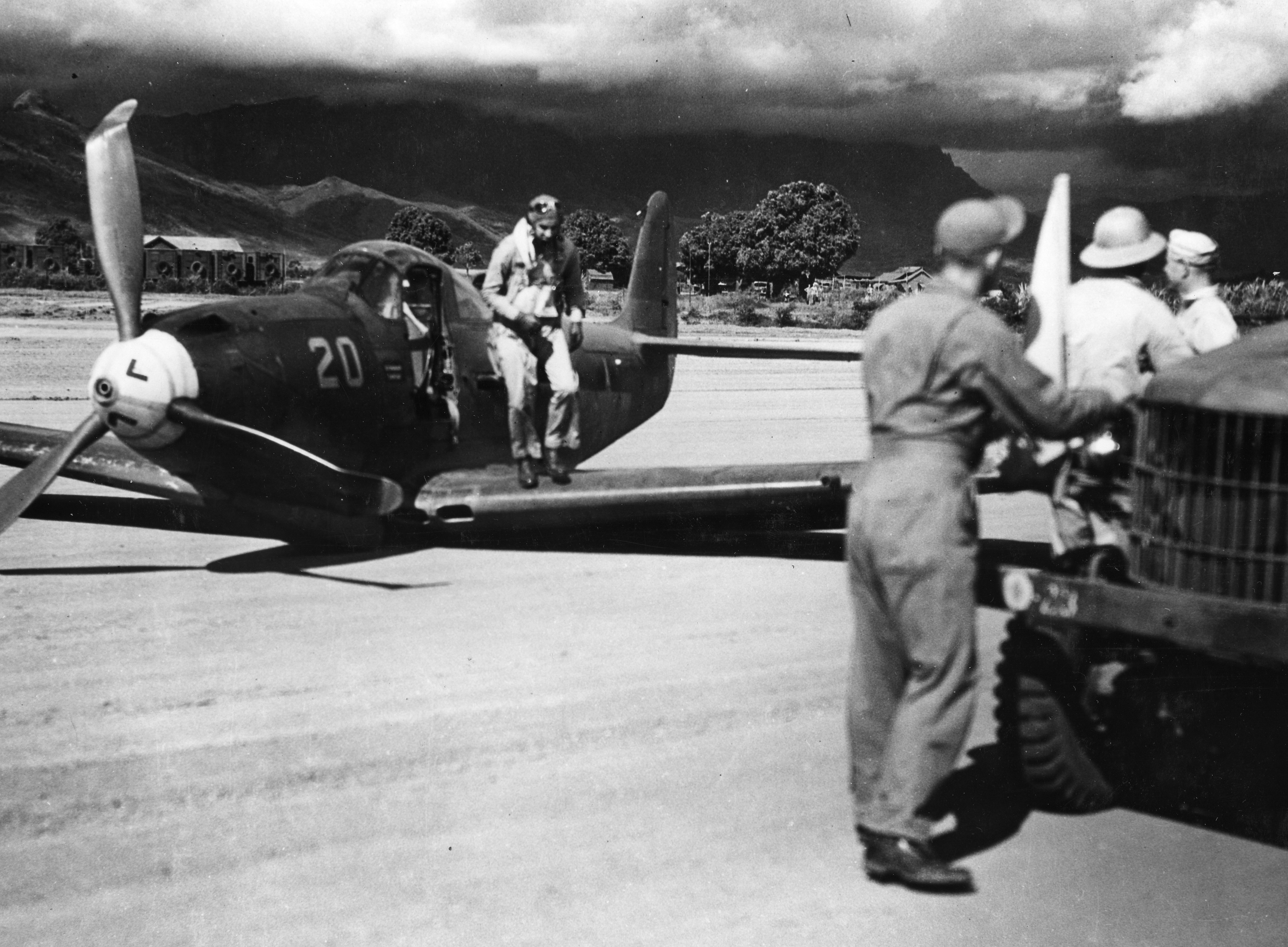
A rough way to make it home.
When we started out, we each had our own plane. I got two I called my own. I named them Ruby I and Ruby II. Eventually, as planes were getting shot down or knocked out of commission, we were assigned to whatever planes were available that day. Ruby I and Ruby II were both shot down–but not on days I was flying them.
We did have an officer’s club–another grass shack that we built-stocked with liquor brought up from Australia. I wasn’t a drinker, so they put me in charge of our supply because I could be trusted with it. The Japanese used to send nuisance bombers against us at night. One evening, he hit our officer’s club and it caught fire. I remember everyone leaping from the slit trenches nearby to try and save our liquor!
Our first tour ended in the first part of August. We went back for a rest in Sydney and stayed at place called King’s Cross. I was engaged at the time so I didn’t run around much, and I didn’t drink, but I’ll tell you, some pretty wild things went on around there. The guys just had to blow off the tension we’d been under for so long back up at Moresby. I ended up meeting a wealthy family with three daughters. Three of us stayed with them, and took their daughters out to the swanky clubs.
Phil Shriver at Port Moresby, 1942.
We had a two week leave before going back to Townsville. We stayed there until mid-November and then returned to New Guinea. By November, it wasn’t nearly as stressful as our first two months. Things were slacking off a bit and the Japanese weren’t raiding us nearly as often. When we did run into them, they weren’t as good as the ones we faced during the summer. We did a lot more escort and patrol work than the first two months we were there. We also strafed ground troops at Buna from time to time, something the P-39 was good at. But communications with our own troops weren’t that stable, so we never knew where to strafe and if we’d hit friend or foe.
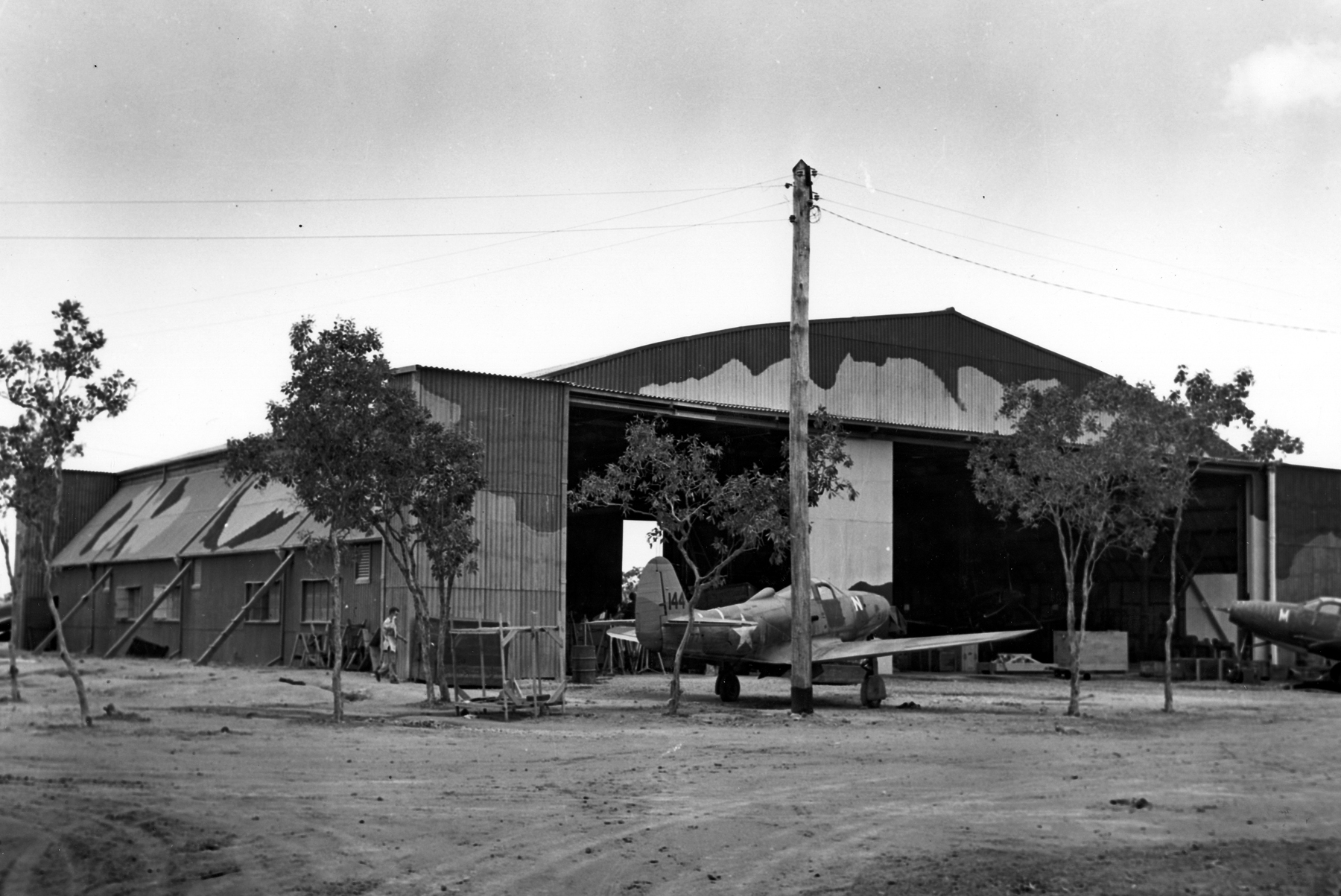
An Airacobra at Townsville, Australia, fall 1942.
In May of 1943, I left New Guinea for good and caught a B-24 for home down in Brisbane. I came back to Hamilton Field, the same place I left out of. This all happened pretty fast, so nobody was there to greet me when I got back. It didn’t matter, it was wonderful to be home, to have survived the ordeal we all went through. Our squadron lost 12 of the 25 pilots who originally went to Moresby. We all figured we had about a 50/50 chance to get home. Somehow, I was one of the lucky ones.
* * *
Outclassed, under trained and over matched by their well-equipped Japanese opponents, the 8th and 35th nevertheless held the line over Moresby until new squadrons flying better aircraft could arrive to continue the fight. In August, just as Phil’s group rotated home for a break, the American landing at Guadalcanal largely diverted the Japanese Naval air units away from New Guinea. The Tainan Air Group moved to Rabaul just prior to the August 7th landings, leaving Lae behind and all the terror they instilled in the AAF aircrews forced to fly there.
The Japanese Army Air Force stepped into the void created by the Imperial Navy’s new focus on Guadalcanal. From the fall of 1942 through the summer of 1944, Japanese air operations over New Guinea largely became a JAAF show. Occasionally, the JNAF would mount a strike from New Britain–April 7, 1943 and October 15, 1943 are two examples–but for the most part, the Army sentais carried the burden. The drop off in pilot quality Phil Shriver noted in his recollections could very well stem in part from this change over. The JAAF aircrews were noticeably inferior to their JNAF peers, even at the start of the war.
Throughout the fall of 1942 and into 1943, American air strength grew in New Guinea. The first P-38s arrived, and their superior high speed performance gave the Americans the edge in air-to-air combat they sorely needed. Nevertheless, the issue remained in doubt until the great air battles of the spring and summer forced the JAAF onto the defensive once and for all.
Phil Shriver spent the rest of the war as an AAF test pilot. He flew every aircraft in the Army Air Force’s inventory except the P-38. After VJ-Day, he returned to civilian life after giving serious thought to staying in the service.
While he fought in New Guinea, his older sister suffered through the horror of captivity in the Philippines. She had been one of the nurses who stayed behind to treat the wounded on Bataan. Liberated in 1945 at San Thomas prison, she rarely spoke of her experiences to anyone, even to her brother.

One of the 28 surviving members of the Japanese garrison on Attu. He’s seen here with several other POW’s after being captured by Soldiers of the 7th Infantry Division.
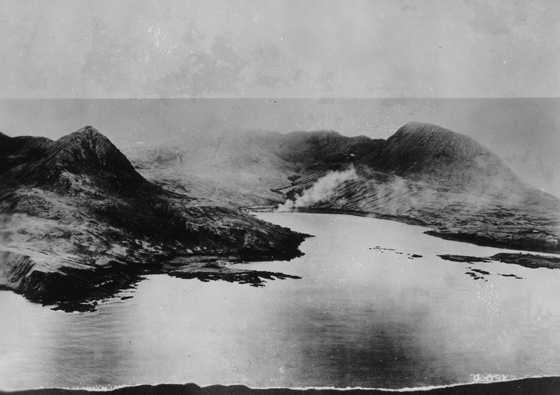 Following the capture of Attu Island in the Aleutians at the end of May 1943, the 7th Infantry Division discovered a treasure trove of documents, diaries, letters, photographs and film among the items captured during the campaign. Some of the only film sequences we have in the West of the Japanese carrier force came from footage found on Attu. Stills were taken from the footage, which included the final moments of the HMS Exeter and HMS Cornwall, two Royal Navy heavy cruisers sunk by Japanese carrier aircraft in the Dutch East Indies and the Indian Ocean in the spring of 1942.
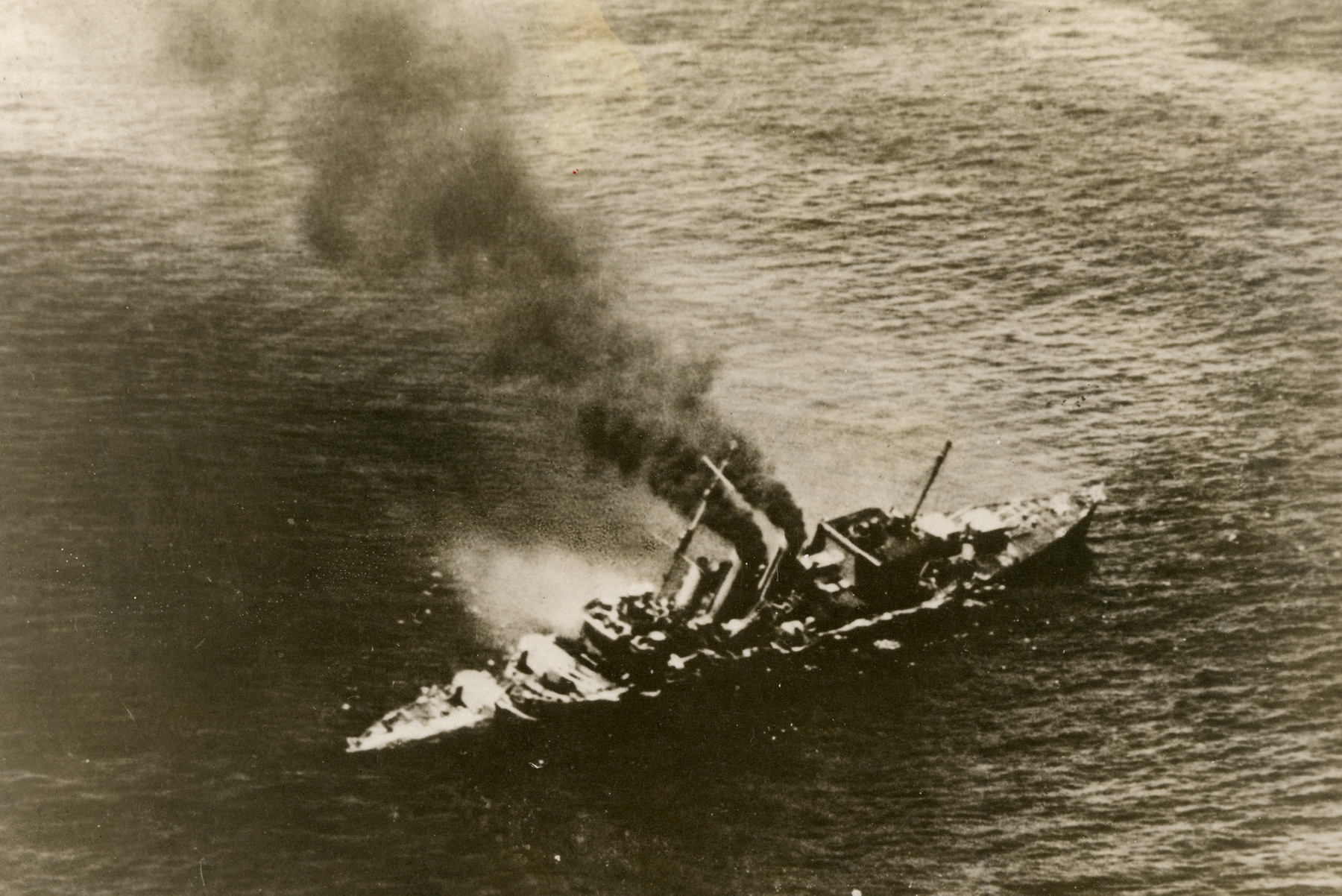
HMS Cornwall sinking after being dive bombed by Japanese carrier aircraft during the Indian Ocean Raid in the spring of 1942.

HMS Exeter’s last moments off Java.
The letters, diaries and documents provided insight into the experience of the Japanese Soldier and Sailor, and showed a streak of fatalism as they realized the hopelessness of their situation in the Aleutians. The material was translated by U.S. Navy and Army intelligence units, and some of those translations have survived at the National Archives in College Park, Maryland.


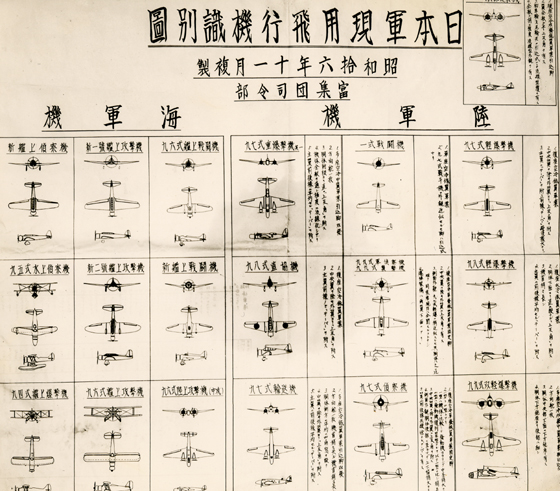
On Attu, considerable weaponry, equipment and even wrecked float planes fell in American hands. The gear helped give the U.S. Army greater insight into the organization and capabilities of the Japanese military, information that was put to good use later in the war.
The information gathered on Attu, along with similar intel gleaned from the Solomons and New Guinea, was compiled into a technical manual on the Imperial Japanese Army that covered everything from weapons employed, artillery tactics and infantry TOE’s to what typical bunkers and fortifications looked like. The manual was widely distributed during the war, and has subsequently been reprinted.


Soldiers of the 7th Infantry Division examine a wrecked Nakajima “Rufe” float plane fighter captured on Attu.
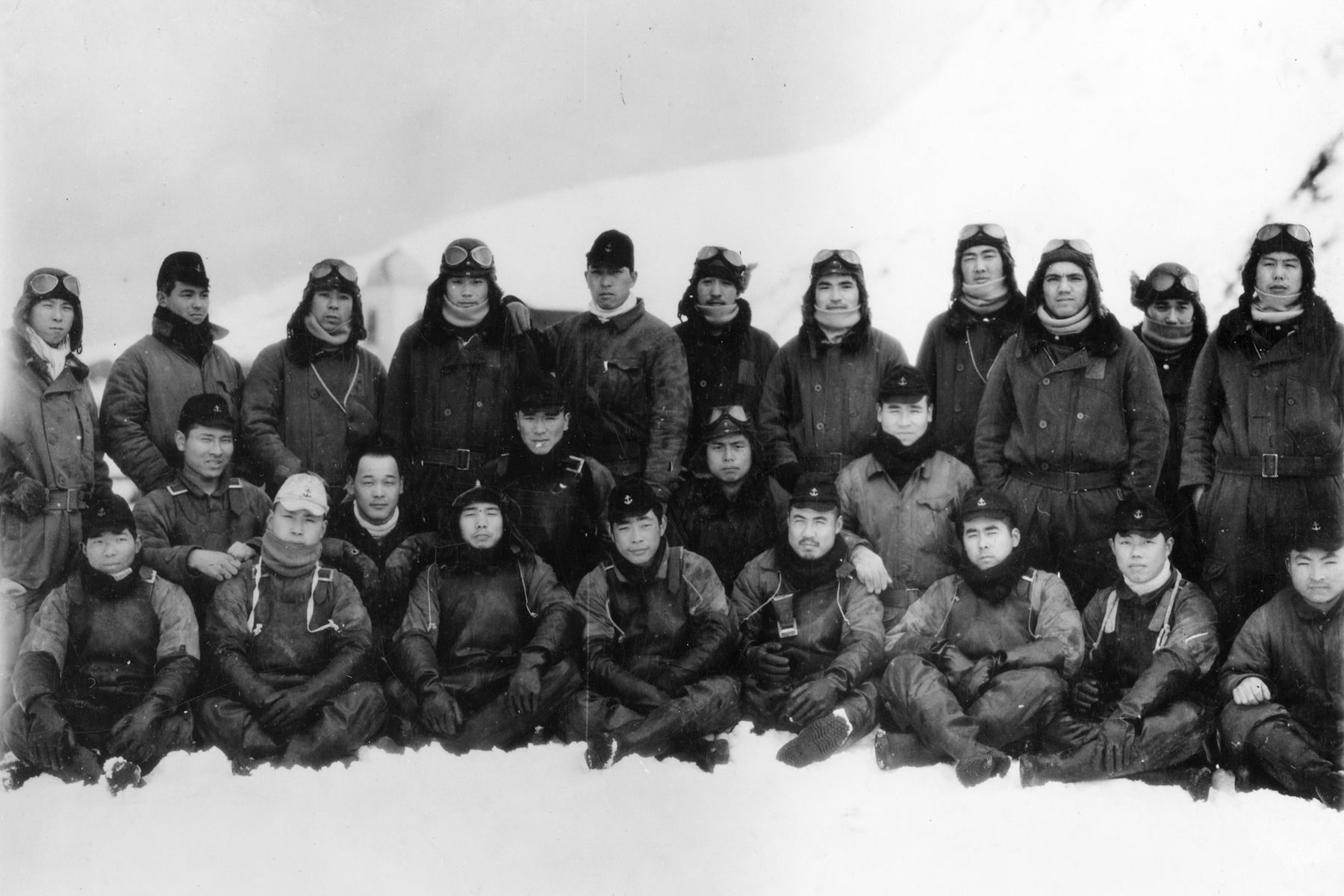
The pilots of a Japanese float plane squadron based on Attu. The photo was part of the intel trove captured on the island.

A Japanese gas mask found on Attu attracted the interest of U.S. intelligence. It was taken to Adak, examined and photographed only a few days after its capture in May of 1943.
See the U.S. intel teams in action in this short film clip:
Scenes from the 7th Infantry Division’s fight for Attu, May 1943.
 The American Warrior