Posts Tagged With: #usmc

MAG-45’s War in the Pacific Backwaters

The strip at Falalop Island, Ulithi Atoll, home to Marine Air Group-45. This photo was taken at the end of April 1945. In the photo can be seen several F6F-5N night fighters, a line of TBM Avengers, a few SBD Dauntless dive bombers, an SB2C Helldiver, and an unusual array of Culver TD2C Turkey target drones (at right)

The strip at Falalop Island, Ulithi Atoll, home to Marine Air Group-45. This photo was taken at the end of April 1945. In the photo can be seen several F6F-5N night fighters, a line of TBM Avengers, a few SBD Dauntless dive bombers, an SB2C Helldiver, and an unusual array of Culver TD2C Turkey target drones (at right)

In the fall of 1944, Marine Air Group-45 set up shop at Ulithi Atoll and received the task of suppressing the bypassed Japanese bases in the Carolines. MAG-45’s biggest and most important target was Yap, which included a large airfield capable of handling twin-engine bombers. The air group’s Avenger squadron, initially VMTB-232 and later VMSB-245, also provided anti-submarine patrols around the fleet anchorage at Ulithi. In November, two Japanese submarines launched five midget subs which succeeded in sinking a U.S. Navy oiler. Marine Avengers sank two of the midget subs.

In the months that followed, the air group flew night intercept operations with VMF (N)-542’s F6F-5N Hellcats, carried out ceaseless attacks on Yap, Fais and Sorol Islands. Though they encountered only occasional Japanese aircraft, the flak over these targets was often intense and so dangerous the crews were told not to drop below six thousand feet during their attack runs.

USMC Series WWII MAG-45 vmsb-245 ii Ulithi Atoll 040445 -1

VMSB-245’s parking area in May 1945. ‘245 arrived at Ulithi in March and flew until the end of the war. It had previously flown a tour from Midway and a second in the Marshall Islands prior to arriving at Ulithi. TBM Avengers, SB2C Helldivers, F6F-5N Hellcats can be seen along with what looks like a USN variant of the Beech 18 and an air rescue float plane.

MAG-45’s job was a thankless one, their efforts and missions lost to the American people as the tide of war advanced ever closer to the shores of the Japanese Homeland. Yet, it was in these grinding, attritional missions that the Marine aviators demonstrated a supreme level of dedication to their craft and cause. Day in and day out, the struck the same targets to ensure the strips at Yap could not be used to launch surprise raids against the U.S. warships at anchor in Ulithi, which had become a key forward replenishing base for the fast carrier task forces. There was little chance to participate in a major battle that could make headlines and history, and almost no opportunity for the fighter pilots to score aerial kills. Yet they were steadfast and carried out their missions with deadly effectiveness until the Japanese surrender in August 1945.

In honor of their all-but unknown efforts, here are some photographs from that backwater campaign.

VMSB-245 crews receive a target briefing prior to a mission against Yap Island on May 1, 1945.

VMSB-245 crews receive a target briefing prior to a mission against Yap Island on May 1, 1945.

USMC Series WWII MAG-45 Pilots Mangrum Ulithi Atoll 042845-1

LT. Col. Hurst and Colonel Robert Mangum chat with and congratulate two young fighter pilots, Lt. Hill and Lt. Hungtington, after they shot down a Japanese plane. April 28, 1945.


Categories: World War II in the Pacific | Tags: , , , , , , , , , , , , , , , , | Leave a comment

Ulithi Interlude

USMC Series WWII MAG-45 gunners and monkey vmsb-245 Ulithi Atoll 05145-1

Memo: Before bombing Yap Island, always remember to feed your monkey.


Categories: World War II in the Pacific | Tags: , , , , , , , | Leave a comment

Saipan Beach H-Hour, in Color

USMC Series WWII Saipan 1st wave hits beach LVT 061544  (1 of 1)In just two hours on June 15, 1944, three hundred amphibious tractors (LVT’s) carried over eight thousand heavily armed U.S. Marines onto Saipan Island in the Marianas Chain. It was a masterful display of amphibious warfare tactics and doctrine, but it also set the stage for a brutal, close range battle for control of Saipan’s sandy west coast. In places, the Marines found themselves pinned down by intense mortar, artillery and automatic weapons fire, and it took hours just to claw a foothold ashore. But by nightfall, the Marines had established themselves enough to repel the first of many Japanese counter-attacks.Marines struggling on the beach at saipan 5x7

This short film clip is raw footage shot by one of the Marine combat cameramen who went ashore with one of the first waves. It is silent, as was most of the footage shot, but that only adds to the poignancy of these scenes. The images are striking, not only for the chaos and carnage they reveal, but also for the film’s clarity. Much of the Marine Corps color footage has deteriorated over the years so that they are predominately reddish or blue. It makes for muddy looking scenes, and in many cases the more common black & white film has stood up better over the years. This clip is stark, clear and the colors have survived the decades in remarkably good shape.


Categories: World War II in the Pacific | Tags: , , , , , , , , | 3 Comments

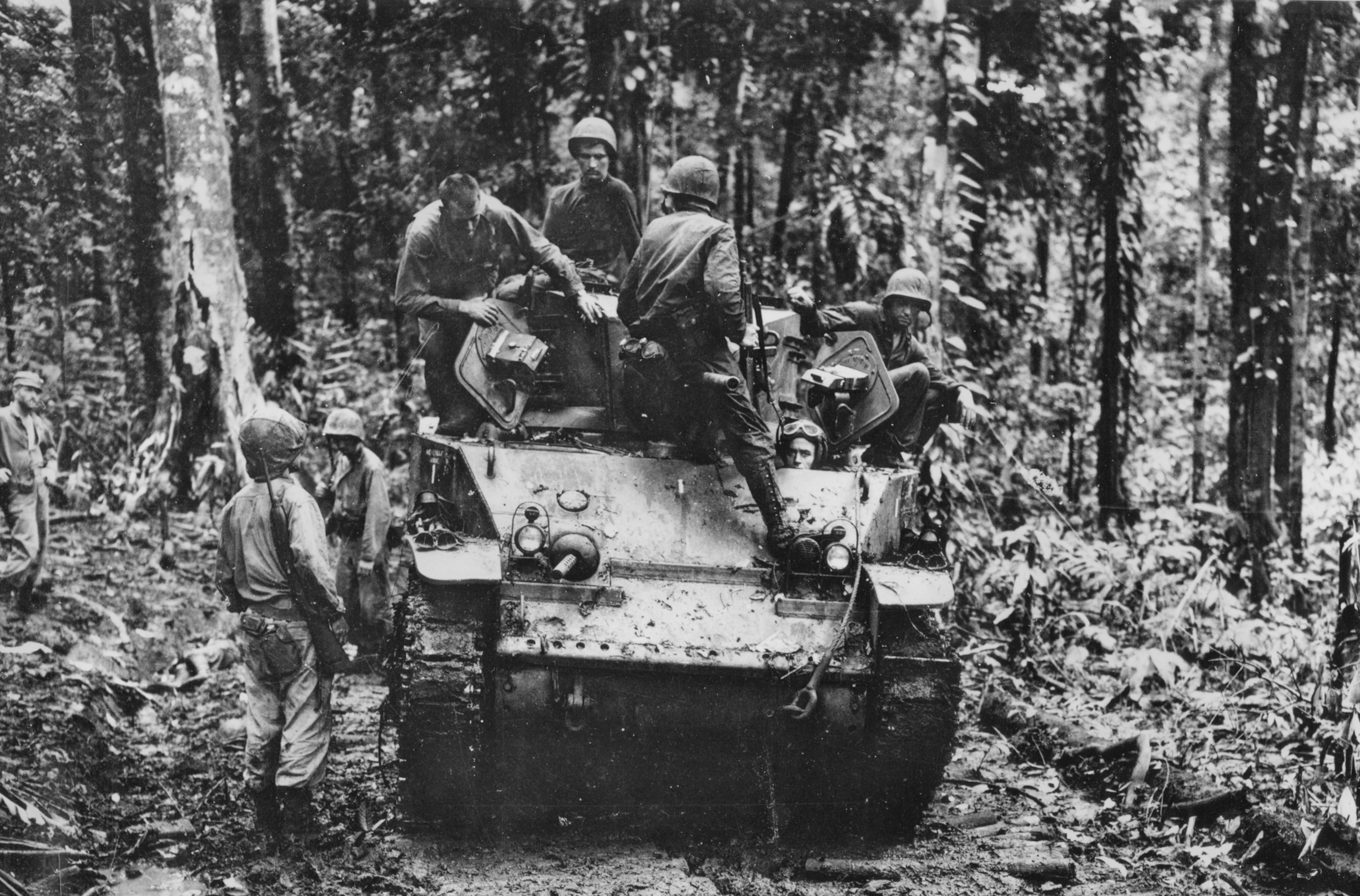
Photo of the Day: Marine M5 Stuart Tank Crew 1944

1st Marine Division M3 Stuart Cape Gloucester New Britain 011644  (1 of 1)

1st Marine Division M5 Stuart light tank crew taking a short break during the brutal fighting at Cape Gloucester, New Britain. January 16, 1944.


Categories: World War II in the Pacific | Tags: , , , , , , , , , | Leave a comment

Hue, ’68

Vietnam Series 1st Marine Div Sniper in Hue City Vietnam 020568 (1 of 1)


1st Marine Division sniper fighting in Hue City, Tet, February 1968.

Categories: Vietnam | Tags: , , , , , , , | Leave a comment

Blog at WordPress.com.