Imagine coming homing from 53 days of continuous combat to be told you’re going to be one of the first to fly the Navy’s latest and greatest bomber. It is the next generation, the plane you will be piloting when you return to war after this short interlude in the States.
You’ve been flying a dive-bomber whose forward-firing guns rarely worked, that couldn’t make more than 220 mph fully loaded, could only carry a thousand pounds of bombs, and was easy meat for Japanese fighters.
Despite the deficiencies in your aircraft, you and your half-trained squadron played a key role in stopping a critical Japanese counter-offensive. Your bombs destroyed numerous ships and barges. You’re a national hero, though the cost was high. Most of your pilots are dead. Those left are in Stateside hospitals recovering from wounds and trauma.
A revolutionary new bomber, faster, with more firepower and more ordnance, is exactly what you wanted while leading your men against the Japanese Navy.
With great fanfare, you’re brought to the most modern aircraft factory in America, one the Navy invested millions in to construct, then leased back to the aircraft company for a dollar a year.
You give a rousing speech to the employees who are building this revolutionary weapon of war.
There in Hatbro, Pennsylvania, in front of thousands of workers, you’re given the keys to the new plane to take it on a test flight and see what the future holds.
That plane was the Brewster SB2A Buccaneer.
And it was a complete dud. The worst aircraft produced by the U.S. defense industry during WWII.
On this Memorial Day, I want to honor the men from VMSB-232 lost on Guadalcanal. Aboard the USS Long Island (CVE-1), the 12 pilots and 12 gunners of 232 were told to buy time with their lives so America could bring up more men & planes.
Two survivors of 232. Art O’Keefe & Dick Mangrum, 1943.
They did far more than just that. They saved America’s first offensive of WWII.
The cost:
Pilots
Fletcher Brown
Larry Baldinus
Oliver Mitchell
Charley McAllister
Don Rose
Leland Thomas
Gunners:
W.R. Proffitt
R.S. Russell
P.O. Schackman
Nine of 24 KIA. Half the pilots lost. The others were all either wounded or medically evacuated, except for Dick Mangrum. After 53 days, he was last man standing, a skipper without a squadron.
Happy to report I’ll be signing books at Powell’s Cedar Hills store in Beaverton, Oregon on June 5th! If you’re in the area, please drop by and say hello!
When you’re a year removed from lecture halls and your fraternity house, and you find yourself 180 miles south of nowhere in the middle of the Pacific, told to launch off a make-shift aircraft carrier with a catapult that will fire you off the deck at a 45 degree angle into a crosswind while piloting a combat aircraft you’ve had less than 30 days to learn to fly…and if you survive the launch, you’ll fight the best combat aviators in the world who have been shooting down planes since you were on your high school JV teams.
You’re going to be living in the jungle, slowly starving on captured food stocks. You may be five ten, a buck fifty now, but if you survive, you’ll be lucky to be a hundred and twenty pounds. When you’re not in the air every day, you’ll be sniped, bombed, shelled, strafed, and mortared. The enemy’s ground troops are a few thousand yards away, preparing to overrun your make-shift, shell-pocked airfield that in itself is a hazard to use. You’ll be exposed to jungle diseases not even known to Western medicine yet. You’ll be wracked with malaria, doubled over with dysentery.
Your aircraft’s oxygen system will fail and poison you. A hit in the wrong place, and you’ll be covered in superheated engine oil. If you get shot down, you’ll face sharks at sea and death by torture at the enemy’s hands in the jungle.
And some light bird who doesn’t know the basics of overwater navigation, who refuses to share your circumstances, has just told you your mission: buy time with your lives. Die hard. You have one ace in the hole: USMC Captain John L. Smith is your commanding officer. With him at the tip of your spear? All the other stuff is just noise.
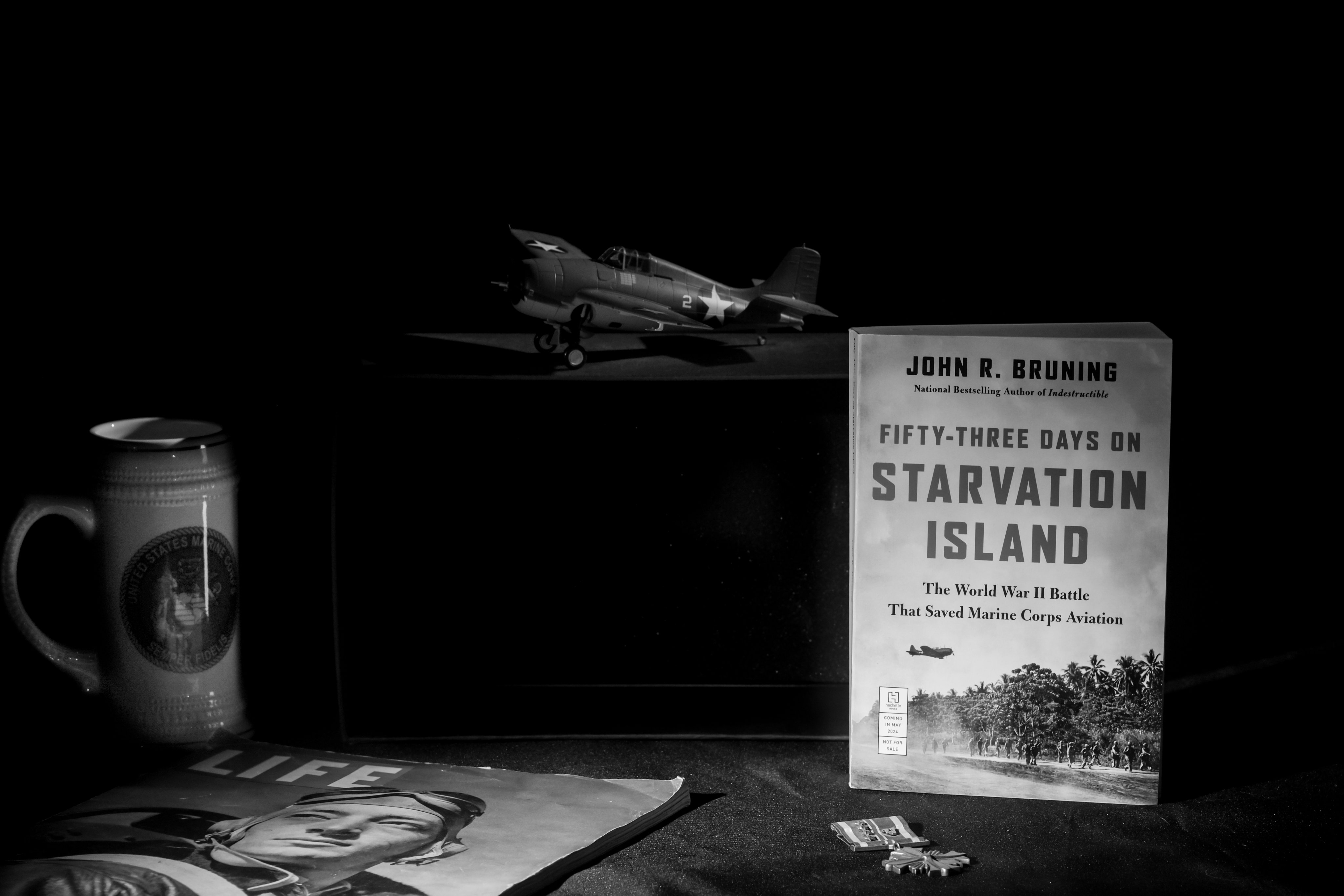
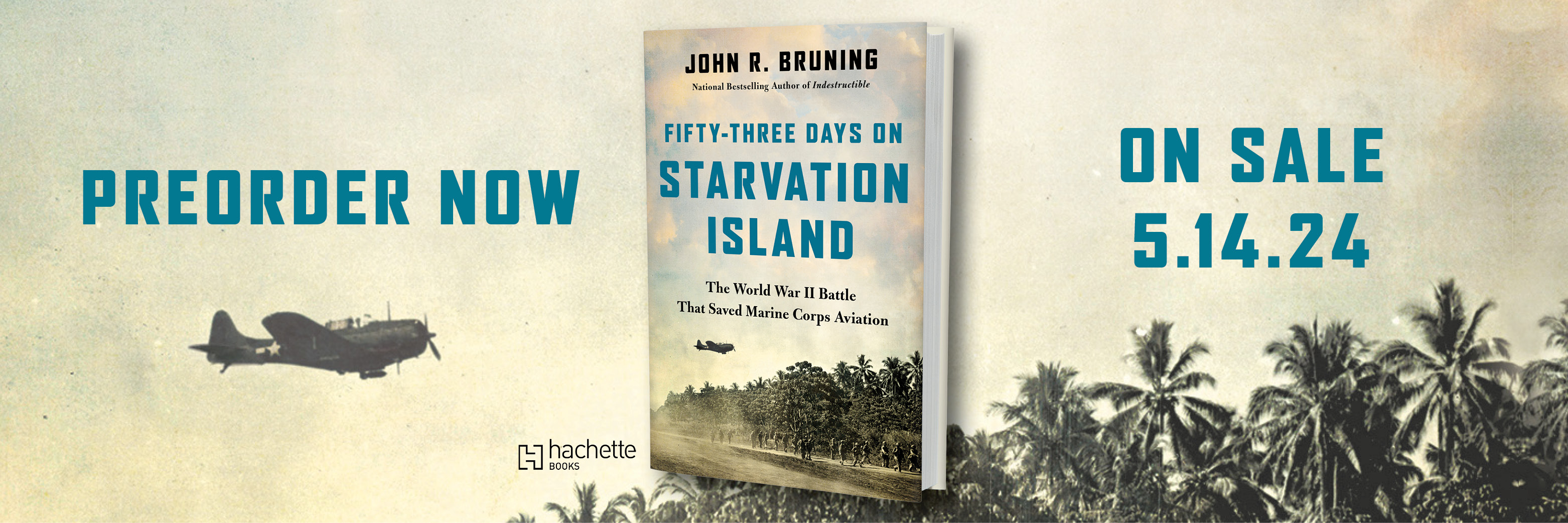
Fifty-three days of this to go…then you can go home. For thirty-four years, I’ve wanted to tell this story. Thanks to Hachette, it’ll be in bookstores everywhere, Audible and Amazon this May 14.
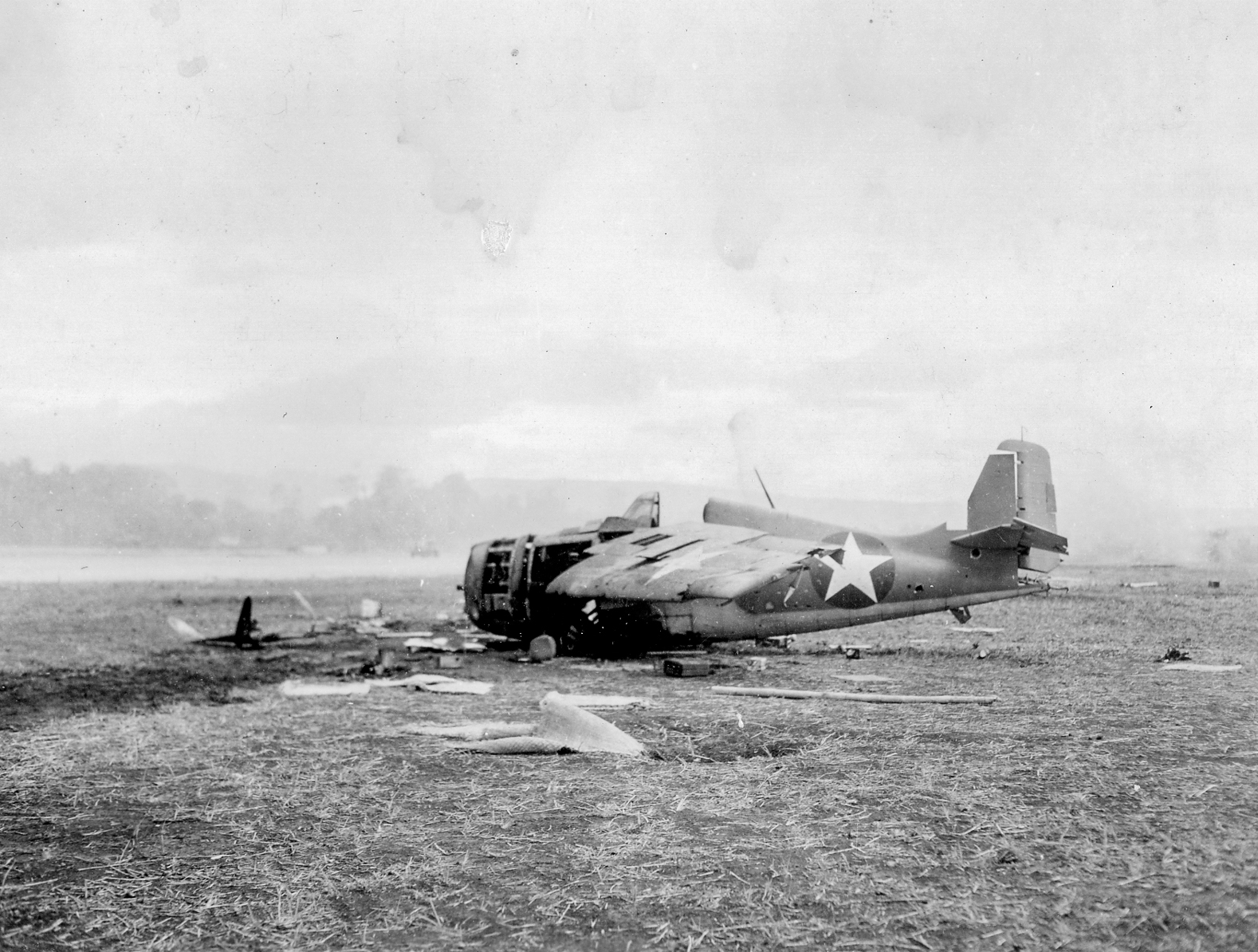
The Grumman F4F Wildcat earned a reputation for ruggedness and pilot survival that was justly deserved. The aircraft it replaced, the F2A Buffalo, did not have an armored slab that extended above the pilot’s shoulder level, so when the USMC’s VMF-221 went into battle with the F2As at Midway, there was a lot of discussion among the pilots that they lost many of their squadron mates to cannon and machine gun fire that struck their heads.
The armor plate in the F4F extended all the way up to the pilot’s headrest, which at times allowed the Marine and Navy pilots to hunker behind it as a Zero they couldn’t shake hammered away at them. That slab behind their seat saved countless pilots in 1942.
However, in doing the research for “Fifty-Three Days on Starvation Island,” I discovered two weaknesses in the F4F that plagued the pilots flying daily combat operations on Guadalcanal in them.
First, taking hits in front of the windscreen along the top and upper sides of the cowling often severed the F4F’s main oil line. This caused a spray of scalding hot oil to pour into the cockpit from under the instrument panel, inflicting horrific burns on the pilot. John Lindley, a beloved and highly respected member of VMF-223 was wounded in this manner in late August on Guadalcanal. Several others were wounded in the same manner in the days that followed.
The oxygen system was the other weak point. The oxygen masks were poorly designed, the system was also poorly designed, and there were few replacement oxygen tanks in the South Pacific, and no way to refill them on Guadalcanal. Contaminated O2, faulty masks or just the poor design of the system contributed to the loss of quite a few Marine and USN pilots during the first fifty-three days of the air war over Guadalcanal.
Despite these issues, the Wildcat was a solid performer that gave America’s naval aviators a weapon that was capable, if properly flown, of beating the A6M Zero in air-to-air combat. It remained in production at General Motors facilities until the end of the war, despite being replaced by the F6F and F4U as the first-line carrier-based fighter in the Pacific.
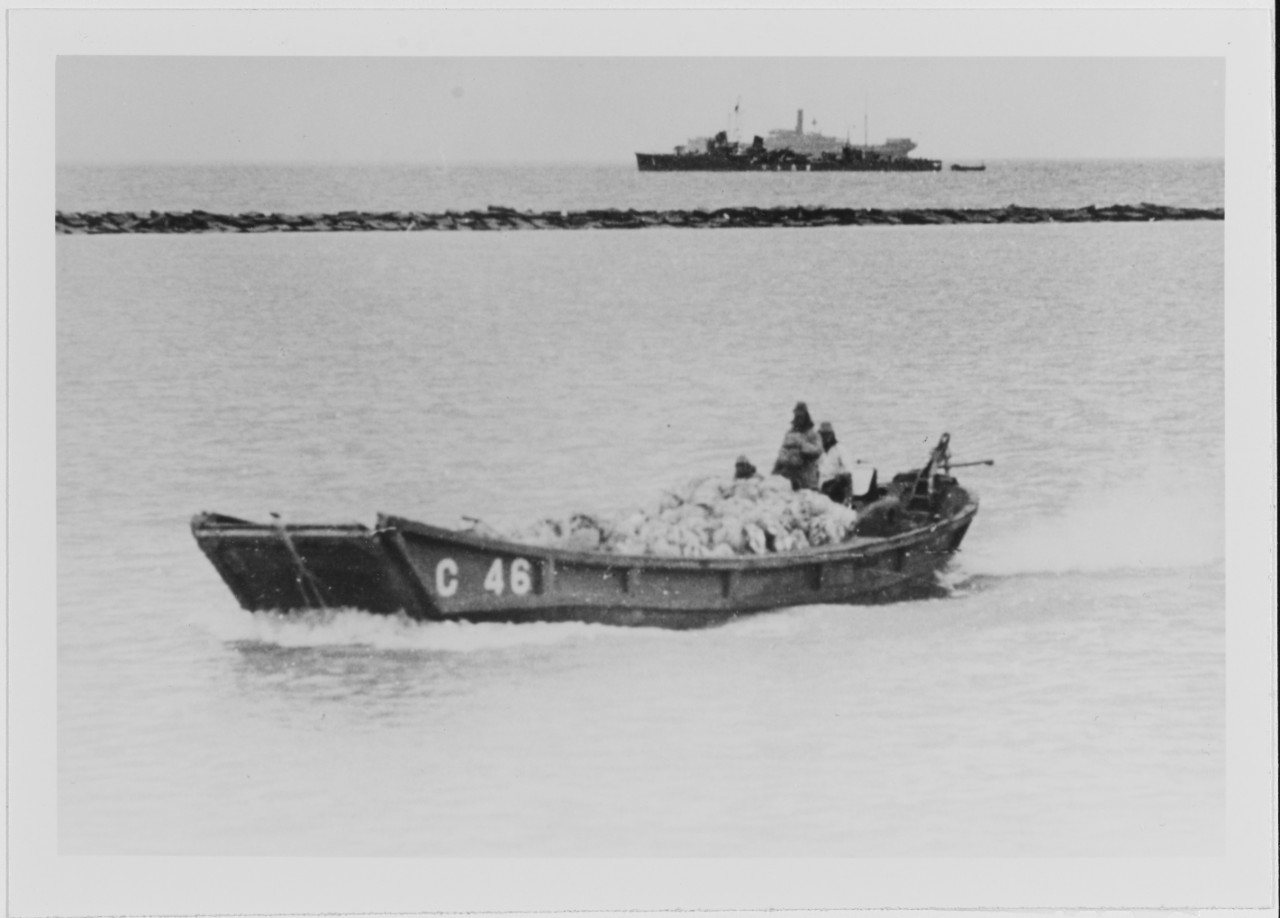
In early September 1942, the Japanese attempted to reinforce Guadalcanal using a technique dubbed “Ant Freight.” This required carrying troops to the Central Solomons aboard destroyers or transports, transferring them to tiny LCVP-like Daihatsu landing craft, or barges, and sending them hundreds of miles through rough seas down the Slot to Guadalcanal.
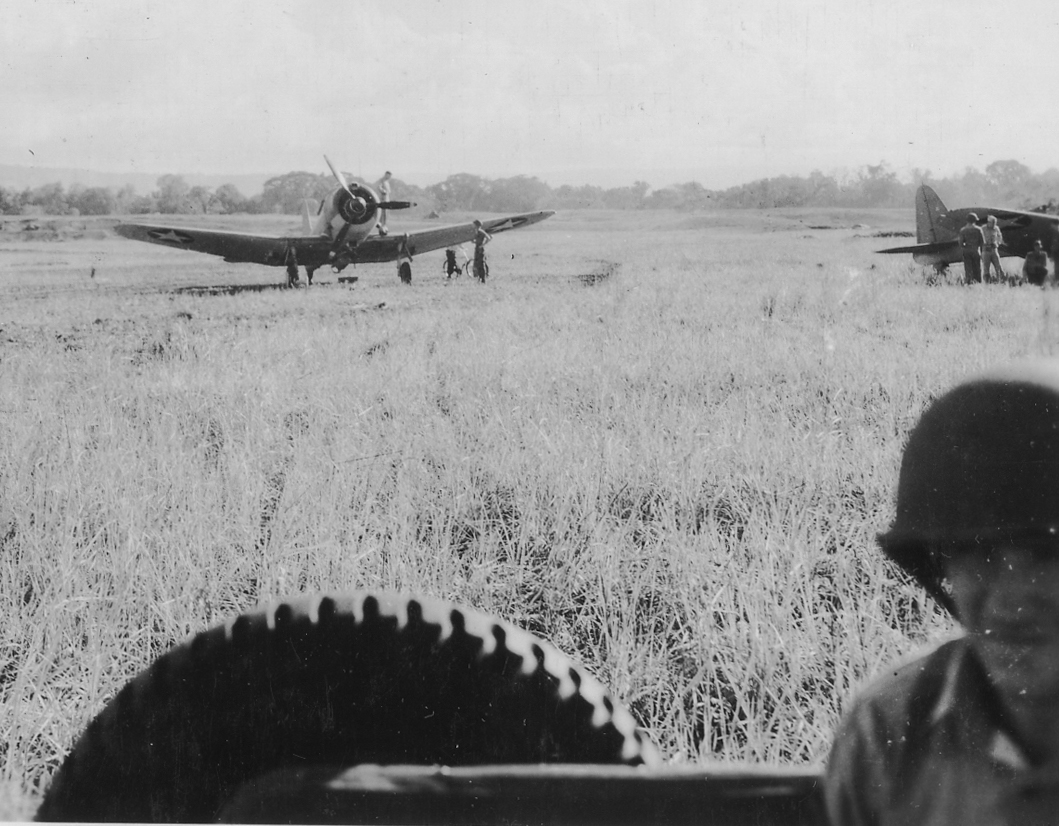
The SBD Dauntlesses of VMSB-232 and Flight 300 played a pivotal roll in disrupting these barge convoys. With most of their forward-firing .50 caliber machine guns non-functional, Richard Mangrum’s men used a “wagon wheel” tactic that required orbiting the convoys at low altitude while their rear gunners hammered away at the boats with their flexible mount .30 caliber Brownings. this required facing continuous light AA fire from the barges, and sustained fire on a target to do any real damage.
When Mangrum returned to the States, one of the things he hoped to see was a new generation of USN and USMC attack aircraft with plenty of functional forward-firing guns that could wreak havoc on such Japanese surface vessels.
As it was, day after day on Guadalancal, the SBDs, P-400s and F4Fs (when available), would hammer these slow moving vessels. It is estimated around 300 Japanese soldiers were killed in the attacks, and the barge convoys with hundreds more men ended up scattered, disorganized and devoid of supplies. One thousand men of Kawaguchi’s brigade of veterans finally did reach Guadalcanal, but were put ashore on the West side of the Marine perimeter, while the bulk of Japanese forces on the island were to the east and moving south with Kawaguchi to hit Edson’s Ridge.
Had those men reached Guadalcanal with the rest of their brigade in time for the Battle of Edson’s Ridge, the outcome of the campaign might very well have been a Japanese victory.
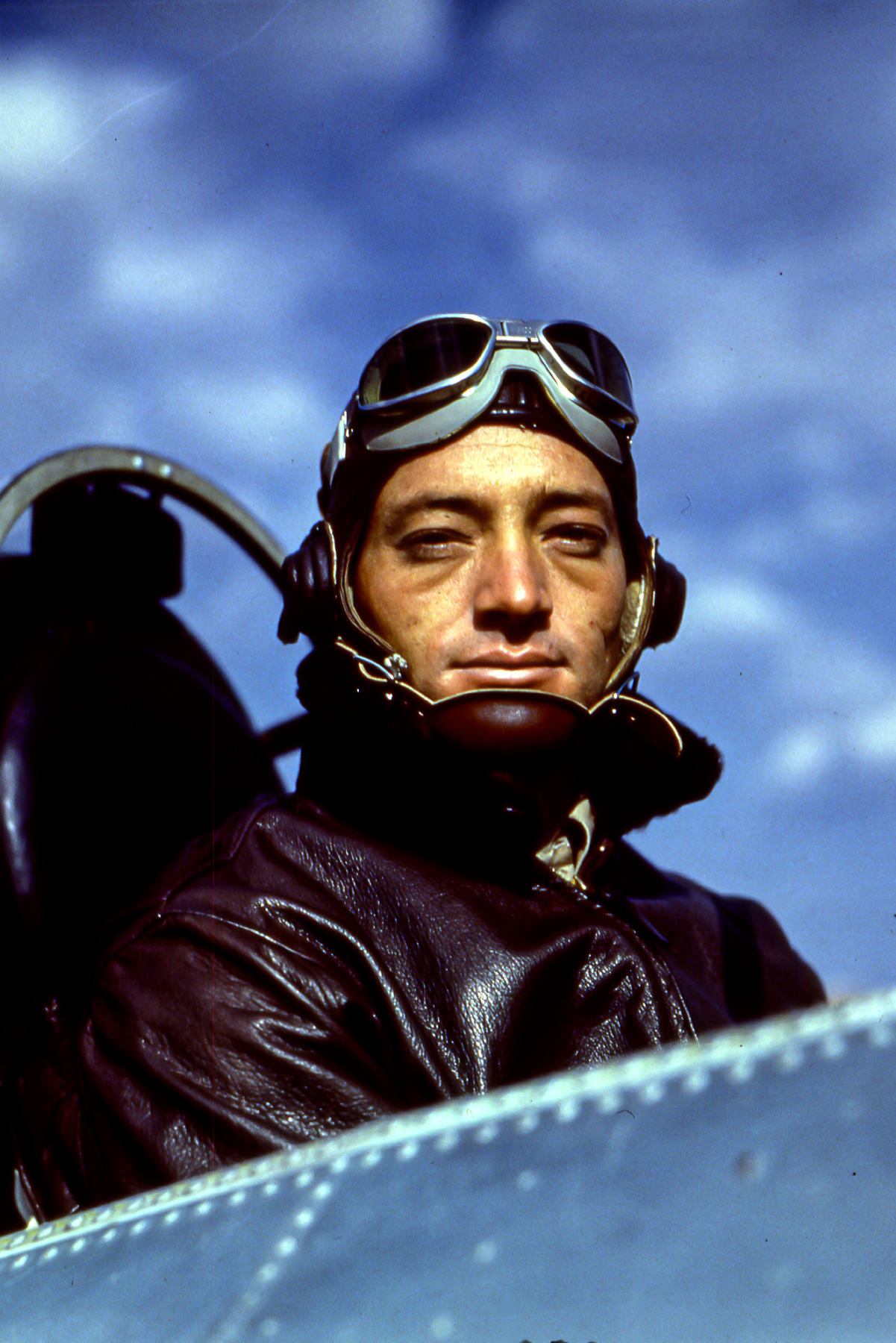
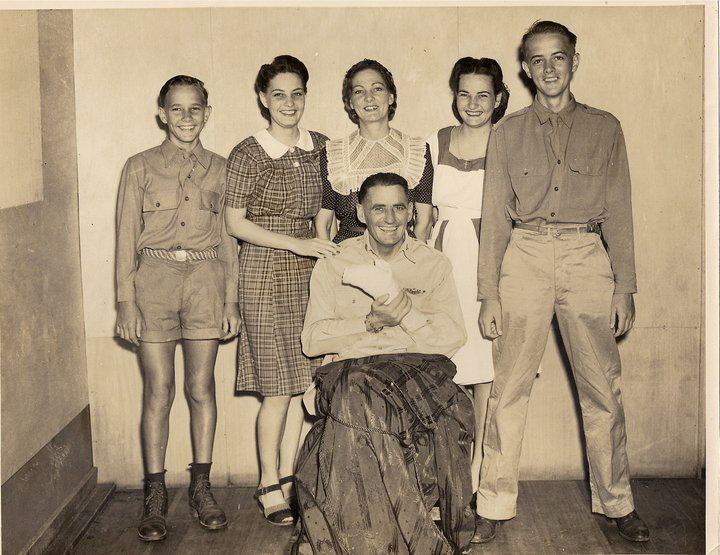
Two veterans of the anti-barge missions off Guadalcanal that September. At right is the skipper of VMSB 232, Richard Mangrum. At left is Arthur O’Keefe, one of Mangrum’s fresh-from-flight-school pilots assigned to 232 in July of 1942. Taken after the 1942 deployment. Photo via Mike O’Keefe.
Back in the fall of 2016, I recorded a series of clips of myself in the Oregon Cascades reading excerpts from Indestructible, the first book I wrote for Hachette. Indestructible is the story of P.I. “Pappy” Gunn and his family during the Pacific War, and Pappy’s frantic efforts to liberate his wife and children from Japanese captivity in the Philippines.
Interviewing Nathan Gunn, Pappy’s youngest son, in 2014-15, the story I read in this clip came up. We talked about it at length. Neither of us ever figured out what happened to the boy in the leg braces, and I still wonder if he made it through the war and the final weeks before liberation.
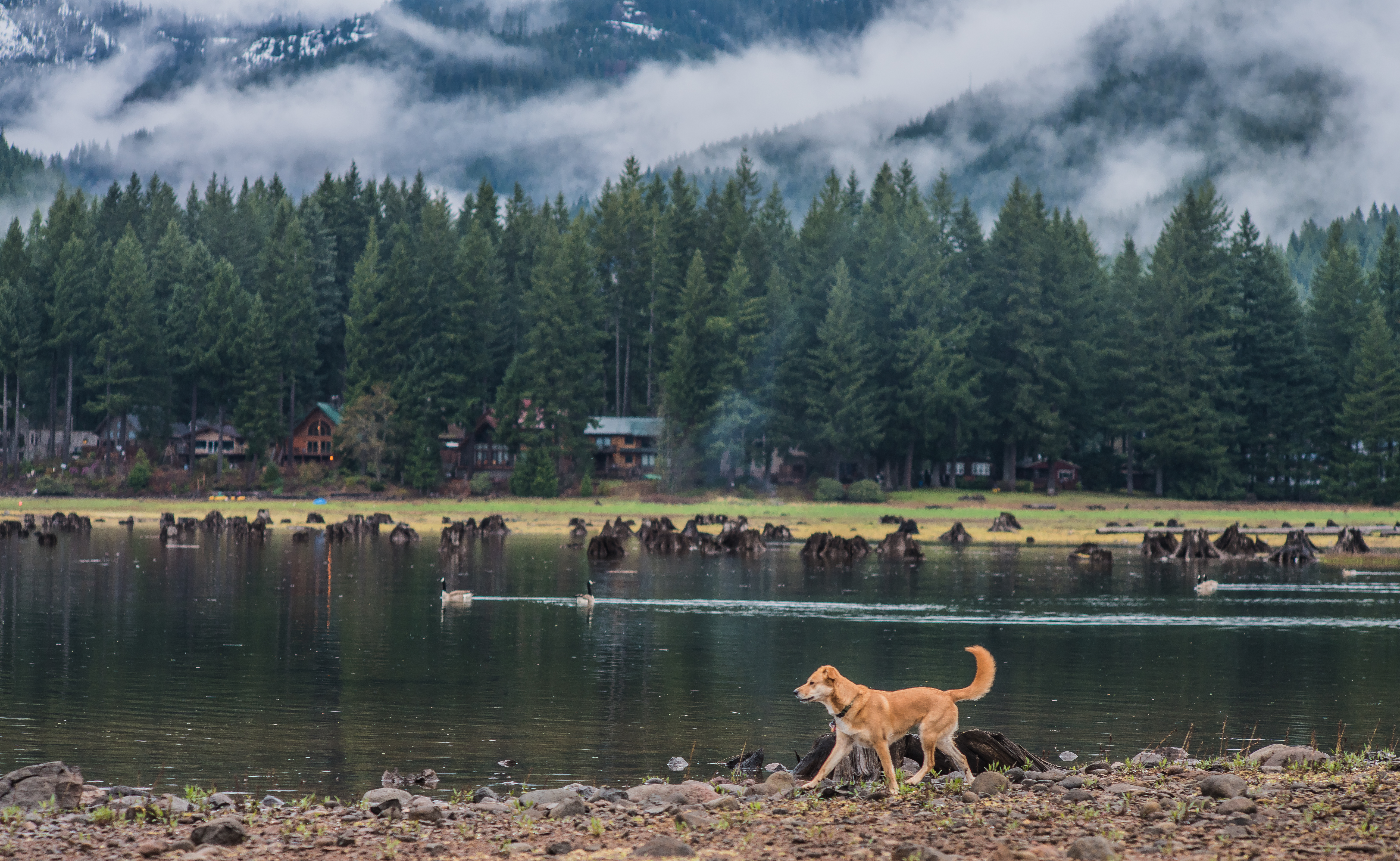
Writing military history from the perspective of personal experiences–not the macro level grand strategy & movement of armies or navies, but how such things impacts human beings caught up in such machinations– it takes a lot out of me, especially since we lost Taylor Marks in Iraq in August of 2009. The pain families and friends go through after the contact team arrives in their community is one I know all too well. To counter the rugged subject matter, I write in the woods above a lake in the Oregon Cascades. There’s something about our forests and mountains that is just chicken soup for the soul.
I never posted these little clips–too self conscious at the time. Eight years later, I look at them with a different eye. The bridge I’m on in this clip is gone now. In fact, two weeks ago, I was crossing the stream below it, slipped and knocked myself out. Kinda wish we still had the bridge. 🙂
Digby, the cat in the frame with me, was my writing cat from 2012 to 2017 when he passed while I was on the road doing research for Race of Aces. His full name was an homage to RAF Fighter Command during the Battle of Britain: Digby Baxter Boscombe Downe–all names of Fighter Command airfields during the summer of 1940. He and I and Gwen, my Jordanian dog, would spend weeks at a time up there in the woods, writing Indestructible. They ate very well as I often forgot dog/cat food. So, Gwen got a lot of pork chops and Digby dined on grilled chicken.
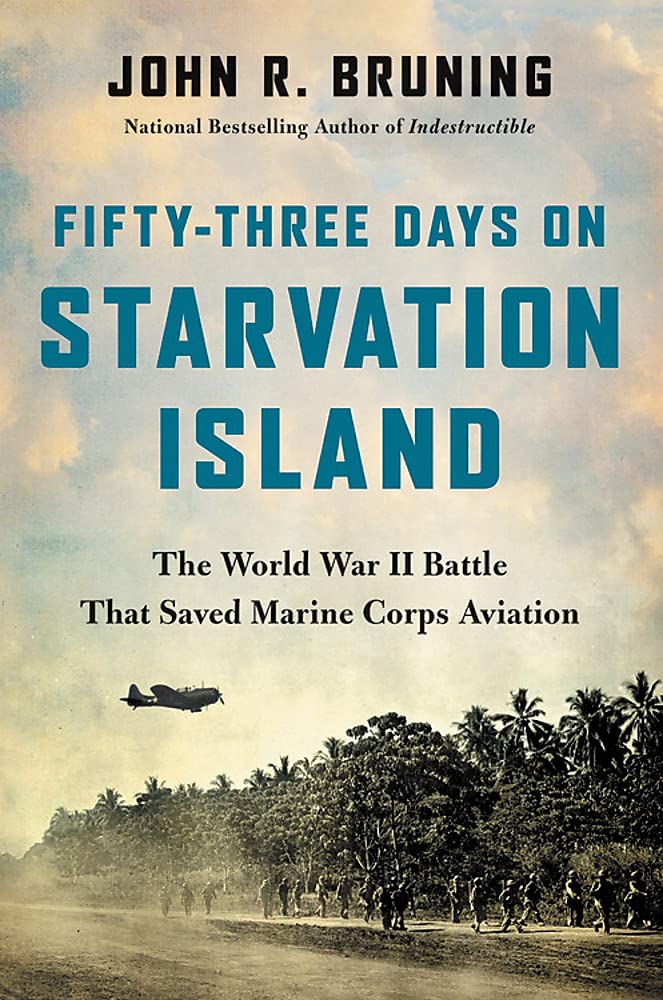
Thirty years in the making. One month until release day! I am sooo excited about this, my 25th book. 53 Days tells the story of the crucial early weeks of the air war over Guadalcanal, as seen through the experiences of three key leaders: John L Smith, Dick Mangrum and Marion Carl.
The concept for the book started in General Marion Carl’s living room in 1991, and was later fueled by a bucket list I made while stuck on the ground after the helicopter on I was on was forced down due to mechanical failure in the Hindu Kush.
Written through covid lockdowns, the Afghan Evac, two wildfires that burnt out my beloved writing area in the Cascades. What a wild ride to get it to market.
I’d hitched a ride with “Big Windy”–1-214 GSAB from FOB Shank to Kandahar in early November as they prepared to return to Germany with their four CH-47 Chinooks. My own plan was to throw myself on the mercy of the USAF and hopefully get a ride home to JBLM on C-17s. My then-wife, Jennifer, had been diagnosed with cancer while I’d been embedded in Helmand Province with an engineer unit conducting route clearance missions. When I got back to Shank at the end of October, my daughter called me with the news.
I stepped off the Chinook I’d hitched a ride on and said goodbye to my Big Windy friends. Walking along the flight line for the PAX Terminal, I was in aviation buff paradise. All sorts of NATO aircraft were coming and going. Eurofighters, Chinooks, Hueys, etc.
The Big Windy guys had the BEST decor at Shank….
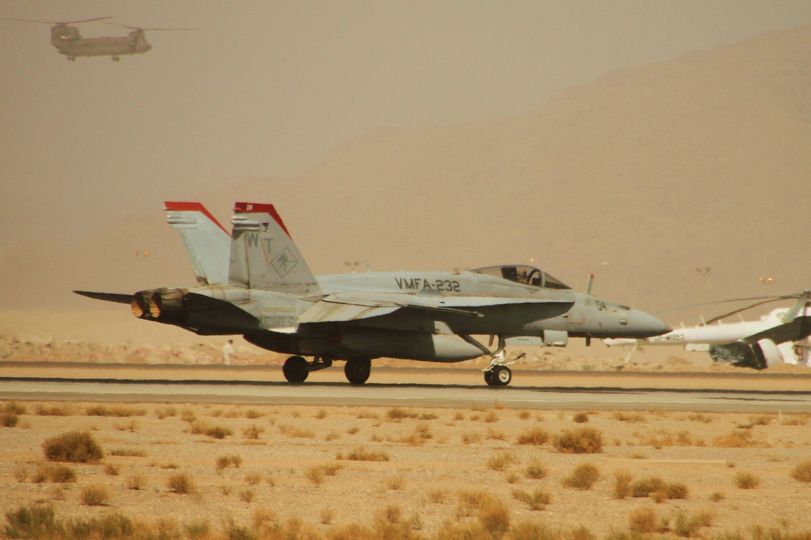
An F-18 began its take off roll and went blasting past me. I stopped to watch and realized the pilot & aircraft belonged to VMFA-232. The sight of this unit still in action hit my aviation historian heart center mass. Fifteen years before, Major Dick Mangrum’s gunner, Dennis Byrd, reached out to me while I was working as an aviation historian for Dynamix Inc., a computer game company. Dennis and I became friends, and I interviewed him repeatedly & corresponded with him for five years.
Major Dick Mangrum commanded VMSB-232 in the summer of 1942. He took the squadron into Guadalcanal as part of the first aviation component to reach Henderson Field. Dennis flew the entire 53 Days of combat VMSB-232 would endure there as Dick’s back-seater.
Earlier in the fall of 2010, I’d been aboard a Chinook forced to make a precautionary landing in the Hindu Kush. Every aircraft available came to our defense and orbited overhead, keeping us safe from Taliban attack. While we were down waiting for rescue, I made a mental bucket list of books I wanted to write if I survived and got home. Fourth on that list was getting the chance to write the story of John L Smith, Marion Carl and Dick Mangrum and their Guadalcanal Deployment with VMF-223 and VMSB-232.
Watching that F-18 take off at Kandahar on my last day in Afghanistan reinforced my intent to write about the guys who came before that pilot and set the bar for service so high during the pivotal weeks on Guadalcanal. VMSB-232 was virtually destroyed in the 53 days its men served on the island, and in October 1942, Dick Mangrum was the last pilot left from the squadron. Everyone else had been medically evacuated, killed or wounded.
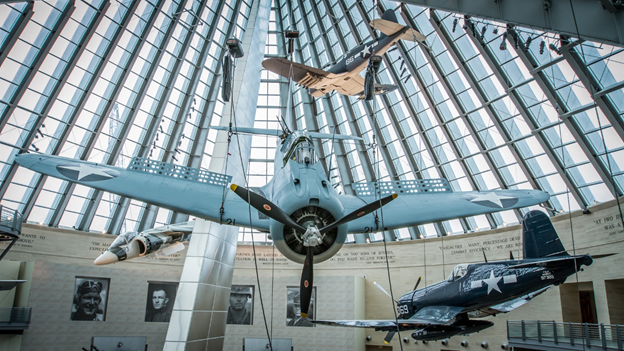
The USMC Museum in Quantico has honored Dick Mangrum & Dennis Byrd by painting their SBD Dauntless in their markings. It hangs on display now, a reminder of the heritage and tradition that VMFA-232 carries forward to this day.
Later, as I headed home aboard a C-17 to help take care of Jenn through surgery and radiation, I wondered if VMFA-232’s F-18s had covered our downed Chinook that day in September. I’ll probably never know for sure, but it was a comforting thought for sure.
Wanted to take a few minutes and write a note to explain my long absence here. The 2020s have been a wild ride for my family and myself. From the Goat’s Last Run just before the Covid lockdowns in 2020, to now, I wrote or ghost wrote three more books and had Race of Aces come out just as the pandemic struck the United States.
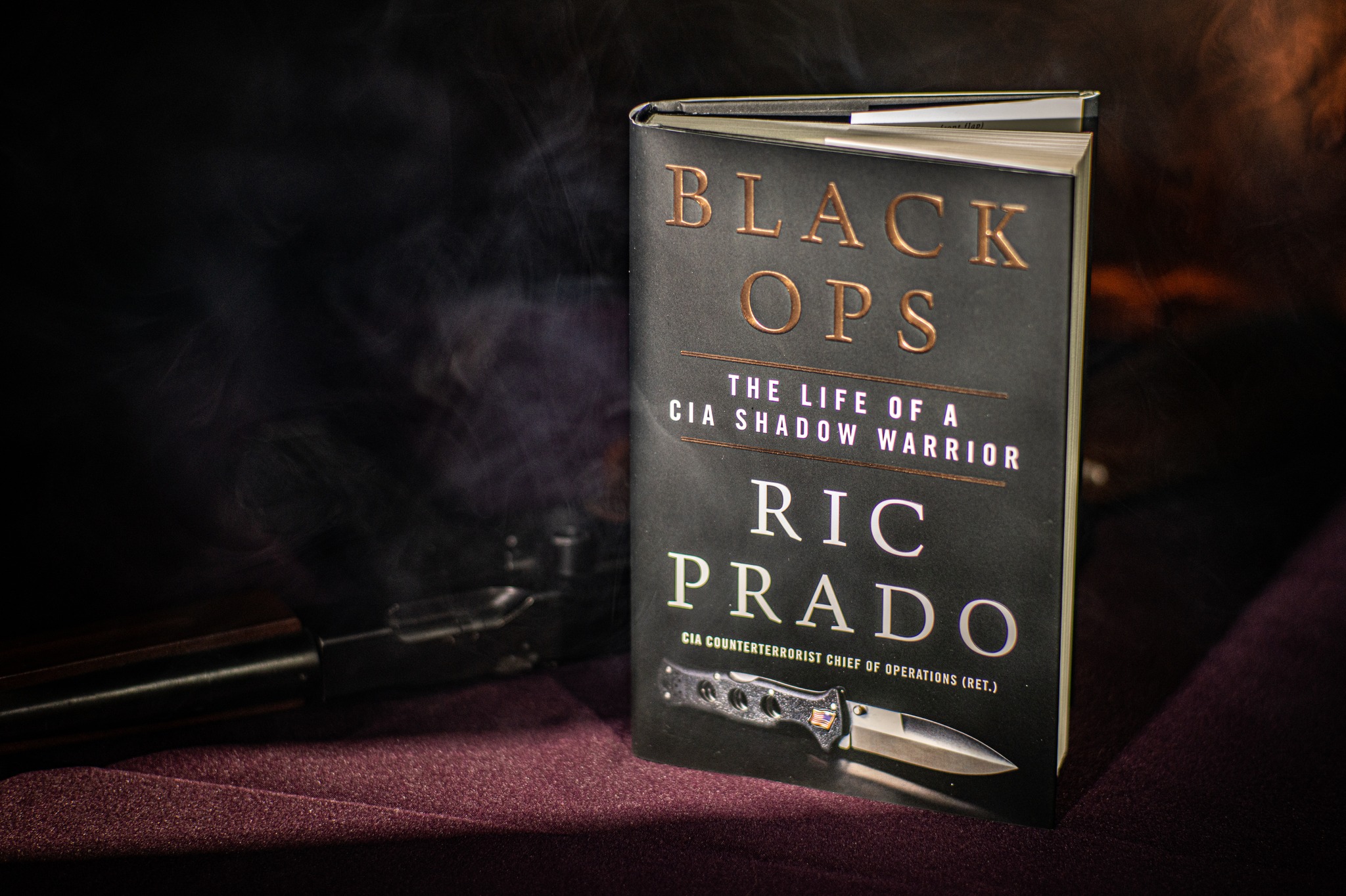
During the craziness of 2020-21, I helped Ric write his best selling memoirs of his time with the CIA. In the process, Ric became a dear friend.
In between the book writing sessions, I went off and played photojournalist again and got myself in all kinds of interesting and somewhat hazardous situations. I photographed some of the early post-George Floyd protests and their aftermath in Portland and Salem, then ended up in the middle of the Santiam Canyon Wildfire in September 2020. Miraculously, the beloved cabin I’ve used since 2009 as a writing spot survived, thanks to a team of smokejumpers who stopped the flames about 100 meters from the cabin complex.
Unfortunately, the devastation to the Santiam Canyon communities was catastrophic. Virtually all of the town of Detroit was destroyed, while Mill City and other small towns suffered terribly as well.
I spent the first day of the September 2020 Santiam Canyon fire photographing the Mill City FD fighting to save their town from complete destruction. Late that afternoon, one of the firefighters warned me the last road out was about to be cut by the fire. Not having any water or sleeping gear, I made the decision to try and get out. It was a near run thing.
A year later, the fall of Kabul and our precipitous withdrawal from Afghanistan caused a four month break in writing. It has seemed that every month has brought unique challenges, including a fatal plane crash that happened about 350 meters from our house.
Pretty sure I’m preaching to the choir here. All of us and our families have faced similar things. The 2020s were destined to be an outlier decade for everyone, I think.
Just before Christmas 2023, a light plane crashed in heavy fog just north of our home. Three Afghans who’d come to our town to continue their flight training, were killed in the tragic accident
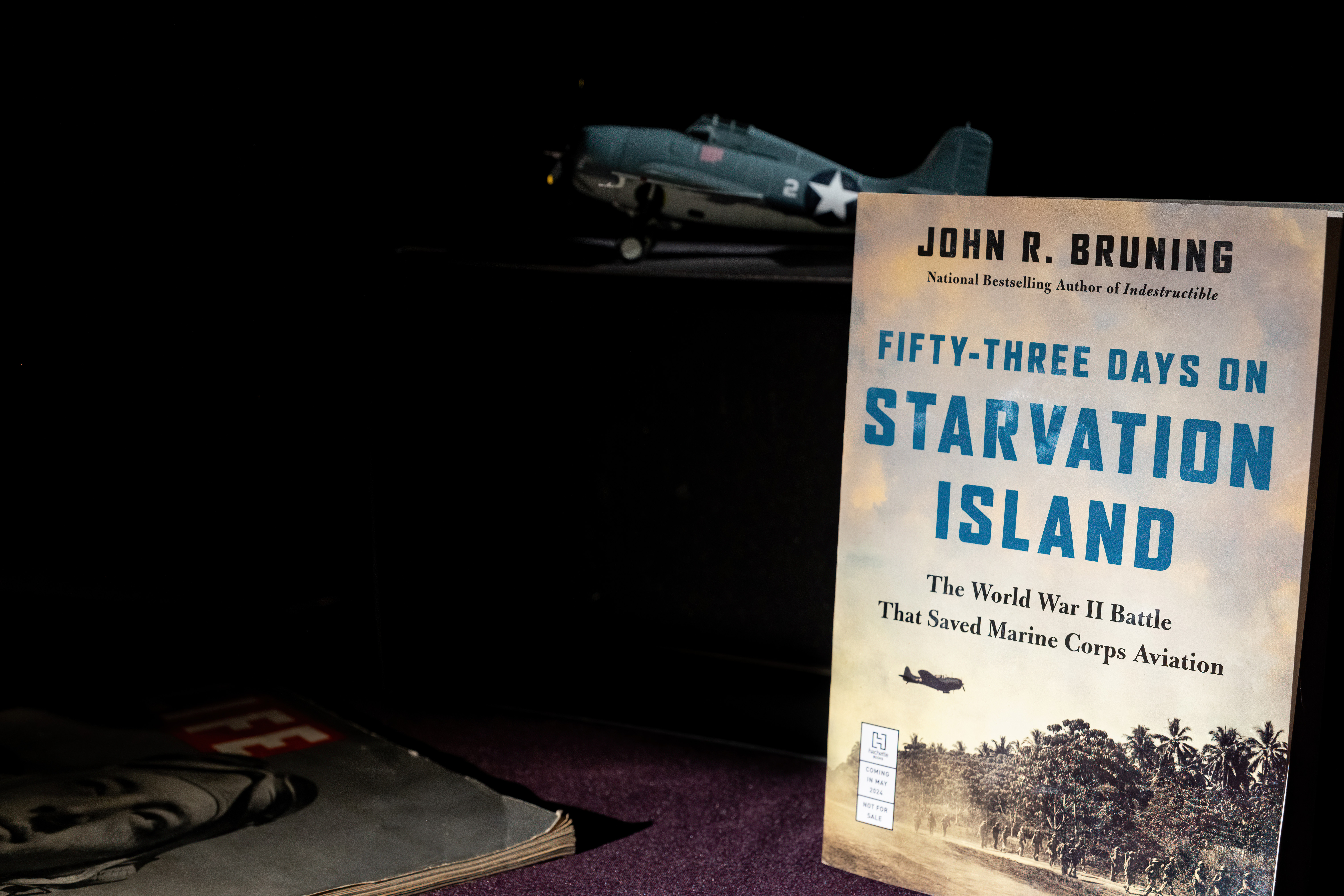
For the last two years I’ve been trying to catch up. At last, I have. Just in time, too, as my 25th book, “Fifty-Three Days on Starvation Island” is due to be released by Hachette on May 14th!
Fifty-Three Days takes a deep dive into the human cost of America’s first offensive of WWII, as seen through the eyes of the first two Marine aviation squadrons to join the fight. There at Guadalcanal in August 1942, less than fifty mostly-half-trained American aviators stood against the best and most veteran Japanese air units of the Pacific War. For fifty-three days, these men flew and fought nearly every day, while at night they endured shellings, naval bombardments, bombings, sniper fire, and infiltration attacks, all while eating starvation-level rations. The book centers on three key leaders–John L. Smith, Marion Carl and Dick Mangrum, who held these squadrons together through the most difficult days ever experienced by Marine aviation.
In the weeks and months to come, I’ll be writing here again and responding to the many kind emails I’ve received while I’ve been focused elsewhere. In short order, expect a story on one of the most unusual military sites in Oregon, a place that has generated countless urban legends since its construction during the height of the Cold War.
Anyway, wanted to check in and report that now that we’re over the hump, I’ll be devoting time here again at last. Stay tuned for some fun stuff ahead!














 The American Warrior