
December 1944
Ardennes Forest, Belgium
At the outset of the massive German offensive in the Ardennes Forest in December of 1944, many American units were overrun and destroyed. On the north side of the breakthrough, the 1st and 2nd Infantry Divisions both made epic stands that prevented the Germans from opening more routes through the Ardennes. Their dogged defense of the north shoulder became one of the critical components to eventual victory.
This is the story of one battalion’s role in the defense of the north shoulder.
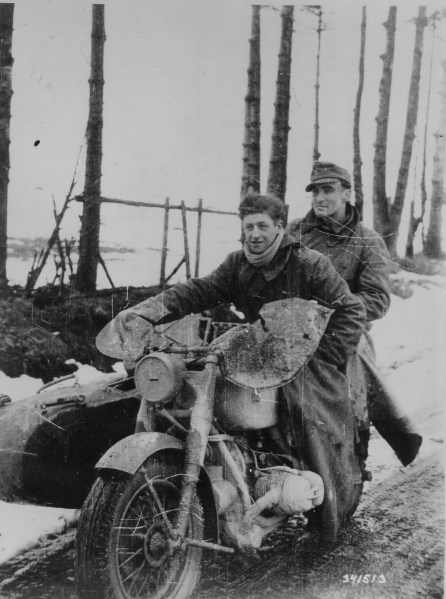
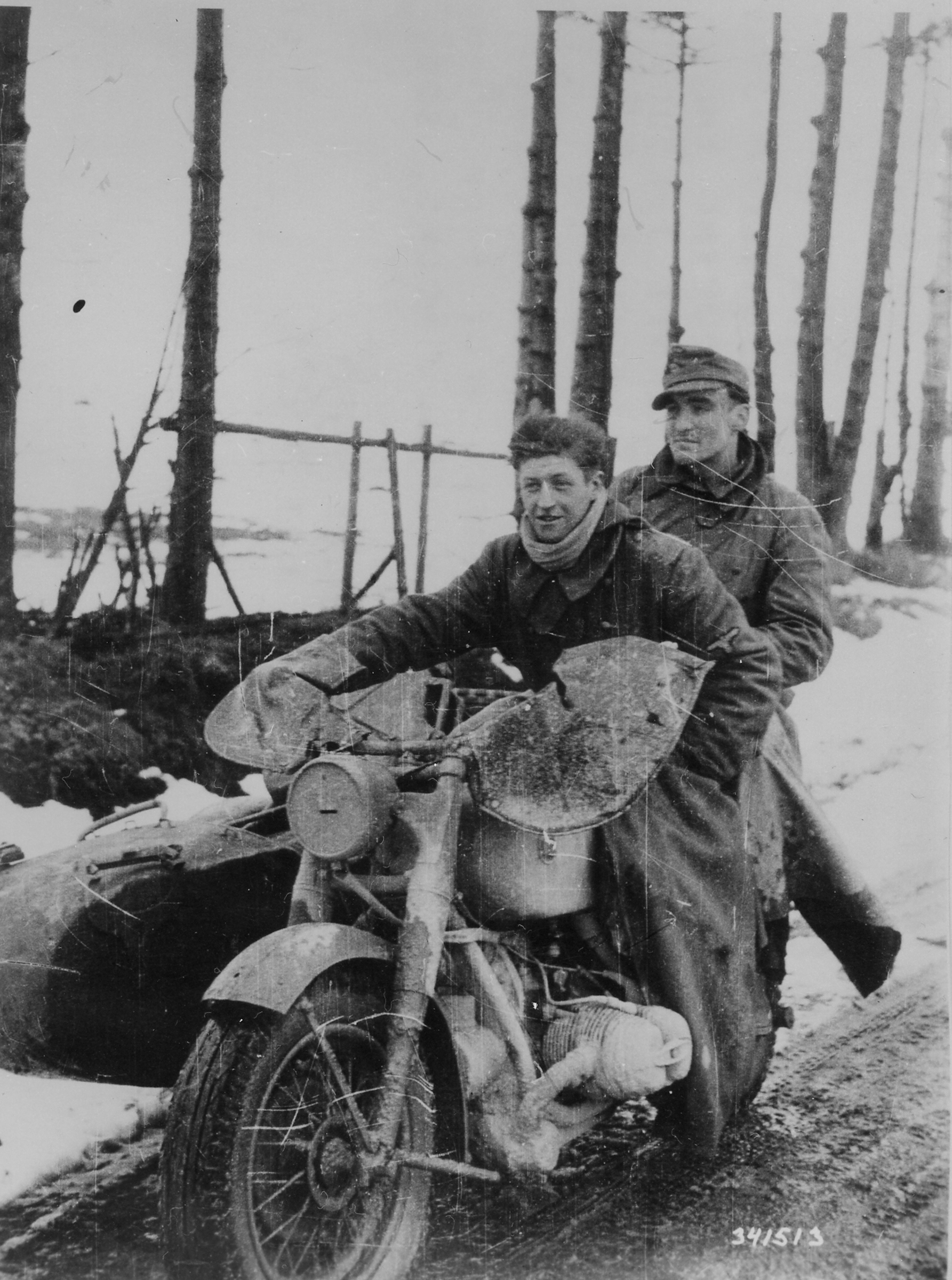
Elements of a Waffen SS reconnaissance company move through the Ardennes.
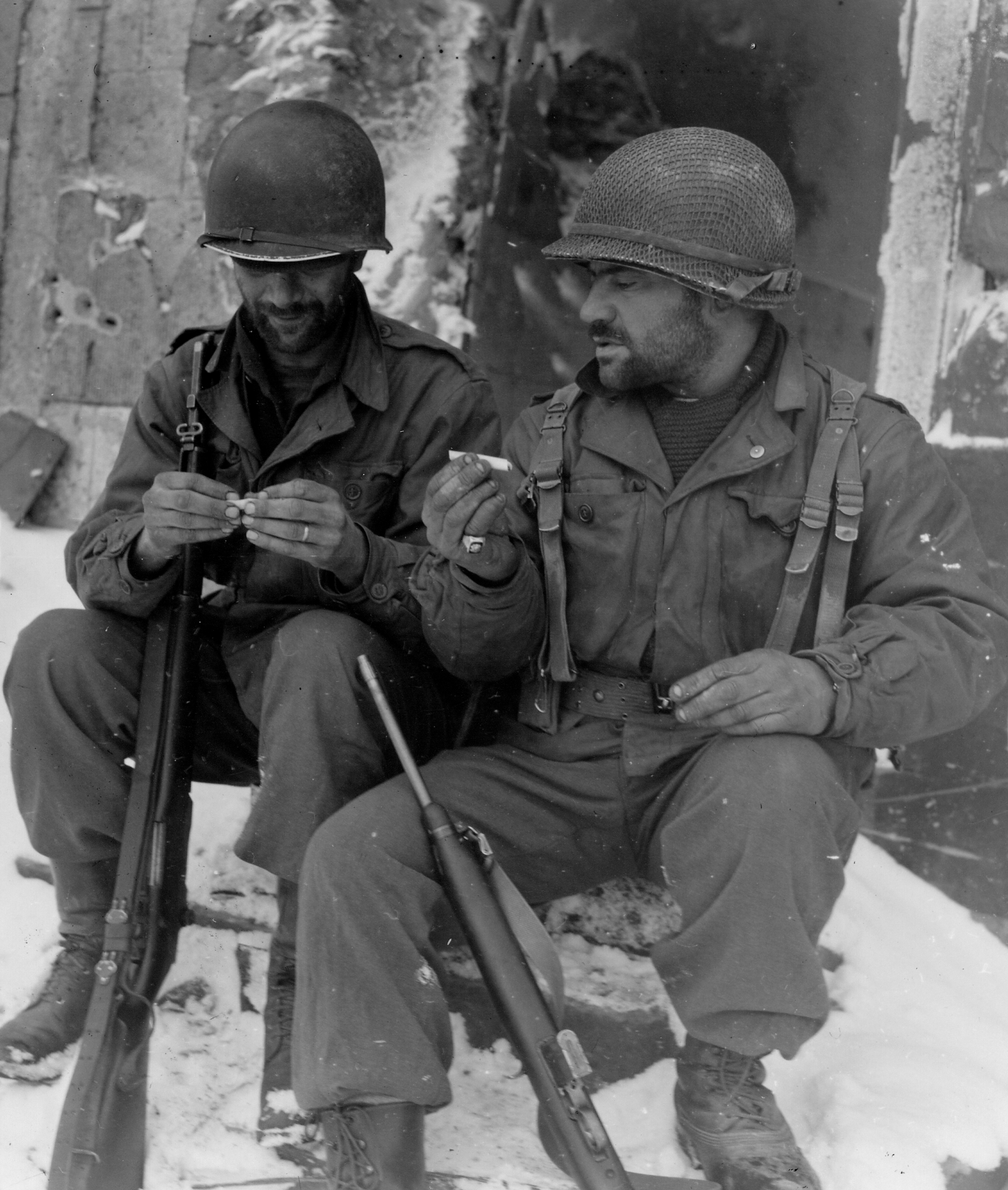
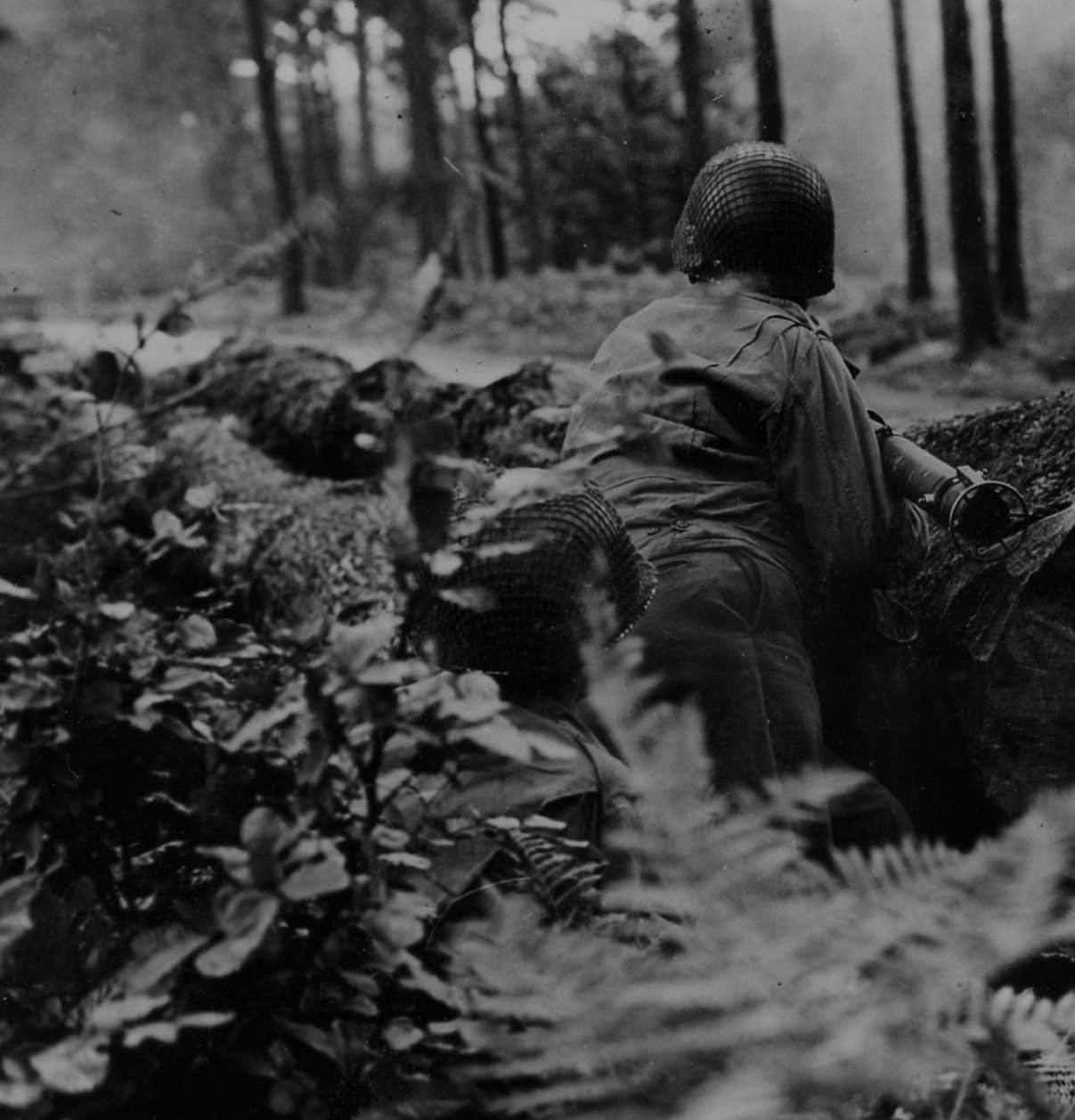
After the initial German onslaught on December 16, 1944, the 2nd Infantry Division and the battered 99th tucked themselves tight against the base of Elsenborn Ridge and dug in deep. This presented no easy task. Frequently, the first foot of soil was frozen solid, and hacking through it required arduous labor from the perpetually exhausted and sleep deprived GI’s. Worse, once down past that frozen layer, the men frequently struck ground water. When they had time, they built their foxholes with steps on either side so the men could sit or sleep above the muck and water at the bottom of their holes. The best holes were three or four feet wide, six feet long and four or five feet deep. When there were engineers around, they made sure the infantry had an easier time at preparing their positions. Rifle shots into the ground would open a divot in the frozen ground that the engineers would stick explosives into, then set them off to blast a crater that the GI’s could then flesh out into a foxhole.
As the two divisions prepared their positions, the men learned that they couldn’t stay immobile in their foxholes for long. To do so invited frozen limbs. Some of the men used this as an honorable way out of the front lines. They would deliberately stay in place for five or six hours at a stretch until their legs began to freeze. Then they’d be evacuated, much to the disgust of the rugged veterans who knew the score.
Forty five hundred yards from the anchor of the 2nd ID’s southern flank stood the small Belgian town of Butgenbach. Here, the battered 26th Infantry Regiment—part of the storied Big Red One (1st ID)—took up positions to protect the flank and rear of General Robertson’s men.
The war had not been kind to the 26th Infantry Regiment. It had fought in North Africa and Sicily before landing at Omaha Beach on D-Day morning. Hard fighting in the Normandy hedgerows had followed, and even the breakout did not offer any relief. The regiment was flung into the Hurtgen Forest, then into the Roer dam offensive. By the start of the Bulge, hardly any veterans remained in the regiment. Its infantry companies were under strength and composed of about ninety percent green replacements. In 2-26, the battalion could count on only seven officers who had been in the unit prior to December 1st.

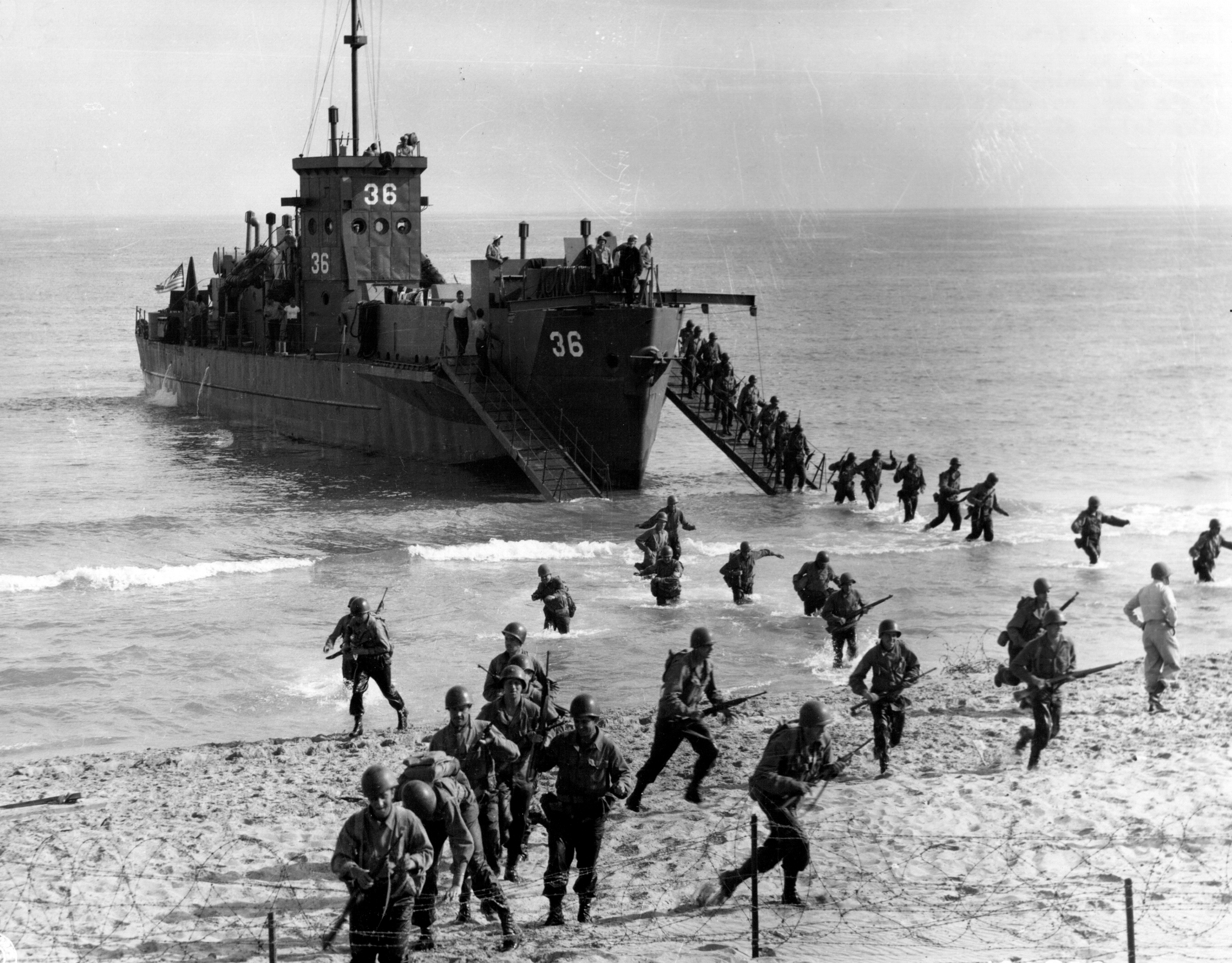
The Big Red One hits the beach during Operation Torch, the invasion of North Africa.
The Blue Spaders, as the 26th was known, were in for another epic and sanguine moment in a history full of both as they dug in and reinforced their foxholes with tree limbs and sand bags. The few veterans left in the regiment made sure the new guys dug deep and camouflage their fighting positions well.
The 2-26 gained the toughest defensive assignment. They were pushed out in front of the rest of the unit and deployed behind Dom Butgenbach along the Malmedy Road—which in German terms was Rollbahn B and of critical importance to the success of any breakthrough. The battalion commander, a Ph.D graduate from Clemson named LTC Derill Daniel, anchored his left flank on a small lake that stretched north to the edge of the 2nd ID’s anchor point at Wirtzfeld. On the right, however, there was little effective terrain to use as an obstacle. As a result, the 2-26’s flank dangled, exposed to any left-hook attacks coming from Bullingen a few kilometers down the Malmedy Road.
Unknown to Daniel and his Blue Spaders, they’d dug in astride the 12th SS Division’s axis of assault. They would be hit by everything the Hitler Jugen Division had left, as the 12th SS made one last attempt to force its way through to the west.
After the failure to break through the 2nd Infantry Division’s lines, the Germans shifted their focus to the west, sliding off the hard right shoulder of Gerow’s V Corps in search of a way around all the American power now protecting Elsenborn Ridge and the two key Rollbahns.
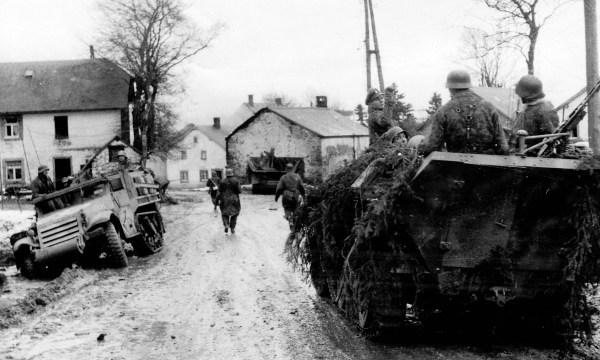
Waffen SS panzergrenadiers move past wrecked American equipment during the 1st days of the Ardennes offensive.
The Waffen SS soon discovered that Rollbahn B, the Malmedy Road, had its own problems. It was dirt and gravel, which meant in December, 1944, it had devolved into mud and ice. When the 12th SS shifted its axis of advance and put its medium and heavy tanks on the road, they churned up the road and sank so deep some of them rumbled along with mud all the way to their decks. The support vehicles behind them suffered all manners of breakdowns and bog-downs as a result. In Hitler’s mind, he saw a repeat of 1940 in the Ardennes. What he didn’t see, or factor into his plans, were the conditions of the road and the weight of the tanks in 1944, which was at least four or five times greater than the Panzer I’s and II’s of the 1940 campaign. That weight made a huge difference. Trying to cross bridges became problematical. The road network suffered, and the tracked vehicles ground the dirt ones into seas of frothy mud.
By midnight, December 20, the 12th SS had concentrated the remains of its panzer regiment, the 25th Panzer Grenadiers and the 560th Panzerjaeger Battalion in front of Dom Butgenbach. The
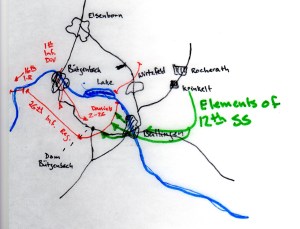
terrain on either side of the road proved to be too soft to support armor, so the armor would be restricted to a narrow front.
In pitch darkness, the panzers formed up on the road. Behind them, a battalion of dismounted infantry stumbled through the chilly night, checked their weapons and prepared to advance.

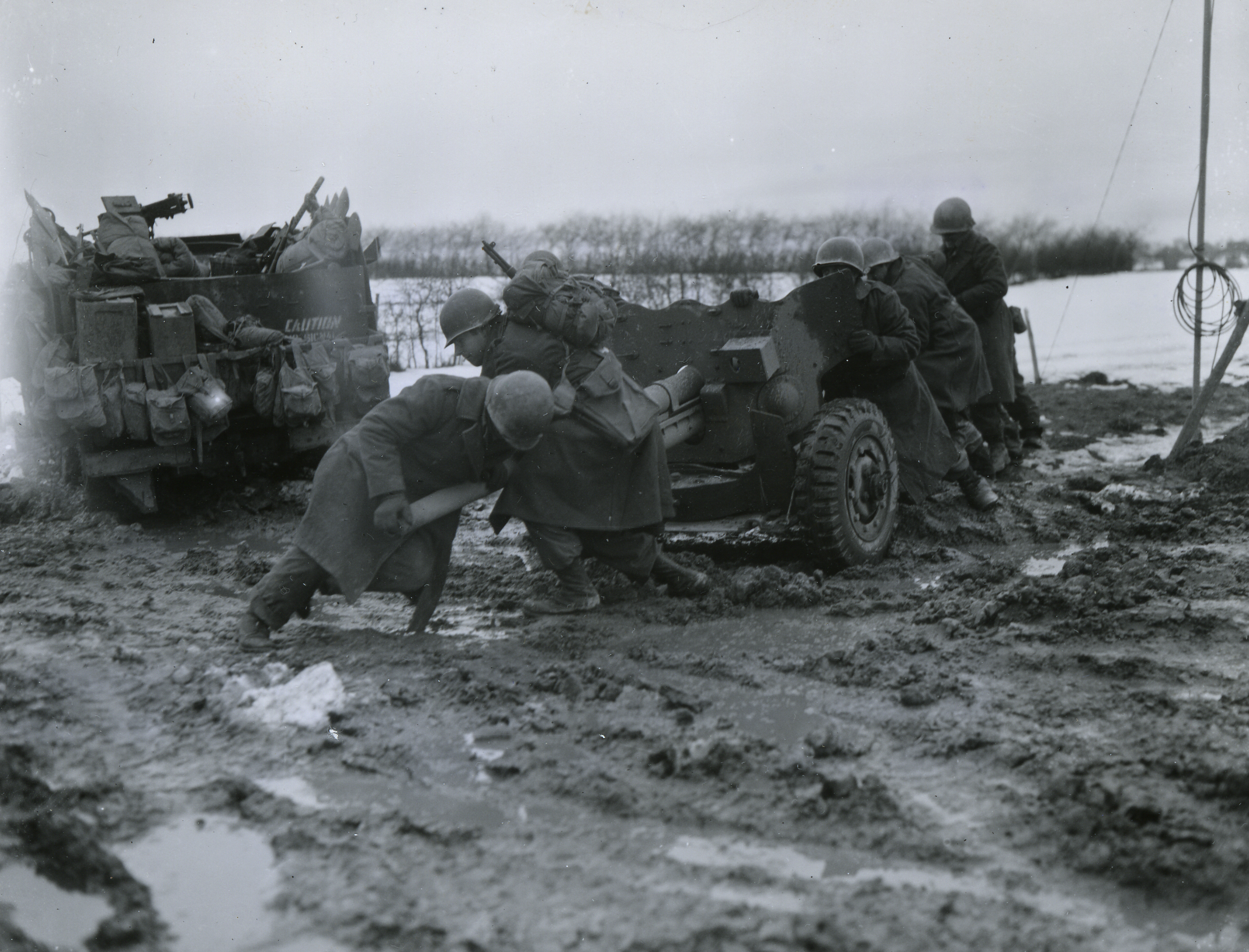
The Blue Spaders manhandle one of their 57mm anti-tank guns into position prior to the German onslaught. December 17, 1944.
Later that morning, they streamed up the road and ran headlong into 2-26’s F Company. A close quarters tank-infantry quickly developed. The German gunners managed to kill three bazooka teams and destroyed a machine gun section, but LTC Daniels had covered his front with well-placed 57mm anti-tank guns, which scored flank shots on a number of the panzers. At the same time, the battalion’s forward observers called massive fire missions, and the German infantry faced a gauntlet of steel and high explosives.
The attack failed. The Germans fell back, reformed and came again. This time, the Panzerjaegers—humpbacked Jagdpanzer IV’s—joined in the attack. Artillery snuffed the infantry, and the bazooka men and 57mm AT gunners knocked out at least eight tanks. During the fight, Sergeant Stanley Oldenski, who commanded a section of 57mm guns, sent most of his men out to hunt tanks with bazookas, keeping only Corporal Henry “Red” Warner as his gunner. Together, the two GI’s put four quick shots into a Jagdpanzer, setting it afire. Another one came in view, and they stopped it with two well-placed shots. Then their 57mm gun jammed. As they worked to clear it, another Jagdpanzer loomed before them. Rolling straight at the gun, with the intent to crush it and the two men manning it, the Jagdpanzer closed to less than thirty feet. Red Warner drew his pistol, swung out away from the gun and fired a single shot at the Jagdpanzer’s commander, who had popped out of the commander’s hatch to get a look around. The Waffen SS NCO flopped forward, half in, half out of the turret, blood pouring from his fatal head wound.
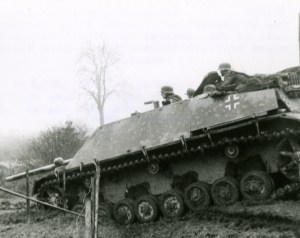
A Jagdpanzer IV on the move.
The loss of their commander prompted the Jagdpanzer to reverse and break contact. Warner ultimately destroyed three panzers himself, but was killed by tank machine gun fire a few days later. He received a posthumous Medal of Honor for his actions.
Once again, as the Germans struggled through the snow to their objectives, American artillery came into its own. The flexibility of the fire direction system, the ability of the gunners to launch Time on Target missions–where every shell fired from multiple battalions landed on the Germans at the same instant–and the skill of the forward observers all combined to make American artillerists the best on the planet in 1944.
Here, around Dom Butgenbach, they more than demonstrated their skill again. Time after time, the 2-26 was shielded with a ring of high explosives, protecting the undermanned and hard-pressed infantry platoons from the full weight of the German assault. It allowed one battalion of Blue Spaders to stop the better part of an SS Panzer Division for two days.
Their positions, known among the men as “The Hot Corner,” were littered with dead and dying SS troopers by the end of the 20th. About a hundred and eighty died in the second attack along, over two hundred by the end of the 20th. Twenty-four panzers squat and menacing, burned or smoldered in the battlefield. This represented half the division’s remaining armor assets.

One of the Panzer IV’s knocked out by the anti-armor teams of the 1st Infantry Division.
Night brought no reprieve. At 0130, December 21, three battalions of panzer grenadiers, supported by the remaining tanks in the division, charged forward through the black, foggy night. The Blue Spaders waited until they came within point blank range. Then, machine guns barked. Bazaooka men fired at the blue-red exhaust signatures of passing Panthers and Jagdpanzers. The 57mm crews, hard hit from the past few days, laid perfect ambushes and scored devastating flank shots.
The 1st Division’s fire control center gained access to no fewer than 348 guns from 23 battalions of artillery, all emplaced around Elsenborn Ridge. This highest piece of real state in Belgium had become the summit of American firepower on the North Shoulder, and it was turned on the Germans like a fist of God.
The curtain became a wall. The wall became a divide. The battlefield in front of 2-26’s foxholes churned white and black as the 105’s and 155’s demolished the landscape.
No army could stand such an onslaught. The SS troopers melted away. The Germans switched tactics. At 0300, they laid their own steel curtain down on LTC Daniel’s men. Nebelwerfers—the multiple rocket launchers that made such dreadful howling noises that the men called them “Screamin’ Meamies”—formed part of this artillery assault. They wailed out of the black sky and exploded throughout the battalion’s lines. Heavy and light guns joined with mortars to tear up all the communication wires between the companies and the battalion command post. The men went to ground and hid deep in the protective sanctuary of their snow-lipped foxholes. The German shellfire knocked out heavy weapons, took out machine gun nests and 57mm AT guns, and demolished sections of 2-26’s main line of resistance.
The barrage continued almost until dawn. The GI’s in it could only pray that the random nature of this means of death would spare them.
At 0500, the Germans tried again. Supported once more by tanks and panzerjaegers, the Hitler Youth Division charged to its doom. The American forward observers quickly called in every available gun. The 1st ID’s fire control center coordinated twenty three battalions at once. The fist of God fell upon the Nazis, and the morning’s light saw carnage and chaos engulf their ranks.
In places, determined SS men followed a few courageous tankers, and they succeeded in reaching 2-26’s right flank. The tanks rumbled down parallel to the American lines, shooting down the BAR teams, killing the machine gun crews, and causing havoc. In their wake, the SS troopers followed, sub machine guns chattering.
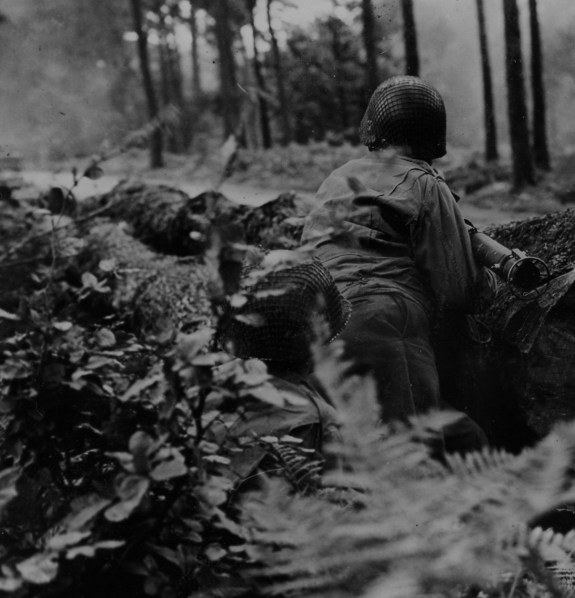
The 26th Infantry’s bazooka teams took a heavy toll of German armor at the Hot Corner.
The battalion mortar platoon frantically laid down fire. Some of the tubes launched 750 rounds each that morning. Elsewhere, the FO’s saw the collapsing right flank and focused their wrath on the Germans there. Nevertheless, about a company-sized armor element managed to break through and push toward their American rear. They were met by a track from the 634th Tank Destroyer Battalion, which killed seven German panzers as they rumbled over a ridge. Two Shermans from also joined in the fight, each taking out a panzer before they were blown to pieces by the superior German guns.
The armored thrust reached LTC Daniel’s command post, but the battalion’s mortar teams pummeled the approaching German tanks. Then a pair of M36 Jacksons—90mm armed tank destroyers—rolled into the battle and polished off the last elements that achieved the breakthrough. It had been a near-run thing. Colonel Daniels later wrote, “…We wouldn’t be here now without them (the artillery support).”
For eight hours, the battle ebbed and flowed. A quarter of the Blue Spaders fell. The American guns dropped no fewer than 10,000 shells on the Hitler Youth Division. The men in the foxholes repelled assault after assault. In one case, a full company of panzer grenadiers attacked a dug in platoon from 2-26. A furious artillery fire mission, perfectly timed, shattered their attack and saved the desperate GI’s.
Finally, as the sky darkened once again, the 12th SS threw in the towel. The SS men had suffered almost a thousand casualties and had lost forty-seven tanks and AFV’s. Elsenborn Ridge would never fall to the Germans.
For more about the Bulge, please see: http://www.amazon.com/The-Battle-Bulge-Photographic-American/dp/0760341265/ref=sr_1_1?ie=UTF8&qid=1387236781&sr=8-1&keywords=bulge+bruning











 The American Warrior