World War II in the Pacific


Lethal Minds and the Unintroverting of a Writer

If you’ve been following me on FB or any social media site for awhile, you know I don’t really talk about myself or my own life much. I’d much rather talk about the incredible people I’ve met or written about, or share silly cat/dog tales. Since coming back from Afghanistan, I’ve become a very private, insulated and hermit-like introvert.

The book signings for 53 Days reminded me that I need to actually get out into the world, talk with my audience and stop living under a rock.

Right as I came to that realization, Worth Parker over at Lethal Minds & the Duffle Blog, reached out and asked if he could send me some interview questions about my life in the writing biz.

So, I need to thank Worth for this opportunity to be something other than a person who is most happy in a cabin in the woods with his dog and cat.

Also, I got to talk about my old boss, Damon Slye, who successfully drummed out of me every bit of the academic writing style I was taught at the U of O. “Look and feel John, look and feel….”

The interview is here:

https://lethalmindsjournal.substack.com/p/12-questions-with-a-writer-john-r
Categories: World War II in the Pacific, Writing Notes | Leave a comment


The Armchair Commanders Podcast

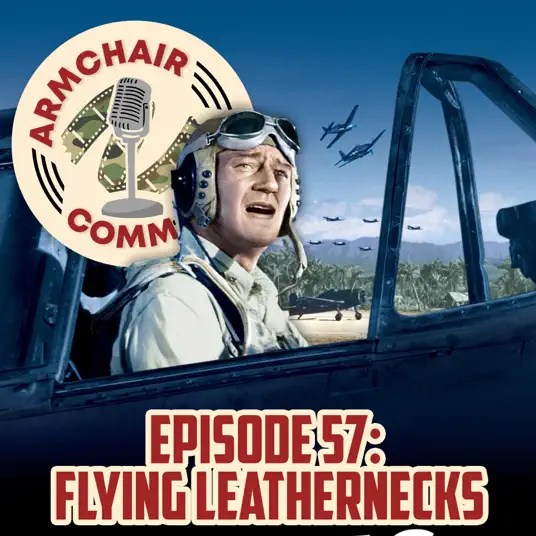
Got to spend a bit of time with Jon & Jack on the Armchair Commanders Podcast and chat about the 1951 classic, “The Flying Leathernecks.” John Wayne, John L. Smith and Hollywood’s version of Guadalcanal!

Thanks guys for having me on!

https://podcasts.apple.com/us/podcast/57-flying-leathernecks/id1687913907?i=1000658134144

Categories: World War II in the Pacific, Writing Notes | Leave a comment


The American History Gazette Podcast

Got to hang out with Jake Suggs the other day and talk about the amazing Marines & Americans who helped turn history’s tide at Guadalcanal. Thank you, Jake for the opportunity to chat about these men!

Jake runs The American History Gazette Podcast, and is one of the next generation of historians who will be carrying forward the legacy and heritage of our nation. I love his podcast, it gives me hope that our past will not be forgotten in the future!

https://podcasts.apple.com/us/podcast/guadalcanal-the-battle-that-shaped-the-marine-corps/id1740424443?i=1000657857969

Categories: World War II in the Pacific, Writing Notes | Tags: , , , , | Leave a comment


John Wayne as John L. Smith

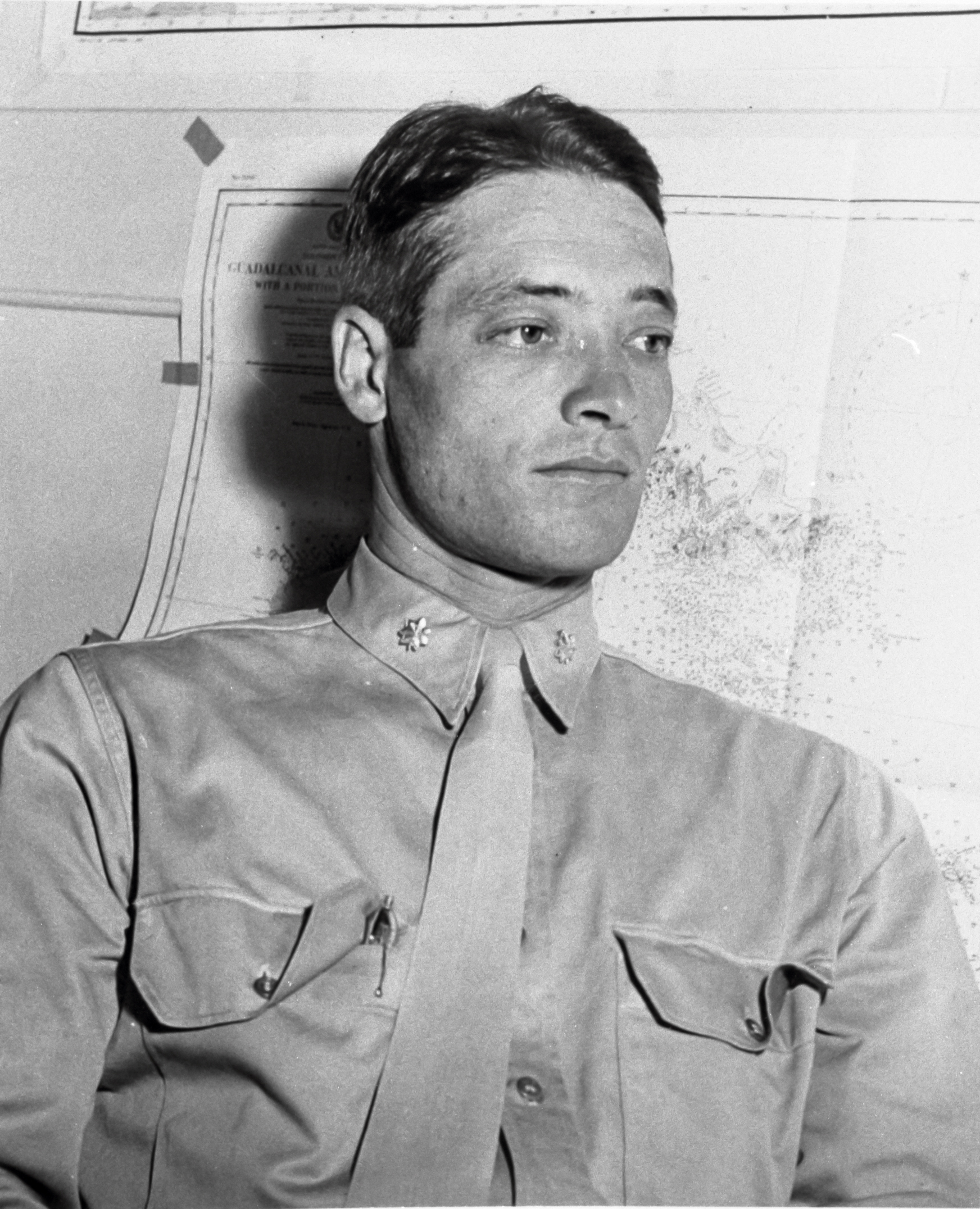
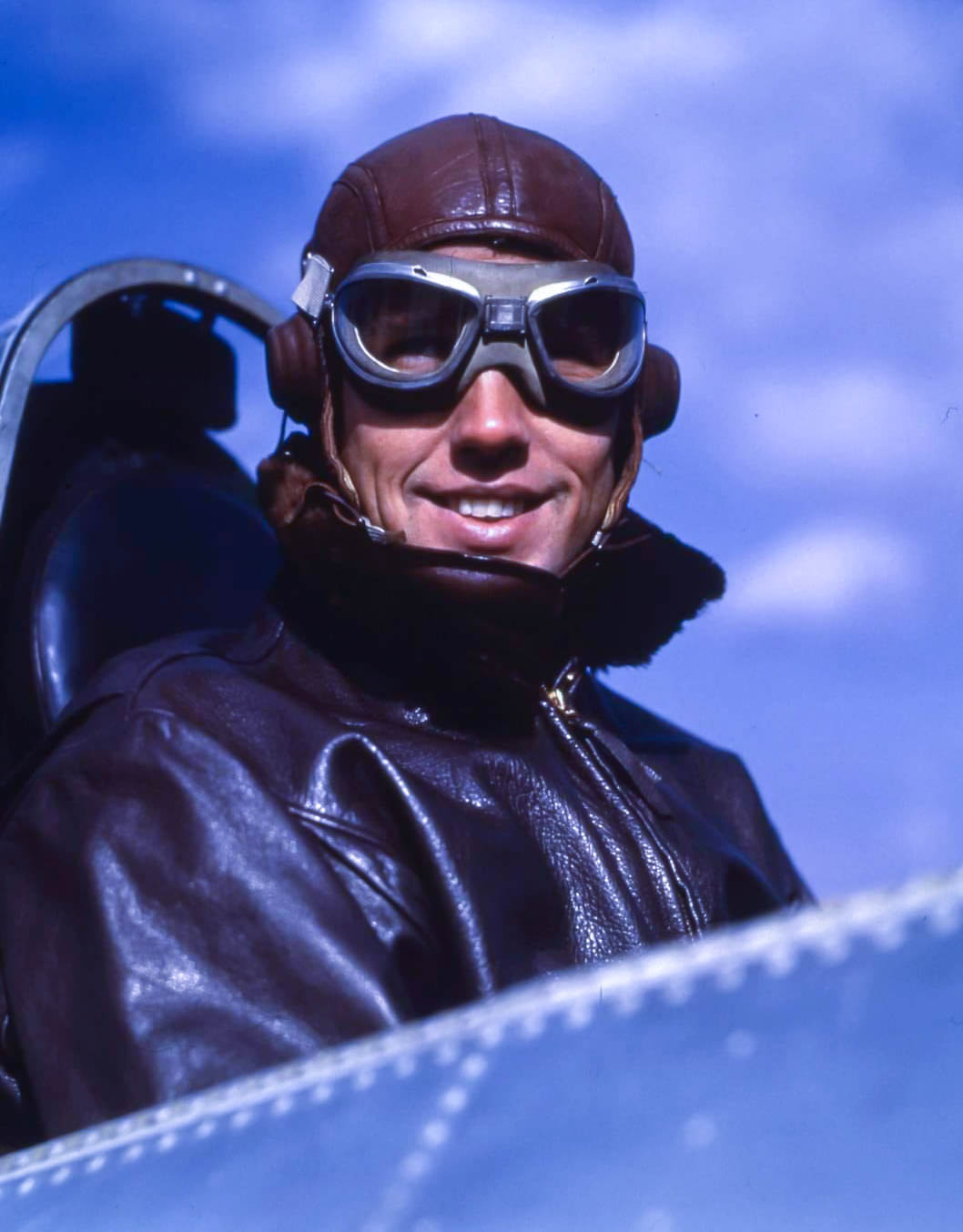
Major John L. Smith, skipper of VMF-223, America’s Ace of Aces in 1942, and one of the greatest Marine leaders of his era. Relentless, aggressive, fiercely loyal to his men, he is seen here in October 1942, just after arriving on Oahu from Guadalcanal. He was a man haunted by the deaths of the young pilots under his command, desperately uncomfortable with the media spotlight shining his way. A decade later, when Hollywood told John L’s story, John Wayne played the great Marine ace, turning him into a ruthless taskmaster whose men resented him.

In reality, the men of VMF-223 loved their skipper. He was demanding, emotional, prone to outbursts of anger, but so clearly loved & looked after his green 2nd Lts that they followed him into every fight for fifty-three of the toughest days any Marine squadron has endured.

The movie, which came out in 1951, is worth a watch. It contains considerable actual combat footage and gun camera clips, some of which no longer exists at NARA.

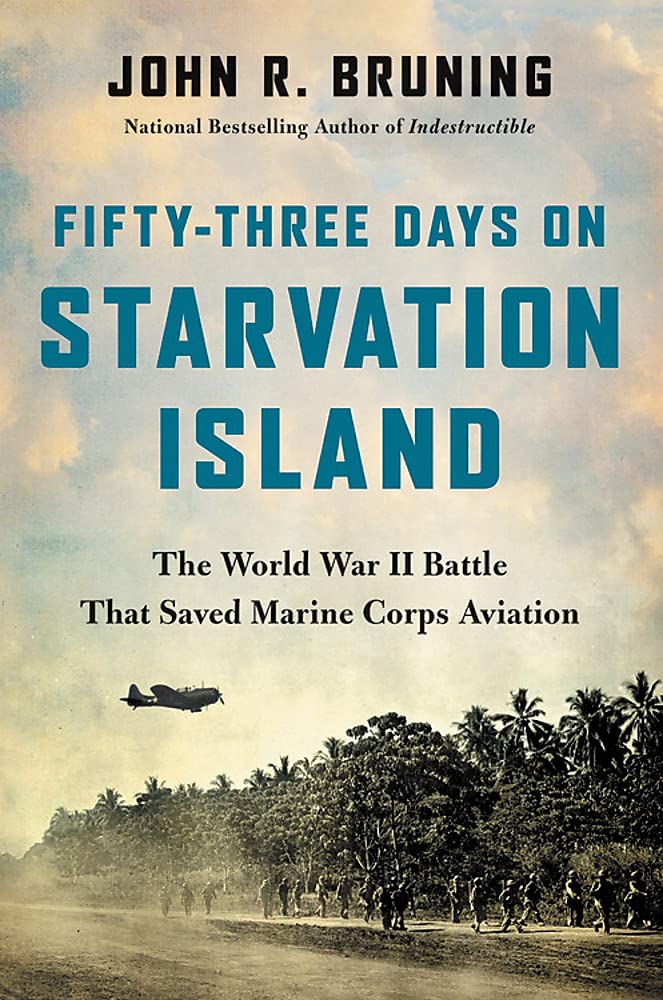
For more on John L and his squadron, take a look here: https://amazon.com/Fifty-Three-Days-Starvation-Island-Aviation/dp/0316508659/ref=sr_1_1?crid=3D3SVSMJ4LVBP&dib=eyJ2IjoiMSJ9.lGQgOoEp8lTHMIcaGBepVg.cGYX2ueZF_lTpJ4r6MZq-zCJhC-aqlZvANWGsLbLdyw&dib_tag=se&keywords=fifty+three+days+on+starvation+island&qid=1717457373&sprefix=fifty+t%2Caps%2C186&sr=8-1

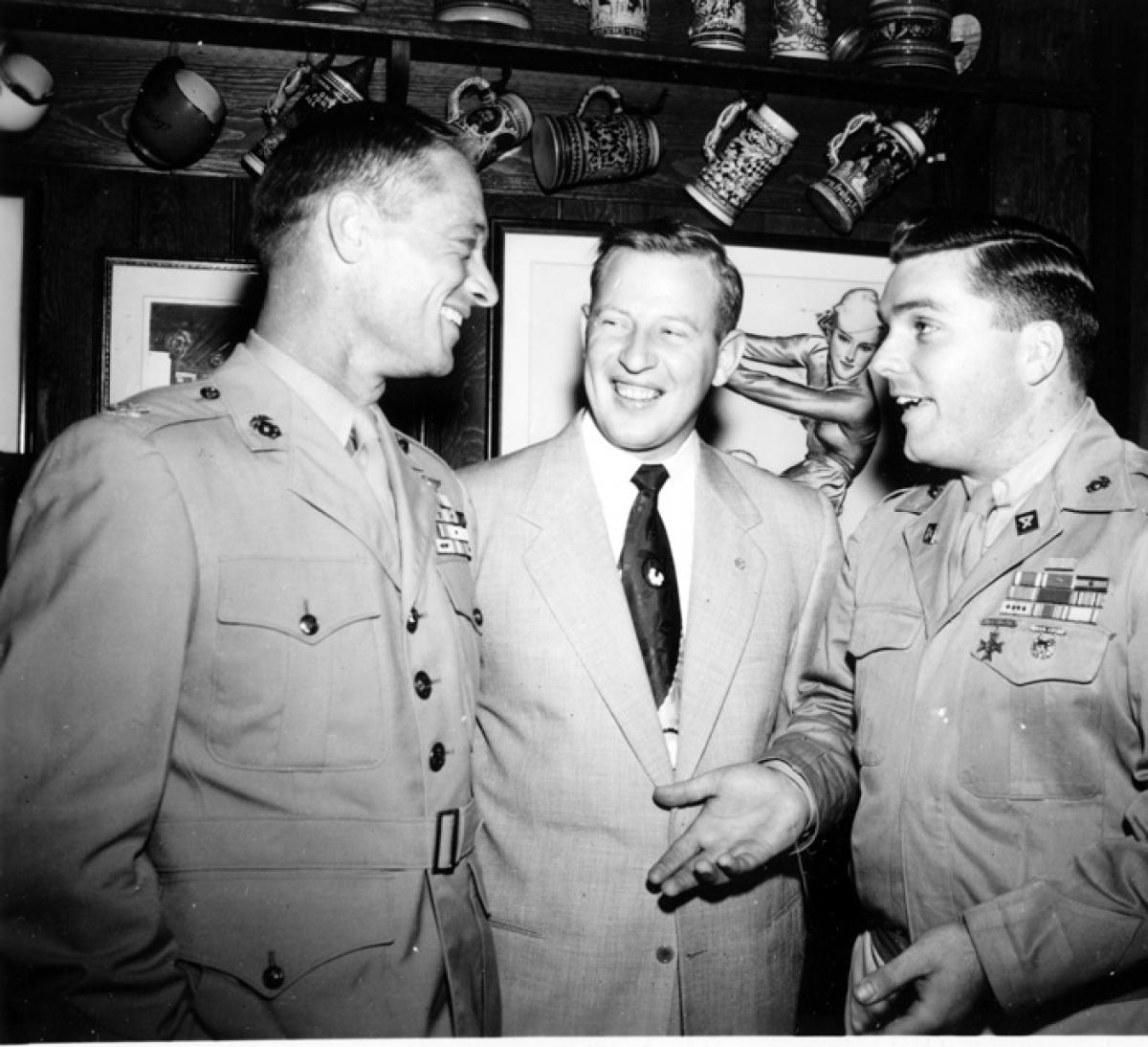
John L Smith (left) with two other Marines during premier night for the Flying Leathernecks in 1951.
Categories: World War II in the Pacific, Writing Notes, WW2, WWII | Tags: , , , | 1 Comment


The Brewster Crotchkick

Imagine coming homing from 53 days of continuous combat to be told you’re going to be one of the first to fly the Navy’s latest and greatest bomber. It is the next generation, the plane you will be piloting when you return to war after this short interlude in the States.

You’ve been flying a dive-bomber whose forward-firing guns rarely worked, that couldn’t make more than 220 mph fully loaded, could only carry a thousand pounds of bombs, and was easy meat for Japanese fighters.

Despite the deficiencies in your aircraft, you and your half-trained squadron played a key role in stopping a critical Japanese counter-offensive. Your bombs destroyed numerous ships and barges. You’re a national hero, though the cost was high. Most of your pilots are dead. Those left are in Stateside hospitals recovering from wounds and trauma.

A revolutionary new bomber, faster, with more firepower and more ordnance, is exactly what you wanted while leading your men against the Japanese Navy.

With great fanfare, you’re brought to the most modern aircraft factory in America, one the Navy invested millions in to construct, then leased back to the aircraft company for a dollar a year.


You give a rousing speech to the employees who are building this revolutionary weapon of war.

There in Hatbro, Pennsylvania, in front of thousands of workers, you’re given the keys to the new plane to take it on a test flight and see what the future holds.

That plane was the Brewster SB2A Buccaneer.

And it was a complete dud. The worst aircraft produced by the U.S. defense industry during WWII.

Welcome home, Marine.

Categories: Uncategorized, World War II in the Pacific, Writing Notes | Leave a comment


VMSB-232 on this Memorial Day

On this Memorial Day, I want to honor the men from VMSB-232 lost on Guadalcanal. Aboard the USS Long Island (CVE-1), the 12 pilots and 12 gunners of 232 were told to buy time with their lives so America could bring up more men & planes.

Two survivors of 232. Art O’Keefe & Dick Mangrum, 1943.

They did far more than just that. They saved America’s first offensive of WWII.

The cost:

Pilots

Fletcher Brown

Larry Baldinus

Oliver Mitchell

Charley McAllister

Don Rose

Leland Thomas

Gunners:

W.R. Proffitt

R.S. Russell

P.O. Schackman

Nine of 24 KIA. Half the pilots lost. The others were all either wounded or medically evacuated, except for Dick Mangrum. After 53 days, he was last man standing, a skipper without a squadron.

Not forgotten.

Categories: Uncategorized, World War II, World War II in the Pacific, Writing Notes, WW2, WWII | Tags: , , , , , , | 1 Comment


The Men of Fifty-Three Days on Starvation Island: Marion Carl

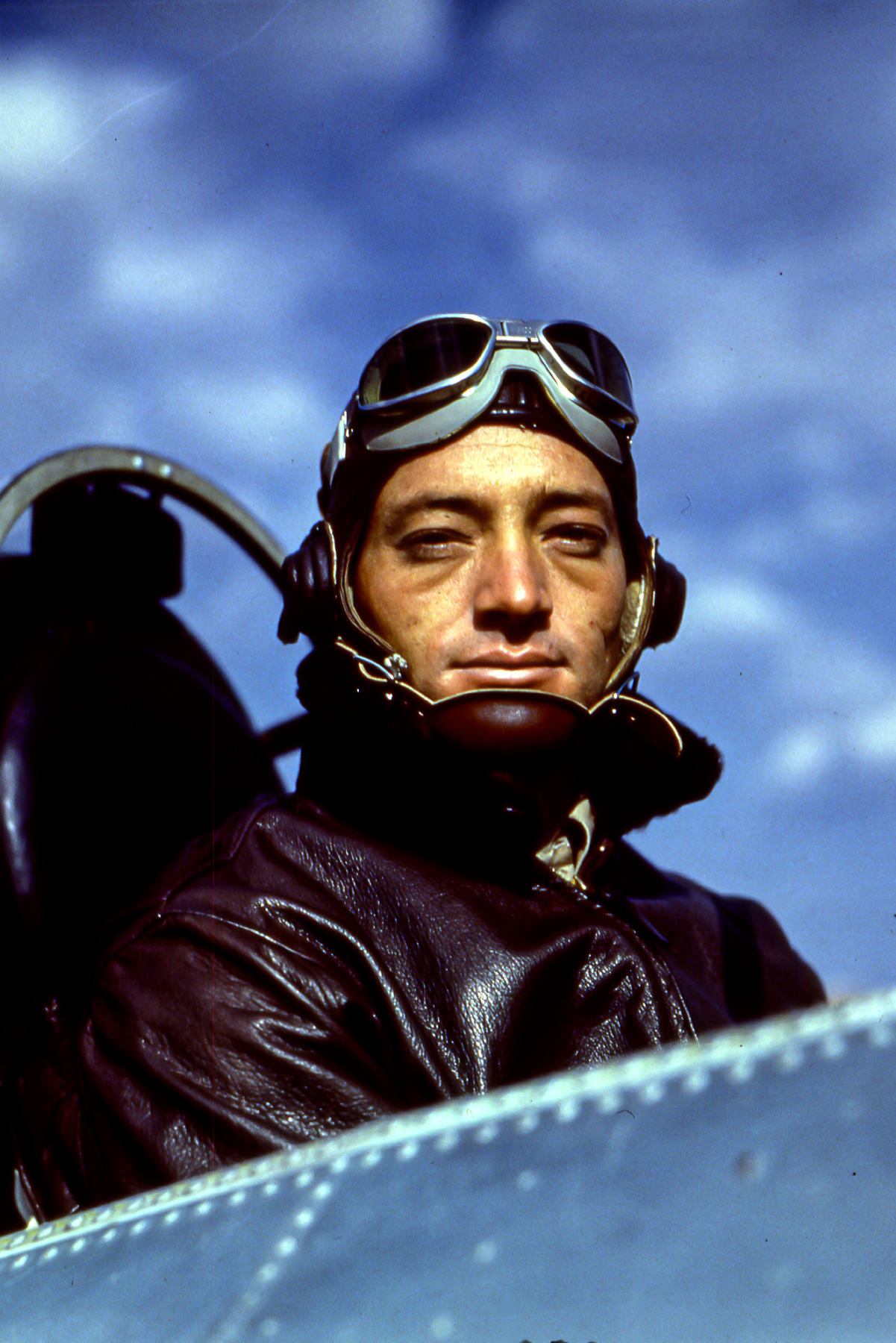
Marion Carl grew up on a dairy farm outside of tiny Hubbard, Oregon. He squeaked through Oregon State, then went on to be one of the 50 fighter pilots in the pre-war Marine Corps. He was one of the 9 pilots to survive the Battle of Midway from his squadron, VMF-221.

Two months later, he became the first Marine Corps ace while flying with John L Smith and VMF-223 at Guadalcanal. He returned to the U.S. to be feted as the hero of the hour, and the PR guys had high hopes for Marion, since he was tall, charismatic and possessed the winning mile you see in the photo here.

They sent him out on tour with John L and LTC Richard Mangrum, skipper of the first dive bomber unit to fight at Guadalcanal. He hated the press tour. Loathed it. The reporters annoyed him, the attention annoyed him. He fell asleep in press conferences. Sat and said as little as possible in other ones, chewing his nails and counting the seconds he could get away. He wasn’t made to be a celebrity. He was meant to fly and fight.

In early 1943, he returned to VMF-223 as its skipper and took it out to the Solomons for a second combat tour. He should a couple more planes down, returned to the States to become one of the legendary test pilots in American history.

He flew and fought through the rest of his career, from secret recon runs over China in the 1950s, to taking the 1st Marine Brigade into Vietnam in 1965, where as a brigadier general he flew combat missions in support of his men in both jets and helicopters. He retired as a major general in 1973, with over 13,000 hours in his logbook and is considered one greatest military aviators in American history. His story formed the basis of Fifty-Three Days on Starvation Island.

Categories: American Warriors, World War II, World War II in the Pacific, Writing Notes, WW2, WWII | Tags: , , , , , | Leave a comment


Fifty-Three Days on Starvation Island–Book Signing!

Happy to report I’ll be signing books at Powell’s Cedar Hills store in Beaverton, Oregon on June 5th! If you’re in the area, please drop by and say hello!

Categories: Uncategorized, World War II in the Pacific, Writing Notes | Tags: , , , , | Leave a comment


When Fraternity Guys Defended the Flag…on Guadalcanal

1942:

When you’re a year removed from lecture halls and your fraternity house, and you find yourself 180 miles south of nowhere in the middle of the Pacific, told to launch off a make-shift aircraft carrier with a catapult that will fire you off the deck at a 45 degree angle into a crosswind while piloting a combat aircraft you’ve had less than 30 days to learn to fly…and if you survive the launch, you’ll fight the best combat aviators in the world who have been shooting down planes since you were on your high school JV teams.

You’re going to be living in the jungle, slowly starving on captured food stocks. You may be five ten, a buck fifty now, but if you survive, you’ll be lucky to be a hundred and twenty pounds. When you’re not in the air every day, you’ll be sniped, bombed, shelled, strafed, and mortared. The enemy’s ground troops are a few thousand yards away, preparing to overrun your make-shift, shell-pocked airfield that in itself is a hazard to use. You’ll be exposed to jungle diseases not even known to Western medicine yet. You’ll be wracked with malaria, doubled over with dysentery.

Your aircraft’s oxygen system will fail and poison you. A hit in the wrong place, and you’ll be covered in superheated engine oil. If you get shot down, you’ll face sharks at sea and death by torture at the enemy’s hands in the jungle.

And some light bird who doesn’t know the basics of overwater navigation, who refuses to share your circumstances, has just told you your mission: buy time with your lives. Die hard. You have one ace in the hole: USMC Captain John L. Smith is your commanding officer. With him at the tip of your spear? All the other stuff is just noise.

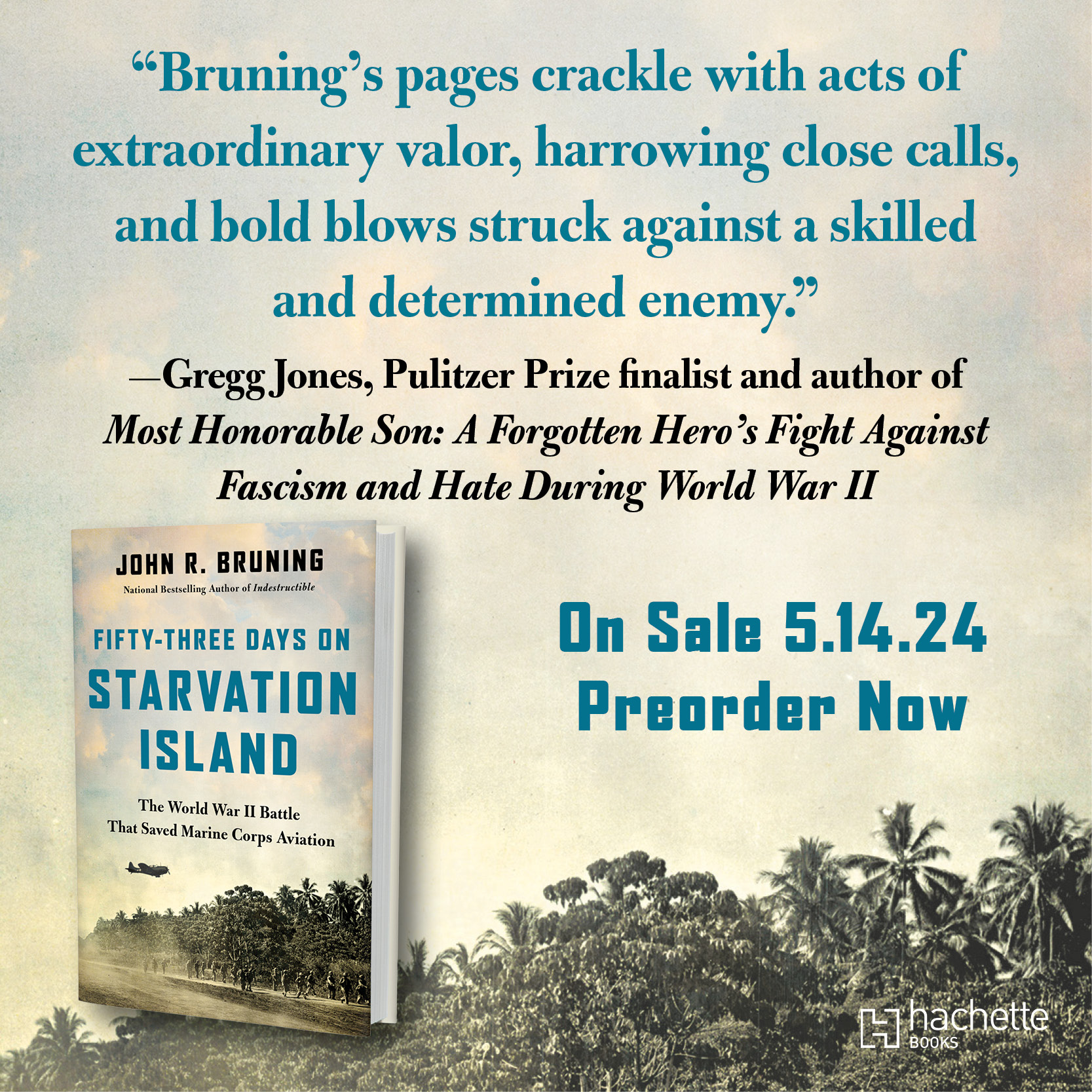
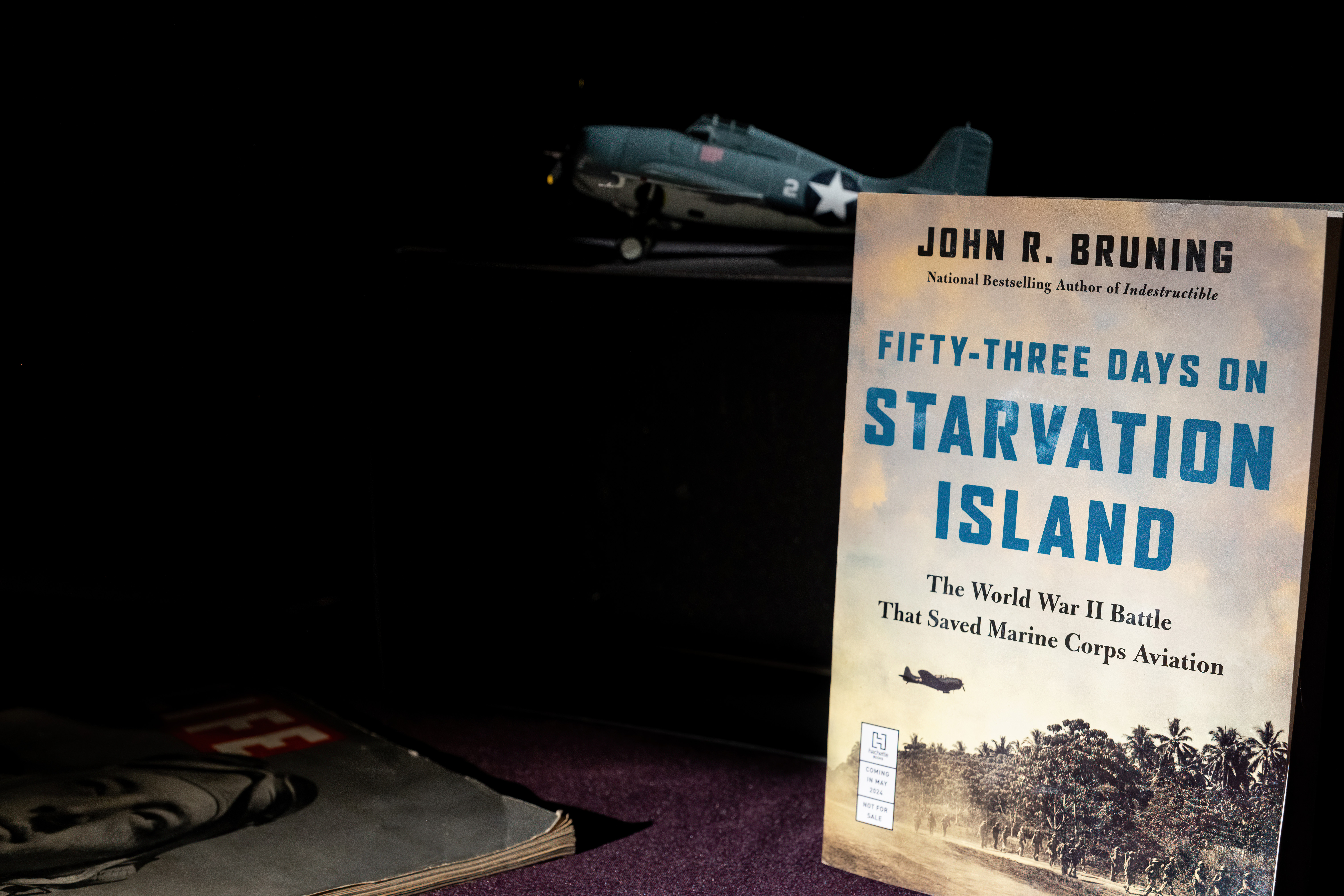
Fifty-three days of this to go…then you can go home. For thirty-four years, I’ve wanted to tell this story. Thanks to Hachette, it’ll be in bookstores everywhere, Audible and Amazon this May 14.

https://www.amazon.com/Fifty-Three-Days-Starvation-Island-Aviation/dp/0316508659/ref=tmm_hrd_swatch_0?_encoding=UTF8&dib_tag=se&dib=eyJ2IjoiMSJ9.lGQgOoEp8lTHMIcaGBepVg.cGYX2ueZF_lTpJ4r6MZq-zCJhC-aqlZvANWGsLbLdyw&qid=1715476351&sr=8-1

Categories: Uncategorized, World War II in the Pacific, Writing Notes, WW2, WWII | Tags: , , , , | Leave a comment


The Wildcat’s Weak Points

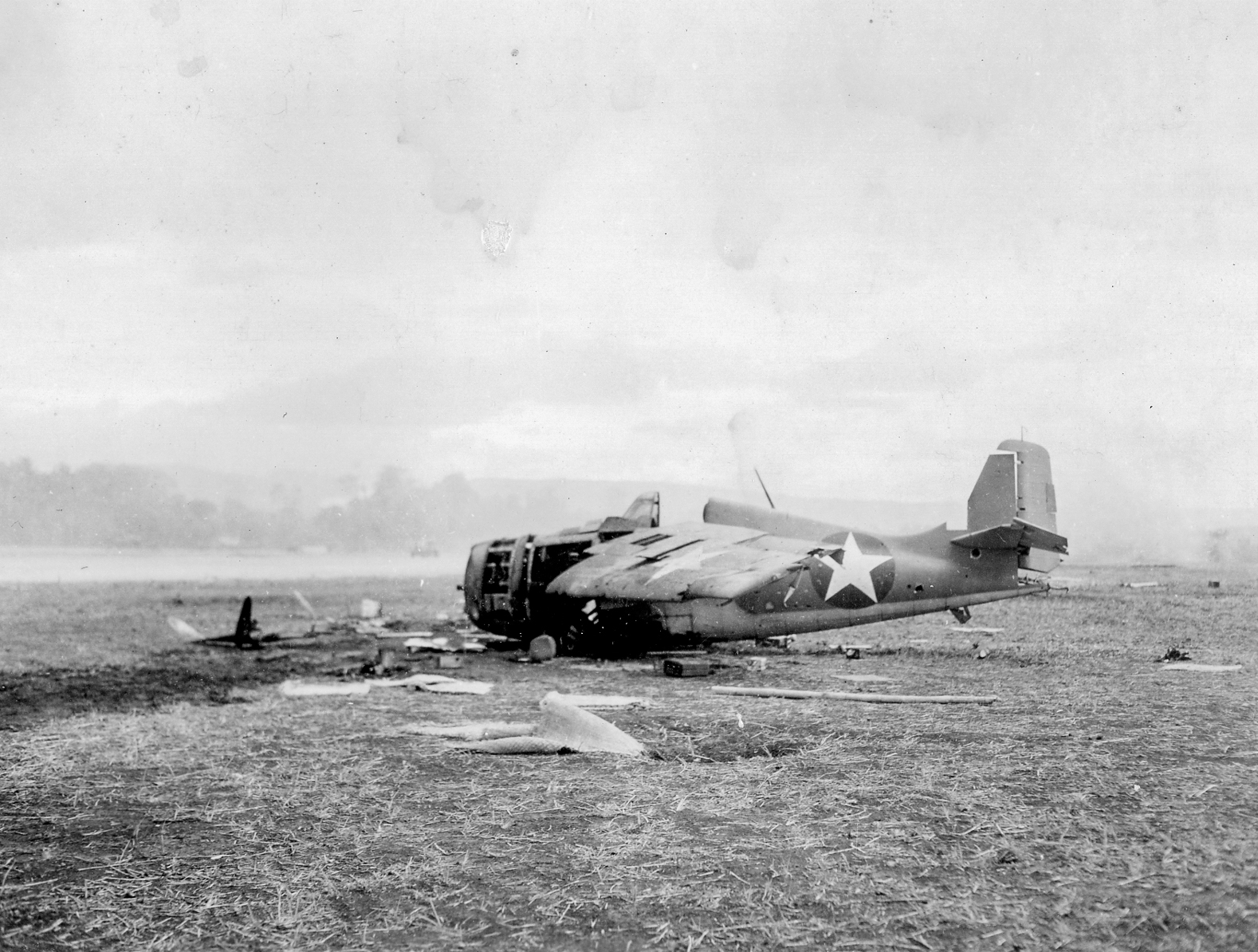
The Grumman F4F Wildcat earned a reputation for ruggedness and pilot survival that was justly deserved. The aircraft it replaced, the F2A Buffalo, did not have an armored slab that extended above the pilot’s shoulder level, so when the USMC’s VMF-221 went into battle with the F2As at Midway, there was a lot of discussion among the pilots that they lost many of their squadron mates to cannon and machine gun fire that struck their heads.

The armor plate in the F4F extended all the way up to the pilot’s headrest, which at times allowed the Marine and Navy pilots to hunker behind it as a Zero they couldn’t shake hammered away at them. That slab behind their seat saved countless pilots in 1942.

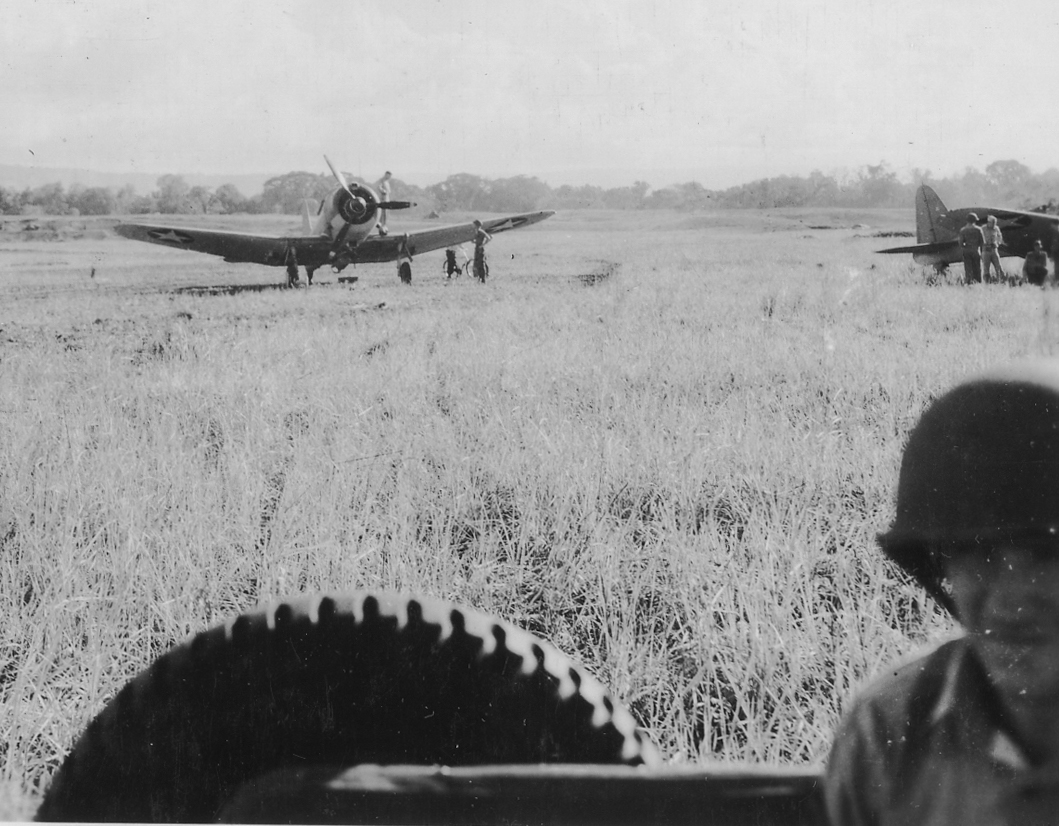
However, in doing the research for “Fifty-Three Days on Starvation Island,” I discovered two weaknesses in the F4F that plagued the pilots flying daily combat operations on Guadalcanal in them.

First, taking hits in front of the windscreen along the top and upper sides of the cowling often severed the F4F’s main oil line. This caused a spray of scalding hot oil to pour into the cockpit from under the instrument panel, inflicting horrific burns on the pilot. John Lindley, a beloved and highly respected member of VMF-223 was wounded in this manner in late August on Guadalcanal. Several others were wounded in the same manner in the days that followed.

The oxygen system was the other weak point. The oxygen masks were poorly designed, the system was also poorly designed, and there were few replacement oxygen tanks in the South Pacific, and no way to refill them on Guadalcanal. Contaminated O2, faulty masks or just the poor design of the system contributed to the loss of quite a few Marine and USN pilots during the first fifty-three days of the air war over Guadalcanal.

Despite these issues, the Wildcat was a solid performer that gave America’s naval aviators a weapon that was capable, if properly flown, of beating the A6M Zero in air-to-air combat. It remained in production at General Motors facilities until the end of the war, despite being replaced by the F6F and F4U as the first-line carrier-based fighter in the Pacific.

Categories: Uncategorized, World War II in the Pacific | Tags: | Leave a comment

Blog at WordPress.com.