The Human Cost of Indecision

Shock and Awe, the war on ISIS is not. The junior varsity team President Obama has repeatedly denigrated has spent this spring scoring a series of strategic victories that has left the U.S.-backed Iraqi Army in shambles. Our response? Seventeen air strikes since mid-May. An Air Force general violated the basic tenants of OPSEC to crow about bombing a building. Oh, and the President admitted this week that we don’t have a strategy.

We have spent the last year proving that you cannot fight a war half-heartedly and expect anything but an enemy victory.

The long-term security ramifications of our weak response to ISIS are extremely troublesome. ISIS has been given time to develop tactics to counter our firepower and technology. They’ve become even more effective on the battlefield. They’ve now got thousands of American armored vehicles that they have captured from the Iraqis. Their recent assault on Ramadi included waves of explosive-laden Humvees driven by suicide bombers into Iraqi Army defenses. Their strategic mobility in the face of our complete air superiority demonstrates a masterful grasp of logistics and camouflage.

The longer the West lets ISIS survive, the more capable they become. Australian intelligence reports now indicate that ISIS has acquired enough radiological material from captured hospitals or other sources that they can now build an effective dirty bomb.

If the Australians are right, the junior varsity has the capacity to build and deploy a WMD. This is the same junior varsity that tortured a fourteen year old boy to death on camera for propaganda purposes, and recently threw three gay men off a hundred foot tall building in Mosul before a crowd of hundreds of onlookers who had been armed with rocks and told to finish off the prisoners should they miraculously survive the fall. ISIS has institutionalized violence, torture, mass killings and then glorifies their brutality with internet propaganda videos. If anyone thinks ISIS will show restraint with WMD weapons, or will negotiate them away in some future diplomatic summit, they are delusional.

Our policy has been to supply and train the Iraqi Army. That policy has failed. If there are any doubts of that, just look at the numerous photos and footage of ISIS fighters wearing American ACU’s, carrying M4 rifles with ACOG scopes and using American-made Hummvees and even M1 tanks.

Meanwhile, the Kurds are fighting bravely with fierce determination and are begging for weapons and ammunition since the Baghdad government has played politics with such deliveries. The Kurds are about the only ones who have resolutely fought ISIS, and the West has not properly armed or equipped them. One wonders what they could have done with all the armored vehicles and weaponry the Iraqi Army left behind for ISIS.

A good step in the right direction would be to give the Kurds everything they need. But that’s only a step on a much longer path ahead if the human agony we are witnessing in the Middle East is to ever be stopped.

What is going on here is a slow motion train wreck caused by the United States’ refusal to lead a coalition of the willing into delivering decisive military intervention in the Middle East. Instead, the half-measures and over-reliance on a dysfunctional Iraqi Army and Iranian-backed Shia militias has only prolonged the anguish of countless innocents now living under ISIS rule. These were the very people for whom American blood was shed for so many years the previous decade. Now, we have thrown them to the wolves, and their suffering is our shame. The longer the West continues to half-heartedly fight this war—a war against an energized and dedicated foe—the more civilians will perish in horrifying ways. To not intervene decisively will only ensure their blood is on the West’s hands. History will not forget the abandonment of these defenseless people, and the global implications of our betrayal of them will linger for generations.


John R Bruning


Categories: Writing Notes | Tags: , , , , , , , | 2 Comments

Escape to Midway

Harry Ferrier grew up in Massachusetts and Connecticut.  At age sixteen, he lied about his age to enlist in the U.S. Navy.  Harry became an aviation radioman and joined his first squadron, Torpedo Eight, in September of 1941. At age seventeen, he flew his first combat mission. He later served with VT-3 and VT-8 again during the Battle of the Eastern Solomons and the defense of Guadalcanal.  Harry married just as the war ended, raised two children, and made the Navy his career.  He rose from Seaman 3rd Class to  full Commander before he retired after the Vietnam War. I was fortunate to interview him in 2000, first over the phone, then in person in Washington State. Harry was one of those Americans who had overcome every imaginable adversity through the course of his life from the Depression and a broken home to crewing a torpedo bomber in the darkest days of the Pacific War when almost all his friends were lost in combat. Getting to know Harry was one of the most inspirational moments of my life.

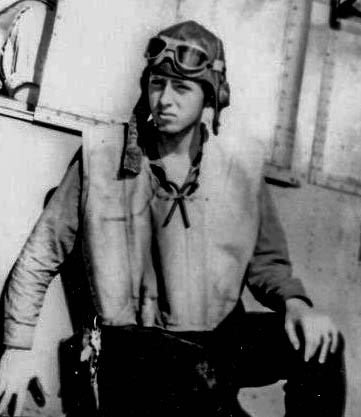
Harry Ferrier at Midway, all of 17 years old in June 1942.

Harry Ferrier at Midway, all of 17 years old in June 1942.

At age thirteen, Harry Ferrier’s childhood came to an abrupt end the day his father died of a heart attack.  From then on, tragedy and hardship dogged Harry’s young life, setting in motion a chain of events that led him into the midst of one of history’s greatest naval battles.

His dad had been the rock of his family.  A big, burly welder whose own father had immigrated from Scotland at the end of the 19th Century,  Harry’s dad had held his family together in the midst of the Depression with his unflagging work ethic.  On the strength of  his fourteen hour work days, he kept food on the table and the mortgage current for their tiny house in East Springfield, Massachusetts, despite the fact that he’d lost his right leg below the knee while jumping freight trains as a kid.

When he died, the family lost its primary source of income.  Harry’s mother, as devoted as she was to her four kids, simply couldn’t pay the bills with the meager wages of her waitressing job. What little savings they had soon ran out. Eventually, they lost the house.

It was the spring of 1938, and Harry’s family had become homeless in the depths of the Great Depression.

In desperation, Harry’s mother farmed the kids out to stay with friends and relatives. Scattering the family at least kept them all off the street, but the pain of separation inflicted lasting damage on them. While his sisters were sent to live with an aunt and his brother stayed with another family, Harry moved in with his close friend, Dean Mosher. The Moshers kept Harry for the better part of the year in West Springfield while his mother sought to get back on her feet.

Tragedy struck the family again.  This time, within a few months of his father’s fatal heart attack, both of Harry’s grandmothers died suddenly.  Their deaths sent him reeling.  He was just thirteen years old,  unsure how to process such grief without his remaining family together to offer support.

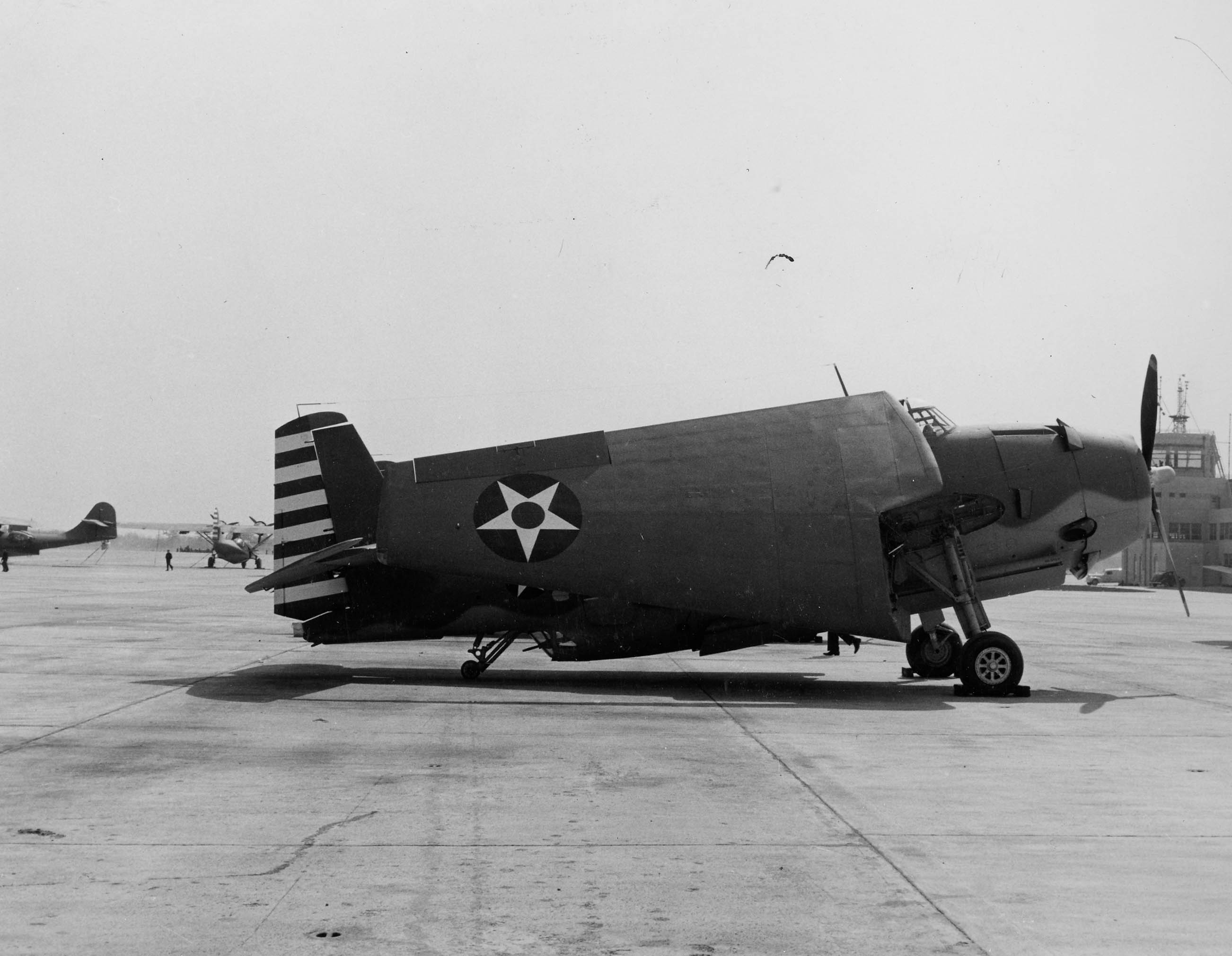
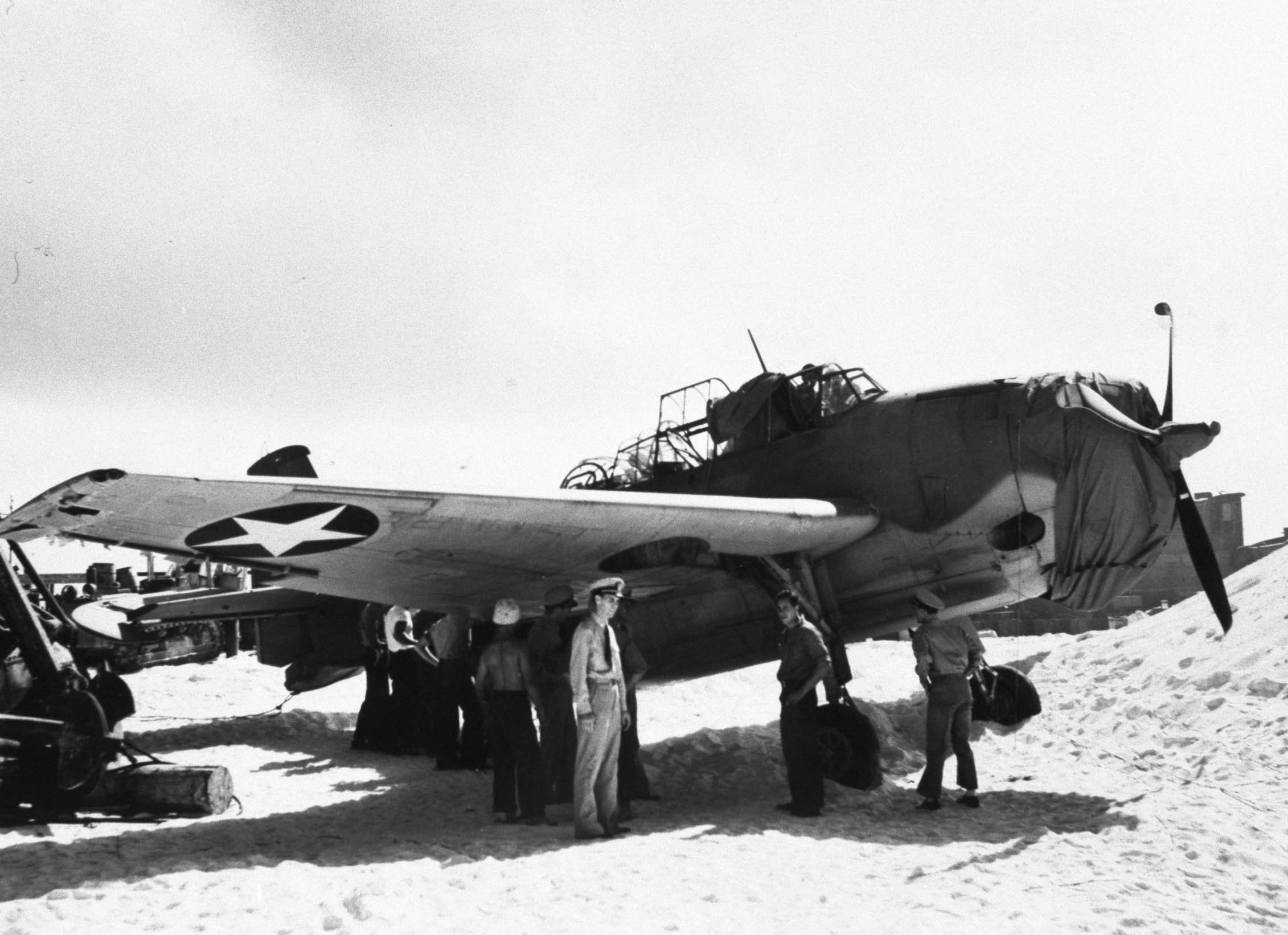
VT-8 received the first operational Grumman TBF-1 Avengers to reach the Fleet. Here is Harry's aircraft, 8-T-1 at NAS Norfolk at the end of March 1942, just before the squadron was deployed to the Pacific.

VT-8 received the first operational Grumman TBF-1 Avengers to reach the Fleet. Here is Harry’s aircraft, 8-T-1 at NAS Norfolk at the end of March 1942, just before the squadron was deployed to the Pacific.

Once affable and outgoing, Harry he withdrew into himself. He became solemn and serious and kept the rest of the world at arm’s length.

That fall of 1938, his mother returned to get him.  Harry was shocked by the change in his mother.  At five foot one,  she had always been a heavy woman, but in the space of about eight months, she’d lost 50 pounds. She looked gaunt and haunted.

Unable to make a good enough living for her children on her own, Harry’s mom  married a bartender named Tracy.  When the family reunited, it was at his home in East Hartford, Connecticut.  There, he discovered his new step-father had a son of his own, an older boy nicknamed “Stub.”  Stub was a bully who made Harry’s life even more difficult.  Fortunately, Stub stayed with them for only a short time before joining the Navy .  Later,  Stub would be dishonorably discharged after going AWOL during World War II.

Life never got better for Harry’s family while in East Hartford.  Tracy, a broad-shouldered, rough Irishman, had never amounted to much. He drank heavily and lashed out at his family.  Verbal abuse was common. Later, he started getting violent.

Another shot of 8-T-1 at Norfolk. March 26, 1942.

Another shot of 8-T-1 at Norfolk. March 26, 1942.

Even when Harry’s mom became pregnant with the first of four more children, the drinking and abuse didn’t stop.  Daily life, hard enough in those days when the country was still trapped in the  Depression, became  a struggle for survival.

Harry began looking for a way out; somehow he had to escape from his step-father and the sense of hopelessness at home.   For two years, he endured and waited until he could finally make his escape.

At age sixteen,   Harry finally settled on his getaway method—the United States Navy.  Unfortunately, he couldn’t join up until he turned seventeen, but Harry didn’t think he could last another year at home.  Things were getting so bad, he had to get out–or give in.

The TBF was to replace the TBD Devastator, which still equipped most of the USN's torpedo squadrons that spring. As a result, VT-8's performance at Midway was to be closely watched to see how the new Grumman would perform in combat.

The TBF was to replace the TBD Devastator, which still equipped most of the USN’s torpedo squadrons that spring. As a result, VT-8’s performance at Midway was to be closely watched to see how the new Grumman would perform in combat.

So he doctored his birth certificate, changing his date of birth from 1925 to 1924 with careful work at a friend’s typewriter.  Officially, anyway, he was now seventeen.  He presented himself to the Navy recruiter, who gave him a small mountain of paperwork for he and his mother to fill out.  Since he was not yet a legal adult,  his mother needed to give her consent for him to join up.  She signed the papers, perhaps knowing that this was indeed Harry’s one chance to escape from their harsh existence.  Also, with more babies on the way, his departure meant one fewer mouth to feed.

When Tracy found out what Harry wanted to do, he offered to help him gain some weight so he could pass his physical.  At the time, Harry weighed less than 110 pounds, which barely qualified him for the Navy.  To “fatten” him up , Tracy bought Harry a case of beer and ordered him to drink it.

A short time later, in February of 1941, he passed his physical and became a Seaman 3rd Class destined for aviation radio school in Jacksonville, Florida.  He’d made good his escape—but what he had escaped to?

Midway Atoll, 1942.

Midway Atoll, 1942.

June 4, 1942

Midway Atoll

As dawn broke over Midway Atoll,  Radioman 2nd Class Harry Ferrier sat in his assigned TBF Avenger torpedo bomber, 8-T-1,  waiting for battle.

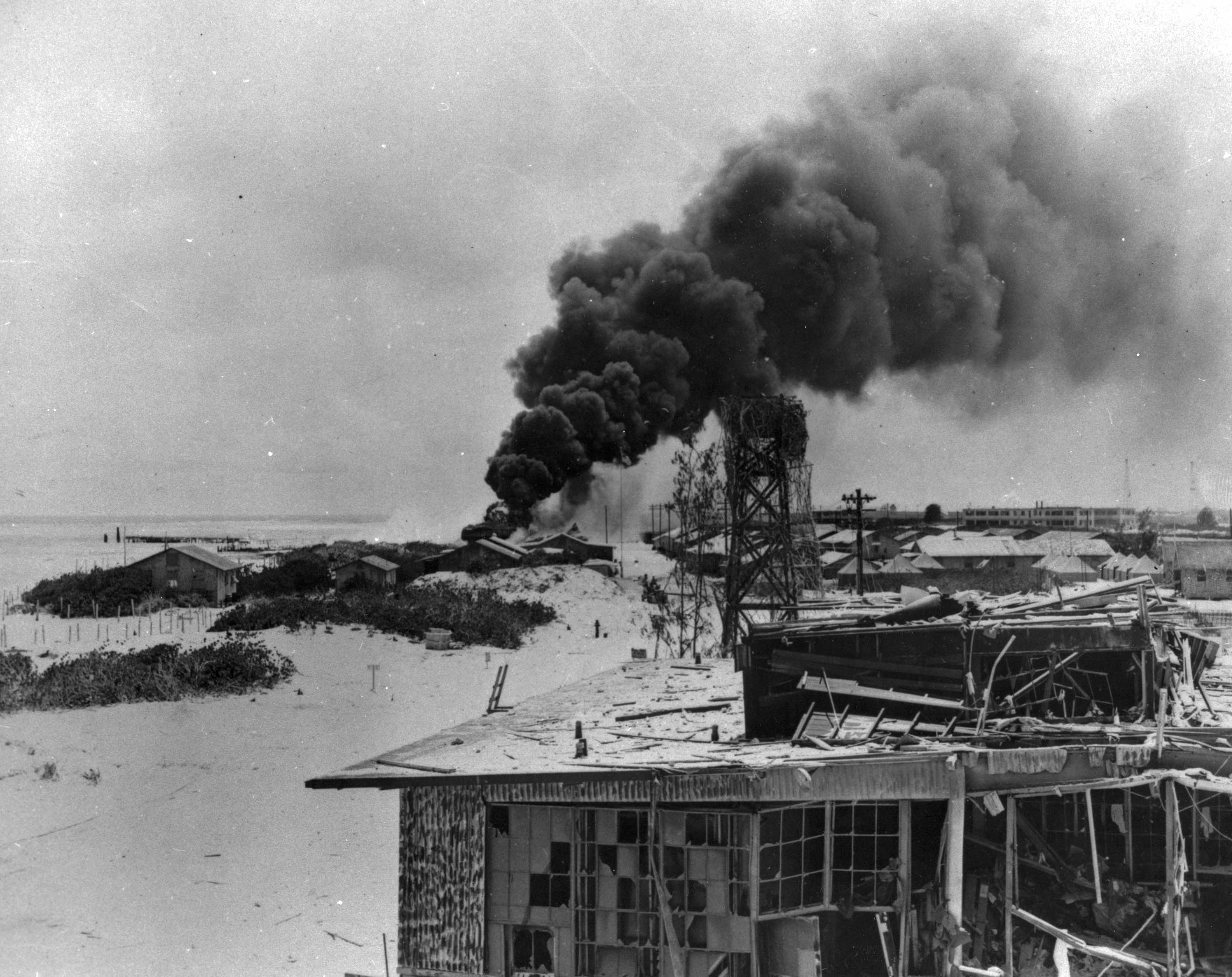
Midway after the Japanese air attack on the morning of June 4, 1942.

Midway after the Japanese air attack on the morning of June 4, 1942.

Harry watched the sunrise in contemplative silence.  Two days before, Lieutenant Langdon Fieberling had called all the crews from Torpedo Eight together to tell them the gravity of the situation.  The Japanese fleet—not some of it, all of it, was bearing down on Midway from the northwest.  The Japanese planned to knock out Midway’s defenses with air attacks, then storm the beaches with the Emperor’s best troops—a brigade of Imperial Marines.

They had to be stopped.  And to do it, the Americans had scraped together 52 combat planes and sent them to Midway’s airfield.  Off the atoll’s northern beaches, three of the Navy’s precious aircraft carriers now lay in ambush, counting on the element of surprise to make up for their lack of numbers.

The Japanese were coming with the fury and might that had laid waste to Pearl Harbor only six months before this calm spring morning.  Admiral Chuchi Nagumo’s four fleet carriers composed the heart of Japan’s naval strength, for their 300 aircrews were the best trained, most experienced combat pilots in the world.  And, in the Mitsubishi A6M2 Zero, those pilots had the best fighter aircraft in the Pacific.

Harry’s squadron, Torpedo Eight (VT-8) possessed six new Grumman TBF Avengers.  These aircraft had never been in battle before.  In fact, back in February of ’42, Torpedo Eight had been split into two groups.  The main part of the squadron left Norfolk, Virginia aboard the USS Hornet, an aircraft carrier now somewhere to the north of Midway.  The rest of the squadron—Harry included—remained behind at Norfolk to work up with the factory-fresh Avengers then just starting to arrive from Grumman’s plant on Long Island.  It was a sign of desperation that their six untested planes had been urgently ordered to Pearl Harbor in May, and then from there on to Midway. Harry’s det reached the island on June 1st, just ahead of the coming onslaught.

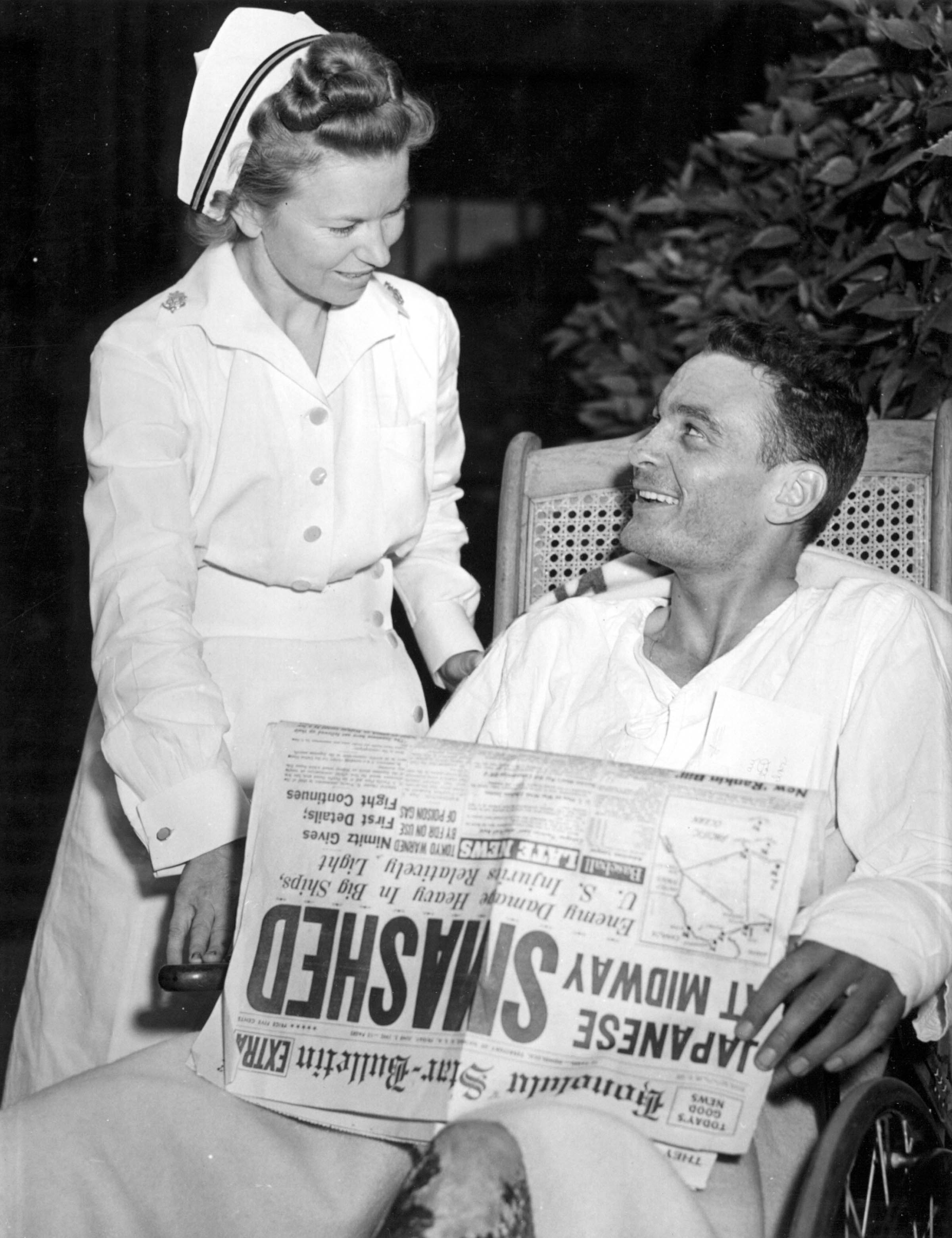
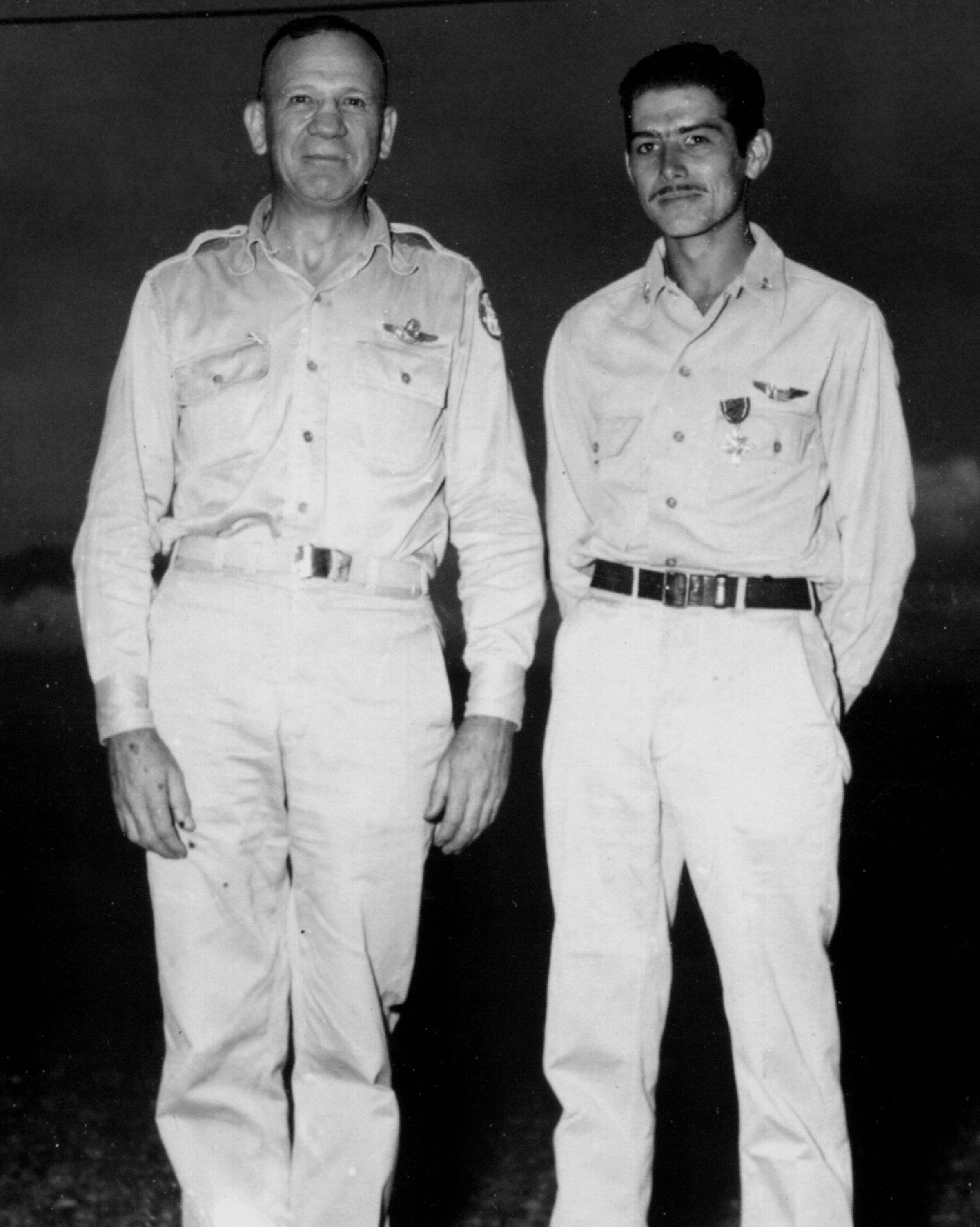
While the VT-8 det at Midway attacked the Japanese carrier fleet, the rest of Torpedo 8 flew off the USS Hornet and was wiped out. Ensign George Gay, seen here in Hawaii after the battle, was the lone survivor from the squadron's 14 TBD crews that launched from the Hornet that morning.

While the VT-8 det at Midway attacked the Japanese carrier fleet, the rest of Torpedo 8 flew off the USS Hornet and was wiped out by Zero fighters and anti-aircraft fire. Ensign George Gay, seen here in Hawaii after the battle, was the lone survivor from the squadron’s 14 TBD crews that launched from the Hornet that morning.

Harry Ferrier was seventeen. He couldn’t drink liquor, nor could he vote in his hometown elections. But here he was, ready to defend his country no matter how daunting the odds.

Next to him in the cramped confines of the cockpit, Jay Manning fidgeted restlessly.  The wait was starting to get to him.  Jay was only a little older than Harry.  A twenty year old native of Washington, he had been trained to operate the Avenger’s dorsal turret.  It would be Jay’s job to keep enemy fighters at bay while their pilot, Ensign Bert Earnest, made a wave top-level torpedo run on a Japanese warship. Harry would operate the plane’s radio as well as man the single .30 caliber machine gun jutting out of the Avenger’s belly just under the tail.

None of the men sitting in 8-T-1 had ever seen combat.  Only a few weeks before, they made their first live torpedo drop off Rhode Island.  From those practice runs, they had learned that delivering a torpedo took extraordinary skill.  Bert Earnest would have to keep the plane under 200 mph and lower than 150 feet flying absolutely straight when he released the weapon from the Avenger’s bomb bay.  If those conditions weren’t exactly met, the torpedo would porpoise or careen out of control.  It was difficult enough to make a successful drop during their training runs, doing it while the Japanese shot at them was sure to be even more of a challenge.

Just after 0600 hours, a Marine dashed up to 8-T-1.  Cupping his hands to his mouth, he shouted, “Enemy forces at 320 degrees, 150 miles out.  Get going!”

Bert started the Avenger’s enormous Wright-Cyclone R-2600 engine.  All around them, engines turned over and sputtered to life as Midway’s tiny air force scrambled to get aloft.  Somewhere nearby, another Massachusetts native named Sumner Whitten was just starting his own VMSB-241 SB2U Vindicator dive-bomber.  Whitten’s Vindicator would be the last plane to take off from Midway before the Japanese attacked.  Harry’s would be among the first.  The strike would be bookended by New Englanders.

The aircraft from Midway were supposed to attack in concert.  Lieutenant Fieberling’s six Avengers would coordinate their torpedo runs with four Army twin-engined B-26 Marauders.  As they made their low-level attacks, the planes from VMSB-241 were to whistle down on the Japanese and deliver their bombs from a 70 degree dive.  And, as the grand finale, a group of high-flying B-17 Flying Fortresses would pepper the Japanese ships with strings of bombs dropped from 20,000 feet.

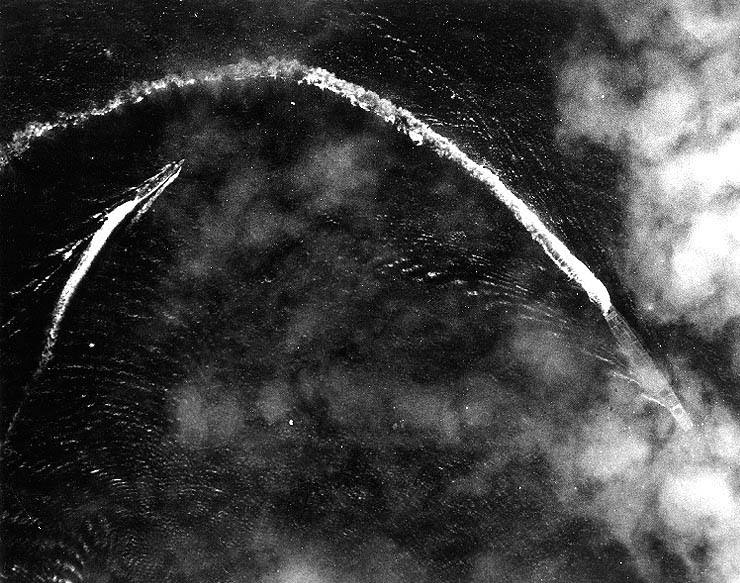
The Japanese fleet carrier Akagi under attack by Midway-based B-17 Flying Fortress bombers during the morning of June 4, 1942.

The Japanese fleet carrier Akagi under attack by Midway-based B-17 Flying Fortress bombers during the morning of June 4, 1942.

The plan to fell to pieces almost the minute the mission began.  In the mad scramble to get aloft,  none of the squadrons joined up.  Instead, each unit went out towards the Japanese fleet on its own.  The attack would be made in drips and dribbles, instead of the single hammer-blow envisioned.

As 8-T-1 climbed away from Midway, a lone Japanese plane suddenly dropped down on them and went right through their formation.  As it zipped away towards the atoll,  a knot formed in Harry’s stomach.    Over the horizon, the Japanese were waiting for them.

From his dorsal turret, Jay Manning looked out behind them and saw Midway getting attacked by scores of Japanese planes.  They had arrived over the islands just as Sumner Whitten began his take-off roll down the runway.  The American strike group had missed being caught on the ground by only a few minutes.

***

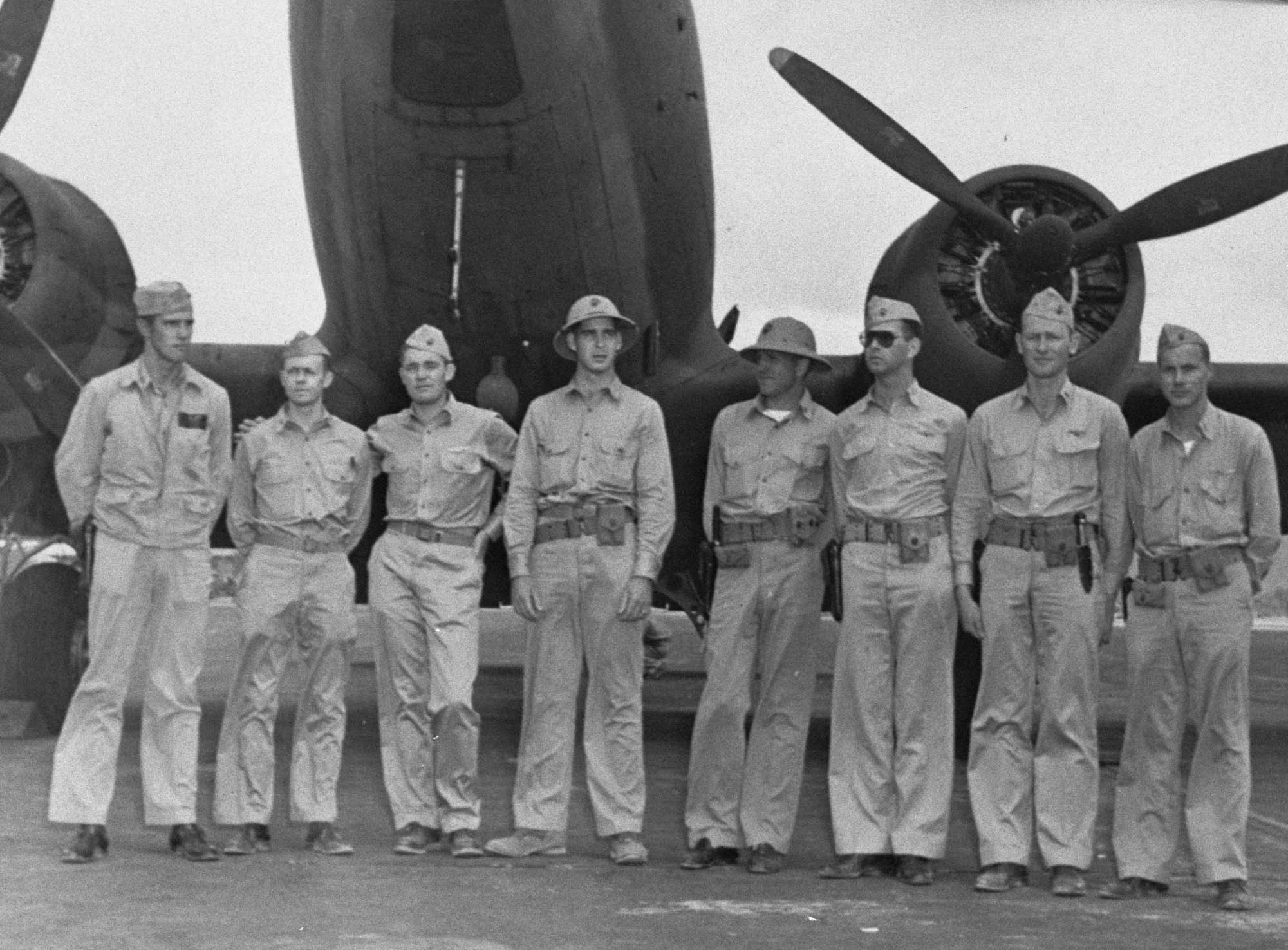
Survivors of VMF-221 and the other Marine air units, seen at Midway at the end of June. At far left is Marion Carl, who later became the first Marine Corps Ace while flying from Guadalcanal.

Survivors of VMF-221 and the other Marine air units, seen at Midway at the end of June. At far left is Marion Carl, who later became the first Marine Corps Ace while flying from Guadalcanal.

They wouldn’t have fighter cover.  The lone fighter squadron on Midway, VMF-221, had flung its 25 obsolete Buffaloes and early-model Wildcats at the incoming Japanese air raid.  Twenty-five Americans waded into just over 100 Japanese planes. It was a slaughter.  In minutes, 19 of those 25 were falling in flames.  Only Marion Carl’s fighter was fit to fly after the attack ended.

Midway’s bombers sped towards the heart of Japan’s naval air power. It would be up to the young and inexperienced gunners to protect their planes from the most skilled fighter pilots in the world.

Since Torpedo Eight had taken off from Midway first,  Harry’s small group of friends now composed the tip of Midway’s aerial spear.  A few miles behind them cruised the Army’s B-26’s.  Further back, the dive bomber squadron lumbered along, climbing above 10,000 feet.  The dive-bombers would further fragment, dividing into two groups.  Midway’s planes were soon spread all over the sky.  There would be no chance to coordinate attacks.

For an hour, the six TBFs flew along at 4,000 feet as the rising sun cast a reddish glow on the scattered clouds that now dotted the sky that morning. Through the trip, Harry sat deep in 8-T-1’s belly, monitoring the radio.  It was an isolated, lonely position.  Above him, he could look up and  see Jay nestled in his turret.  To either side, a small porthole in the fuselage offered his only view of the outside world. With little idea of what was going on around him, Harry would have to rely on Bert and Jay.  The feeling of helplessness would have overwhelmed a lesser individual.

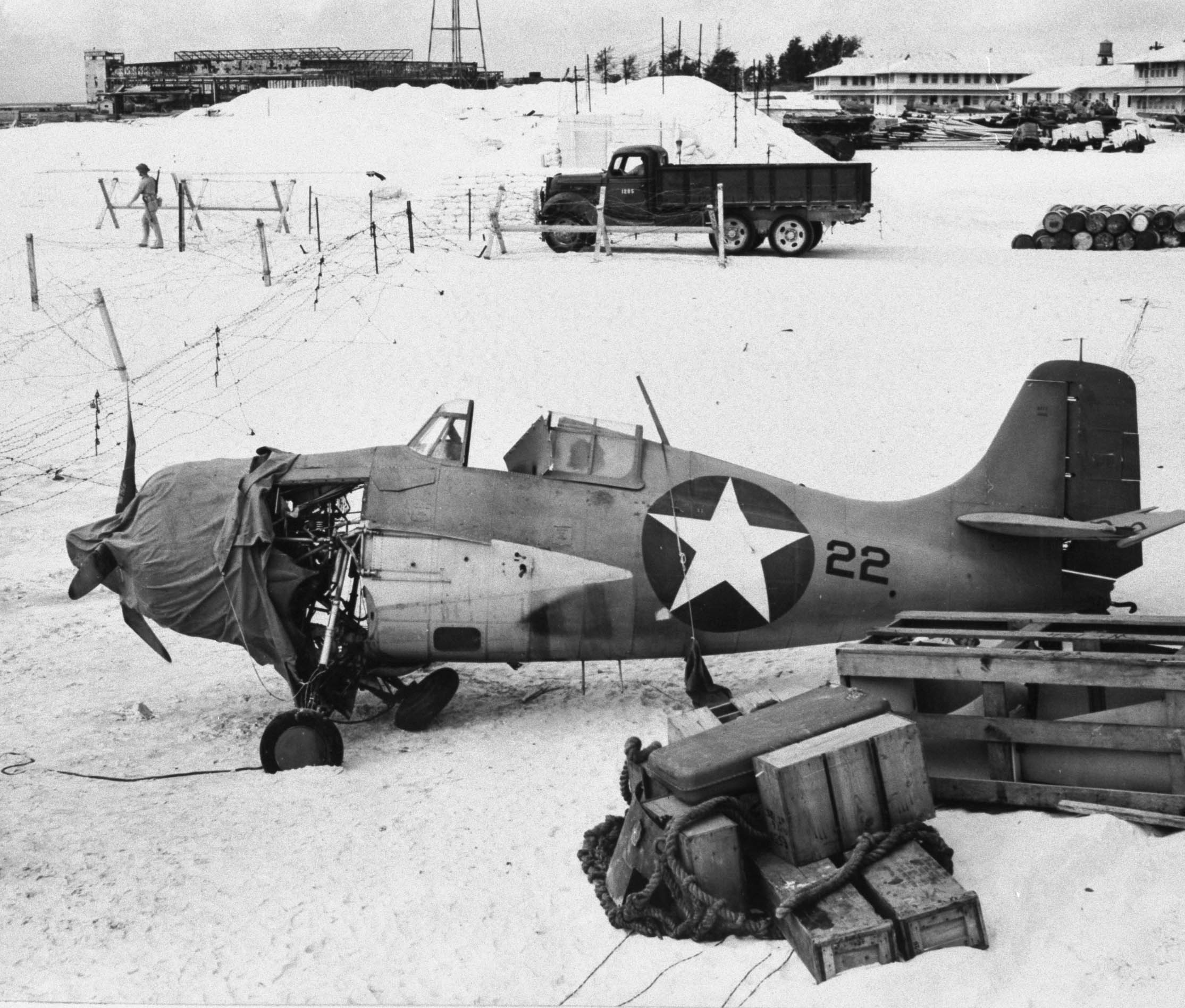
One of the surviving F4F-3 Wildcats at Midway, seen after the battle.

One of the surviving F4F-3 Wildcats at Midway, seen after the battle.

Just after 0700, Harry’s earphones crackled to life.  Bert had keyed the intercom switch to announce, “I can see ships ahead.”

They had reached the Japanese carriers.  Ahead and below were stretched two battleships, three cruisers, and a dozen destroyers.  They protectively huddled around the four vital aircraft carriers, of which Bert could only see two.

Torpedo Eight was about to make the first American attack on the Japanese Combined Striking Force.  To date, only one other attack had ever been made against these ships.  Back in April, while operating in the Indian Ocean, a squadron of British Blenheim bombers had found these same carriers.  Desperately, the Blenheims attacked through clouds of flak and swarms of angry Zeroes.  Not a single British aircraft survived.  The Japanese ships weren’t hit.

The intercom crackled again, this time it was Jay’s excited voice shouting, “We’re being attacked by enemy fighters!”

Bert slammed the stick forward and dove for a cloud some distance ahead of them.  The other TBFs entered steep dives, hoping to evade the incoming Japanese Zeroes.  It didn’t work. Torpedo Eight had stumbled right into the fleet’s combat air patrol.  Twenty-nine Zeroes descended on the six Avengers.

Following Jay’s warning, Harry swung around and crouched at his .30 caliber machine gun in the ventral window.  As he moved to his battle position, he glanced out one of the portholes just in time to see a flaming aircraft plunge towards the sea.

Harry grasped his machine gun and searched for targets even as 8-T-1 sloughed and yawed wildly.  It was all Harry could do to stay in position through all the crazy gyrations.  Above him,  Jay’s single machine gun barked. Cordite fumes filled the compartment and Harry could hear the rattle of spent brass bouncing off the turret’s floor.

Peering out from under the tail, Harry caught only fleeting glimpses of the raging air fight. Every few seconds, a Zero would slash through their formation, then wing past Harry’s little window as it pulled off target, red rising suns burned hot on its white wings.  With his .30 caliber gun, he couldn’t do much damage, but he blazed away at every plane that crossed through his narrow view of the outside world.

Then they were hit.  It was a terrifying sound, like huge hail stones striking a tin roof.  The din was nearly deafening, and the TBF rocked from the impact as cannon shells struck home. They were taking hits everywhere.  Bullets and shells tore great gouges out of the fuselage and wings, sending slivers of metal through the cockpit.

A cannon shell blasted the right side of Jay’s turret into a spray of broken Plexiglas and shrapnel.  The thunderclap noise the impact produced caused Harry to jerk away from the gun and stare up into the turret.  Above him, he could see Jay hanging limp in his straps, the turret a mess of twisted metal and glass fragments. Blood and gore were spattered everywhere.  Blood streaked down either side of the turret walls.

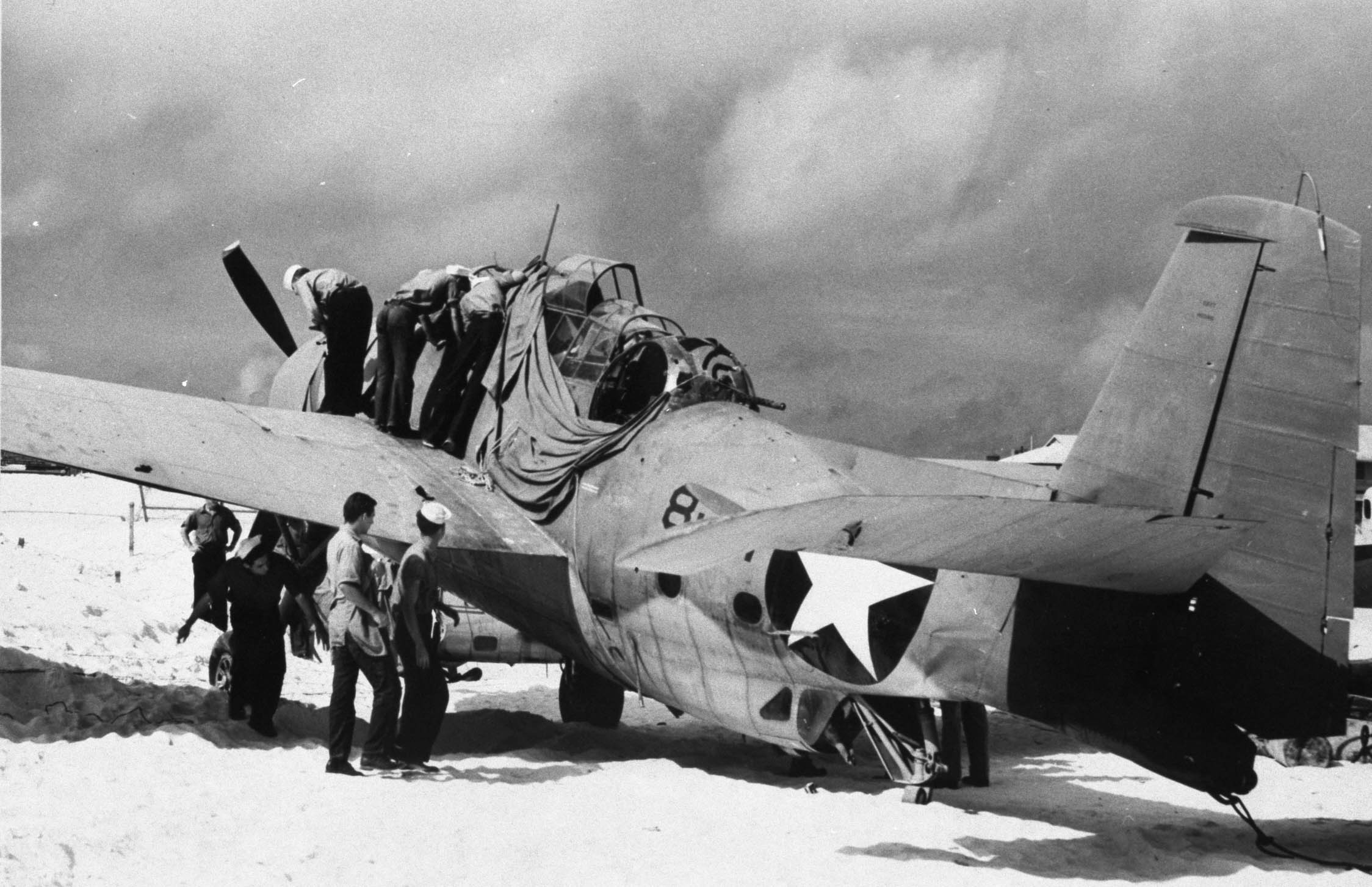
8-T-1 back at Midway following the mission.

8-T-1 back at Midway following the mission.

Bert had the Avenger right on the water now, and as Harry shakily returned to his gun, he could see the individual ocean swells, each punctuated by a crest of whitecaps.  They were under a hundred feet now, charging desperately towards the Japanese fleet.

The Zeroes came again, relentless and brutally effective.  As Harry searched for targets, another fusillade of bullets and shells ripped into the TBF.  This time, the enemy fire shredded the hydraulic system.  That caused the tail wheel to extend down right in front of the ventral gun.  Alone in his tiny metal box under his crippled TBF, Harry lost his only means of fighting back.  He was  captive now in his own airplane.

A flurry of bullets scythed into the radio compartment and Harry’s head was rocked by a hard blow. He spun away from his machine gun, feeling blood pour down his forehead. A moment later, he lost consciousness.

In the cockpit, Bert Earnest fought to keep 8-T-1 in the air.  The other Avengers were going into the water all around him.  One burning TBF pulled briefly alongside his shattered bomber, its pilot gesturing frantically at him.  A second later, it was gone, a burning smear of wreckage on the waves below.

A Mitsubishi Zero, the most deadly fighter of the Pacific War's opening months.

A Mitsubishi Zero, the most deadly fighter of the Pacific War’s opening months.

The Zeroes scored again, blowing away chunks of 8-T-1’s aluminum skin.  The stick shuddered in his hand as his control cables took hits.  He pulled back on the stick slightly, but felt it go slack just as a cannon shell exploded through the canopy behind him.  Shrapnel tore through the cockpit, and he felt searing pain in his right cheek as a sliver of metal clipped him just above the jaw line.  Blood splattered the cockpit and his flight suit even as more bullets demolished his instrument panel.

Though dazed from the blood loss, Bert realized the carriers were still a long way off.  And no a single TBF remained in sight.  A glance behind had told him all he needed to know about Jay.  His gunner was dead.  Harry had probably been killed, too. He was attacking the most heavily defended fleet in the world and he was alone.  The spear point of Midway’s attack had been whittled away to just 8-T-1.

He couldn’t make the carriers.  No way; they were too far off.  Settling on a what he thought was a cruiser, he lined up on its frothy bow and released the torpedo.  Free of its cargo, the TBF leapt upwards for an instant, before sagging into a shallow descent.  Bert played with the stick to correct his angle of attack, but got no response.  The elevator cables had been  shot away.

Unable to control the Avenger, he resigned himself to death.  He waited for the end as the waves below surged towards him. Then, with about 30 feet left before impact, Bert unconsciously reached down to adjust the elevator trim.  In a flash, he realized he could fly the plane with the trim tabs.  Sure enough, as he played with the trim controls the Avengers nose rose sluggishly.  Limping away northward, two Zeroes clung to his Avenger’s tail even as he cleared the last of the Japanese ships.  The two fighters flayed the Avenger with well-aimed fire, but somehow failed to bring it down.  A few minutes later, they pulled off target and returned to the fleet.

Another shot of a Mitsubishi A6M2 Zero, taken with Mt. Fuji in the background.

Another shot of a Mitsubishi A6M2 Zero, taken with Mt. Fuji in the background.

In the radio compartment, Harry awoke slowly, his head throbbing with pain.  At first, he became aware of sounds.  The TBF’s rumbling Wright-Cyclone brought him much comfort.  At least they were still in the air.  He opened his eyes and tried to focus.  Through his blurred vision he could see his radio compartment was splintered with shadows, broken by shafts of sunlight shining through ragged bullet holes in the fuselage.  As he looked around, he saw his radio had been smashed to junk by machine gun rounds.

Blood still streamed down his face, and when Harry became aware of that again, he reached up to find the wound.  Gingerly, his fingers found a hole in his forehead.  Stunned, he wondered how he could still be alive after getting shot in the head. Then he remembered he’d been wearing a cap.  He took it off and examined it.  The cap’s bill and front were soaked in blood, while an entry hole had pierced it on the left front side.  He let out a sigh of relief when he saw a similar hole in the back of the hat.  That had to have been the exit hole.  He’d only been grazed.

Feeling a little better, Harry crawled forward from the radio compartment into the cockpit seat behind Bert.  When he got there, he saw the cockpit was a gory mess.  The canopy glass had been punctured by many bullet holes, and now cool morning wind whistled through the cockpit, making an eerie sound that added to the nightmare.

With no instruments left, Bert flew back to Midway with luck and dead reckoning.  En route back, they spotted a huge plume of black smoke on the horizon and turned towards it.  Sure enough, that was Midway, black smoke boiling out of ruptured fuel storage tanks the Japanese bombers had hit earlier in the morning.

They came in to land, but men near the strip waved them off.  Frustrated, Bert aborted the landing and staggered back into the pattern.  They swung around again, only to be waved off a second time.  Neither Bert or Harry had the patience for this game.  When they wheeled around for a third attempt, Bert ignored the warnings from below and painted the TBF down on the runway.

Only one wheel had come down.  The other remained locked securely in the wing.  Neither Harry nor Bert realized this until 8-T-1 began slowing down.  Suddenly, the wing dipped and struck the runway, causing the Avenger to tilt wildly and ground loop.  The dying plane skidded to a halt, and as it did, Bert cut all the electrical switches.

For a moment the silence seemed overwhelming.  Harry and Bert stared out around them as rescue crews rushed to their aid.  A sense of utter desolation struck them.  They were the sole survivors of their detachment.

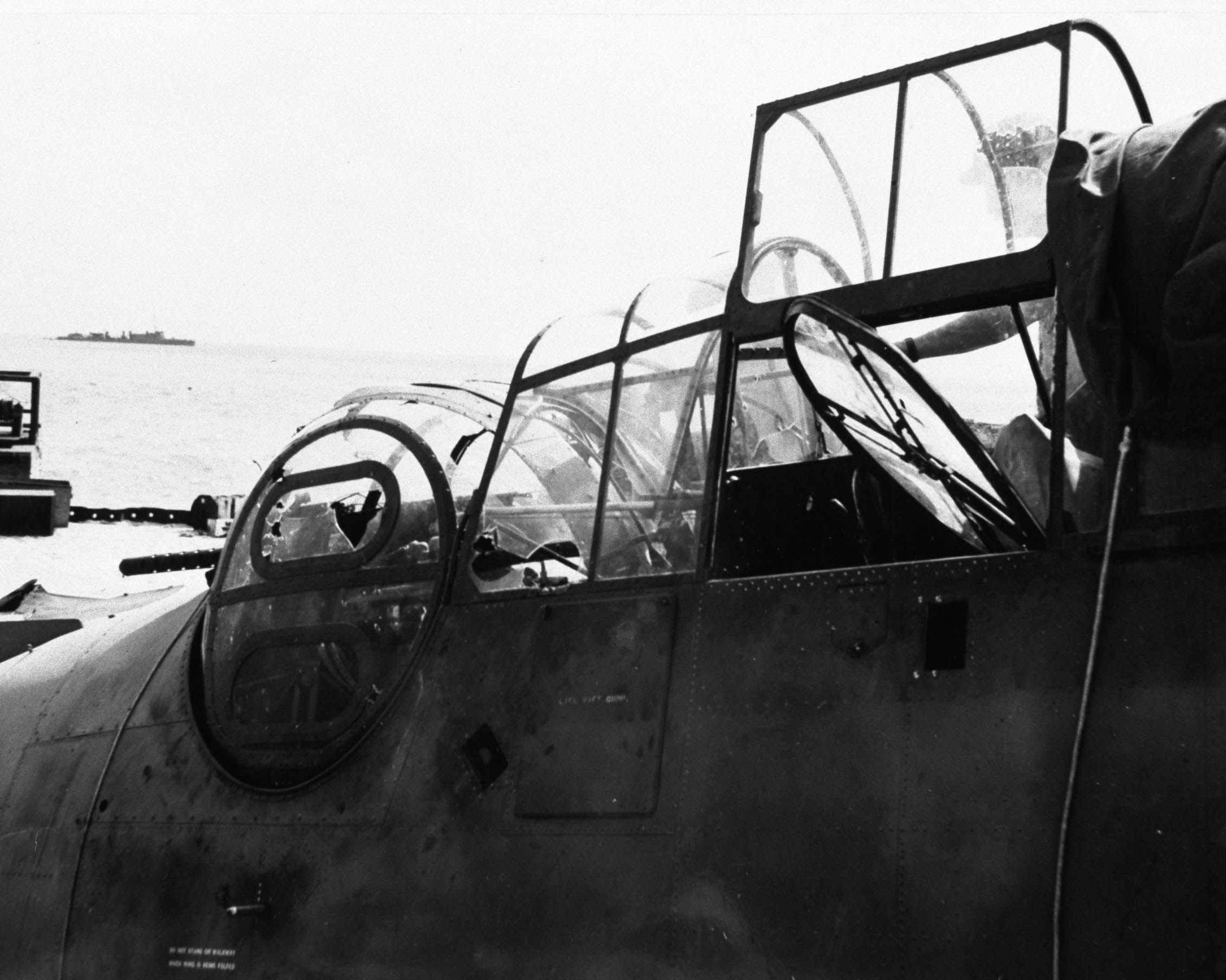
Manning's turret after Bert got 8-T-1 back to Midway.

Manning’s turret after Bert got 8-T-1 back to Midway.

***

Later, Bert and Harry learned just how bad things were.  The rest of Torpedo Eight, flying outdated Douglas TBD Devastators had attacked the Japanese fleet from the Hornet about two hours after their fateful run.  They went in without fighter cover as well, and the Japanese just shot them out of the sky.  All 14 TBDs went down.  Twenty-seven men died and only Ensign George Gay survived to be rescued from the sea by a flying boat after the battle.

Of 46 men Torpedo Eight had sent aloft that morning, only Bert, Harry and George Gay were left.  Harry was the only surviving enlisted man.

And this was their first mission.  Harry  wondered how anyone was going to live through the war if this is what they would face every time they flew.

On the strip, the sights of disaster were evident everywhere.  Sumner Whitten, the other New Englander among Midway’s airmen, limped back to Midway in his SB2U Vindicator, but over half his squadron had been shot down.  The fighter squadron had been wiped out—only a single F4F-3 Wildcat remained flyable.  The B-26s that had trailed the TBFs into battle had been massacred.  Two had gone down, and the other two came back so full of holes that they sat for days at the end of the runway, bleeding oil, hydraulic fluid and gas from dozens of gashes.  One group tried to count the holes in one of the B-26s, but gave up after reaching 200 on one wing and part of the fuselage.

Harry’s own TBF was pulled down towards the beach, where its gear was lowered.  There it would sit for the next month like a forlorn sentinel waiting vainly for its comrades to return.  A thorough engineering analysis was later done on it.  At least 64 bullets had struck 8-T-1, along with nine 20mm cannon shells.  The cannon shells probably obscured some other bullet holes, so the real count could never be firmly established.

Altogether, over half of Midway’s aircraft went down in that one desperate rush at the Japanese carriers.

Harry spent the rest of the day and night of June 4th in the hospital at Midway, where his head wound was treated.  Dizzy, his vision still blurred, he lay in his cot thinking of all the friends he’d lost.  The stab of pain as he recalled each man forced him deeper and deeper within himself.  He would never completely come out of his shell again.

The next day, he returned to Torpedo Eight’s living quarters, which were tents clustered near the airfield.  Carefully, he went through all the enlisted men’s possessions, cataloging them and packing them up to be sent home to their families.  It was the toughest task he ever had to do.

TBF Midway 1

Midway, of course, turned into the most remarkable American naval victory of WWII.  At 10:30 in the morning on June 4, several squadrons of Navy dive-bombers caught the Japanese carriers by surprise with their decks loaded with aircraft.  With just a few bomb hits, three of the four were turned into raging infernos.  The fourth would be destroyed later in the afternoon.  In return, the US Navy lost the aircraft carrier Yorktown and 144 aircraft. Of the 48 torpedo bombers launched by the American carriers and from Midway that day, only six returned.  The price was high, but in that single day, the Japanese lost their best ships and best aircrew.  Never again would they be able to take the offensive in the Pacific.

Harry Ferrier left Midway shortly after the battle ended.  He returned to Pearl Harbor, where the Navy put him up in the Royal Hawaiian Hotel for night before reassigning him to Torpedo Three.  A month later, he set sail for Guadalcanal aboard the USS Enterprise.

Harry served with VT-3 through most of August, fighting in the third carrier clash of the war at the Battle of the Eastern Solomons.  Just as he and his pilot were returning to the Enterprise after a mission, a Japanese bomb struck the ship.  Harry’s plane got caught up in the middle of the Japanese attack, and his pilot went barreling after several dive-bombers in hopes of shooting them down.

Following Eastern Solomons, he was sent up to Henderson Field at Guadalcanal while the Enterprise returned to Pearl Harbor to have its damage repaired.  At Henderson, Harry ended up flying with a reconstituted Torpedo Eight.  Miraculously, he drew Bert Earnest as his pilot.  Together, these two comrades-in-arms endured the terrible living conditions, dreadful food, dysentery and Japanese shellings that came with the territory on Guadalcanal.  Finally, later that fall, Harry and Bert were evacuated.

Fifty-five years after the nightmare at Midway, Harry Ferrier returned to the island as part of a team of underwater explorers who were looking for the USS Yorktown.  Robert Ballard, the famous oceanographer who had located the Titanic and the Bismark back in the 1980s, led the team that would find the Yorktown.  Two American Midway veterans and two Japanese aviators who fought in the battle accompanied the search team aboard the research vessel, Laney Chouest.

For Harry, the experience was a painful revisit with memories he had long ago thought he’d overcome. After Midway, he’d moved on with his life.  He had stayed in the Navy after the war, working as an electronics expert on various atomic bomb test programs before serving three combat tours in Vietnam as an officer aboard a helicopter assault ship.  He retired from the Navy as a Commander after rising from the enlisted ranks not once, but twice. Justly proud of his military career, Harry had overcome so much to succeed in his career and life.

On Memorial Day,  the Laney Chouest’s crew held a solemn ceremony on the water north of Midway where the two American and two Japanese veterans of the battle came together in a moment of friendship and reconciliation.

The ceremony aroused some long-suppressed demons.  Harry had lost 43 friends and squadron mates on that terrible day in June, and as they rode the seas not far from Torpedo Eight’s gallant charge, the faces of the men  who’d died that day welled up  to haunt him once again.  How had he survived when so many had not?

Emotions long since held in check came flooding out.  Allowing those feelings to flow free proved to be a catharsis, but at the same time, it left Harry exhausted and homesick.  He had escaped to Midway for a second time.  As difficult as it had been, this time, it had helped to heal him.

Categories: Warrior Memories, World War II in the Pacific | 3 Comments

The Hero My Town Lost

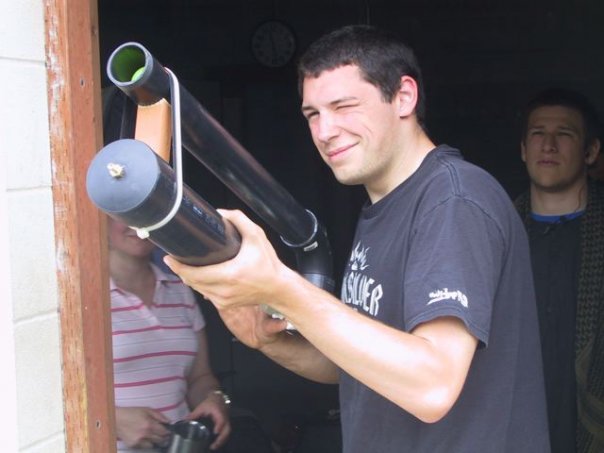
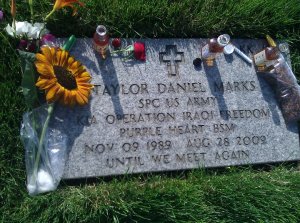
306273_2047422068476_1350649_nIn August 2009, Specialist Taylor Marks was killed by an Iranian-made EFP roadside bomb emplaced on a bridge in downtown Baghdad only a short distance away from an Iraqi Police checkpoint. Killed with him was Sergeant Earl Werner, a veteran of OIF II and the Oregon National Guard’s relief efforts in New Orleans following Katrina. I did not know Sergeant Werner, but I knew of him. Taylor, on the other hand, was like family to me. Before he left our little Oregon town, he had routinely babysat my kids. He introduced my son to LEGO’s and showed them you could set stuff on fire with a magnifying lens and some sunlight. That was the Puckish side of him–he liked to push boundaries, but never so far that he got out of line. His teen age rebellion consisted of exploring abandoned buildings at night, playing with fireworks, and building modified potato guns that could fire simulated RPG’s at 2-162 Infantry’s Humvees during drill weekends.

6381_1205869900835_3846338_n

Taylor armed with one of his RPG simulators at Fort Lewis in June 2008, his last volunteer OPFOR drill weekend before leaving for Basic Training.

He was a brilliant young man who had earned a scholarship to the University of Oregon, where he planned to become an Asian Studies major. But after meeting me and my band of rag-tag civilians who role-played bad guys for the Guard and law enforcement, Taylor chose a path of service. He joined the Guard straight out of high school and was training to be a military intelligence specialist when the 41st Brigade departed Oregon for its pre-deployment work up at Camp Shelby in the spring of 2009. Taylor originally had orders to attend the Defense Language Institute in Monterey, California, but the 41st was so short handed those were changed at the last minute. Instead, he was pulled into the 82nd Cav and assigned to be an MRAP driver.

1924022_1182644817291_7170494_n

Taylor’s senior prom night. I let him have my Pontiac GTO for the night. He’s one of about six people to have driven the car, and it escorted his remains home from the airport, then to Willamette National in 2009. The GTO will never leave my family as a result.

He reached Oregon in early June of 2009 having not fired a weapon in months. During one of our OPFOR drill weekends at Camp Rilea, Oregon, I asked some of the NCO’s there if they could get Taylor some range time since he’d missed almost all the pre-deployment training with his new unit. About two weeks later, Taylor was sent to Camp Shelby just in time to help his unit pack up and head out the door for Iraq. He was killed in action six weeks later.
6a00e553b244e1883400e553c58dc48834-500wi

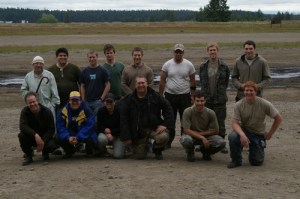
The 973rd Civlians on the Battlefield (COB). Taylor is standing at top right.

His death in combat was one of those terrible turning points in my life. I lost a young man who’d become a major part of my family’s life, whose life had been set on the path to Iraq by his association with me. Intellectually, I knew his death was not my fault. But in my heart I knew that had I not drawn him into my group of civilian volunteers and introduced him to the National Guard, he’d have gone off to college like so many other young men. My heart will always be burdened with that guilt, and it took me almost five years to reconcile and accept that burden of responsibility. I also learned that the pain of loss never goes away; it just becomes a part of you that either you accept and live with, or it will torment and destroy you. It was a toss up which way it would go with me for a long time. Part of me went to Afghanistan to tempt Fate. If God wanted to take Taylor, then take me too. He didn’t. I came home, and Taylor didn’t, and for a long time that made his loss even harder to bear. It colored every day, and for a long time, it took down much of the best parts of my life. In my eulogy of him, I promised to live my life for him, as adventurous and wide open as he had led his. I took that vow as sacred, and have tried to live up to it, but there were times in the first years after his death that I very nearly gave in to the grief and guilt.

9th fs johnson & whitehead nadzab 8x10

Gerald Johnson (at right). MIA October 7, 1945. He was lost in a typhoon off the coast of Japan less than a week before he was supposed to rotate home. He’d survived over 1200 combat hours and 265 missions in three tours that spanned the Aleutians, New Guinea and the Philippines.

In the 1990’s, I became very close to 49th Fighter Group ace Colonel Gerald R. Johnson’s widow, Barbara. Like Taylor, she had become part of my extended family, and had even been part of my wedding party in 1993. While writing first my M/A thesis on her beloved husband, then the book Jungle Ace, my time with her was precious and life-changing. It was also the first time I really began to understand the magnitude of such a loss. Five decades had passed since she had lost Gerald at war’s end, but his death had altered the landscape of her life so profoundly she lived in its shadow for the rest of her life. The grief never went away. Time does not heal all wounds. In Barbara’s case, it perhaps dulled the pain a little bit, but it was always there in her eyes.
6a00e553b244e1883401b8d07b2c2f970c-800wi

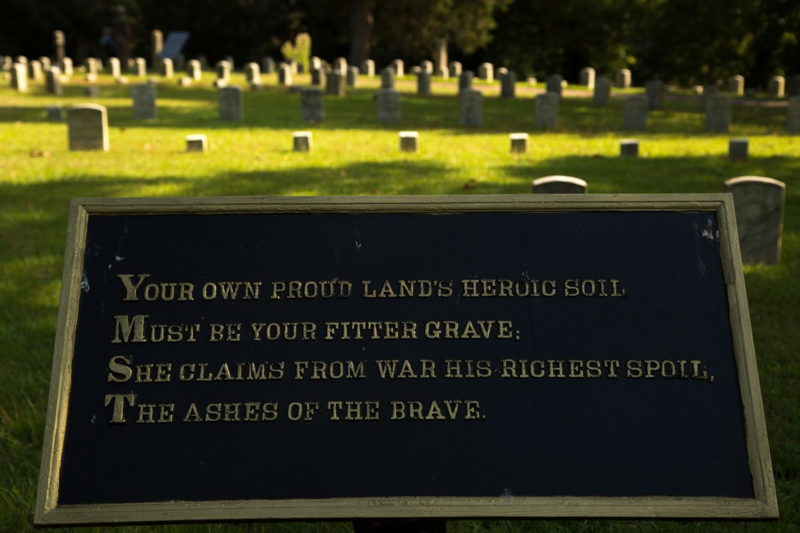
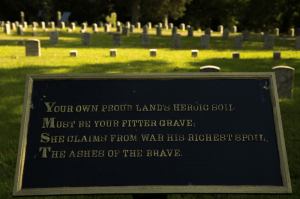
Shilo Battlefield.

So this Memorial Day, there will be countless pundits speaking of the “ultimate sacrifice” and the bravery of our warrior heroes. Sacrifice will be so overused that it will lose its meaning. For me, Memorial Day has become a reminder of pain, of my own experience with loss, of the pain I saw in Barbara’s eyes and so many others whom I’ve met over the years who lost a beloved family member to war and violence. I will remember the elderly neighbor we had when we first came to Independence. She lived alone and was very isolated from the community. When I came to her door canvassing for a political cause, she welcomed me inside and we talked for quite a long time. She had married young, during WWII, to her high school sweetheart. Before he left for overseas service, they had a daughter together. He was killed in action, and she never remarried. What was the point, she had said to me. Her Love had died. She focused on raising her daughter and lived the rest of her life in quiet loneliness, waiting to be reunited with her Soldier.

I am typing these words right now in the Saratoga Public Library in Saratoga, California. I grew up here in the heart of the Silicon Valley back in the 70’s and early 80’s. This library was my refuge, and it was here that my love of history and writing took hold and flourished. I spent countless hours after school here, reading everything the library had collected on World War II, lost in the romance and adventure of air battles, aces and the nobility of service.231185_1554810130556_8171780_n
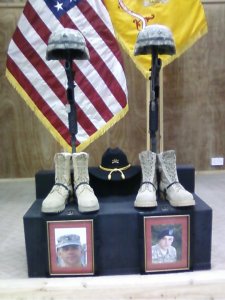
I look back now and realize that I never understood the reality of combat and what that does to the human soul. It took losing Taylor and seeing the fighting in Afghanistan for me to catch a clue and glimpse that reality. Now I understand that the death of a warrior is not only the end of a life and the destruction of so much potential, but the turning point in every life close to the lost Soldier’s. That death will have a cascading effect on those left behind that is rarely discussed or understood. For the Johnson family, Gerald’s death led to such anguish that his twin brother Harold ultimately took his own life. The shock of that led to his father’s death only a few weeks later. For me, it was the end of what I call my old life and so much in it that I loved. My sense of family changed forever, I lost friends and relationships. Like so many others, the death of an American warrior redrew the fabric of life back home. The ripples of loss spread across families, neighborhoods, communities. One by one, they redraw the face of America until, by war’s end, we find ourselves a changed nation.

When I think of Taylor now, I think of all that our nation lost when that EFP took his life. Had he lived, what amazing things he could have done with his mind and talent. The way he could have added to our collective experience, the way he would have found meaning in his life surely would have led to the betterment of the world in some small but notable way. His was one of thousands of lives cut short since the towers fell, one drop in an ocean of lost potential torn from us by an enemy who would strike at our children and our own homes if given a chance. Devoted men and women who believe in our nation’s exceptionalism and have the courage of their convictions to stand strong in the maelstrom of combat are among America’s most valuable souls. On this Memorial Day, as we mourn for those we lost, let us hope our nation’s leaders remember their value and pledge to ensure that when they are called to battle again in the future, the cause is the measure of their commitment.


To all of you hurting on this Memorial Day Weekend, all I can say is don’t lose the Faith. If you do, our nation is lost.


6a00e553b244e188340105358afa44970c

2nd Battalion, 162nd Infantry, Oregon National Guard. Camp Rilea, October 2008. Mobilization Day for the unit’s second deployment to Iraq.


Below is the eulogy I gave at Specialist Taylor Marks’ memorial service in Independence, Oregon in September 2009.


============================================================================

Over a century ago, Walt Whitman wrote of his experiences in the Civil War, and its aftermath.

To the tally of my soul,
Loud and strong kept up the gray-brown bird
With pure deliberate notes spreading, filling the night.

Loud in the pines and cedars dim,
Clear in the freshness moist and the swamp perfume,
And I with my comrades, there in the night.

While my sight that was bound in my eyes unclosed
As to long panoramas of visions.

And I saw askant the armies,
I saw as in noiseless dreams hundreds of battle-flags,
Borne through the smoke of the battles and pierc’d with missiles, I saw them.

I saw battle-corpses, myriads of them,
And the white skeletons of young men, I saw them,
I saw the debris and debris of all the slain soldiers of the war,
But I saw they were not as was thought,
They themselves were fully at rest, they suffer’d not.
The living remain’d and suffer’d, the mother suffer’d
And the wife and the child and the musing comrade suffer’d,
And the armies that remain suffer’d.

Taylor Marks made the transition from boy to man, first by training soldiers, then by joining them in battle. During this cornerstone period in his young life, I had the singular joy, pride and kinship to be touched by Taylor’s bright and dawning spirit.

Winston Churchill, not the statesman, but the American novelist, wrote about how disorienting this voyage from child to man can be.

At all events, when I look back upon the boy I was, I see the beginnings of a real person who fades little by little as manhood arrives and advances, until suddenly I am aware that a stranger has taken his place.

No stranger ever took Taylor’s place. To his last breath, he remained gentle of heart, loyal to those he loved, faithful to our Lord, and true to the values he had established long ago, thanks to the guidance of his family. He never lost his idealism. His spirit was never tarnished with bitterness or regret. He loved the Guard and his blossoming role within it. Unlike Churchill’s character, he negotiated the path to adulthood not to look into a mirror and see a stranger, but to see the eyes of the man he wanted to become. What a gift. So few of us get there, especially so fast, that I found myself in awe of Taylor.

Two things brought Taylor and I together: a Christmas card and a ballroom dance class. These two disparate moments in our lives formed the nucleus of our bond. In the months that followed, it was solidified and nurtured through shared misery and the sheer uniqueness of our common goals.

In December of 2007, I was sitting on my couch. My then six year old boy, Eddie, was nestled next to me, babbling on about all the World War II airplanes he wanted for Christmas. My wife Jennifer, handed me a beige envelope. It was a Christmas card from Ken Leisten Sr. Kenny, his son, was killed on July 28, 2004 in the Sunni Triangle. I wrote about him in The Devil’s Sandbox, and every July, I go to Willamette National to be with Vince Jacques and the rest of Kenny’s platoon to celebrate his life.

I sat and read this card  from a man who had lost his only son, while my only son’s arms were tight around me. I started to cry, partly for Ken’s loss, but also for my own utter selfishness.

What had I done to see that no other father loses his boy? I had reams of tactical information on the enemy from the books I’d researched and written. Time had come to put it to use.

The previous May, Brad Bakke, Aaron Allen and I had role played insurgents during an Alpha Company, 2-162 Infantry drill weekend. Being an insurgent was brutal. I was sick for a month afterward.

Alpha Company asked us back for the January drill. I said I’d be there with a group ready to be abused.

At the time, I’d been asked to teach a ballroom dance section in a PE class at Central High. Most of the kids weren’t really all that into learning how to swing and waltz, but I noticed one kid had game. Every period, he came eager to learn, willing to give something new a try, and seemed devoid of self-consciousness and immune to the vibe sent out by his peers that this just wasn’t cool.

That was Taylor. He had these absolutely bizarre sideburns and chin fuzz that made me wonder if he’d taken the pilgrim section in his history class a little too seriously. But that could be, and later was, shaved. What moved me about this kid were his eyes—dark and wide, they radiated curiosity. They had depth and a sort of grace found only in much older men totally at peace with themselves. I saw in their depth, keen intelligence and a thirst to explore the world.

I didn’t see selfishness. I didn’t see a sense of entitlement. I didn’t see a kid who’d succumbed to pop culture’s fixation on the superficial or the material.

And I also sensed a bit of Puckishness in him. I liked that. I liked that a lot.

Just before Christmas vacation, I assembled the class and told them I was forming a group dedicated to helping train 2-162 Infantry for its next combat deployment overseas. I told them we would be roughed up, we’d be working in all manner of weather conditions, and we would be taxed to the utmost of our endurance. I didn’t sugarcoat this. I made it clear it would be a challenge, but one with tremendous rewards. Our goal: prepare those who fight so that every one of them comes home to their families.

Taylor was all over this. He wanted in, and was willing to bring friends. I checked with my wife, who had Taylor in her math class, and she gave me the thumbs up. Outstanding kid, good grades, sense of responsibility. He would not goof off.

Taylor brought Gaelen Bradley into our group. As the January drill approached, we wanted to make a statement to the Oregon Guard that we would not be your average weekend enemy force, or OPFOR. I scheduled us to support two companies: Alpha down in Eugene, and Charlie at Camp Whithycombe up in Clackamas.  To pull this off, we’d need to go all weekend with minimal sleep.

That Saturday rolled around, and I kept Taylor and Gaelen close to me in the shoot house at Goshen. Each fire team through the door had to make a split-second decision based on our reactions to them: greet us as friends, detain us as suspects, or shoot us as hostile insurgents.

When Sergeant Alan Ezelle first told us to be hostile and resist detention, I watched Taylor get slammed face-down into concrete and broken glass. After that iteration, I thought he’d be done. He got up grinning. Gave me a thumbs up and grabbed one of our training AK-47’s, and made ready to give the next fire team.

It started to rain. Then it snowed. The shoot house has no roof, and the concrete floor soon was slick and covered with icy puddles. None of us had the sense to wear cold weather gear. Taylor’s teeth chattered. His lips turned blue. I told him to go take a break and get warm. He said, “Hell no. Bring it.”

And so it went. Fire team after fire team. Squad after squad. Taylor was dumped, dragged, shot at with blanks at close range, and generally pummeled into submission. Sergeant Ezelle didn’t make us friendly local nationals that often, so we did a lot of fighting in the snow that day. We learned one of the nuances of being an enemy force in training: you’ve got to bring the appropriate level of violence to each squad based on their level of experience and ability. As they learned and got better, Sergeant Ezelle had us ratchet up our resistance.

When the day ended, Soldiers came to us and thanked us. “You’re the most realistic OPFOR we’ve ever had.” Others said, “That’s the best training weekend I’ve had since joining the Guard.” We would hear that a lot in the months that followed, and every time such words served as rocket fuel to our motivation.

That evening, sore, stiff and soaking wet, we climbed into our cars and drove home, changed, then sped to Withycombe in time to dig shallow firing positions and execute night ambushes on Charlie Company. We finished at 3:30 that morning. Taylor was still grinning.

By the end of the weekend, our group had put in 37 hours and had impressed 2-162 enough to give us civilians a role at every field drill. Taylor and Gaelen, and Bethany Jones and Shaun Phillips set the standard for our group.

We incorporated as a non-profit called the 973rd COB—Civilians on the Battlefield. In the months to come, we spent out of our own pockets tens of thousands of dollars on equipment, clothing, and training devices. SimplyIslam.com must have wondered if a Mosque had opened up in Polk County after all the orders we placed for Arabic clothing. My office is so heaped with training AK-47’s, RPK’s, and other gear that it has become known as the Unawriter’s Lair.

When Taylor saw Alpha Company had limited access to training IED’s, he and Shaun Phillips went to work. They built simulated car bombs that when detonated, touched off a siren. When nine soldiers were killed or wounded entering an Al Qaida safe house in Iraq in early 2008, I got word from a friend over there that the place had been wired with an IR-triggered bomb that went off when the door was breached. Taylor and Shaun constructed a duplicate, and we employed this tactic against Alpha Company so they could develop counters to it.

When we started ambushing Humvee convoys at Rilea, we didn’t have access to simulated rocket propelled grenade launchers. The dreaded RPG’s. Taylor went off and built two. I’ll never forget the first time we tested one of them. We were down at Riverview Park. We wanted a projectile that would travel far enough to be useful and make a loud enough noise on impact to let the Soldiers in the Humvees know they’d been hit. At the same time, we didn’t want to use anything that could cause an injury. That is an engineering challenge way beyond me.

Taylor came up with miniature nerf footballs as ammo, squished and wrapped in duct tape. I was skeptical, and dared him to hit my GTO from about 200 feet. I got in and drove it at a steady clip, and he let loose on me.

THUNK! The Goat shuddered so hard I thought the whole right side had been bashed in. Taylor had hit the Pontiac’s real quarter panel. That was the last time we used my muscle car for target practice. Taylor’s stuff worked, and it worked in the field because he designed them to be rugged. He paid for all the materials out of his own pocket, with money that he earned from his job at the Chevron station on 22.

Every drill weekend, Taylor was there, setting a quiet example with his relentless work ethic. As he came to understand the Soldiers and what they would face in the months to come, he grew ever more dedicated. At Rilea, and at Goshen, we didn’t leave the field until the last Soldier had come off the lanes. Taylor was almost always the last man off with me.

He came to respect, then revere the NCO’s who worked with us. Sergeant Ezelle, Sergeant Hambright, Sergeant Cochran—they became Taylor’s role models. He saw in them a willingness to confront evil on distant shores. He saw in them the consummate professional NCO—capable teachers, disciplined human beings, and men capable of telling a story or two about their wild days.

Taylor asked me to be one of his mentors on his senior project, which he produced on our group. I was honored, and he’d come over to my office and we’d have some pretty serious heart to heart talks. He’d received a scholarship to the U of O and had been set on a course much like mine at his age: college, dorm life, the intellectual challenge of academia.

But he found his true calling with us. The combat arms of the U.S. military represents one tenth of one percent of our population. The fate of nations—our nation—rests on so precious few who are willing to bear this burden and forgo the advantages of an average civilian life.

As he saw the commitment 2-162’s men shared, he felt it grow within him. Once, at Andy’s, he wondered out loud how he could go to college when something so much larger needed good young men.

When he defended his senior project, I sat in the back of the classroom and felt like the proudest parent in the world. He nailed it, too, by the way.

That spring, the 973rd assembled the most outrageous and diverse group of individuals I’ve ever been associated with. Everyone understood the importance of the mission and took our responsibility in every field exercise very seriously. But along the way, the unexpected happened. We went from strangers to family in a drill weekend.

I always wanted an extended family. My own back in California is a mess, and I always sort of felt alone and left out of something most others share.

The 973rd became my crazy, boisterous, clan, bonded by the oddity of our undertaking, and the scores of hours spent in the bushes with each other waiting to ambush the next patrol. Taylor became a brother, a son. So did all our young men—Spencer, Joe, Andrew, Aaron, Gaelen—just to name a few. Joey became our spiritual center—irreverent yes, but a shoulder and an ear for everyone—including Taylor. Mark Farley our XO, balanced us, kept the peace when things got rough. I was the leader, always demanding that we be better than perfect on every iteration.  And Jones too care of us all.

One day, that spring, Taylor asked me to hook him up with a recruiter I trusted. I gave him a copy of the Devil’s Sandbox and told him to read it. He came back, more resolved than ever. I wanted him to know—to understand what was at stake and the perils of the warrior profession. I gave him House to House. He read it and badgered me some more.

I was too slow for him. He went and got a recruiter on his own. Sergeant Ben Taylor played it absolutely straight with Taylor. But I completely freaked out. In front of my kids, I called Ben and tore into him and screamed things to him I’ve never said to another human being. I was protecting my cub. I later sat down with Ben and his boss, Colonel Myer, and found that my preconceptions were all wrong. Ben is a compassionate, dedicated member of the Oregon Guard, and he came to love Taylor as much as the rest of us. Ben is one of the most honest and straight human beings I’ve ever known.

After Taylor scored a 98 out of 99 on the ASVAB, he found a way for Taylor to use his love of language and Asian culture for the benefit of the Guard. He was set to go become an interrogator and a linguist, with Cantonese and Japanese as his specialties. Ben’s stewardship sent Taylor’s morale through the roof.

School was coming to an end, and I wanted Taylor’s final weeks to be memorable. That spring, during an Alpha Company drill at Goshen, he dragged his white sedan down to the range to be used as an obstacle the Soldiers would have to search.

What kind of a high school kid offers up his wheels for a training exercise? I never would have been so gracious. The car took a beating, and Taylor never once complained.

To honor that, I let him borrow my GTO so he and Gaelen could double date to the Senior Prom. Aside from my wife, who keeps breaking it, Taylor was the only other person to drive this car. That Pontiac means a lot to me. It was the first totally frivolous thing I’d ever purchased in my adult life. Up until recently, we never had the resources to be frivolous, we were lucky to keep our house. My wife had faith that I could make it to New York as a writer—and she was the only one who kept that faith—and the GTO became my reminder of our shared success.

Taylor treated my Goat with reverence. I gave him the keys, told him to keep it under eighty—yeah right—and have fun. Later that night, I grabbed the family and piled into our other Pontiac. “Where are we going?” Jenn asked. “Gonna check on the Goat.” I said.

That was the first time I’d ever been in the Green Villa Barn’s parking lot. The senior prom was held here. A year later, we’ve returned to the location of one his best high school memories to honor what he has meant to us.

Now, we are left to grieve. Thank God I don’t have to do that alone. The 973rd gathered Friday night to share this trauma equally. We visited Taylor’s family, and Michelle, Don, Morrey and Courtney—with your grace and gentle spirits you gave us the greatest gift one human can bestow on another: the ability to heal from this loss. Had we not come together as we had, had I not felt the warmth of your embrace and heard the things Taylor said of me from your own voices, I would have been done. The guilt, the pain—it would have been too much. Instead, your open home, and your open hearts laid cornerstone for a new beginning for all of us.

You also gained my extended family, my clan. Courtney, you now have a big sister in Jones and twenty older brothers. If your boyfriend breaks up with you, call us. We’ll go beat him up. This connection will bind us forever.

That connection began Taylor became one of our own. He babysat my little boy and little girl. He taught them to melt stuff with a magnifying glass, and now I have two pyromaniacs who go nuts on the 4th of July. That’s okay, so do I. He showed them how to use my treadmill for things other than exercise.

One day, he brought a big tub full of Legos over to my office. We’d never given Eddie Legos before, which Taylor thought was appalling. So he gave my boy his childhood collection. Overnight, Eddie went from a WWII airplane fanatic to a Lego-obsessed construction foreman. My office became a cityscape, complete with sharks eating Indiana Jones and elaborate space ships docked on my furniture. Just walking around without puncturing a foot on these things became a challenge. A year and a half later, Eddie’s urge for Legos has only grown. That’s all he wants for birthdays and Christmas now, and we’ve grown Taylor’s original collection significantly, partly because one of my other adopted sons, Andrew Bowder, contributed his childhood sets to the cause as well. Someday, I hope Eddie’s son will play with them, too. Grandpa’s job will be to tell him about Taylor.

We spent a year with the 2-162 and participated in every field exercise here in Oregon as they prepared to go to Iraq. We learned how to test each squad. We exploited mistakes so we could impart lessons. We figured out gaps in fields of fire and helped each squad hone their skills so such errors were ironed out here, where it didn’t count, instead of learning them with casualties on the battlefield. We earned the respect of every Soldier who went through our lanes.

About two weeks ago, I heard from Sergeant Ezelle. He’s in Iraq now, and I asked him if our group really made a contribution, and what we could do to improve for the next unit we help train. Easy wrote back, “You helped my men more than your group will ever know. Thank you.” From a two deployment veteran, that meant everything. He also added, “You need to start charging the Guard.” Never. We will never take a dime.

We now support other elements of the Guard, as well as the state police, local law enforcement and SWAT Teams. What Taylor helped found has grown beyond all our expectations. And we stand ready to help prepare those who fight anytime, anywhere.

Forming and leading the 973rd has been the most meaningful experience of my life. If we helped to save one Soldier’s life, there is nothing greater any of us will ever accomplish.

From our group, four of our young men—my adopted sons—have either joined the military, or are in the process. I live in fear of another day like this one, but at the same time I am so proud. They saw what Taylor did when we worked alongside the men of 2-162.

As Taylor prepared to leave, we sat down for lunch at Andy’s again.
I told him that he stood on the threshold of his life. The pages ahead were unwritten—he just needed to write the story. Seize, it. Go be great. Don’t lie down and succumb to the mediocrity of a life half-lived.

No worries there. Taylor was already headed that way. He was a special man, with talent, potential and drive to lead him anywhere he wanted to go. And one thing for sure, he was destined for a significant life. Where he wanted to go was into the fight, to be a member of that one tenth of one percent that keeps us safe and fights to liberate the world of all its evils. He offered his life—he didn’t give it. It was taken away by evil so vile it has scorched us all.

He lived far more in his nineteen short years than most of us will in eighty. He did so with the same wide open heart that we found in his family.

His pages will remain unwritten. And I’ve been wondering how I will survive that.

Let his spirit be our guide. Taylor went into life wide open to it. He reveled in a challenge, chased dreams and flung himself into whatever task absorbed him. There’s nothing ordinary about that.

I will live. And I will go into every day with Taylor never far from my mind. I will match his zest and daring, and I am not going to sink into the mundane. This life we all continue to share—Taylor has shown us just how precious and fleeting it is. We don’t know how many pages we have left to write in our own stories. We have to treat each one as a miracle. So, I will challenge all of you today, rise to this occasion, take with you Taylor’s spirit, and sally forth into the world with his unbeatable optimism and sense of adventure. Let it carry you to new places, let it lead you to new relationships, and may you be always be open to the wonder and beauty of this extraordinary planet.

Don’t let your job or career define you, and force you into a workaday rut that never allows for the majesty of a sunset shared with one you love. Instead, take the road less traveled, the one Taylor chose. He refused to let the world define him. He stayed true to his childhood identity even as he came to manhood. That takes a powerful, unique spirit, and it is a soul to emulate.

The successes I will have in the future, will be Taylor’s as well. He will spur me on when I’m fatigued. He will nudge me when I fall in a rut. I will dare when once I would have been cautious. And I will fill my pages for him. And when it comes time for my eulogy, let the world know that I lived true to my own soul.

That is how I will survive.

Just before Taylor left, he sent me a text message from the Blackberry he always was fooling with. “John, Thank you. That day at Central—it has changed my life for I believe the better, and no matter what happens from here, I want you to know I think it was one of the coolest decisions I have ever been able to make. I can’t wait to be OPFOR again when I get back. See you in ten months.”

We won’t see Taylor in ten months. Our reunion has been delayed, but rest assured, there will be one.

Moxley Sorrel, who served as Robert E. Lee’s chief of staff, penned these words as he tried to speak of his love for his men.
For my part, when the time comes to cross the river like the others, I shall be found asking at the gates above, “Where is the Army of Northern Virgnia?” For there I make my camp.

When I cross that river, I will find the bivouac of the Oregon Guard, because I know my brothers and sisters of the 973rd will not be far away. And there, between the two camps, I will find Taylor.

 

Categories: Iraq War 2003-2010, Writing Notes | Tags: , , , , , , , | 4 Comments

Sergeant Bell and Second Fallujah

Me_and_ssg_colin_fitts  David Bellavia ranks as one of the most creative, intelligent and flat-out hilarious human beings I’ve ever met. I have spent countless hours on the phone, sides aching, gasping for breath as David fires off one-liner after one-liner. When I hang up after such conversations, I feel let down. Though we’ve never met face-to-face, David is one of the closest friends I’ve ever had.

We met in 2006 and wrote a book together about his experiences in Iraq. Called House to House, the memoir detailed the brutal struggle to capture the northeast part of Fallujah in the fall of 2004, a job assigned to Task Force 2-2, 1st Infantry Division. On November 10, 2004, David helped save his platoon from an ambush laid inside a well-built and fortified house. After risking his own life to get his men out, he returned to the house and fought a pitched battle in utter darkness with the insurgents hunkered down inside. The solo fighting raged from room to room with machine guns, assault rifles and pistols. It finally ended in hand-to-hand combat on the second floor. David emerged from the house, wounded and forever changed by the experience. But he was the only one who came out alive from that fight. The insurgents fought him to their last breath.

For his actions that day, David was awarded the Silver Star. He was nominated for the Medal of Honor, which if this had been any war but the current one, he would have received in 2005. Someday, there will be a president who rights that wrong. I still hope somebody will step up and do the right thing here and award David the medal he deserves.

David returned home from Iraq and left the Army. It was the biggest sacrifice he’s ever made. He loved the Army, loved being an NCO. But his family would not have been able to endure another deployment. Ultimately, he chose his wife and children over what he most wanted to do: return to Iraq and continue the fight.

One of the things I admire 100_0623most about David is his complete lack of bitterness over what happened with his award. He refused to talk about it in House to House, but the fact is the Army did not treat him very well after Fallujah. His MOH nomination was stalled, then denied. Instead of a DSC, David received a Silver Star in the mail several months after he retired from the service. His name was misspelled, and the citation really didn’t accurately describe the action for which it was given. It was a kick in the teeth instead of an attempt to honor the personal courage of a man who gave everything he had to save the lives of his men and execute the mission assigned. Yet, David took it with a measure of dignity not seen very often these days. He remains pro-mission, pro-Army, and is a stalwart supporter of America’s veterans. To me, that shows a grace and depth of character only rarely found.

In 2007, House to House was published by Simon & Schuster’s Free Press imprint. It received stellar reviews and was called by the Oregonian’s Mike Francis “Nothing less than a 21st Century Red Badge of Courage.” Mike’s review is the one I want read at my memorial service when I kick the bucket. He’s an outstanding journalist who in 2004 embedded with the Oregon National Guard in Baghdad even though he’d never been a war correspondent.  He’s seen it, been there and been in harm’s way, so his review is the one that over the years has meant the most to me. Find it here: http://blog.oregonlive.com/oregonatwar/2007/09/house_to_house_book_review.html


The UK’s Telegraph called it, “The most exciting book you’ll ever read.”http://www.telegraph.co.uk/arts/main.jhtml?xml=/arts/2007/11/01/bobel127.xml

20061106_david_bellavia


Writing the book with David revealed a person to me who has struggled at times with life, but who refuses  give up until he’s conquered every mountain thrown in his path. He’s got more pluck and more desire, more love of his country and more raw courage than any man I’ve ever known. It was one of the greatest honors of my professional life to work with David and write about his platoon from 2-2. He’s a friend, a man I admire, and an exemplary American who operates not from self-interest, but from his heart and passion, both of which are fueled by his selfless patriotism and love of his Brother warriors.

Categories: American Warriors, Iraq War 2003-2010 | 4 Comments

The Supply NCO Artist

IMG_1500

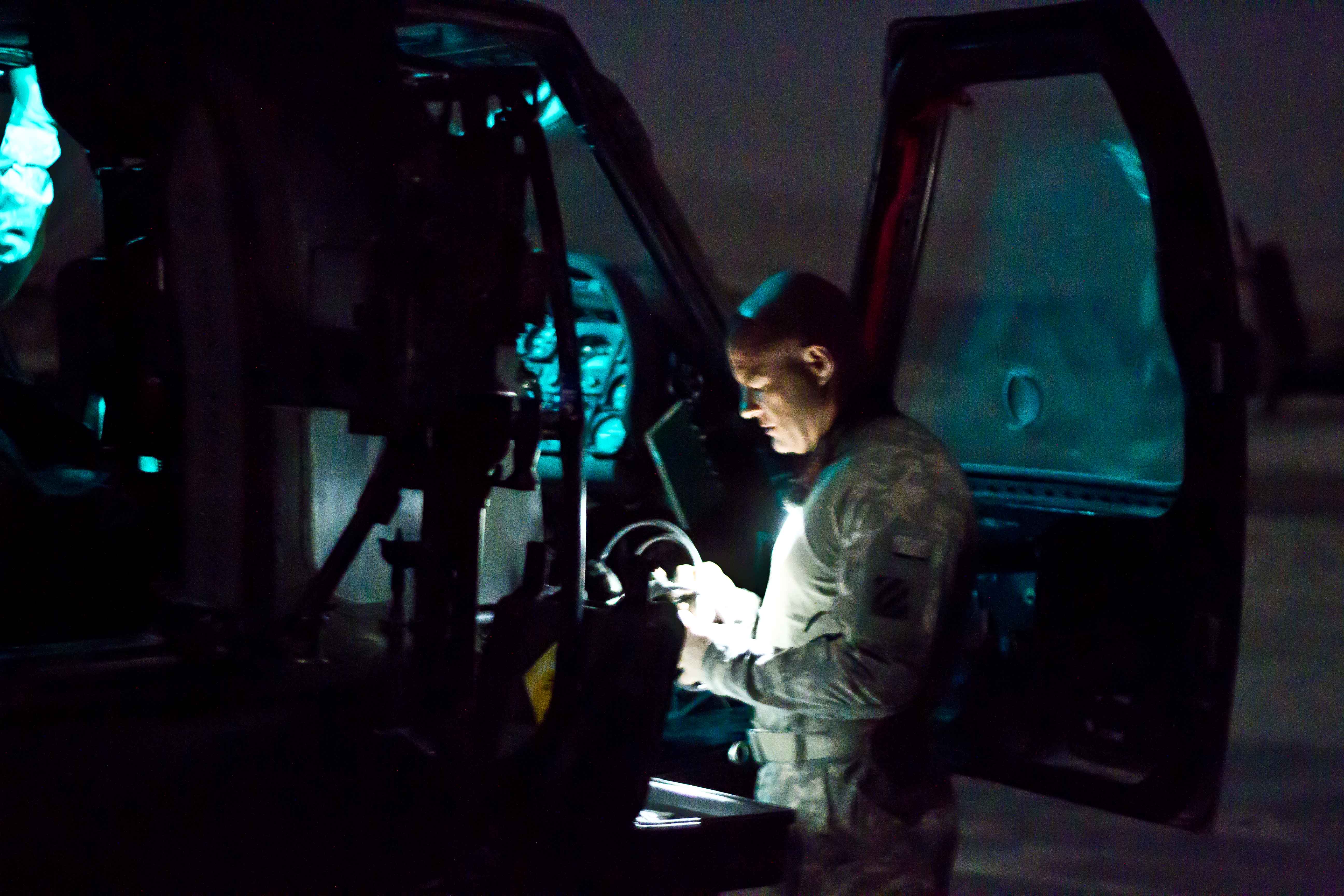
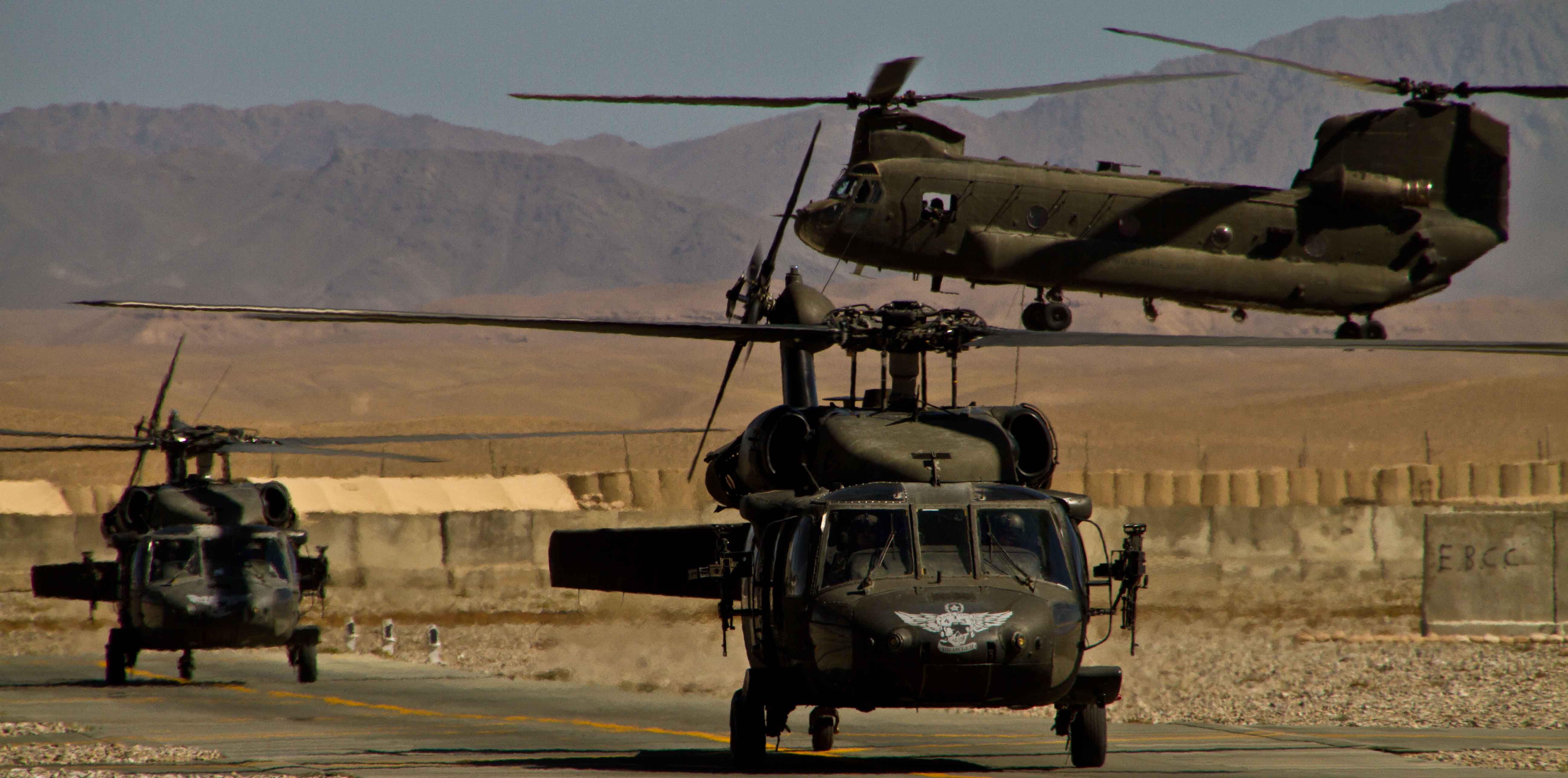
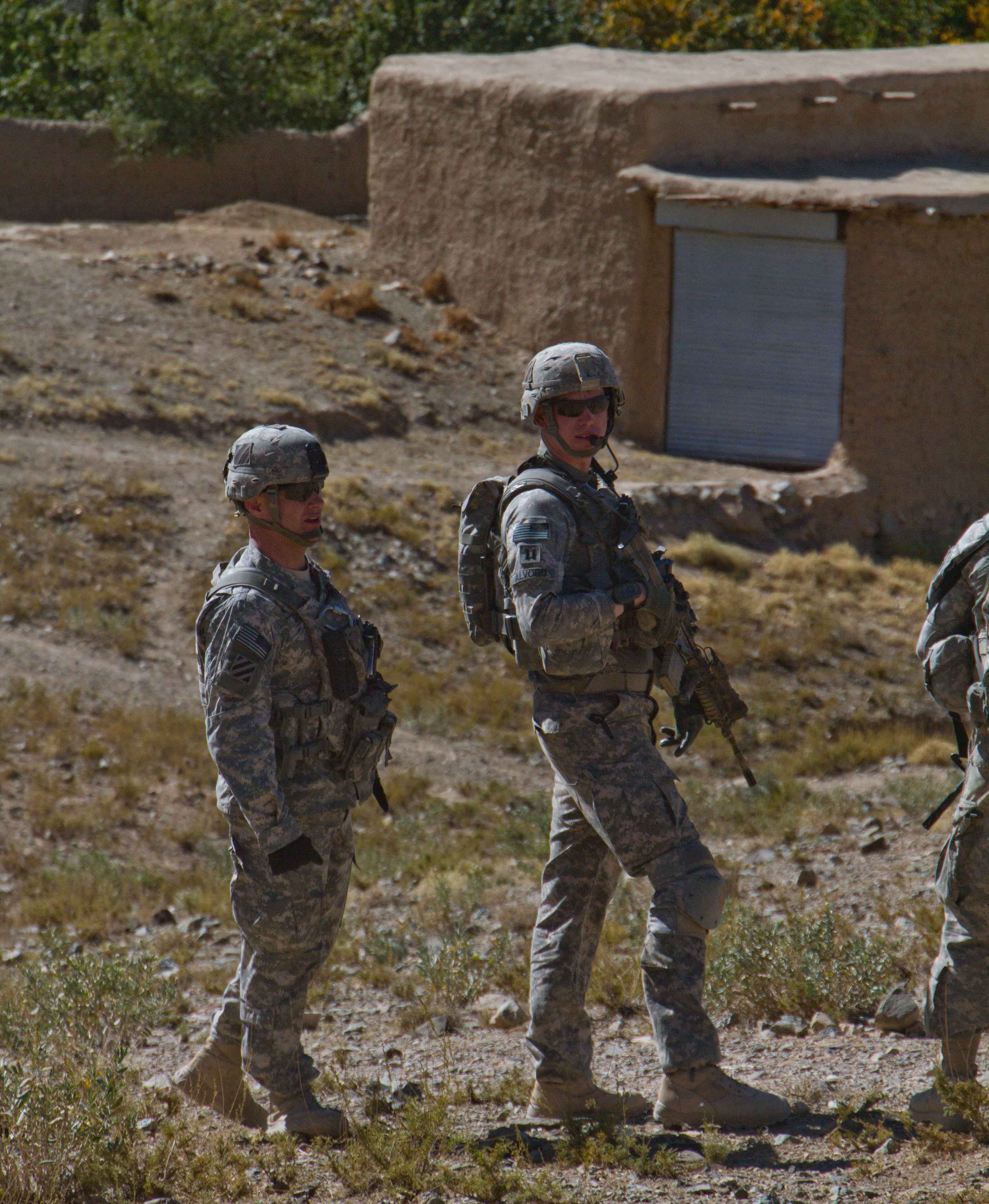
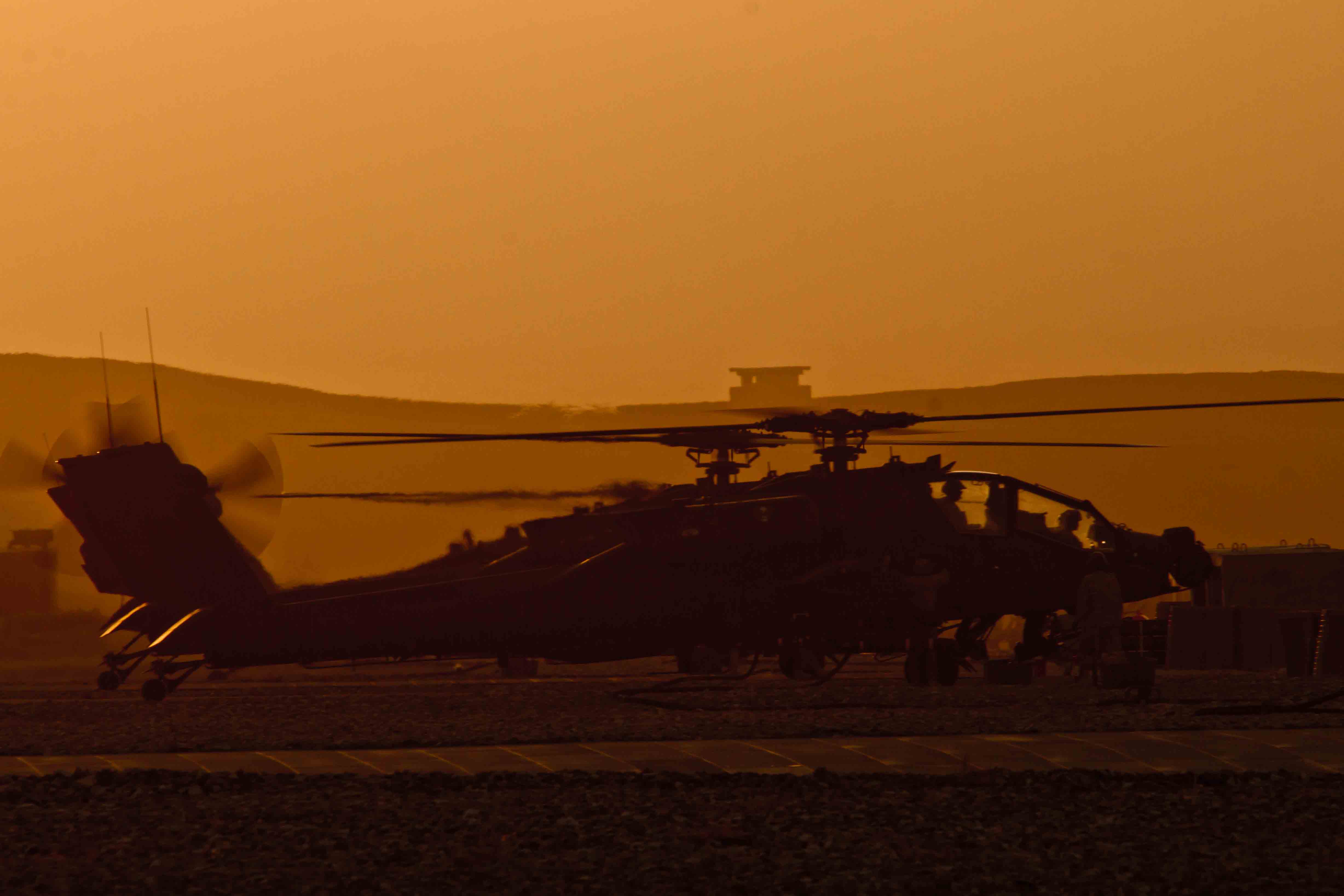
Task Force Brawler was full of interesting and dynamic characters.  From Brawler Six to men like Andrew Alvord—the unit’s fighting quartermaster—to Cassie Moore (the unit’s only female Apache pilot) and C-17-flight-engineer- turned- Blackhawk-pilot Hunter Lescoe, this unique aviation task force marched to a different beat thanks to is remarkably diverse and talented members.

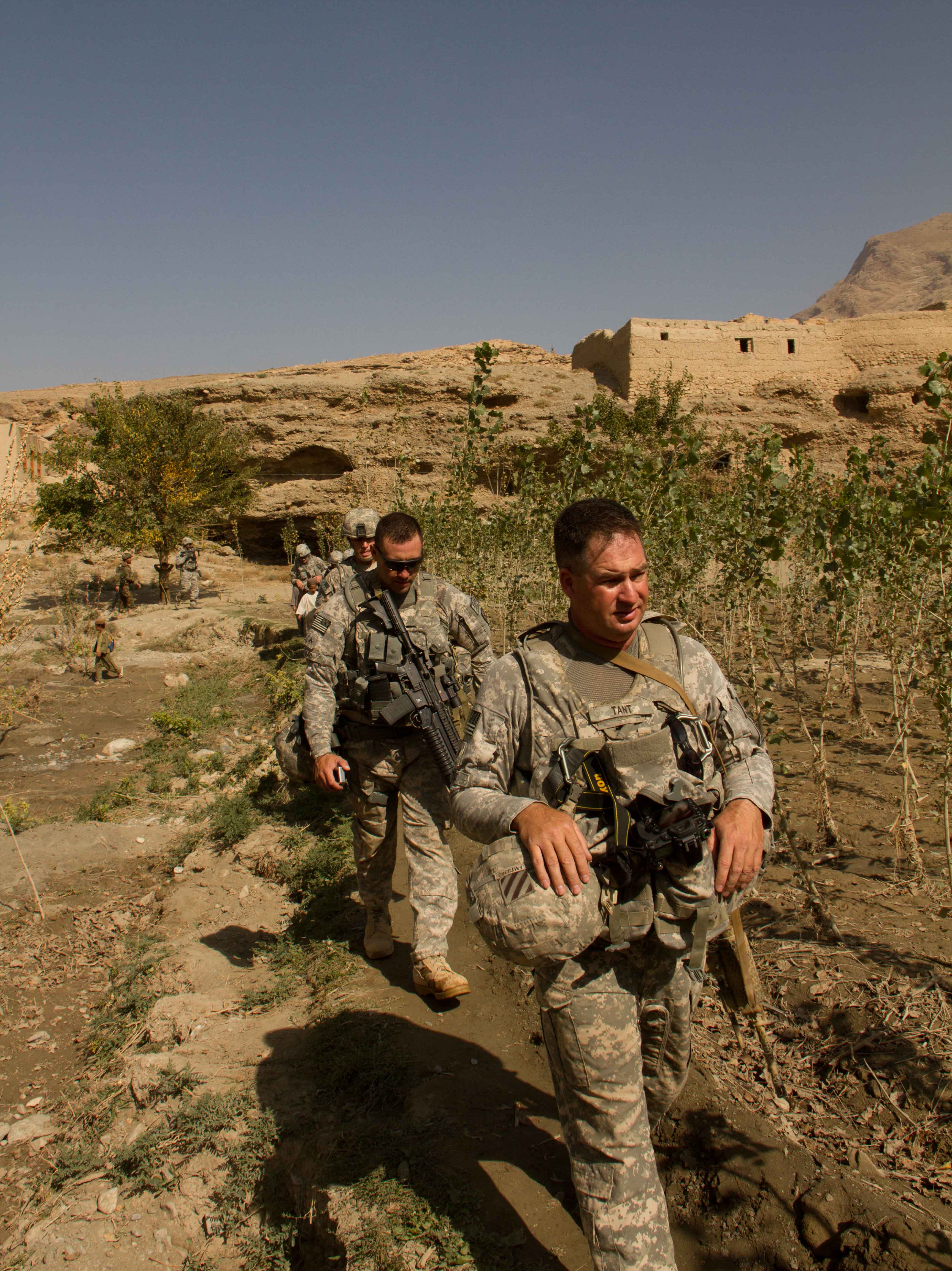
Sergeant Scott Tant, an Arkansas native, ranks as one of the most unique individuals I met at FOB Shank. Scott is a supply NCO who has a passion for photography.  Lieutenant Colonel Ault recognized that talent and gave Sergeant Tant Task Force Brawler’s  Public Affairs Office.  For a year, Scott essentially served as one-man operation to document TF Brawler’s operations in theater. IMG_1329

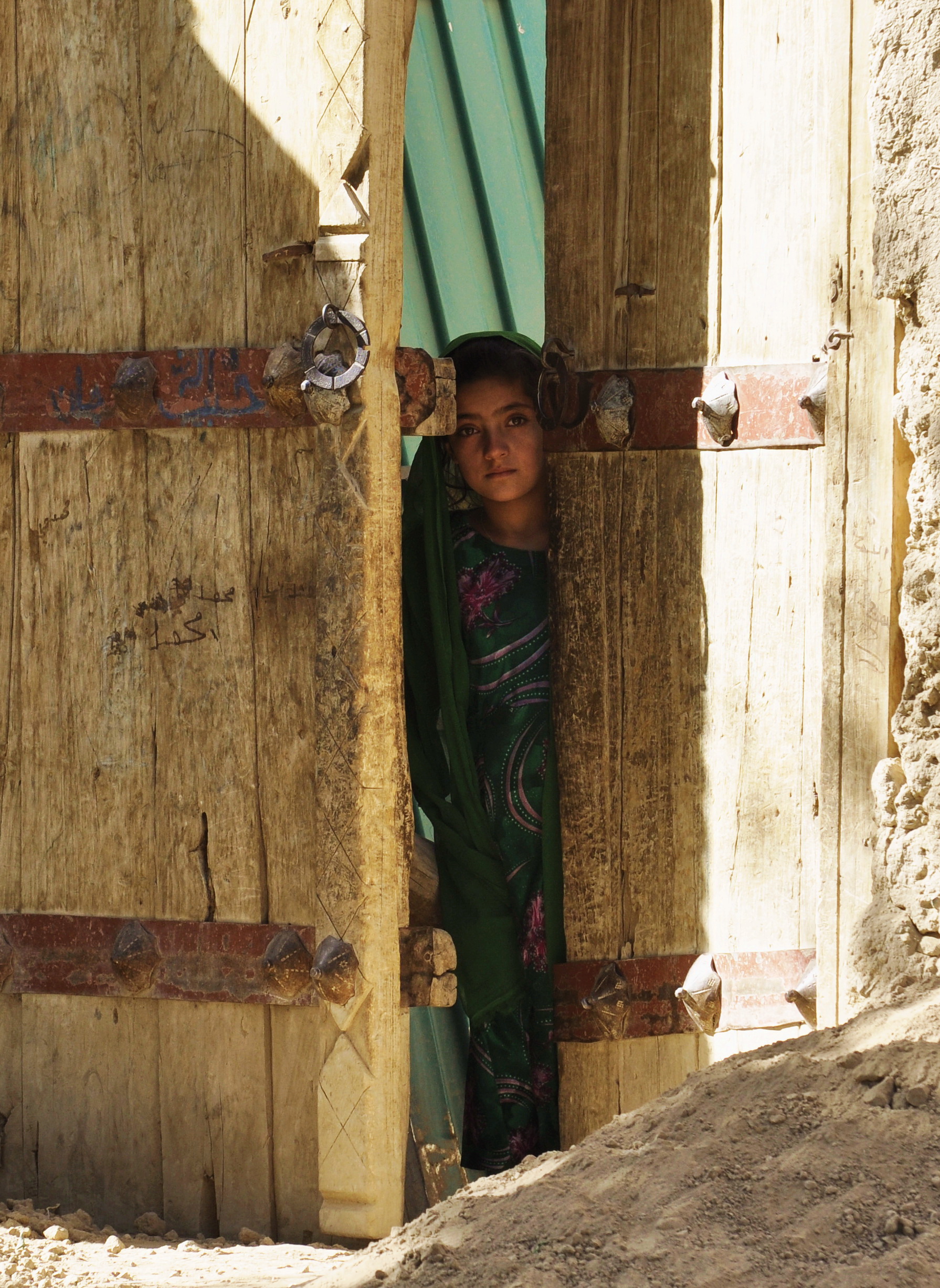
Scott went out on dozens of missions with the Ground Combat Platoon. I was amazed at Scott’s attention to detail.  His mind was a catalog of all things normal or abnormal in each village we visited. His eye for detail caught things that I never would have noticed—a few carved letters in a door, a new paint job on a building, the nuances that certain known leaders displayed as they interacted with Lt. Mace (Brawler’s S9) or Captain Alvord (PL for the GCP). Nothing escaped Scott’s eye. At one point, I told him he’s got a career waiting for him as a Pinkerton Private Eye.

IMG_1492
His photographs  reflect that attention to detail. Years ago, I collected about 40,000 photographs from World War II, including vast numbers taken by US Army Signal Corps cameramen. It is easy to distinguish those photographers who loved their craft from those who simply considered it a wartime job and nothing more. Scott transcended both extremes this past year in Afghanistan. He is an artist in uniform, and his photographs rank as some of the best I’ve ever seen emerge from a combat theater, and several of his photos have won awards. Those are considered to be some of the best images of Army Aviation ever taken during the war in Afghanistan.
IMG_1441

One thing I noticed within TF Brawler is a sense of humbleness. It started at the top with Brawler Six, whose modesty and discomfort in the media spotlight was a refreshing change from some of the things I’ve experienced since I swiched to writing about current military affairs. There was no “me too” in Brawler Nation, just a quiet pride in the entire task force’s accomplishments.

Scott Tant reflected that sense of humility. In his tiny office across from the XO’s, he created an archive of photographs that document the task force’s year in Afghanistan better than almost anything I’ve ever seen for a unit in the Global War on Terror. His artistic eye, his skill with his equipment (even if he is a Nikon guy), and his love of the craft ensured that every image tells a unique and powerful story. Someday, I hope to see his work in print; our nation needs to see the war through Scott’s eyes.


Photo below by Sgt. Scott Tant

_DSC0414

Categories: Afghanistan, American Warriors | Tags: , , , , , , , , , , | 1 Comment

The Legendary Alan Ezelle

1934882_1147964296701_2539593_nBefore I introduce Master Sergeant Alan Ezelle, I must preface it with the following confession: the first time I met E.Z. he scared the absolute hell out of me. I mean, at the handshake I was ready to wet my pants, flee, or surrender.

One look into his eyes, and you’ll know what I mean. They telegraph that this man is the baddest, nastiest, life-takingest NCO in the land.

And they don’t lie. They just don’t reveal all about the man.

10_ezelle_on_patrol

Alan Ezelle on patrol in Baghdad, Iraq during OIF II.

Sergeant Major Vince “Vinni” Jacques once said to me that “E.Z.’s been fed a steady diet of lizards and small Asian children.” I tried to quote that exactly in the Devil’s Sandbox, as I thought it was pretty hilarious, but apparently eating babies is okay, while eating Asian babies is racist. Who knew? Anyway, the Asian part got chopped in the end.

None of that changes the fact that I believe Vinni’s on to something there. Alan Ezelle is something more than human. I’m not sure what it is, but he is not your average mortal man.

E.Z. is a prior service enlisted man who served in the U.S. Army at the tail end of the Cold War. He did a stint straight out of high school in 1986, ended up in Germany for part of the time, then came home and separated from the service. He settled in Eugene, where he got a job as a bouncer in a local strip club. Several times, he faced down armed, drunken, horny rednecks with his fists, wits and a baseball bat. Somehow, he always came out on top.

Later, he found work at a company that rebuilds damaged railroad box cars. This was seriously hard labor, and E.Z. spent eight hours a day or more swinging a sledgehammer there. All in a day’s work. Truth be told, few men are up to such work day after day.

IMG_4514He joined the Oregon Guard in the early 1990’s and has served with Charlie Company (now Alpha) 2-162 for most of his career.

Alan Ezelle earned an ARCOM with V device for a four hour firefight in August, 2004. See the Devil’s Sandbox for details on that engagement. If this had happened during World War II, E.Z. would be wearing a Silver Star or DSC right now. His courage under fire, and his tactical, small-unit leadership in combat was second to none that day. His men were caught in a tactically disadvantage situation on Budweiser Bridge, taking fire from three directions and from both banks of the Tigris River. Meanwhile, an Iraqi SF unit was pinned down on the west bank by almost a hundred insurgents. Thrown into the mix was at least a platoon plus of Iraqi National Guardsmen, most of whom were half-trained and prone to lighting up the sky, the water and the sectors occupied by American troops.

E.Z. helped extract the surviving Iraqi SF guys, getting into a grenade-throwing fight with the insurgents in the process. He then covered their withdrawal back across Budweiser Bridge and got everyone out before he led his platoon off the bridge.

Img_4525

E.Z. with Aaron Cochran during an Alpha Company MOUT exercise in 2008.

Through the course of the 04-05 deployment, E.Z. found himself in every possible type of firefight, ranging from lone gunmen spraying and praying, to complex ambushes complete with IED’s, RPG’s and lots of small arms fire. He led his Charlie Company platoon through it all without suffering a single man wounded in action.

The enemy was not so lucky.

24371_1365528055659_5541583_n

Al Ezelle (right) at the 2-162 welcome home following the battalion’s second Iraq deployment in 09-10. Brian Hambright (center) and Vince “Vinni” Jacques (left)–both among the finest NCO’s to serve with the Oregon National Guard.

Al Ezelle has that rarest aspect of personal charisma that elevates all those around him to perform incredible feats. His leadership is always unquestioned. The confidence his men have in him is total. What Ezelle orders gets done, like right now. Some of them are scared as hell of him, but everyone who has ever served with him says the same thing: the man knows how to motivate, knows how to extract the last ounce of effort from every man, and he always leads the way. Back when he was a platoon sergeant, I overheard his men on drill weekends talking quietly among themselves about some of the amazing things they’d seen E.Z. do. They spoke about him with a mix of holy terror and reverence. E.Z. is one of those guys that does stuff people remember. More than once I’ve heard a Soldier say, “I swear to God he did that. He’s not F###ing human, dude. He’s just not.”

Some of it is pretty damn funny too. One specialist related how E.Z. got dive-bombed by an angry crow outside the Alpha Co. armory in Eugene one day. The crow came back for more, swooping low over E.Z.’s head and squawking like crazy. E.Z. eyeballed the bird, then drew down on it. The wise bird got the message: the armory is Alan Ezelle’s territory. Mess with that and you’ll end up splattered, feathers drifting in the wind.

IMG_0400Now, E.Z. lives up to his larger-than-life persona every time he straps on his IBA. But at the same time, the knuckle dragger image he projects serves to hide two vital things about him. First, he is one of the smartest human beings I’ve ever met. He’s got a steel trap of a mind that allows him to make snap decisions in the heat of the moment. He knows when to use a carrot, when to use a stick. And he also lets everyone know that the stick he’s carrying is not an ordinary one. It is the biggest freaking one on the block and he won’t stop beating the crap out of you with it until you’re a limp, broken fraction of a man begging for momma. Only then will he ease up a bit on you.

Img_4516

Buried under the larger than lifeness of Al Ezelle is the soul of a teacher. When I worked with Alpha Company as their volunteer OPFOR coordinator from 07-10, I saw Al’s teaching persona emerge many times as he patiently explained a particular nuance to Battle Drill Six Alpha, or a Soldier skill that one of his men needed to hone. Someday, if he ever retires from the service, I hope he ends up as a history teacher. His classes would pass the AP exam every year. 🙂

He tempers that threat of overwhelming force with a very keen sense of human nature. When trying to make friends and win hearts and minds, he’s direct and honest and will do whatever he can to help a community out. He’s a savvy negotiator who understands that most humans have motivations and desires that can be used as the basis for establishing rapport. If he didn’t like kicking in doors so much, he would have been an outstanding diplomat, or interrogator.

I’ve never met anyone who has a better grasp of small unit tactics and doctrine than Alan Ezelle. In a fight, he’s proven many times he keeps a clear head and can visualize the entire battlespace in his head. This, combined with his ability to quickly assess a situation and make snap decisions, is what makes  Alan Ezelle such an outstanding leader of men. His SA can’t be beat. He is never surprised in combat, or in the training I’ve been involved with since 2007.

One aspect of E.Z. that I don’t think I did justice to in the Devil’s Sandbox is his ability to educate and teach his young soldiers. Over the last year, as I’ve watched him in the field during drill weekends, I’ve seen him mentor his new guys along with patience and just the right among of ass-kicking when necessary. He would have made an excellent high school teacher, he’s got all the skills for that and more.

In August of 2008, I was embedded with Alpha Company during the brigade’s summer Field Training Exercise at Gowan Field. During a company level assault on a village, part of his platoon was pinned down on the far left flank of the assault. He was with another element across a street and about a hundred meters from the squad that got in trouble. Two men were declared wounded. Al saw what was going on and sprinted across that stretch of open ground, kicked open a door, shot the “insurgent” inside, then got his wounded out of the line of fire.  One of the brigade’s officers at the time was watching that display of initiative and muttered, “That’s not his job anymore. He’s not a squad leader.”  I couldn’t help but think, this is exactly what he did in Iraq, and he saved lives. TO&E–Whose job it is on a battlefield doesn’t matter. What counts is the effect. Leaders get the job done no matter what their role is on paper.

As of 2015, Al Ezelle now serves as the 41st Brigade’s operations NCO. While not kicking in doors anymore, his innate situational awareness and tactical acumen I’m sure makes him well suited for his new role. But at heart, he will always be door-kicking, Soldier’s Soldier, larger than life, eminently capable and filling everyone around him with confidence and courage. I’ve met many great leaders—NCO’s and officers here at home and in Afghanistan, who I would have, and did, follow anywhere to write about them. But of all the warriors I’ve met over these many years, Al Ezelle is the only one who I would want leading my kids’ into a fight should they decide to enlist one day.

IMG_4544

Al Ezelle, Mark Flowers (of WWIIgyrene.org) and Brian Hambright at Goshen Range, spring 2008. Exemplary NCO’s.


Categories: American Warriors, Iraq War 2003-2010, Uncategorized | Tags: , , , , , , , , , | 4 Comments

Photo of the Day

Flares over Helmand Province, Afghanistan. November 2010.

Flares over Helmand Province, Afghanistan. November 2010.

Categories: Afghanistan | Tags: , , , , , , | 1 Comment

The Patriot Journalist

“Many heroes lived, but all are unknown and unwept, extinguished in everlasting night because they have no chronicler.”

-Quintus Horatius Flaccus.


187mckinlaykantorBorn in 1904, MacKinlay Kantor grew up in Iowa, where he showed considerable writing talent even as a kid. As an adult, he became a novelist and published his first novel at age twenty-four. He wrote crime stories at first, then in the Depression he switched to military and historical novels set in the American Civil War.

During World War II, Kantor tried to join the service, but he was almost forty when Pearl Harbor was attacked. He was 4F’d, but that didn’t stop him from getting into the fight. He went to England as a correspondent for an LA-based newspaper. He flew combat missions with both RAF and USAAF bombers, and even learned how to operate the turrets on B-17’s and B-24’s.

After D-Day, he reached the Continent and chronicled the experiences of the foot soldiers fighting their way into Germany. On April 14, 1945, he was present when American troops liberated Buchenwald Concentration Camp.

He returned at the end of the war and wrote a beautiful and poignant book on PTSD and the struggle of veterans to reintegrate back into their communities back home. Glory for Me was published later that year in 1945 by Coward-McCann Inc. It is the story of three combat-scarred veterans, Fred, Homer and Al, who meet in a B-17 that flies them back to their hometown of Boone City. What unfolds is a case study of recovery from trauma and failed relationships as each man endures his own struggle to overcome the things that scarred his soul overseas.

The-Best-Years-of-Our-LivesIn 1946, MGM turned Glory for Me into one of the most loved movies of the era. The Best Years of Our Lives earned seven Academy Awards, including a special one for the actor who played Homer. The movie’s themes are timeless and as poignant today after nine years of war as they were in 1946. The AFI lists it as one of the top 100 American films ever made.

Kantor continued writing novels on the Civil War and later on the American Revolution. He published his most famous work,Andersonville in 1956. The stunning story of the Union POW’s and how they were treated at that notorious Confederate prison earned Kantor a Pulitzer Prize that year.

Kantor publshed over thirty novels during the course of his life. Most of them delved into the life and experiences of ordinary American soldiers. He based many of his early Civil War books on interviews he personally conducted with Union and Confederate veterans.

He died in 1977 at the age of 73, leaving behind a legacy of respect and reverence for the soldiers, airmen and sailors he wrote about in his lifetime body of work.


31j2NyMzdxL__SL500_AA300_From Glory for Me:
When you come out of war to quiet streets

You lug your War along with you.

You walk a snail-path. On your back you carry

it-

A scaly load that makes your shoulders raw;

And not a hand can ever lift the shell

That cuts your hide. You only wear it yourself–

Look up one day, and vaguely see it gone.

…And one day it is gone if you are wise.

Categories: War in Europe, World War II Europe, World War II in Europe, Writing Notes | Tags: , , , , , , | 4 Comments

Brawler Six

IMG_1496In my twenty-five year career as a military historian and writer, I’ve  been very fortunate to have met and interviewed some incredible leaders—men and women who inspired those under their command to feats well beyond the norm. I’ve interviewed men who airdropped into Normandy, NCO’s who fought room to room in Fallujah, pilots and crew from the Doolittle Raid, two of the four men who formed the “Killer Flight” who shot down Admiral Yamamoto. Generals, admirals, Marine Corps legends like Marion Carl—these are the people who have composed the best of my professional experience since I left graduate school. I have been blessed with such associations, and my life’s work has been a source of pride and strength. Then I encountered Robert Ault, and everything I thought I understood about leadership changed.

In early September 2010, I met Lieutenant Colonel Robert Ault, Brawler Six, and it took about five minutes for him to blow my hair back. There on the edge of the world at FOB Shank I had encountered a character who could have stepped from a Nelson DeMille novel.

IMG_3495

LTC Ault in cockpit at left. Taken at FOB Gahzni, October 23, 2010

Walking around Task Force Brawler, interviewing his air and ground crews, it became clear to me that LTC Ault was one of those rarest of leaders—a man universally admired and whose people would do anything for him. As he went about his day, I was amazed at the reaction his presence had on those around him. He’d blow into a room like a northeaster and light up everyone with his enthusiasm and energy. He has an infectious personality, one that he is careful to use in a positive manner.  If he had an off day—if something at home troubled him, or the stress of command and constant missions ever got to him—he never revealed it. He was a force of his own, and in his wake he always seemed to leave people grinning from ear to ear, be they under his command, Jordanian officers or local Afghan elders.  His effect transcended culture and difference, and he used that power to unite and forge relationships that most would have never been able to pull off. For Rob Ault, it was as natural as breathing.

Born in Southern California, LTC Ault grew up always wanting to fly. When he was sixteen, he used the money from his after school job as a box boy to take flight lessons. He earned his pilot’s license a year later. He somehow managed to conceal this achievement from his parents. When his dad finally found out, I suppose astonishment aptly covers his reaction.

When other high school kids were out living it up, tinkering with cars and hitting the 80’s-era SoCal mall scene, Rob Ault and his pals went flying. On one flight, he took his friends to Catalina Island off the coast in what became one of his favorite memories of his youth. Other times, he and his buddies would mock dogfight each other in Cessna 152’s.IMG_3597

Some of his high school teachers totally misunderstood the sort of man developing inside Robert Ault. One cynically told him he’d be well suited for a job in the construction industry. They missed the intellect behind the Puckishness; their loss.

Ault moved on to college and earned his first degree from Cal State San Bernardino. He joined the Army and became an aero scout, flying OH-58 Kiowas. Later, he transitioned to Blackhawks.

IMG_0553

LTC Ault with a village elder, listening as the Afghan explained how the Kabul government had neglected his people. He complained non-stop about what he had not been given. Ironically, not a single vote had been cast in his village in the national election a few weeks before this photo was taken.

Before coming to Afghanistan, LTC Ault served in Iraq in two non-flying staff slots.  While meeting with local Iraqi security officials and political leaders, he was nearly killed by a suicide bomber. Dozens of Iraqis were killed or wounded in the blast, but somehow LTC Ault survived despite the fact that he was not wearing body armor at the time of the attack.

In July of 2008, Ault took command of 4-3 Air Assault Battalion, part of the 3rd Combat Aviation Brigade. The 3rd ID is known as the Rock of the Marne for its role in blunting the Ludendorf Offensives in the spring of 1918, and the 3rd CAB is known as “Marne Air.” Originally composed entirely of UH-60 Blackhawks, 4-3 was turned into a unique task force a few months later with the addition of an Apache and Chinook company. The new task force became known as “TF Brawler” and their motto said everything about their attitude: “Here to Fight.”IMG_0328

From the outset, Ault ensured that things would be different in his command. He wanted to create a totally new culture for an air unit, one that could set the conditions for an “exponential” effect on the battlefields of Afghanistan.

Most air assault battalions function as sort of an airborne taxi service. The local ground units they support send over Air Mission Requests (AMR’s) for the battalion to execute, and the Blackhawks will run around day and night moving troops from base to base, inserting them in air assaults, or lugging supplies from one point or another. It is an important job, but it is a reactive one, and does not tie the air unit into the ground war in anything but an ancillary role.IMG_2027

Lieutenant Colonel Ault had a different vision. He wanted his task force to be right in the middle of the fight with a much more proactive and aggressive part to play. Here, he combined his leadership skills with a powerful and creative intellect. In the process, he transformed Task Force Brawler from just another air asset into a revolutionary force on the counter-insurgency battlefield.

First Rule of Brawler Nation: everyone’s a warrior. For a year before their deployment, Ault’s men and women trained relentlessly in three key areas: marksmanship, medical skills and physical fitness.  The constant live fire exercise reinforced the point that everyone in the task force was expected to be

a rifleman first.

IMG_0497

LTC Ault (left) and Captain Andrew Alvord on patrol.

Colonel Ault reorganized his support company and created what became known as the “Ground Combat Platoon” from his fuelers, motor T guys, clerks and quartermaster. In the year before they arrived in Afghanistan, the GCP trained furiously in every aspect of infantry tactics. They worked on MOUT ranges, practiced air assaults and downed aircraft recovery missions. In the process, they worked side by side with the air crews and developed almost instinctive cooperation over the course of many realistic field exercises.

In Afghanistan, all this paid off handsomely. Instead of merely flying the AMR’s as expected, Task Force Brawler set out to gain its own slice of the battlefield.  Lieutenant Colonel Ault sought  to expand his unit’s role by  forging unlikely alliances with coalition units that could help him achieve his goal of being “exponential” on the battlefield. With the daily AMR’s covered, Ault sent out airborne patrols in Blackhawks filled with the GCP. These missions were dubbed Average Guy Engagements (AGE’s), as opposed to the COIN-standard “Key Leader Engagements. “  Using their aerial mobility, the GCP would roll around Logar Province looking for unusual activity. When they spotted something, they’d drop down, dismount the GCP and check it out. In these early patrols, the GCP made its first contacts with the local population, who had never been policed from the air like this before.  In most cases, these sudden appearances ended up generating good will. On one memorable occasion, the GCP landed next to a doctor whose car had broken down. The Americans offered to help fix his flat tire!IMG_3625

Always looking for new ways to get into the battle space, Colonel Ault gradually expanded the role of the GCP. From aerial patrols, his fuelers-turned-warriors served as outer cordon for Special Operations missions, interdicting traffic around the perimeter of these crucial raids.

To get ever deeper into the fight, Ault established what TF Brawler called “COIN Head Start” seminars. Bringing in experts at counter-insurgency warfare every week, his officers underwent an almost collegiate-level crash-course on how to stabilize and befriend local populations. After weeks of this on-the-fly intellectual training, they put ideas into practice with mock shura meetings where local Afghans taught them the customs and cultural sensitivities needed to engage successfully with village elders.

IMG_1211In the spring of 2010, Brawler went into the counter-insurgency business. Colonel Ault convinced his brigade commander, Colonel Don Galli, to give his task force two long-neglected villages that sat astride a unit boundary south of FOB Shank. These two locales had not been visited by ISAF forces for months, if not years.  Using their Chinooks and Blackhawks, Brawler’s GCP flew to these tiny hamlets where Colonel Ault, Lt. Evan Mace, Captain Gray, Captain Pruitt and Captain Alvord forged contacts with the local village leaders.

Later, TF Brawler absorbed several more villages and a key valley into its ad hoc Area of Operations. For the rest of the summer and fall, when not flying missions with his men, Brawler Six was out with the GCP meeting with Afghan sheiks in an effort to win them over to the coalition’s side.  Brawler jump started numerous projects around the region, ranging from school construction, fresh water pipelines to mosque renovations and agricultural assessments.

IMG_1224During the summer of 2010, roadside bombs virtually closed down stretches of Highway One in Logar Province. Brawler stepped in to help combat the IED menace. Using innovative new tactics, Colonel Ault put together an offensive airborne package known as Falcon Strike. Each night, a combined force of AH-64 Apache Gunships, a command element in a Blackhawk, and the GCP mounted in several UH-60’s would patrol along Highway One in search of insurgents laying IED’s. The Apaches would engage these bad guys, and the GCP would then land nearby, dismount and police up weapons and intelligence from the bodies (and body parts). It was tremendously effective, and after the first Falcon Strike missions, IED placement along this stretch of Highway One virtually ceased for weeks.

IMG_3607In a year of operations in Afghanistan, Brawler broke the mold for air units. Instead of being an airborne bus service for the local ground units, Ault’s dynamic leadership and aggressive desire to get more involved in the fight led to a revolutionary method of employing an army aviation asset. His task force joined the COIN fight in a unique and effective way. And while they were kissing babies and making friends by day, they killed scores of bad guys by night, saving countless civilian and military lives on Highway One. In the end, not only did Brawler Nation have an exponential effect on the battlefield, the men and women under Ault’s command had forged a new way of air-ground warfare in a counter-insurgency environment.

IMG_1248When I asked Captain Andrew Alvord, the GCP’s platoon leader, how much of this was due to LTC Ault’s leadership, he replied without hesitation, “All of it. “ Captain Joe Pruitt, the Echo Company commander, said the same thing. Ault’s indelible leadership stamped Brawler from the outset and created a unique culture that blended a warrior’s aggression with intellectual creativity and a can-do spirit that ultimately created friends out of enemies throughout Logar Province. And for those irreconcilables? They paid the price for their continued resistance.

Task Force Brawler will be the standard by which all other army aviation task forces will be judged. Lieutenant Colonel Ault’s leadership will serve as a model for others to follow and develop. And Brawler Nation will have an exponential effect on its own service for years to come.

Not bad for a Southern California boy.

IMG_1488

Categories: Afghanistan, American Warriors | Tags: , , , , , , , , , | Leave a comment

A Warm Winter Moment on Attu

Men of the 54th Fighter Squadron greet a group of Army nurses on Attu Island during the winter of 1943-44.

Men of the 54th Fighter Squadron greet a group of Army nurses on Attu Island during the winter of 1943-44.


Categories: World War II in the Pacific | 6 Comments

Blog at WordPress.com.