The Forgotten Bomber

312th bg b32 color flight 4x6

A 312th Bomb Group Consolidated B-32 Dominator over the Philippines during a mission in the summer of 1945. The Dominator was quickly discarded and forgotten following the success of the B-29 Superfortress program, and only the 312th saw operational service with this unusual bomber. General Kenney had wanted B-29’s for his Far Eastern Air Forces, but Arnold denied that request the year before, wanting to keep the Superforts focused on the strategic campaign against the Japanese home islands. So Kenney asked for the B-32, and got just enough by the summer of 1945 for the 312th to fly a handful of missions before the end of the war.


Categories: World War II in the Pacific | 1 Comment

Photo of the Day: Army Aviation in Vietnam

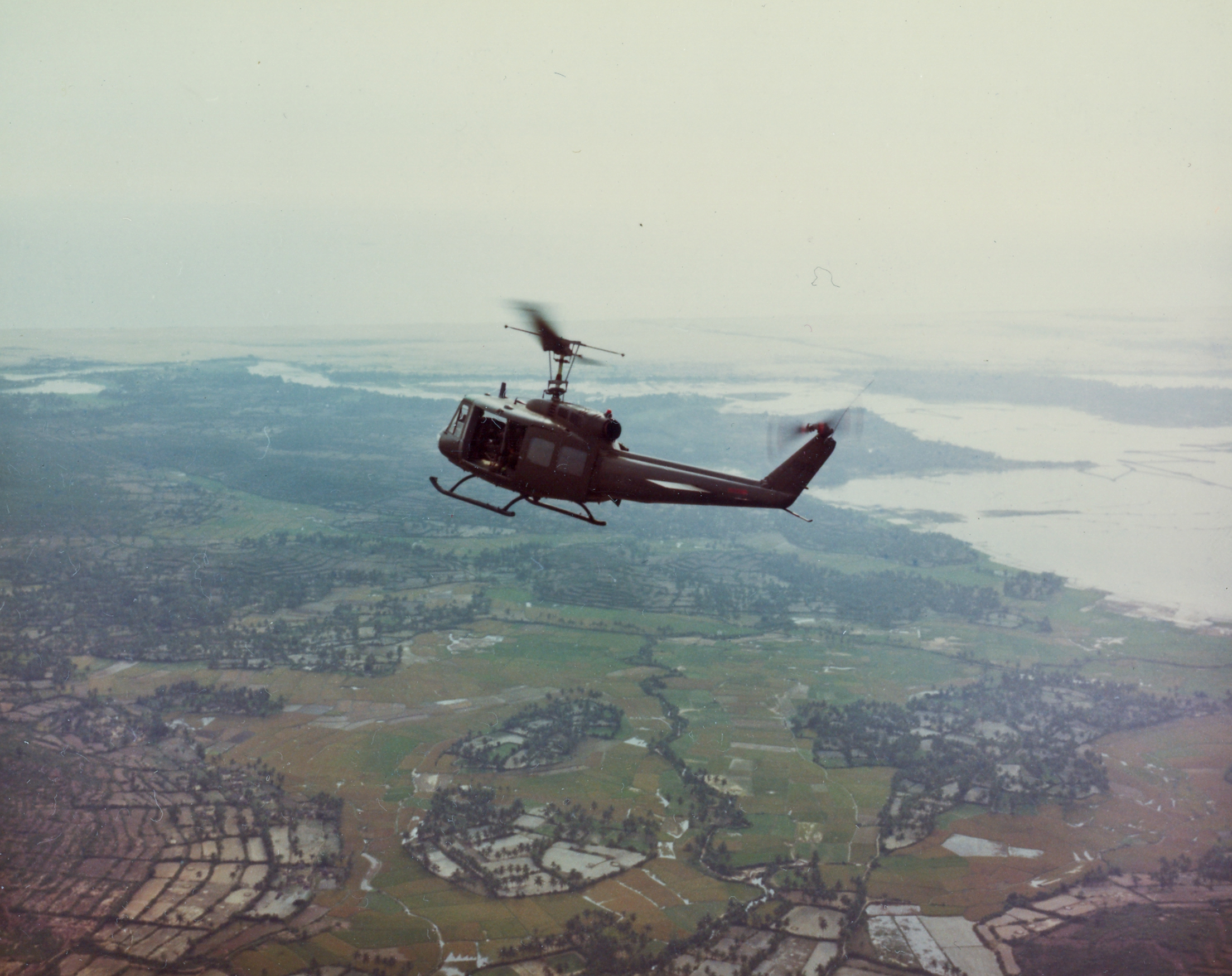
A Huey UH-1 Iroquois from the 35th Infantry Regiment over Phu Cat, Vietnam on April 11, 1967.

A Huey UH-1 Iroquois from the 35th Infantry Regiment over Phu Cat, Vietnam on April 11, 1967.

Categories: Vietnam | Tags: , , , , , , , , | Leave a comment

Photo of the Day

German Series WWII Barbarossa Russian Air Force Red Air Force Soviet SB2 Wreck Vitebesk Russia 070841  (1 of 1)

A Red Air Force SB-2 light bomber lies in a field near Vitebesk on July 8, 1941. The brave crew faced daunting odds in trying to attack the advancing German Army in skies controlled by the Luftwaffe.


Categories: Allies, World War II Europe, World War II in Europe | Leave a comment

Photo of the Day: The Shepherds of the Arctic Sea

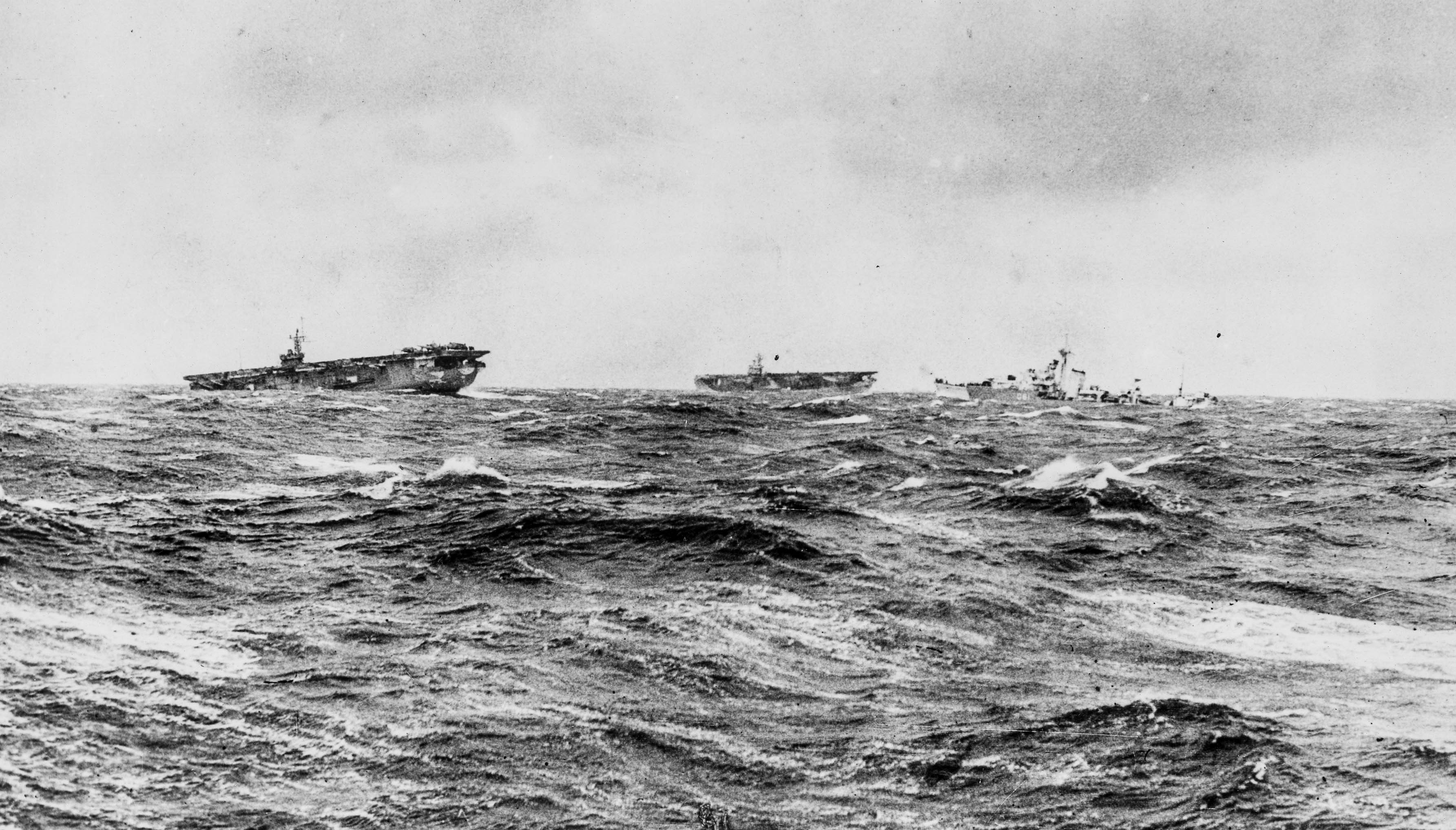
208 aa for uboat series235

Two Royal Navy escort carriers, HMS Emperor and HMS Strike pitch in the heavy swells of the Arctic Sea during a convoy escort operation to the Soviet Union. An RN destroyer can be seen at right, providing the carriers with an anti-submarine screen.


Categories: Allies, World War II Europe, World War II in Europe | Tags: , , , , , , , , , , , , | Leave a comment

The Cumberland Clerk of Clark Field

Confession: Part of the perils of conducting archival research far from home is that I get easily distracted. I’ll be plowing through piles of government documents looking for nuggets relevant to my next book, then I’ll stumble across an insanely cool story that I can’t help but to track down. This was the case this week while working at the MacArthur Memorial archives in search of material related to Paul “Pappy” Gunn. There I was, digging around in the collection when I came across a debriefing document related to a clerk named Corporal Joseph Boyland. So I love stories about unlikely folks who step up in moments of great turmoil and crisis to become bigger characters than their rank and role might lead you to believe. In Afghanistan in 2010, I met a quartermaster named Captain Andrew Alvord–who happened to be out commanding an air assault platoon composed of support troops like fuelers and clerks. He led the platoon on many patrols, fought several sharp engagements during Taliban ambushes, and made friends out of local villagers. That is the kind of American who makes our nation great.

Which leads me back seventy years to a Cumberland, Maryland factory worker who, in the throes of the Depression, sought service in the Army Air Corps as a way out of his small town circumstances. Enlisting in 1937, he trained as a clerk and was sent to the Philippines in 1941 to be a paper-pusher in the newly established V Bomber Command Headquarters. In four years, promotion had come slowly for him, and when  Japanese aircraft  appeared over Clark Field on December 8, Boyland was a corporal.  He was at Clark when the attack came and destroyed most of MacArthur’s air force on the ground, and in the chaotic days that followed, he was culled from the HQ element and sent to the 192nd Tank Battalion, where he trained as an M3 Stuart gunner for six weeks at the start of the Bataan Campaign.

In February, he received a week’s worth of infantry training, then was posted at Cabcaben Airfield, where he manned a .50 caliber anti-aircraft machine gun. Between standing watch over the field, he participated in dismounted patrols around Mariveles, and did such an impressive job that he received a spot commission to 2nd Lieutenant by the 31st Infantry’s Major Miller. Along with most of the other marooned FEAF ground and air personnel, he served in combat with the 71st Infantry Division (Philippine Army) until malaria and dysentery knocked him out of action.

As the situation on Bataan began to collapse in early April 1942, he was ordered to Corregidor, but the FilAmerican Army surrendered while he was trying to find passage to the Rock. The Japanese captured him at Mariveles. With twenty other American POW’s, he was pressed into service as a truck driver for the Japanese. Under guard, he drove around Bataan, Guagua, and Pampanga, forced to do whatever the Japanese demanded of him. Yet, his experience was easy compared to what thousands of other half-starved, sick POW’s faced on the Death March. Boyland and his crew of truck drivers often were allowed to go into Manila to purchase food and even alcohol. This comparatively easy life changed later that spring when and thirteen other American drivers were taken to Olongapo and crammed aboard a Japanese transport vessel. The ship took them to Negros Island, where he and his fellow POW’s drove and repaired trucks for the next year.

On Negros, Boyland experienced the opposite extreme of the Japanese occupation. In the months that followed, beatings became increasingly frequent, and he bore witness to the full horrors inflicted on the Filipino population, especially after the Kempeitai showed up on Negros. One Kempeitai Lieutenant in particular terrorized the inhabitants of Bacolod, killing civilians with his sidearm.

Towns suspected of supporting the growing guerrilla movement were dealt with harshly. Several times, Boyland witnessed Japanese troops pour into this villages and massacre the residents with machine guns and bayonets. Other times, the Japanese would capture a group of Filipino males, tie them up and spend days torturing them. They’d be left in the sun without food and water, burned with cigarettes, and mutilated with scissors. Afterwards, Boyland and his fellow Americans would be ordered to bury the bodies.

Sometimes, the Japanese made clumsy attempts to connect with the Filipino population. In April 1943, Boyland was ordered to drive in a two truck convoy. In back, instead of just bayonet-armed Japanese Soldiers, he and the other driver transported a brass band, a singing trio, two Filipino nurses and a couple of doctors. With music merrily playing, they rolled through the countryside, visiting hamlets around Bago. They would stop, hand out candy, cigarettes and donated clothing to the impoverished populace while the medical staff tended to the sick. Sometimes, they’d host dances and games, complete with prizes.

The pistol-fond Kempeitai lieutenant went along on the sojourns, keeping a watchful eye on the spectacle. The Japanese called these Peace and Relief Missions.

Such tactics couldn’t sway the Filipinos, who remained fiercely loyal to the United States despite the reign of terror unleash on them behind the facade of brass bands and free shirts. That point was driven home to Boyland once day when his truck broke down during a Peace and Relief run to Ponte Verde. As he worked to repair it, the locals came out to him, and when the Japanese weren’t looking slipped him fresh fruit and eggs. The mayor even gave him some money.

Enough was enough. Beaten almost every day for months, bearing witness to horrific atrocities then burying the victims, all while driving around a traveling road show with the sadistic Kempeitai officer was too much for Joe Boyland. In April 1943, a Japanese officer smacked him across the face and that humiliation became the final straw.

The next day, he was in the market place at Bago, paused between runs in his truck. His Japanese guard walked across the street to buy cigarettes, and Boyland saw his chance. He slipped into a nearby shop and bolted out the back door. He linked up with a local guerrilla cell, which took him up into the mountains to escape the Japanese.

For most of the next year, Joe lived the life of an American insurgent, operating with the guerrillas of Northern Negros. They carried out ambushes, sometimes attacking the very trucks that he’d been driving. By July, all but two of the American drivers he’d been with had escaped and linked up with various guerrilla groups as well.

Boyland soon found the shadow war on Negros had an ugly underbelly. The Filipinos in the movement hated the local Spanish aristocracy. They represented the elite of the old colonial order, and they took out centuries of pent-up resentment on them through midnight raids and violence. The Spanish left their outlying properties and moved to Bacolod where the Japanese could better protect them, and many openly collaborated with the occupation force as a result.

Martinez Godinez was an exception. He and Boyland had become friends after Martinez provided food, whiskey and safe places to crash. He was officially the Spanish Consul for Negros, and despite his nation’s neutrality in the war, he played an important role in keeping Boyland’s guerrilla cell in the fight. Despite this, other insurgent groups considered him an enemy, and they marked him for death. Boyland protected him as much as he could, but eventually convinced Martinez to send his family to Manila, where they would be (at least for the time) safer.

Then there were the anti-American guerrillas. The most notorious, at least to Boyland, was a former sergeant in the army named De Asis. Reputed to have gone on a blood-feud killing frenzy that claimed the lives of some twenty-seven Filipinos, De Asis was all about settling scores and exercising grudges. He had a deep seated hatred of Americans, and was rumored to have killed several. In January 1944, Boyland went in search of De Asis, probably to try and halt his depredations, but he proved elusive and Joe never found him.

Bacolod, the largest city on the island, teamed with intrigue. Plenty of the locals supported the guerrillas, but there were always fifth columnists, spies and sympathizers working with the Japanese. A German named Weber was one of the most aggressive pro-Japanese civilian in the city. He would strut through the streets in shorts, armed with a pistol and would “arrest” anyone he suspected of supporting the insurgency, then turn them over to the Japanese authorities.

In February 1944, after months of shadowy operations, ambushes, near misses with Japanese patrols and rival guerrillas, Boyland was evacuated off Negros and taken to Australia, where he was debriefed then sent home to Maryland.  When he returned to Cumberland, he learned that one of his brothers had joined the Navy and was serving in England. He later took part in D-Day as part of a landing craft crew.

Joe was given a hero’s welcome in his hometown. So few had escaped from the Philippines that the local papers celebrated his arrival, but noted repeatedly that he wouldn’t talk about his experiences. It later came out that he’d been thoroughly interrogated at the Pentagon after his return from the Philippines. Once he was given 30 day leave and came home to Cumberland, the Secret Service kept him under constant surveillance to ensure he did not speak of what was happening in the Philippines. That level of paranoia was also experienced by other escapees, including the legendary Ed Dyess.

Boyland went to OCS and stayed in the military after the war, learning to fly and serving as a pilot in the Air For Parce before finally retiring as a lieutenant colonel. In December 1975, his car got stuck in soft mud on the side of Route 301 in North Carolina, outside of Rocky Mount. While walking along the shoulder to a nearby gas station to get help, he was hit by a passing car and tragically killed, a terrible end for the warrior clerk.

He never spoke to the press about his wartime experiences in detail, honoring the order given to him during his Pentagon debriefing to keep his mouth shut. But he did tell his hometown paper once of a poignant moment after he was captured that haunted him through his captivity.

While being taken to a POW camp, he spotted a billboard on the side of the road advertising Kelly-Springfield tires.  Cumberland was home to an 88 acre Kelly-Springfield factory, completed in 1921 when Joe was just four years old. The company employed much of the town, and was a pride of the city until it was purchased by Goodyear the year Joe graduated from high school.

The billboard brought him back to his hometown, and as he watched the advertisement pass by, he was filled with memories of City Hall Plaza, Bedford street and all the little shops in downtown Cumberland. As it slipped past his truck, the billboard served as a reminder to all he’d lost, and all he’d fight to regain in the difficult years to come.


Categories: American Warriors, World War II in the Pacific | Tags: , , , , , , , , , , , , | 6 Comments

Battleship on Loan

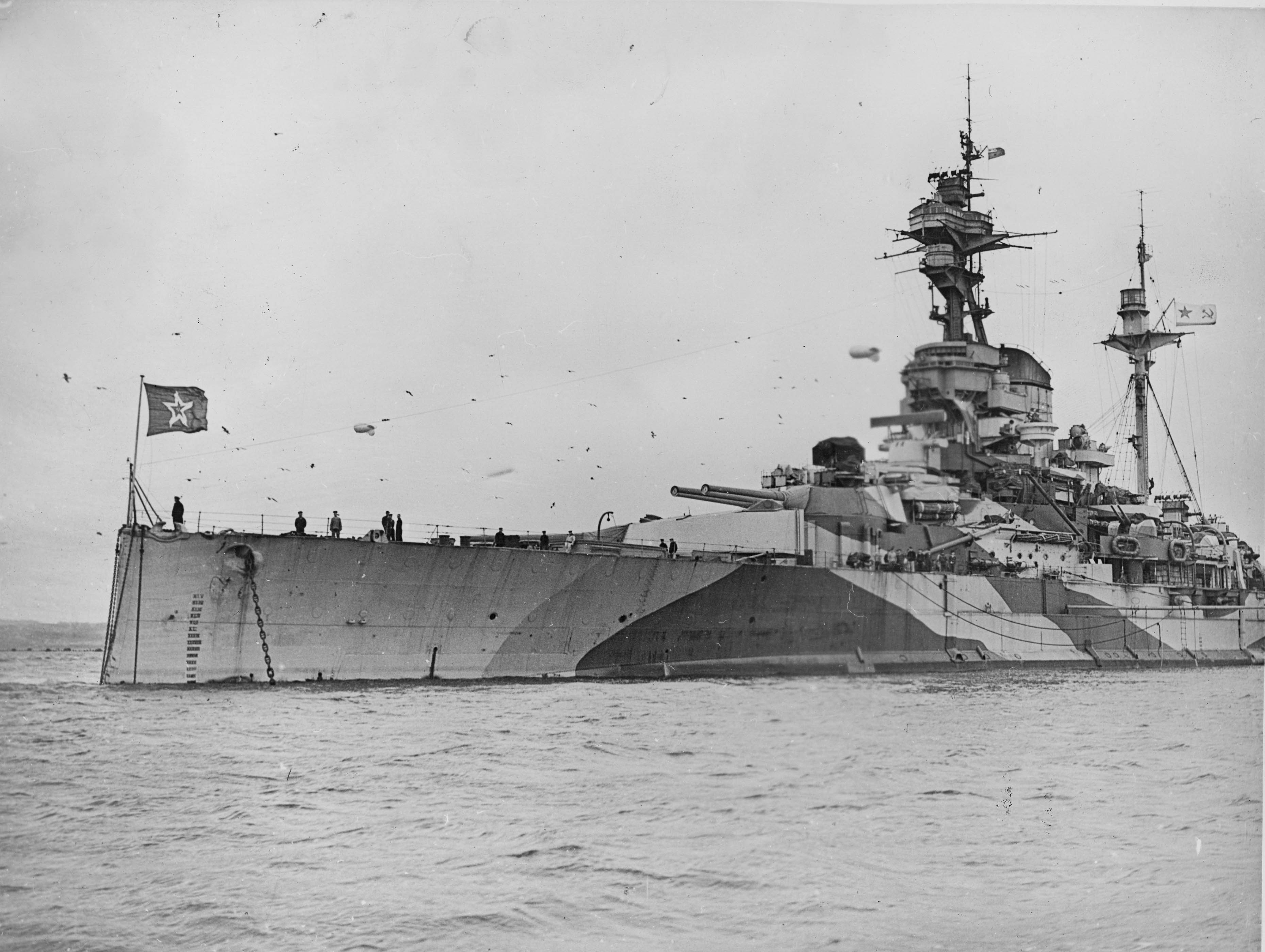
The Royal Sovereign, rechristened the Arkhangelsk, seen in 1944 proudly flying the Soviet flag.

The Royal Sovereign, rechristened the Arkhangelsk, seen in 1944 proudly flying the Soviet flag.

The HMS Royal Sovereign was one of the mid-World War I R-class battleships that would end up serving all over the world, but saw little direct combat in two wars. She missed the Battle of Jutland in the spring of 1916 by only a few weeks, but once operational, she joined the Home Fleet. Later, during the 19 30’s, she served in the Mediterranean as a counter-weight to Italy’s growing naval power.

Like most of the other R-Class battleships, the Royal Sovereign was not substantially modernized during the inter-war period, or even after 1939 when it became clear her anti-aircraft armament was woefully inadequate. Nevertheless, she performed convoy escort duties in the Atlantic, the Med, and later in the Indian Ocean. After a refit in Philadelphia in 1943, where some of her six inch guns were removed so that her deck armor could be increased by two inches, she returned the Indian Ocean for further convoy work.

In the summer of 1944, she escorted convoy JW-59 through the Arctic Sea on the northern Lend-Lease run. Once in the Soviet Union, the crew turned her over to the Russian Navy. A deal had been struck between London and Moscow to loan the Royal Sovereign to the Russians in lieu of sending several captured Italian warships to the Black Sea Fleet as part of Italy’s reparation payment to the Soviet Union.

Crewed by Soviet sailors and commissioned in August 1944 as the Arkhangelsk and became  Admiral Gordey Levchenko’s flagship. At the time, she was the largest vessel in the Soviet Navy. She continued to escort Allied convoys until war’s end. Following the surrender, she ran aground and was seriously damaged. The Russians returned her in 1949 after receiving the Italian battleship Giulio Cesare as reparations. She was in such poor condition by 1949 that the British quickly sold her for scrap.


Categories: Atlantic War, World War II in Europe | Tags: , , , , , , | Leave a comment

And Then….This

Recently, I noted a sharp uptick in visits from folks in Russia. I love the international nature of the readership here, and I appreciate the time everyone takes to come visit my little corner of the web.

It turns out, a very cool Russian naval history discussion site posted a link to my article about the U.S. Navy’s accidental bombing and strafing of a Russian tanker. Actually, it was a U.S.-built tanker, turned over to the Russians so they could carry war material back to the Motherland from U.S. West Coast ports.

As I scrolled through the comments and used Google translate to be able to (almost) understand them, I came across this gem that is so awesome that I had to share it with y’all. Keep in mind, Google translate might not be 100% accurate here….

“The bastard! X s allies…..! Box of poisoned banana monkey black in the mouth! Let devour, and then we’ll see the sanction may be canceled. This cannot be forgiven, especially oblizyanam as written in ‘Tsushima’.  I am outraged to the limit! Attacked our in anything neuvinovaty but still off the coast of our Kamchatka. This cannon be forgiven!”

Okay, wow. This has to be the all time greatest response to anything I’ve ever written. Ever. So, I would like to say to this fine Russian patriot:  Do remember that this attack was a terrible accident that happened because our two nations had joined together to fight for a common good. As far as the current sanctions go–if our leaders could only honor the common heritage and bond shared between us during the darkest hours of our nations’ histories, perhaps we would find common ground, cooperation and lasting peace.

Google Translate version of what I just wrote there above:

Не забывайте, что это нападение было ужасным несчастным, что случилось, потому что наши две страны уже объединились, чтобы бороться за общее благо. Насколько нынешние санкции го-если наши лидеры могли только почтить общее наследие и связь общего между нами в самые темные часы истории наших народов, возможно, мы бы найти общий язык, сотрудничества и прочного мира.

(sorta hope that translation is better than the one I got, lest we start WWIII by miscommunication). 🙂

Please check out the site in Russia. It has many, many cool photos from Russia’s rich naval heritage. And the comment I’ve quoted above is at the bottom of the page. 🙂

http://forums.airbase.ru/2008/11/t87716,99–istoricheskie-fotografii-4.html


John B

Categories: Uncategorized | 9 Comments

The Romanian Air Force

A Romanian fighter pilot about to sortie in an I.A.R. 81 on May 16, 1944.

A Romanian fighter pilot about to sortie in an I.A.R. 81 on May 16, 1944.

WWII Series Romanian Air Force Junkers Ju-88 Bombing Up Eastern Front -1

Romanian ground crews bomb up an awaiting Junkers Ju-88 on the Eastern Front in January 1944.

When the Axis invasion of Russia began in 1941, the Romanian Air Force totaled about six hundred aircraft. In the early phases of the war, the Romanian Air Force flew an unusual collection of British, French, Polish and German-designed aircraft, including the Heinkel-112 fighter that never saw widespread use with the Luftwaffe. Gradually, the British and French-built aircraft were replaced with more modern German fighters and bombers, including the Junkers Ju-88, the Heinkel He-111 and the legendary Junkers Ju-87 Stuka. The Romanians acquired about a hundred and fifty Stukas and used them on the Eastern Front all the way through the 1944 campaign to provide close air support to Axis units.

Some of the Romanian fighter squadrons were equipped with the I.A.R.-80 and 81, a homegrown design capable of speeds up to 350 mph. Rounding out the fighter force were German-supplied Messerschmitt Bf-109’s. Romanian fighter pilots were well-trained and quite capable. During three years of fighting, they claimed over two thousand aerial victories, and several of their aces were credited with sixty kills or more. The USAAF encountered Romanian interceptors many times during the 15th Air Force’s campaign against the Ploesti oil fields.

A Romanian Ju-87 squadron prepares for a mission on the Eastern Front in November 1943.

A Romanian Ju-87 squadron prepares for a mission on the Eastern Front in November 1943.

In August 1944, a coup toppled the pro-Axis government and Romania switched sides. With USAAF support, the Romanian Army held off a German attack against their capital. Fighting raged between once close-Allies as the Romanian Army later went on the offensive and drove the Wehrmacht away from the vital oil fields around Ploesti. By the time the war ended the following spring, the Romanian Army had captured over 50,000 German troops. These POW’s were turned over to the Red Army, where they suffered through years of captivity in Siberia.

208 aa for uboat series246

An I.A.R.-81 pilot receives a bit of help climbing into the cockpit before a sortie against the Russians on the Eastern Front, December 9, 1943.

In an ironic twist, the Romanian Air Force’s final kill took place between one of its Messerschmitt Bf-109G’s and a Luftwaffe 109K. When the war ended, the Romanians continued to use their 109’s for several years, and the I.A.R.-81’s remained in front line service until 1948. Gradually, though, the wartime aircraft they had acquired gave way to a Soviet-sponsored modernization program. Today, the Romanian Air Force flies an interesting mix of both NATO and Russian aircraft, and is on tract this year to receive its first batch of F-16 fighters.


Categories: World War II Europe, World War II in Europe | Tags: , , , , , , , , , , , | Leave a comment

Lend Lease Wings

A formation of Brewster Bermuda dive bombers on a training flight. The aircraft never saw widespread service as a result of its mediocre performance.

A formation of Brewster Bermuda dive bombers on a training flight. The aircraft never saw widespread service as a result of its mediocre performance.

During the Second World War, the United States produced thousands of aircraft, guns, artillery, vehicles and ships that its armed forces never used. Instead, these weapons from the great “Arsenal of Democracy” were sent to other Allied nations fighting desperately to stem the tide against the Axis Powers. Well known are the Bell P-39 Airacobras that reached Russia and performed excellent duty as ground attack aircraft. The P-51 Mustang, the F4U Corsair, Grumman F4F Wildcat, the TBM Avenger all served in with the British Fleet Air Arm or Royal Air Force, as well as in other Allied nations during the war.

But some lesser known types were sent overseas as part of the Lend Lease effort. Perhaps one of the more unusual was the Brewster SB2A Buccaneer. Designed before the war as a carrier-based dive bomber, the British and Dutch were so desperate for such an aircraft that they placed orders for it before the prototype even flew in 1941. When it finally did, the aircraft’s performance proved to be such a disappointment that the contracts were largely canceled. A few Brewsters, dubbed Bermudas by the FAA, saw limited service as training aircraft and target tugs, but its role as a combat dive bomber had been eclipsed by better aircraft.

208 aa for uboat series113

Number 88 Squadron became the first Douglas Boston unit in the RAF. It began flying anti-shipping and interdiction missions in February 1942.

The British also used the legendary Consolidated B-24 Liberator, though not primarily as a strategic bomber but as a long range anti-submarine aircraft. And after the Fall of France, the Douglas DB-7 Boston ended up in RAF service flying low altitude, short-ranged hit-and-run raids against German targets on the Continent. The Boston became a mainstay of the RAF’s light attack units in 1942-43, equipping about two dozen squadrons before ultimately being replaced by the DeHaviland Mosquito in the later stages of the war.

A badly damaged British Liberator, seen here back in England after it had been struck by a falling bomb dropped from a squadron mate in mid-flight. The British largely used their Liberators as long-range anti-submarine and maritime patrol aircraft.

A badly damaged British Liberator, seen here back in England after it had been struck by a falling bomb dropped from a squadron mate in mid-flight. The British largely used their Liberators as long-range anti-submarine and maritime patrol aircraft.

Categories: World War II Europe, World War II in Europe | Tags: , , , , , , , , , , , , | Leave a comment

The Stone Wall at Marye’s Heights

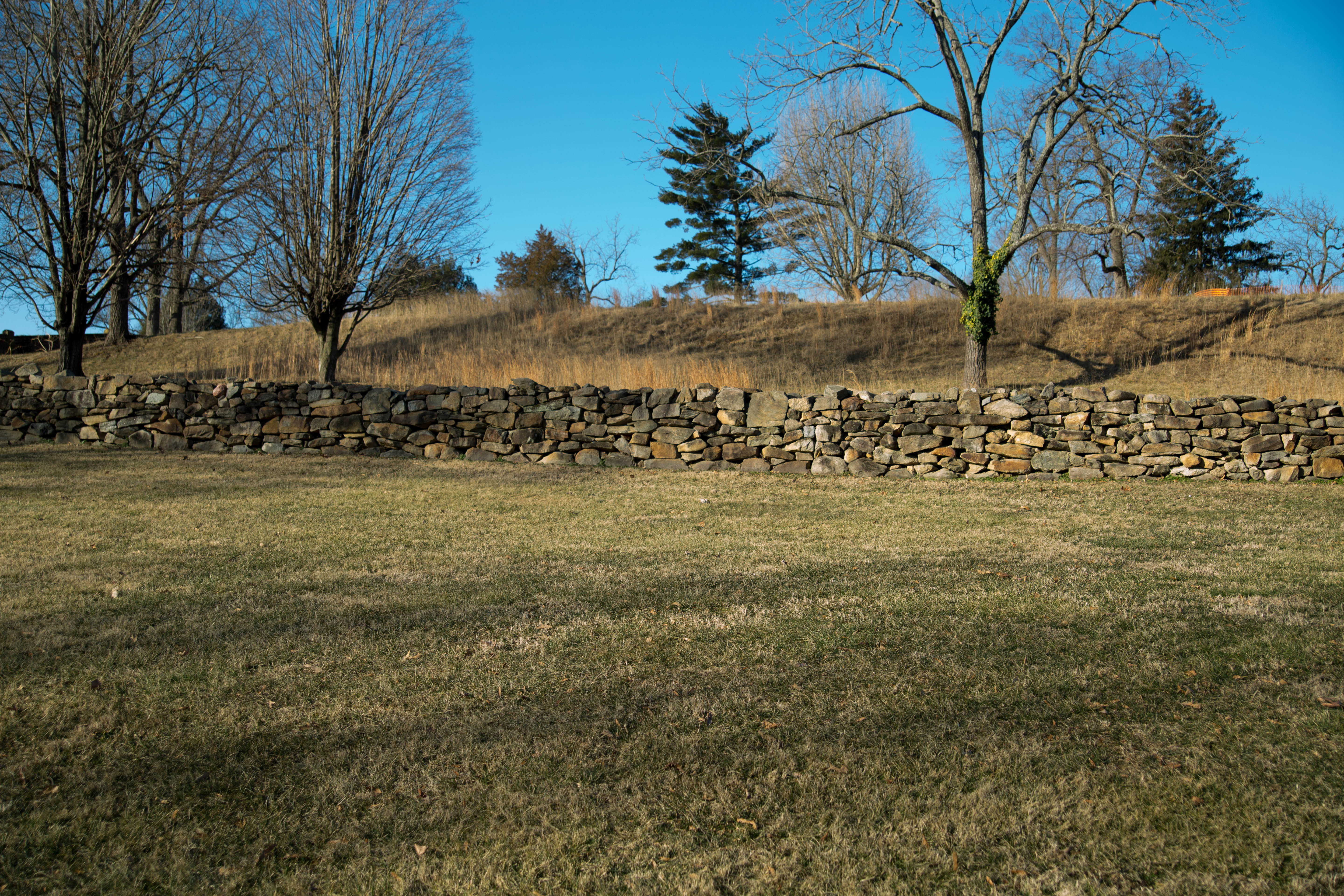
G86A4529

The last sight some 8,000 Union Soldiers ever had on December 13, 1862.

On December 13, 1862, Union General Ambrose Burnside launched a furious, frontal assault against Robert E. Lee’s Army of Northern Virginia as he sought to widen his bridgehead across the Rappahannock River at Fredericksburg. Lee’s troops held a formidable defensive position on a ridge outside of town known as Marye’s Heights. With artillery atop the ridge, and his infantry deployed along its slope behind a waist-high stone wall, the Confederates had a clear field of fire for hundreds of yards in Lee’s front.

Burnside’s troops marched right into that killing zone, and despite extraordinary bravery failed to even reach the stone wall. Wave after wave of blue clad Soldiers swept up the slopes, only to be mowed down by close-range artillery and rifle fire. The attack was pressed for hours with the same result after every charge. The dead and wounded carpeted the soft ground before the stone wall, while the Confederates suffered minimal casualties. Legendary Maine professor, General Joshua Lawrence Chamberlain, spent the night on the slope with the rest of the 20th Maine Volunteers using the bodies of the fallen to shield them from the elements and Confederate sharpshooters.G86A4526

As he watched the carnage unfold, General Robert E. Lee is supposed to have uttered, “It is well that war is so terrible, lest we grow too fond of it.”

The following spring, during the Chancelorsville Campaign, Union troops seized Marye’s Heights, only to be driven off by a Confederate counter-attack the following day.


G86A4519

Hallowed Ground.


Categories: American Civil War | Leave a comment

Blog at WordPress.com.