

John & Renee Do History–Again!
This episode, we find out how long Renee’s been wearing her Harry Potter sweats, how John stole a fuzzy North Korean-made blanket in Afghanistan, gave Renee Fireball to help combat Renee’s latest injury, all while discussing some remarkable American combat veterans from the Pacific Air War. We chat about the 475th Fighter Group, the 49th Fighter Group, what it is like to dogfight with a duck between your legs, what happened when 38 kill ace Tommy McGuire got bored and how a coin toss led a Mid-West Quaker kid to a moment of terrible decision over Wake Island in 1941.
A Very Gwenie Moment
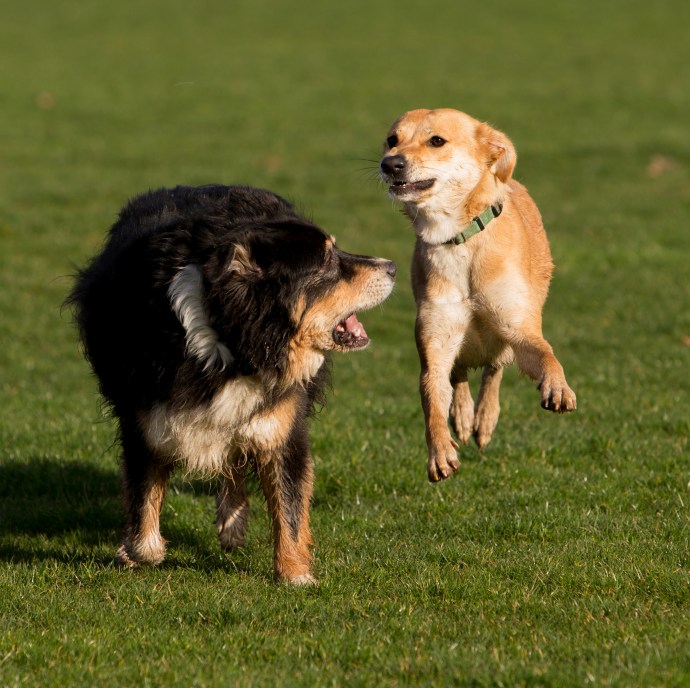
Air Jordanian
Historians and their Animals
Today we kick off our theamericanwarrior.com podcast series! This week, we’ll be talking about a little-known characteristic historians have in common–the way we name our pets.
Hope you’ll listen in as Renee Bruning and I (John R. Bruning) chat about World War II battles, Civil War generals and foundling kittens.
Into the Dead City: With 2-162 Infantry in New Orleans 2005, Part I
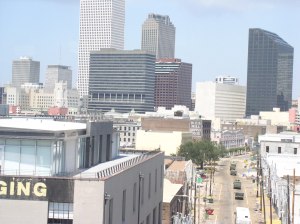
First glimpse of New Orleans, September 8,2005.
New Orleans, Louisiana
September 8, 2005
Ten Days After Hurricane Katrina
The dog trotted alongside our bus as we rolled to a halt next to a small park flanked by a Mississippi River seawall. The green space here was littered with debris—downed tree limbs, trash, an abandoned grocery cart lying on its side. The wall had been tagged by some anonymous vandal who memorialized his sentiments with, “RIP. Whore Katrina.” Sort of a gang-banger version of a cave pictograph, I guess.
I watched the dog lope past my window. It was an emaciated German Shepherd without tags or a collar.
“John…John, let’s go,” I turned from the window to see Sergeant First Class Vince “Vinni” Jacques calling to me from the front of the bus. All the other soldiers were jumping off the bus and streaming across the garbage-strewn grass. We’d been in the bus for almost three hours, drinking water and staring out at the destruction wrought by Hurricane Katrina as we inched our way from the New Orleans Naval Air Station, across the Mississippi, and into the city. On the entire drive in, we saw less than a dozen people—all but two of whom were first responders. On a street corner a few blocks from the Mississippi, a twenty-something couple sat on the curb, clothes filthy, eyes hollow and staring at us. A dirty grey dog lay panting at their feet, a length of twine serving as a leash and collar. They were the only civilians I’d seen in the otherwise empty streets. New Orleans looked like the set of one of Hollywood’s last-man-on-earth epics.

For the Ward Brothers!
I followed Vinni off the bus. The heat assailed me the moment my feet touched the ground. Not even noon yet, and the temperature had to be a hundred degrees. Coupled with late summer humidity, the weather was so severe that people were dying from it as they awaited rescue at evacuation points elsewhere in the city. The day before we left Portland, the Oregonian ran a front page photograph of an elderly African-American sprawled dead in a lawn chair he had unfolded in front of the New Orleans Convention Center. Another victim of heat stroke.
I followed Vinni to the seawall, where most of the soldiers of 2nd Battalion, 162nd Infantry, Oregon National Guard had lined up to relieve their bladders. I watched the spectacle of three hundred and fifty men urinating in a public park and whispered, “Well, you don’t see that every day.”
Through tight lips, Vinni replied, “Say goodbye to civilization for awhile.”

Then-Sergeant First Class Vince “Vinni” Jacques. Taken at the Portland Airport the evening before our departure for New Orleans. Vinni had been wounded in action in Iraq, and had served in the 1991 Gulf War in an airborne artillery unit.
A year before, as the battalion prepared to deploy to Iraq, some of the men had taken their last leave in New Orleans. Sergeants Shane and Brian Ward had pub crawled through Bourbon Street. Late on their first night in town, Shane staggered into an alley and was caught relieving himself by two New Orleans police officers. They dragged him to their squad car, cuffed him and face planted him on its hood. Brian protested, and they roughed him up as well. Both spent the night in the local slammer.
What a difference a year makes. Shane had been seriously wounded in Iraq. Brian had come through physically unscathed, but had left the Guard in the summer.
Sergeant First Class Tommy Houston appeared next to me. Always grinning, ready with a story and generous to a fault, he looked over at me and shouted, “This one’s for the Ward Brothers!”
The cry echoed up and down the seawall: “For the Wards!”
Without power or running water, there was not a functioning bathroom in the entire city. This would have to do. I unzipped and let fly, feeling like a complete scofflaw.
A moment later, as I walked back toward the bus, the German Shepherd padded toward me. I stopped and regarded her. She looked up at me with forlorn eyes, her ears lowered submissively.

The first of hundreds of abandoned pets we found in New Orleans.
“Come here, girl,” I said, urging the dog a few steps closer. Soldiers walked around her, and she glanced at each with an odd dual expression of fear and hope.
She came to me and sat down. I didn’t have much food on me, just a granola bar I’d brought from Oregon. I pulled it out and tore the wrapper off. She looked puzzled as I offered it to her. A few dainty sniffs, an even sadder expression, and she took the bar in her mouth.
“Better than nothing, I guess, eh girl?” I whispered to her.
“Come on, John,” Vinni said
I lingered. I had a canteen of water, and I tried to pour some into the dog’s mouth. No luck. She finished her granola bar and waited for more. A soldier I didn’t know found an empty can in the grass, brought it over and filled it with water from his CamelBak. She drank eagerly.
“John!” Vinni growled, his voice suggesting I ignore him again at my peril. I stuffed the empty granola wrapper into my pocket—I may have just defiled a public park, but I wasn’t ready to break the littering laws despite the reeking garbage that lay strewn in all directions—and followed Vinni.
We pulled our bags from the bus’s luggage compartment. Each of us had a rucksack stuffed with clothing and gear, plus a duffel bag, body armor and Kevlar helmet. To this mix, I’d added an Olympus digital camera and a Dell laptop computer. Instead of searching for our stuff in the mass of identical rucks and duffels, we shouldered whatever was handed to us and walked single file the two blocks to the New Orleans Center for Creative Arts, which now served as the Oregon National Guard’s headquarters in Louisiana.
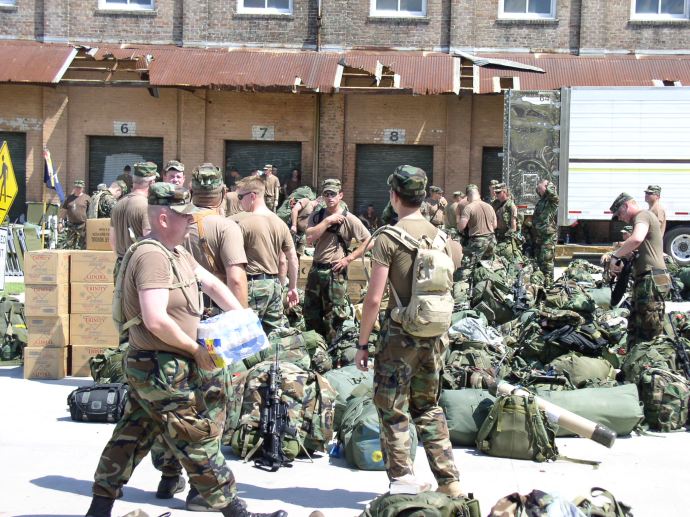
At the Creative Arts Center a few hours before we headed north to the New Orleans Baptist Seminary. The CAC served as the brigade HQ for the Oregon National Guard.
We dumped our gear in the parking lot, then returned to the bus to get the crates of bottled water and boxes of Meals Ready to Eat (MRE’s) that would sustain us in the days to come. Each box weighed twenty or thirty pounds and was stuffed with a variety of MRE’s ranging from chicken sandwiches to omelets and hash browns.
The soldiers of 2nd Battalion, 162nd Infantry had spent a year in the heat of the Middle East. They’d fought in Najaf, Fallujah, and helped suppress the two Shia uprisings in Baghdad. They were used to this heat and knew how to measure their movements and stay hydrated. They grabbed two or three crates at a time and slung them on their shoulders. It looked easy. I picked up two MRE boxes and made it a block before the humidity hammered me. Soaked with sweat and panting like a dog, I staggered toward the parking lot.
I was a middle-aged civilian, out of shape and a hundred pounds overweight. I had no experience with this sort of weather. My head started to buzz. My vision tunneled. A soldier nearby saw my face and grabbed one of the boxes. “Thanks,” I managed.

Me with the Volunteers the morning before we flew to New Orleans. I went into the city weighing 300 lbs. Came out a month later down to 260. I was extremely out of shape, unfit and totally unready for the physical and emotional challenges of post-Katrina New Orleans.
“Hey, Sir,” he said to me, “You’re here as our guest. You don’t need to carry this shit.”
“I’m sure as hell not going to be dead weight.”
He laughed, then added, “Well, that’s exactly what you’ll be if you go down and do the twitchin’ chicken.”
“What’s that?” I asked.
“When you get heat prostration, you keel over and your body spasms uncontrollably. We saw it all the time in Iraq. Called it the twitchin’ chicken.”
“Jesus!” I had a vision of myself writhing in the street as Vinni and Tommy Houston watched. Could there be anything more humiliating?
He grinned at me and bounded off, carrying the MRE box like a football.
“Damn, how I wish I was young again. Or skinny.”
I dropped the MRE box on top of a pile in the parking lot. The men had made four-foot-high walls with the supplies, providing a bit of protection from the sun. Without any further orders, they settled down to doze and chat.
I found a bottle of water and drained it in seconds. Another one followed. I tried to wipe the sweat off my face, but everything I had was soaked with it. I ended up just smearing it around with my grey-blue t-shirt.
Vinni had gone off somewhere. Most of the soldiers in the immediate area I’d only recently met. I stood there next to the pile of supplies, feeling terribly out of place. I was the only civilian with 2-162.
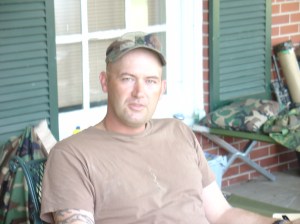
SFC Tommy Houston. Gregarious, always ready with a story and generous, Tommy made sure I had the proper equipment for New Orleans. I didn’t even own a pair of boots before we left. The pair he acquired for me turned from black to green as a result of the muck we slogged through in the city.
I finished a third bottle of water, then lay down in the shade of the supply boxes next to Tommy Houston.
“Ya good John? Yer lookin’ a little on the warm side there, pal.”
“Yeah, I’m okay. Thanks.” When the battalion received its mobilization orders, and I asked to come along, Tommy took me into the bowels of a supply warehouse and outfitted me with black infantry boots, a CamelBak, wool socks and a poncho liner that he called a “Whoobie.” This was a lightweight, camouflaged blanket that he assured me would come in handy.
We made small talk until I found myself drifting. The sun rose and our meager shade evaporated. The men covered their faces with their caps and soon most of them were snoring.
Movement at my feet woke me up. When I opened my eyes, I saw Sergeant Matt Zedwick grinning down on me. Known as “Z” in the battalion, Matt was a superb physical specimen. He was one of those guys who shattered the myth of soggy, out-of-shape National Guardsmen that the regular army often uses to denigrate the reservists. Matt didn’t have an ounce of fat on him, and his shoulders were wide, strong and capable. In our interviews, I’d found him to be the epitome of the modern National Guard non-commissioned officer.
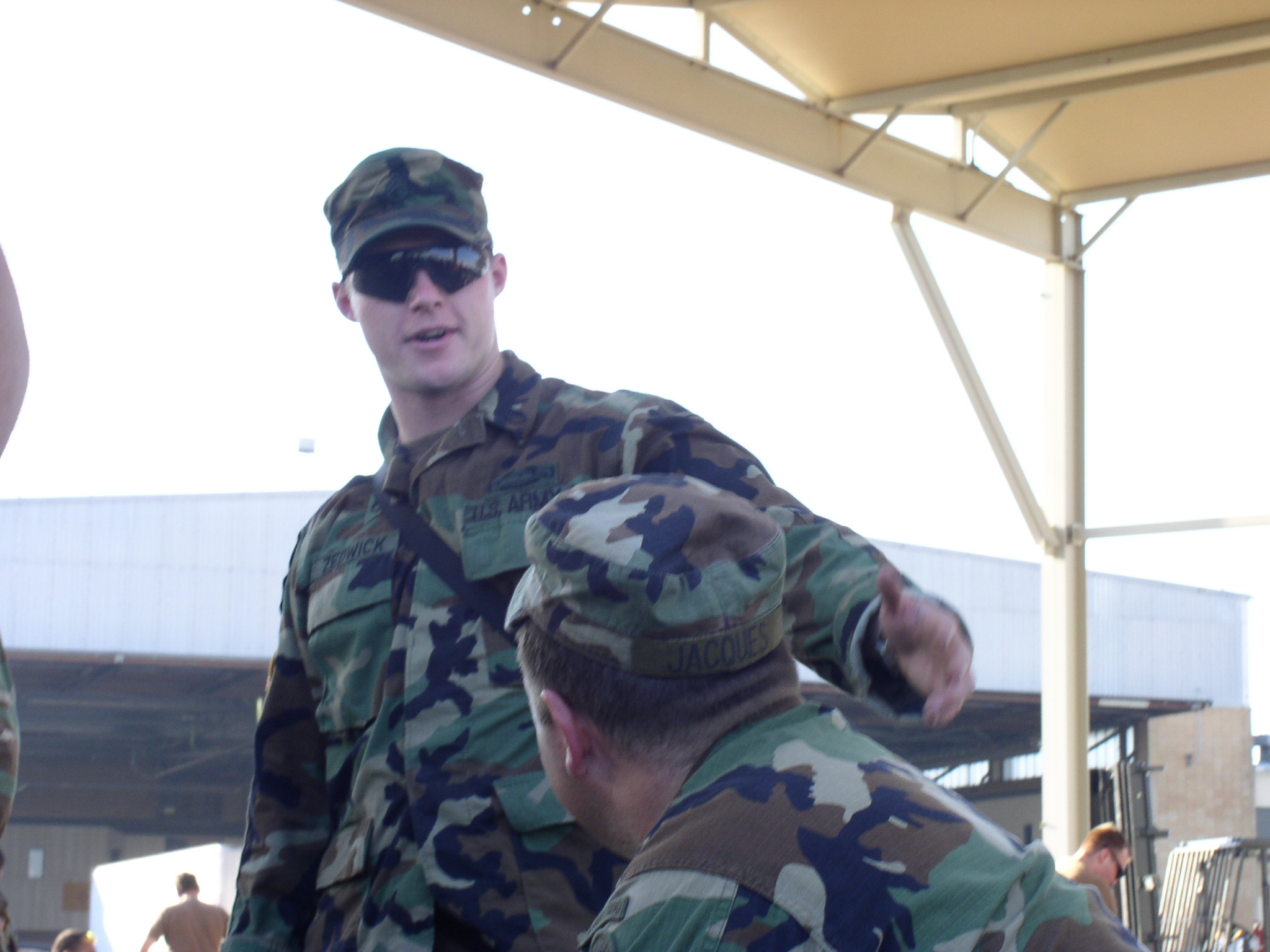
Matt “Z” Zedwick at NAS New Orleans the morning of September 8, 2005 before we drove into the city. Matt was a veteran of the Sunni Triangle, the 2nd Battles of Najaf and Fallujah. He became the first Oregon National Guardsman to receive the Silver Star since WWII. After Katrina, he was a guest contestant on the TV Game Show, Deal or No Deal.
“What’s up, Matt?” I asked. Without a word, he pulled a Zip-Lock bag out of his pocket and dropped it on an MRE box by my feet. He bent down and tugged its contents onto the cardboard.
I sat up and saw that he’d brought me a six-inch-long dead dragonfly.
“What the hell?”
He flashed another sly grin and walked away. I watched him leave, completely befuddled by this gift.
In June, 2004, a car bomb destroyed Matt’s Humvee and set it afire. The gunner, Eric McKinley, died instantly. Matt jumped out and dragged his wounded truck commander clear of the burning wreck. When insurgents opened fire on them, he shielded Sean with his own body. Moments later, a second IED blew up and severely wounded Shane Ward. Despite incoming small arms fire, Matt rushed over to him and staunched the bleeding, an action Shane told me over a beer had saved his life. Matt became the first Oregon Guardsmen since World War II to receive a Silver Star for courage under fire. That’s the third highest valor award the Army gives its soldiers.
I sat pondering what just happened when Specialist Joel “Stiney” Stineman strolled by and dropped another dead insect on the MRE box. Tommy and I studied it. It appeared to be some sort of black and red wasp.
Another soldier delivered a second dragonfly. Soon, the MRE box was covered with dead bugs.
Vinni reappeared, face red and slick with sweat. He looked down at the box and asked, “What’s going on?”
“Well, I’m not sure. The guys keep bringing me dead things.”
Vinni let out a deep, rolling laugh. “John, that’s just a sign they like you.”
I wanted to ask if this was some sort of infantry tradition. Instead, I feigned appreciation and replied, “Nice. Good to know. Appreciate it.”
I scooped up the biggest dragonfly and stuck it back in the Z’s plastic bag.
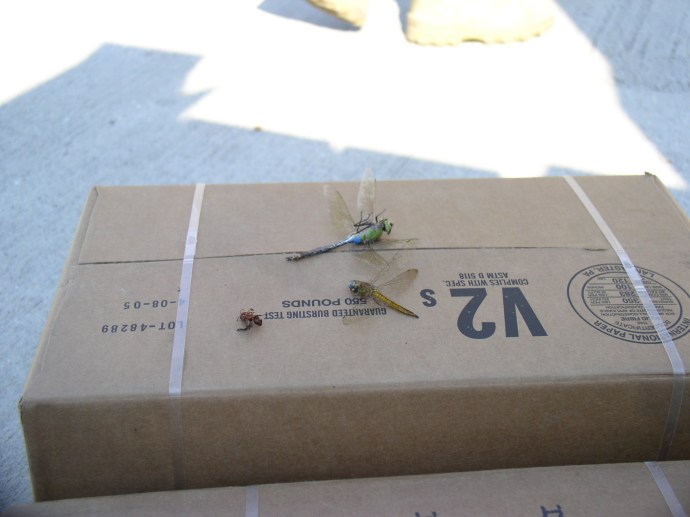
The Box of Dead Offerings.
“What’re ya doin’?” Tommy asked as I stuffed the bug into my laptop bag.
“Hey, you never know when something like this will come in handy,”
Vinni was a legendary prankster, and he’d already victimized me several times. I owed him, and the bug had given me ideas.
Tommy shook his head and gave me a sly grin. “Ya. You’ll fit in around here.”
Sergeant First Class Sean Davis, the man Matt Zedwick had pulled out of the burning Humvee, walked up to Vinni. “There’s a bank up the street,” he said, “There’s a bunch a parakeets flyin’ around inside it.”
“Parakeets?” Vinni asked, incredulous.
“Yeah.”
“That’s jacked up.”
“Well, go take a look at what’s sittin’ in front of the entrance to the brigade headquarters,” somebody else chimed in.
“What?” I asked.
“Go look!”
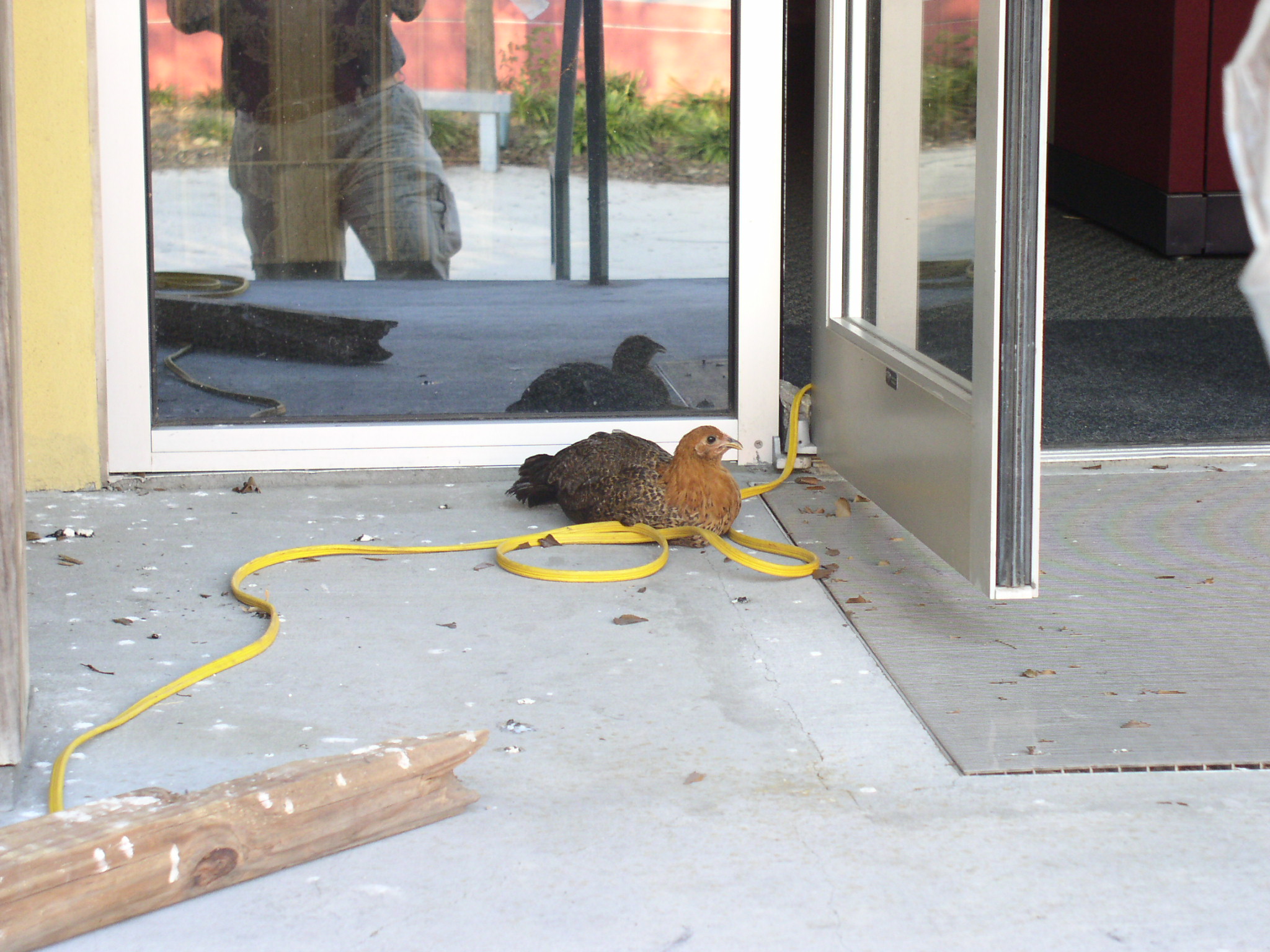
The guardian of brigade HQ.
I got up and stretched, feeling old and very out of shape. I walked through the parking lot to the Creative Arts center. As I rounded the corner, I encountered a chicken roosting on a loop of extension cord next to the front door. The cord ran back to a gasoline generator that provided the headquarters with enough power to get the unit’s computers up and running.
I walked up to it and flipped on my camera. She sat up defensively, eyeballing me as if I’d invaded her territory. Her territory? She’d made her nest at the entrance to a cultural landmark. And besides, who owns chickens in a big city? I had visions of some local voodoo doctor keeping chickens around for various love potions or revenge serums.
“John, how you doing?” I turned around to see Brigadier General Douglas Pritt, the commander of the Oregon contingent here in post-Katrina New Orleans. We had met back in February, when I first approached the Guard and asked permission to write a book about 2-162’s experiences in Iraq.

General Pritt confers with Captain San Miguel, commander of Bravo Company, 2-162 Infantry.
“I’m good, Sir. Thank you.” I replied. General Pritt did not have the visage of a hard-bitten general, a la George S. Patton or Douglas MacArthur. Instead, he possessed a friendly face, a calm demeanor and a soft voice. He never swore, a fact that had become a legend in his command. Infantrymen have notoriously foul mouths, but woe be unto any soldier who used profanity in his presence.
We shook hands as he said, “Listen, how about you staying here at brigade headquarters? We’ll have air conditioning up and running in a few hours and hot chow at night. You’ll be comfortable here.”
“Where’s 2-162 going, Sir?” I asked.
“North, up by the housing projects. Lot of flooding there.”
The previous night, just before we settled down to sleep on the aircraft parking ramp at the New Orleans Naval Air Station, I’d met a Virginia National Guard MP. We’d struck up a conversation and I had asked him about the city. “The worst part’s the projects. Gang bangers ‘been shootin’ at everyone—police, ambulances, fire trucks. They’ve lit ‘em all up. The other day, we found a cop lyin’ face down, handcuffed to a telephone pole. Shot in the back of the head, execution-style. Freakin’ gruesome shit, man.”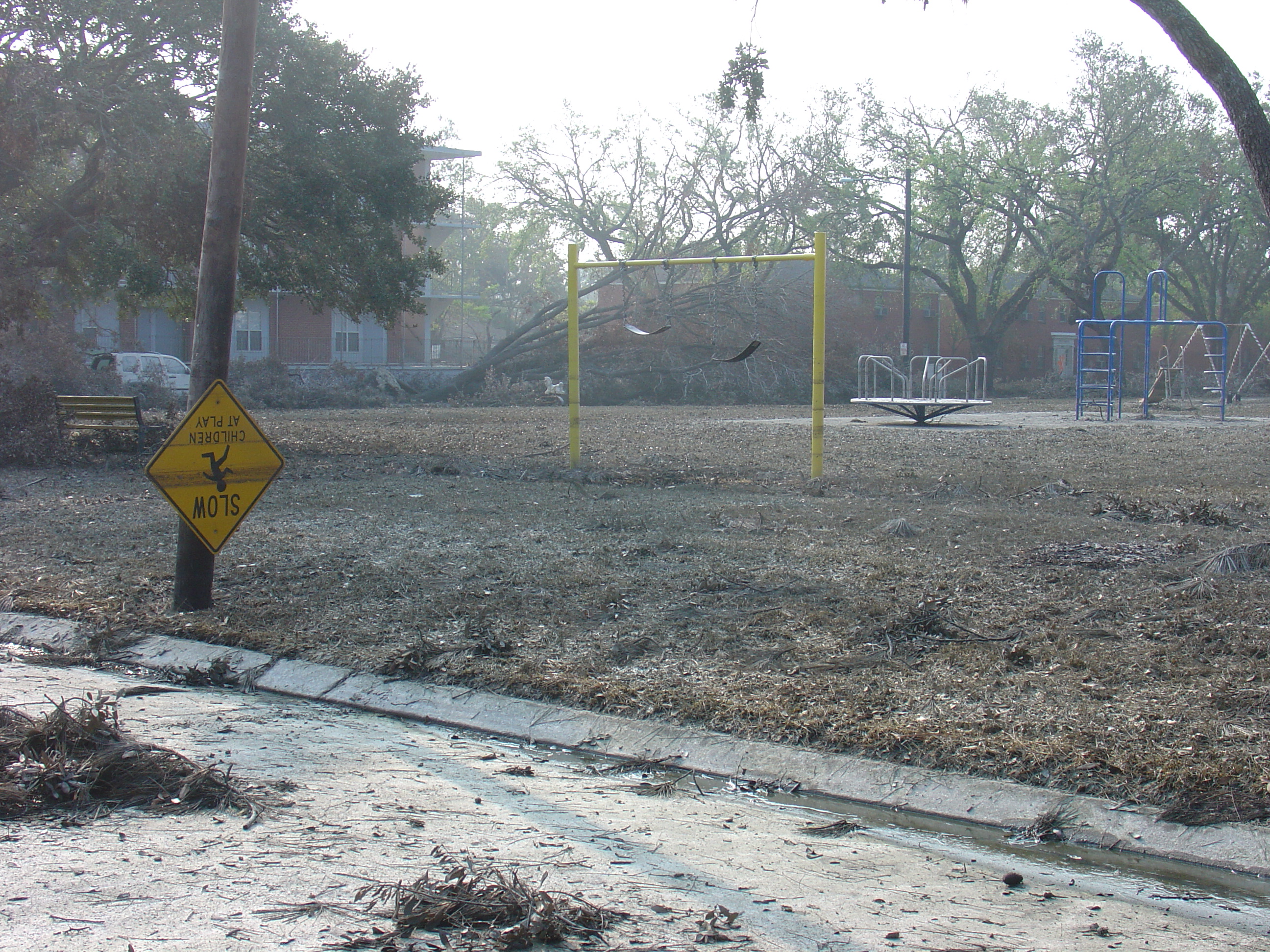
“You’ll be able to see plenty from here, John,” General Pritt continued.
We made eye contact, and I could see the intent behind his words. You won’t be able to do this. Not in your shape. Not with your weight.
The General was giving me a gracious way out. Perhaps he was having second thoughts about allowing me to tag along.
I’d spent the last six months doing research for the book on 2-162. It entailed interviewing as many members of the unit as possible; all of the documents associated with the deployment were still classified. Since February, I’d put almost twenty thousand miles on my Explorer as I drove around Oregon to speak with the battalion’s veterans. The work had taken me in some unexpected directions, including the visitation area of the Washington County Jail.
On the Friday before Labor Day, I arrived at the Oregon Military Department to interview the senior non-commissioned officer in the battalion, Sergeant-Major Brunk Conley. He came out of his office and greeted me with, “John, I can’t talk to you today. I’m sorry. We just got mobilized for Katrina. We’re going to New Orleans.”
Without even thinking, I blurted, “Take me with you.”
Brunk, a lean and chisled twenty-plus-year veteran of the Guard smiled warmly and said, “I hoped you’d say that. Let me go talk to General Pritt.”
All year long, as I met and interviewed each member of 2-162, the fact that I had not been able to embed with them in Iraq weighed heavily on me. I’d only learned of the unit’s intense combat experience a month before they were set to return, so I had no time to get out there and meet the soldiers in the field when I started writing the book.
Going to New Orleans could help atone for that.
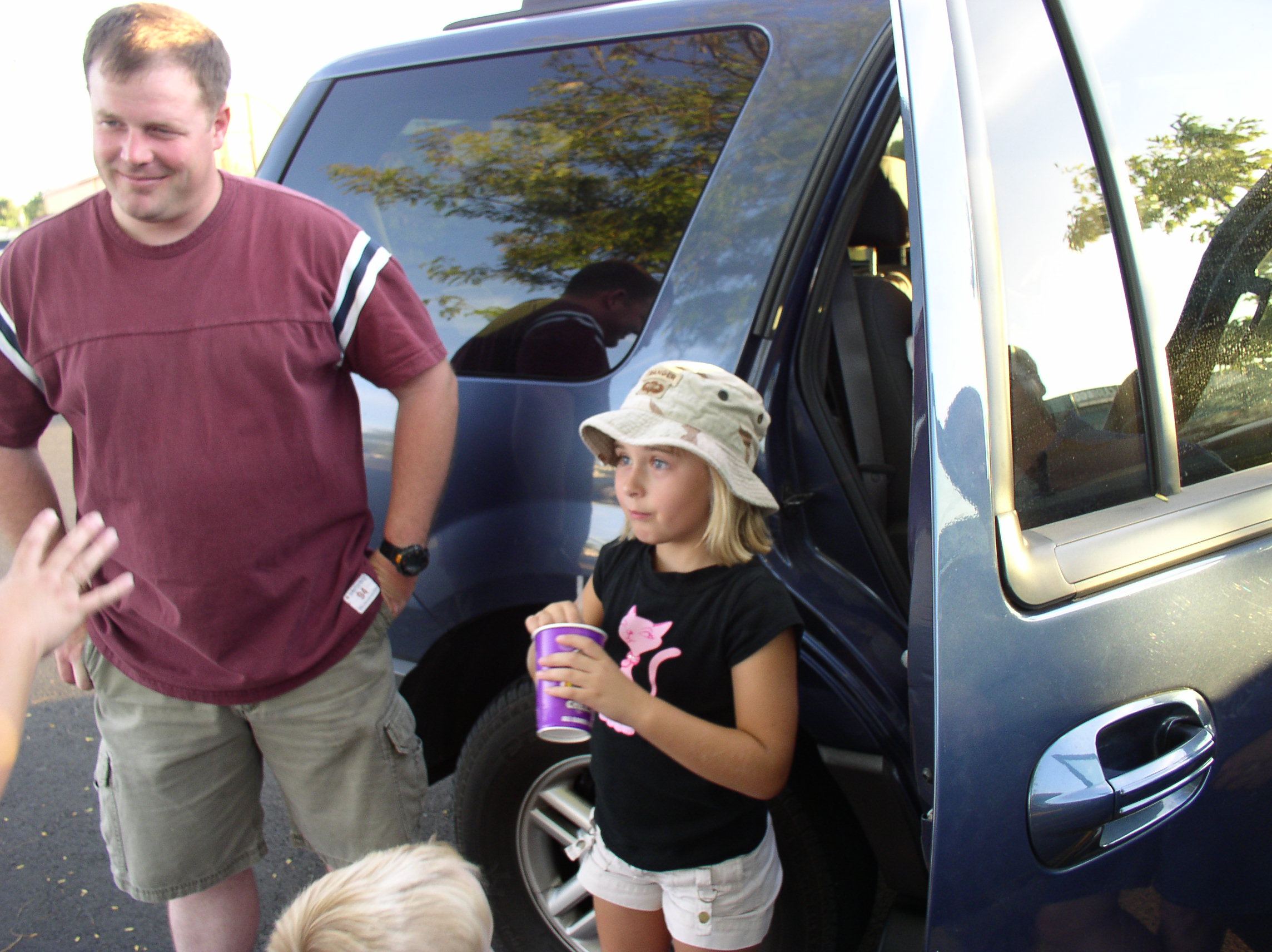
Vinni with my daughter Renee during a birthday party for my son Eddie a month before we went to New Orleans. Vinni had given Renee the hat she has on.
Besides, when I called Vinni and asked him if he was going, he growled, “Hell yeah–if they let us shoot looters!” Vinni growled a lot. It was one of his most endearing features, actually.
Where Vinni went, I went. In the six months since I met him, I’d become closer to him than anyone besides my wife. We’d shared stories, bonded over drinks and late night talks. I had helped write his men up for awards the army had initially denied them. In return, he paved the way within the unit for me to write the book.
Air conditioning would be nice. So would hot chow. For the past three days, I’d lived off granola bars and MRE crackers.
“Sir, if you don’t mind, I’d like to stay with 2-162.”
General Pritt offered a thin smile, “John, it is going to be pretty rugged.”
“I know, Sir. But if it’s at all possible, I’d like to be with the Volunteers.”
Back in 1917, when the United States joined the Great War, 2-162 became the first National Guard unit to assemble and declare itself ready for service overseas. It gained its motto, “First to Assemble,” from that achievement, and also earned the nickname the Volunteers.
“Okay. But once you’re there, you’ll have to stay.”

Abandoned city busses became our primary means of transportation from the outset of our arrival in New Orleans. The Soldiers combed the streets to find them, then got them back into working condition within a few hours.
“I wouldn’t want to be anywhere else, Sir.”
“You’ve grown close to the men, haven’t you, John?” he asked.
“Some of them are like brothers to me, Sir.”
He thought about this for a minute. Journalists stay detached, or at least they try. I was never a journalist and never really referred to myself as a writer, even though that’s how I’ve made my living for nine years. When asked, I tell people I am a military historian.
“We’ve found a good spot for the battalion, a seminary. You should be relatively comfortable there.”
“Thank you, Sir.”
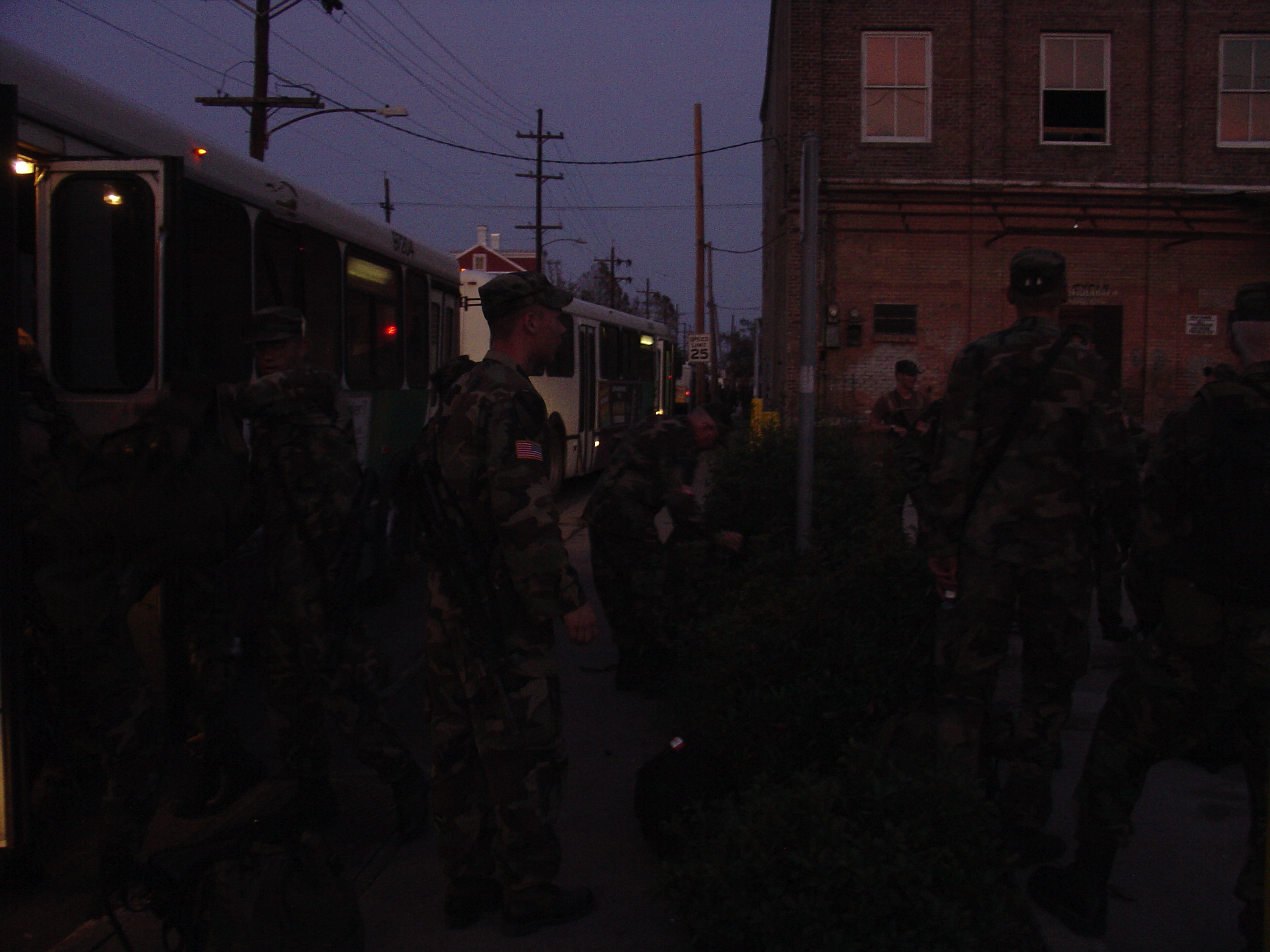
Loading up for the drive north to the Seminary.
General Pritt offered his hand. He looked unsure. I felt unsure. I think both of us were wondering the same thing: can the middle-aged, flabby historian hack this?
“Good luck, John.”
“I’ll see you out there, Sir.”
He looked at the chicken as he walked back inside headquarters. She stared back, unafraid, as though she dared him to interfere. She sat up, extended her neck and clucked what must have been a curse in Chickenese.
The general shook his head and smiled, then disappeared inside. The chicken would stay.
General Pritt was a hard man not to like.
The waiting in the parking lot continued. The Oregon Guard lacked motor transport, and we remained hunkered down around our supplies hoping that something would show up to get us out of the sun and to our assigned area of operations.
When nothing did, the soldiers improvised. Small parties set forth into the neighborhood. Initially, this was just a matter of curiosity, but when some of the men stumbled across an abandoned city bus, inspiration struck. Further searches uncovered four of them, all with their keys still in the ignition, just sitting derelict in the middle of streets and boulevards. One had been driven onto a sidewalk where it had snapped off a stoplight pole. The driver had kept going after the collision until the bottom of the vehicle balanced on the pole’s stump. The Guardsmen, ever creative and adaptive, figured out a way to get it clear without tearing out the bus’s vitals.
Late that afternoon, the men drove our newfound wheels to the Creative Arts Center and reported to the battalion commander, Lieutenant Colonel Dan Hendrickson, that we had our own rides at last.
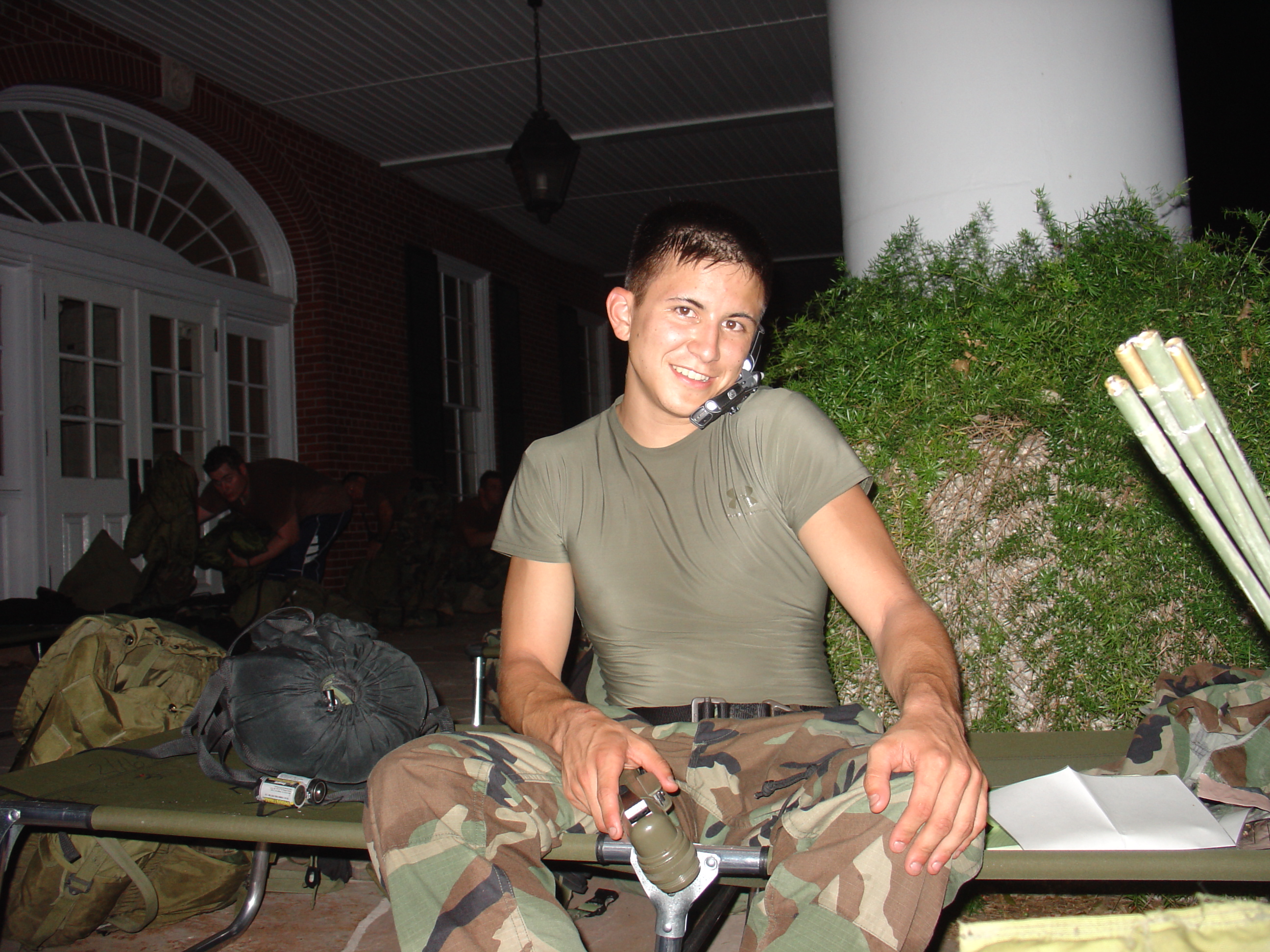
Joel “Stiney” Stineman, the battalion’s “Token Jew.”
As dusk fell, we made a human chain from the pile of supplies to our new busses and passed box after box from one set of hands to another until everything we’d brought into the city had been stuffed inside the rigs. When we finished, our duffels and rucks dominated the back third of every bus. I climbed inside and found Sergeant First Class Chris Johnson sitting atop the pile of gear, his head sticking through an open skylight in the roof. Every other seat had been taken, so I sat down on the steps leading to the rear side door. A moment later, Stiney sat down next to me.
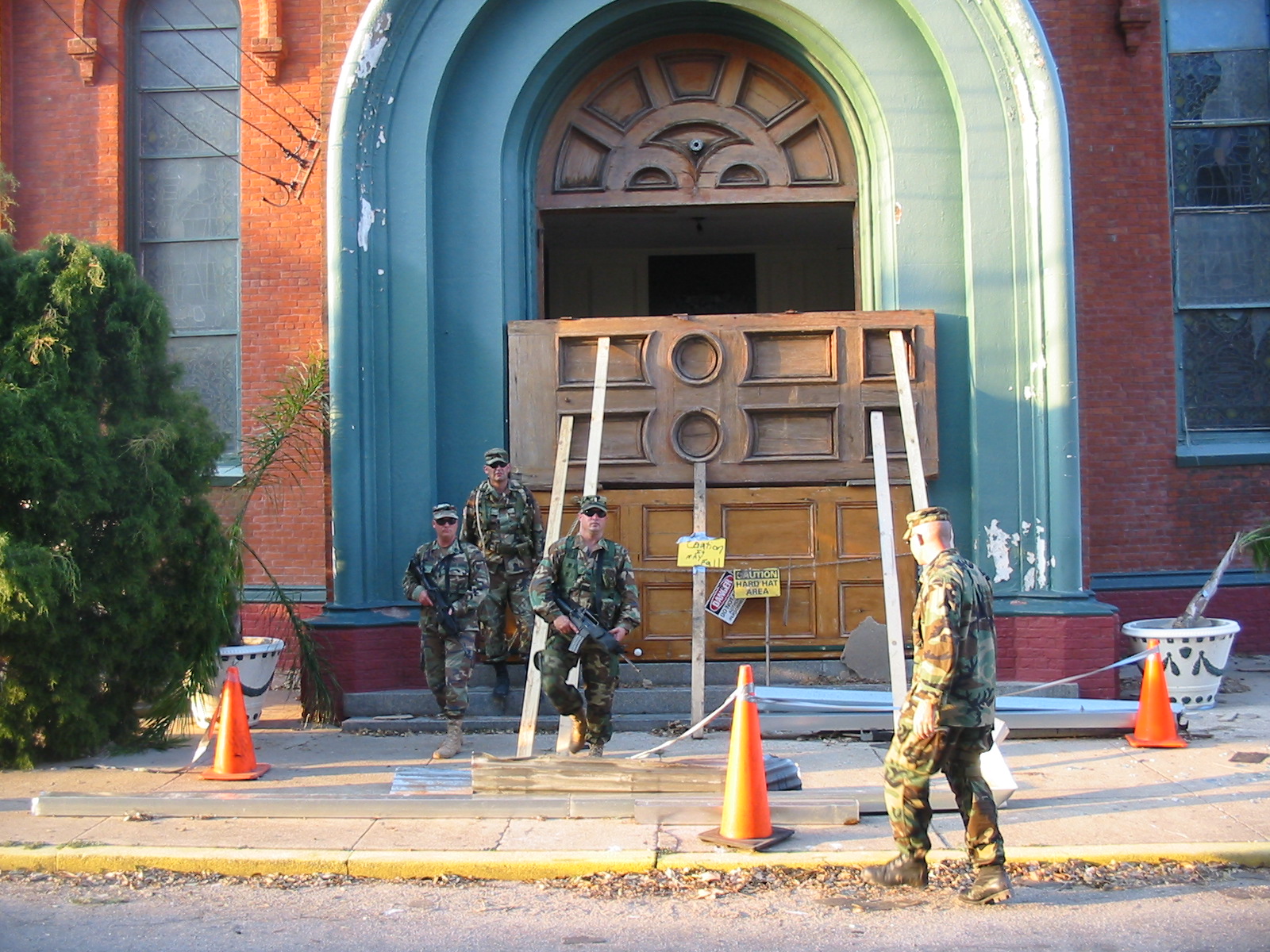 Peering through the double doors, I saw the German Shepherd again. She had lingered on the edge of the parking lot all afternoon. Occasionally, a soldier would bring her something to eat or drink. Now, as we prepared to leave, she was nosing through torn bags of trash across the street from the parking lot. When our engines revved, she looked up morosely and watched us drive away.
“Who would abandon such a beautiful animal?” I wondered out loud.
Stiney shook his head, “I don’t know, but they’re all over the place, rooting through the garbage like that.”
“Why isn’t anyone out there rescuing them?”
Stiney shrugged. “Nothing’s working here, John. It’s chaos.”
“It’s so fucked up that the morgue workers all fuckin’ walked off the job,” Chris Johnson shouted down to us from his perch, “Nobody’s even around to pick up the corpses.”
“That’ll prolly be our job,” somebody added.
The bus started moving. We drove east for a few blocks and came to a smoldering building. One entire side had been blown out and tanks of propane gas lay strewn through the rubble. Nearby, somebody had spray-painted “LOOTERS WILL BE SHOT” on a scorched brick wall.
Stiney leaned over and showed me his digital camera. “Check this out. We found a crack house up the street.” He flipped on the viewing screen and showed me photos he’d taken of the wretched place.
I’d grown up in the heart of the Silicon Valley. Our neighbors were corporate CEO’s and high tech entrepreneurs. Pretention, status, materialism—those were the cultural norms I knew as a kid. When I came to Oregon, it took years to knock that arrogance out of me. What did I know of crack houses?
“I’ve had an easy life,” I said, more to myself than to Stiney.
“We all did. Until Iraq,” he answered.

Inside the crack house Stiney found.
The busses swung left up a wide boulevard. We were heading north now.
“Were you there the day Vinni got hit?” I asked.
Stiney nodded. “Yeah. He never really got over that and we didn’t either. I’m surprised he’s here.”
Four months into the deployment, Vinni’s armored Humvee was destroyed by a roadside bomb. His driver, Kenny Leisten, died instantly. Everyone else inside suffered severe wounds. Vinni had spent the last year recovering and only returned to active duty status the day before we left for Louisiana.
We sat in silence for several minutes, watching the scenery pass.
“Check that out!” Stiney exclaimed. I followed his gaze to see a derelict city bus resting partly on a sidewalk. Bullet holes peppered some of the windows.
We passed downed power lines draped over crushed and battered cars. At a high school, we saw trucks on their side, telephone poles snapped like pencils, and pools of oil collecting under shattered transformers. In the distance, fires blazed untended, creating crimson coronas on the horizon.
We came to an intersection where cars had been hastily abandoned. Doors and trunks stood open. Some had hoods raised and belongings cast pell-mell on the ground.
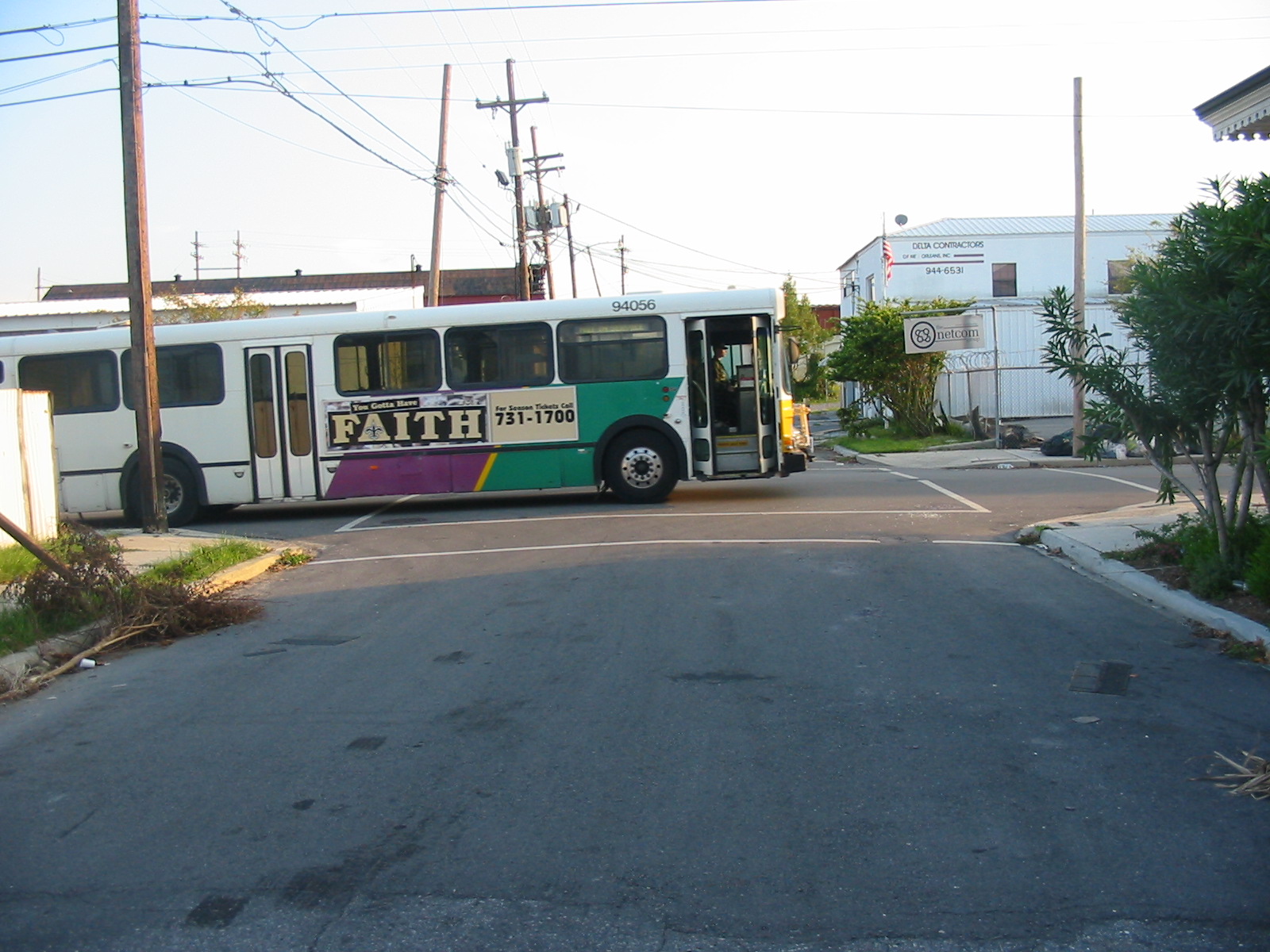
We found abandoned busses all around the Creative Arts Center.
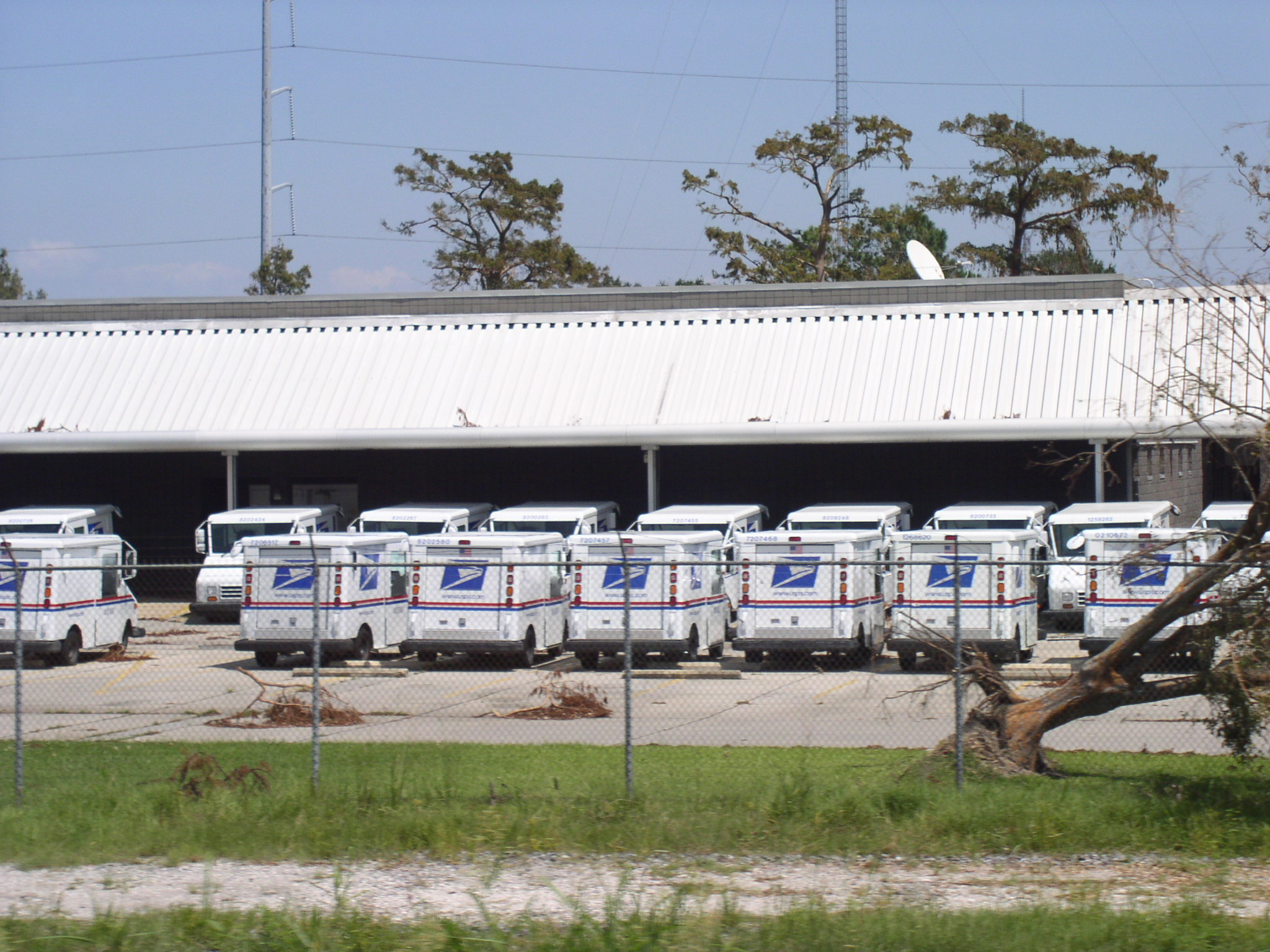
There were hundreds of unused vehicles that could have been used to rescue the people at the the Superdome and Convention Center.
We drove on through the New Orleans sunset. The deeper we penetrated into the city, the darker it became. Our drivers moved slowly, edging around stalled cars and random debris that clogged the road in places. A few times, we had to inch along the sidewalks to continue our journey.
“I wonder why they didn’t use these busses to get the people out of the Superdome.” I said.
Stiney shook his head. “I heard a teenager had that idea. He showed up with a bus, offered to take as many people out of the city as it would hold.”
“Really? What happened?”
“The NOPD arrested him for theft.”
“Jesus, you’re kidding?”
Before we’d left, we’d seen Mayor Nagin’s plea for help during an interview with Geraldo on Fox News. He sounded desperate and panicky. Later, we heard him on the radio announce that he was going to stay in the city no matter what, even though the CIA was trying to kill him. Talk about delusional.
Nobody was sure what to make of all this. It did make us anxious to get our boots on the ground and see for ourselves what was going on in New Orleans.

The drive north to the Seminary.
Another few blocks, and the busses came to a stop. We sat in total darkness, unable to see more than a few yards beyond our windows. I could make out an alley with a few abandoned cars and several downed trees. No sign of the floodwaters that had caused the worst national catastrophe since Galveston, Texas, had been destroyed by a hurricane at the turn of the 20th Century.
“Stiney, you remember when we first met?” I asked in a hushed voice.
“Kenny’s memorial service.”

Kenny Leisten’s memorial service, July 2005. I met many of the men from 3rd Platoon, Bravo Company there for the first time. Since then, I’ve tried to get back each July 28th.
Vinni had invited me up to Willamette National Cemetery to pay my respects to his fallen driver on the first anniversary of his death. I met most of the platoon that day for the first time. I also met Kenny’s father, who welcomed me with a warmth that I had not expected.
“Yeah. Vinni told me that your church sent a copy of the 91st Psalm to everyone in the platoon. Is that right?”
Stiney pulled off his cap, wiped the sweat of his forehead and answered, “That’s right. They laminated it on a little card. Vinni read it to the platoon before every mission, to keep us all safe.”
During the memorial, Vinni had produced his copy of the 91st Psalm and had read it over Kenny’s grave. The soldiers had wept as he choked through the words.
“Okay, I’m confused,” I said. “If you belong to a church, why isit everyone keeps calling you the battalion’s ‘token Jew?’”

Vinni at Kenny’s grave.
Stiney started to laugh. “I’m both. I am a Japanese-German-American Christian Jew.”
“How’s that possible?” I asked through my laughter.
He thought about that for a long moment. As he deliberated, a cat appeared out of the darkness. It moved slowly, hitching along on three legs. It kept its back left leg raised, and it carefully avoided putting any pressure on it.
“I guess the best way to put it is that I’m spiritual without being confined by doctrine. I have my own views of God. You can’t simply believe what others spoon-feed to you. If you open yourself to God, his true reality is revealed. That’s the basis of any relationship with Him. Do you know 1 John 5:14?” Stiney finally said.
“No.”
“’This is the confidence we have in approaching God: that if we ask anything according to his will, he hears us. And if we know that he hears us—whatever we ask—we know that we have what we asked of him.’ Basically, the way I see it, we have to get past all the artificial barriers we’ve created to know God’s true nature. It sounds easy, but I still struggle with it.”
I wanted to ask him where God was in New Orleans, but thought better of it.
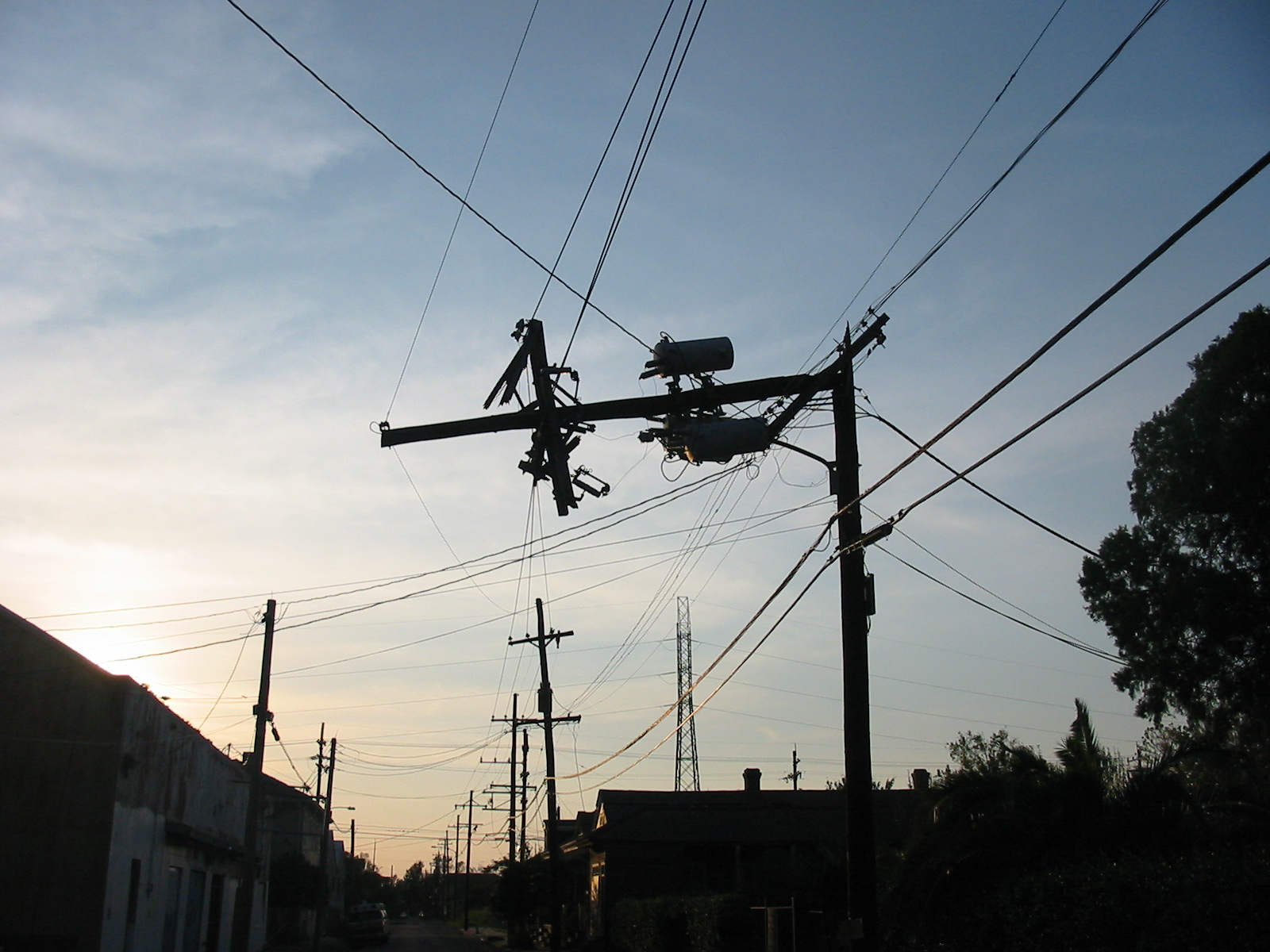 The cat hobbled into the alley and disappeared. I had volunteered at the animal clinic in my small Oregon town for three years in the 90s. The sight of this injured animal made me want to kick the doors open and go save it. For a moment, I indulged in a fantasy: if I could only get to it, I’d keep it hidden from the battalion commander and somehow get it back to Oregon.
I stared into the alley, hoping to catch sight of it again.
“You okay?” Stiney asked, staring at me.
“Just hate seeing animals suffer.”
“How ‘bout you? You religious?” Stiney asked.
“Not in a conventional sense, I guess,”
“What do you mean?”
“I was raised Episcopalian until my sister rebelled. She refused to kneel at a service once, and that embarrassed my mother so much she never took us back.”
“Do you go to church now?”
“Sometimes. But I guess I’m like you. Have my own views. I believe in a higher power.”
“After the number of times I could have died, I have no doubt of that.” Stiney said, his voice an octave lower.
“Stiney, how old are you?”
“Twenty-one.”
“You are wise beyond your years, you know that?”
“Thanks, John,” he said, smiling.
Our lead driver refused to go any further. He’d learned that every convoy using this route had been sniped at by gunmen or gang bangers. Going forward in darkness into an ambush did not appeal to him. And so, we waited. The minutes grew long. Stiney and I leaned against the stack of gear behind us and got lost in our own thoughts.
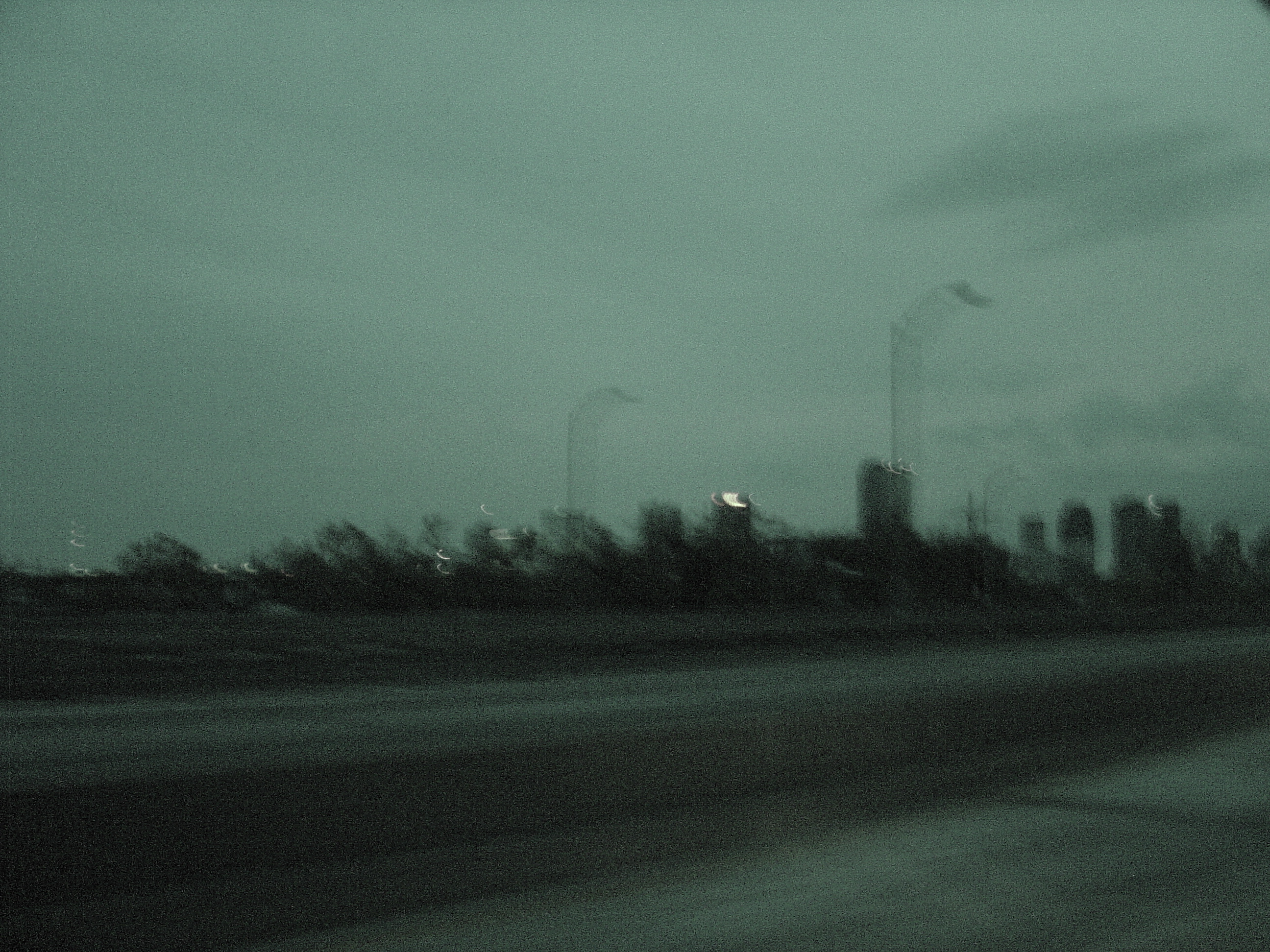 Forty-five minutes later, somebody prevailed on the driver to get moving again. With a lurch, our bus crept forward into the black New Orleans night.
We hadn’t gone far when a pink glow lit up our bus. I stood up and looked out the windows to see a Tower Records, its neon sign miraculously still blazing. A body lay on the far sidewalk, front-lit by the store’s sign.
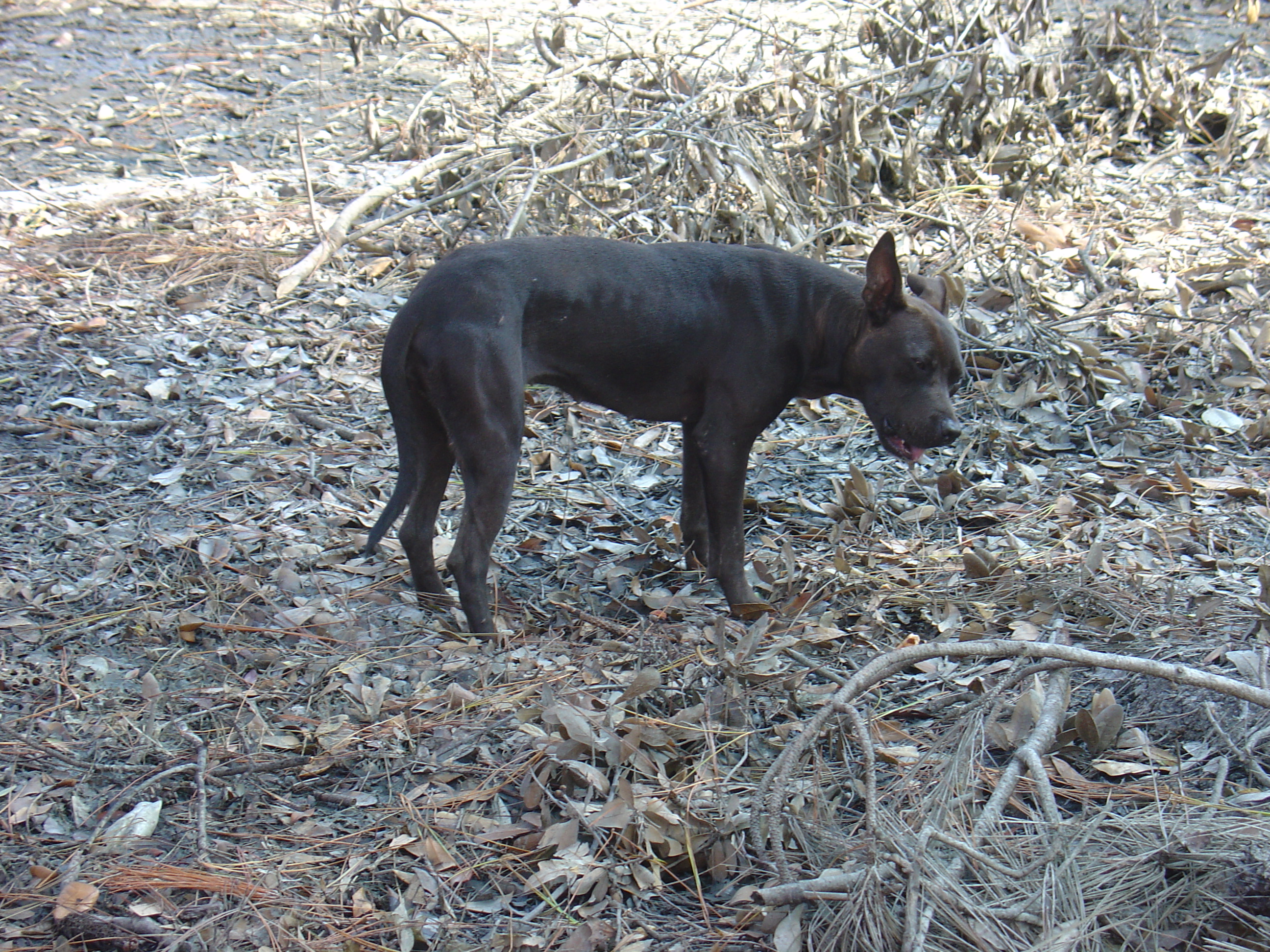
Starving, dying and desperate animals were everywhere in New Orleans. Eighty percent of the pets in the city died in Katrina’s wake.
I froze at the sight, eyes locked and tracking it as it passed through my field of view. Stiney said nothing, but I could tell he was looking at it, too.
Another block, and the blackness returned. I could make out the buildings on our side of the street but little else. We slowed to a crawl again and slalomed through more debris. As the bus straightened out we reached another intersection. The side street stretched beyond our view, but I saw a car squashed almost flat by a fallen tree.
To our left, a small halo of red light came into view. It moved, first down, then back up, then glowed brighter, revealing a solitary figure behind it. We drew closer. It was a man, standing alone on the sidewalk, smoking a cigarette. He was the first living person we’d seen since leaving the Creative Arts Center. As our bus went by him, I saw the whites of his eyes. He was so close I could have reached through the double doors to shake his hand. He took another drag of his cigarette and exhaled the smoke.
In a doorway only a few feet from the lone figure, two corpses lay, arms around each other in a last embrace. Their bodies, baked for days in the heat, looked bloated and distended, their arms and legs entwined, foreheads touching.
I looked back at the smoking man who stood in the darkness next to the dead. He seemed unconcerned.
“Did you see that?” I asked Stiney, trying very hard to keep the horror and panic out of my voice.
“Yes,” he said in a soft whisper.
My body started to shake and I did my best not to let Stiney see. If I were to earn the respect of these men, I could not let such sights affect me. At least, I couldn’t it show.
“It’s like that movie 28 Days Later out there.” Stiney remarked.
“Apocalyptic,” I added. I couldn’t stop shaking.
The scenes of devastation rolled past our field of view. After awhile, destroyed and derelict cars became routine. So did the acres of downed power lines that festooned every neighborhood we entered.
Sometime before midnight, we reached the edge of the flood zone. The busses splashed through ten-inch-deep watery sludge. Soon, the side of our rig was slathered with black muck. Streaks of the stuff slithered down the windows on our double doors, leaving a track of filth that partially obscured our view.
We approached a freeway and inched onto it. Here and there we passed emergency vehicles parked nose to tail on the shoulder. A few had their lights flashing through the darkness. As we passed them, the strobe effect made me dizzy.
Stiney on a night patrol a few days later, carrying the platoon’s commo gear.
The freeway dipped downward and we inched onto some low ground that must have been totally submerged when the levees broke. Now, the waters had receded just enough to leave a corona of pudding-like slime at the edge of the remaining floodwater. Dead fish lay in the mud, their silver scales illuminated by our headlights.
Our drivers dared to cross this flooded stretch of highway. I watched as the water grew closer and closer to our bottom step. It looked opaque. Shapes and forms bobbed on the surface, but I couldn’t tell what they were. Dead fish? Tree limbs?
Then I saw the unmistakable form of a dog. It lay half-submerged near a retaining wall, the wake kicked up by our passage slapping against its fur.
I closed my eyes as we went by it.
The bus changed gears and sped up, slopping out of the flooded patch of freeway. The bus had grown silent–the men no longer pointed things out to each other. The silence unsettled me. I wanted to strike up another conversation with Stiney but words eluded us. Instead, we sank deeper into our own thoughts.

2nd Platoon, Bravo Company’s area at the Seminary was along the walkway in front of the music hall.
Somewhere, we took a wrong turn. The convoy stuttered to a stop. The drivers conferred over crackling radios. When we started moving again, each bus executed a “Y” turn and headed back for the flooding. We splashed through it again and took an off-ramp that led us back into the city.
Ten minutes later the convoy reached the New Orleans Baptist Seminary. We drove through the gates and stopped in the parking lot in front of the student union. The doors opened, and we dismounted to form another chain to get our gear off the bus. Soon, the parking lot was stacked with rucksacks and duffels. We sorted through them, reading the names stenciled on them until all had been claimed. I grabbed my gear and followed Vinni into the Seminary. Each company in the battalion had been assigned an area to bed down for the night. Charlie company set up shop in front of the cafeteria. I followed Vinni and Bravo Company around the corner to a breezeway in front of the music hall.
We dumped our gear and returned to the bus to fetch the supplies. Soon, my assigned area was flanked by MRE boxes. I pulled out my poncho liner and laid it down on the concrete between Vinni and Stiney.
Stiney on his cot at the Seminary. It was too hot and humid to stay inside since there was no power to any of the buildings.
Some of the men carried collapsible cots with them. After setting them up, they tore into the MRE’s and began eating. I checked my watch. It was almost one in the morning. We’d been driving all night.
I hadn’t eaten since we left the naval air station that morning. I hadn’t brought along a pocket knife, and I hadn’t learned that you can tear the Mylar covers off the MRE packages by hand. I hated asking for help, so I’d spent the last few days eating the granola bars I’d brought from Oregon.
Vinni polished off an MRE then left to attend a briefing with the battalion staff. Stiney busied himself with setting up his cot and unloading some of his gear. Tommy Houston took his men over to the nearby school chapel, where they settled down on the steps.
Exhaustion set in. Using my duffel as a pillow, I stretched out and started to fall asleep. Then Vinni showed up and shook me back awake.
“John, listen up,” he whispered. “Here’s the deal. Three firefighters fell into the water a few days ago. Full immersion. All three just died of cholera.”
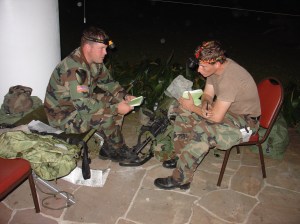
Briefing at the Seminary.
“Cholera?” I asked, stunned.
“Yeah. And a couple of dogs were seen drinkin’ the floodwater. They died horribly in twenty minutes.” He emphasized horribly.
“Jesus,” was all I managed.
“Orders from the battalion commander: we’re to stay away from the water. Don’t get even touch it. Anyone who comes in contact with it will be treated as a casualty and evacuated out of the city. Understood?”
“Yes.”
“Stay away from it. We’ll DECON after every patrol startin’ tomorrow morning.”
“DECON?” I asked.
“Decontaminate. We’ll use bleach.”
“Okay.” I wondered if this meant bathing in the stuff.
“Stay out of the water, John.”
“No worries, Vinni.”
“Good. Get some sleep. I’ve got to go brief my squad leaders.”
He vanished down the breezeway. I lay back on the poncho liner, Vinni’s words lingering in my head.
Cholera.
In college, I wrote a term paper on cholera. In the last fifty years, it has been almost unheard of in the United States, thanks to modern sanitation techniques and clean water supplies. In times past, cholera ravaged communities, killing even the strongest with its brutal effects. I remember writing about its symptoms, and how the afflicted would vomit so violently they sometimes tore their stomach muscles.
I couldn’t think of a worse way to die.
What am I doing here?
I looked over at Vinni’s empty cot. Across the breezeway, against the music building’s outer wall, the men had formed another line of cots. Spike Olsen sat on the edge of his, shirt off, dogtags dangling around his neck. Spike had just married my daughter’s first grade teacher. My wife, Jennifer, and I had attended the wedding and spent the night dancing and drinking with many of the other men sitting around us now.
You’re here because you’re connected to these men.
Spike had survived both the Battle of Najaf and the Battle of Fallujah. He and I had spent hours talking about his experiences in my office, an old ballroom above an animal clinic. He was finishing school at Western Oregon University and wanted to be a cop.
“What up, John? You doin’ okay?” he asked me, noticing my gaze.
“Doin’ great,” I lied.
The first few times I had interviewed Vinni, he treated me like any other journalist. He kept it professional and didn’t share much of himself. Then one night, we got to laughing about something, and he asked if I wanted to hear some of the funnier stories about the battalion. That’s when his true personality emerged—puckish, wild, full of life. He told of pranks and parties and nights on the town before the deployment.
Through the laughter, we’d become friends. And from that friendship sprang trust. During another interview session, Vinni related how his platoon had raided a house in the Sunni Triangle. In the chaos, an attached sniper team accidentally shot a woman in front of her family. In halting sentences, Vinni told me how his medic, Doc Josh Smith, tried to save her. She died in front of her family.
Rather than walking away, Vinni spoke to her father and told him how devastated he was such an accident could happen. Beside his daughter’s body, the father stepped forward and embraced Vinni and thanked him for his words.
After he shared that moment with me, we kept no secrets between us.
What started as just another book project—my sixth—turned into something very different. I’d come to Oregon for college. I didn’t make many friends up here. My friends and family back home really didn’t understand why I stayed after graduation. Most of my high school class had returned to Silicon Valley.
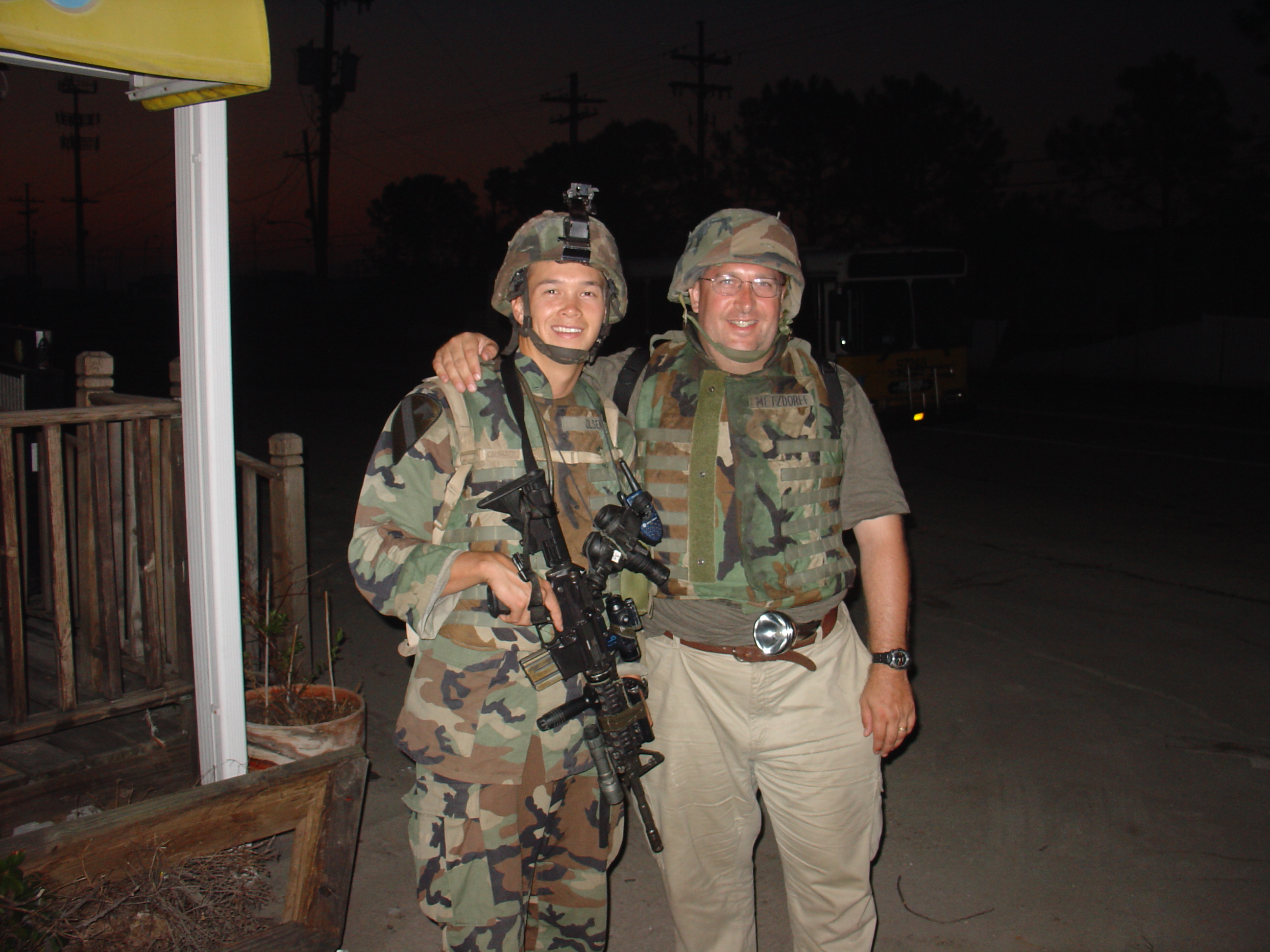
Spike and I during the company’s first night patrol in New Orleans. I was wearing borrowed body armor, which didn’t fit. No matter how hard I tried in New Orleans and Afghanistan, I was never able to master the art of tacticool. I looked like a dork tagging along with some truly exceptional human beings. Which I was.
But I loved my adopted state. I stayed and worked in the computer game industry for six years before finding the courage to leave and start a writing career. In the first six months I made three hundred bucks. Where some of my classmates from home were already multimillionaire entrepreneurs, I struggled to pay the mortgage every month. It soon became hard to relate to even my closest childhood friends, and I isolated myself away in my small Oregon town.
Then I met the soldiers of 2-162. Through our interviews, I discovered the non commissioned officers(NCO’s) and I shared common values, similar views and goals. We came from opposite backgrounds—most had worked their way up into the middle class while I had worked my way down—but somehow that didn’t matter. Loyalty, trust, meaning—those were the things that motivated men like Vinni, Sean Davis and Matt Zedwick. Those were the things that motivated me too, but had been all too elusive in my life for far too long.
I turned over and wrapped the poncho liner over my head to protect myself from the mosquitoes now buzzing around us. Only my nose and eyes remained uncovered.
I’d spent the last nine years writing about World War II and Korea from an office above the animal clinic in downtown Independence. I’d never embedded with a unit before, never ventured out into the field. I had been removed from reality, steeped in the past and writing about men who, for the most part, were long in their graves.
Now I’d followed kids half my age into the heart of a national disaster. I was so far out of my box, I felt utterly lost.
I couldn’t explain why to myself, but I knew, no matter how hard this would become, I needed to be here with 2-162. I had to overcome my fear, though, and I’d never been good at that.
Vinni settled down in his cot. As he pulled his whoobie over himself, he called over to me, “First patrol at 0600, John. Briefing at 0530. Get some sleep.”
“Roger that, Vinni.”
But long into that first night, I stared out at the floodwaters not ten feet from my make-shift concrete bed and wondered if I had the strength to pull this off.
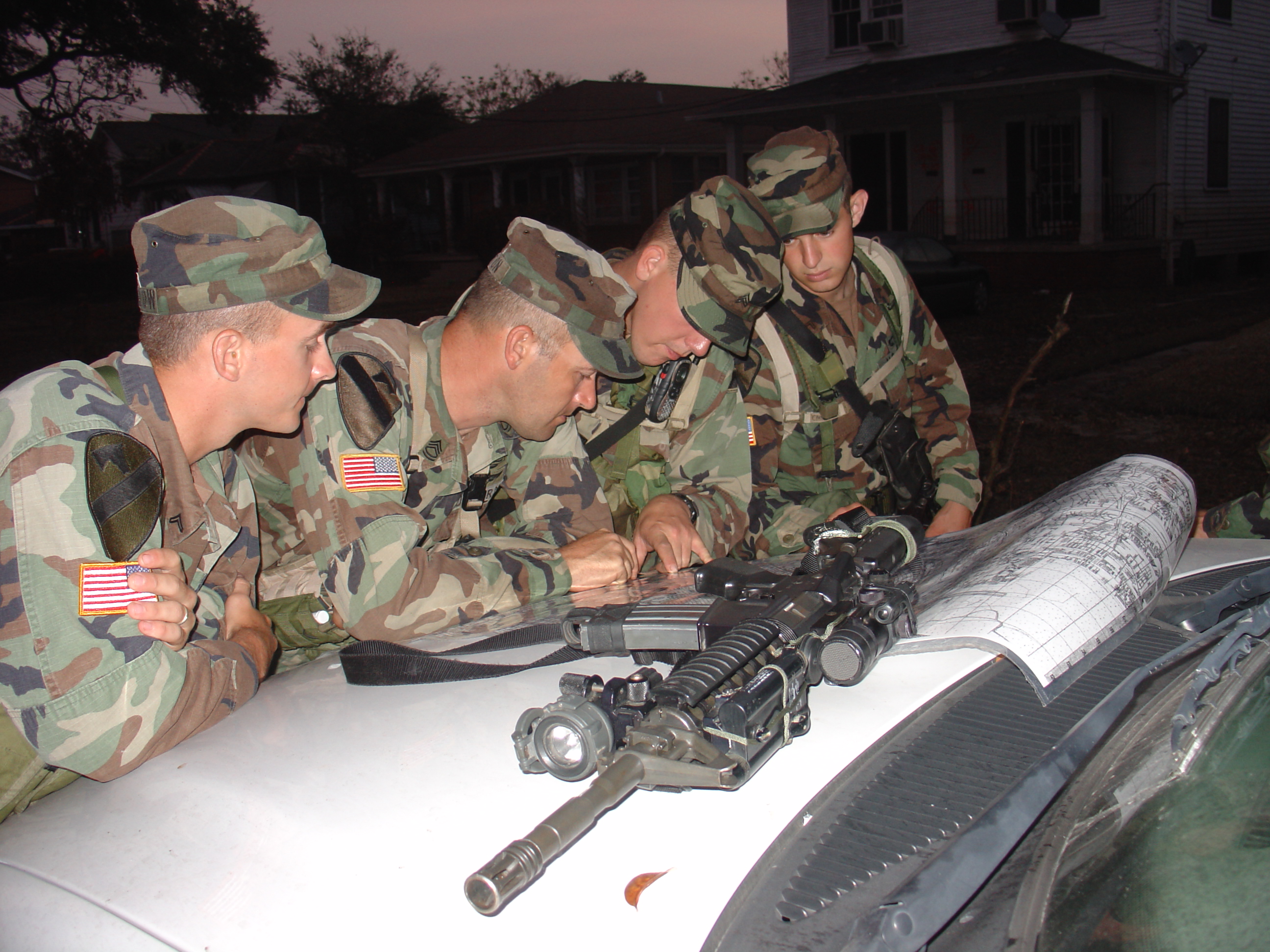
What’s Ahead in 2016
 Dear Friends,
I wanted to take a moment and thank each of you for coming to visit my little corner of the web. Last year, the site’s readership exploded. We went from having a few visits every month to thousands a day at times, something that both elated and surprised me. As a writer, there is nothing more gratifying than seeing the words we write resonate out there and find an audience.
Roald Dahl, the great children’s author, wrote, “So Matilda’s strong young mind continued to grow, nurtured by the voices of all those authors who had sent their books out into the world like ships on the sea. These books gave Matilda a hopeful and comforting message: You are not alone.”
I read that book to my daughter, Renee when she was little, and that passage always stuck with me. Every time we’ve had a book released, I circle back to that quote and wonder where the winds will take it. With this website, I don’t have to wonder, the feedback is virtually instantaneous, something I truly love. I’ve sat here in wonder looking at all the folks from around the world who have come to look at my words, the photos and videos here, and I cannot help but to marvel at this amazing technology. I am profoundly grateful for every visit. So thank you, Dear Reader. Your interest has made this site a focal point of my life.
In the months to come, we’re going to be leveraging technology even more here. We’ll be starting a podcast series soon that will cover a rage of topics and highlight plenty of nearly forgotten American warriors. I’ll be bringing in some guests, doing some interviews, and having a lot of fun with the studio equipment we just picked up to pull this off.
We’re working on a new mini-documentary that we’ll serialize here later in the spring. We’ve acquired some color footage rarely seen before from both the ETO and PTO during WWII, and we’ll be acquiring more over the coming year.
On May 3rd, Indestructible will hit bookstores. This is a book I’ve wanted to write since I was a kid marveling at the tales told by George Kenney and the likes of Ed Sims & Martin Caidin in their books. Indestructible is the story of Pappy Gunn and his family’s experience during the Pacific War. In researching the book, I compiled something like 30,000 pages of documents and many, many stories about Pappy that we did not have room to include in the main narrative. To support the release, throughout May and June, I’ll be posting additional stories, documents and videos about Pappy, his family and friends.
 A little later this year, I’ll be embedding with an artillery battalion during their annual field training exercise and will be posting stories, photos and videos about the men & women behind the guns.
We’ll also be following up on some of the stories posted last year. Most notably, thanks to y’all out there in cyberspace, The Last, Lost Letter reached Frank Christen’s surviving relatives. Though his widow passed in 2004, his sister and her family finally received closure and read Frank’s final words home. When his family contacted me…well, all I can say is that have been few professional moments in my life more powerful and rewarding. So stay tuned for an update on that article in the weeks ahead.
Of course, we’ll be updating Gwenie’s story. Our Jordanian refugee continues to grow, get into trouble and cause mayhem wherever she goes. We’ll be following year two of her experience in Oregon after being rescued in Amman by Captain Cassie Wyllie, one of my favorite humans.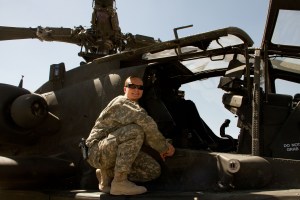
Thanks again for making this all possible. Looking forward to a tremendous 2016, and thank you again for your interest and support!
John R. Bruning & Gwenie

Marion’s Shoes
 Marion Carl grew up in the tiny village of Hubbard, Oregon, a few dozen miles southwest of Portland. After graduating from high school, he enrolled at Oregon State University. While studying engineering, he also joined the Corps of Engineers and ROTC. In the fall of 1937, during his senior year, Carl learned to fly on a Piper J-2 Cub at an airport just outside of Corvallis. In May, 1938, Carl went up to Fort Lewis, Washington tried to enlist in the Army Air Corps . The Air Corps turned him down, citing unspecified physical reasons. Later, Carl discovered that the recruiter had filled his quota for the month and had rejected him for that reason.
He graduated from OSU in June, 1938 and spent the summer up at Fort Lewis as a second lieutenant in the Army. Despite the Air Corps’ reject, Marion was determined to find a way into the air. He went to see a Navy recruiter and was accepted into the naval aviation cadet program. In August, he reported for duty in the Navy. In one day, he went from a second lieutenant in the Army to a Seaman Second Class in the Navy to a Private First Class in the Marine Corps! Years later, Marion Carl would become one of the rarest of officers–one who worked his way up from private to general in the course of a most distinguished military career.
Carl recalled in a 1992 interview that he chose the Marine Corps for two reasons, “I wasn’t all that enthusiastic about being at sea so much. The other was, of the eight of us there, I was the only one who qualified for the Corps. I was the only one with a college degree. The Navy was taking men with two years, but the Marines weren’t. You had to have a college degree. On top of that, I got to Pensacola a month ahead of the others.”
Of the eight other young men Carl joined up with that summer, three washed out of flight school. The other five became Navy pilots.
When the war began, Carl was serving with VMF-221, a fighter squadron equipped with the squat, barrel-shaped Brewster F2A Buffalo. Just after Pearl Harbor, Carl and the squadron boarded the U.S.S. Saratoga as part of the Wake Island relief expedition. VMF-221 was supposed to be launched from the Saratoga, fly to Wake and help defend the atoll with the remnants of VMF-211, the Wildcat squadron already there.
Just before the Saratoga came into range of Wake, the operation was canceled. The frustration the Marines felt was palpable, and on the bridge of the Sara, officers talked openly of disregarding these orders. Nevertheless, the task force turned around and aborted their mission. A short time later, the gallant defenders of Wake Island surrendered to overwhelming Japanese forces.
Instead of going to Wake, Marion Carl and VMF-221 went to Midway Atoll. There, amongst the gooney birds, the men wallowed in boredom for nearly six months, flying training missions but never sighting the Japanese.

Midway Atoll. This is Sand Island.
At the end of May, 1942, Midway received a sudden influx of reinforcements. They came in drips and dribbles– a few B-17s, a quartet of Marauders from the 22nd Bomb Group, and six TBF Avengers from Torpedo Eight. Having broken the Japanese naval code, JN-25, the Americans knew the Japanese would soon be attacking Midway. Every available airplane was rushed to the Atoll.
That attack came on the morning of June 4, 1942. VMF-221 took to the air in defense of Wake Atoll. Carl took off with the squadron flying a Grumman F4F Wildcat, one of six the squadron now possessed. Together with the Buffalos, the Marines were able to put up twenty-five fighters to meet over a hundred Japanese aircraft, all flown by crack veterans of the China Incident, Pearl Harbor and the Ceylon Raid. The result was a slaughter. The Zeroes flying cover for the Nakajima B5N Kates and Aichi D3A Vals had placed themselves too high and too far behind their chargees to prevent the Marines from making one unhindered pass. The Americans took advantage of the mistake and managed to claw down a couple of bombers before the Zeroes descended upon them in all their fury. The Brewsters, unmaneuverable and slow, were chopped to pieces by the expert Japanese pilots.
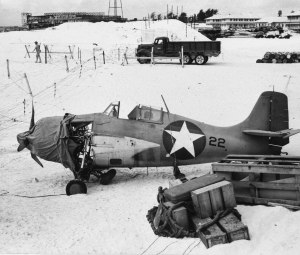
One of the surviving F4F-3 Wildcats at Midway, seen after the battle.
Marine Carl not only held his own, he damaged a bomber before the Zeroes swarmed all over his division. Climbing out of the fight, he went looking for trouble at 20,000 feet. In 1992, he recalled to me, “The next thing I knew, I had a Zero on my tail. I didn’t know he was there until these tracers started going by. I racked it into a tightest turn I could. He followed me and made it look easy! So, I headed for the nearest cloud. He hit me eight times.”
Just inside the cloud, Marion cut his throttle and skidded the Wildcat. When he popped out the other side, he caught sight of the Zero scuttling along below. Marion shoved the stick forward and opened fire at the same time. The sudden dive jammed all his guns, allowing the Zero to escape.
After clearing three of his guns, he returned to Midway to discover a trio of Zeroes lagging behind the rest of the strike group. Carl followed the three Japanese fighters, waiting for his opportunity to strike. Finally, as one of the three Zeroes began falling behind the others, the Oregonian attacked. He dove down behind the Zero and opened fire from dead astern. The Mitsubishi crashed into the water off the reef that surrounded the atoll.
It was the first of eighteen kills Marion Carl would claim in two years of combat.
When he returned to Midway, he discovered that fully half his squadron had been killed in the fight. In fact, besides his own Wildcat, only one other fighter was operational. It was a grim introduction to combat.
Two months later, Carl and VMF-223, his new unit, landed at Henderson Field on Guadalcanal. Throughout August and September, the gritty Marines fought a desperate battle of attrition in their daily encounters with the Japanese. On August 24, 1942, in the middle of the Battle of Eastern Solomons, Carl and his division intercepted an inbound strike from the Japanese carrier Ryujo. In the dogfight that followed, the young Oregonian gained credit for downing two Zeroes and two B5N Kates, making him the first U.S. Marine Corps ace.
Only a few weeks later, the hunter became the hunted.

Henderson Field, Guadalcanal seen August 22, 1942.

An F4F scrambles at Henderson Field.
September 9, 1942 was a typical day for the beleaguered American Marines on Guadalcanal. Shortly after 11:00, Australian coastwatchers reported a major Japanese raid headed for Henderson Field (code-named Cactus), the airfield the Marines were doggedly trying to defend. Cactus Control ordered a full-scale scramble as soon as it received news of the impending attack. The pilots of VMF-223 and -224 raced to their fighters, which had been warmed up and ready to go since dawn. Captain Marion E. Carl was one of the sixteen Wildcat pilots in the cockpit that day. He climbed into his F4F-4, strapped in, and taxied out of the dispersal area. With his stubby fighter now on the runway, he opened the throttle. The Wildcat careened down Henderson Field and bounded into the cloudy skies above Guadalcanal. After Carl took off, one pilot from VMF-224 did not quite make it. He stalled just as he got airborne, and his Wildcat smacked into the ground at the end of the runway. Now there were fifteen Grummans to meet the Japanese attack.

John L. Smith, Bob Galer (Medal of Honor) and Marion Carl at Guadalcanal.
Though Carl had only been on the island since August 20th, he had already carved a niche for himself in aviation history. Six days after arriving at Henderson Field he had shot down his fifth Japanese plane. In doing so, he became the first U.S. Marine to ever reach acehood. He had continued to add to his score, and only his squadron’s commander, John L. Smith, had any chance of catching his tally. Smith and Carl enjoyed a friendly rivalry, each one determined to leave Guadalcanal with the laurels of top ace status. Carl to this point had remained comfortably in the lead, but the September 9th mission would alter the balance between the two aces.
The Wildcats pointed northward and labored for altitude. For once the Marines had received enough warning to climb above the Japanese bombers. Often, word of an impending attack came too late for the F4F’s to get to a proper intercept altitude. The frustrated pilots would watch the Mitsubishi G4M Betties pass serenely overhead while their Wildcats struggled for altitude thousands of feet below. This time, though, the Marines managed to get to about 23,000 feet before the noontime raid arrived. The raid consisted of two formations; one Vee of G4Ms, and another of escorting A6M2 Zekes. The Zekes trailed behind the bombers, keeping watch over their charges as they shepherded them to the target area.
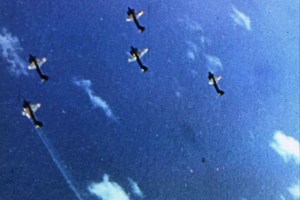
A formation of G4M Betty bombers seen later in the war at Okinawa. This is a still image from gun camera film taken by an F6F Hellcat belonging to VF-17.
On this day, the Marines had the altitude advantage. Like the intercept over Midway, the escorting Zekes were again caught slightly out of position. Carl led his men to a point about a mile ahead and off to one side of the Vee of Betties. In column formation, the Marines executed 180 degree turns and dropped down on the bombers. With his nose pointed almost vertical, Marion’s Wildcat accelerated to over four hundred miles per hour. He had just enough time to give a Betty a long burst from his six fifty caliber machine guns as his Wildcat howled through the formation. The fifties stitched the bomber from nose to tail, tearing apart the crew positions. It fell earthward, mortally wounded.
 Engine roaring, Carl swept under the stricken plane, ready to make another attack on the formation. Using the speed he had gained during his first pass, he zoomed back up above the Japanese and turned to make another overhead run on them. Down he went again, his Wildcat whining furiously as he pushed the nose towards the vertical again. Guns chattered, tracers flew. Another Betty dropped out of the formation, victimized by the sharpshooting Oregonian, its engines coughing up great spumes of smoke.
Then, Marion got reckless.

Another gun camera still from VF-17’s Okinawa dogfight. This Betty was carrying a rocket-powered suicide stand-off bomb called a Yokosuka MXY7 Ohka. It is just visible under the Betty’s centerline.
Carl had limited himself to only one or two passes at the bombers on his previous intercept missions. After two runs, the Japanese fighter escort usually had enough time to intervene. After his second pass, he would roll inverted and dive for the deck. No Zero could keep up with a Wildcat in a steep dive above 10,000 feet, so the maneuver ensured he would make it back to Henderson to fight another day.
On September 9th, Carl saw no Zeroes, heard no warning calls. He decided to attack the bombers one more time. He climbed back over the Betties, selected one and rolled in on his target.
As he started his run, his F4F suddenly shuddered. Cannon and machine gun strikes rocked the Wildcat, and Carl had no chance to react. A Zero had somehow slipped behind him. In seconds, Carl’s engine exploded in flames. Smoke poured into the cockpit, stinging his eyes and disorienting him. The smoke forced him to open the canopy, which added such drag to the Wildcat that Carl knew he was now a “dead pigeon” for the Japanese pilot behind him.
With the smoke came an intense wave of heat. Later he would recall, “The one way I didn’t want to go was to get burnt, to get fried. I don’t take long to make up my mind on something like that. So I just rolled the [Wildcat] over and out I went.”
Carl had bailed out at about 20,000 feet. By the time his parachute opened, the air battle had passed him by. Not a single aircraft remained in sight. He spiraled downwards in his chute, enjoying a birds-eye view of Guadalcanal and its environs. He landed in the water about a mile off shore.
For several hours, he floated in his Mae West, treading water and trying to prevent the current from dragging him away from shore. He kept his flying shoes on, and held onto his Colt .45, figuring he’d need them when he got ashore. Still, the weight of these burdens tired him out, and he began to lose headway against the current. Before he had bailed out, his face had been slightly burned by the heat in the cockpit, and the wound began to ache.
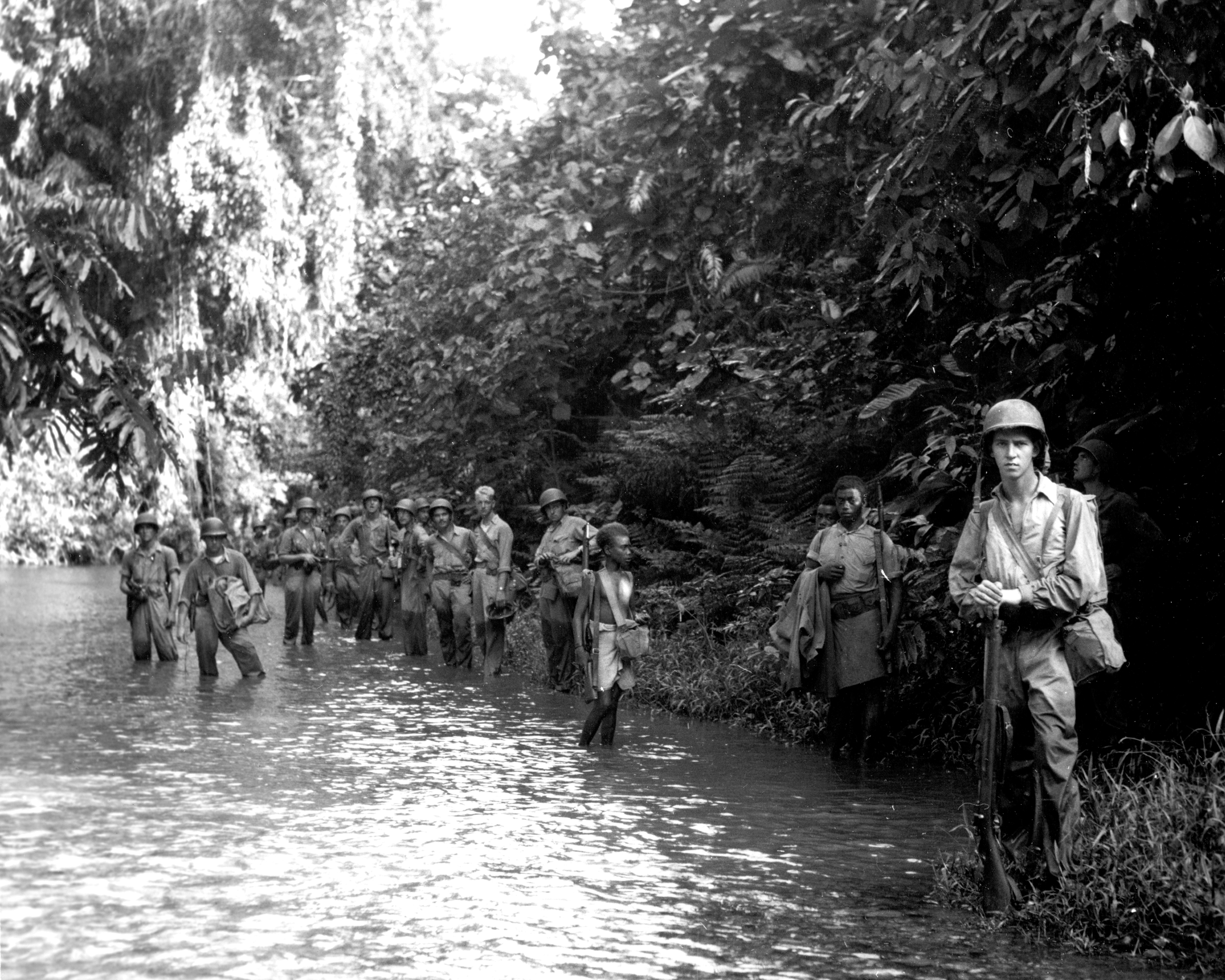
A Marine patrol on Guadalcanal in the fall of 1942. After Carl ended up in the water, he faced a challenging trip to get back through Japanese lines to reach the Marine perimeter around Henderson Field.
Fours hours later, a native canoe cut through the choppy waves towards him. Exalted that help had arrived, Carl began to shout out, “American! American! American!” The native wasn’t completely convinced, however, and circled the downed aviator for several minutes before concluding he indeed was an American. He helped Marion climb into the canoe, introduced himself as Stephen, then began to paddle towards shore. He brought Carl to a small native encampment, where he was introduced to a native from Fiji who had been serving as a doctor for the local inhabitants. Corporal Eroni spoke good English, and proved more than willing to help the American get back to Henderson Field.
After trying unsuccessfully to get back to the perimeter overland, Carl and Eroni decided to go by sea in an eighteen foot skiff. The small boat was powered by an ancient single cylinder engine which at the moment did not work. Fortunately the resourceful Marine had plenty of experience with small engines, as he had purchased a scooter some months before that had demanded constant mechanical attention. He managed to get the skiff’s engine working after tinkering with it for most of an evening.
That morning, around 4:00 A.M., Carl, Eroni and two other natives set out for Henderson Field. The boat weaved its way along the coast, the two men keeping a sharp watch for any Japanese troops. By 0700, they had reached Lunga Point, where the Oregon Marine splashed ashore to report back for duty.
When Brigadier General Roy Geiger, the commander of the air striking force on Guadalcanal, heard of Marion’s return, he sent for the intrepid Marine immediately. Moments later, Carl stood before him, saluting happily. The two men chatted amiably for a while, then Geiger mentioned that Smith had just shot down his sixteenth plane. With the two Betties he got on the ninth, Carl had only twelve. “What are we going to do about that?” demanded Geiger playfully.
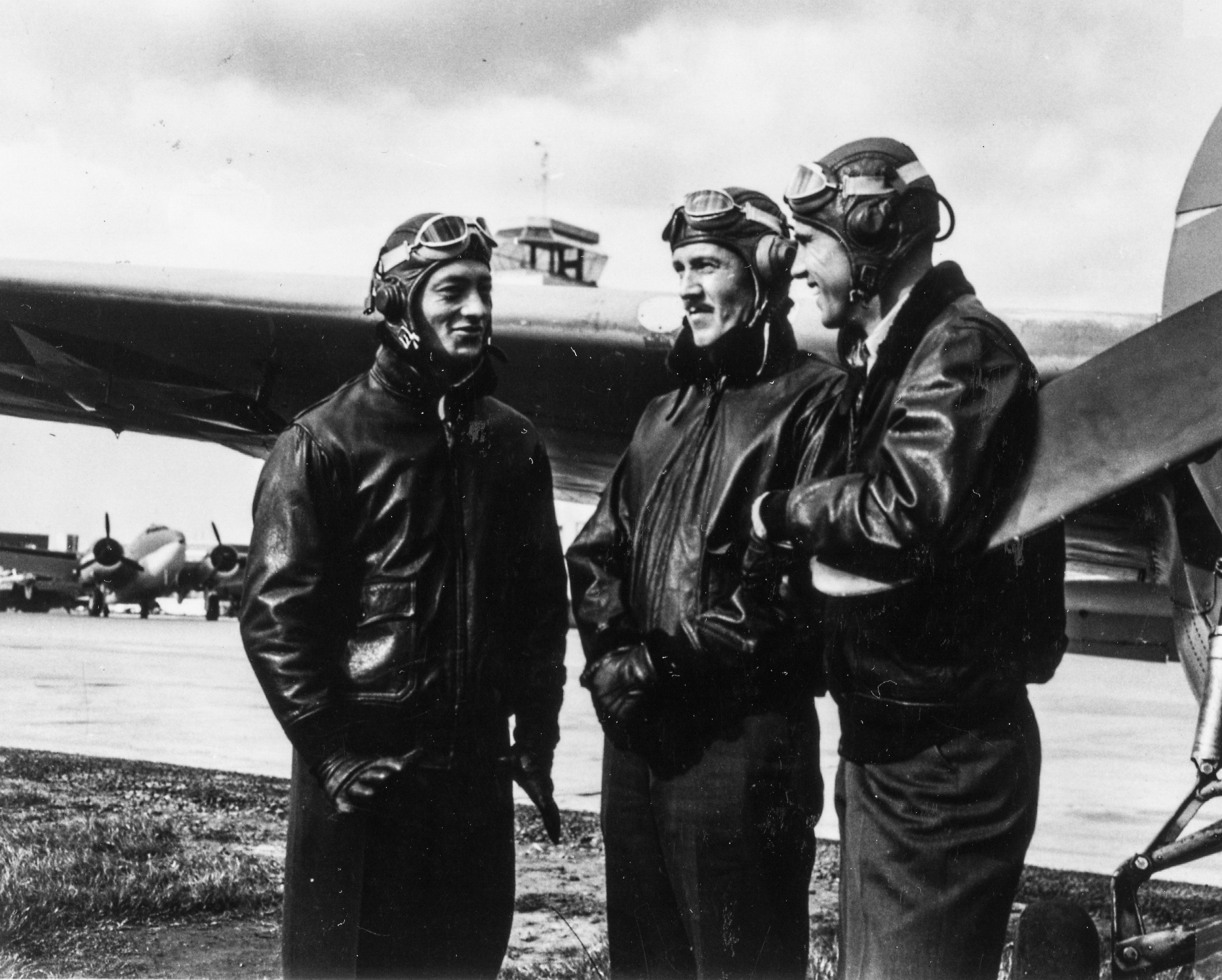
John L. Smith, Dick Mangrum and Marion Carl.
“Goddamnit General, ground Smitty for five days!” Carl replied.
Smith finished the war with 19 kills and the Congressional Medal of Honor. Carl ended his WWII combat career with 18.5 victories.
Word spread quickly throughout VMF-223 that Carl had returned. His comrades were overjoyed to see him, though some were also a little embarrassed. After he went missing, the pilots figured he was gone for good and divided up his possessions. Marion had to spend the day rounding up his personal belongings. Finally, he managed to recover his scooter, his short wave radio and all his other nick-knacks except for a pair of shower shoes. He had kept them carefully under his cot, his name carefully marked on their soles in black, indelible ink. Carl searched high and low, but found no trace of them.
In the late 1950’s Carl was stationed in Headquarters, Marine Corps in Washington D.C. as part of the Commandant’s staff. He’d become a colonel by then and was on track to get his brigadier’s star.
One day, the Marine Corps Commandant, General David M. Shoup, took him aside after a meeting and said to him, “By the way, Marion, I’ve gotta pair of shoes of yours.”
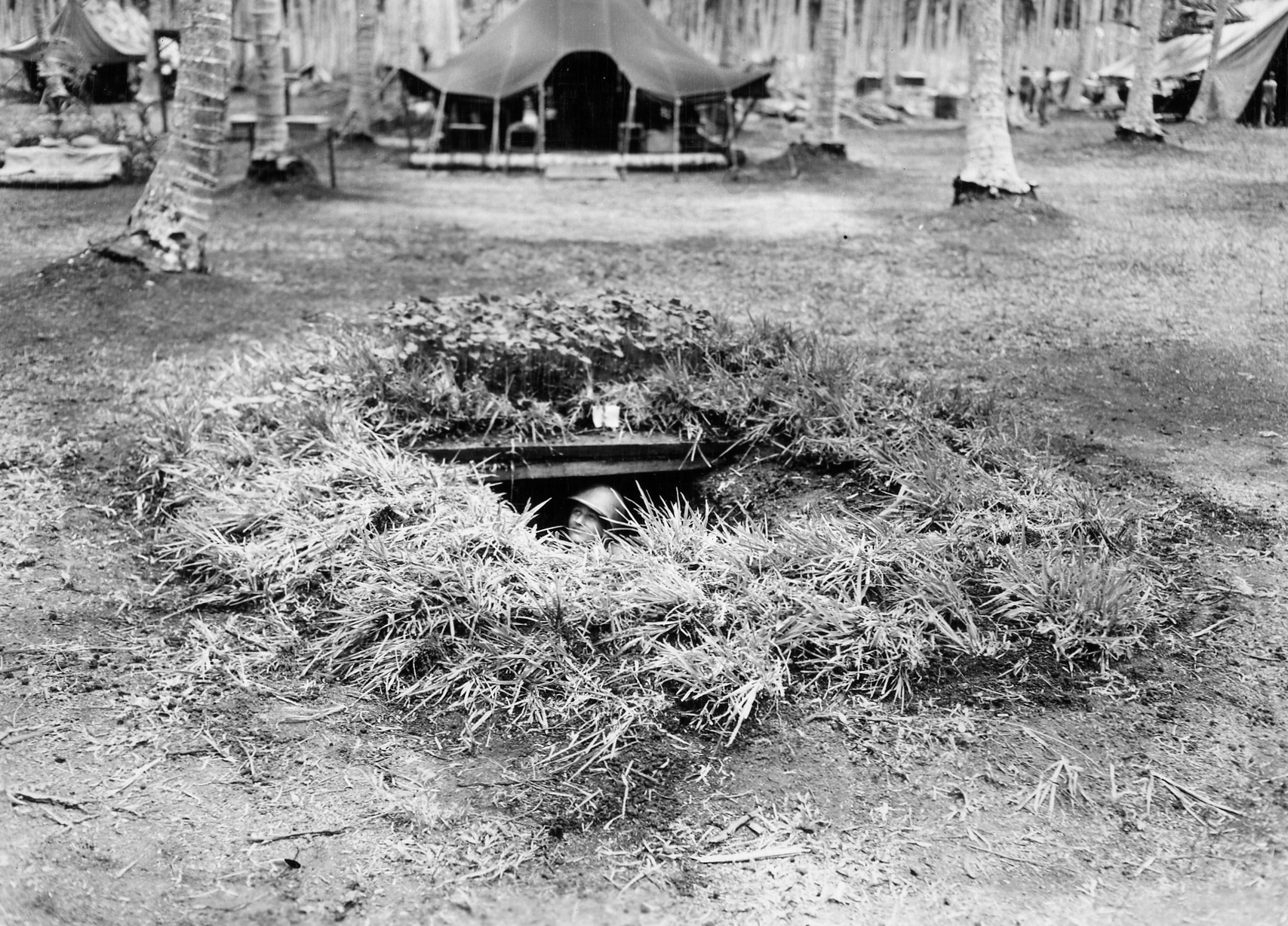
A Marine dug out at Henderson Field.
Puzzled, the Oregonian asked, “What do you mean you’ve got a pair of my shoes?”
Shoup explained that he’d been serving with a Marine line unit defending Henderson Field that fall. After Marion had gone missing in action, Japanese warships shelled the Marine perimeter. The onslaught had flatted Shoup’s quarters, along with many other tents and structures around the airfield. After the Japanese ships steamed back up the slot, Shoup crawled out of his foxhole and went looking for a place to sleep. He came across Carl’s tent, learned that the Oregonian had been posted missing, and decided to curl up on his cot. In the morning, as he headed back to his regiment, he caught sight of the shower shoes under the cot. He scooped them up, figuring a dead man didn’t need them, and disappeared.
Shoup finished his tale by telling Carl he wasn’t going to give them back. “They’re the luckiest pair of shoes I’ve ever had,” he told Carl. “I credit them for keeping me alive during the war.”
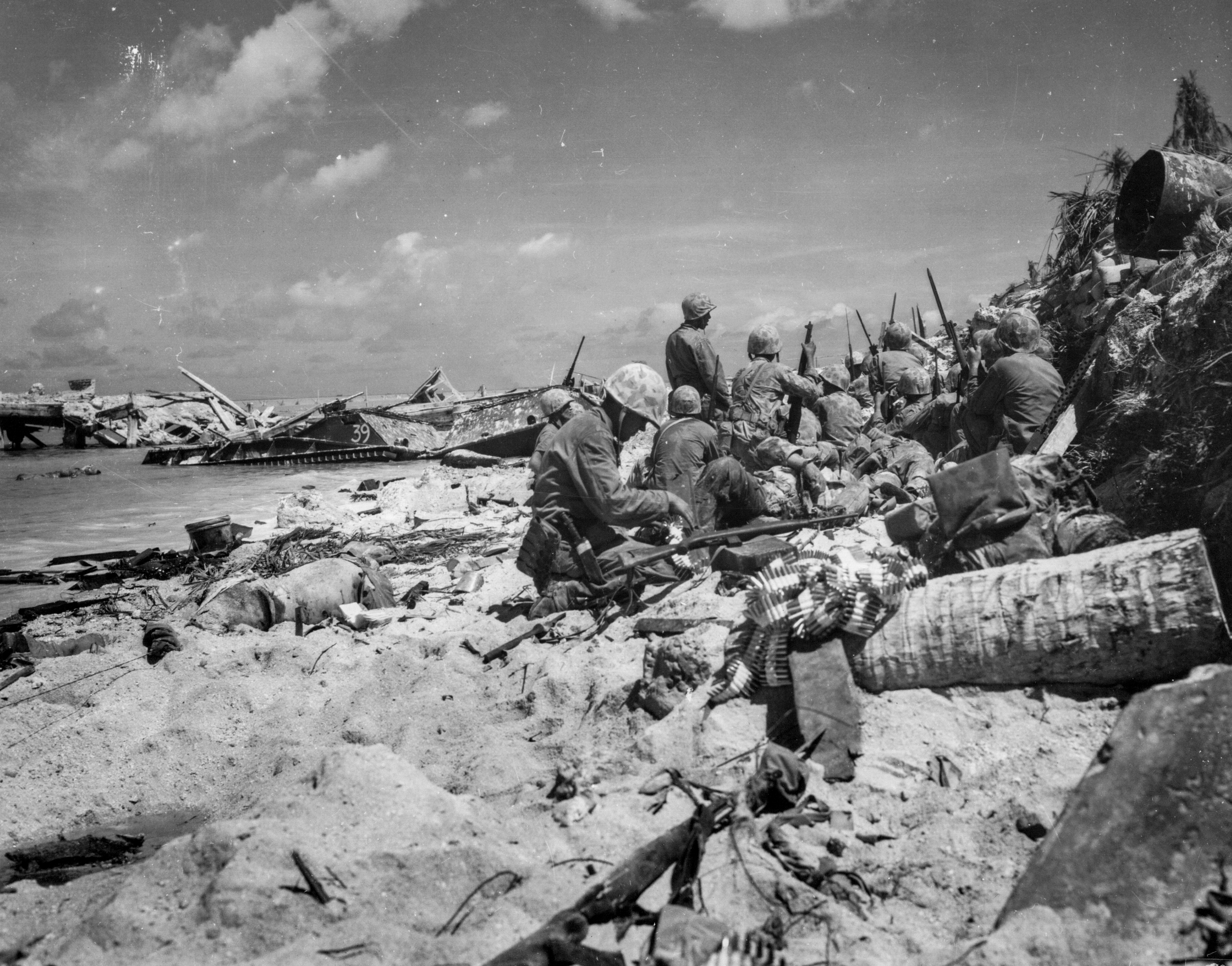
Betio Island, Tarawa, November 1943.
They must have been truly lucky shoes. Shoup carried them in his pack when he hit Beach Red at Betio with the first Marine waves in November, 1943. In the first desperate hours of the invasion, he took command of the Marines clinging to the waterline and led the push inland. His actions that day earned him a Medal of Honor. Later, though assigned as a divisional staff officer, he found his way to the front lines during the Battle of Saipan, where he was trapped in a forward observer’s position for several hours. He later received a Legion of Merit for his role in the Marianas campaign.

David Shoup, with his family looking on, receives the Medal of Honor at the Navy Department in Washington D.C. on January 22, 1945.
Marion Carl stayed in the Corps after the Japanese surrender. As a Marine test pilot, he earned numerous “firsts” in his illustrious career. Besides being the first Marine ace, he was the first pilot in the Corps to land a jet fighter on an aircraft carrier, and he set a world’s speed record in 1947, going 650.6 mph in a Douglas Skystreak. Later, he commanded the first jet aerobatics team, was the first military pilot to wear a full pressure suit and in 1986, he became the first living Marine to be enshrined in the Naval Aviation Hall of Honor. Brigadier General Marion Carl retired on June 1, 1973, with over 14,000 hours in some 250 different plane types, ranging from experimental rocket propelled aircraft to canvas-covered puddle jumpers. In the course of his thirty-four year career, he earned two Navy Crosses, five DFCs, four Legions of Merit, and fourteen Air Medals. Not bad for a small town farm kid.
In June of 1998, a 19 year old drug addict broke into Marion’s ranch house east of Roseburg, Oregon. Wielding a shotgun, the intruder wounded Marion’s wife, Edna, with a blast of gunfire. Hearing the racket, Carl burst out of his bedroom and flung himself in front of his wife, just as the addict pulled the trigger again. Carl was killed instantly. He died as he had lived—a true hero whose measure lay not in his many accomplishments, but rather in the size of his enormous heart.
Jordanian Snow Dog
 Dear Friends,
I do hope the holiday season has treated you and your family well. We here in Independence, Oregon were blessed with a rare break from Hurricane Gwenie, a storm system that has been ravaging the house for a year now. For whatever reason, Gwen decided to allow the presents to live, the tree to not be wrecked and the new “training” couches to go uneaten. She did decide to decapitate our Santa Claus and left his crushed, severed brain pan on the front entryway floor in a small pile, along with Santa’s arms and part of Rudolph. Nevertheless, the big stuff survived, so I’m calling it a win. Progress. Baby steps….
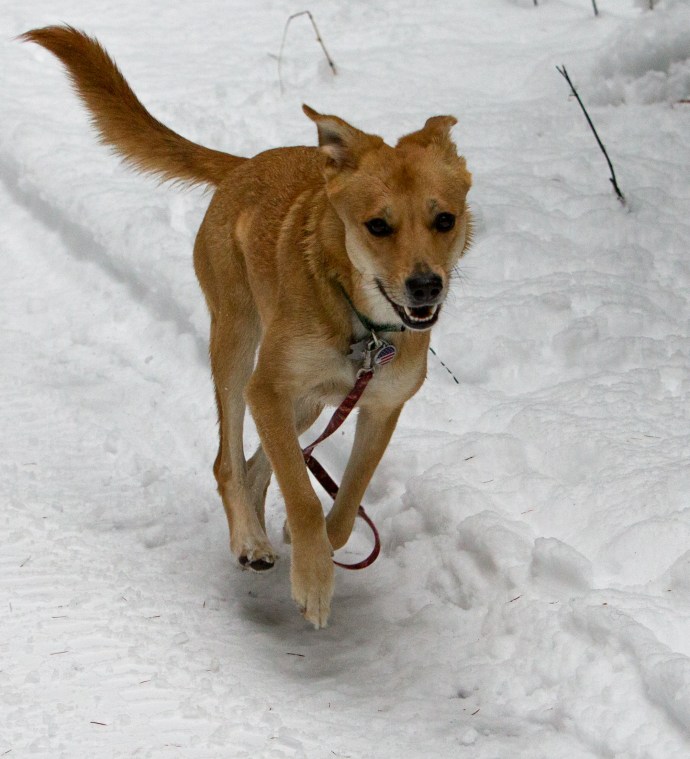
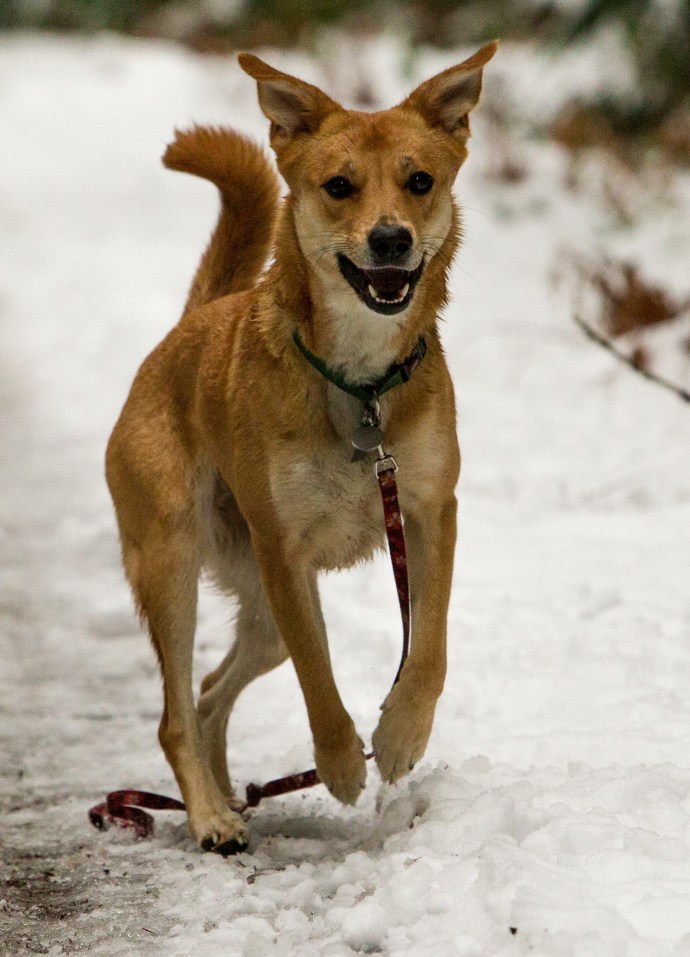
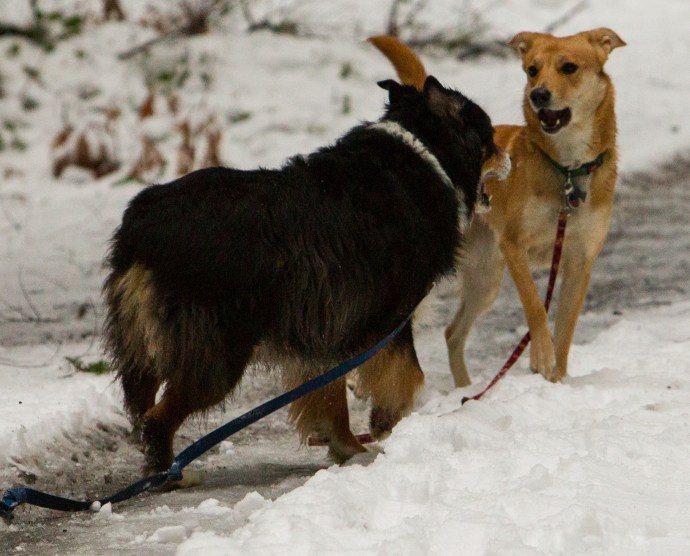
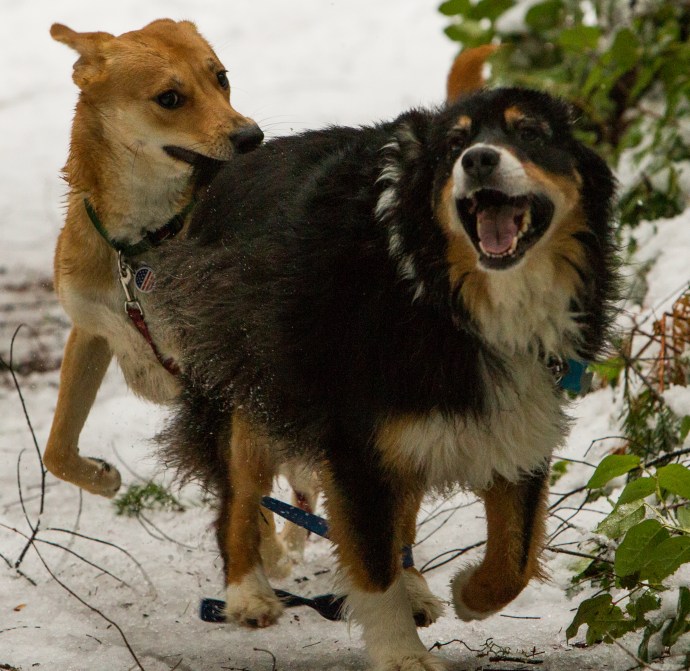
Anyhoo, yesterday, I took Gwenie and Ryder up to Cabanistan, where we drove into a small snow storm. As you may recall, Gwenie experienced snow (and hypothermia) the first weekend she arrived in the United States in November 2014. She got a small taste of it again a few weeks ago at Cabanistan when we got about a quarter inch.
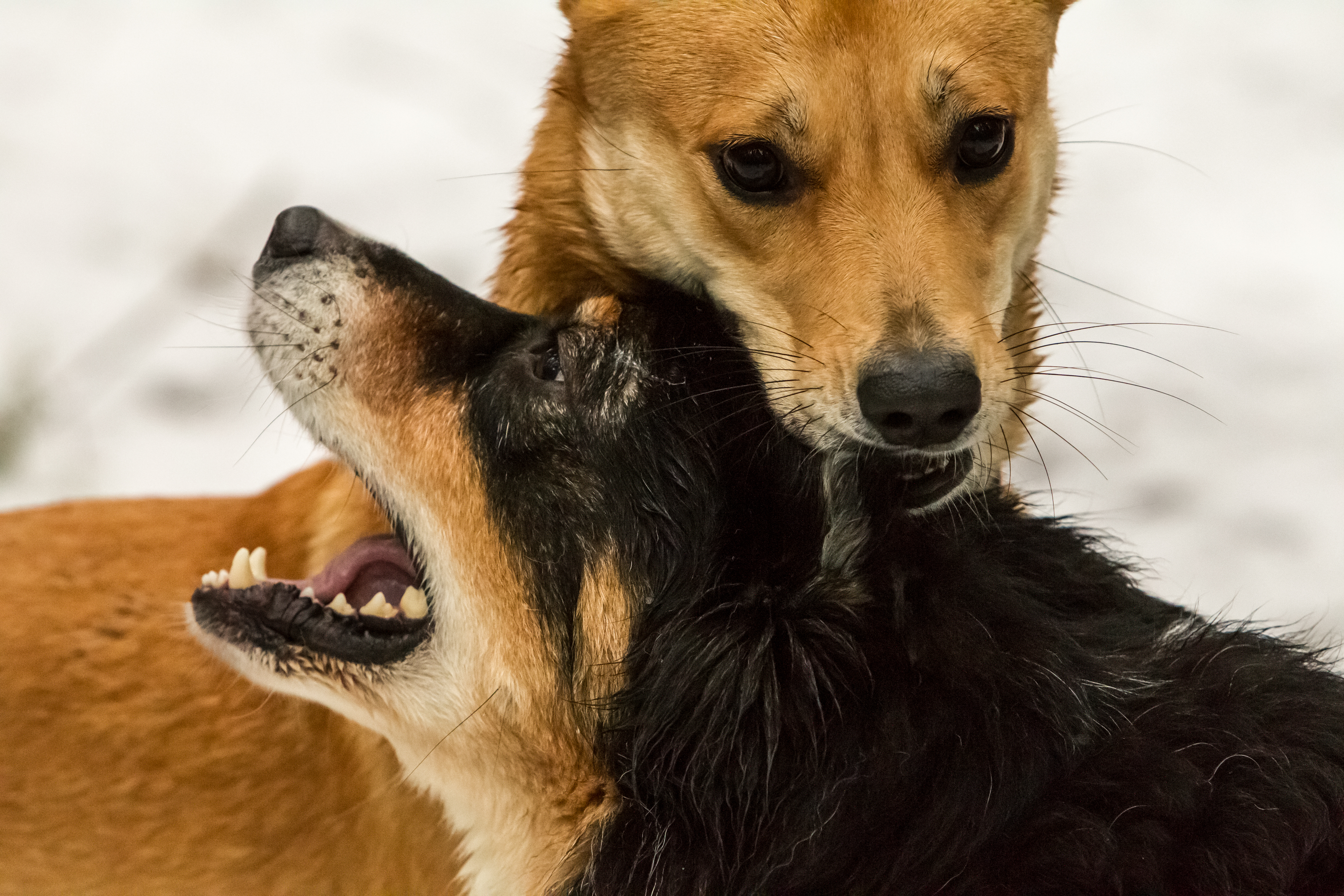
This time, we arrived in our favorite spot in the Oregon woods to find some decent sized drifts and perhaps six inches already on the ground. Not sure how Gwenie would respond to it, I turned her loose with Ryder. I’ll let the photos I tell the rest of the story. Suffice to say, while our Jordanian refugee lacks the proper camouflage for winter conditions, she clearly has a snow dog’s heart.
Best wishes to all of you in 2016, and thank you so much for making this little corner of the web such a success,
John & Gwenie


 The American Warrior