Urge the Heroes

My Friends,


Four years ago today, a friend of mine was murdered in the line of duty. Chris Kilcullen was a police officer and negotiator for the Eugene, Oregon police department. I worked with him in training exercises many times from 08-11 and found him to be a remarkable man. I wrote this article in April 2011 after I got home from his memorial service.

=============


The new University of Oregon basketball arena is fantastic. No expense was spared to give the Ducks a special home in what had been the site of Williams Bakery when I attended the school in the 1980’s. I remember waking up in my freshman dorm to the scent of fresh baked bread that first fall away from home, a smell that today can take me right back to those early days of semi-adult freedom and all the joy I felt at having the opportunity to study history.IMG03985-20110429-1633
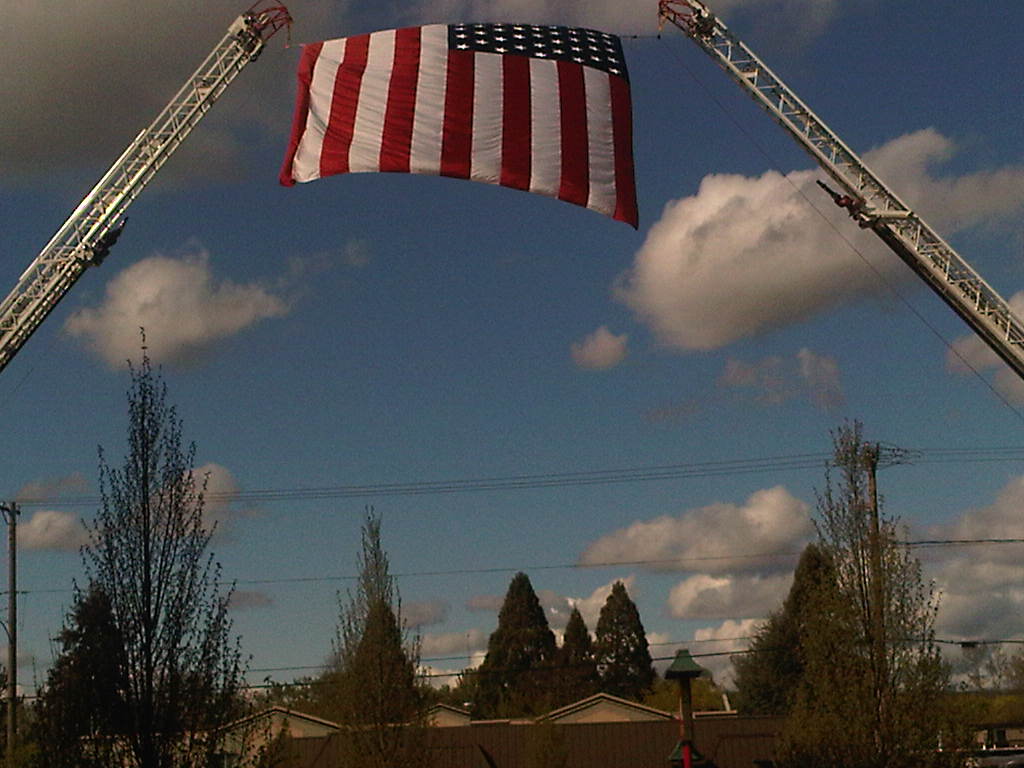
It was an odd homecoming for me. I had not been to the campus since returning from Afghanistan. Frankly, last fall I did not think I would survive my time in theater and never expected to see again the school that became my first home in Oregon. Now that I am back, I never expected to return to it in the way I had to this afternoon.

In the arena’s lobby, I stared at the words printed on the main wall, superimposed over enlarged photos of past Duck athletes in action.

                                                Urge the Heroes
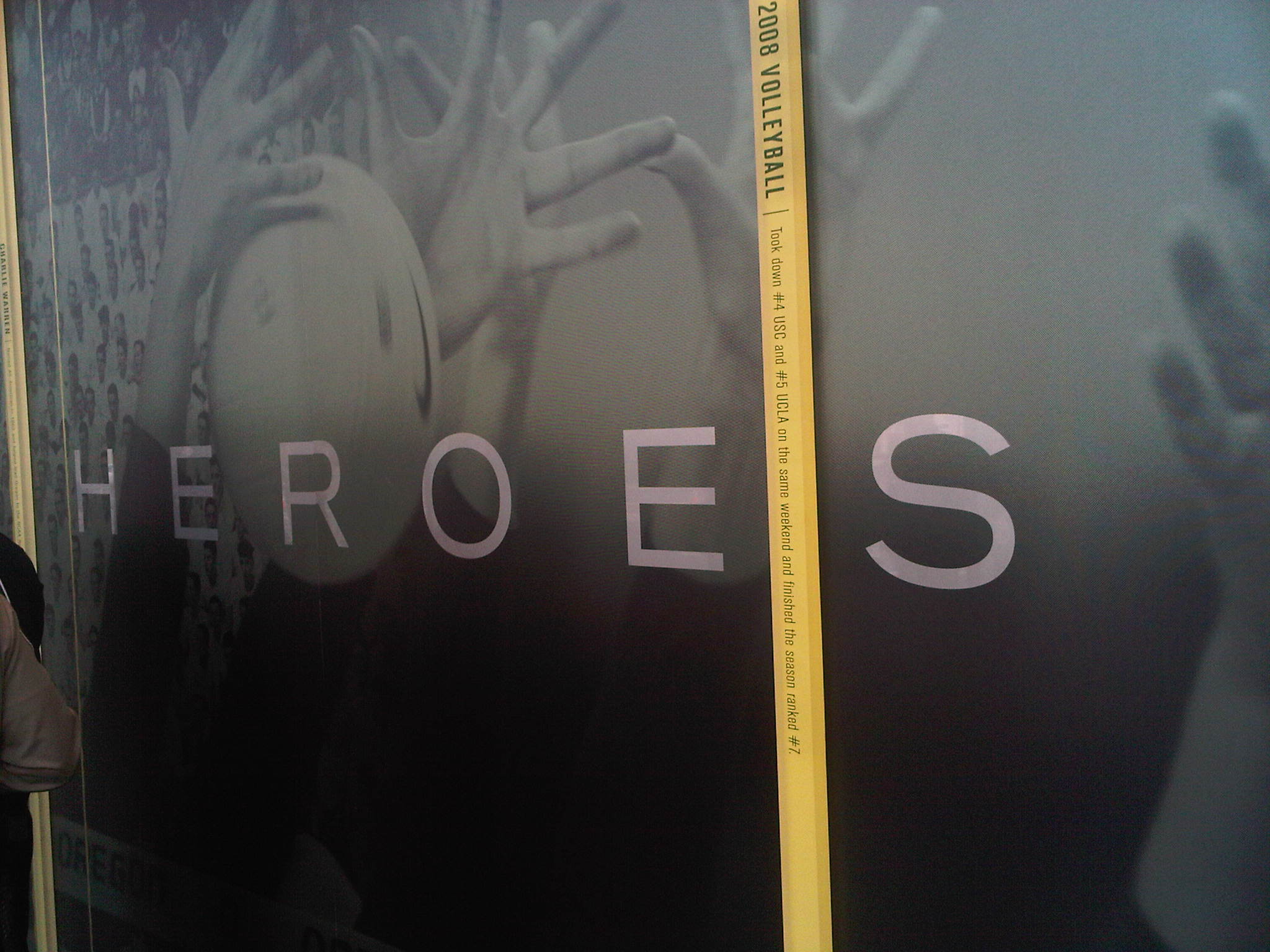
IMG03988-20110429-1646    Being a middle aged Duck, I recognized those words from our fight song, Mighty Oregon. Reading the words reminded me of the summer of ’89 when I worked at the Paul Masson Mountain Winery’s concert series. During intermissions, I had wine pouring duty and I used to give extra vino to anyone who could sing Mighty Oregon. I was amazed at how many Bay Area residents had gone to Oregon, and even more surprised at how many Duck alumni could remember the words to the fight song.

Today, those words overlayed across past hardwood glories offended me. I felt a stir of rage. Then tears. How dare we use that word in such context.
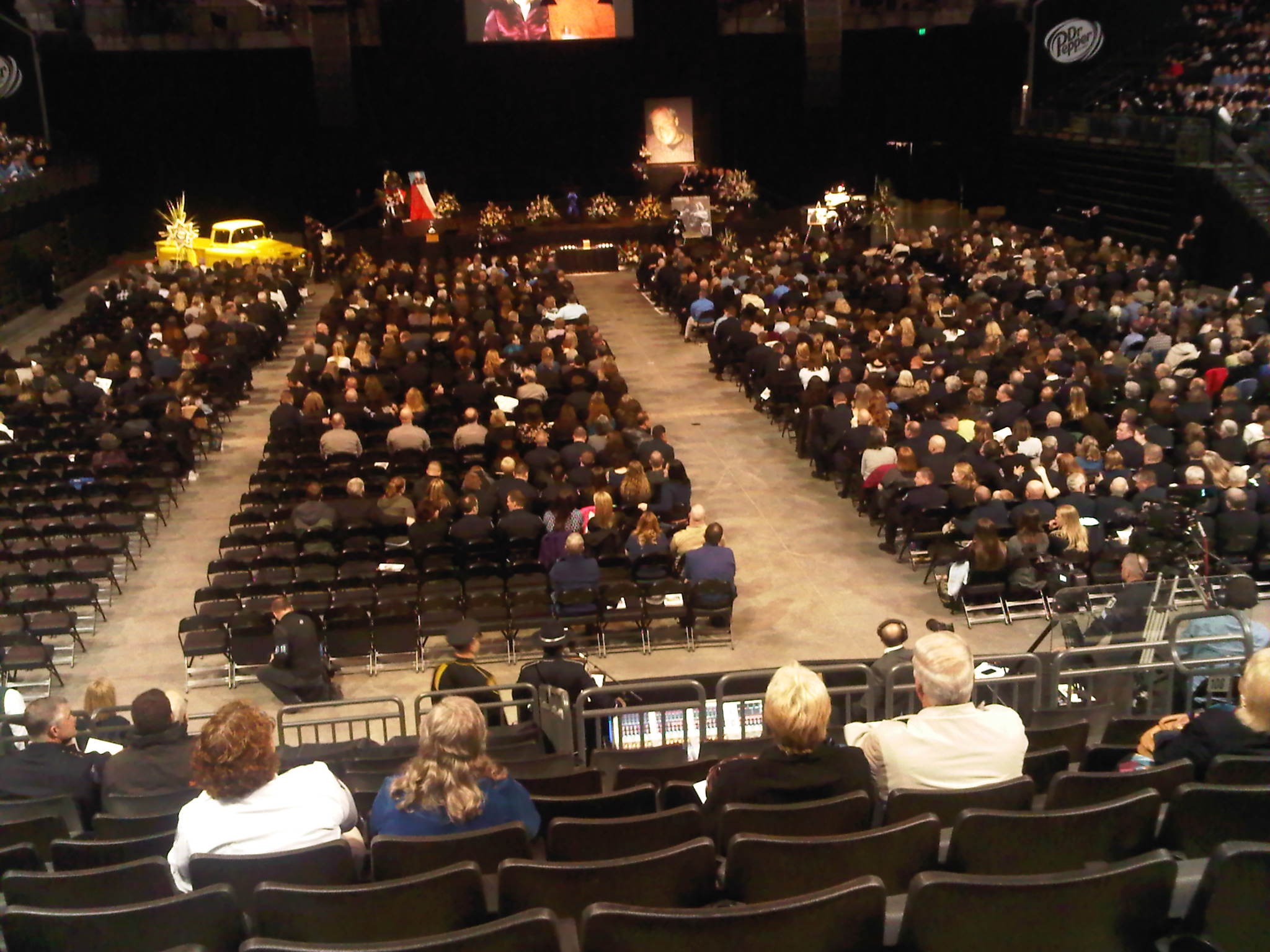
IMG03971-20110429-1354 I stepped into the arena. On the giant screen above the court, the first thing I saw was a photo I took in the fall of 2008. Displayed there for all to see was a true hero, not the false idols found here on game night.

In that photo, Chris Kilcullen was full of life, his winning smile exuding charm, his eyes full of mirth. I sank into a seat and thought of the many hostage negotiation exercises we went through together. I’d be on the throw phone role playing a bad guy holding my wife or kids at gun point, screaming irrational demands at Chris. I swore at him. I called him every name I could think of to cause him to lose his cool. I said horrible things about his mother and his wife. I probed for every weak point a man can have in hopes of causing a flare up, a quick retort or some other slip that we could discuss in the post-exercise after action review.
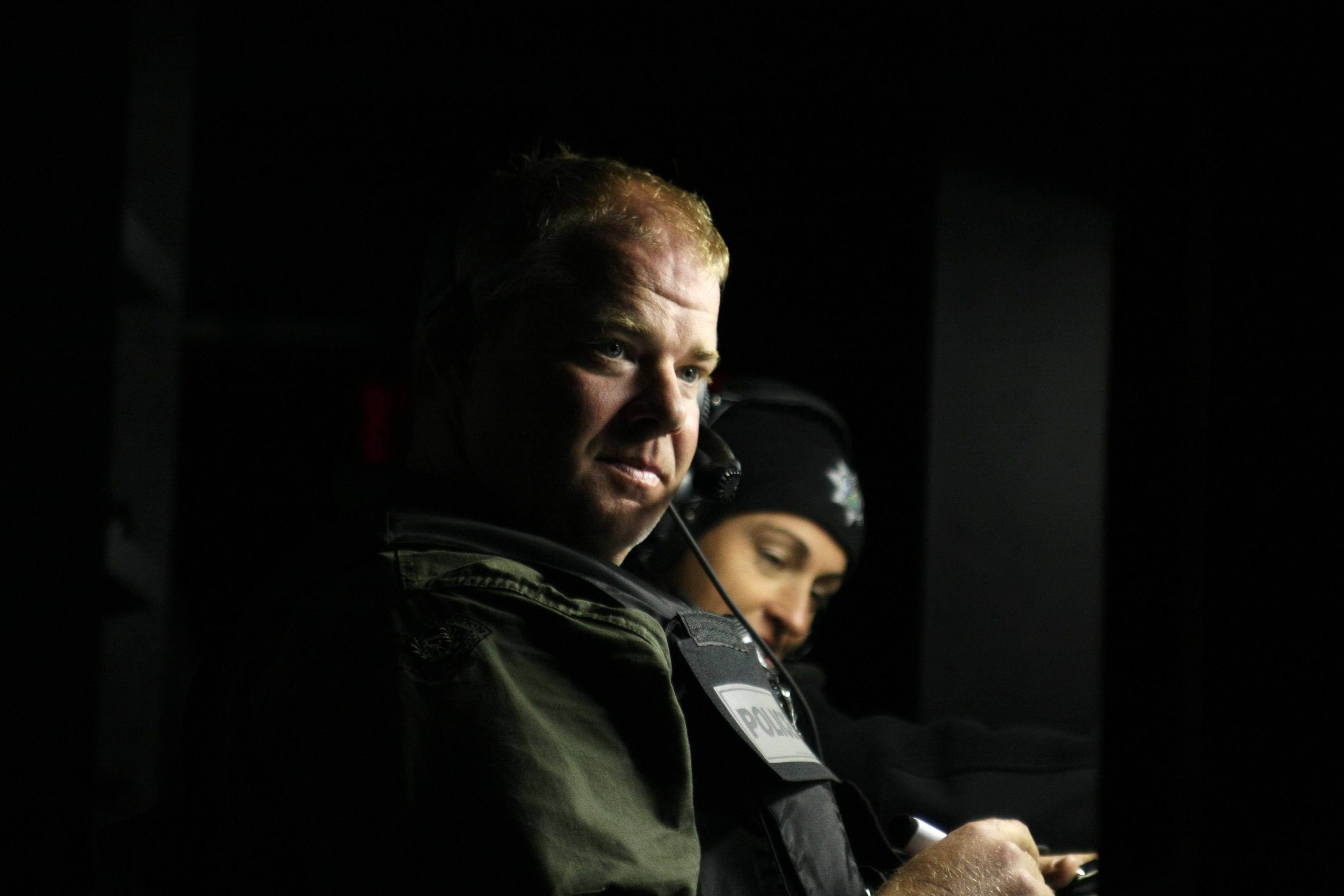
IMG_4558

In other iterations, I’d been able to get under the skin of some of the other negotiators. Just before the SWAT entry team kicked in my door and took me down in one exercise, the last thing the negotiator said to me was, “Sayanora mother fucker!”

IMG_4887

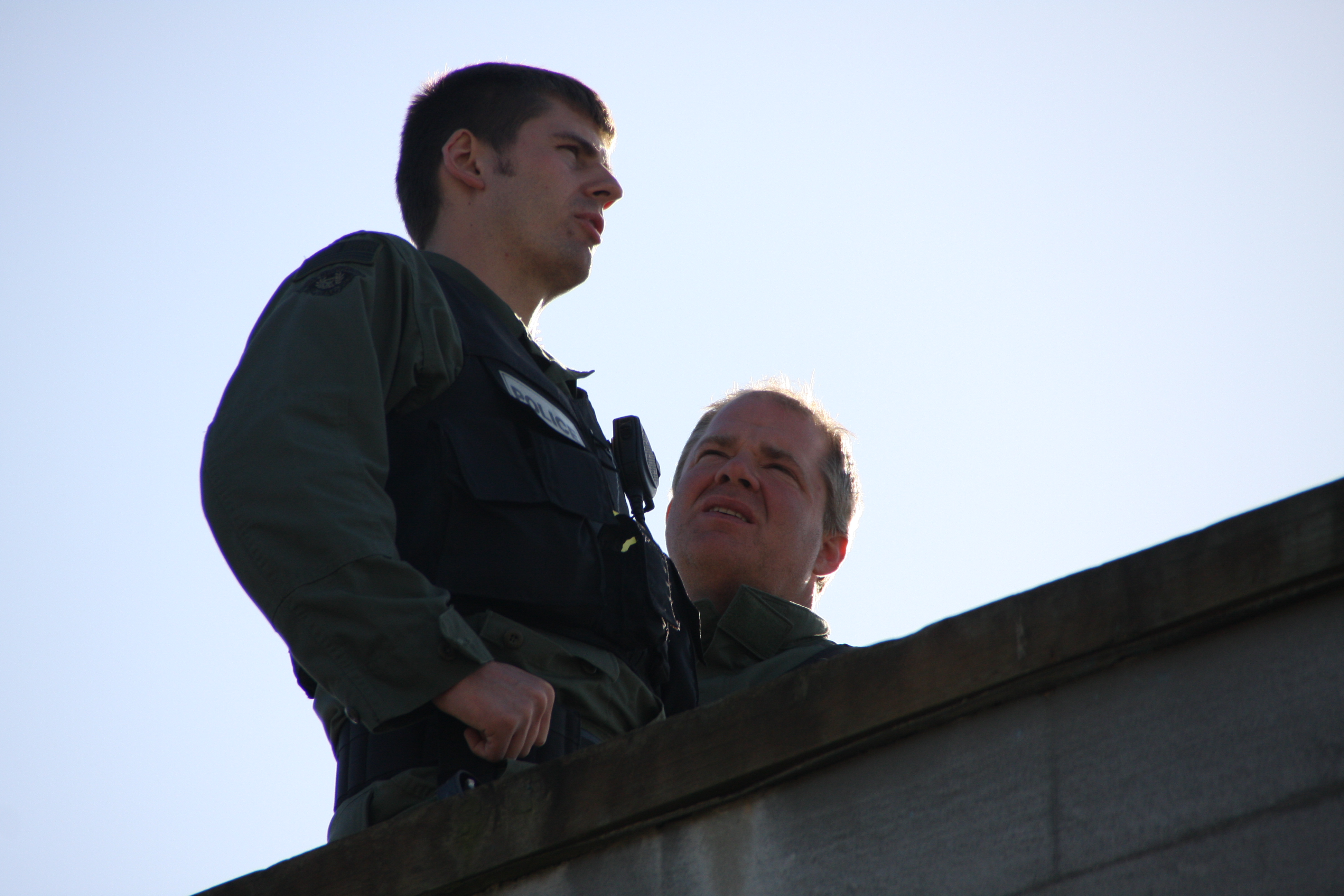
Chris teaching a new negotiator to talk me out of jumping off the city hall building at the Rilea MOUT Range, September 2008.


One memorable exercise had Chris teaching a new negotiator how to talk a person out of jumping off a building. That person was me. I jumped. Chris imparted some of his hard-won experience to his protégé, and in the succeeding iterations he talked me off the roof.
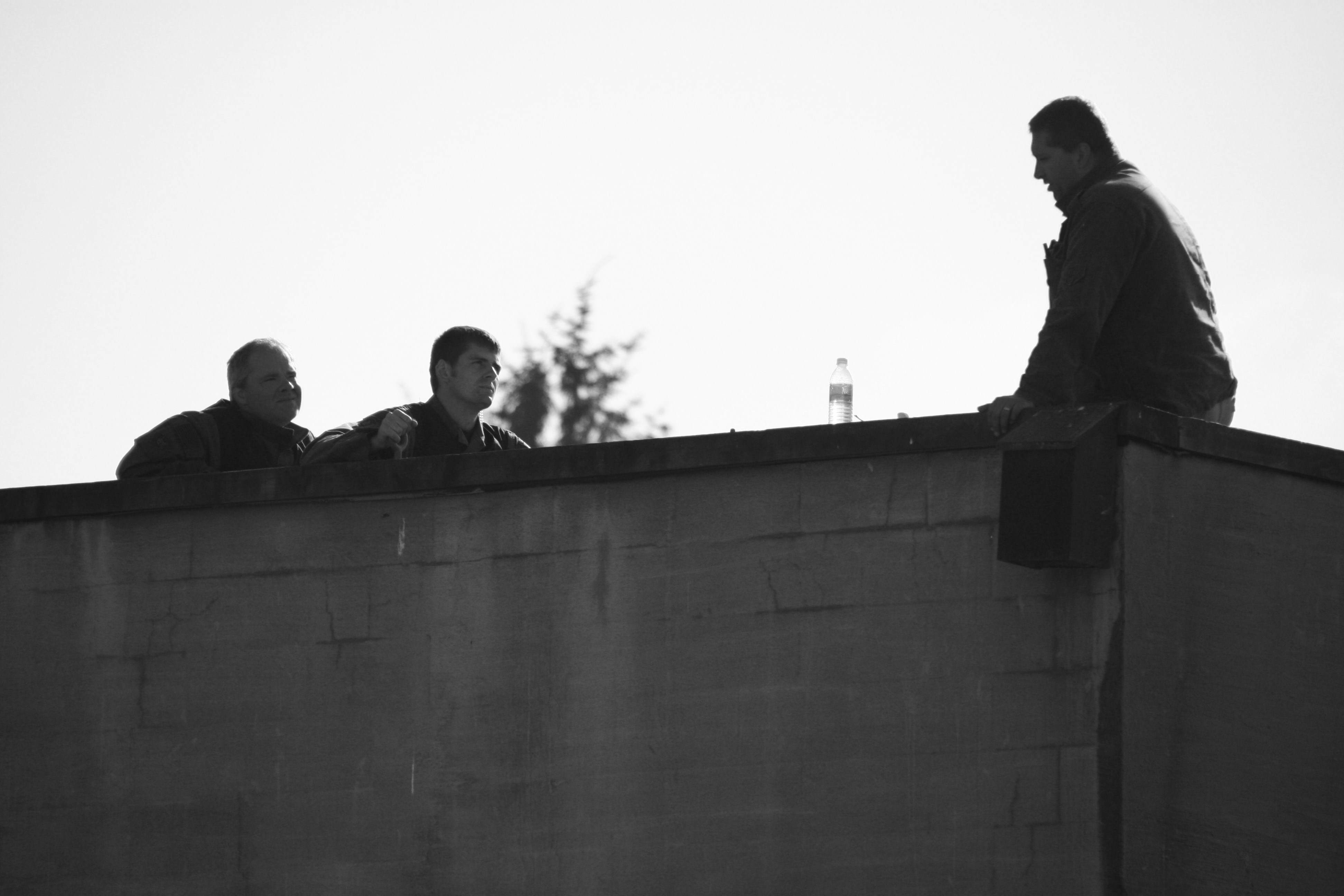
IMG_4900        As I sat in the new arena, I thought about all the vile things I spewed at Chris that never elicited a response. His calm and soothing voice was in my ear at that moment; the consummate professional. But he was more than that. He was a consummate, compassionate human being.

After one iteration, we were standing around talking. Somebody said to Chris, “You can charm the panties off a nun.”

Totally.
IMG_4892

Chris had been with the Eugene Police Department since 1998. He was a motorcycle cop assigned to the traffic unit. This meant he was out there giving people with lead feet (like me) speeding tickets. But he did it in such a charming way that those he ticketed came away feeling better for their chance to interact with him. His spirit shined that bright.

It was snuffed out last week by a 56 year old mentally ill woman. She shot at Chris with a .38 after he chased her into Springfield. This great cop, this father of two, this doting husband, died on the streets he devoted his life to keep safe for the rest of us. Exactly how a woman so deranged can legally buy a firearm in this State needs to be addressed. For now, this woman’s rash and senseless act has torn apart a family, and a community. We all need to heal. Coming so soon after Jerry Webber’s death, it was an especially cruel blow to his fellow officers.

IMG_7121

Jerry Webber.


Over brats and beer in the Rilea starships, I talked cars with Chris. He loved his ‘50’s Chevy pick up that he’d had since his teen years, and it was particularly painful to see it for the first time on the arena floor parked beside the stage erected for the occasion.
IMG_5166

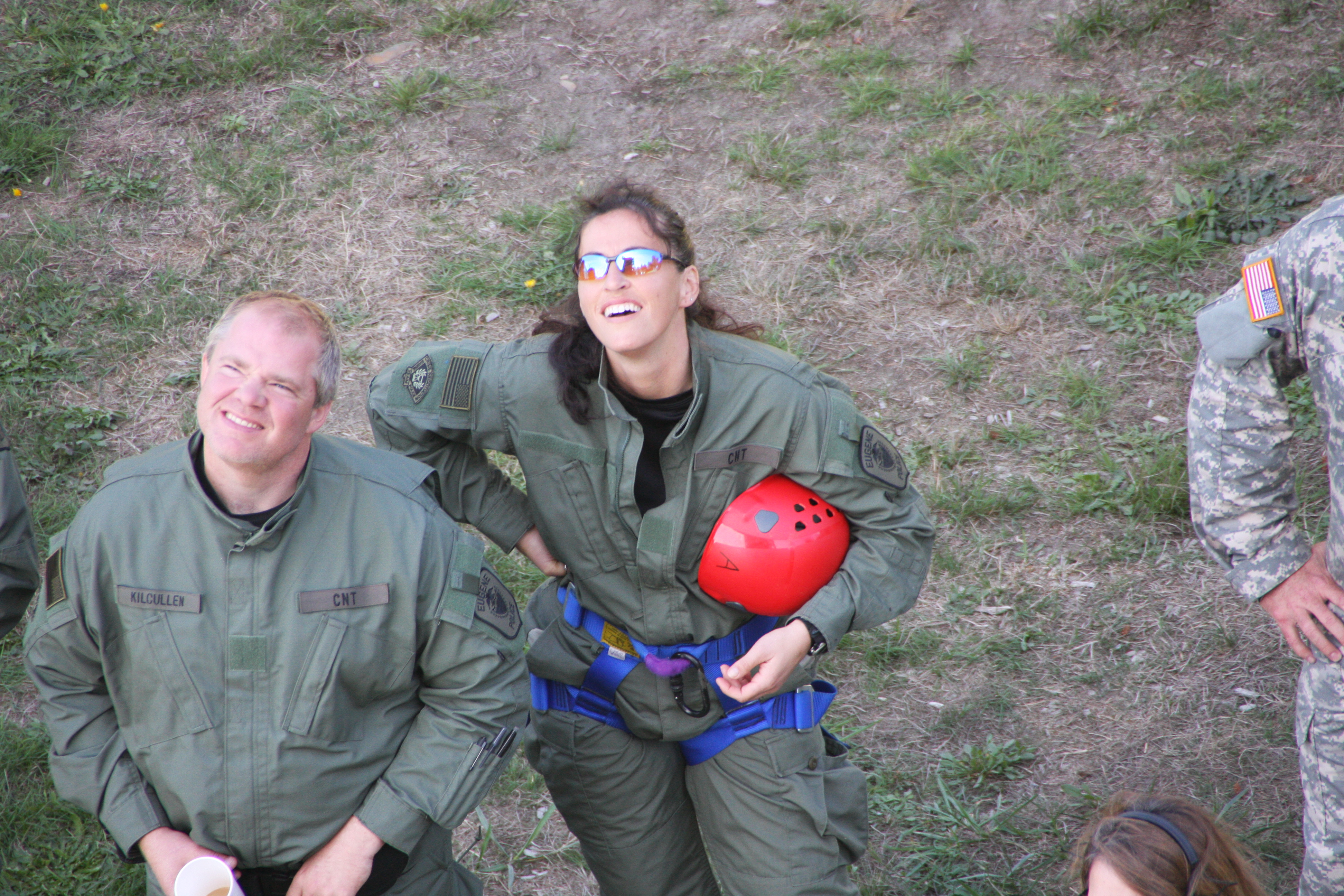
I remember rolling into Eugene in December, 2009, on my way to bring all the photos I’d shot to Lt. Jen Bills. Until I went to Afghanistan, some of the best images I’d taken were during those weeks at Rilea with EPD. I was proud to give them to Jen so that she could share them with everyone else and their families.IMG_7463
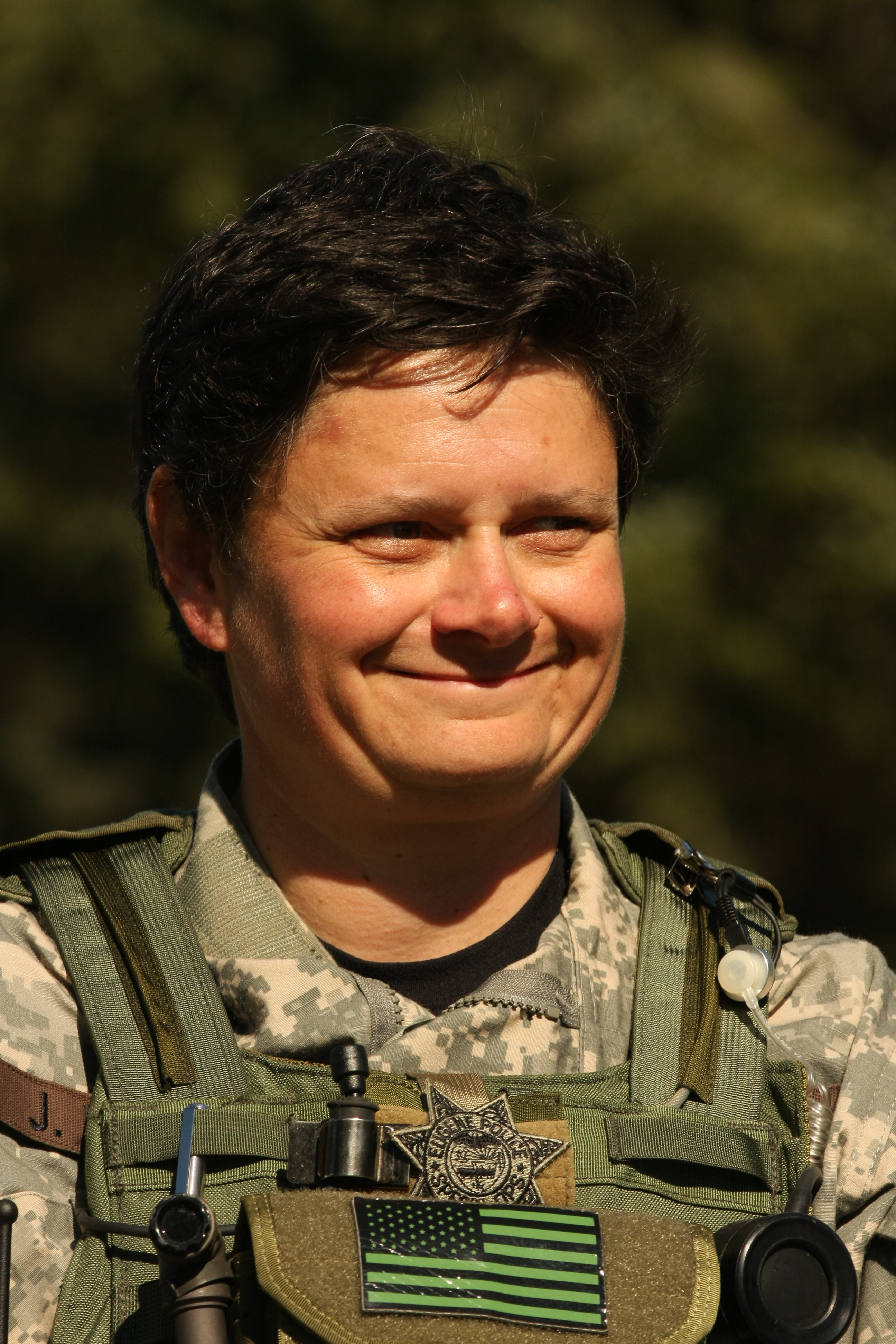
Little did I know that two of the men I photographed would later die.

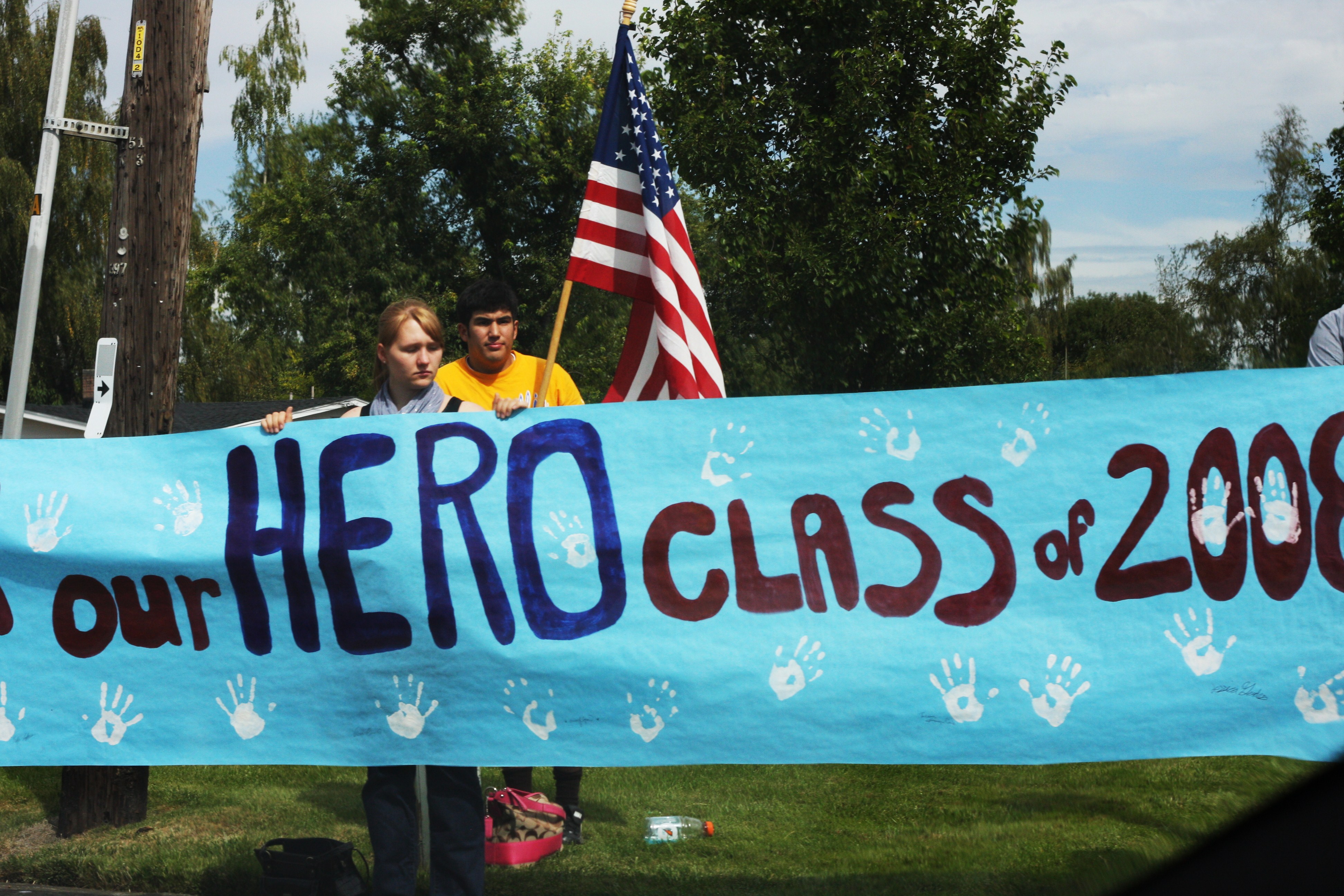
Driving along 7thStreet, I passed a sleazy downtown motel. Something was amiss, as the place was surrounded by police, and a team of officers looked ready to enter one of the rooms. I saw Chris and his motorcycle across the street on the outer cordon and waved at him. I’m not sure if he saw me as I drove past, but even in the middle of the real action, he had a slight grin on his face. Ever the buoyant one, Chris Kilcullen. He was in his element.

It was a surprise to see the officers in a real world environment instead of the training range. As I parked at the station, a surge of pride went through me—in some small way I felt like I had a part in all this. Those weeks off from writing and away from my family to serve as a tackling dummy for the EPD never seemed more worthwhile. Perhaps some of the lessons helped the SWAT and CNT folks learn would be of use out in the field after all.

But all those iterations at Rilea failed to save Chris from a lone crazy armed with a pistol she never should have been able to obtain. I don’t have the space in my heart left to feel guilty about that—Taylor’s death owns that real estate—but I couldn’t help but second guess some of the things I’d done during those training weeks. Could I have done something different that could have given Chris the edge he needed to survive this woman’s surprise onslaught?
IMG_4328


I imagine, there’s a lot of that going around right now. And I remembered writing about two soldiers soldiers who died in Iraq during an IED attack. The men in that platoon were quick to blame some of the decisions made on that patrol. Recriminations lingered and left some of the men embittered. From an outsider’s perspective, I thought the men had gotten it all wrong. The decisions were of no consequence. The insurgent who triggered the bomb killed those men. War happens. The bad guys cause damage despite every precaution and care taken. That’s just the nature of the business. And so it is with Chris’ death. Nobody is responsible but the woman who chose murder over a ticket.
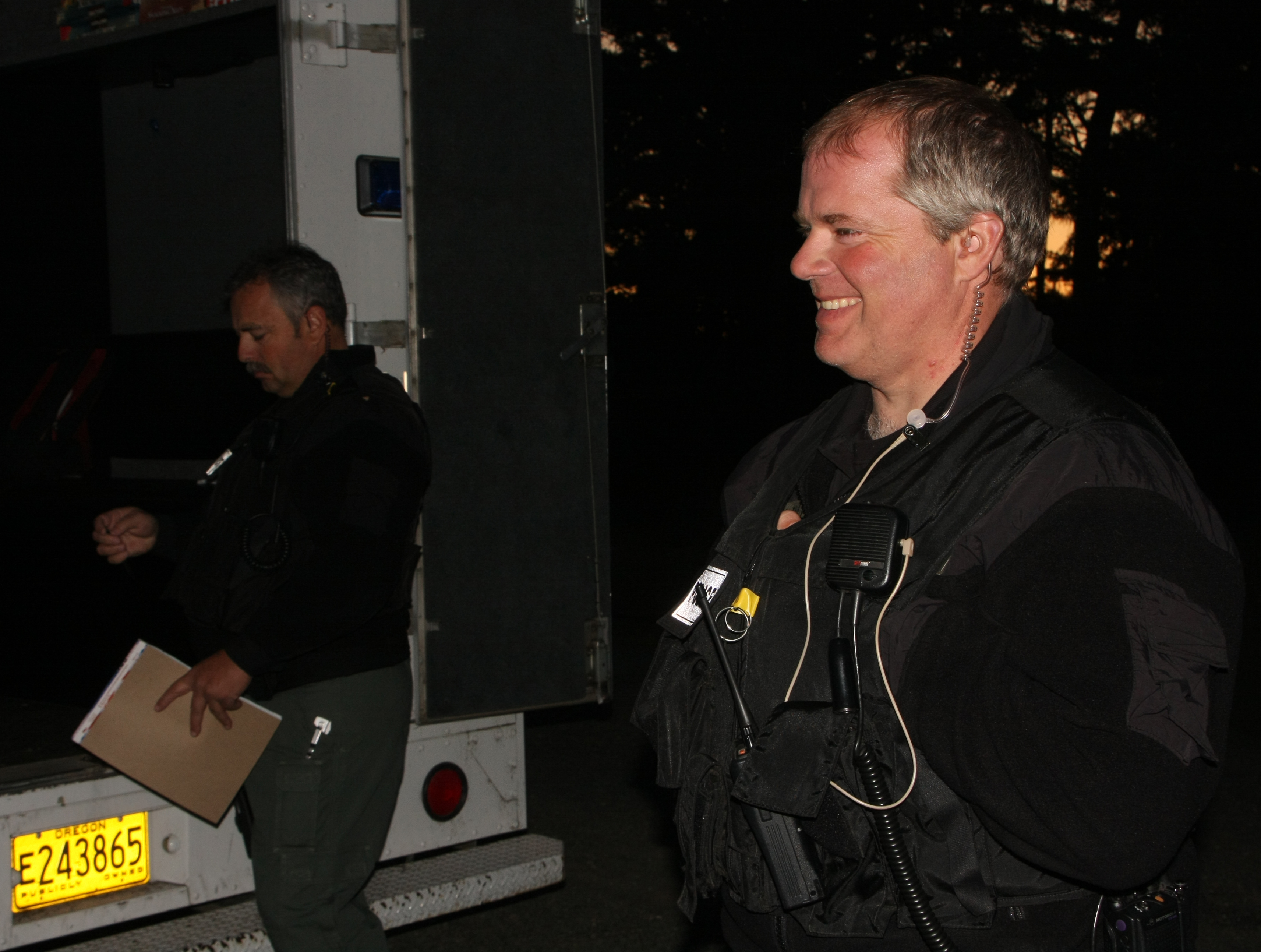
IMG_6641  I listened as Chris’ friends and families told stories of his life. His partner listed off his nicknames, many of which were hilariously off-color. When he finished, he said, “There was one name I never said to him…best friend.”

Finally, I could not take any more. Two years, four funerals—Jon Hudson, Taylor Marks, Jerry Webber and now Chris. I go through life with my heart wide open, but these past months have caused me to withdraw and be more protective of myself. Now, I felt raw again. I stepped into the lobby and walked to the huge windows overlooking campus. Across the street, I saw my freshman dorm, Dunn Hall. Third floor, center. There was my window shared with my first roomie, Chet Nakada.IMG03987-20110429-1643
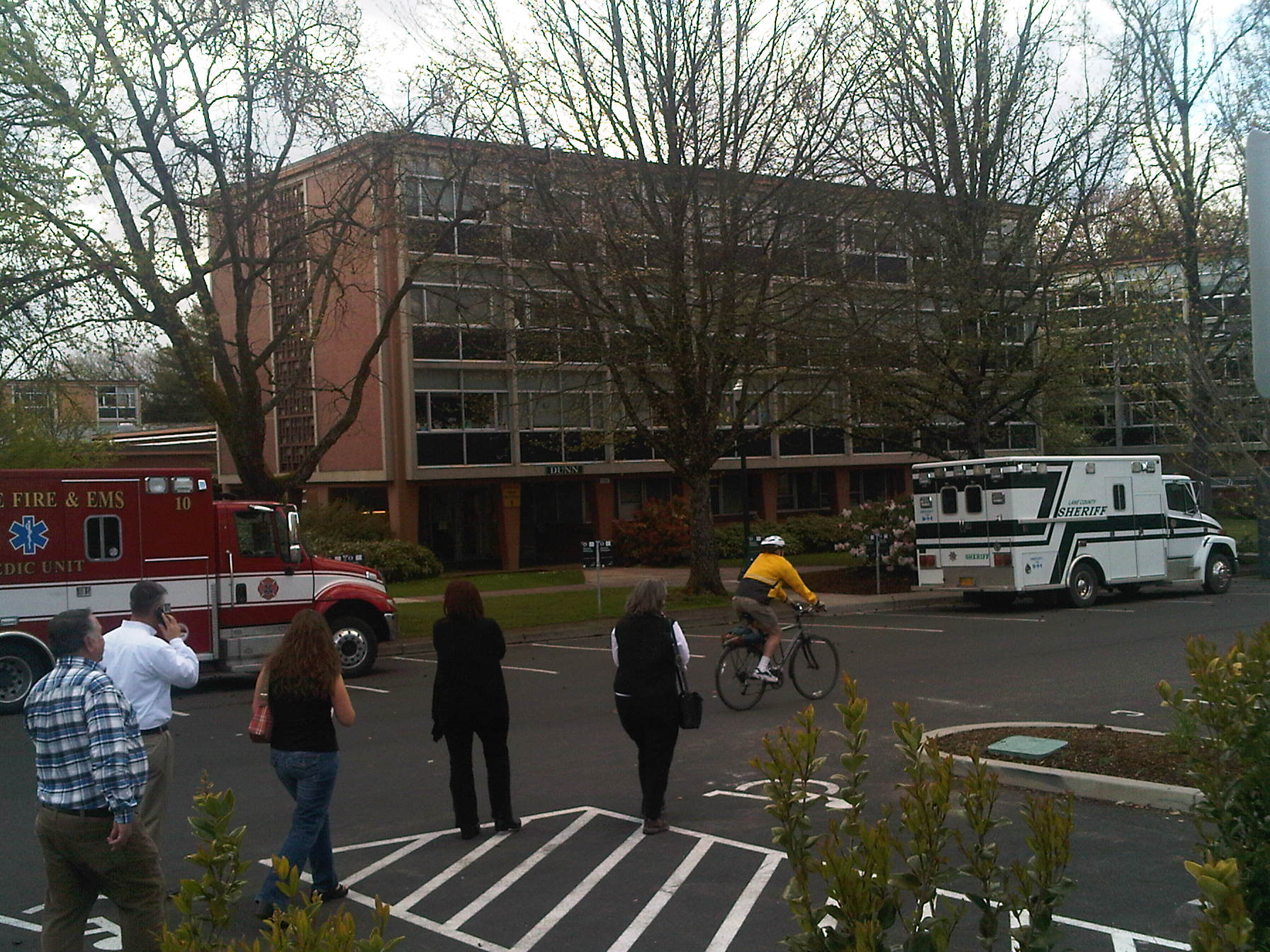
Chris was born a month and four days after I was in 1968. He went to Willamette High, class of ’86. He started at the U of O the same time I was there. I wondered if we crossed paths on campus all those years ago. Perhaps we had one of those massive lecture classes like Western Civ together. I’ll never know. But he was there, sharing the experience of the university just as I had, tasting those first sweet moments of freedom right along with the rest of us.

Jen Bills. Mark Farley. My wife, Jennifer Beggs. We were all in the student body together. In time, our lives would come together in unexpected ways, and I wondered what we would have thought of that if we had such foreknowledge back then.
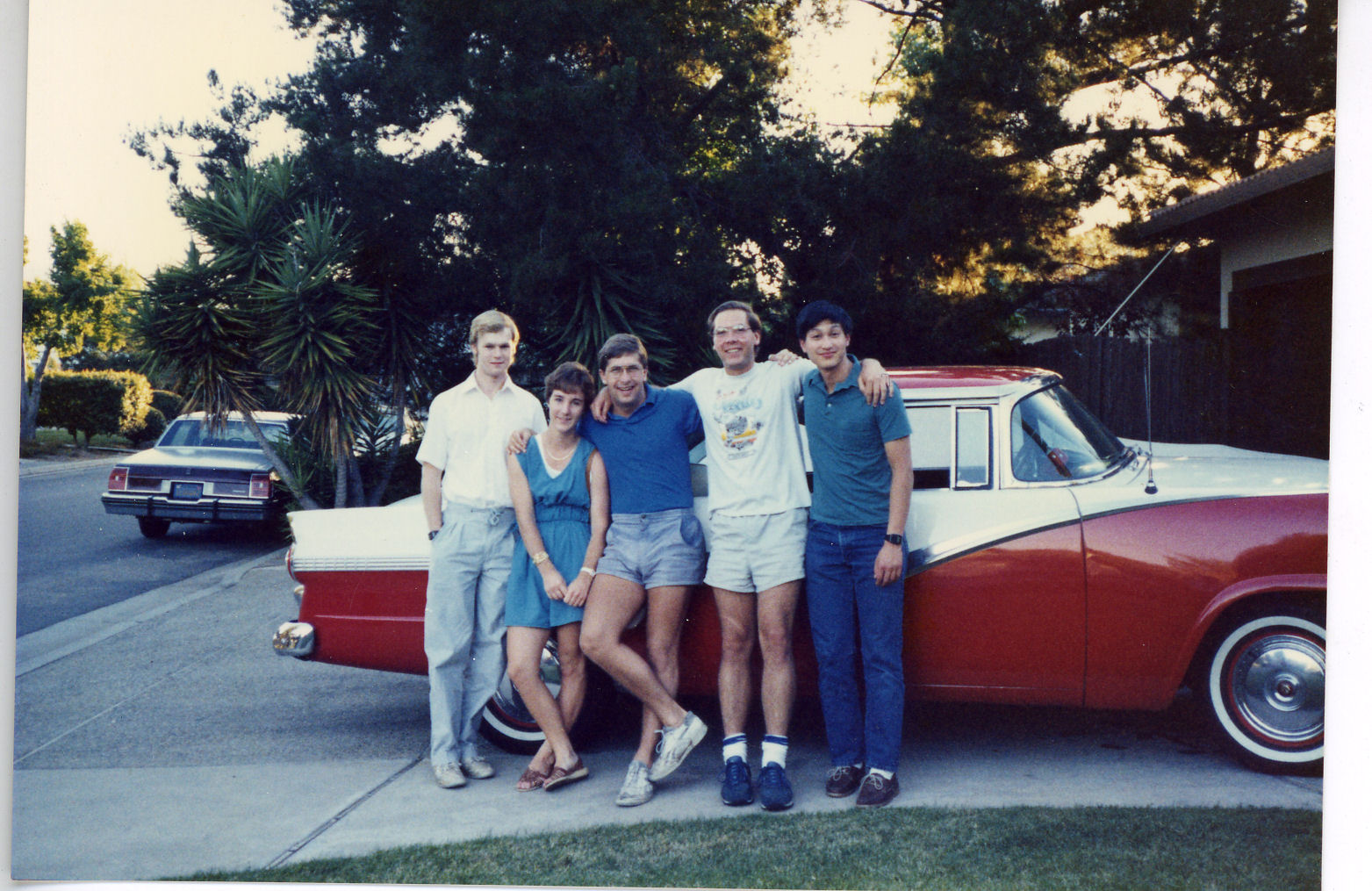
Gang010       I stared at my old dorm room window and thought of dancing in the hallways. Water gun fights. The great Dunn Bun War that left our floor littered with hundreds of stale hot dog and hamburger buns the night before Christmas break. I thought of tender moments shared in the predawn hours with my first college love, waking in her arms to the delicious aroma of fresh baked bread. I once told her that I’d live in a cave if I had to just to be an historian and do what I loved. She didn’t like that thought. She had dreams of material wealth, big houses and dinner parties, little black dresses and rooms captivated by her charisma.

So not me.
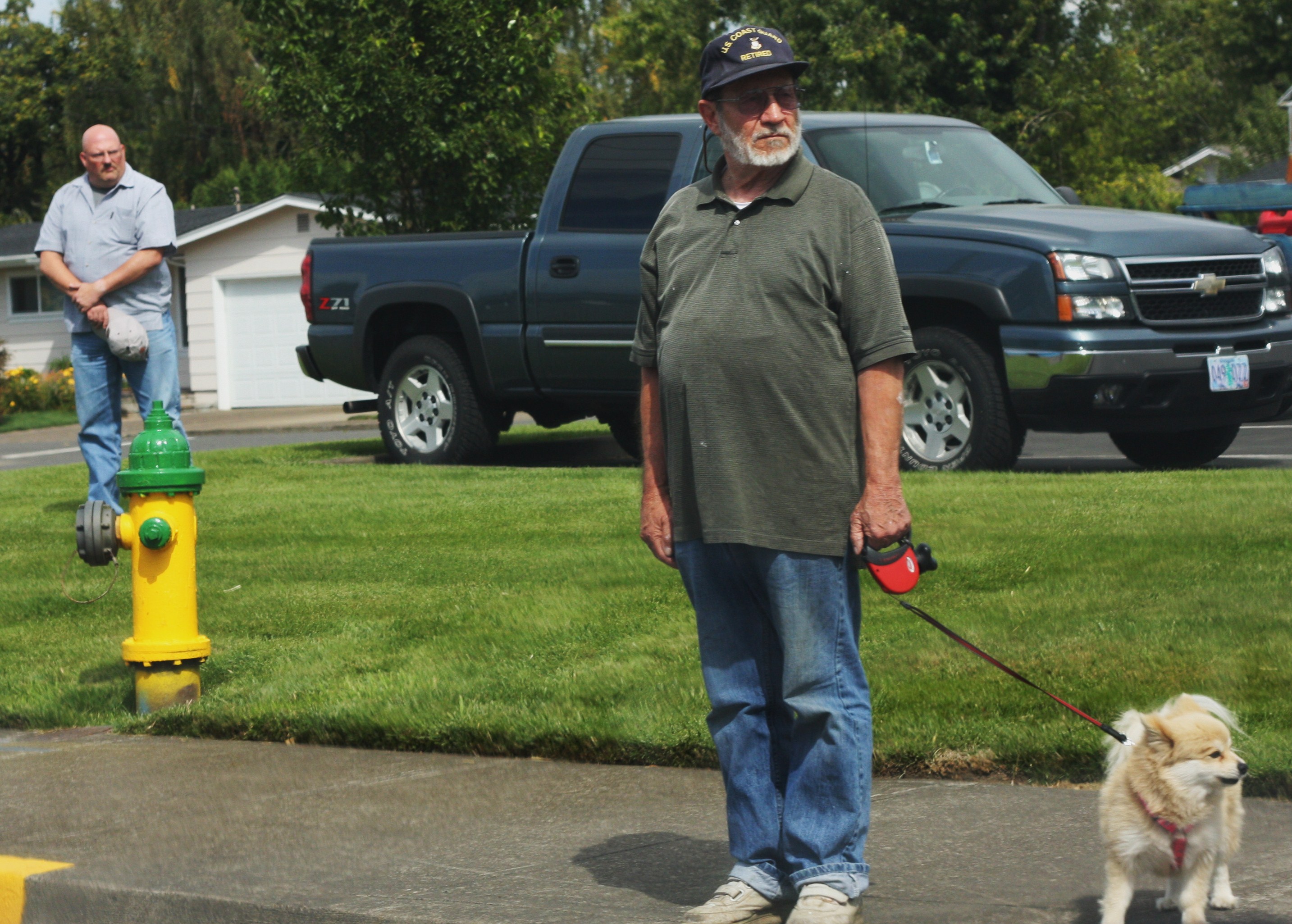
IMG_4323

But I’ll say this: mine has not been an easy professional path. Moments like this one, these farewells to friends and colleagues torn from this life through violence or circumstance weighs heavily on me, and makes carrying the work forward increasingly hard.

I turned away from the window and that idealistic gestational phase of my life. I needed to say a proper goodbye to a man whose noble heart had earned my respect and admiration.

I walked through the lobby and saw those words again.

Urge the Heroes
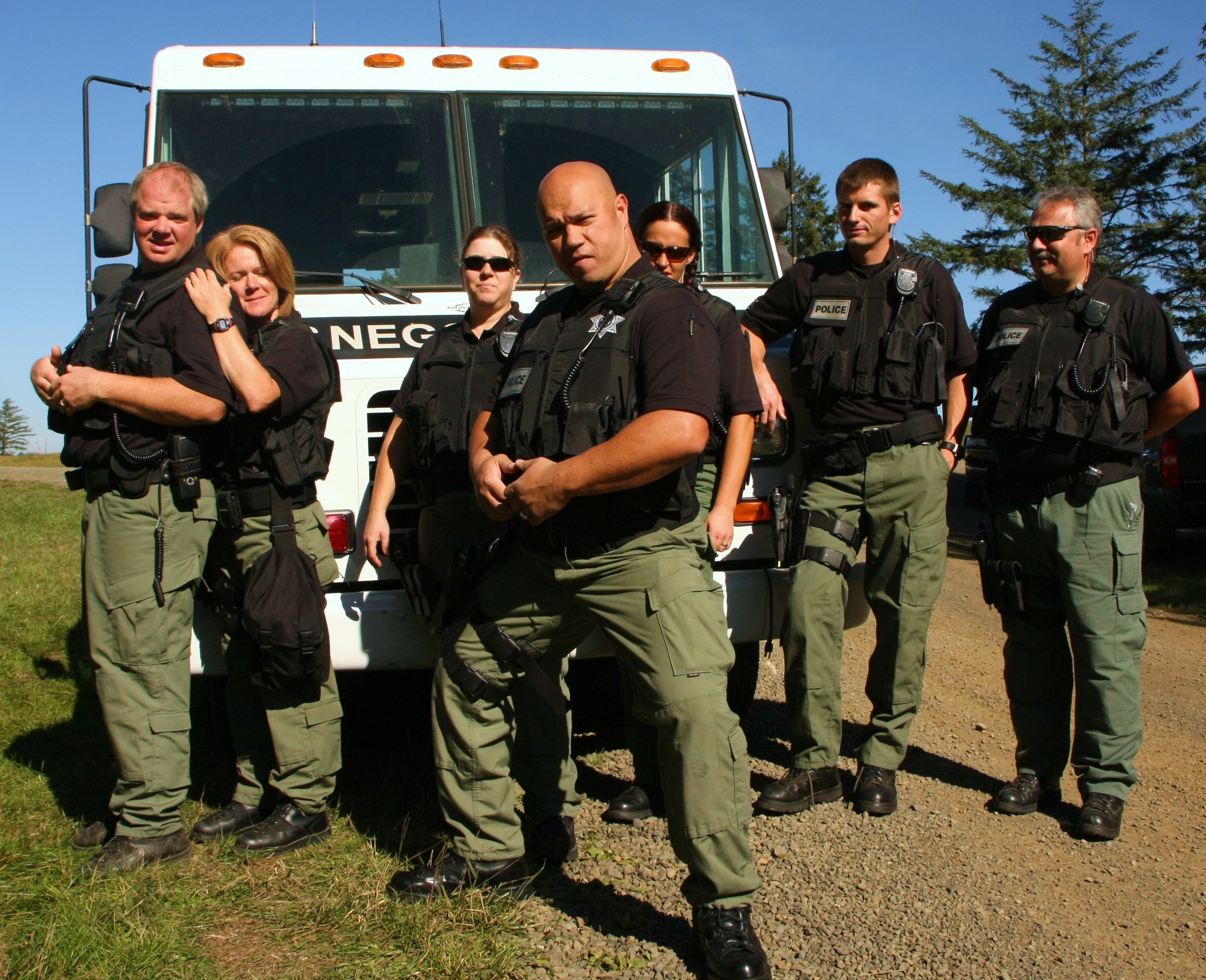
IMG_7312
So misplaced on that wall. There are no heroes on the hardwood, only athletes with heart and grit. Respectable, sure. Heroic, never. Americans misuse the word “hero” all the time. It has become an ingrained cultural error, one that demeans the service and spirit of the true heroes whose lives are spent in service for the greater good.
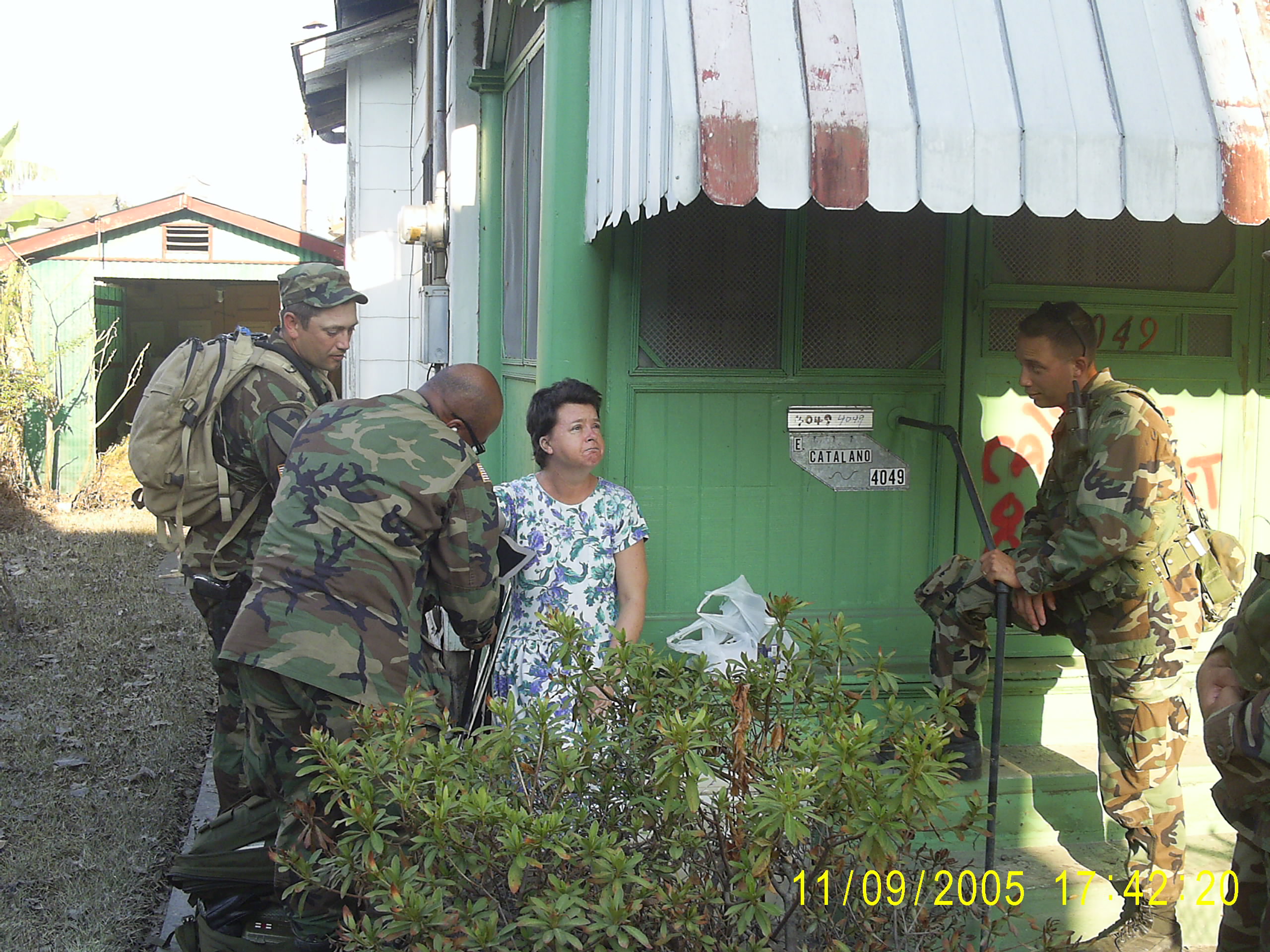
SUC50085    Suddenly, I didn’t feel so worn down. Chris Kilcullen dedicated his life to protecting us. I’ve spent my life making sure men and women like him are not forgotten. That is my purpose, my crusade. And in that pursuit, I connected with Chris. We were both men devoted to our callings.

The big house my college sweetheart so coveted has eluded me. Coming home from Afghanistan, the financial mountain I face is a scary one. No matter. I’ve known heroes. I’ve seen them in action here at home. I walked the ruined streets of New Orleans with them. I flew into battle with them last fall. In the final judgment, that is all I need out of life.IMG_9688
I returned to the arena, suffused with sadness, but rededicated to all I’ve predicated my life upon. Somewhere in the years behind us, the kid I once was stared out that dorm window dreaming of doing the things I have done. If he could see me now, I’d tell him only one thing: I’ll keep the faith.

I owe it to men like Chris.


Originally Published April 30, 2011:

http://www.theunawriterslair.com/the_unawriters_lair_guns_/2011/04/urge-the-heroes.html
 

Categories: Home Front, Writing Notes | Tags: , , , , , , , , , , | 4 Comments

Iowa’s Red Horse in Action

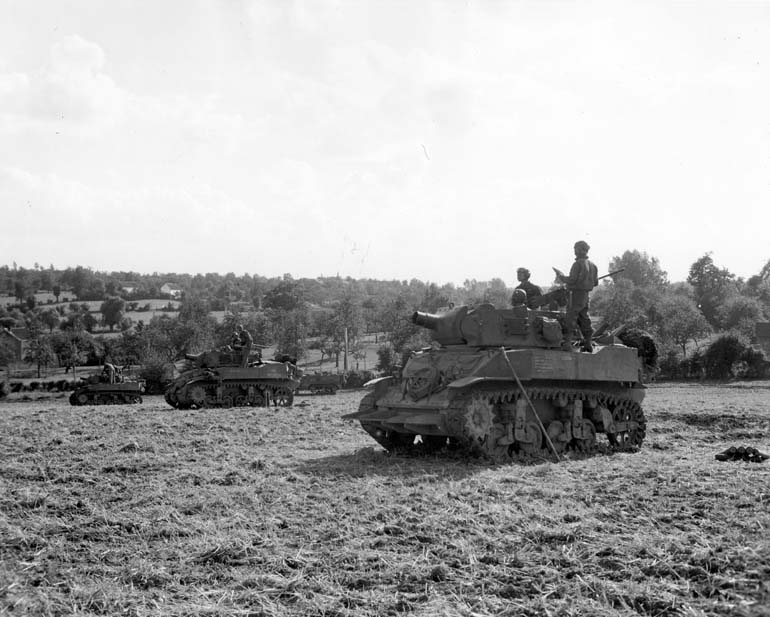
113th cav recon reg m8 tanks heure le remam belgum sept 9 44

M8 75mm gun motor carriages of the 113th Cavalry, Iowa National Guard, conduct a fire mission with their 75mm guns outside of Heure le Romain, Belgium on September 9, 1944.


Categories: National Guard, War in Europe, World War II Europe, World War II in Europe | Tags: , , , , , , , , , , , | Leave a comment

Beer Bombing in B-17’s

b17 buzzing base late 1942 swpa099 5x7Over the years, I’ve come across interesting things American air crews have thrown out of their planes during bombing missions. One of the more famous was a donkey that was a B-17 group’s mascot. They’d picked the donkey up in North Africa and brought it back to England, where the local kids were given rides on it. The donkey kicked the bucket one day, so the guys in the bomb group somehow put it in an NCO’s uniform, gave it a set of dogtags and dropped it over Germany during their next mission. You know that somewhere, in some archive, is a report of finding a flattened, uniformed donkey in some poor German farmer’s field.

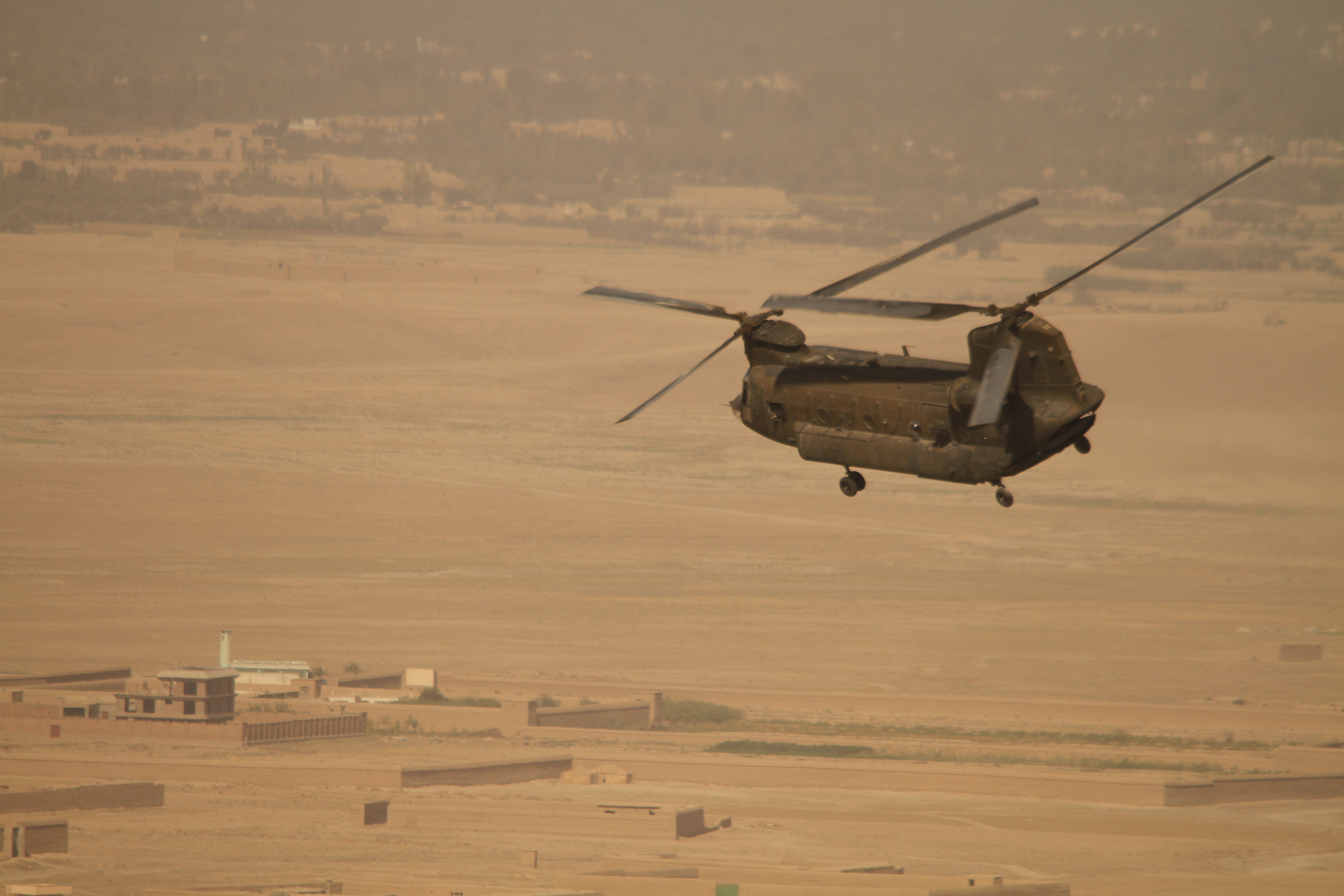
In 2010, while I was with TF Brawler at FOB Shank, Afghanistan, I was on a Chinook that was near-missed by an RPG as we were coming into land at COP Tangi. The village by the COP was pretty hostile, and aircraft often took fire getting into that outpost. I wanted to take pee-filled Gatorade bottles and drop them on that village the next time we had to get out to Tangi Valley. Unfortunately, the prudent Chinook company’s commander nixed that idea. Apparently, raining pee down on the populace doesn’t really lend itself to the whole hearts-and-minds thing. Still, it would have been good for morale.IMG_7484

Anyway, I was reminded of that suggestion today while reading through a Boeing tech rep’s report from the SWPA.  He’d been hanging out with the 43rd Bomb Group “Ken’s Men” in Australia and New Guinea, and had written a report home on how the B-17’s were holding up in the tropics. The author of the report, R.L. Stith took detailed notes on what was one of the largest heavy bomber raids launched in the Pacific to date.

On February 13, 1943, the 43rd Bomb Group put aloft thirty-five B-17’s so heavily laden that Stith remarked, “How can one talk balance when they get away with this and worse?” The main force of thirty-three Forts carried sixteen three hundred pound demolition bombs that had been wrapped with wire to create more shrapnel when they detonated. Alongside those three hundred pounders, the ground crews stuffed the bays with sixty incendiary clusters each weighing twelve pounds. In the radio compartments of each plane, four twenty-two pound flares were stashed. And just forward of the waist guns, the Forts carried more than a dozen twenty pound fragmentation bombs. Somehow, another three hundred pounds of emergency gear was stashed throughout the fuselage of each aircraft as well.

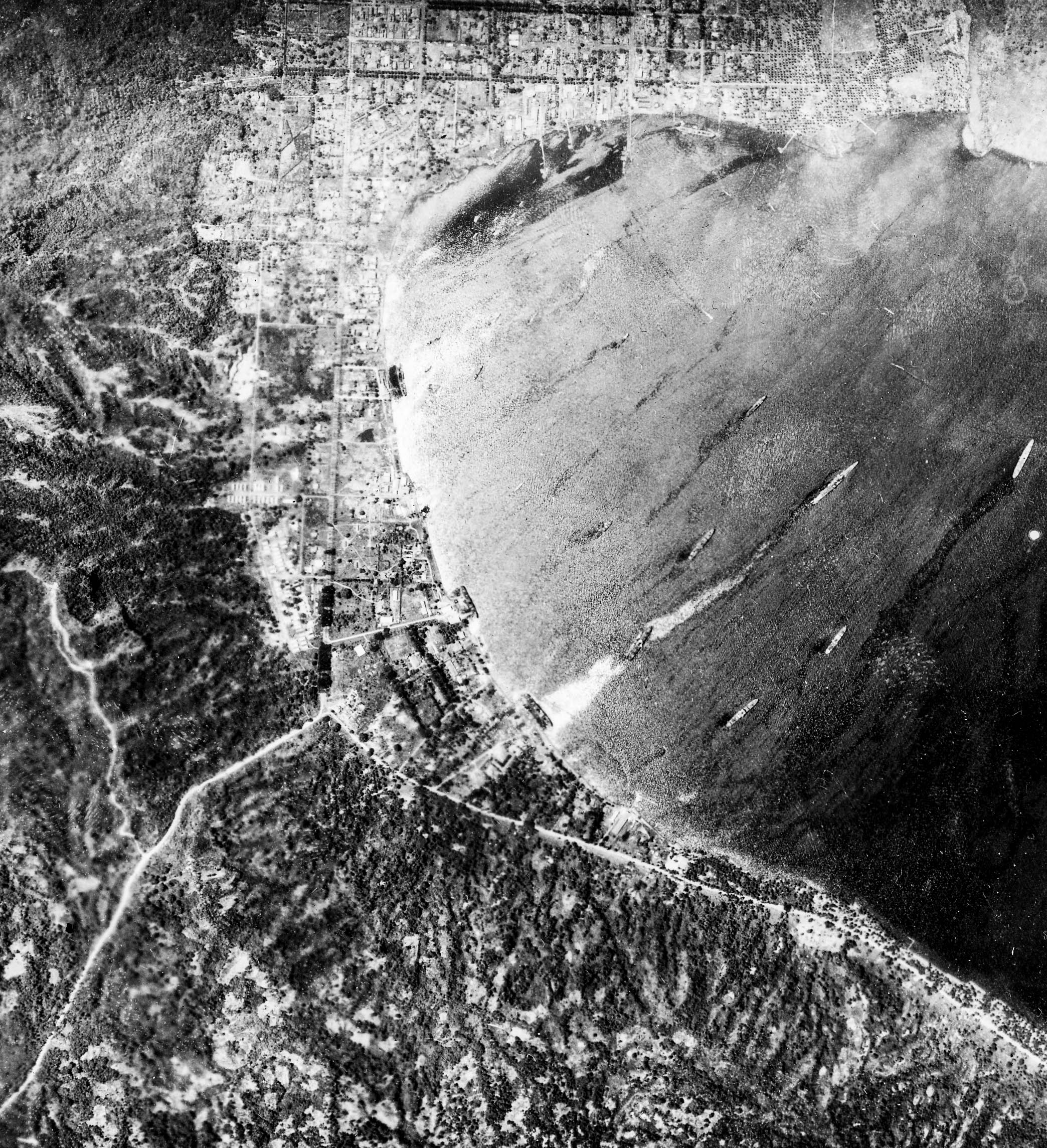
5th af series swpa rabaul oct 28 43 411

Rabaul and Simpson Harbor.

The plan called for a night attack on Rabaul with the intent of setting parts of the town afire with the incendiary bombs. The main force would hit the target area sometime after 0300 on February 14th. Two other B-17’s had been assigned to go in ahead of the main force, and it was their load-out that got my attention.

The two B-17s were supposed to keep the Japanese awake and in their slit trenches for hours so that by the time the main effort reached Rabaul, they would be worn out and demoralized. To do this, Stith noted they had been loaded with a mix of incendiary clusters, fragmentation bombs–and beer bottles.5th af b17 at port morebsy 1943 4x6

Americans. Piss us off, and we’ll rain our empties down upon you without remorse. Go us.

5th af series swpa b17 rabaul raid january 43 374I did a double take when I saw that in an official report. Beer bottles? They seriously dropped Coors Light on the Japanese at Rabual?  Then it dawned on me: an empty bottle dropped from 6,000 feet has got to make the mother of all whistling sounds. That kept with the mission profile for those those B-17’s–keep the Japanese awake and in their trenches. The beer bottles were a cheap, field expedient noise maker that didn’t take up much space or weight and could be hurled out of the waist positions at the crew’s leisure. In a theater known for its innovation, this small one was nothing short of brilliant.

That night, the first two Flying Forts reached Rabaul and began trolling back and forth over the target area. Searchlights speared the sky around them, anti-aircraft fire peppered the night’s sky, and the the American pilots changed the pitch on their propellers to maximize their noise signature. They gradually released their bombs. Between them, the beer bottles came shrieking down on the Japanese.

At 0340,  main effort arrived in four waves, flying at altitudes ranging from four to nine thousand feet. Over the next several hours, the 43rd Bomb Group dropped sixty-nine tons of bombs on Rabaul, sparking a massive conflagration among known supply dumps around Rabaul, destroying searchlights, food stockpiles, oil tanks and grounded aircraft. The 3,700 incendiaries dropped on the target created a sea of fire a half mile long and a quarter mile wide. The flames were estimated to be two hundred feet tall, and the plume of smoke from the attack towered ten thousand feet over the target area. The conflagration could be seen from the air for a hundred miles.5th af series swpa rabaul367

Surviving Japanese documents describe the attack as a costly one and very damaging. Some fifteen aircraft were destroyed, as were ammunition dumps and other installations. Total casualties have been lost to history, but the Japanese sources mention a heavy loss of life.

There is no record of their response to the beer bottle barrage, but the attack (and another one the following night) clearly had an impact on the garrison’s morale. Bruce Gamble, in his outstanding work, Fortress Rabual,  notes that one illness-plagued petty officer assigned to Air Group 705 later wrote, “I felt beaten physically and emotionally. I tossed and turned to ease the suffering, but the nightmares kept possessing me with no break.”

One has to wonder if he heard those beer bottles shrieking earthward in his nightmares.
What’s the most unusual thing you’ve heard about dropped during a bombing raid?


Categories: Afghanistan, World War II in the Pacific | Tags: , , , , , , , , , , , , , , , , , , | 8 Comments

The Cost of a Propaganda Coup

Today is one of those days in American history where a lot of interesting things happened. It is the start of Paul Revere’s ride, the commencement of the bombardment of New Orleans in 1862.  The SF Earthquake of 1906 happened today, as did the Doolittle Raid, the Yamamoto Assassination, the 1986 naval skirmish between the U.S. and the Libyans. Tomorrow is the anniversary of the Oklahoma City bombing.

The Doolittle Raid will probably be the most remembered of today’s many anniversaries. On April 18, 1942, sixteen B-25 bombers took off from the USS Hornet and attacked targets in and around Tokyo. The planes flew on to China (one crew made it to Soviet territory), but were all lost in crash landings or the crews bailed out. To the United States populace, starved for any glimmer of good news, the daring raid was a huge lift to national morale. To the Japanese, it was a tremendous shock to discover they were vulnerable to air attack. Their response was to push forward with the Midway plan–and exact revenge on the Chinese.

Most books and articles written about the Raid don’t talk about that latter reaction. Passing mention is made to the fact of the Japanese retribution in China and how most of the airfields the planes were to use were overrun by Imperial Army troops. The truth is that the Chinese paid dearly for America’s propaganda victory.

In the wake of the attacks, Japanese troops destroyed entire cities–one of more than 50,000 people. They killed, raped and tortured hundreds of thousands of Chinese civilians before unleashing bacteriological agents created by Unit 731 upon the surviving population.As a result, cholera and other diseases claimed countless others in the wake of the retribution attacks.

So, today, I want to honor those victims and use my little spot on the web to remind all of us that, while China may be an American economic rival now, our histories are interconnected. The loss of the FilAmerican Army on Bataan was keenly felt in America that April. The Doolittle Raid gave us hope that we could strike back and fight what seemed to many an unstoppable Imperial power. And yet, far more died in China as a result than were captured in the Philippines. Those who so courageously helped our aviators once they were on the ground paid a terrible price. One Chinese civilian was tied up, doused with kerosene and his wife was forced to light him on fire.

For freedom and peace to flourish, those who seek to institutionalize cruelty, who seek to justify barbarism with ideology, must be stopped. World War II taught us that only nations who stand together, put aside their differences and their own faults, can stem that terrible tide. It is a lesson that I wish all our world leaders would remember and take to heart.

For further reading, please check out:

http://www.smithsonianmag.com/history/untold-story-vengeful-japanese-attack-doolittle-raid-180955001/?no-ist

And Scott’s brand new book can be found here:

http://www.amazon.com/Target-Tokyo-Doolittle-Avenged-Harbor/dp/0393089622/ref=sr_1_1?ie=UTF8&qid=1429372779&sr=8-1&keywords=target+tokyo

Categories: Allies, World War II in the Pacific | 7 Comments

Photo of the Day: A Moment on the Western Front, 1918.

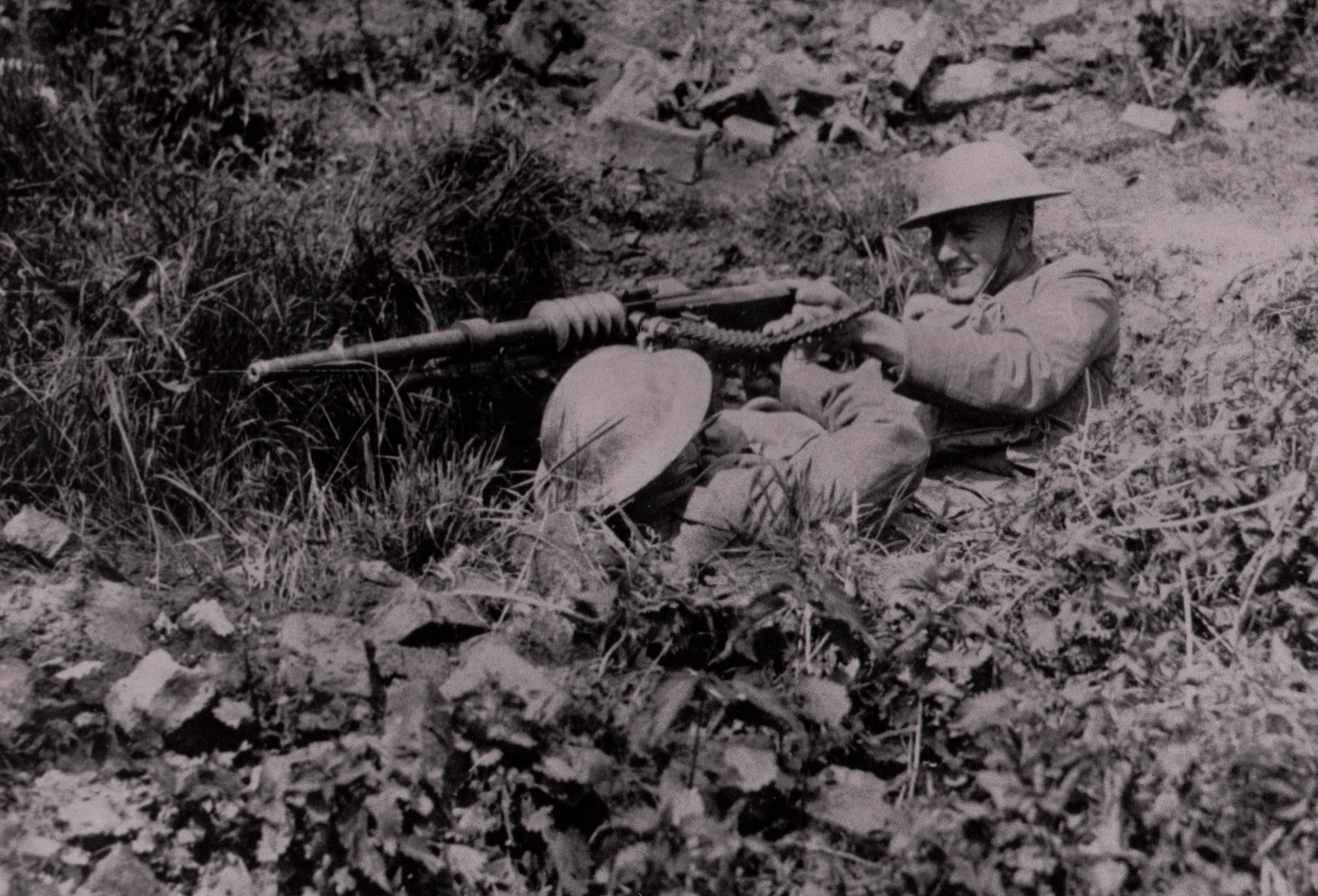
014

U.S. machine gun team, Western Front, France 1918. The men are manning a French Hotchkiss M1914 machine gun chambered for the 8mm Lebel cartridge.


Categories: World War I | 1 Comment

Gwenie’s Story: The Only Thing To Fear is…Well, Everything and Everyone.

G86A0327As you may recall, Gwenie came to me via Puppy Rescue Mission, Cassie Wyllie and an epic aerial journey that took her from Amman, Jordan to the green Willamette Valley in Oregon. Since arriving here in November 2014, Gwen has eaten one of the couches, dug up the entire back yard and redecorated the house with random things she has found in her foraging expeditions.

Most recently, she has taken to leaving piles of Legos, barbecue brushes, brooms, bits of plastic Easter eggs and other random stuff heaped before the front door. She lays next to her little offerings, waiting for our return so that she may jump all over us, thus ensuring our clothes are properly coated with muddy puppy prints.

I love this dog. I’m not sure the house is going to survive her.20150404_113333

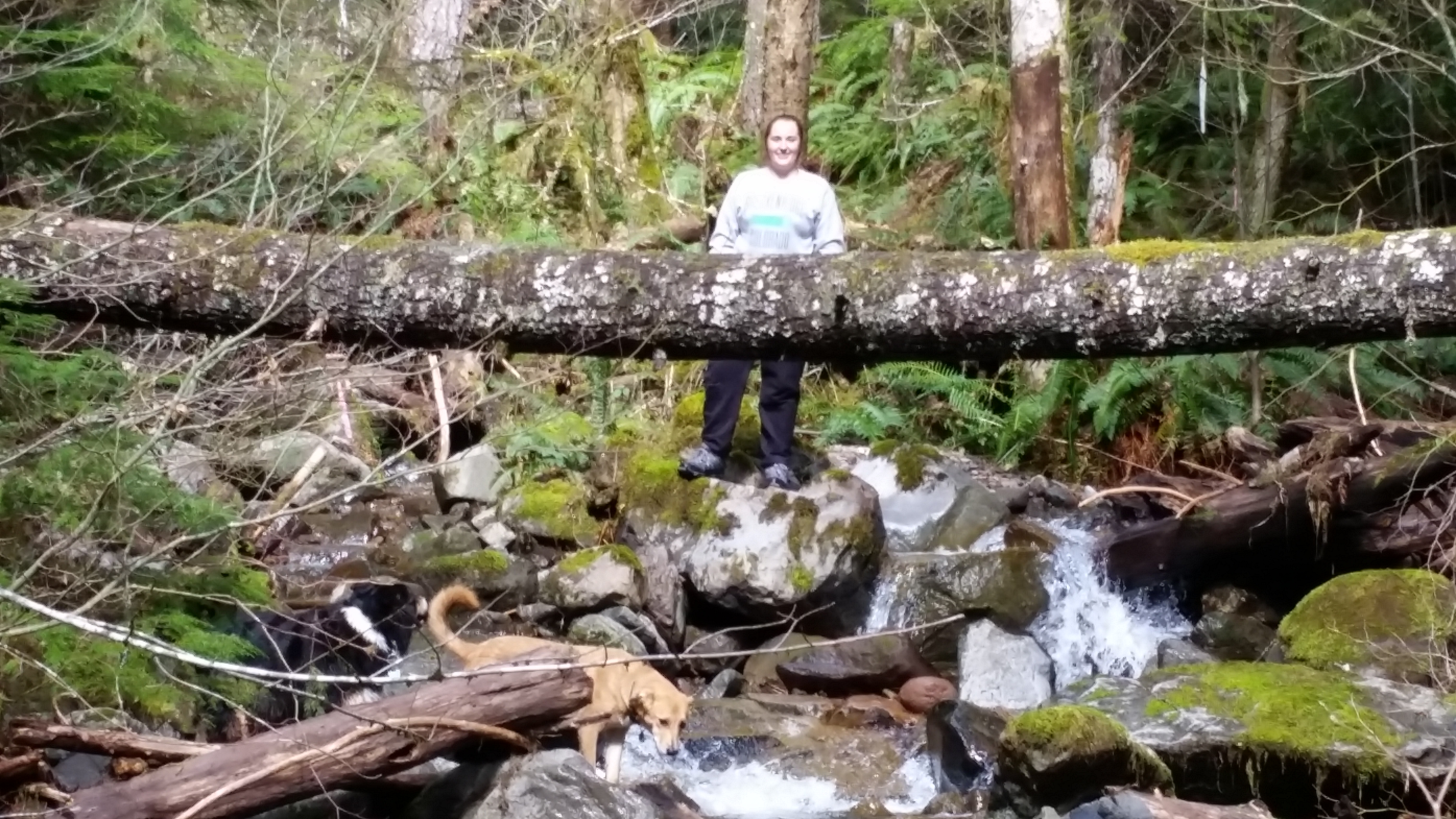
Early on, we realized this pup needed exercise. Problem: she doesn’t want to leave the yard. Next Problem: she hates car rides and vomits a lot in them. Recently, I took her up to the cabin in the Cascades I use as an alternate, back up writing lair when I need to focus. This was the second attempt to get her up there. She sat in the back of our Explorer thoroughly unhappy, howling and making whiny, gurgling sounds. About an hour into the drive, she projectile vomited all over the back of the car. I mean, barf was dripping from the ceiling, splattering the windows, etc. The smell was beyond description and almost rivaled post-Katrina New Orleans.G86A0295

She yakked twice more before I got to our woodland destination.

Walking her through the neighborhood is problematical as well. At first, the neighbor’s statue terrified her, and getting her beyond it turned into a major hurdle. I am pleased to report that we’ve overcome that one. Now, any time she sees people, or another dog she doesn’t know, she tries to jump into my arms Scooby-Doo style. Since she now weighs over forty pounds, it can be a bit disconcerting when she flings herself at me all amped on terror-spawned adrenaline.

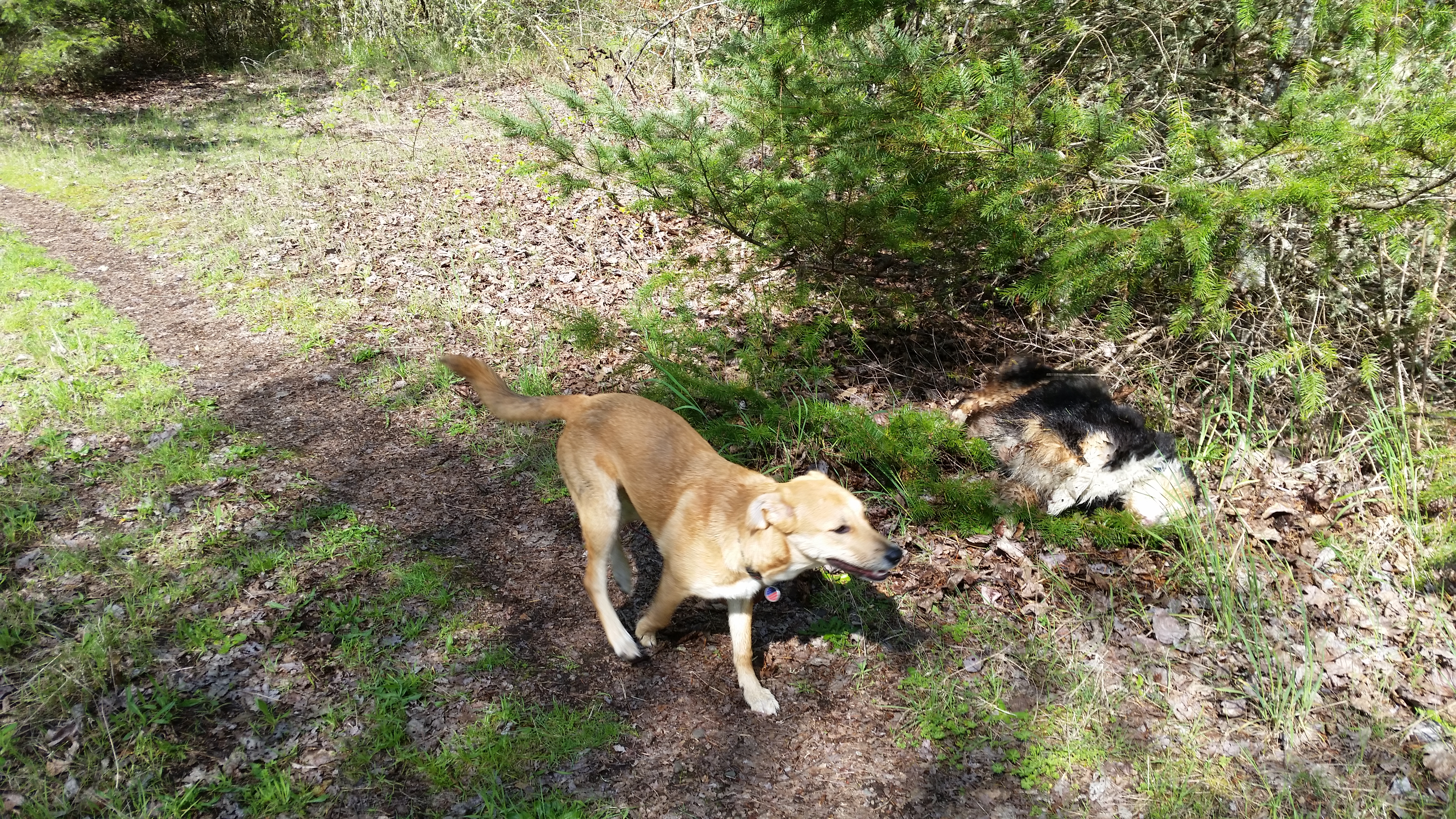
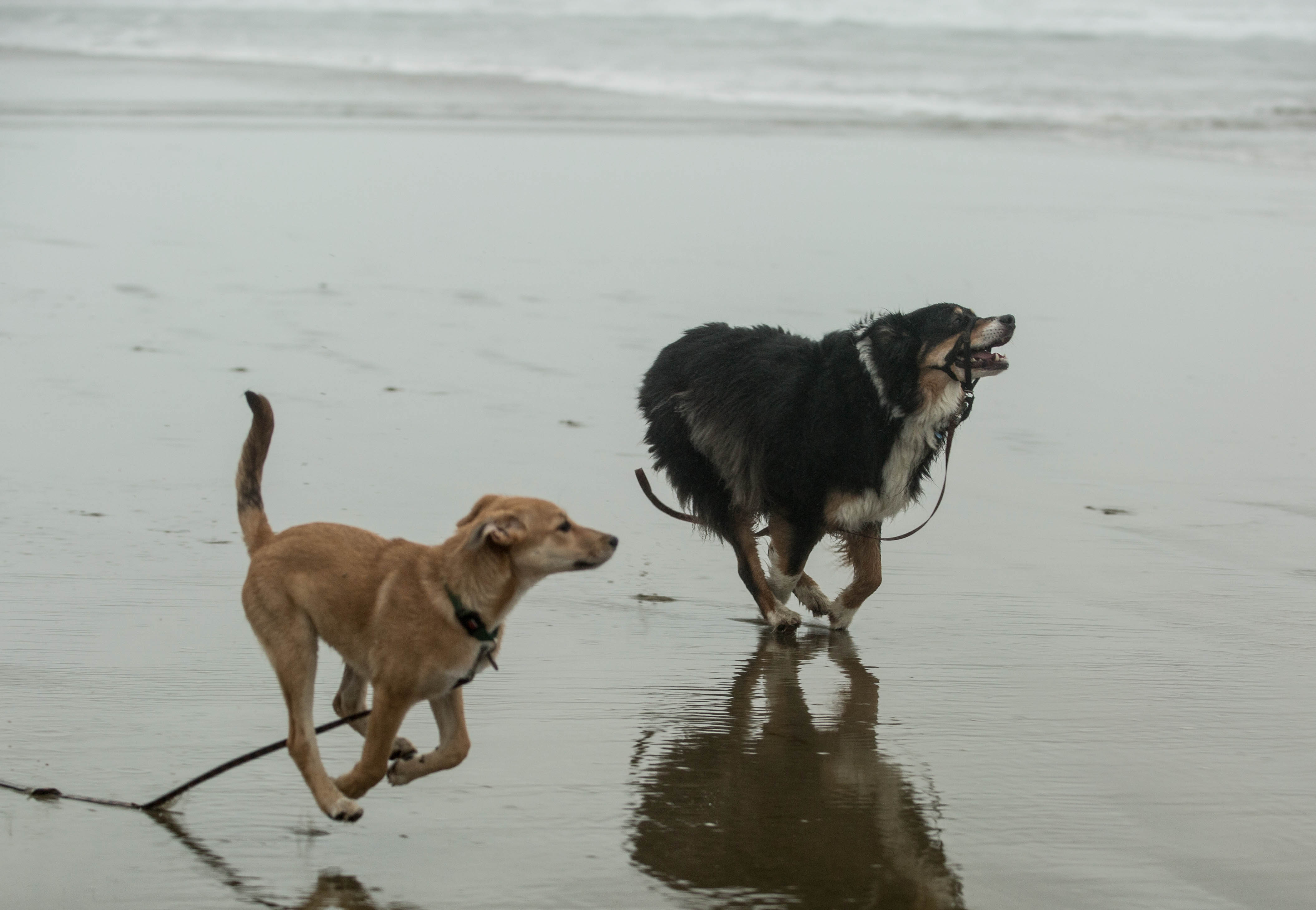
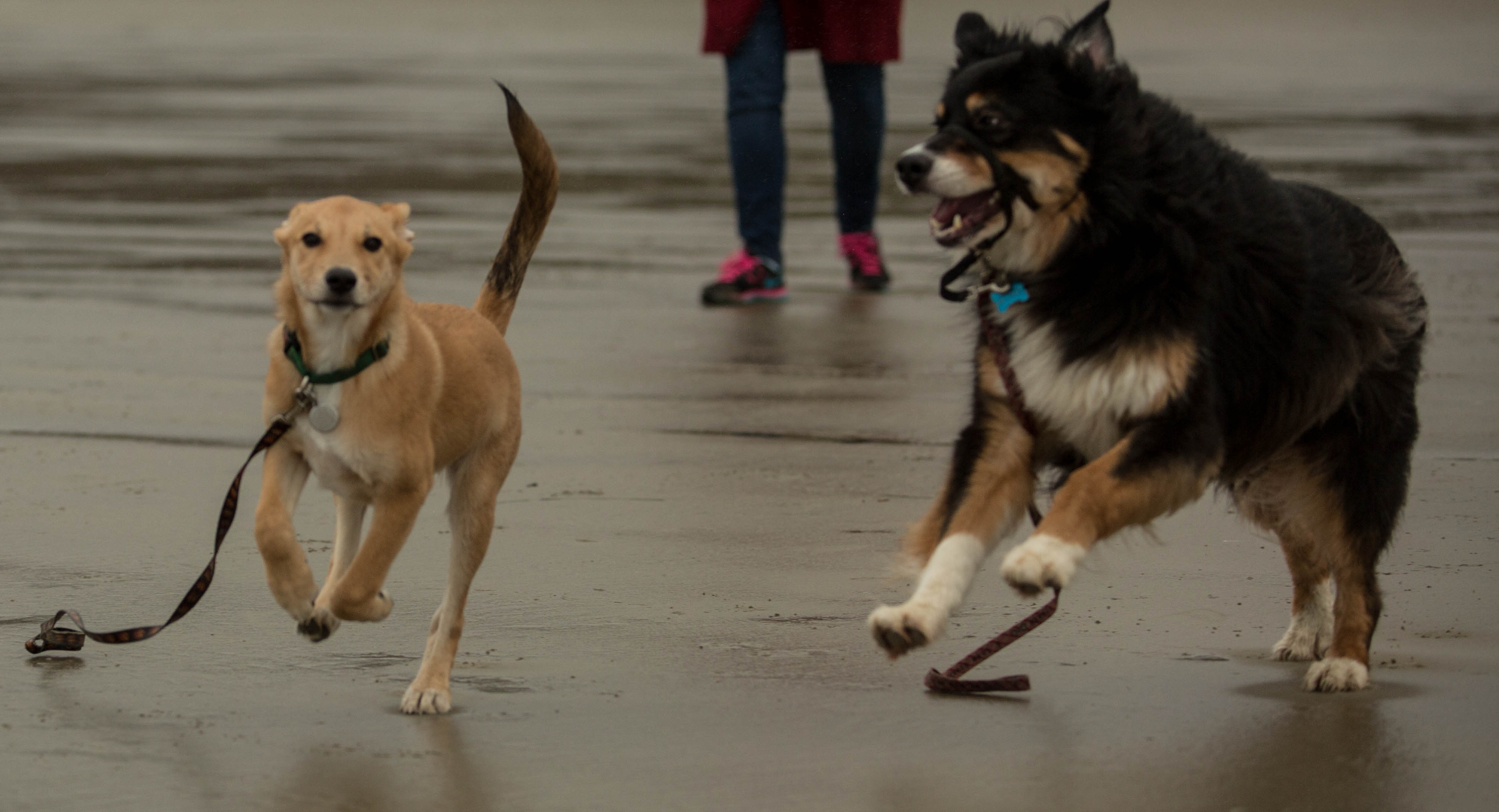
20150322_111242Now, this dynamic totally changes if Ryder is with her. Ryder is our seven year old Aussie Shepherd and fullback for the street football squad here. He is a brilliant animal, knows the difference between a pro-set and an I formation, can run a couple of pass routes and loves the pitch & sweep. He is fearless, perpetually happy, and Gwenie has fallen into his orbit. She reveres him and is so connected to him that if he leaves the house without her, she flips out and throws herself against the front door and utters long, tortured howls.

If he gets in the car, she will consent to getting in with him. If he walks through the hood, she wants to be right beside him. And if we’re out walking and he gets ahead, she will grow anxious and start bucking against the leash to try and catch up. With Ryder around, she is fearless and will adventure anywhere.20150321_145344

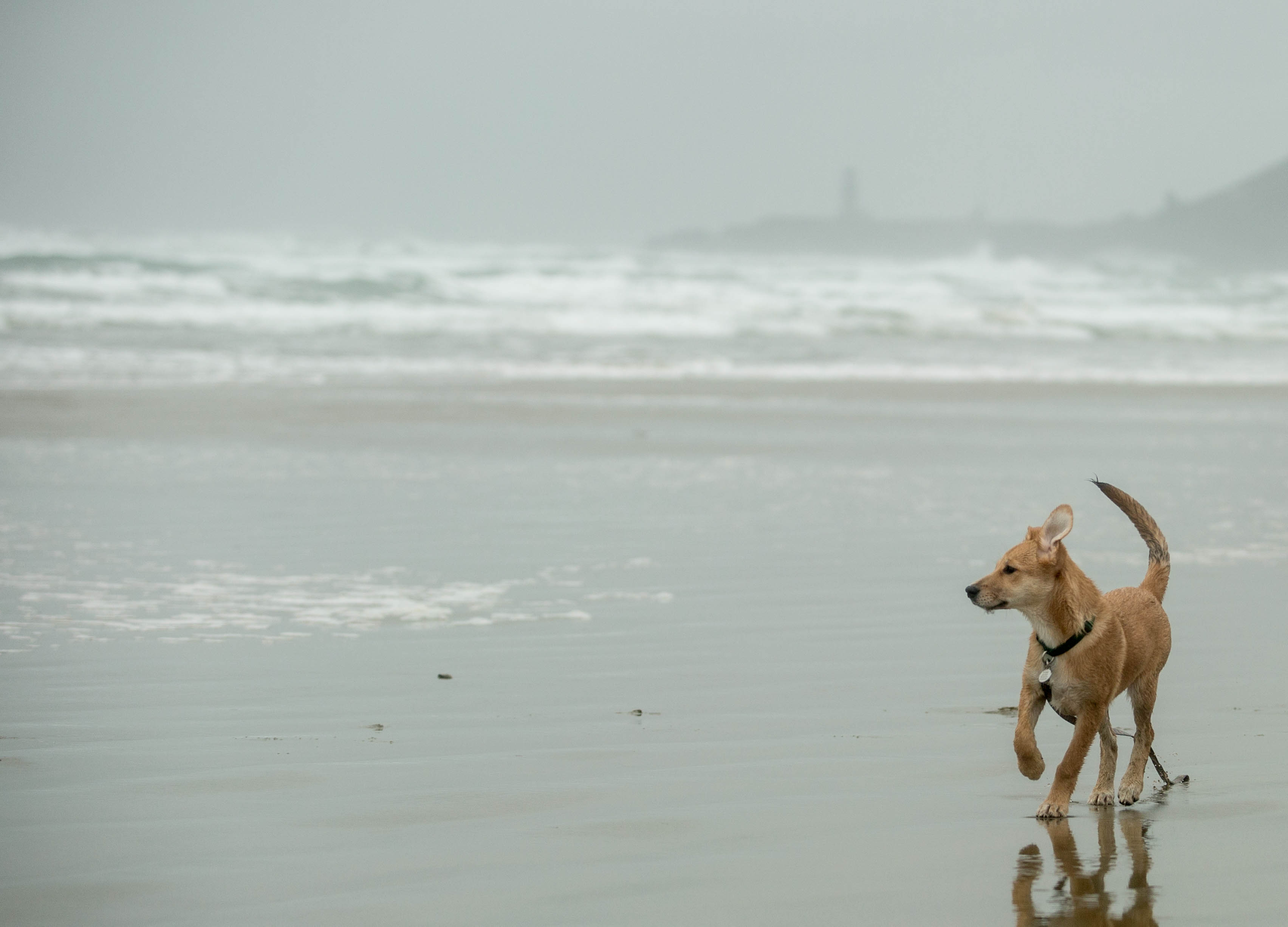
After we discovered this, we took them over to the beach in Newport. It was raining and cold, but Ryder jumped right out of the car and bolted for the water. He and my daughter, Renee, love to play in the surf together. Gwenie padded after them, unsure of the wet sand at first. Gradually, she grew emboldened. When I took her off the leash, she streaked up and down the beach, chasing Ryder and playing gleefully with him.

Alone, she never would have even gotten into the Explorer. With Ryder, well, she gets by with a little help from her friends.

G86A0275


Categories: Gwenie's Story | 1 Comment

Marine Mitchells

pbj955

A Flying Nightmares PBJ airborne over the Solomons in 1944.

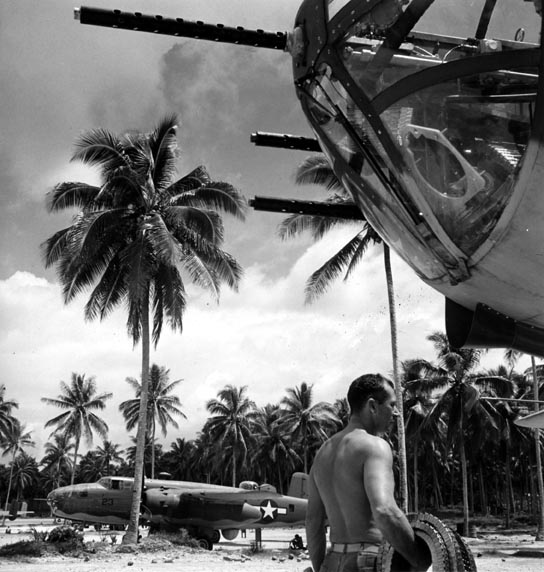
Though the exploits of the USAAF’s medium bomb groups in the Pacific are well-documented, much less has been written about the U.S. Marine aviators who flew the Mitchell in combat out there alongside the 5th and 13th Air Force B-25 units.  The Marines deployed seven PBJ Mitchell squadrons to the Pacific during the war, where they arrived first in the Solomon Islands in early 1944. The Flying Nightmares, VMB-413 earned distinction as the first PBJ outfit to enineter combat. Operating against Rabaul and Kavieng against heavy anti-aircraft opposition, the squadron lost twenty-seven men in its first sixty days in combat. Despite the losses, they had pioneered a new attack technique: While the 5th and 13th Air Force B-25’s pounded New Britain and New Ireland during daylight, the Marines of the ‘413 went in at night.

pbjs over rabaul in flak932

A daylight raid over Rabaul. 1944

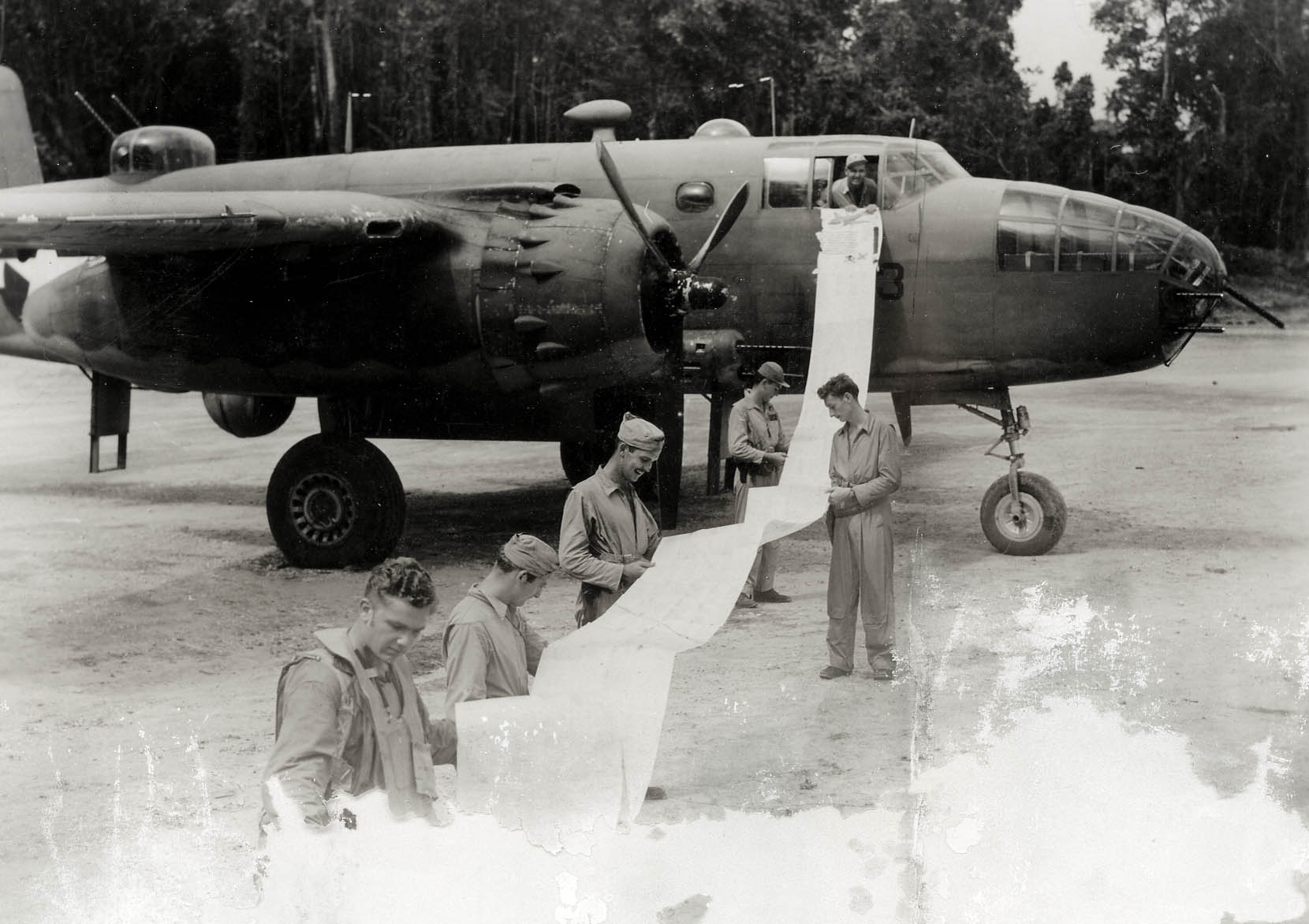
In May 1943, the Nightmares were pulled out of combat and sent back to refit and reform. VMB-423 replaced 413 that month, and they began combat flights almost immediately. One of the PBJ’s that 423 took into battle had been paid for by a war bond subscription campaign started by some school kids in Oklahoma. By the time it was finished, some 35,000 kids had taken part in the effort. The children had all signed their names on a sixty-five foot long scroll that the unit brought with them to the Solomons. On one of the squadron’s first missions, they dropped the scroll on the Japanese during a bombing raid over Rabaul.

pbj oklahoma scroll700

The Oklahoma scroll. Hard to imagine American public schools helping to raise money for combat aircraft today.

More PBJ squadrons arrived in theater during the course of 1944, including VMB-611 which flew its first night raid over Kavieng in November 1944. The following year, most of the PBJ units moved into the Central Pacific and flew from the Marianas, Iwo Jima and Okinawa. VMB-611 went to MAGSZAM–the Marine air formation that supported the Army in the Southern Philippines. VMB-611 under LTC George A. Sarles began flying from Zamboanga, Mindanao in March of 1945. In the two months that followed, they became experts at close air support, blasting targets in front of the 41st Infantry Division and other Army & Filipino guerrilla units fighting to liberate the island from the Japanese.

VMB-611 at Moret Field, Mindanao.

It was an assignment that received little recognition or publicity. The men of 611 flew constantly, wearing themselves and their aircraft out as their attacks helped minimize Allied ground casualties. They flew 173 sorties in two months. At the end of May, Sarles’ and his crew went down during a bombing run over Japanese defensive positions on Mindanao. Though some of his crew escaped the wreckage and made it back to friendly lines, Sarles was killed. During that spring, VMB-611 suffered nine missing or killed in action, nine wounded and lost four aircraft to the intense Japanese ground fire they encountered on nearly every mission.

‘611 at Moret Field, Mindanao.

VMB-611 was not relieved or rotated out of the line to give the crews a break, as had been standard practice in the South Pacific. Instead, they flew continuously in combat until August 1945 when the war ended.

One PBJ pilot noted that in 50 combat missions, he never saw a Japanese plane in the air. That lack of aerial opposition did not mean their task was an easy one. In seventeen months of fighting in the Pacific, the seven PBJ squadrons lost 45 aircraft and 173 men as they carried out some of the most difficult and unheralded aerial attacks of the war against Japan. The constant strain of night attacks and the seemingly never-ending days of flak-filled skies took a psychological toll on all the crews. At night, friends would sortie on heckling missions, only to never return. Their fates remained unknown and are largely lost to history.


Dedicated to reader David Fish, whose father was one of those PBJ crewmembers who went MIA on a mission with VMB-611 in May 1945.

marine pbj sqn024

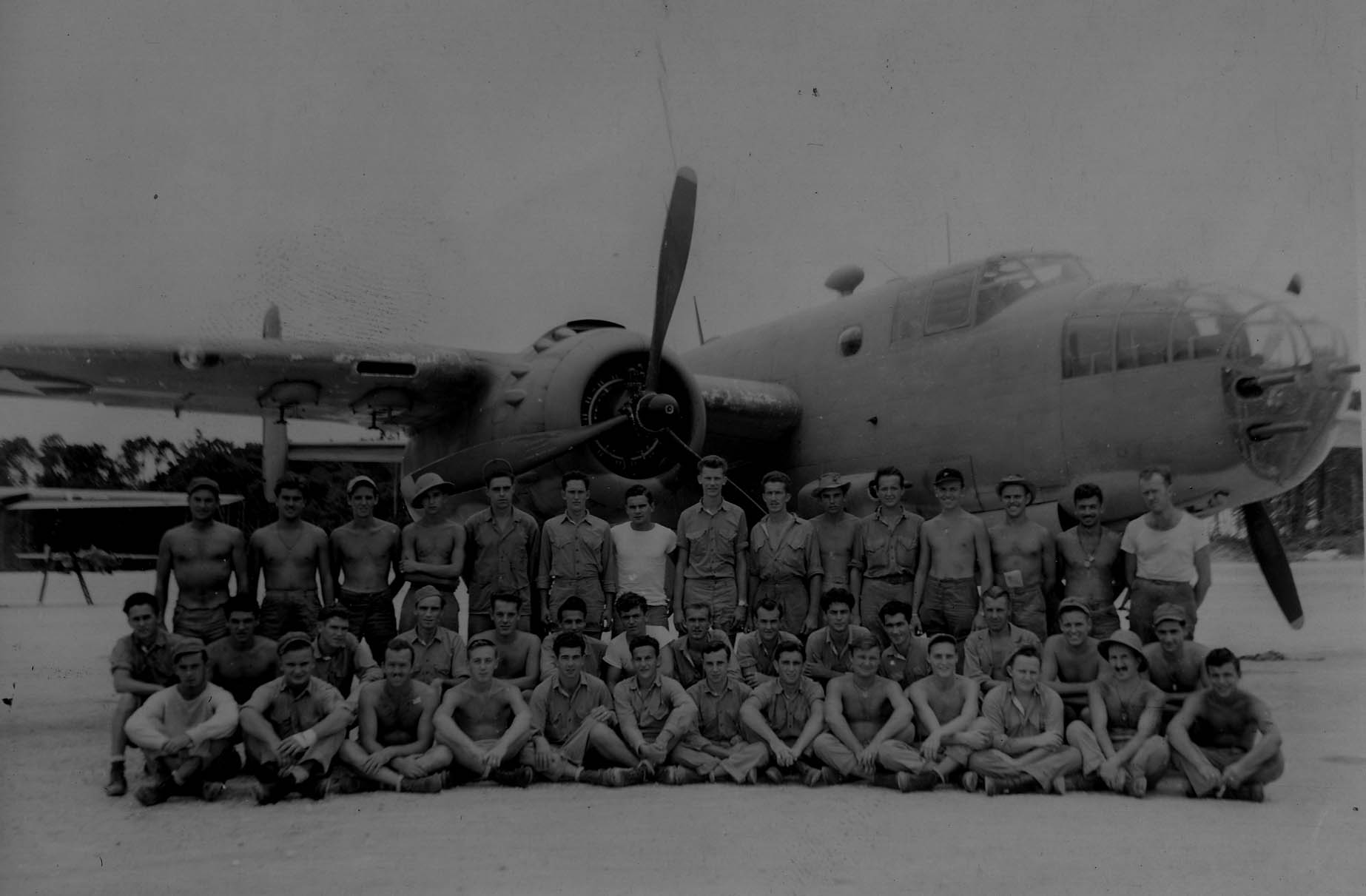
Forty-two of the fifty members of the Philadelphia South Pacific Club. All hailed from the city of Brotherly Love, and they were by far the largest contingent of men from one spot back home in the Marine Air Groups serving in the 1944 campaign against Rabaul.


Categories: World War II in the Pacific | 7 Comments

A Note to My Readers

David Fish, one of our recent visitors to this little corner of the web, lost his father in the Southern Philippines during a Marine PBJ Mitchell mission in 1945. His father served with VMB-611.

David’s note reminded me that I had some photos and film footage of Marine PBJ’s. In doing some research, it looks like the film footage is of VMB-612, and I could swear the legendary Jack Cram is in some of the sequences. Not sure which units the photos are of, but I am posting them here today in hopes David might be able to catch a glimpse of his dad. Stay tuned for another post in a few hours.

In 2009, I lost somebody in Iraq very close to me. I used to call him my unofficially adopted son. Almost six years have passed and I think about him every day. The sense of loss, the grief over his death has diminished, but I know it will never go away. His death became one of those inescapable fault lines in life that change everything. I look back, and I see my life was heading in one arc before 2009. After, it went a totally different route after his death.

I remember in the 1990’s when I was interviewing Gerald Johnson’s widow, Barbara, her grief over his death had been one of the defining elements of her entire life. It never goes away. My friendship with Barbara gave me the first insight I had into the cost to those left behind in the wake of war. I was so young and naive back then, thinking that the war was a great and tragic adventure, the source of endless stories. Barbara suffered through seven decades of pain after Ged died in 1945. I get that now.

Jeez. Even writing about this chokes me up.

Anyway, whenever I can, I’ll do what I can for those of you out there who have lost someone in service to your nation. I’ve collected about 45,000 photographs over the years and have a lot of film footage as well, and I’ll do my best to find images of your loved ones, or at least of their units.

Regards,


John R. Bruning


marine pbj sqn024


Categories: Writing Notes | 7 Comments

The Lost, Last Letter

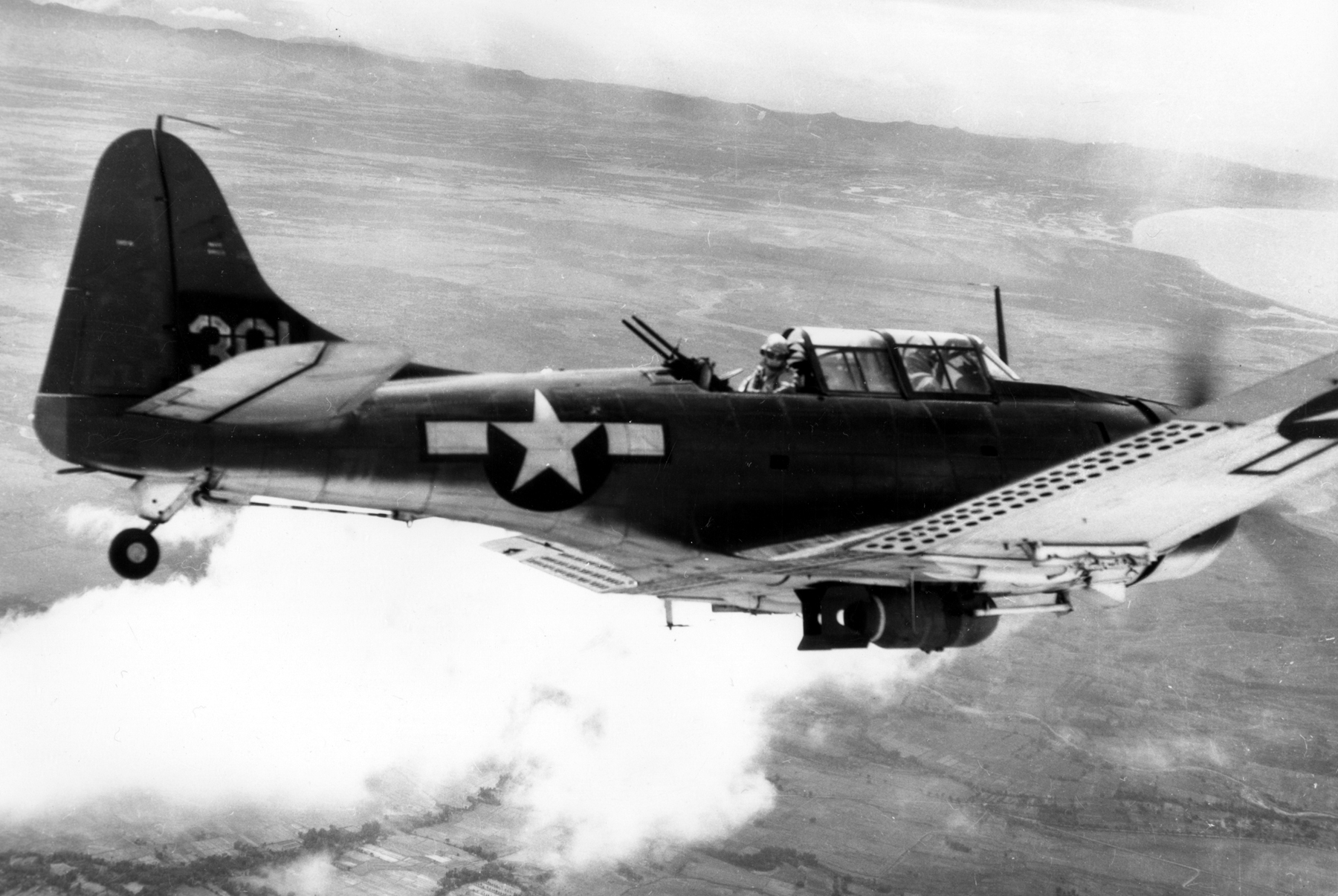
Guadalcanal SBD VMSB-231 4x6

A VMSB-231 SBD over Guadalcanal, late 1942.

Frank Christen grew up on a Depression-Era farm just outside of tiny Jerseyville, Illinois, graduating from the high school there in 1938 at age 19. He scraped enough together to continue his education at Washington College in St. Louis, then transferred to the University of Texas at Austin. In June 1941, he enlisted in the USNR and was accepting into the flight training program. He learned to fly at Grand Prairie, Texas and graduated the following year from NAS Corpus Christi on May 20, 1942. He was commissioned a 2nd Lieutenant in the Marine Corps and assigned to VMSB-142, a Douglas SBD Dauntless dive bombing squadron.n3n corpus christi color 4x6

While at the University of Texas, Frank had met Ruth Clark of Corning, New York. He and Ruth were married on July 30, 1942 just before he was assigned to NAS Coronado in San Diego.  The couple lived together there in Southern California for a brief few months before Frank shipped out to the South Pacific in early November.

He reached Guadalcanal several weeks later with VMSB-142 while the fighting in the southern and central Solomons still raged fiercely. He twenty-three years old and flung to the farthest reaches of the planet, far from friends and family. Like the others in his squadron, he did his duty to the utmost.

Henderson Field

Guadalcanal.

On December 16, 1942, he was ordered to strike targets around Munda, New Georgia. Four SBD’s took off from Henderson Field, Guadalcanal at 2105 hours. This was Christen’s third combat mission in two days. He’d bombed Munda with his squadron the day before, and attacked a Japanese vessel early that day on the 16th. This was a mixed force of Dauntlesses from both VMSB-132 and VMSB-142.

During the flight through the growing darkness, the formation ran into a rain storm.  Christen and his section leader, Lt. Jackson Simpson, lost the rest of their flight. The other two SBD’s continued on and made a night bombing attack on the Japanese-held airfield at Munda.ijn dd under attack sbd palau 44 300 dpi c

Christen and Simpson discovered a Japanese destroyer in the waters off New Georgia. Christen made the initial run on the destroyer and illuminated it with flares. Fully alerted, the Japanese anti-aircraft crews poured fire up into the night. Simpson rolled in on the ship and scored a direct hit. Christen followed a moment later.

That was the last Simpson saw of the Jerseyville native’s SBD. It vanished in the attack.

Fourteen days later, a War Department telegram arrived at Ruth Clark’s place in Austin and delivered the news that Frank was missing in action. She packed up and headed straight for Frank’s family in Illinois to await further word. Weeks passed. Nothing. At the end of January, she returned to Austin for the next school term.

Months passed without any word. One can only imagine the family’s torment. In August, 1943 Ruth received a letter informing her that Frank had been awarded the Distinguished Flying Cross for his attack on the destroyer that night. After that, there was no further word.

sbds iv 300 dpi cin the fall of 1943, Ruth returned to Illinois and spent time with the Christens. Then she went home to Corning to see her own parents. Waiting for her in Texas was a letter from a stranger with an overseas APO address. The day she returned to Austin, she tore it open and read the words every devoted wife longed to read. The letter came from an American serviceman somewhere out in the Pacific who had tuned into a Japanese short wave radio broadcast. The announcer was reading in English the names of Americans captured in the South Pacific. Included in that list was Frank Christen and the Japanese even read out Ruth’s address during the broadcast.  Ruth called Frank’s family in Illinois and related the incredible news.

Three weeks later, the War Department declared him killed in action.

Frank Christen never returned home. His body was never located, and his fate was never learned. There is a plaque honoring him in the MIA section of the American cemetery in Manila, PI.

henderson field series sbd over guadalcanal 4x6

An SBD over Guadalcanal late 1942.


Today, I was sitting in a coffee shop in Dallas, Oregon and reading through a pile of documents in hopes of finding another story for this website. I tumbled across a translated Japanese report captured in Manchuria in May 1943. It included Frank Christen’s interrogation report. With considerable help from my Marine Corps historian friend, Mark Flowers, we identified Frank (his name was not included in the document, just his date of birth and educational background) and we were able to find out more about his life and last mission.

He’d been shot down during his bomb run over the Japanese destroyer. His SBD crashed into the water and his tail gunner, PFC Glenn Shattuck from Granby, CT, was killed. Though wounded by anti-aircraft shrapnel, Frank got out of the aircraft and discovered the plane’s life raft floating nearby. He inflated it, got in and began rowing toward the nearest island. It was 2300 hours, December 16, 1942.

sbds cent sol bulldog sqn 300 dpi c 8x10

Marine Dauntlesses over the Central Solomons.

He paddled ashore and looked for help. Calling out in the night, he failed to find any locals. Concluding that the island was uninhabited, he decided to keep moving.

He set out to sea again in his raft, intending to make it to another nearby island. For 18 hours he bobbed in the waves, paddling as his waning strength allowed. Finally, he made it on the afternoon of December 18th. He came ashore and found some coconuts to eat. Not long after, two Japanese soldiers walked out of the jungle and spotted him. They ordered him to surrender, but he bolted and ran.

A search ensued. Later that day, the Japanese found Frank high in a large tree next to the island’s jetty.

He surrendered and was taken to Rabaul, New Britain and interrogated. Christen was asked about his family–he had five brothers and two sisters–where he attended school, how he joined the Marine Corps and even what he thought of African-American military personnel.

The interrogation was thorough and probably brutal. He was asked about the number of aircraft at Guadalcanal, the performance and bomb loads of his SBD Dauntless. He was asked about the resentment between Marines and the Army, and about the morale of the forces on Guadalcanal in general. He answered the questions.

At one point, his captors wanted to know what Americans thought of the Japanese. He answered honestly: that he and his comrades had little understand or knowledge of Japan before the war. After Pearl Harbor, they had no doubt the United States would prevail. But then, in the South Pacific, they discovered the true strength of the Japanese. He felt that America had completely underestimated the power and capabilities of the Japanese Navy.

5th af b25 raid rabaul mar 5 44 4x6

Rabaul under 5th Air Force B-25 attack, March 1944. Most of the POW’s at Rabaul did not survive the war.

Toward the end of the interrogation, Frank was asked if he’d seen any Japanese prisoners of war himself while on Guadalcanal. He told them that there were a few kept near Lunga Point. One Japanese soldier was captured after he’d been badly wounded. The Marines had taken him to an aid station, where a doctor had been working on him. The soldier had not been properly searched, and while on the table, he pulled out a grenade and detonated it, killing himself and the doctor trying to tend to his wound. The interrogation report added, “In general as soon as a Japanese soldier is captured, he commits suicide. For this reason, it seems that there are only a few PW’s.”

After the pulled all the information they could out of Frank Christen, he asked if he could write a letter home to his wife. His captors agreed and promised him they would deliver it.

It never reached Ruth.

I read the brief letter today seventy-three years after this scared, traumatized young American wrote it and I wondered if there is still anyone out there who loved him and would want to see it. So, in case there is, here it is.  The last letter home of an American doomed to die as a prisoner of war somewhere in the South Pacific.

To My Beloved Wife,

I am writing you a short note to let you know that I am a Prisoner of War. They (The Japanese Army) are hoping that this letter will be able to reach you, and I of course am hoping this reaches you. Please let my mother know as soon as possible. You can send me packages through the International Red Cross.

They (The Japanese Army) are very kind to me. You will undoubtedly hear many things, but don’t ever believe them. I was injured by shrapnel but it was mostly a case of fright.

I must close now. I love you. I will be able to return when this war is over. My love for you will never change.

Frank


sbds ii 300 dpi c

Please forward this story far and wide. Share it on as many forums and sites you can think of so, if Ruth is still alive, we can get her Frank’s final words.


Thank you,


John R Bruning


Categories: The Missing, World War II in the Pacific | Tags: , , , , , , , , , , , , , , , , , , , , , , , , , , , , | 17 Comments

The Crusaders

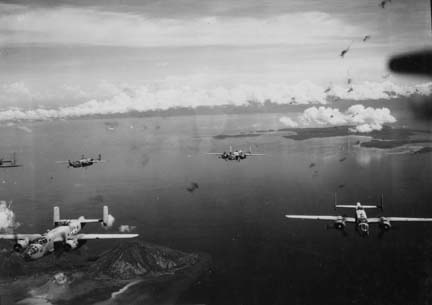
The 42nd Bomb Group served as the only B-25 Mitchell outfit in the Thirteenth Air Force during World War II. Going into combat in the Solomon Islands in the summer of 1943, the Crusaders took part in the drive to Bougainville and the isolation of Rabaul. After that campaign, the Thirteenth Air Force moved to New Guinea and became part of FEAF. The 42nd finished the war operating in the Southern Philippines and supporting not only the ground effort there, but also the invasion of Borneo in the Dutch East Indies.

Check out A. Gray’s page: http://waynes-journal.com/about/ for a look into the the day-to-day life of a 42nd Bomb Group tail gunner. It is a terrific site that gives you remarkable insight into the experiences of our American aviators in the SWPA during the war.

In honor of A. Gray and his remarkable website, I’ve posted some photos of the group that I’ve collected over the years:

42nd bg skip bomb practice new caledonia045

A B-25 crew from the 42nd practices skip bombing at New Caledonia in the summer of 1943.


42nd bg sqn co col harry wilson b25 nose art guadalcanal371

Colonel Harry Wilson in the cockpit of his 42nd Bomb Group B-25 at Guadalcanal, 1943.


42nd bg attacking bougainville 1943065 4x6

A dramatic shot of the 42nd during a bombing raid on Bougainville in the fall of 1943.

b25s 42nd bg munda Field 1943 8x10

The Crusaders operating from Munda FIeld, New Georgia during the climactic battles for the Northern Solomons in the fall of 1943.

42nd bg b25 cape sansapoor 4x6

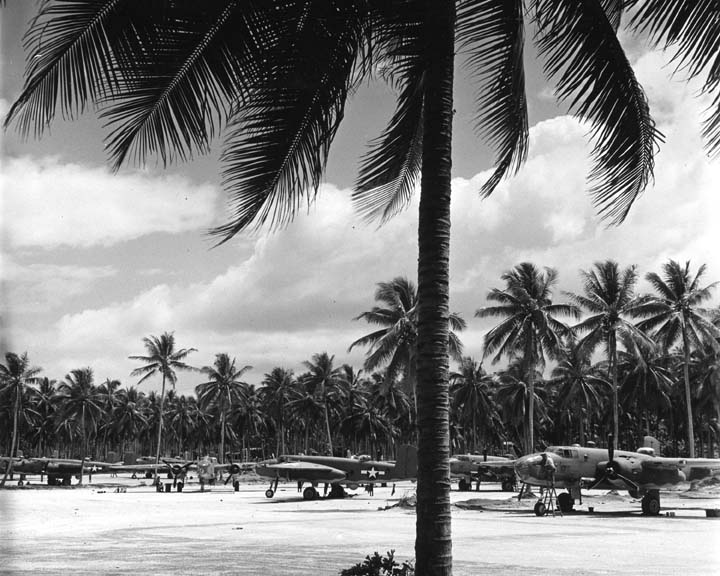
The Crusader’s flight line at Cape Sansapor, New Guinea.

42nd bg b25 bombing sandakan borneo 4x6

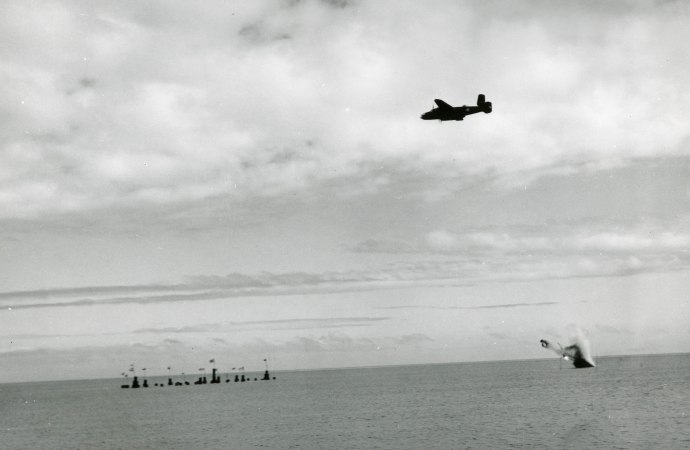
A 42nd Bomb Group Mitchell roars off target during a low-altitude strike against Sandakan, Borneo in the summer of ’45.


42nd bg 13th af b25 crew in water zamboanga619 8x10

A 42nd Bomg Group B-25 crew gets into their life raft after ditching off Zamboanga, Mindanao in 1945.


Categories: World War II in the Pacific | 18 Comments

Blog at WordPress.com.