The Day the U.S. Navy Bombed a Russian Tanker

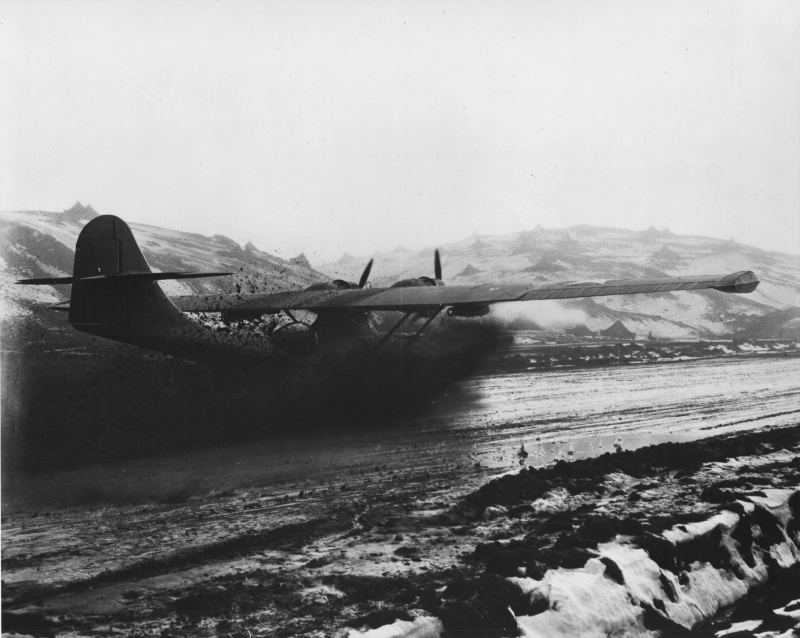
A VB-136 PV-1 Ventura takes off from Casco Field, Attu Island in the fall of 1944.

The morning of August 27, 1944 was a cold one (they all were) on Attu Island in the Aleutian chain. There on the edge of nowhere, Fleet Air Wing Four’s Lockheed PV-1 Ventura bombers carried on a fitful war against Japan’s northernmost bases in the Kurile Island group. Whenever the weather cooperated, the Ventura crews would sortie forth to hunt for shipping to bomb and land bases to attack.

Lt. Everett Price and his crew from VB-136 took off that morning just after 0700, bound for Otomari Zaki, one of the islands in the Kuriles. Price had orders to strike at any Japanese shipping encountered, or supplies discovered on the island there. It would be a long flight, and the Venture carried one thousand four hundred and fifty gallons of fuel to feed its twin Pratt & Whitney R-2800 radial engines.

FAW4 VB136 PV1 Ventura Airborne 304

A VB-136 Ventura on mission.

At four thousand feet, Price tried to gauge the wind speed that day by looking down at the waves below. After studying the water, he concluded that the breeze was about half as intense as the 30 knots they had been told to expect earlier that morning. He told his navigator, Ensign George Campbell, to factor that change into his calculations. Not long after, Campbell fixed their position with a sunline and LORAN and he concluded they were 450 miles from their target area and about 175 minutes out. They were also off course to the north of their intended flight path. Campbell made some corrections and passed them to Price.

Later that morning, they spotted the Kamchatka Peninsula, watching it pass by on their starboard side. Flying in and out of clouds, they finally sighted a tall volcanic mountain that they thought was Araido To. A few minutes later, after four hours in the air, somebody called out two vessels off to starboard. Price made them out, perhaps twenty-five miles away. Towering clouds loomed in the distance to the south, and a fog bank hugged the wave tops near the two ships. They were close to the coastline of one of the Kurile Islands, which the aviators thought was Onekotan.

Price and his copilot, Ensign Francis Praete, banked the PV-1 toward the two vessels while the crew studied them with binoculars. One looked like a Japanese picket ship. The other was a tanker–a prime target for the Navy crews.
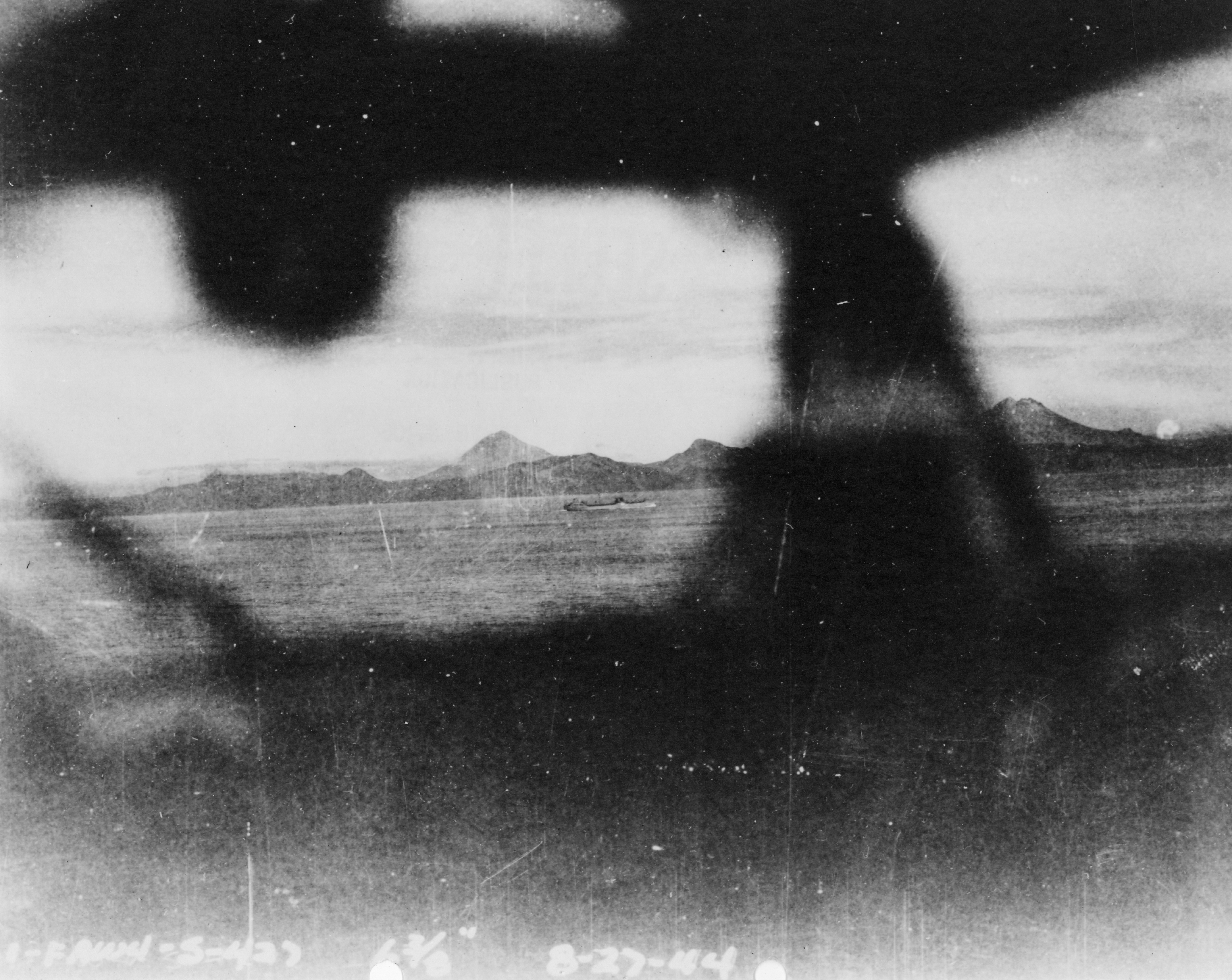
faw 4 after action reports621

One of Gavin’s photographs that he shot with the K-20 while crouched between Price and Phaete. Here, the PV-1 crew is making their attack on the tanker.

Game on. Price pushed the yoke forward and dove to the attack. They dropped down to seventy-five feet and leveled off. The tanker seemed to be making about ten knots on a northeasterly course, and Price positioned the PV-1 for a beam attack.

Four thousand feet from the target, Price opened fire with the Ventura’s bow guns. He two second burst fell wide of the ship, chewing up the swells just forward of the tanker’s bow. He corrected, and hammered the vessel with a long, eight to ten second burst. The plane’s five .50 caliber machine guns spewed out about five hundred rounds, tearing through the bridge and superstructure, puncturing the hull and causing extensive damage.

Closing at 240 knots, Price kept firing, walking the nose back and forth with rudder inputs to try and suppress the anti-aircraft fire that was now directed against them. Several guns were located fore and aft on the tanker, and while they were not using tracers, the crew could see their muzzle flashes and feel near-misses buffet their aircraft.

This was the critical moment. Price remained laser-focused on executing their bomb run, Praete next to him on the controls as well. Between them crouched Paul Gavin, the radioman. He held a K-20 camera in hand and was shooting photographs of the attack.

The final seconds of Price’s bomb run. Photo again taken by Gavin.

The intercom suddenly lit up with chatter, but Price was so focused he couldn’t make out what was being said. Then Gavin suddenly pounded on his shoulder. Price ignored him. The tanker swelled before them, its masts well above the PV-1. One mistake now, and they’d careen into the ship and all be killed.

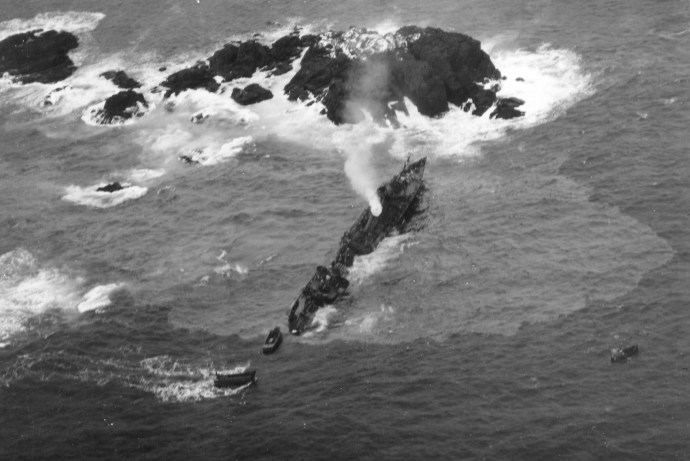
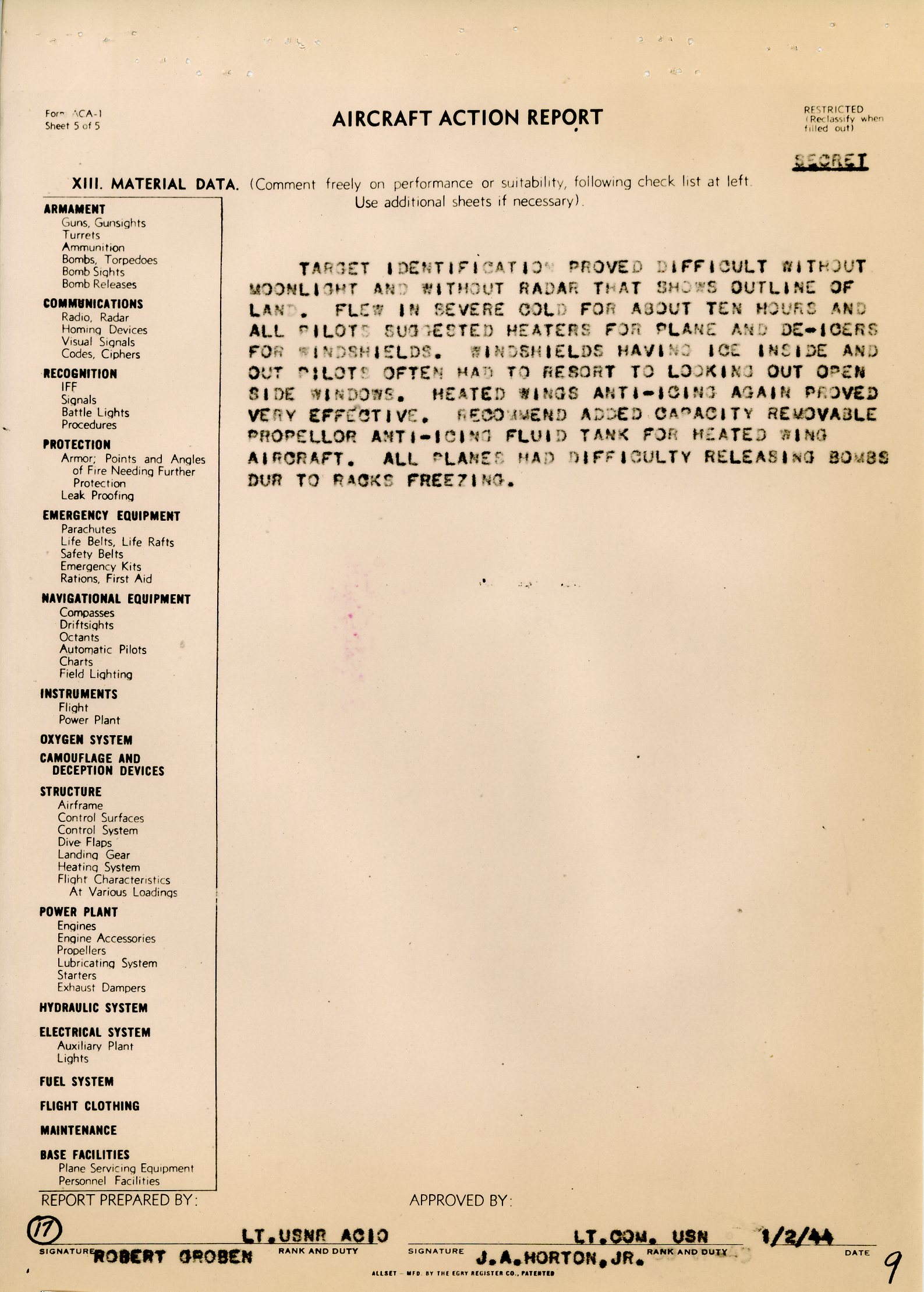
Lieutenant Price triggered the bomb release. Three bombs were supposed to fall out of the bay at hundred foot intervals. The first, an incendiary, failed to arm. The second, a 500lb General Purpose bomb, hung on the rack and failed drop. The third, another incendiary, released perfectly. It struck the tanker directly amidships and punctured a meter square hole in the hull about six feet above the waterline.

Price pulled up at the last possible moment, narrowly missing the tanker’s mast. As they cleared the area, Gavin snapped photos of the vessel burning, smoke boiling from the direct hit. It was a masterful masthead level bombing run, the sort perfected by the 5th Air Force, then passed on to the U.S. Navy’s bomber squadrons.

Except that the tanker was the Russian USSR Emba, a Suamico class fleet oiler built in Portland, Oregon. Completed in May 1944  she was handed over to the Russians as part of our Lend-Lease program at the end of June. The Russians had crewed it for only two months when Price’s crew put a hole in her hull.
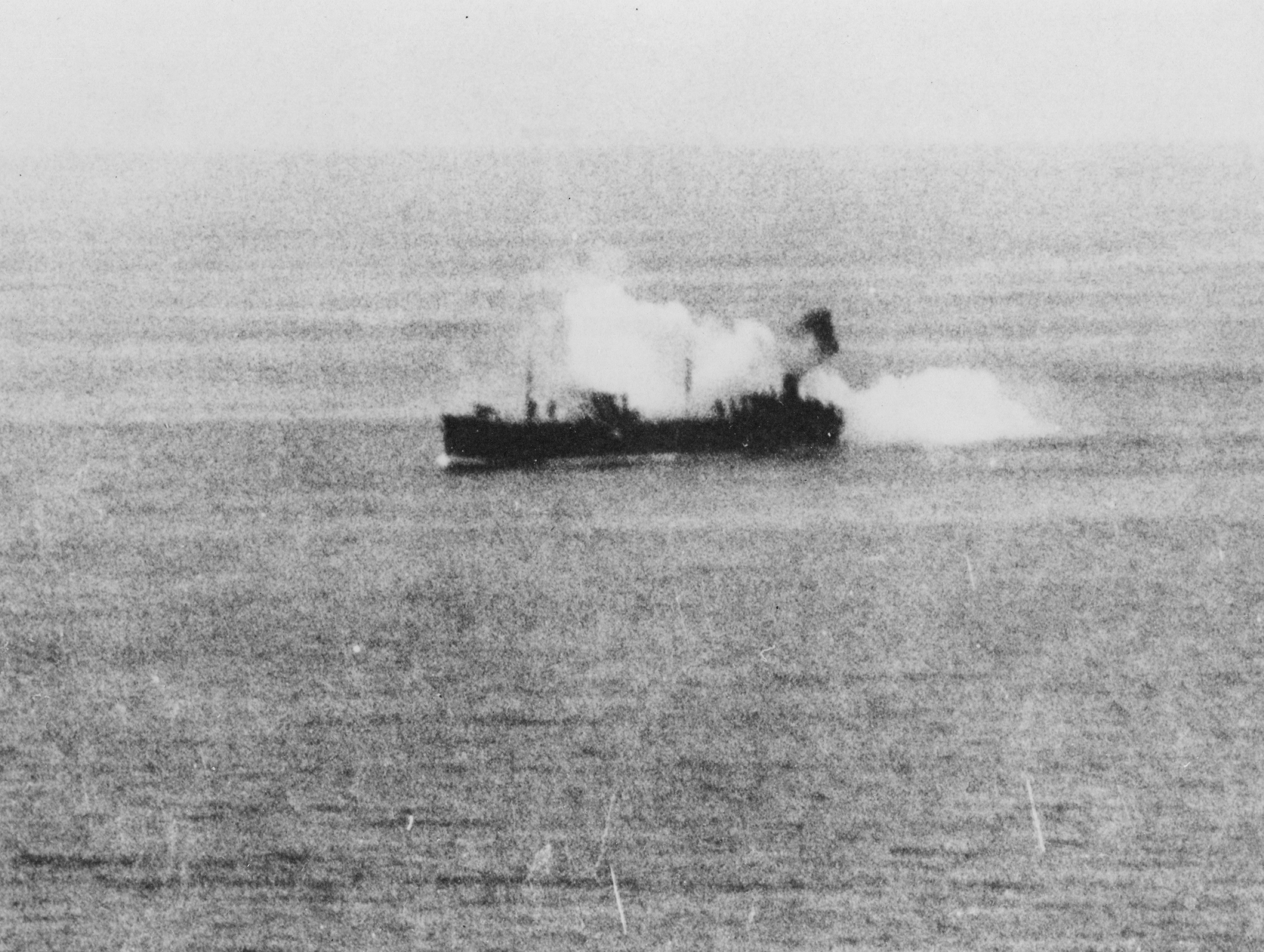
Moment of impact. Price’s third bomb strikes Emba amidship. Emba survived the war and the Soviet Union turned her back over the United States in 1948. She was renamed Shawnee Trail, AO-142 and served through the 1960s in both the USN and the merchant fleet. She was sold for scrap in 1973.


It turned out that the chatter on the intercom during the bomb run came from the plane captain, Paul Knoop, who had spotted “USSR” written on the Emba’s side. Gavin also spotted Russian markings, which was why he started hitting Price’s shoulder.

When the PV-1 returned to Casco Field on Attu, Price found himself in the middle of an international incident. It turned out the crew had erred in their navigation and had wandered over the Russian sealane between the U.S. and Vladivostok. This sealane accounted for 50% of all the material sent by the United States to the Soviet Union during the war. Gasoline, oil, trucks, raw materials, railway cars and locomotives were all delivered via the Pacific Route. Armaments, aircraft, ammunition were all prohibited due to the touchy neutrality issues between Russia and Japan, so everything carried through Japanese waters had to be non-combat related.

An investigation commenced almost at once. A U.S. Navy inspection team examined the Emba on September 2, 1944, counting over a hundred and fifty bullet holes on the bridge alone. Other rounds pierced the hull and narrowly missed the ship’s doctor. Fortunately, the bomb hit did not compromise the Emba’s watertight integrity and caused no casualties.

Price and Phaete were disciplined for their mistake, though what that discipline was is lost to history now. Fleet Air Wing Four redoubled its ship identification efforts, and went over the recognition signal procedures with all air crew.
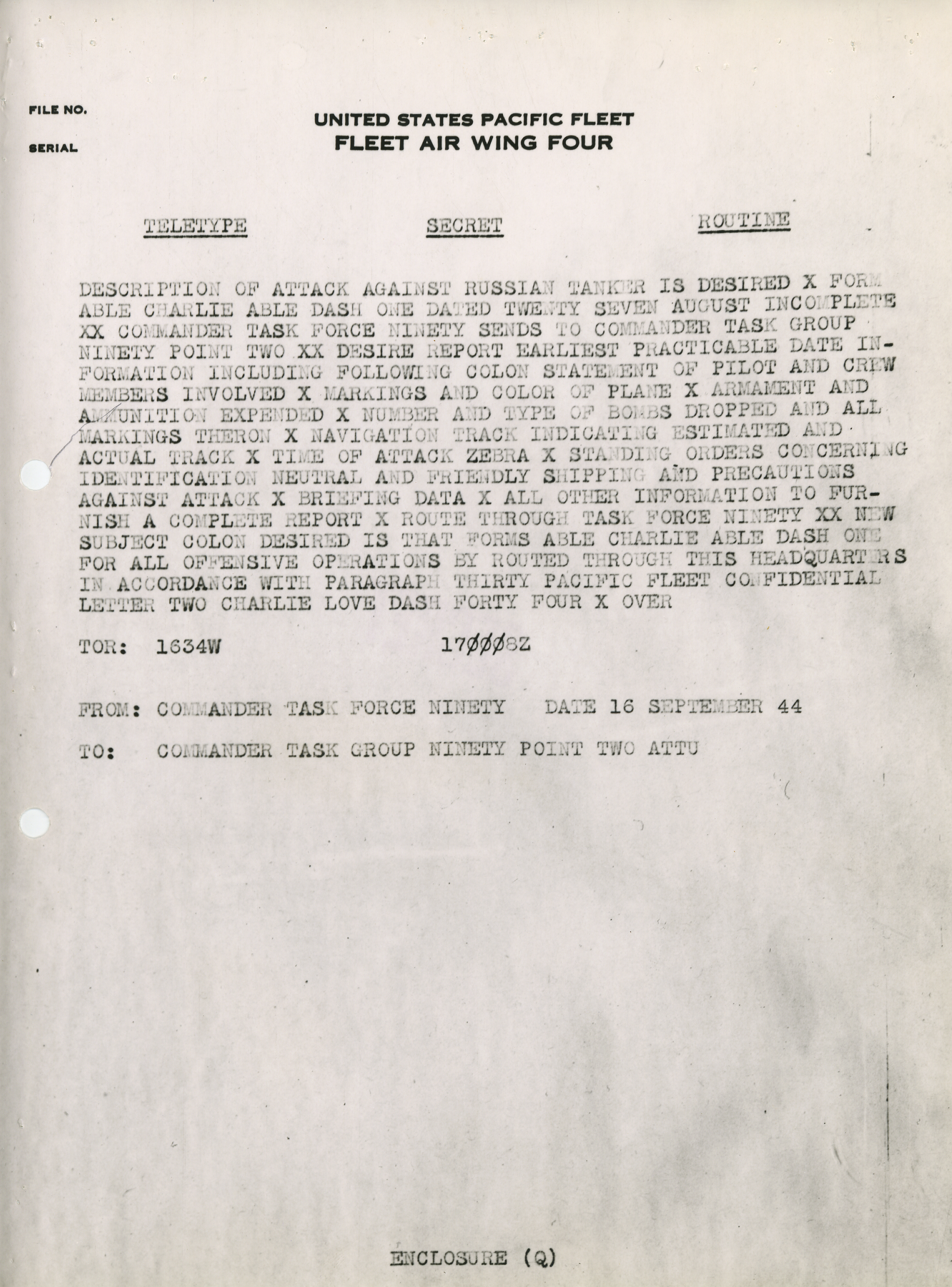
The message that no squadron commander wants to receive. Ever.



Categories: World War II in the Pacific | 6 Comments

Photo of the Day: Red Army Link Up, Wittenberg, Germany 1945

Recently, we’ve received a lot of traffic from the Russian Federation. Today’s photo is in honor of all of our Russian readers:


Russian Series WWII  Russian Soldiers with Liberated British and Australian Paratroopers After Link Up with 9th Army Wittenberg germany 043045  (1 of 1)

April 30, 1945. Russian Soldiers liberate weary Australian troops who’d been POW’s of the Germans in a camp near Wittenberg. The photo was taken as the 9th U.S. Army linked up with the Red Army’s units around that city. The photo was taken by the 168th Signal Corps Company’s George J. Barry.


Categories: World War II in Europe | Tags: , , , , , , , | Leave a comment

Saviors: Flying Dutchmen B-17’s

air sea rescue b17 ie shima047

A Flying Dutchman B-17 awaiting its next mission at Ie Shima in August 1945. 5th Rescue Group.


The 401st Bomb Group over Germany, December 30, 1943.


As the war ended in Europe and the air offensive against Japan became the focus of the USAAF’s last efforts in WWII, the B-17’s day as America’s work horse bomber came to an end. Most of the Forts still remaining in service with the 8th and 15th Air Forces would soon be scrapped or sent to bone yards. A few dodged that fate when the USAAF converted about 130 to perform a much needed and unheralded role in the Pacific.

The vast distances between targets in Japan and the B-29 bases in the Marianas assured that many crippled Superforts would end up in the Pacific.

b29 tail t 4x6Submarines were posted along the strike routes to help save the crews that went into the drink, but the USAAF needed their own Search And Rescue squadrons to help find those men. A number of air rescue squadrons were already in service in the Pacific, mainly flying the venerable PBY Catalina. In the final months of the war, the USAAF began employing modified Forts in the SAR role.


A 5th Rescue Group B-17H at Ie Shima, July 27, 1945


Dubbed the B-17H “Flying Dutchmen,” the planes carried an A-1 Higgins lifeboat under the fuselage. Twenty-seven feet long, self-bailing and self-righting, these boats could be dropped by the Forts to downed crews bobbing on the Pacific swells. Three parachutes would deploy and help ensure the boat landed in the water safely. Once aboard, the wet airmen would find blankets, provisions and survival gear waiting for them, all carefully stowed in the A-1.

The Flying Dutchmen also carried search radars in place of chin turrets. Operating from Ie Shima Island in the final weeks of the war, the Flying Dutchmen of the 5th Air Rescue Group saved a number of B-29 crews before the Japanese surrender. They continued in USAAF and USAF service, performing their vital duties in the Korean War and beyond until 1956. After 1948, they were redesignated SB-17G’s.


Professor Edward Mooney has shared a link that shows how the Higgins Boat was deployed. Thank you Dr. Mooney!

http://members.peak.org/~mikey/746/boat.htm


air sea rescue b17 ie shima048

The 5th Rescue Group’s B-17H’s at Ie Shima Island, near Okinawa. Seen in August 1945.


Categories: World War II in the Pacific | Tags: , , , , , , , , , , , , | 1 Comment

Skip Bombing in Forts

43rd bg briefing 1942 australia450

Men of the 64th Bomb Squadron, 43rd Bomb Group prepare for a mission against the Japanese on November 17, 1942. The photo was taken at Mareeba, Australia. L-R: Captain David Hassemer, 2nd Lt. Jacob Franz, Lt. John Crockett, Lt, Raymond Holsey, Captain Eugene Halliwill, Lt. Jack Ryan and Sgt. John Rosenberger.

Though the B-17’s role in Europe has been studied for decades, the Flying Fort started its USAAF combat career in the Pacific. The 19th Bomb Group, stationed in the Philippines in 1941, carried out the first American B-17 raids of WWII. Later, the 19th moved to Australia, supporting the Dutch East Indies campaign along with the 7th Bomb Group before joining the fight over New Guinea and Rabaul. The 7th later went on to serve in the China-Burma-India Theater.

A B-17 in Northern Australia, May 1942.As the 19th held the line, the first squadrons of the 43rd Bomb Group began to arrive in Australia. By late summer, as General George Kenney took command of the 5th Air Force, the entire 43rd had reached the SWPA, giving him two groups of heavy bombers with which to strike the Japanese. Being an unconventional thinker, Kenney and one of his aides, Major Bill Benn, talked through how to better employ their Forts. Pre-war doctrine called for mass formations of B-17’s to hit both land and naval targets, but Kenney knew he’d never get very many heavies. Bombing ships from 20,000 feet with a half dozen or less B-17’s on any given mission had resulted in almost no hits. Had a hundred or two hundred Boeings been used to saturate an enemy naval force with bombs, perhaps they would have had more success. As it was, Kenney had to make do with somewhere between twenty and forty B-17’s available for operations on any given day. With a percentage always performing long range reconnaissance missions, the 5th Air Force rarely had more than a dozen B-17’s free for bombing missions.


b17 loading bombs into bay mareeba australia nov 17 1942416 8x10

Bombing up a Fort at Mareeba, November 17, 1942.

As the 19th held the line, the first squadrons of the 43rd Bomb Group began to arrive in Australia. By late summer, when General George Kenney took command of the 5th Air Force, the entire 43rd had reached the SWPA, giving him two groups of heavy bombers with which to strike the Japanese. Being an unconventional thinker, Kenney and one of his aides, Major Bill Benn, talked through how to better employ their Forts. Pre-war doctrine called for mass formations of B-17’s to hit both land and naval targets, but Kenney knew he’d never get very many heavies. Bombing ships from 20,000 feet with a half dozen or less B-17’s on any given mission had resulted in almost no hits. Had a hundred or two hundred Boeings been used to saturate an enemy naval force with bombs, perhaps they would have had more success. As it was, Kenney had to make do with somewhere between twenty and forty B-17’s available for operations on any given day. With a percentage always performing long range reconnaissance missions, the 5th Air Force rarely had more than a dozen B-17’s free for bombing missions.

kenney on nashville watching os2u launch 1944

General George Kenney (left), aboard the USS Nashville in 1944. His willingness to try anything and everything led the 5th Air Force to be one of the most innovative and flexible USAAF units of WWII.

Kenney and Benn decided to see if the B-17 could be used in low altitude anti-ship attacks. They’d read reports of the British using such techniques to bounce bombs across the surface of the water and into the sides of Italian ships in the Mediterranean Sea and thought that might be workable. Others in the 5th Air Force, including the legendary Paul “Pappy” Gunn, had concluded through experience that wavetop attacks were the only way to take out Japanese ships.

Kenney sent Benn to command the 63rd Bomb Squadron, 43rd Bomb Group, which was used as an incubator for such tactics. Simultaneously, the 3rd Attack Group also began working on the technique. Soon other units began training on the new tactics as well.

That fall, the B-17’s of both the 43rd Bomb Group and the 19th began launching night skip bombing attacks against Japanese vessel. Operating in small numbers, or sometimes as lone wolves, the B-17’s prowled the night skies over the northern coast of New Guinea and New Britain in search of targets. They repeatedly struck heavily defended Simpson Harbor, Rabaul, which was the main Japanese base in the area.

43rd bg b17 nov 17 42 mareeba australia428

A 64th Bomb Squadron crew at Mareeba, November 17, 1942.

Flying from bases in Northern Australia, the B-17 crews would stage out of Seven Mile Drome at Port Moresby, New Guinea, before heading out against their assigned targets or patrol areas. The attacks proved to be far more successful than all previous B-17 anti-shipping raids done from altitude. The 5th Air Force later estimated the hit rates against shipping increased from 1% to over 70%. Nevertheless, using Forts like this was a stopgap measure at best. Low and large, they were vulnerable to Japanese anti-aircraft fire, and they lacked the firepower needed to suppress those defenses during bomb runs. To counter that, the crews learned to make fast approaches from two thousand feet. They would dive down, level off below five hundred, pickle their bombs and run for home on the deck.

5th af swpa b17 1942 Australia 951 8x10

“The Old Man,” one of the 19th Bomb Group B-17’s. During a photo recon mission over Gasmata, New Britain in March of 1943, this Fort was intercepted by thirteen Japanese Zero fighters. The A6M’s made repeated runs on the bomber, wounding both pilots, the top turret gunner, the navigator and bombardier. The top turret gunner, who had washed out of flight school back in the states, ended up landing the B-17 with the help of one of the pilots back at Dobodura. When the forward hatch was opened, blood poured out onto the ground. Miraculously, everyone lived. The Old Man was repaired and later became General Whitehead’s personal aircraft.

Eventually, the A-20 and B-25 gunships became the 5th Air Force’s primary anti-ship aircraft, along with Australian Beaufighters and Beauforts. The B-17’s were replaced by longer-ranged B-24’s which were mainly used for conventional bombing from altitude. Still, for a brief period in late 1942-43, Kenney’s Fort crews carried out some of the most unusual B-17 attacks of the war.


b25 skip bombing tanker842 5x7


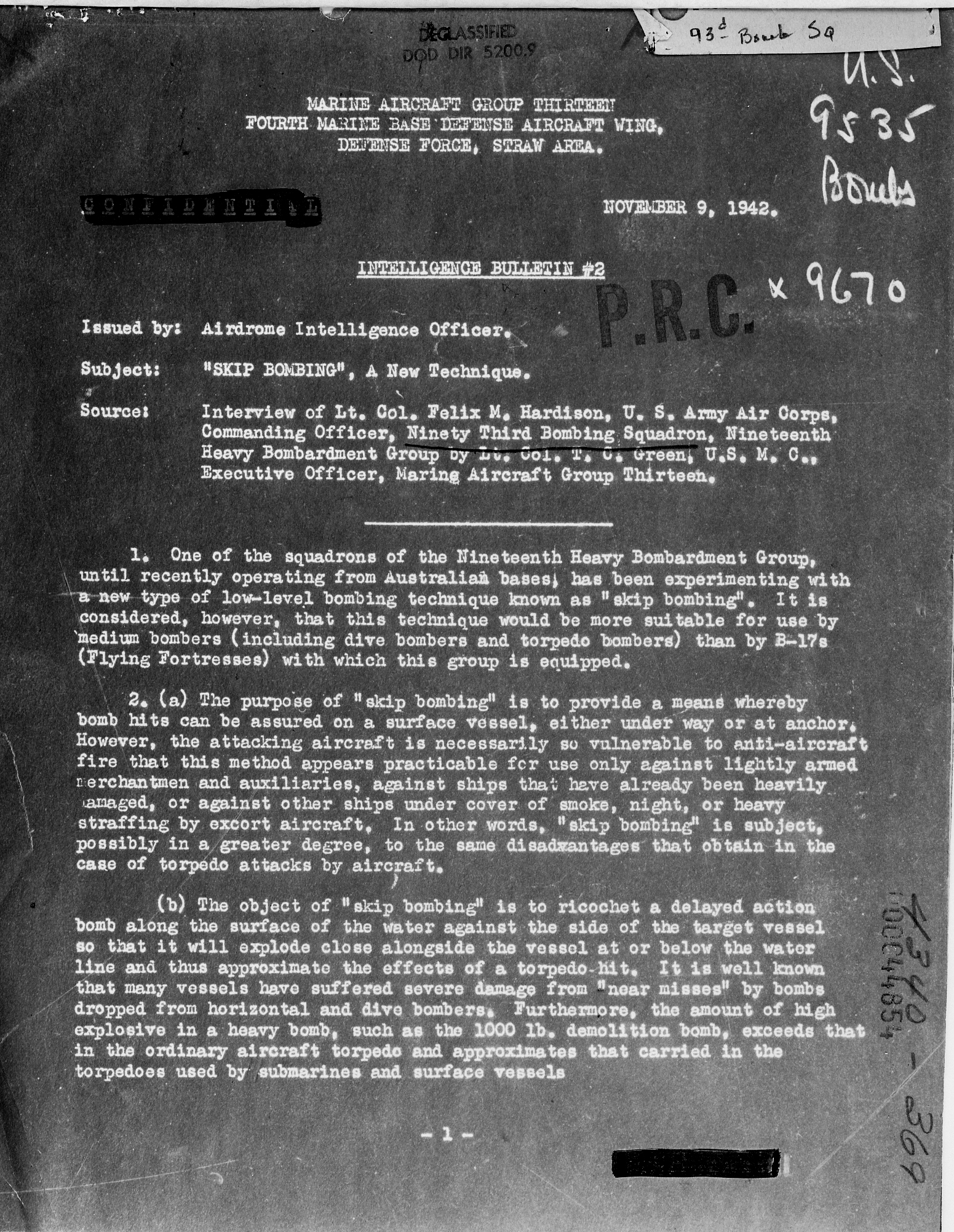
During the war, the USAAF, Marines and Navy tried to share their combat experiences and developments as much as possible. Part of this process included interviews with officers freshly returned to the States from combat. This document is an interview with one of the key leaders in the 19th Bomb Group conducted by a Marine Air Group Thirteen officer in late 1942. In it, Felix Hardison describes the tactics employed by the 19th Bomb Group, as well as the limitations of the B-17 in that role.

Gunn Documents 0923114p076

Categories: World War II in the Pacific | Tags: , , , , , , , , , , , , , , , , | 24 Comments

Thanksgiving on Amchitka

Thanksgiving on Amchitka, November 25, 1943.


DD352 Aground off Amchitka Series  227 4x6

The Japanese did not oppose the American landing at Amchitka in January 1943, though the rough waters and dangerous shoals around the island claimed the USS Worden (DD-352). Fourteen of her crew died as their ship broke apart and sank on the rocks.

Amchitka was easily one of the most remote and inhospitable U.S. military outposts of World War II. It was so remote that during the Cold War, the U.S. detonated three nuclear warheads on the island in various underground tests. Located about 80 miles from Kiska Island in the Aleutian chain, American forces landed there unopposed in January 1943 and quickly built an airfield there to support the final stages of the campaign in the far north. Once the Japanese had been driven from Attu and Kiska, Amchitka-based Navy patrol bombers and 11th AF aircraft began periodic attacks on the Japanese Kurile Islands.

amchitka mud landing

A PBY from Fleet Air Wing Four operating from Amchitka’s mud and Marston Matting strip.


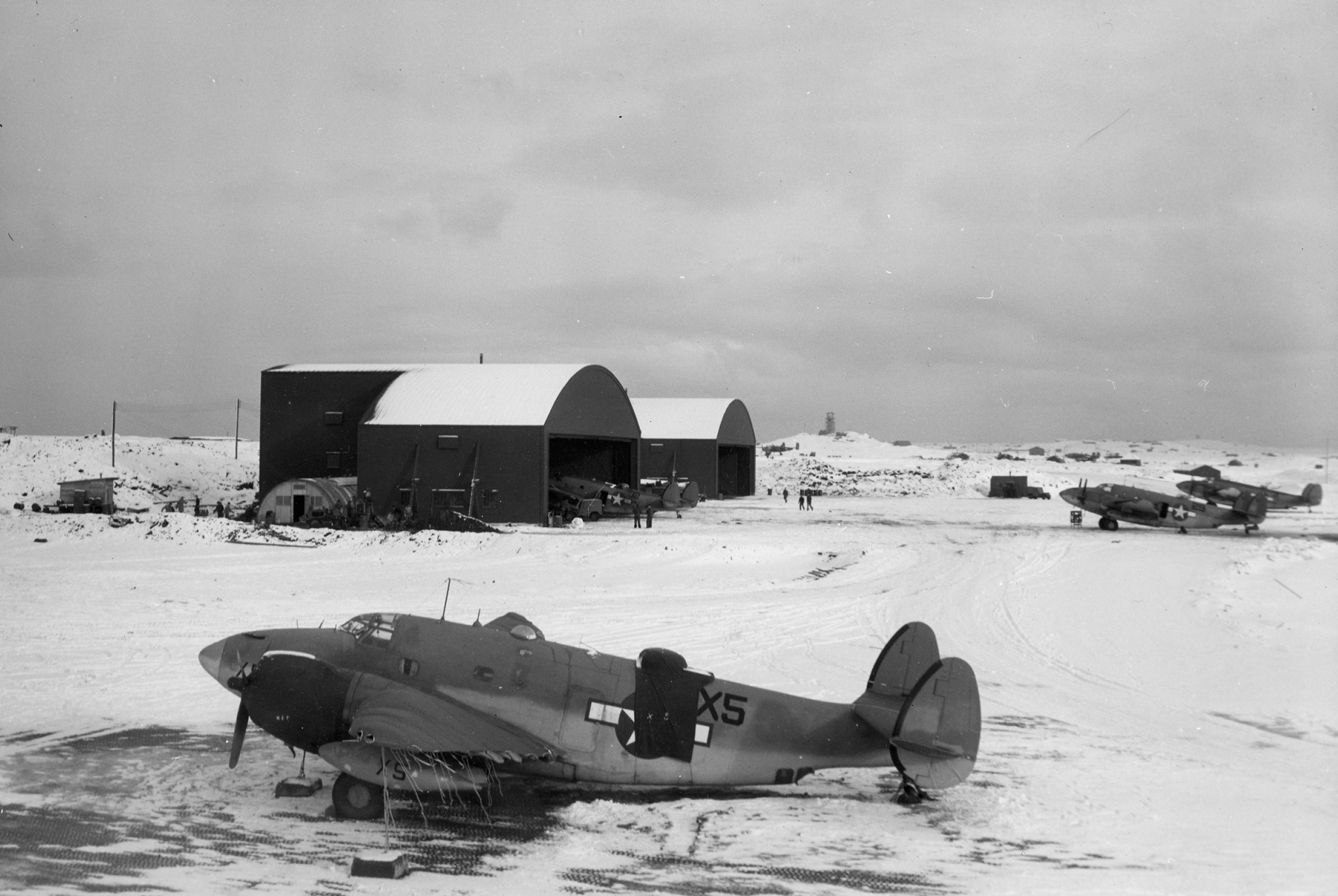
FAW4 PV1 Ventura Amchitka Dec 7 43 4x6

A squadron of PV-1 Venturas at Amchitka in late 1943.

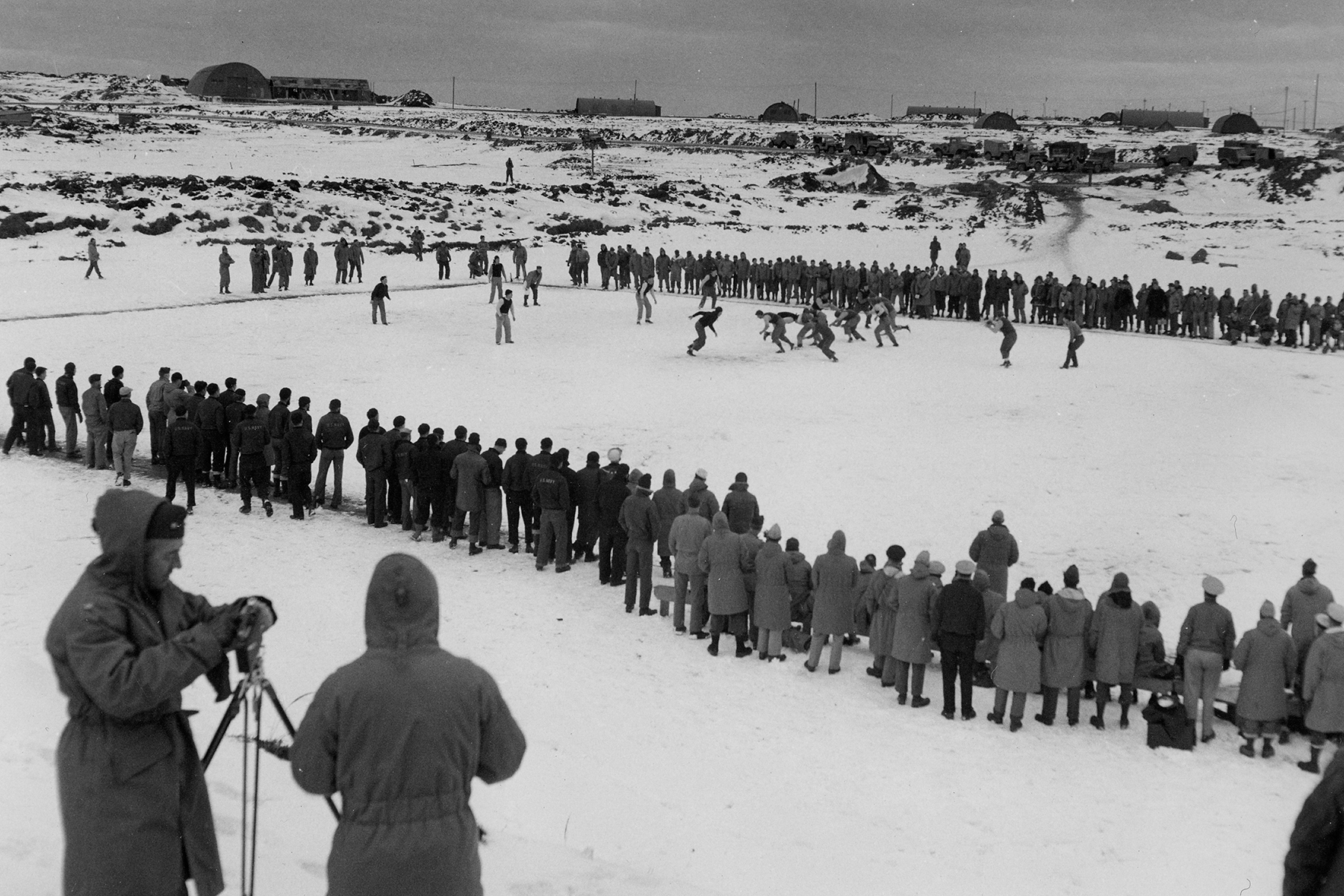
It was a dreary place to be stationed. The weather was awful, accidents frequent, mud or frozen snowdrifts the polarities of daily living. Yet, the men exiled to Amchitka did their best to make the place home. This included their own version of an American tradition–the Thanksgiving Day football game.

Amchitka Football Game in Snow Nov 25 43 Thanksgiving Day 039

The Thanksgiving game on Amchitka, 1943.


Categories: World War II in the Pacific | Tags: , , , , , , , , | 5 Comments

Moments with the 379th

b17 triangle k football game042 8x12

Men of the 379th take a break to play football beside the flight line at Kimbolton in the spring of 1944. The shadow of what the air crews faced lingers in the backstory of the B-17 parked nearby. That’s “Pansy Yokum,” a Douglas-built B-17G that joined the group right at the end of Big Week in February 1944. On March 8th, it was hit by enemy fire during the Berlin Raid and one of the waist gunners was killed in action. Shortly after this photo was taken, this B-17 vanished on July 9, 1944. The crew failed to form up as the 379th assembled for the mission, but apparently the pilot, Lt. Hugh Frye, decided to press on. They either joined up with another group, or went off in search of the 379th. Either way, the Fort was hit by flak over France, limped back toward England, only to crash at sea off Le Havre. All nine aboard perished, including the 23 year old bombardier, Lt. Orval Epperson, a small town kid from Neosho, Missouri. He was his family’s only son.

In November 1942, the 379th Bomb Group was activated at Gowen Field Idaho, just outside of Boise. The crews trained incessantly through the winter and early spring, then deployed to England in April 1943. The group arrived just as the 8th Air Force was ramping up for the ’43 strategic bombing effort against Germany.

Men of the 379th entertaining local English kids and their families at Kimbolton. The B-17 was “Tampa Tornado,” a battered Fort that had first seen service with the 303rd Bomb Group before joining the 379th in September ’43. It was retired from combat service in October, and was the aircraft the group used for tours when civilians came on post.


Commanded by LTC Maurice A. Preston, a Class of ’37 graduate of West Point, the 379th was a sharp, well-disciplined outfit that would soon prove to be one of the elite groups of 8th Bomber Command. Preston held command until October 1944 when he moved up to take over the 41st Wing. He was a combat leader all the way, flying forty-five missions through the worst phase of the air war over Europe. He led the 379th during the August ’43 Schweinfurt raid, and returned to that city the following spring. He went on to have a very successful USAF career, ultimately commanding both the 5th Air Force in the Pacific and all USAF forces in Europe during the height of the Cold War.

The group performed so well in combat that it earned two Presidential Unit Citations, and was recognized for its bombing accuracy, low abort rates, tight formation flying and bomb tonnage delivered on targets. The aircrews pioneered new formations and new bombing tactics that were later adopted throughout VIIII Bomber Command, and completed 300 combat missions faster than any other USAAF heavy bombardment group in England. The group paid a brutal price during its two years in combat. Altogether, 141 of the 379th’s Forts went down over Europe.


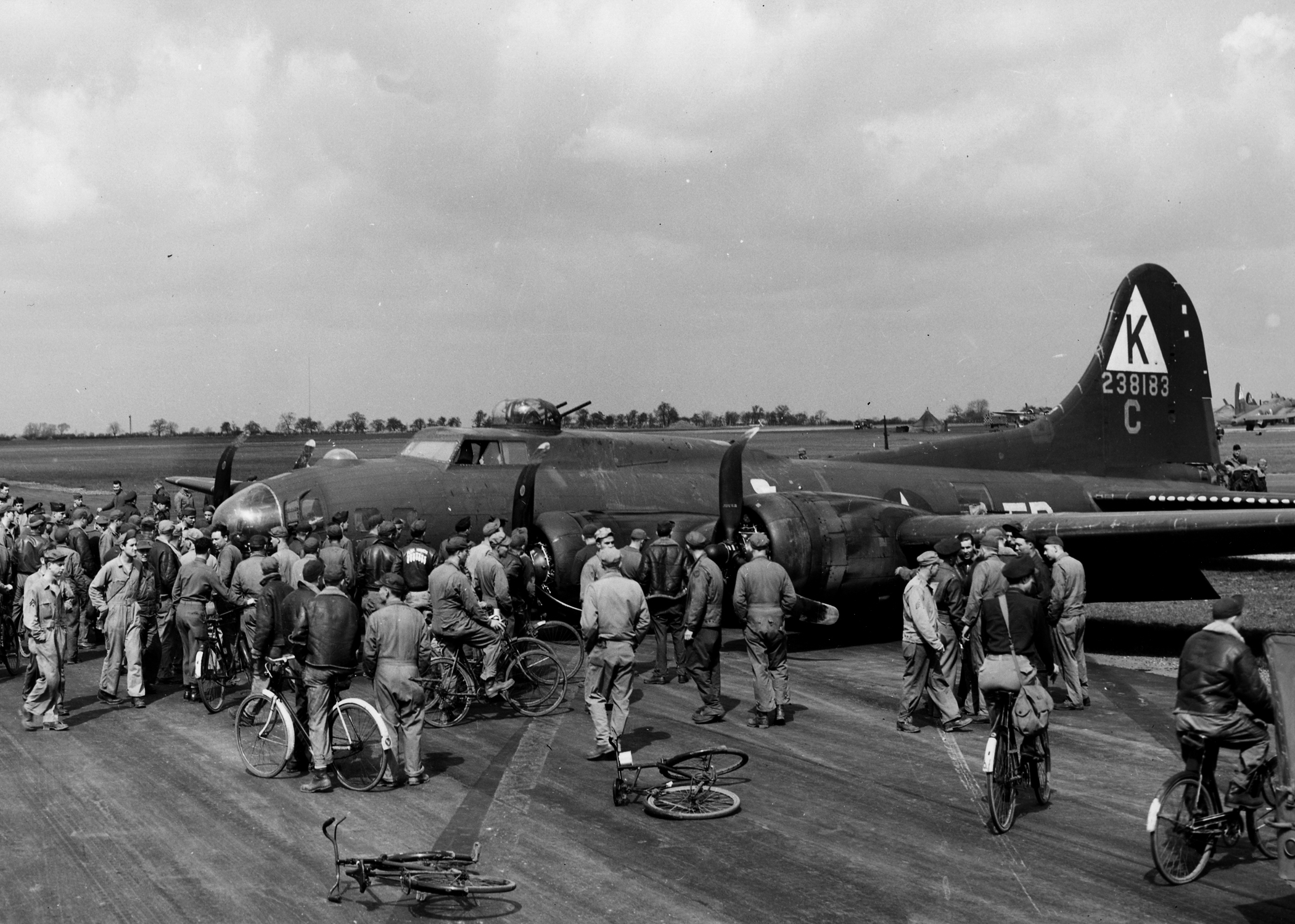
“Lost Angel” returns to Kimbolton on April 10, 1944. This Fort joined the 379th in February ’44, and this crash landing was one of at least two crews of the group experienced in her. On September 28, 1944, Lost Angel and the rest of the 379th ran into scores of German fighters on a mission to Magdeburg. During the bomb run, another nearby B-17 (Queen of Hearts) took a direct AA hit that touched off one of its fuel tanks. As it fell, the tongue of flame it trailed engulfed Lost Angel so completely that the tail gunner thought their B-17 had been hit as well. He bailed out and was taken prisoner. Just after the bomb run, the fighters struck. Lost Angel’s navigator later wrote, “Most horrible sight I’ve seen. Sky filled with burning planes. Too many to count. Had to look away.” For details on that mission, see, “http://b17navigator.com/dads-log-book/mission-no-seventeen-september-28-1944/” Lost Angel was repaired repeatedly and sent back into battle. After the September mission, it was sent to the 384th Bomb Group. Miraculously, it survived the war, only to be scrapped in October 1945.


Categories: Uncategorized, World War II Europe, World War II in Europe | Tags: , , , , , , , , , , , , , | 6 Comments

The Men of Station 167

bg o club809

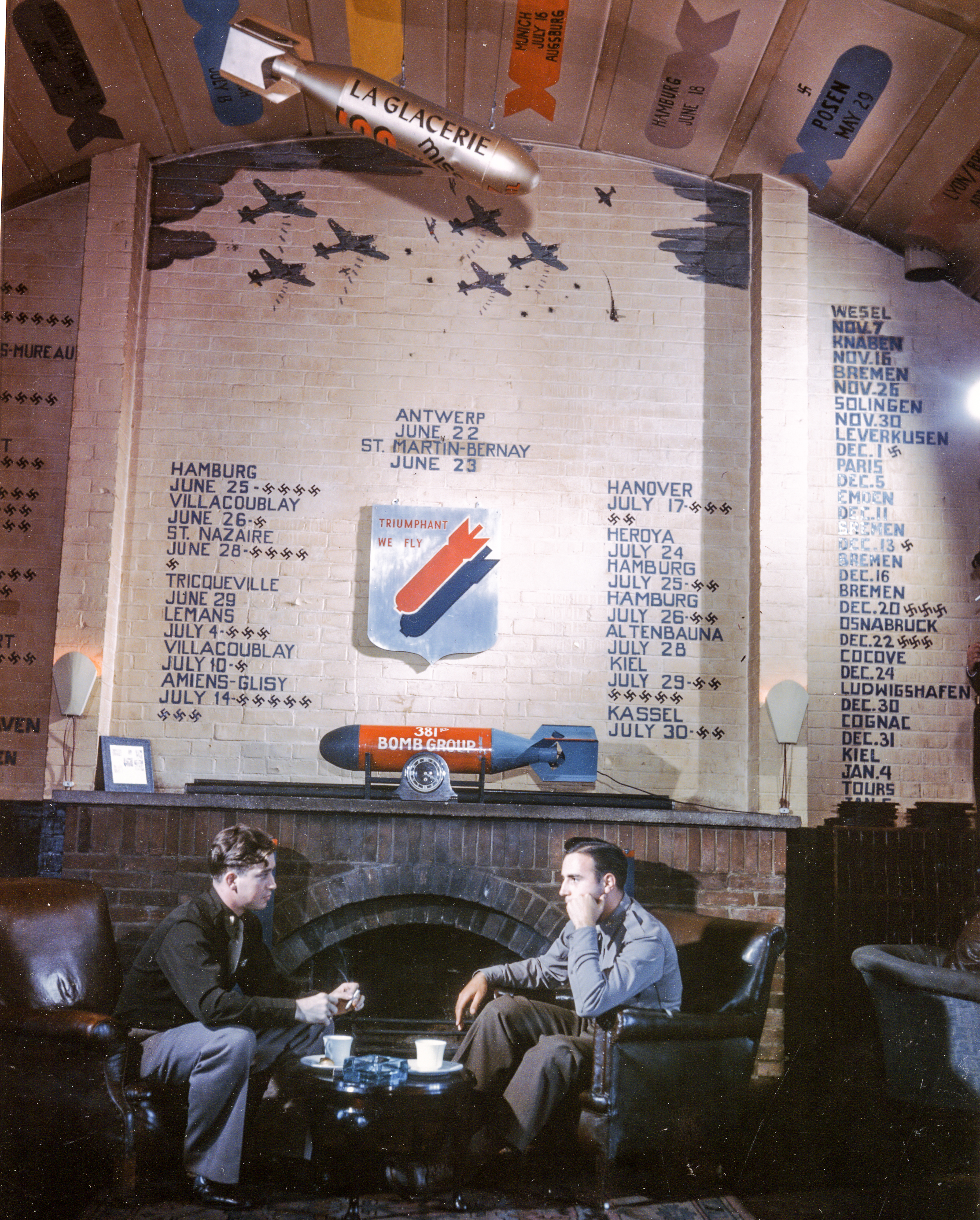
The 381st Bomb Group’s O Club at Ridgewell.

In May of 1943, the 381st Bomb Group reached England. It had been formed and activated in January that year, undergoing a short, intensive training cycle that included a full formation leaflet dropping exercise over Denver. Led by the legendary bomber pilot Colonel Joseph Nazzaro, the 381st was a tight, disciplined organization. Nazzaro would go into combat for the first time with his beloved 381st, and his tenure with the group led to an extraordinary career that culminated with him commanding SAC in the late 1960’s.

381st bg low on channel626 8x10

The 381st climbing out over the channel.

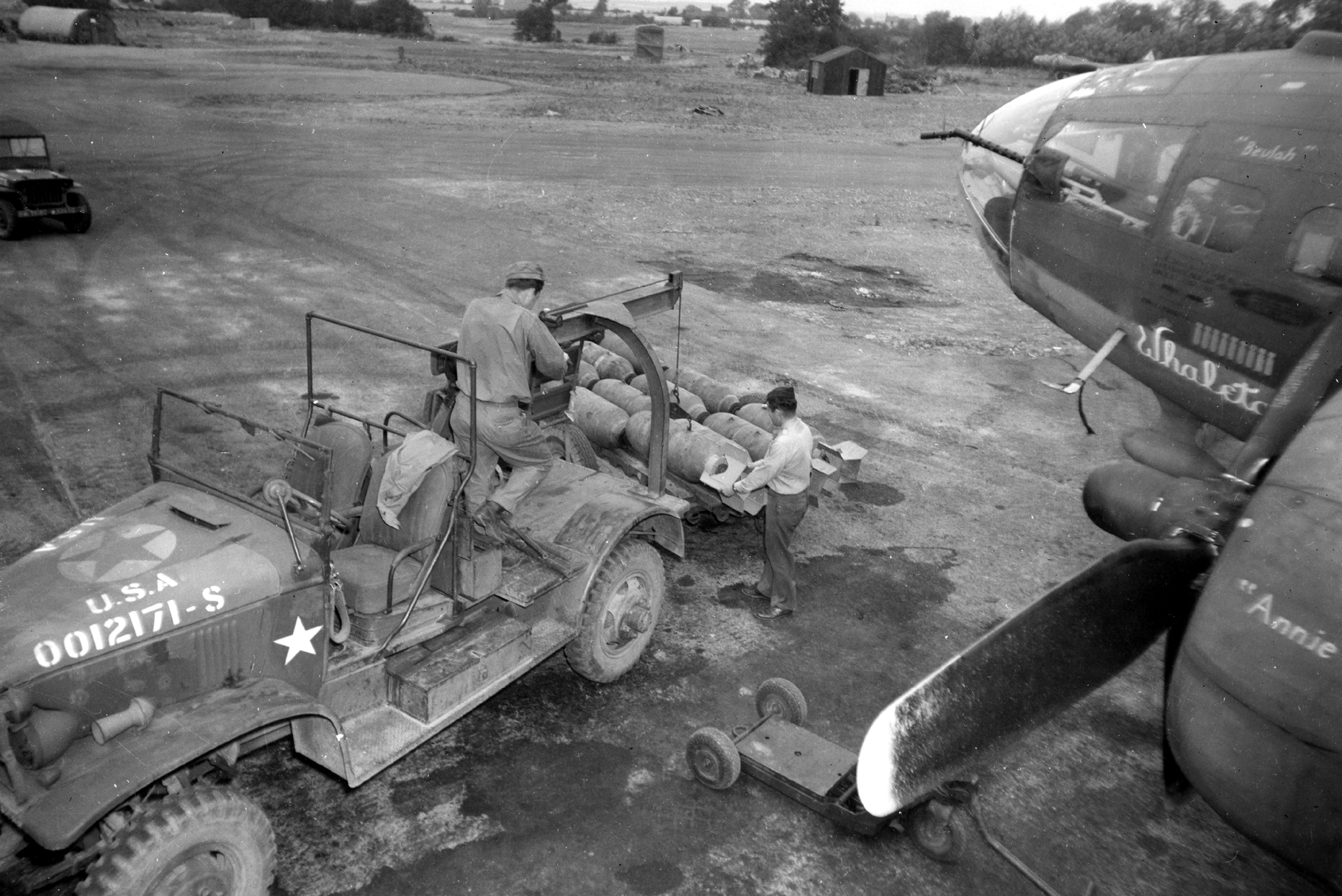
The group set up shot at Station 167, RAF Ridgewell in Essex. After a few weeks of settling in and local training flights, the group flew its first mission on June 22, 1943. Two of its B-17’s were shot down by flak and fighters on that first combat run, and two others came home battered and damaged with wounded aboard. It was a tough indoctrination to the air war over German-held Europe.381st bg b17  bomb loading aug 20 43721 4x6

The following day, the ground crews were busily preparing the Forts for their second mission when a bomb exploded on the flight line. The blast killed twenty four men, yet the 381st joined the rest of the 8th Air Force and continued on to fly that day.

During the August 17, 1943 Schweinfurt raid, half of the group’s bombers went down under the onslaught of determined Luftwaffe fighters and massive flak barrages. Ten crews went with those birds, but one crew returned home after being fished out of the English Channel. Colonel Nazzaro personally led the mission that day, flying the lead Fort in the formation.381st bg b17 sept 26 43 719 8x10

The 381st went on to fly a total of 296 missions–over 9,000 sorties against German targets. It came at a terrible cost–over a thousand combat crews went missing, were killed or wounded during those vicious two years of flying. One hundred and thirty one B-17’s belonging to the 381st never made it back to station 167, which represented roughly 500% of the group’s established strength.

The 381st over Germany, February 5, 1945.

b17 triangle L belly landed377 8x10

Categories: Uncategorized, World War II Europe, World War II in Europe | Tags: , , , , , , , , , , , | Leave a comment

Mission from Okinawa: A Morning with VPB-118

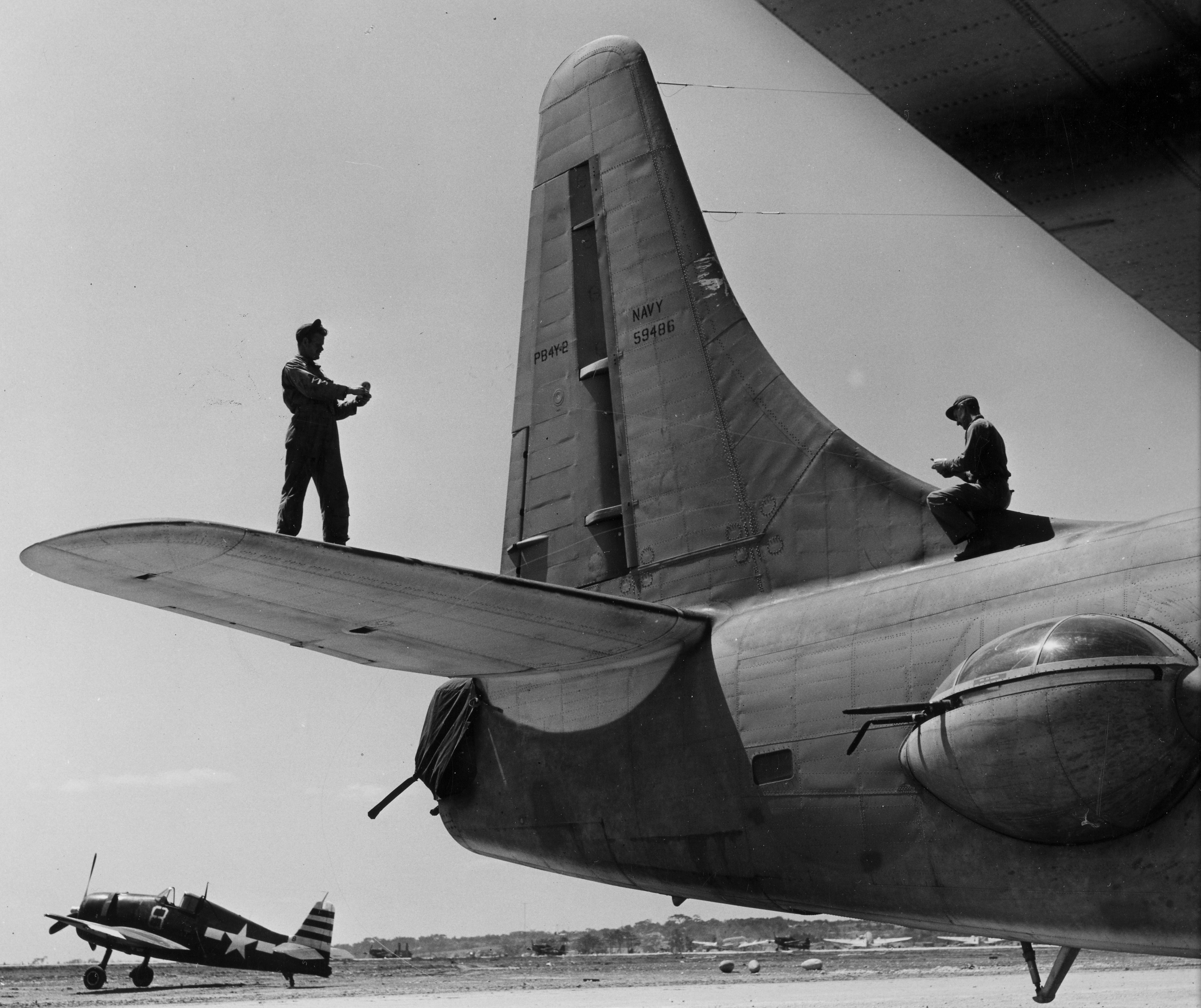
vpb118 pb4y2

Sunrise on Okinawa. Yontan Airfield, May 1945.

In early May of 1945, Ensign Tom Binford, a U.S. Navy photographer, arrived on Okinawa after spending part of the previous months snapping pics of seaplane tenders around the Marianas. He embedded with VPB-118, one of the USN’s patrol bomber squadrons that had just reached the island, where the crews would soon be flying long range anti-ship missions over the Sea of Japan and the Yellow Sea.

vpb118 pb4y2 photos from yontan okinawa may 45241

Dawn at Yontan Airfield.

Binford was a masterful photographer, and his photos documenting the preparations for one of those missions are both dramatic and artistic. The compositions are especially striking.

vpb118 pb4y2 photos from yontan okinawa may 45239

Last hours before the day’s mission.


VPB-118 was commissioned in July, 1944 outside of San Diego. The crews flew practice bombing missions around San Francisco throughout the fall of 1944. (Can you imagine the Navy doing that today? Holy smokes!).  In late ’44, the squadron shipped out and arrived on Tinian to join Fleet Air Wing 1, flying its first mission in January 1945. On April 22nd, VPB-118 moved to Yontan Airfield on Okinawa while fighting still raged on the island.

vpb118 pb4y2 photos from yontan okinawa may 45243

Two aviation machinist mates make final preparations before the day’s mission.


vpb118 pb4y2 photos from yontan okinawa may 45244


vpb118 pb4y2 photos from yontan okinawa may 45246

Mission briefing for a patrol along the Korean coast.


vpb118 pb4y2 photos from yontan okinawa may 45240


Shortly after Binford took these photos, one of the squadron’s PB4Y Privateer bombers went missing somewhere on patrol. The crew lost included:

Lt. J.A. Lasater
Ens. M.L. Gibson
Ens. C.J. Milner
AMM2c E.W. Smith
ARM3c W.J. Hawkins
AMM3c C.W. Jacobs
AOM2c R.E. Miller
AMM2c S.C. Bryant
ARM3c D. McAllsiter
ARM3c H.F. Brockhorst
AOM3c W.L. Thornton
AMM3c R.A. Carr

Altogether, the “Old Crows,” as the squadron named itself, lost thirty-one men killed or missing in action.

vpb118 pb4y2 photos from yontan okinawa may 45242


Categories: World War II in the Pacific | Leave a comment

Twilight at Shiloh

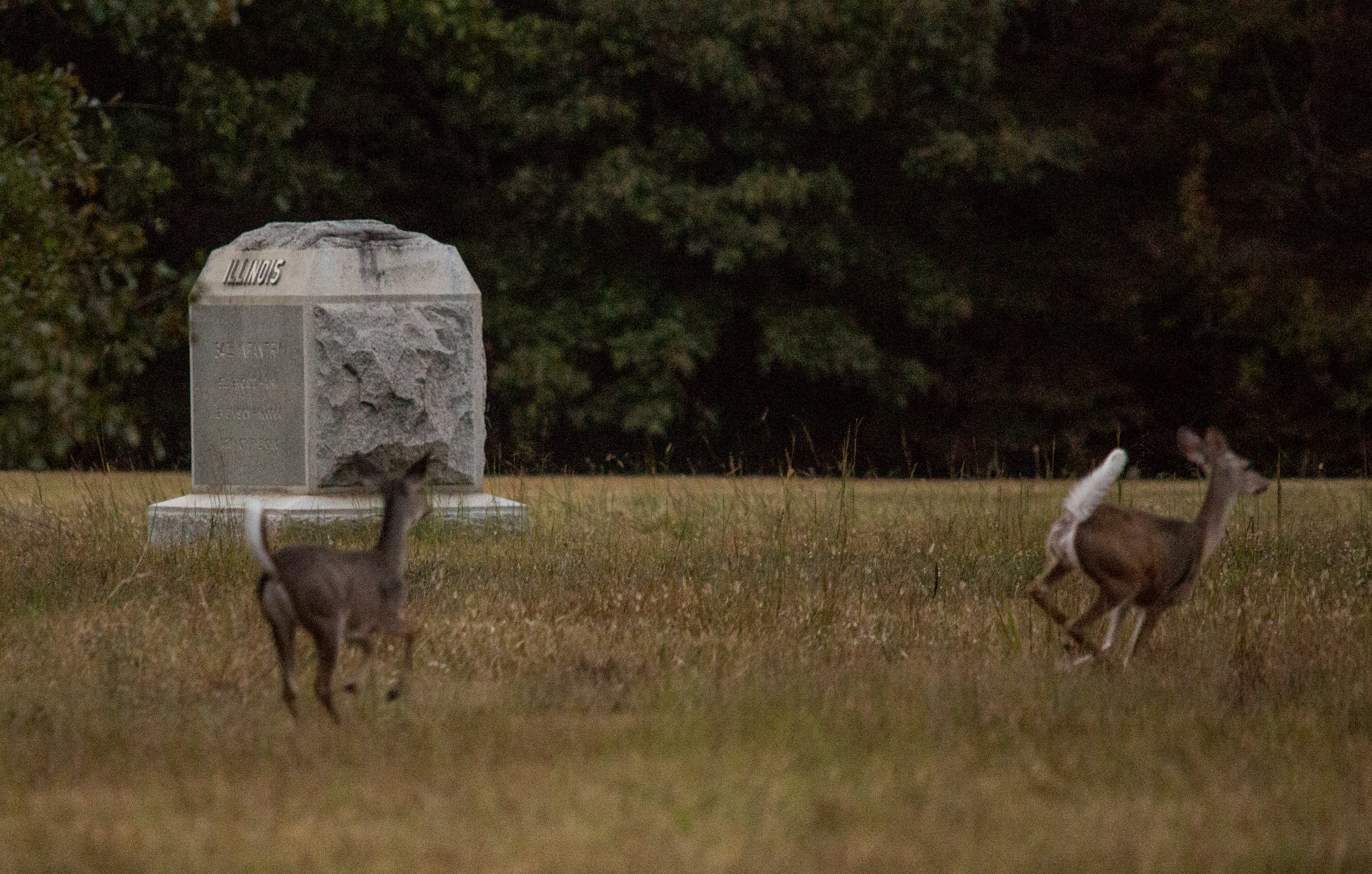
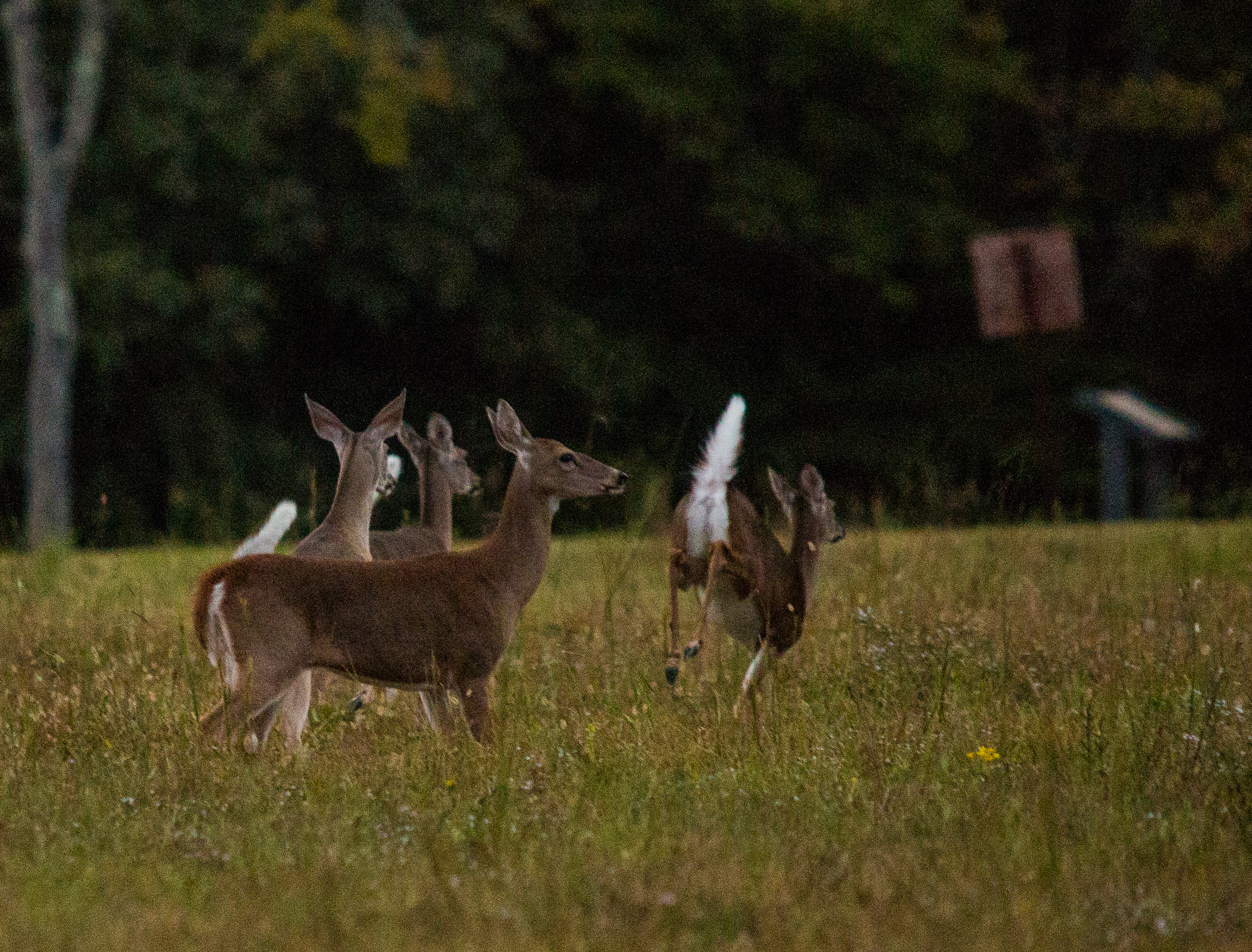
Shiloh Deer

Twilight in late summer 2014, Shiloh Battlefield. This was the site of one of the critical battles of the Civil War’s Western Theater. The evening I was there, I was the only human on the battlefield. White tailed deer played among the unit markers, and a rogue bull showed up at the Hornet’s Nest.
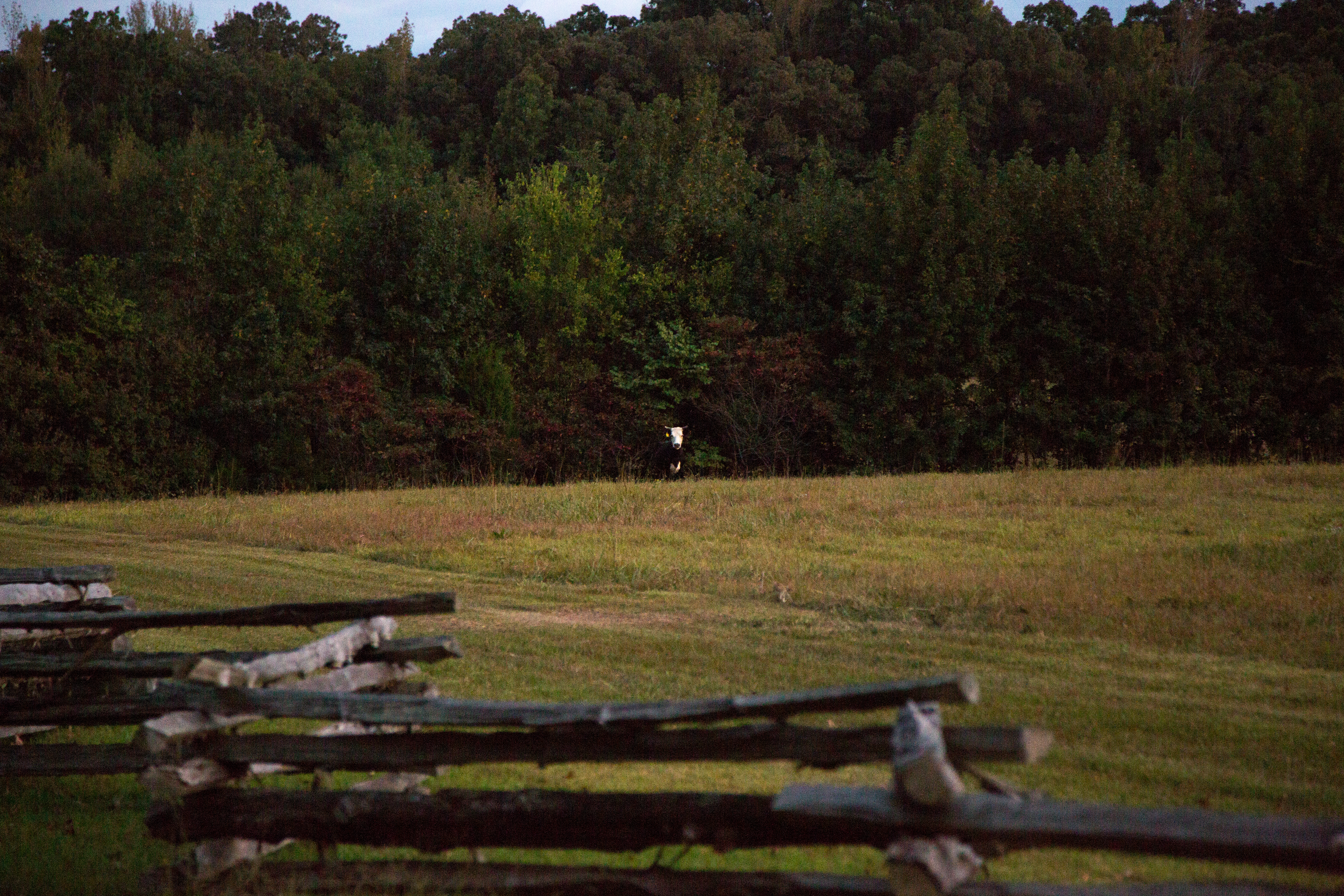
The rail fence at the Hornet’s Nest. Contrary to many post-war accounts, the “sunken road” at the Hornet’s Nest was not sunken at all, but rather a little used farm path through the woods.

Standing at the Hornet’s Nest, watching the sun go down, I turned to see this guy staring at me from across the field where so many Confederate Soldiers perished. We gazed at each other for a long moment, and I was a bit afraid he’d charge me. (I was charged by a Moose in Colorado while working “Level Zero Heroes with Michael Golembesky). But right after I lifted my Canon to my face and snapped this photo, he lit off into the underbrush behind him. The park rangers had received several reports of him on the loose, and the next day they were out searching for him. I hope he got away. The world has enough steak out there.

Categories: American Civil War, Uncategorized | Tags: , , , , , , | Leave a comment

Relief in Place, Vosges Mountains, November ’44

442nd RCT Inf Regt Nisei M1 Carbine St Die France  111344 (1 of 1)


A Japanese-American Soldier for the 442nd Regimental Combat Team stands in a foxhole just outside of St. Die, France on November 13, 1944. The 442nd had just entered the line during a relief in place operation.

Categories: World War II Europe, World War II in Europe | Leave a comment

Blog at WordPress.com.