Posts Tagged With: World War II


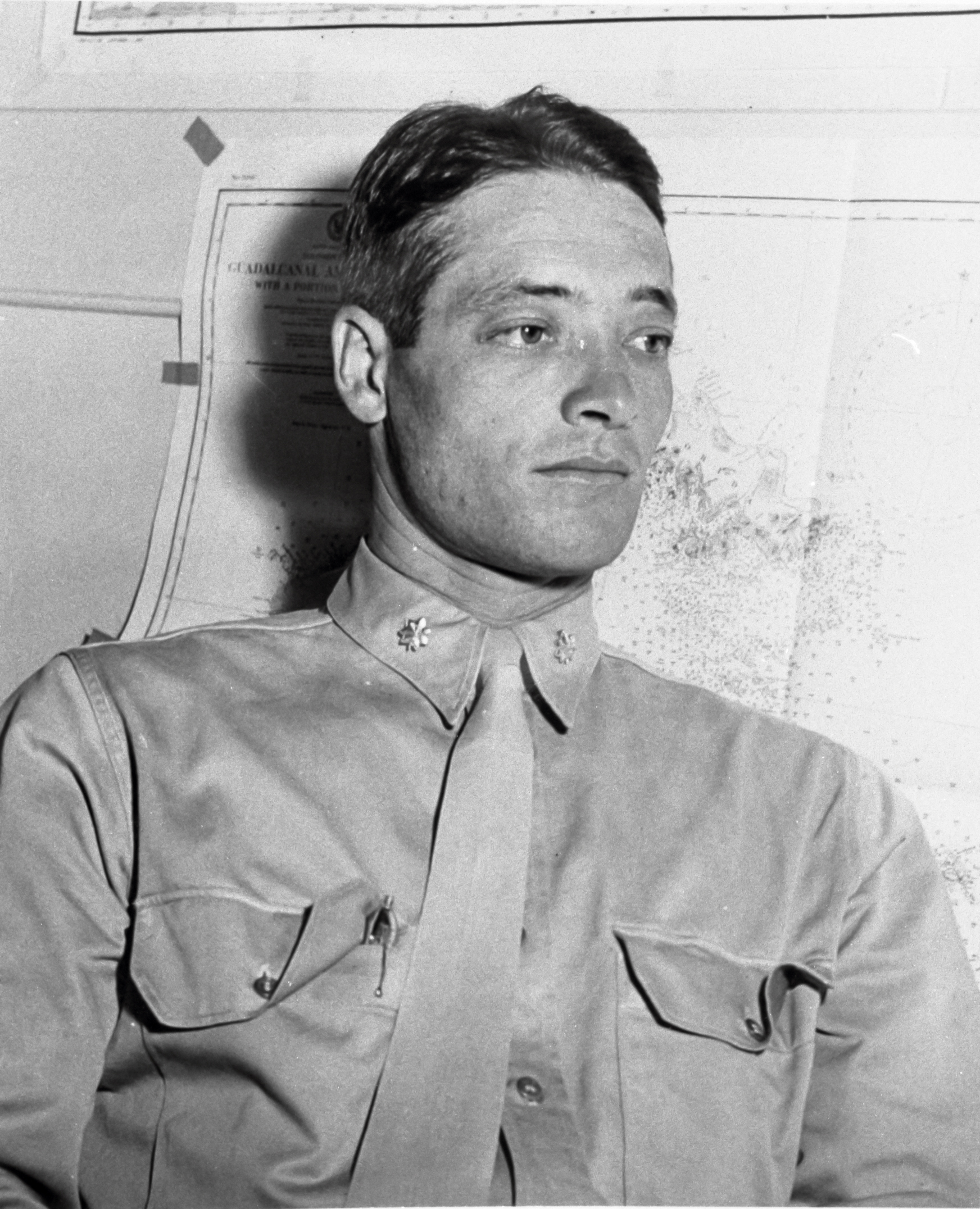
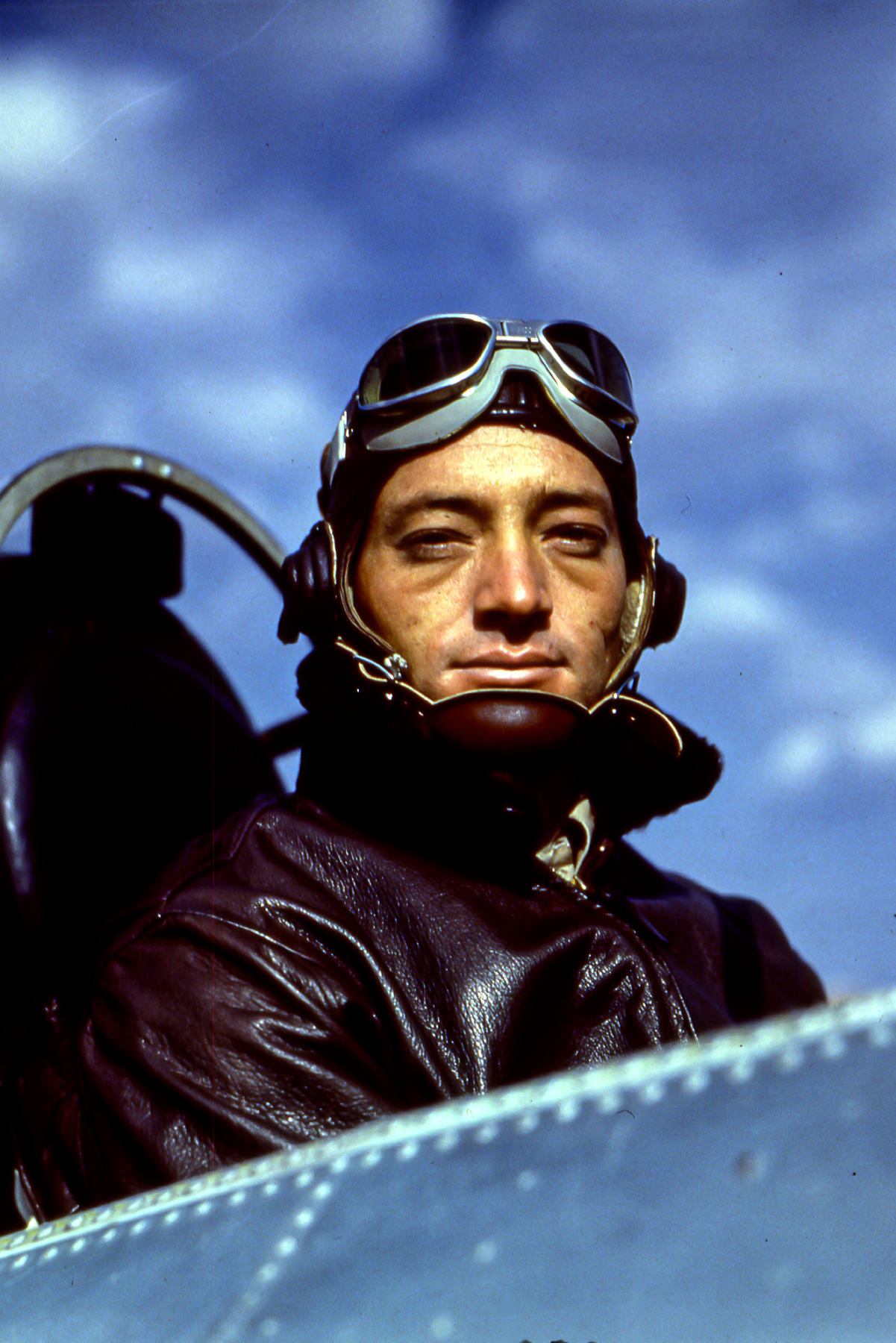
John Wayne as John L. Smith

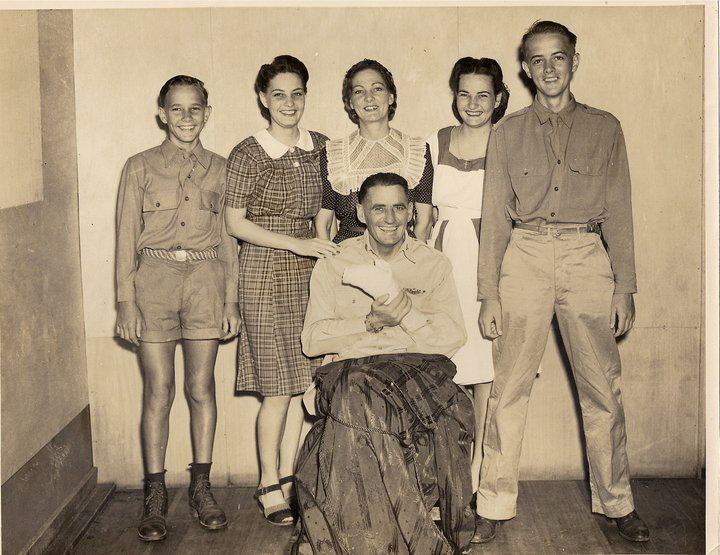
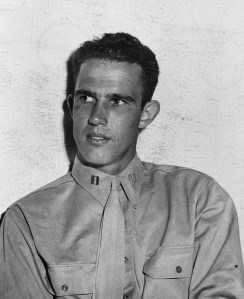
Major John L. Smith, skipper of VMF-223, America’s Ace of Aces in 1942, and one of the greatest Marine leaders of his era. Relentless, aggressive, fiercely loyal to his men, he is seen here in October 1942, just after arriving on Oahu from Guadalcanal. He was a man haunted by the deaths of the young pilots under his command, desperately uncomfortable with the media spotlight shining his way. A decade later, when Hollywood told John L’s story, John Wayne played the great Marine ace, turning him into a ruthless taskmaster whose men resented him.

In reality, the men of VMF-223 loved their skipper. He was demanding, emotional, prone to outbursts of anger, but so clearly loved & looked after his green 2nd Lts that they followed him into every fight for fifty-three of the toughest days any Marine squadron has endured.

The movie, which came out in 1951, is worth a watch. It contains considerable actual combat footage and gun camera clips, some of which no longer exists at NARA.

For more on John L and his squadron, take a look here: https://amazon.com/Fifty-Three-Days-Starvation-Island-Aviation/dp/0316508659/ref=sr_1_1?crid=3D3SVSMJ4LVBP&dib=eyJ2IjoiMSJ9.lGQgOoEp8lTHMIcaGBepVg.cGYX2ueZF_lTpJ4r6MZq-zCJhC-aqlZvANWGsLbLdyw&dib_tag=se&keywords=fifty+three+days+on+starvation+island&qid=1717457373&sprefix=fifty+t%2Caps%2C186&sr=8-1

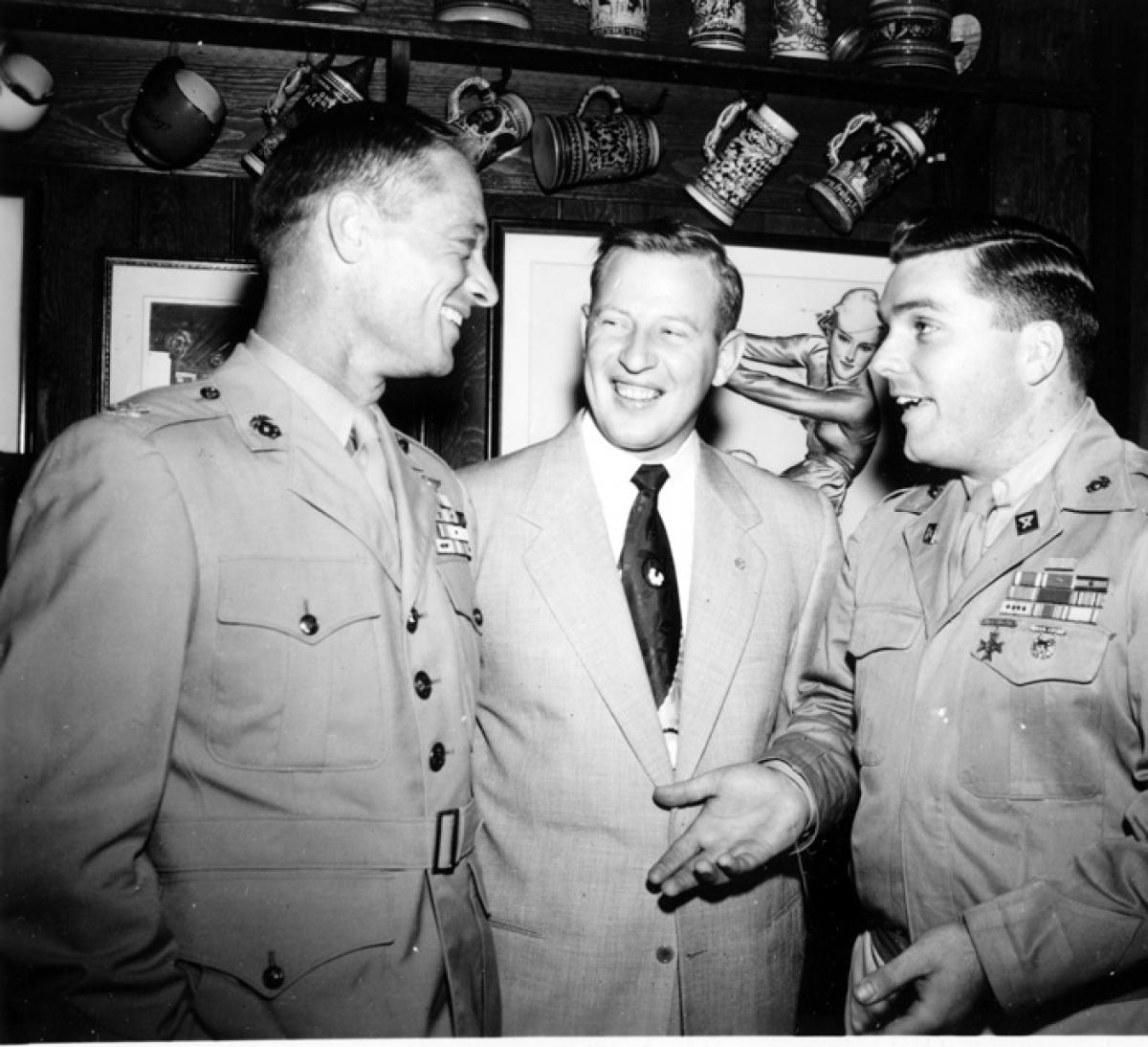
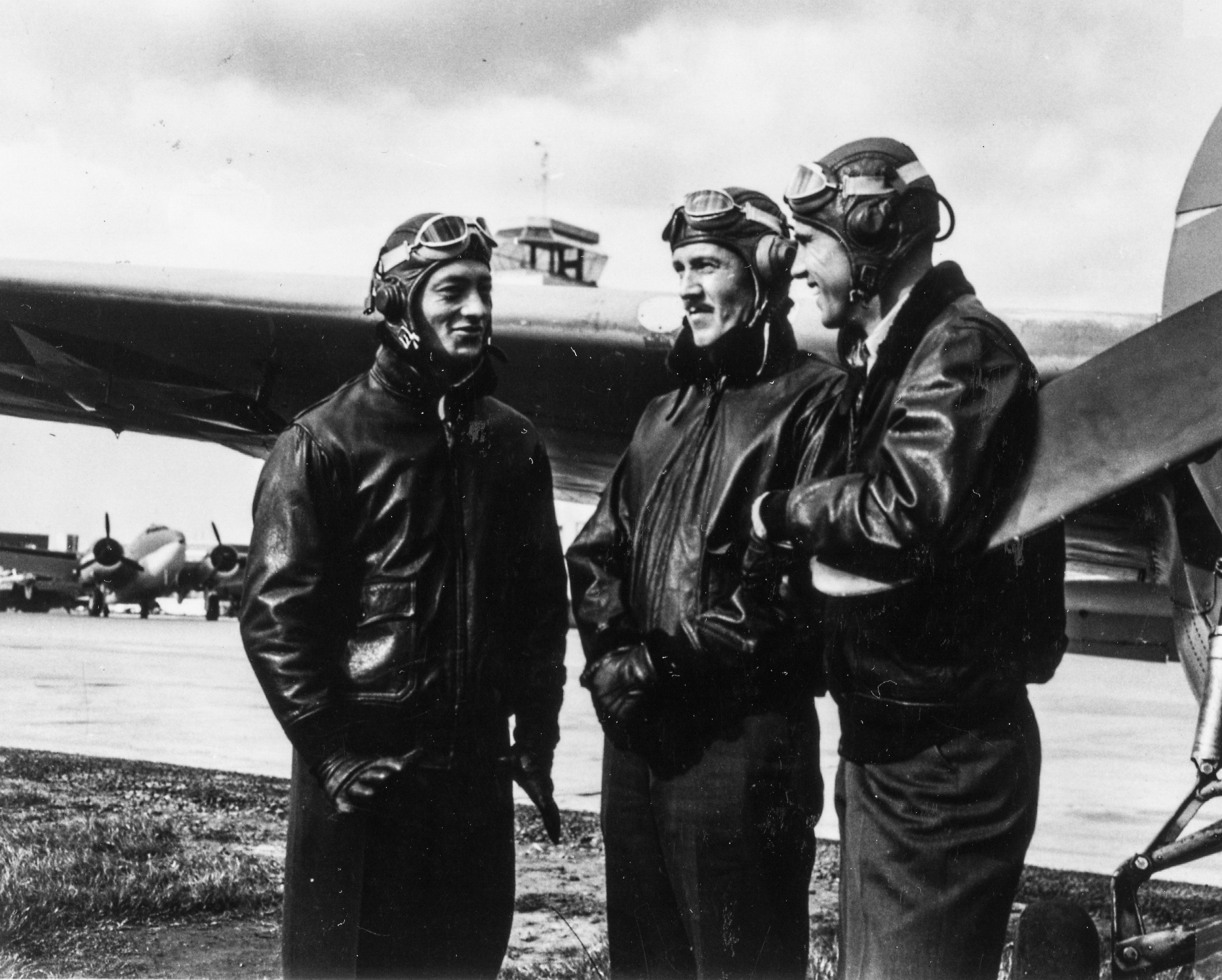
John L Smith (left) with two other Marines during premier night for the Flying Leathernecks in 1951.
Categories: World War II in the Pacific, Writing Notes, WW2, WWII | Tags: , , , | 1 Comment


The Men of Fifty-Three Days on Starvation Island: Marion Carl

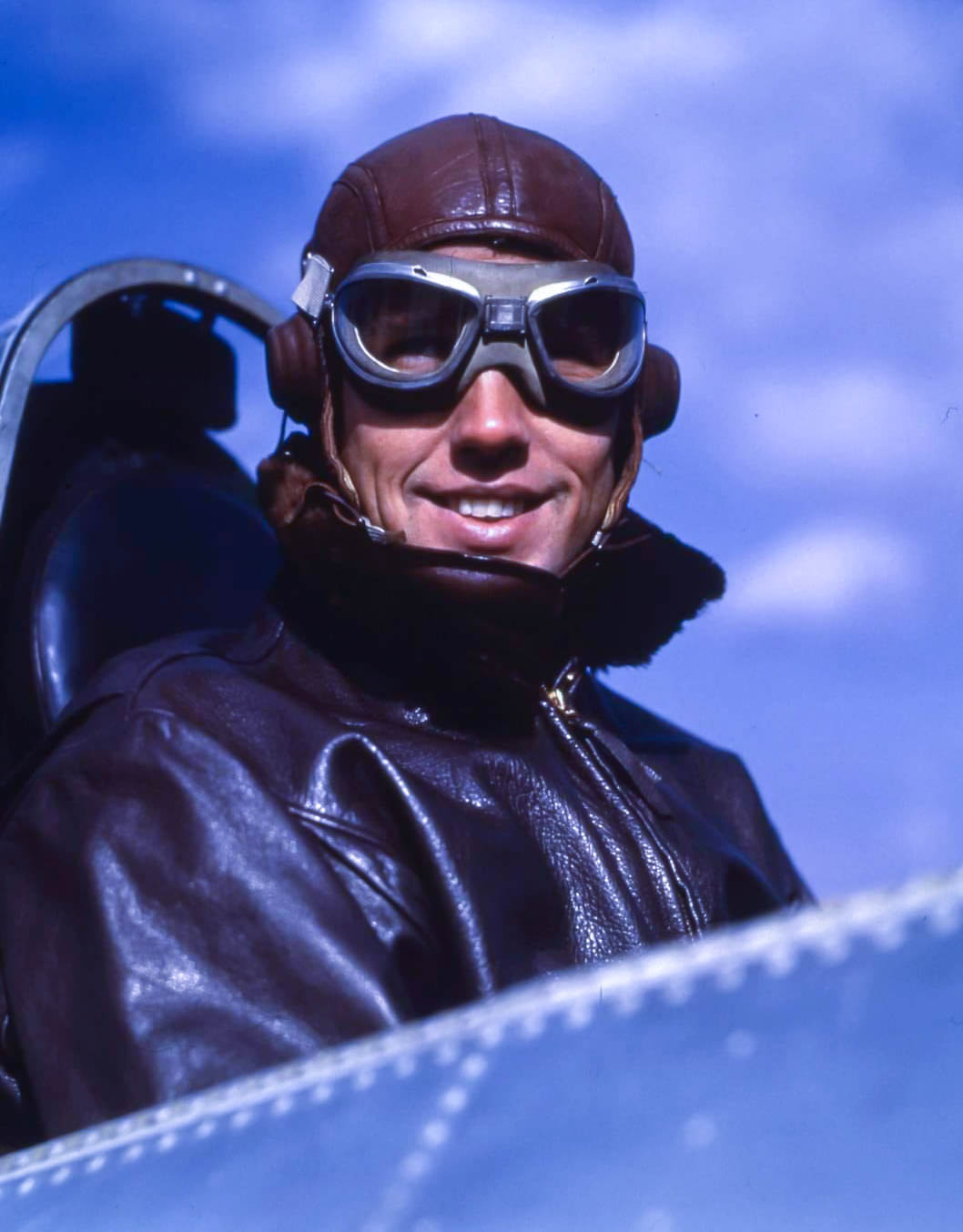
Marion Carl grew up on a dairy farm outside of tiny Hubbard, Oregon. He squeaked through Oregon State, then went on to be one of the 50 fighter pilots in the pre-war Marine Corps. He was one of the 9 pilots to survive the Battle of Midway from his squadron, VMF-221.

Two months later, he became the first Marine Corps ace while flying with John L Smith and VMF-223 at Guadalcanal. He returned to the U.S. to be feted as the hero of the hour, and the PR guys had high hopes for Marion, since he was tall, charismatic and possessed the winning mile you see in the photo here.

They sent him out on tour with John L and LTC Richard Mangrum, skipper of the first dive bomber unit to fight at Guadalcanal. He hated the press tour. Loathed it. The reporters annoyed him, the attention annoyed him. He fell asleep in press conferences. Sat and said as little as possible in other ones, chewing his nails and counting the seconds he could get away. He wasn’t made to be a celebrity. He was meant to fly and fight.

In early 1943, he returned to VMF-223 as its skipper and took it out to the Solomons for a second combat tour. He should a couple more planes down, returned to the States to become one of the legendary test pilots in American history.

He flew and fought through the rest of his career, from secret recon runs over China in the 1950s, to taking the 1st Marine Brigade into Vietnam in 1965, where as a brigadier general he flew combat missions in support of his men in both jets and helicopters. He retired as a major general in 1973, with over 13,000 hours in his logbook and is considered one greatest military aviators in American history. His story formed the basis of Fifty-Three Days on Starvation Island.

Categories: American Warriors, World War II, World War II in the Pacific, Writing Notes, WW2, WWII | Tags: , , , , , | Leave a comment


Fifty-Three Days on Starvation Island–Book Signing!

Happy to report I’ll be signing books at Powell’s Cedar Hills store in Beaverton, Oregon on June 5th! If you’re in the area, please drop by and say hello!

Categories: Uncategorized, World War II in the Pacific, Writing Notes | Tags: , , , , | Leave a comment


When Fraternity Guys Defended the Flag…on Guadalcanal

1942:

When you’re a year removed from lecture halls and your fraternity house, and you find yourself 180 miles south of nowhere in the middle of the Pacific, told to launch off a make-shift aircraft carrier with a catapult that will fire you off the deck at a 45 degree angle into a crosswind while piloting a combat aircraft you’ve had less than 30 days to learn to fly…and if you survive the launch, you’ll fight the best combat aviators in the world who have been shooting down planes since you were on your high school JV teams.

You’re going to be living in the jungle, slowly starving on captured food stocks. You may be five ten, a buck fifty now, but if you survive, you’ll be lucky to be a hundred and twenty pounds. When you’re not in the air every day, you’ll be sniped, bombed, shelled, strafed, and mortared. The enemy’s ground troops are a few thousand yards away, preparing to overrun your make-shift, shell-pocked airfield that in itself is a hazard to use. You’ll be exposed to jungle diseases not even known to Western medicine yet. You’ll be wracked with malaria, doubled over with dysentery.

Your aircraft’s oxygen system will fail and poison you. A hit in the wrong place, and you’ll be covered in superheated engine oil. If you get shot down, you’ll face sharks at sea and death by torture at the enemy’s hands in the jungle.

And some light bird who doesn’t know the basics of overwater navigation, who refuses to share your circumstances, has just told you your mission: buy time with your lives. Die hard. You have one ace in the hole: USMC Captain John L. Smith is your commanding officer. With him at the tip of your spear? All the other stuff is just noise.

Fifty-three days of this to go…then you can go home. For thirty-four years, I’ve wanted to tell this story. Thanks to Hachette, it’ll be in bookstores everywhere, Audible and Amazon this May 14.

https://www.amazon.com/Fifty-Three-Days-Starvation-Island-Aviation/dp/0316508659/ref=tmm_hrd_swatch_0?_encoding=UTF8&dib_tag=se&dib=eyJ2IjoiMSJ9.lGQgOoEp8lTHMIcaGBepVg.cGYX2ueZF_lTpJ4r6MZq-zCJhC-aqlZvANWGsLbLdyw&qid=1715476351&sr=8-1

Categories: Uncategorized, World War II in the Pacific, Writing Notes, WW2, WWII | Tags: , , , , | Leave a comment


Ant Freight and Mangrum’s Dauntlesses

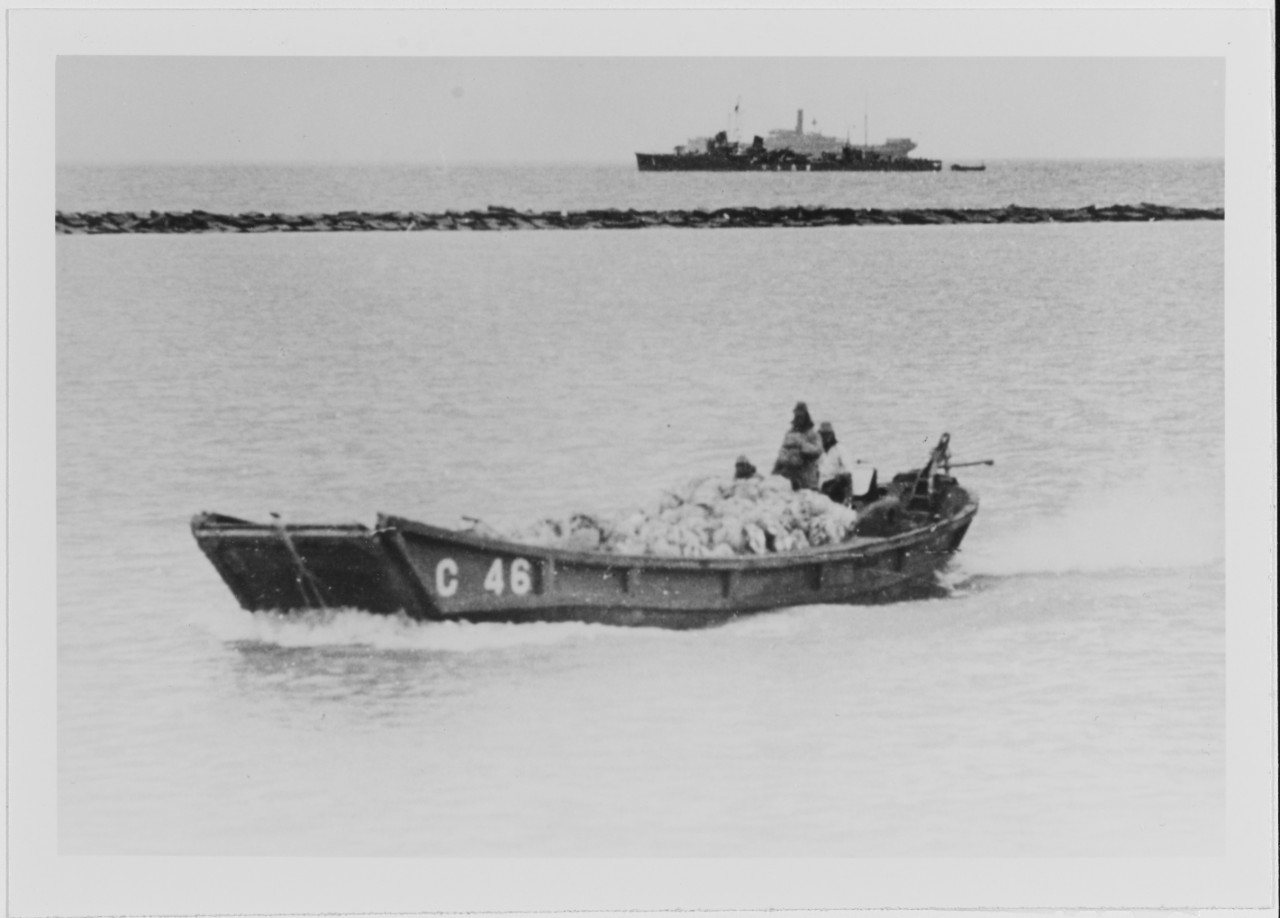
In early September 1942, the Japanese attempted to reinforce Guadalcanal using a technique dubbed “Ant Freight.” This required carrying troops to the Central Solomons aboard destroyers or transports, transferring them to tiny LCVP-like Daihatsu landing craft, or barges, and sending them hundreds of miles through rough seas down the Slot to Guadalcanal.

The SBD Dauntlesses of VMSB-232 and Flight 300 played a pivotal roll in disrupting these barge convoys. With most of their forward-firing .50 caliber machine guns non-functional, Richard Mangrum’s men used a “wagon wheel” tactic that required orbiting the convoys at low altitude while their rear gunners hammered away at the boats with their flexible mount .30 caliber Brownings. this required facing continuous light AA fire from the barges, and sustained fire on a target to do any real damage.


When Mangrum returned to the States, one of the things he hoped to see was a new generation of USN and USMC attack aircraft with plenty of functional forward-firing guns that could wreak havoc on such Japanese surface vessels.

As it was, day after day on Guadalancal, the SBDs, P-400s and F4Fs (when available), would hammer these slow moving vessels. It is estimated around 300 Japanese soldiers were killed in the attacks, and the barge convoys with hundreds more men ended up scattered, disorganized and devoid of supplies. One thousand men of Kawaguchi’s brigade of veterans finally did reach Guadalcanal, but were put ashore on the West side of the Marine perimeter, while the bulk of Japanese forces on the island were to the east and moving south with Kawaguchi to hit Edson’s Ridge.

Had those men reached Guadalcanal with the rest of their brigade in time for the Battle of Edson’s Ridge, the outcome of the campaign might very well have been a Japanese victory.

Two veterans of the anti-barge missions off Guadalcanal that September. At right is the skipper of VMSB 232, Richard Mangrum. At left is Arthur O’Keefe, one of Mangrum’s fresh-from-flight-school pilots assigned to 232 in July of 1942. Taken after the 1942 deployment. Photo via Mike O’Keefe.

Categories: Uncategorized, World War II, World War II in the Pacific, Writing Notes | Tags: , , , , | Leave a comment


On the Bridge in 2016

Back in the fall of 2016, I recorded a series of clips of myself in the Oregon Cascades reading excerpts from Indestructible, the first book I wrote for Hachette. Indestructible is the story of P.I. “Pappy” Gunn and his family during the Pacific War, and Pappy’s frantic efforts to liberate his wife and children from Japanese captivity in the Philippines.

Interviewing Nathan Gunn, Pappy’s youngest son, in 2014-15, the story I read in this clip came up. We talked about it at length. Neither of us ever figured out what happened to the boy in the leg braces, and I still wonder if he made it through the war and the final weeks before liberation.

Writing military history from the perspective of personal experiences–not the macro level grand strategy & movement of armies or navies, but how such things impacts human beings caught up in such machinations– it takes a lot out of me, especially since we lost Taylor Marks in Iraq in August of 2009. The pain families and friends go through after the contact team arrives in their community is one I know all too well. To counter the rugged subject matter, I write in the woods above a lake in the Oregon Cascades. There’s something about our forests and mountains that is just chicken soup for the soul.

I never posted these little clips–too self conscious at the time. Eight years later, I look at them with a different eye. The bridge I’m on in this clip is gone now. In fact, two weeks ago, I was crossing the stream below it, slipped and knocked myself out. Kinda wish we still had the bridge. 🙂

Digby, the cat in the frame with me, was my writing cat from 2012 to 2017 when he passed while I was on the road doing research for Race of Aces. His full name was an homage to RAF Fighter Command during the Battle of Britain: Digby Baxter Boscombe Downe–all names of Fighter Command airfields during the summer of 1940. He and I and Gwen, my Jordanian dog, would spend weeks at a time up there in the woods, writing Indestructible. They ate very well as I often forgot dog/cat food. So, Gwen got a lot of pork chops and Digby dined on grilled chicken.

Categories: Uncategorized, World War II in the Pacific, Writing Notes | Tags: , , , , | 1 Comment


A Moment at Kandahar, 2010

A Moment at Kandahar, 2010:

I’d hitched a ride with “Big Windy”–1-214 GSAB from FOB Shank to Kandahar in early November as they prepared to return to Germany with their four CH-47 Chinooks. My own plan was to throw myself on the mercy of the USAF and hopefully get a ride home to JBLM on C-17s. My then-wife, Jennifer, had been diagnosed with cancer while I’d been embedded in Helmand Province with an engineer unit conducting route clearance missions. When I got back to Shank at the end of October, my daughter called me with the news.

I stepped off the Chinook I’d hitched a ride on and said goodbye to my Big Windy friends. Walking along the flight line for the PAX Terminal, I was in aviation buff paradise. All sorts of NATO aircraft were coming and going. Eurofighters, Chinooks, Hueys, etc.

The Big Windy guys had the BEST decor at Shank….

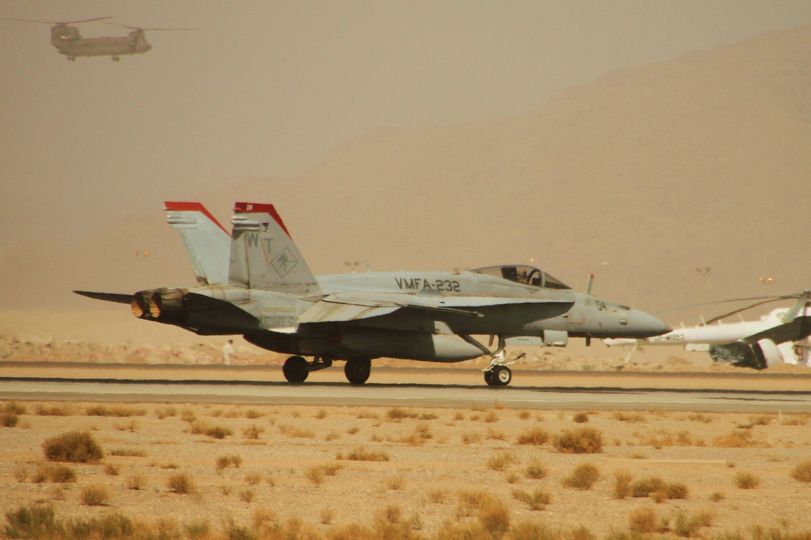
An F-18 began its take off roll and went blasting past me. I stopped to watch and realized the pilot & aircraft belonged to VMFA-232. The sight of this unit still in action hit my aviation historian heart center mass. Fifteen years before, Major Dick Mangrum’s gunner, Dennis Byrd, reached out to me while I was working as an aviation historian for Dynamix Inc., a computer game company. Dennis and I became friends, and I interviewed him repeatedly & corresponded with him for five years.

Major Dick Mangrum commanded VMSB-232 in the summer of 1942. He took the squadron into Guadalcanal as part of the first aviation component to reach Henderson Field. Dennis flew the entire 53 Days of combat VMSB-232 would endure there as Dick’s back-seater.

Earlier in the fall of 2010, I’d been aboard a Chinook forced to make a precautionary landing in the Hindu Kush. Every aircraft available came to our defense and orbited overhead, keeping us safe from Taliban attack. While we were down waiting for rescue, I made a mental bucket list of books I wanted to write if I survived and got home. Fourth on that list was getting the chance to write the story of John L Smith, Marion Carl and Dick Mangrum and their Guadalcanal Deployment with VMF-223 and VMSB-232.

Watching that F-18 take off at Kandahar on my last day in Afghanistan reinforced my intent to write about the guys who came before that pilot and set the bar for service so high during the pivotal weeks on Guadalcanal. VMSB-232 was virtually destroyed in the 53 days its men served on the island, and in October 1942, Dick Mangrum was the last pilot left from the squadron. Everyone else had been medically evacuated, killed or wounded.

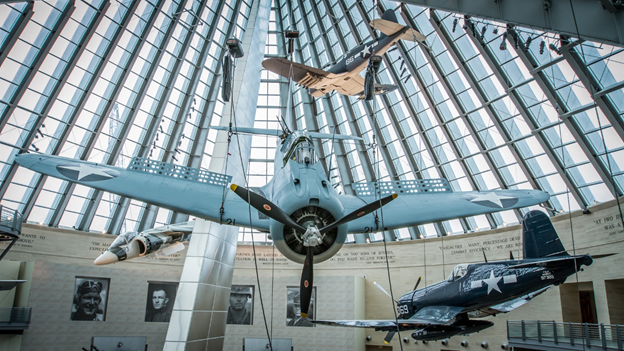
The USMC Museum in Quantico has honored Dick Mangrum & Dennis Byrd by painting their SBD Dauntless in their markings. It hangs on display now, a reminder of the heritage and tradition that VMFA-232 carries forward to this day.

Later, as I headed home aboard a C-17 to help take care of Jenn through surgery and radiation, I wondered if VMFA-232’s F-18s had covered our downed Chinook that day in September. I’ll probably never know for sure, but it was a comforting thought for sure.

Categories: Afghanistan, Uncategorized, World War II in the Pacific, Writing Notes | Tags: , , , , | 1 Comment

The Image Maker

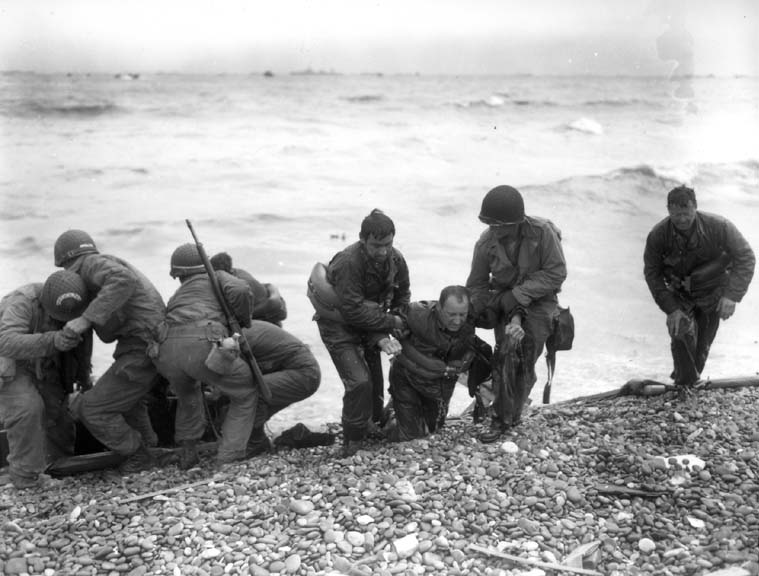
val c pope one of first combat cameramen to land at Normandy seen in france june 44651 8x10Val C. Pope served with a U.S. Army Signal Corps company during World War II. He was one of the first combat cameramen to make it ashore on D-Day. He landed on Omaha Beach with still photographer Walter Rosenblum sometime during the morning of June 6th. Armed only with a movie camera, Val and Walter set about capturing the chaos on Omaha as it unfolded around them. One of the most gripping movie clips Val shot that survived the landing was the rescue of several drowning GI’s. Their landing craft was hit and sinking, and as they ended up in the water floundering, a young lieutenant saw their plight from shore. He grabbed a cast away life raft, jumped into the surf and swam out to them. Val’s footage shows the men being helped ashore.omaha beach 1157

For the next several days, Val remained right in the thick of the fighting, filming some of the iconic scenes of the early days of the invasion. While walking past a couple of buildings in search of a Red Cross aid station, he was ambushed by a German machine gun team. Hit in the head, he fell back unconscious as a fellow combat camerman dove for cover. A few minutes later, a group of GI’s rushed out and pulled Val out of the line of fire. He died as medics worked furiously to save his life.

Today, as we remember the June 6th landings, let us not forget those who carried cameras instead of guns, whose images have become a timeless–and priceless–part of our national heritage. Without them and their selfless spirit to capture history as it unfolded, future generations would have had no window into those momentous events in 1944.omaha beach dday first wave going ashore iii212


Categories: ETO, European Theater of Operations, War in Europe, World War II, World War II Europe, World War II in Europe | Tags: , , , , , , , | 1 Comment

Marion’s Shoes


   IMG0083 nara 57 marion carl Marion Carl grew up in the tiny village of Hubbard, Oregon, a few dozen miles southwest of Portland.  After graduating from high school, he enrolled at Oregon State University.  While studying engineering, he also joined the Corps of Engineers and  ROTC.  In the fall of 1937, during his senior year, Carl learned to fly on a Piper J-2 Cub at an airport just outside of Corvallis.  In May, 1938, Carl went up to Fort Lewis, Washington tried to enlist in the Army Air Corps .  The Air Corps turned him down, citing unspecified physical reasons.  Later, Carl discovered that the recruiter had filled his quota for the month and had rejected him for that reason.

            He graduated from OSU in June, 1938 and spent the summer up at Fort Lewis as a second lieutenant in the Army.  Despite the Air Corps’ reject, Marion was determined to find a way into the air. He went to see a Navy recruiter and was accepted into the naval aviation cadet program. In August, he reported for duty in the Navy.  In one day, he went from a second lieutenant in the Army to a Seaman Second Class in the Navy to a Private First Class in the Marine Corps!  Years later, Marion Carl would become one of the rarest of officers–one who worked his way up from private to general in the course of a most distinguished military career.

            Carl recalled in a 1992 interview that he chose the Marine Corps for two reasons, “I wasn’t all that enthusiastic about being at sea so much.  The other was, of the eight of us  there, I was the only one who qualified for the Corps.  I was the only one with a college degree.  The Navy was taking men with two years, but the Marines weren’t.  You had to have a college degree.  On top of that, I got to Pensacola a month ahead of the others.”

            Of the eight other young men Carl joined up with that summer, three washed out of flight school. The other five became Navy pilots.

            When the war began, Carl was serving with VMF-221, a fighter squadron equipped with the squat, barrel-shaped Brewster F2A Buffalo.  Just after Pearl Harbor, Carl and the squadron boarded the U.S.S. Saratoga as part of the Wake Island relief expedition.  VMF-221 was supposed to be launched from the Saratoga, fly to Wake and help defend the atoll with the remnants of VMF-211, the Wildcat squadron already there.

            Just before the Saratoga came into range of Wake, the operation was canceled.  The frustration the Marines felt was palpable, and on the bridge of the Sara, officers talked openly of disregarding these orders.  Nevertheless, the task force turned around and aborted their mission.  A short time later, the gallant defenders of Wake Island surrendered to overwhelming Japanese forces.

            Instead of going to Wake, Marion Carl and VMF-221 went to Midway Atoll.  There, amongst the gooney birds, the men wallowed in boredom for nearly six months, flying training missions but never sighting the Japanese.

Another shot of Midway Atoll. This is Sand Island.

Midway Atoll. This is Sand Island.

            At the end of May, 1942, Midway received a sudden influx of reinforcements.  They came in drips and dribbles– a few B-17s, a quartet of Marauders from the 22nd Bomb Group, and six TBF Avengers from Torpedo Eight. Having broken the Japanese naval code, JN-25, the Americans knew the Japanese would soon be attacking Midway.  Every available airplane was rushed to the Atoll.

            That attack came on the morning of June 4, 1942.  VMF-221 took to the air in defense of Wake Atoll.  Carl took off with the squadron flying a Grumman F4F Wildcat, one of six the squadron now possessed.  Together with the Buffalos, the Marines were able to put up twenty-five fighters to meet over a hundred Japanese aircraft, all flown by crack veterans of the China Incident, Pearl Harbor and the Ceylon Raid.   The result was a slaughter.  The Zeroes flying cover for the Nakajima B5N Kates and Aichi D3A Vals had  placed themselves too high and too far behind their chargees to prevent the Marines from making one unhindered pass.  The Americans took advantage of the mistake and managed to claw down a couple of bombers before the Zeroes descended upon them in all their fury.  The Brewsters, unmaneuverable and slow, were chopped to pieces by the expert Japanese pilots.
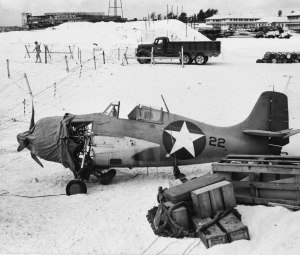
           

One of the surviving F4F-3 Wildcats at Midway, seen after the battle.

One of the surviving F4F-3 Wildcats at Midway, seen after the battle.

Marine Carl not only held his own, he damaged a bomber before the Zeroes swarmed all over his division.  Climbing out of the fight, he went looking for trouble at 20,000 feet.  In 1992, he recalled to me, “The next thing I knew, I had a Zero on my tail.  I didn’t know he was there until these tracers started going by.  I racked it into a tightest turn I could.  He followed me and made it look easy!  So, I headed for the nearest cloud.  He hit me eight times.”

            Just inside the cloud, Marion cut his throttle and skidded the Wildcat.  When he popped out the other side, he caught sight of the Zero scuttling along below. Marion shoved the stick forward and opened fire at the same time.  The sudden dive jammed all his guns, allowing the Zero to escape.

            After clearing three of his guns, he returned to Midway to discover a trio of Zeroes lagging behind the rest of the strike group.  Carl followed the three Japanese fighters, waiting for his opportunity to strike.  Finally, as one of the three Zeroes began falling behind the others, the Oregonian attacked.  He dove down behind the Zero and opened fire from dead astern.  The Mitsubishi crashed into the water  off the reef that surrounded the atoll.

            It was the first of eighteen kills Marion Carl would claim in two years of combat.

            When he returned to Midway, he discovered that fully half his squadron had been killed in the fight.  In fact, besides his own Wildcat, only one other fighter was operational.  It was a grim introduction to combat.

            Two months later, Carl and VMF-223, his new unit, landed at Henderson Field on Guadalcanal.  Throughout August and September, the gritty Marines fought a desperate battle of attrition in their daily encounters with the Japanese. On August 24, 1942, in the middle of the Battle of Eastern Solomons, Carl and his division intercepted an inbound strike from the Japanese carrier Ryujo.  In the dogfight that followed, the young Oregonian gained credit for downing two Zeroes and two B5N Kates, making him the first U.S. Marine Corps ace.

            Only a few weeks later, the hunter became the hunted.


Henderson Field Guadalcanal Aug 22 42 861 4x6

Henderson Field, Guadalcanal seen August 22, 1942.


MAS077 F4F Scramble Guadalcanal

An F4F scrambles at Henderson Field.

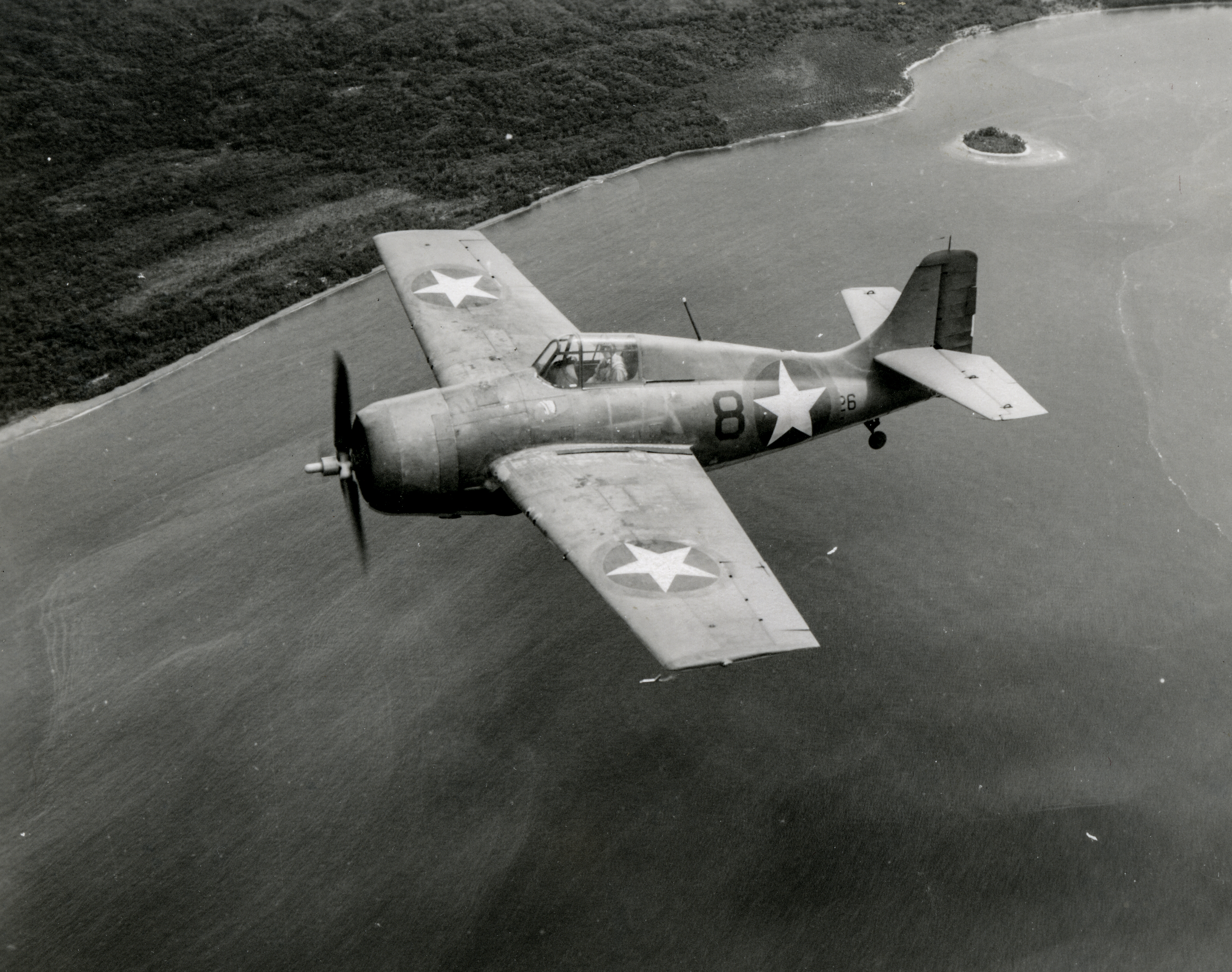
September 9, 1942 was a typical day for the beleaguered American Marines on Guadalcanal. Shortly after 11:00, Australian coastwatchers reported a major Japanese raid headed for Henderson Field (code-named Cactus), the airfield the Marines were doggedly trying to defend. Cactus Control ordered a full-scale scramble as soon as it received news of the impending attack. The pilots of VMF-223 and -224 raced to their fighters, which had been warmed up and ready to go since dawn. Captain Marion E. Carl  was one of the sixteen Wildcat pilots in the cockpit that day. He climbed into his F4F-4, strapped in, and taxied out of the dispersal area. With his stubby fighter now on the runway, he opened the throttle. The Wildcat careened down Henderson Field and bounded into the cloudy skies above Guadalcanal. After Carl took off, one pilot from VMF-224 did not quite make it. He stalled just as he got airborne, and his Wildcat smacked into the ground at the end of the runway. Now there were fifteen Grummans to meet the Japanese attack.

Gdl037 Smith galer carl 5x7

John L. Smith, Bob Galer (Medal of Honor) and Marion Carl at Guadalcanal.

Though Carl had only been on the island since August 20th, he had already carved a niche for himself in aviation history. Six days after arriving at Henderson Field he had shot down his fifth Japanese plane. In doing so, he became the first U.S. Marine to ever reach acehood. He had continued to add to his score, and only his squadron’s commander, John L. Smith, had any chance of catching his tally. Smith and Carl enjoyed a friendly rivalry, each one determined to leave Guadalcanal with the laurels of top ace status. Carl to this point had remained comfortably in the lead, but the September 9th mission would alter the balance between the two aces.

The Wildcats pointed northward and labored for altitude. For once the Marines had received enough warning to climb above the Japanese bombers. Often, word of an impending attack came too late for the F4F’s to get to a proper intercept altitude. The frustrated pilots would watch the Mitsubishi G4M Betties pass serenely overhead while their Wildcats struggled for altitude thousands of feet below. This time, though, the Marines managed to get to about 23,000 feet before the noontime raid arrived. The raid consisted of two formations; one Vee of G4Ms, and another of escorting A6M2 Zekes. The Zekes trailed behind the bombers, keeping watch over their charges as they shepherded them to the target area.

betty gsap water color c 4x6

A formation of G4M Betty bombers seen later in the war at Okinawa. This is a still image from gun camera film taken by an F6F Hellcat belonging to VF-17.

On this day, the Marines had the altitude advantage. Like the intercept over Midway,  the escorting Zekes were again caught slightly out of position.  Carl led his men to a point about a mile ahead and off to one side of the Vee of Betties. In column formation, the Marines executed 180 degree turns and dropped down on the bombers. With his nose pointed almost vertical, Marion’s Wildcat accelerated to over four hundred miles per hour. He had just enough time to give a Betty a long burst  from his six fifty caliber machine guns as his Wildcat howled through the formation. The fifties stitched the bomber from nose to tail, tearing apart the crew positions.  It fell earthward, mortally wounded.

f4f usmc ii031Engine roaring, Carl swept under the stricken plane, ready to make another  attack on the formation. Using the speed he had gained during his first pass, he zoomed back up above the Japanese and turned to make another overhead run on them. Down he went again, his Wildcat whining furiously as he pushed the nose towards the vertical again.  Guns chattered, tracers flew.  Another Betty dropped out of the formation, victimized by the sharpshooting Oregonian, its engines coughing up great spumes of smoke.

Then, Marion got reckless.

g4m betty over water gsap color 4x6

Another gun camera still from VF-17’s Okinawa dogfight. This Betty was carrying a rocket-powered suicide stand-off bomb called a Yokosuka MXY7 Ohka. It is just visible under the Betty’s centerline.

Carl had limited himself to only one or two passes at the bombers on his previous  intercept missions. After two runs, the Japanese fighter escort usually had enough time to intervene. After his second pass, he would roll inverted and dive for the deck. No Zero could keep up with a Wildcat in a steep dive above 10,000 feet, so the maneuver ensured he would make it back to Henderson to fight another day.

On September 9th, Carl saw no Zeroes, heard no warning calls. He decided to attack the bombers one more time. He climbed back over the Betties, selected one and rolled in on his target.

As he started his run, his F4F suddenly shuddered. Cannon and machine gun strikes rocked the Wildcat, and Carl had no chance to react. A Zero had somehow slipped behind him. In seconds, Carl’s engine exploded in flames. Smoke poured into the cockpit, stinging his eyes and disorienting him. The smoke forced him to open the canopy, which added such drag to the Wildcat that Carl knew he was now a “dead pigeon” for the Japanese pilot behind him.

With the smoke came an intense wave of heat. Later he would recall, “The one way I didn’t want to go was to get burnt, to get fried. I don’t take long to make up my mind on something like that. So I just rolled the [Wildcat] over and out I went.”

Carl had bailed out at about 20,000 feet. By the time his parachute opened, the air battle had passed him by. Not a single aircraft remained in sight. He spiraled downwards in his chute, enjoying a birds-eye view of Guadalcanal and its environs. He landed in the water about a mile off shore.

For several hours, he floated in his Mae West, treading water and trying to prevent the current from dragging him away from shore. He kept his flying shoes on, and held onto his Colt .45, figuring he’d need them when he got ashore. Still, the weight of these burdens tired him out, and he began to lose headway against the current. Before he had bailed out, his face had been slightly burned by the heat in the cockpit, and the wound began to ache.

1st marine div patrol guadalcanal 8x10

A Marine patrol on Guadalcanal in the fall of 1942. After Carl ended up in the water, he faced a challenging trip to get back through Japanese lines to reach the Marine perimeter around Henderson Field.

Fours hours later, a native canoe cut through the choppy waves towards him. Exalted that help had arrived, Carl began to shout out, “American! American! American!” The native wasn’t completely convinced, however, and circled the downed aviator for several minutes before concluding he indeed was an American. He helped Marion climb into the canoe, introduced himself as Stephen, then began to paddle towards shore. He brought Carl to a small native encampment, where he was introduced to a native from Fiji who had been serving as a doctor for the local inhabitants. Corporal Eroni spoke good English, and proved more than willing to help the American get back to Henderson Field.

After trying unsuccessfully to get  back to the perimeter overland, Carl and Eroni decided to go by sea in an  eighteen foot skiff. The small boat was powered by an ancient single cylinder engine which at the moment did not work. Fortunately the resourceful Marine had plenty of experience with small engines, as he had purchased a scooter some months before that had demanded constant mechanical attention. He managed to get the skiff’s engine working after tinkering with it for most of an evening.

That morning, around 4:00 A.M., Carl, Eroni and two other natives set out for Henderson Field. The boat weaved its way along the coast, the two men keeping a sharp watch for any Japanese troops. By 0700, they had reached Lunga Point, where the Oregon Marine splashed ashore to report back for duty.

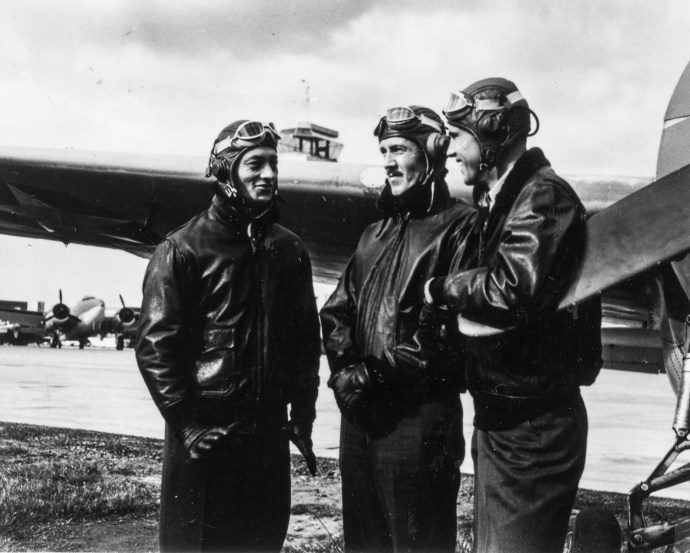
When Brigadier General Roy Geiger, the commander of the air striking force on Guadalcanal, heard of Marion’s return, he sent for the intrepid Marine immediately. Moments later, Carl stood before him, saluting happily. The two men chatted amiably for a while, then Geiger mentioned that Smith had just shot down his sixteenth plane. With the two Betties he got on the ninth, Carl had only twelve. “What are we going to do about that?” demanded Geiger playfully.
Gdl209 Carl-Smith-Mangrum_

John L. Smith, Dick Mangrum and Marion Carl.

“Goddamnit General, ground Smitty for five days!” Carl replied.

Smith finished the war with 19 kills and the Congressional Medal of Honor. Carl ended his WWII combat career with 18.5 victories.

Word spread quickly throughout VMF-223 that Carl had returned. His comrades were overjoyed to see him, though some were also a little embarrassed. After he went missing, the pilots figured he was gone for good and divided up his possessions. Marion had to spend the day rounding up his personal belongings. Finally, he managed to recover his scooter, his short wave radio and all his other nick-knacks except for a pair of shower shoes. He had kept them carefully under his cot, his name carefully marked on their soles in black, indelible ink. Carl searched high and low, but found no trace of them.

In the late 1950’s Carl was stationed in Headquarters, Marine Corps in Washington D.C. as part of the Commandant’s staff. He’d become a colonel by then and was on track to get his brigadier’s star.

One day, the Marine Corps Commandant, General David M. Shoup, took him aside after a meeting and said to him, “By the way, Marion, I’ve gotta pair of shoes of yours.”

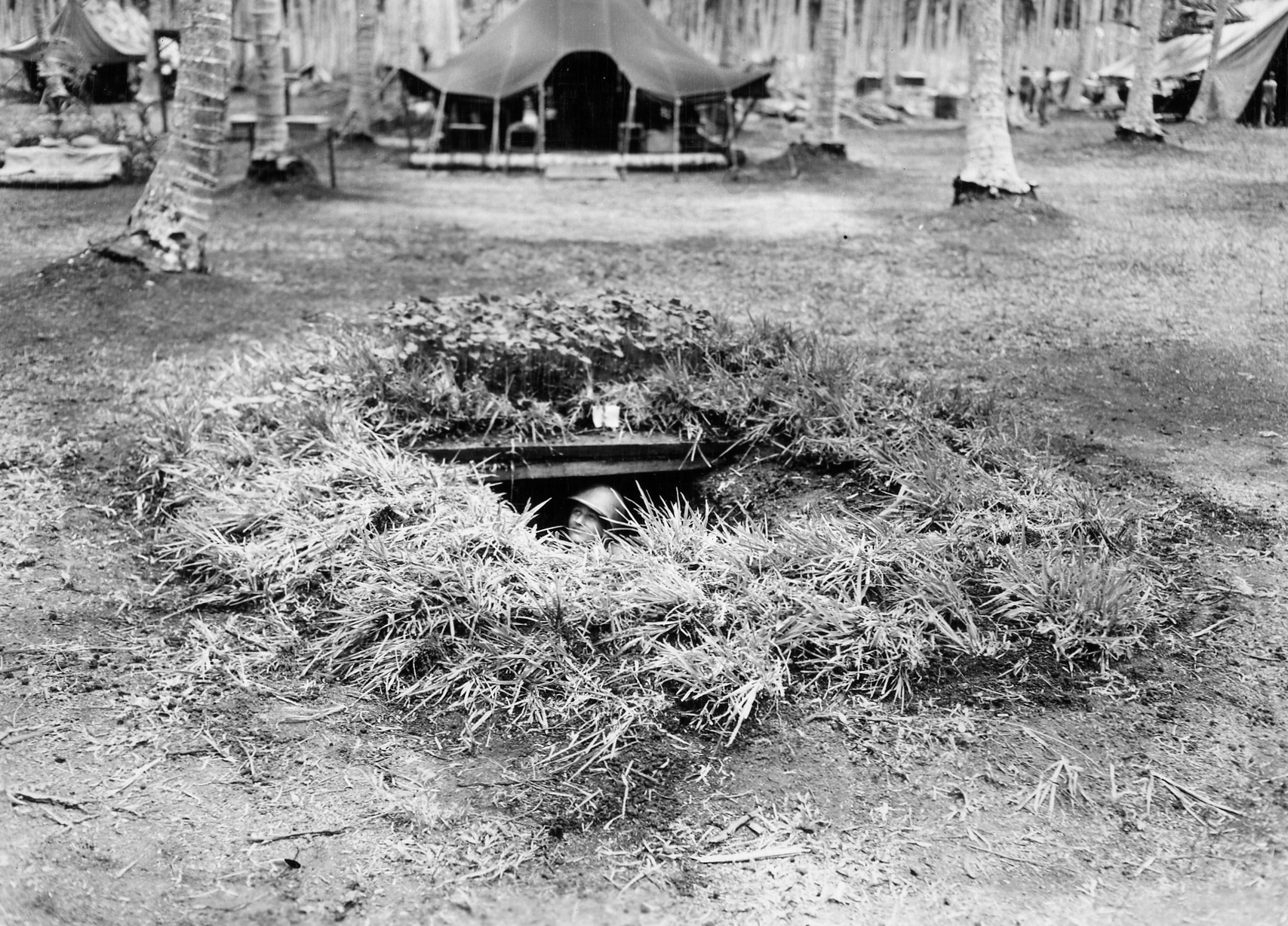
MAS057 Foxhole Henderson Mar43

A Marine dug out at Henderson Field.

Puzzled, the Oregonian asked, “What do you mean you’ve got a pair of my shoes?”

Shoup explained that he’d been serving with a Marine line unit defending Henderson Field that fall. After Marion had gone missing in action, Japanese warships shelled the Marine perimeter. The onslaught had flatted Shoup’s quarters, along with many other tents and structures around the airfield. After the Japanese ships steamed back up the slot, Shoup crawled out of his foxhole and went looking for a place to sleep. He came across Carl’s tent, learned that the Oregonian had been posted missing, and decided to curl up on his cot. In the morning, as he headed back to his regiment, he caught sight of the shower shoes under the cot. He scooped them up, figuring a dead man didn’t need them, and disappeared.

Shoup finished his tale by telling Carl he wasn’t going to give them back. “They’re the luckiest pair of shoes I’ve ever had,” he told Carl. “I credit them for keeping me alive during the war.”

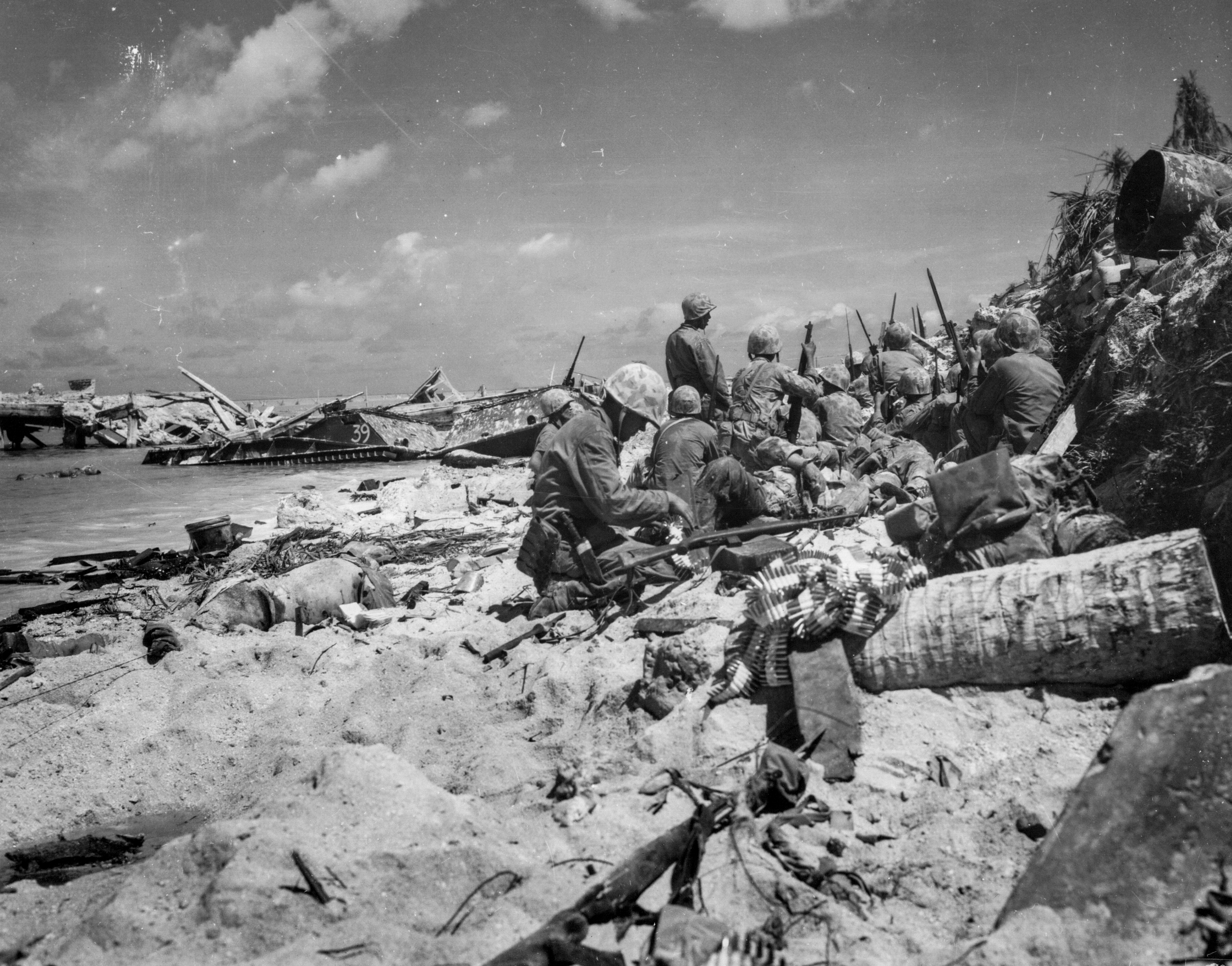
at the waters edge 300 dpi bw

Betio Island, Tarawa, November 1943.

They must have been truly lucky shoes. Shoup carried them in his pack when he hit Beach Red at Betio with the first Marine waves in November, 1943. In the first desperate hours of the invasion, he took command of the Marines clinging to the waterline and led the push inland. His actions that day earned him a Medal of Honor. Later, though assigned as a divisional staff officer, he found his way to the front lines during the Battle of Saipan, where he was trapped in a forward observer’s position for several hours. He later received a Legion of Merit for his role in the Marianas campaign.


David Shoup receives the Medal of Honor at the Navy Department in Washington D.C. on January 22, 1945.

David Shoup, with his family looking on, receives the Medal of Honor at the Navy Department in Washington D.C. on January 22, 1945.


            Marion Carl stayed in the Corps after the Japanese surrender.  As a Marine test pilot, he earned numerous “firsts” in his illustrious career.  Besides being the first Marine ace, he was the first pilot in the Corps to land a jet fighter on an aircraft carrier, and he set a world’s speed record in 1947, going 650.6 mph in a Douglas Skystreak.  Later, he commanded the first jet aerobatics team, was the first military pilot to wear a full pressure suit and in 1986, he became the first living Marine to be enshrined in the Naval Aviation Hall of Honor.  Brigadier General Marion Carl retired on June 1, 1973, with over 14,000 hours in some 250 different plane types, ranging from experimental rocket propelled aircraft to canvas-covered puddle jumpers.  In the course of his thirty-four year career, he earned two Navy Crosses, five DFCs, four Legions of Merit, and fourteen Air Medals.  Not bad for a  small town farm kid.

            In June of 1998, a 19 year old drug addict broke into Marion’s ranch house east of Roseburg, Oregon.  Wielding a shotgun, the intruder wounded Marion’s wife, Edna, with a blast of gunfire.  Hearing the racket, Carl burst out of his bedroom and flung himself in front of his wife, just as the addict pulled the trigger again.  Carl was killed instantly.  He died as he had lived—a true hero whose measure lay not in his many accomplishments, but rather in the size of his enormous heart.f4f usmc airborne034
Categories: World War II in the Pacific | Tags: , , , , , , , , , , , , , , , , , , , , , , , , , , | Leave a comment

Knives and Bayonets Against the Waffen-SS:

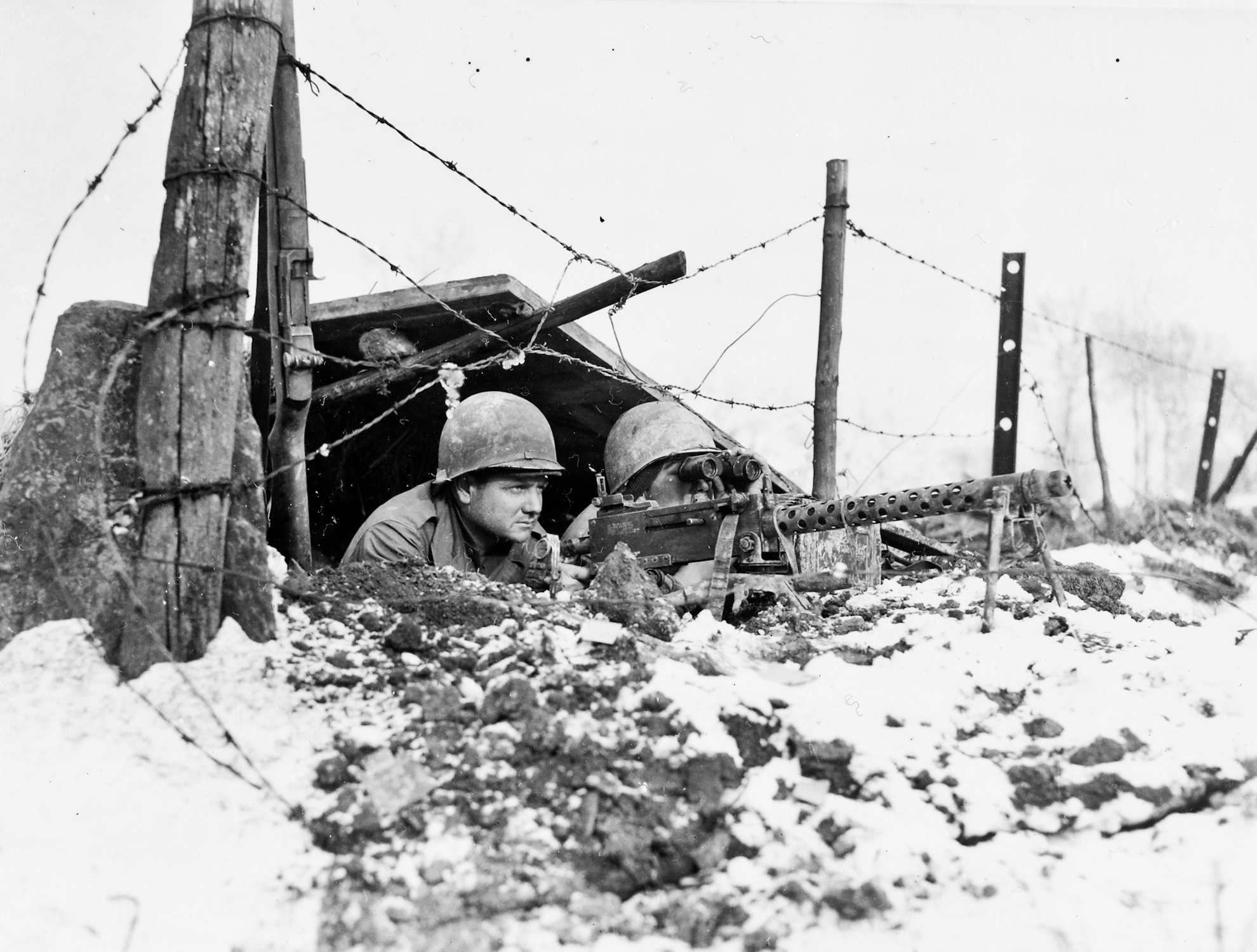
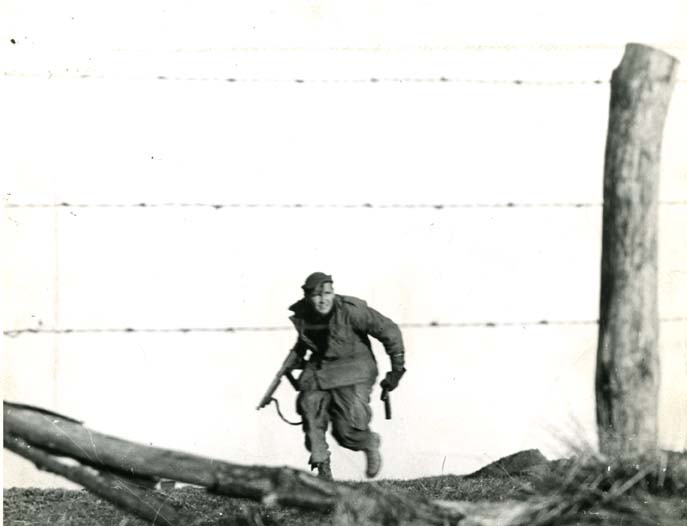
82nd airborne bulge155 8x10The American paratroopers moved swiftly through the darkness, their speed and effort keeping the bitter cold at bay. Through thick woods they’d captured earlier that day, they would soon break out into flat, open ground broken only by rows of heavy barbed wire fences. Four hundred yards across that dead space, two companies of elite SS panzergrenadiers waited for them. Supported by heavy tanks, half tracks, 75mm gun carrying armored cars and 20mm flak wagons, the entrenched SS troops possessed the kind of firepower that could utterly wipe out an infantry assault.

The paratroopers had waited for the pre-attack artillery bombardment, but it didn’t happen. They waited for the two tank destroyers assigned to attack, but the LT in charge of them refused to move forward, arguing his M36 Jacksons were no match for the German armor on the other side of the open ground.

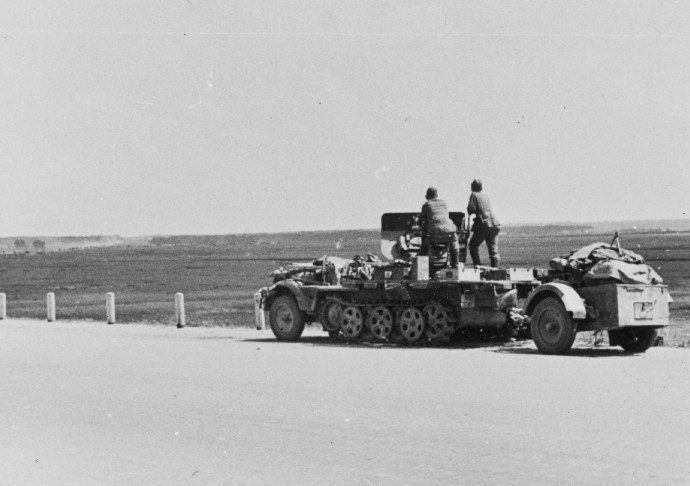
German Series WWII East Front Barbarossa German Halftrack and 20mm anti aircraft gun in action Beresina Russia 070341 (1 of 1)

A German 20mm flak half track. Cheneux was defended, in part, by a Luftwaffe light flak battalion equipped with eighteen of these deadly vehicles.

Without artillery or armor, the paratroopers attacked anyway. The situation was desperate.

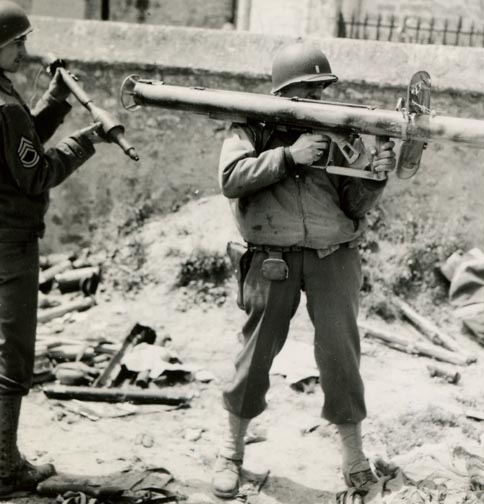
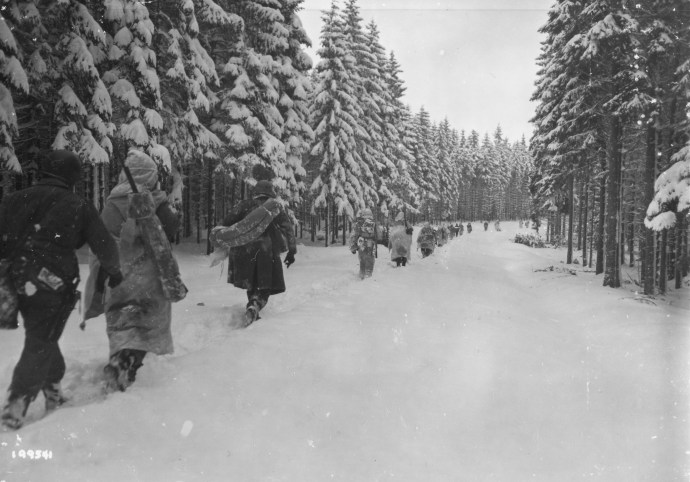
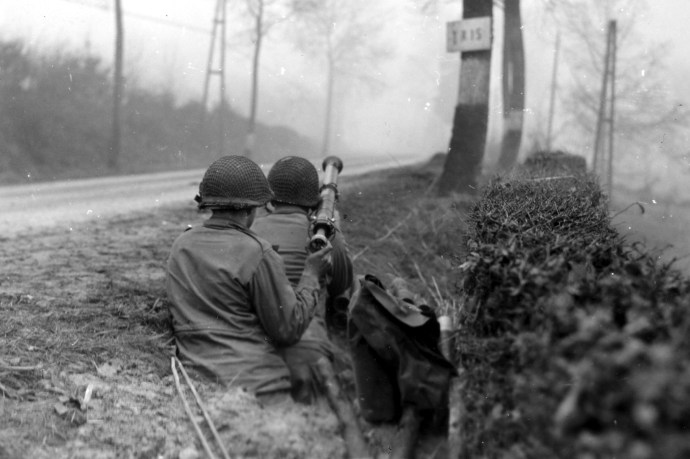
Bulge359It was 1930 hours, December 20, 1944. Christmas season in Belgium’s Ardennes Forest. The 82nd Airborne reached the battlefield only two days before after a wild drive up from France. Thrown into the path of Kampfgruppe Peiper, the men of the 82nd had no time to get oriented, lacked winter clothing and carried nothing heavier than bazooka rocket launchers.
82nd airborne bazooka team bulge dec 20 44583 4x6

An 82nd anti-armor bazooka team covers a road near Cheneux on December 20, 1944.

The Peiper’s panzergrenadiers represented the best troops left to Nazi Germany. Fiercely loyal to the Reich, they fought with tremendous intensity and determination with the best equipment in the world. Equipped with Tiger II heavy tanks, Panther medium tanks, self propelled guns and half tracks, Peiper’s kampfgruppe was supposed to lead the way to the Meuse River in the opening days of the German Ardennes offensive. Getting across the Ambleve River was a key step toward the Meuse, but furious counter-attacks by the 30th Infantry Division had stopped Peiper’s spearhead at Stoumont. To the south, at Cheneux, the Waffen-SS troops seized two bridges, crossed the Ambleve and prepared to drive on.

82nd airborne bulge in ardennes941

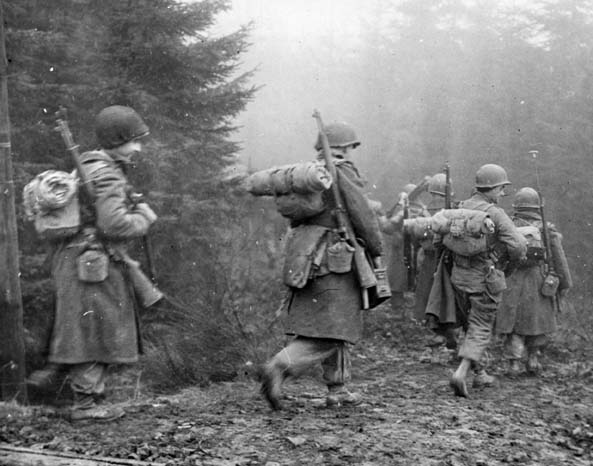
Men of the 82nd moving into forward positions on December 20, 1944.

The 82nd’s 504th Parachute Infantry Regiment reached the front and its regimental commander, Colonel Tucker, realized the gravity of the situation. The panzergrenadiers had to be driven back across the Ambleve and their bridgehead destroyed. Cheneux had to be seized and the river used as the main defensive line against further German armored thrusts.

The responsibility for taking Cheneux fell to the 1-504. Second Battalion had pushed to within a half mile of the town earlier on December 20, 1944, their advance aided by a captured German half track armed with a 77mm field gun, which a scratch American crew put to good use until they ran out of ammunition. Shortly after, the attack stalled and 1-504 was ordered to attack through 2nd battalion’s lines and take Cheneux in a night attack.

Nothing went right at first. Bravo Company 1-504 formed the right wing of the assault, while Charlie was the left.  Each company went in with four waves of men with fifty yards of space between each wave.

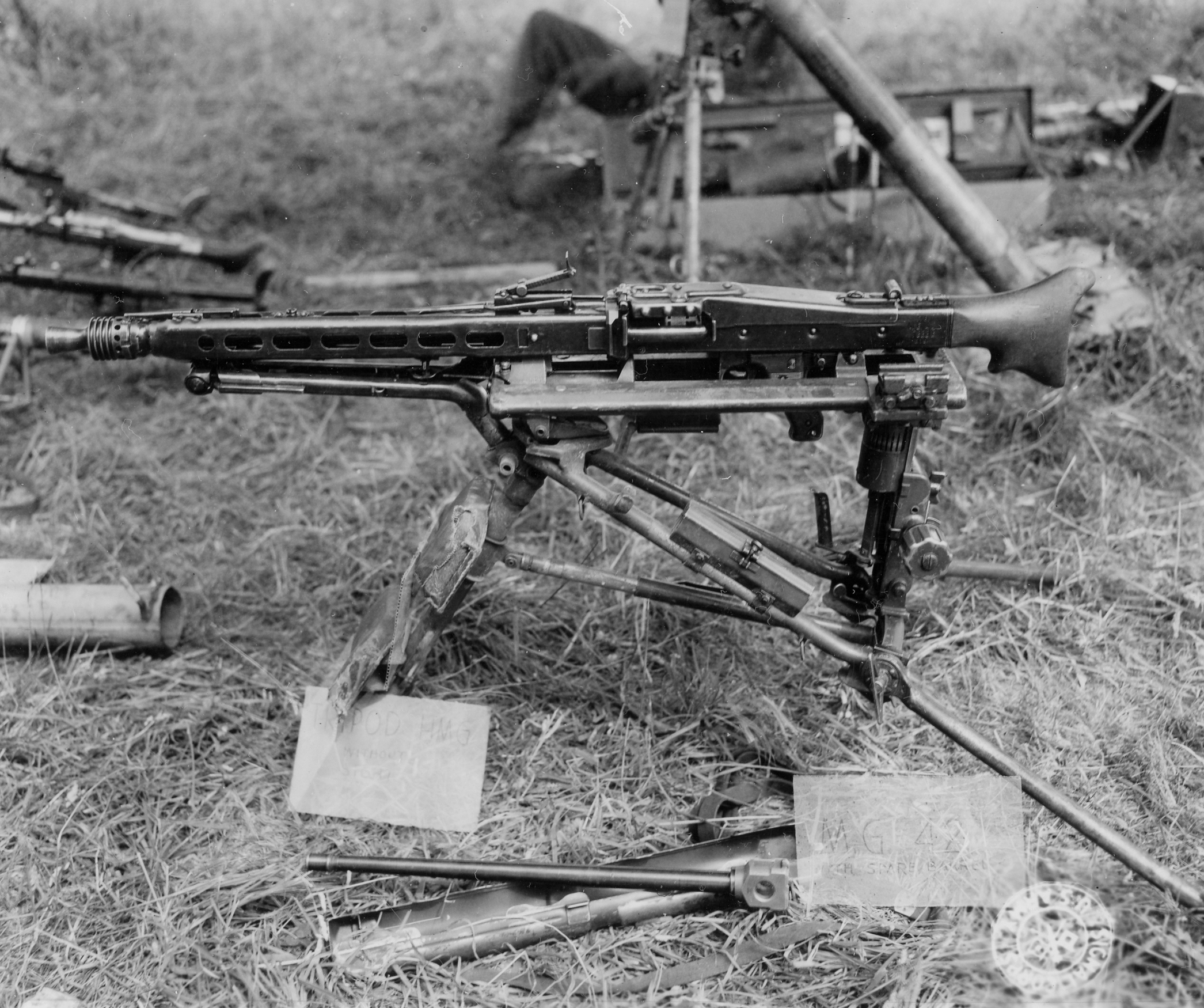
They barely made it into the open terrain when the Germans opened fire with every barrel. Mortar round rained down on the Americans. Artillery soon followed. Struggling through the indirect, the first waves crawled to the barbed wire fences. The Germans had them zeroed. Suddenly, yellow glowing 20mm anti-aircraft shells streaked overhead, exploding among the troops.  The zipper-fast sound of MG-42’s going cyclic erupted across the German main line of resistance. The Americans, caught against the barbed wire, out in the open without support, were cut down relentlessly.

1st Army Captured German Equipment Series MG42 on tripon German heavy machine gun st clair france normandy campaign 062344 (1 of 1)

The deadliest machine gun of World War II, the German MG42.

Trapped in the kill zone, the veteran NCO’s and officers of 1-504 realized they had to close with the enemy or die in the terrible crossfire. On the right, 1st platoon Bravo Company’s commander, 2nd Lt. Richard Smith and Staff Sergeant William Walsh stood up in the tracer-light night and urged their men to charge.  They hurdled the barbed wire fences, 20mm flak rounds savaging their ranks. Sprinting through the fusilade, Walsh was seriously wounded in the hand. He kept going, urging his men as the MG-42’s raked through them.

82nd Airborne Div 325th Glider Regt M1919 Browning 30 cal LMG team Odrimont Belgium Bulge 010645 (1 of 1)

1-504th’s machine gun teams suffered catastrophic losses. Five of eight supporting the initial night assault into Cheneux were wiped out by German counter-fire. This M1919 LMG team belonged to the 82nd Airborne Division’s 325th Glider Infantry Regiment. The photo was taken at Odrimont, Belgium a couple weeks after the Battle of Cheneux on January 6, 1945.

The battalion’s .30 caliber machine guns did their best to suppress the Germans, but the American gunners didn’t stand a chance in the face of so much firepower. Panzers, flak wagons and mortars concentrated on those support by fire positions and took out five of the eight machine gun crews before the night was over.

That left the paratroops on their own in the kill zone. Some tried to provide their own suppressing fire while others charged forward. Ammunition ran low; the men pulled guns and ammo off the wounded and the dead to keep going. Driven forward, the first wave finally reached the German lines. On 1st Platoon, Bravo’s section of the front, Staff Sergeant Walsh had his men prep grenades for him (he couldn’t pull the pins out with his wounded hand). Holding the spoon in place, he charged toward a German 20mm flak half track and chucked the grenade onto its bed. The weapon detonated beside the 20mm gun, wiping the crew out.

Other paras surged into the German trenches and foxholes, clubbing the panzergrenadiers with rifle butts and  beating them with bare fists. The fighting devolved into vicious man-t0-man battles to the death.

st mere eglise june 17 gis with panzerschrek156

A captured panzerschrek under investigation by U.S. troops at St. Mere Eglise during the Normandy Campaign. Captured panzerschreks were sometimes used against the Germans since they proved more effective than American bazookas.

Sergeant Edwin Clements reached one of the flak tracks. Out of ammunition, he drew his combat knife, jumped onto the back of the vehicle and killed the three man gun crew. Nearby, Private Mack Barkley did the same, slitting a 20mm gunner’s throat then grabbed a German panzerschrek and put two rockets into another armored vehicle before being wounded in action.

The fighting coalesced around the armored vehicles. The panzergrenadiers, overwhelmed in their trenches by the desperate American assault, gave ground. Twenty of them were killed in hand-to-hand fighting as the others fell back into Cheneux’s buildings. Meanwhile, the vehicle crews found themselves surrounded by paratroops willing to do just about anything to knock their guns out. Staff Sergeant Walsh was seen climbing onto a German tank and–in true Hollywood fashion–dropping a grenade on the crew from the track commander’s hatch. Others followed suit. Private First Class Daniel Del Grippo of 2nd Platoon Charlie earned a Distinguished Service Cross for knocking out an MG-42 nest, then tommy-gunning a flak track’s 20mm crew.

First Platoon Bravo made it into the west side of Cheneux with twelve men standing. Walsh and Smith urged them forward toward’s the town church, only to run into another flak track parked in an intersection. Sergeant Dock L. O’Neil, who had splintered his M1 Carbine’s stock on an SS Soldier’s head, led the attack against this vehicle and knocked it out with a bazooka just as the gun crew wounded him in the leg. As the track burned, one of the Luftwaffe gunners jumped clear, only to be cut down by O’Neil’s Model 1911 Colt .45. Smith was killed soon after while leading the remains of his platoon.

An hour into the attack and every B Co officer had been killed or wounded except the company commander. The sight of his men being slaughtered in the 400 yard kill zone proved too much for him. He went berzerk, suffering a mental breakdown and a few of his surviving men had to physically restrain him. Command fell to the XO, who pressed the attack forward.

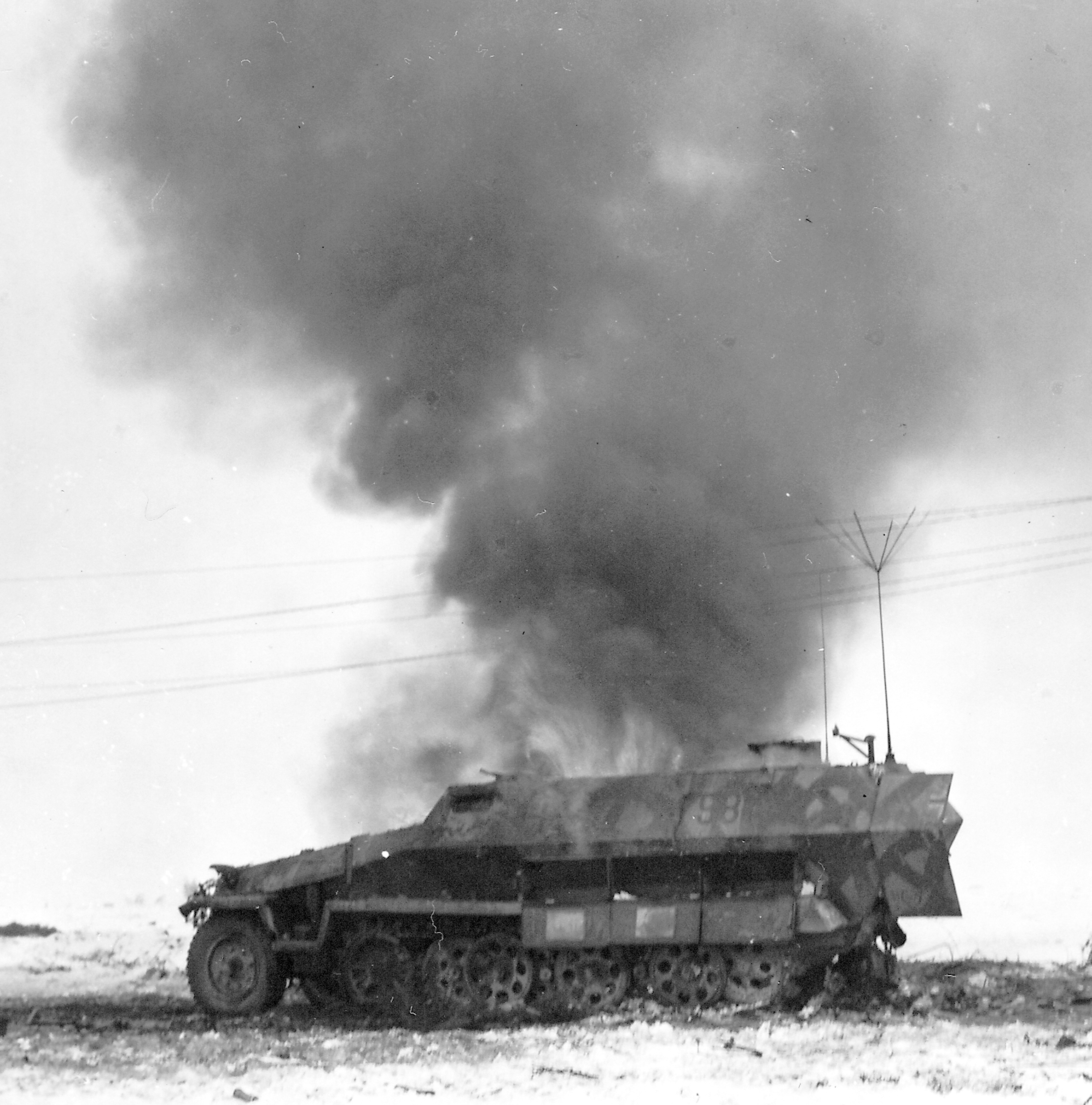
Bulge135 burnGerHTJan6On the left, Charlie Company ran into multiple barbed wire fences. Every time the assault waves climbed over them, the Germans smothered the Americans with explosive shells and machine gun rounds. Stubbornly, the surviving Americans closed with the panzergrenadiers and drove them out of the foxholes–or killed them in place.

As the attack neared the west side of town, Charlie’s lead elements ran into a Puma armored car equipped with a short barreled 75mm infantry support gun. The vehicle had been taking out the battalion’s heavy weapons crews, but now it shifted fire on the advancing paras. Corporal Harold Stevenson tried to knock it out with a bazooka, but the Puma’s gunners cut him down. The vehicle backed away into the night to continue the fight elsewhere in town.

Charlie penetrated the town, fighting room to room with the panzer grenadiers inside the buildings while simultaneously battling the Luftwaffe’s flak tracks in the streets. The two companies of SS panzergrenadiers lost half their men and began to pull back against the Ambleve to defend the two bridges.

Three hours into the fight, one of the 504th’s senior officers discovered that the two M36 Jackson Tank Destroyers assigned to the assault waves had not gone forward. Demanding an explanation, the airborne lieutenant colonel was outraged to hear a young LT explain how his tracks didn’t stand a chance against the German panzers defending the town.

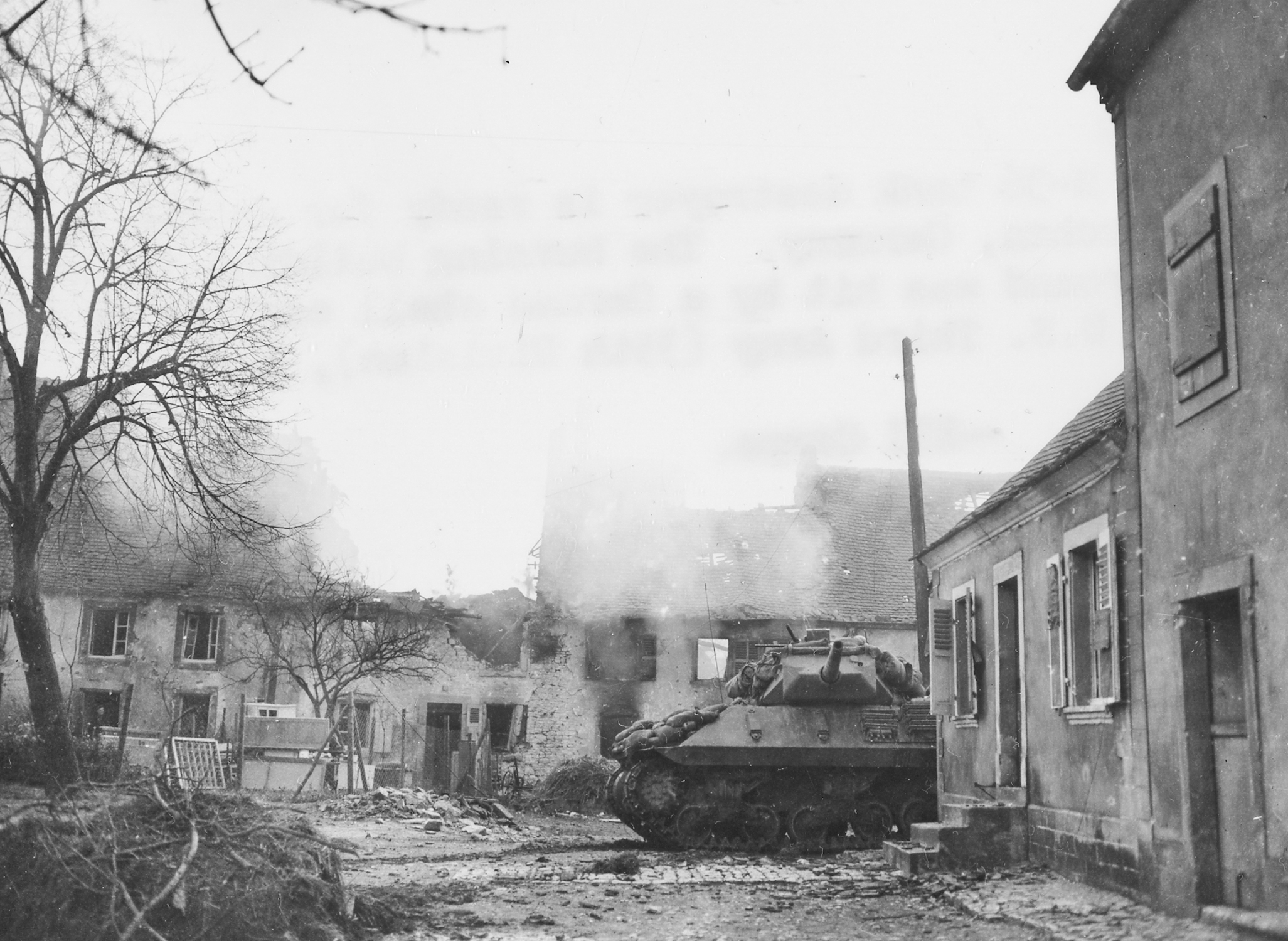
The LTC stormed over to a platoon of 60mm mortars and ordered the men there to start dropping rounds on the tankers if they did not move forward. Under that threat, the LT gave the word to go get into the fight. They rumbled up the main road into Cheneux, the fighting raging in chaotic clumps on either side without any clear front line remaining. As the Jacksons neared the town, a German half track roared right at them. Surprised, the lead Jackson’s crew trained their turret on the track–only to have their 90mm gun barrel smack the German vehicle. Stunned at this collision with an American AFV, the half track crew bailed out while the Jackson’s driver backed up far enough to allow his gunner to put an HE shell into the German rig. It blew up as the M36’s killed its fleeing crew.

35th Inf Div XII Corps 3rd Army M36 Jackson TD in burning town Habkirchen Germany 121545 (1 of 1)

The M36 Jackson sported a 90mm gun, the largest and most powerful anti-tank weapon to be widely employed by the U.S. Army in WWII.

Late that night, a few of the survivors of 1-504th’s attack reached Cheneux’s picturesque church on the south side of town. Surprisingly, it was one of the few intact buildings left, and the men approached it cautiously. Led by Lt. Howard Kemble, a light machine gun platoon leader whose men were thrown into the assault as reinforcements, the small band of Americans opened the church’s front doors and found an elderly priest presiding over a congregation of terrified, traumatized civilians. Though in the midst of battle, some of the Americans–Lt. Kemble included–entered the church, knelt beside the Belgians and prayed together with them. A moment later, they slipped back out into the fight where Lt. Kemble led the men into a bayonet charge. He was killed not long afterward by German Soldier he thought was an American. Kemble received a posthumous Silver Star for his actions.

82nd airborne trooper in counter attack 12 25 44 bulge278

504th paratrooper Walt Hughes at Cheneux after the night assault.


By the end of the night assault, the 1-504 secured half of Cheneux. They clung to their foothold and awaited reinforcement. The next day, the 504th’s 3rd battalion joined the fight and finished the job, clearing the town and forcing the Germans across the Ambleve in bitter fighting.

The Germans lost at least a hundred and fifty men, four flak tracks knocked out or captured, one Tiger II lost, two Pumas, six half tracks, a 105mm howitzer and two other vehicles. The bloody coup de main forced Peiper to abandon his only bridgehead across the Ambleve. He withdrew to La Gleize to await relief that never came. Ultimately, his kampfgruppe was surrounded and virtually destroyed. The 504th’s action at Cheneux played a major role in blunting the main armored spearhead on the northern sector of the Battle of the Bulge. That strategic victory came at a terrible cost. By the end of the first night of the Battle of Cheneux, Bravo company had twenty men standing, no officers. Charlie had three officers, forty men left.

Bulge341 KingTiger82AbnJan8

Men of the 82nd Airborne examine an abandoned Tiger II.

In the days that followed the Battle of Cheneux, the 82nd Airborne Division fought against no fewer than three Waffen-SS Divisions, only retreating after General Bernard Law Montgomery ordered them to do so. Within days of that withdrawal, the division returned the offensive and played a key role in the American counter-punch that regained in January all the ground lost in December.

The 504th had not just achieved their military objective that December 20th. Their furious attack against entrenched, elite troops backed up by heavy weapons and armor–succeeded against all odds because of their sheer courage, professionalism and determination. These men exemplified the best tradition of American combat arms and proved that man-to-man, the Soldiers of the 82nd Airborne were more than the measure of the Waffen-SS.  The assault at Cheneux represents one of the most heroic and determined in the U.S. Army’s history. It has become part of the long and proud legacy of the 82nd Airborne– a legacy that our current generation has added to on the battlefields of the Global War on Terror.

82nd Airborne 504th PIR Bulge belgium 012845-1

The 504th Parachute Infantry advancing to another assembly point prior to an assault on German positions near Heersbach during the final days of the Battle of the Bulge in January 1945. The 504th saw near-continuous action for almost five months following the devastating battle of Cheneux.


Categories: Belgium, ETO, European Theater of Operations, Uncategorized, War in Europe, World War II Europe, World War II in Europe | Tags: , , , , , , , , , , , , , | Leave a comment

Blog at WordPress.com.