Posts Tagged With: World War II

Warrior Adversary: Saburo Horita’s Story

Tone

The Imperial Japanese Navy heavy cruiser Tone. Saburo Horita was assigned to a 25mm anti-aircraft gun crew located near the ship’s bridge.

Saburo Horita grew up on a five acre plot of land his father farmed in Toyama prefecture on the west coast of Honshu. They were a poor family that included three sons (Saburo was the youngest). When Saburo was fourteen, his oldest brother died. Not long after, his mother died as well. He and remaining brother, who had been a porter in a Tokyo bath house until their mom’s death, worked the land together, raising vegetables and rice.

japanese cadet training652 4x6

Japanese pre-war flight training was among the most rigorous in the world, but as the war continued and losses mounted, the Japanese were forced to cut their program short in order to get pilots into the field as quickly as possible.

In June, 1939, Saburo joined the Imperial Japanese Navy, and after six months of training at Yokosuka, joined the complement of the heavy cruiser Tone. He served as a 25mm anti-aircraft gunner and part of the deck crew for the next year. In January 1941, he decided to try and become a naval aviator, hoping he’d be able to fly bombers someday. He passed his physical and all the necessary exams, and received orders sending him to flight school Kasumigaura. He learned to fly on the venerable Type 93 “Willow” biplane, and then later got stick time in a Type 95 “Dave” two-seat biplane.

After he graduated from flight training, the Imperial Navy sent Saburo to Takao, Formosa, where he joined the 3rd Air Group as a reserve pilot. He’d had no time in advanced fighters, so the group put him through an intensive, crash course on the Mitsubishi A6M2 “Zero” fighter they had been flying in combat against the USAAF units in the Philippines. Horita arrived in January 1942, just as air campaign over Luzon was drawing to a close.

Japanese Air Cadets Training 2

Saburo Horita trained on Type 93 and 95 biplanes before graduating to the legendary A6M2 Zero fighter, which he first flew when he arrived on Formosa in early 1942.

After ground instruction, he and his fellow replacement pilots were strapped into Zeroes and sent aloft to get familiar with the aircraft. On those early training flights, the fledglings were told to leave the landing gear down, as none had ever flown a craft with a retractable undercarriage. Saburo and others found the Zero tricky to land, and often they would “kangaroo” across the strip at Takao, bouncing the Zero on and off the runway as they tried to execute a touch-and-go.

Zero over Mt Fuji 8x10

A Mitsubishi A6M Zero fighter with Mt. Fuji in the background. When questioned on the Zero’s performance, Saburo told his Japanese-American interrogator that its top speed was 340 mph and could climb at 3,000 feet a minute.

After they worked through getting his Zero back on the ground consistently, Saburo underwent formation flying and aerobatics instruction with more senior 3rd Air Group pilots. But all too soon, the pressing need for combat pilots forced this first contingent of replacement pilots into battle. Along with six other aviators, Horita boarded a Type 96 “Nell” bomber in February 1942 and flew down to Mindanao. From there, they made the jump to Kendari Airdrome on the Celebes Island in the Dutch East Indies. From there, the 3rd Attack Group had been operating against the Allied air units fighting in the Java campaign. Once Java fell to the Japanese, the 3rd Air Group, based now on Timor, escorted G4M “Betty” bomber raids against northern Australia.

It was during those attacks that Saburo Horita first flew in combat. He took part in at least one raid on Port Darwin in June 1942 before being transferred to Rabaul in November 1942. At Rabaul, he joined the freshly redesignated 582nd Kokutai, which had been the 2nd Air Group up until that time. Before he had a chance to fly in the Guadalcanal campaign, he was stricken with malaria and spent about six weeks recovering. While in the hospital, some of his comrades were posted at Lae and thrown into the fight against the 5th Air Force while others stayed at Rabaul to fly missions against the Allies in the Southern Solomons.

After returning to flight status, Horita had between 300-400 hours in Zeroes, Type 93’s and 95’s. He’d been promoted to lead a three-plane formation, known as a Shotai. It was as a Shotai leader that he flew his final combat mission on January 31, 1943.

Sec 4 IC F A translated document detailing the Japannese side of the sinking of the USS Chicago in January 1943

A translated intercept of a Japanese message detailing the loss of the Chicago during the Battle of Rennell Island.

On that day, the 582nd received orders to escort a squadron of bombers against Allied warships at Tulagi Harbor. The previous two days had been furious ones over the Southern Solomons. Japanese airstrikes had sunk a destroyer and the heavy cruiser Chicago in a debacle later known as the “Battle of Rennell Island.” On the 31st, IJN reconnaissance had detected three warships near Tulagi, and they would be the raid’s primary targets.
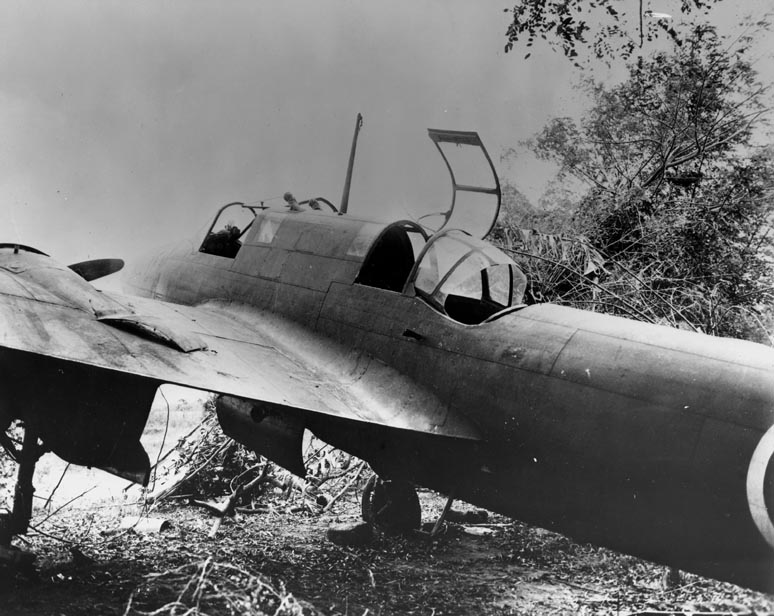
nick philippines596

During his interrogation, Horita was shown a drawing of a new Japanese twin-engine fighter that the Allies knew little about. This was probably either the Kawasaki Ki-45 Toryu (Nick) (pictured here), or the Nakajima Gekko (Irving) night fighter. Horita had known nothing about the new plane, and while admiring the sketch he muttered that he would have liked to have had a chance to fly it.

Over the target area, the Japanese strike failed to locate any Allied ships. Without radios in their Zero fighters, the 582nd could not converse with the bomber crews, so they simply stayed with them and followed wherever they went. In this case, they began searching to the south of Tulagi and Guadalcanal. The search yielded results: two destroyers were soon sighted, and the bombers dove to the attack.
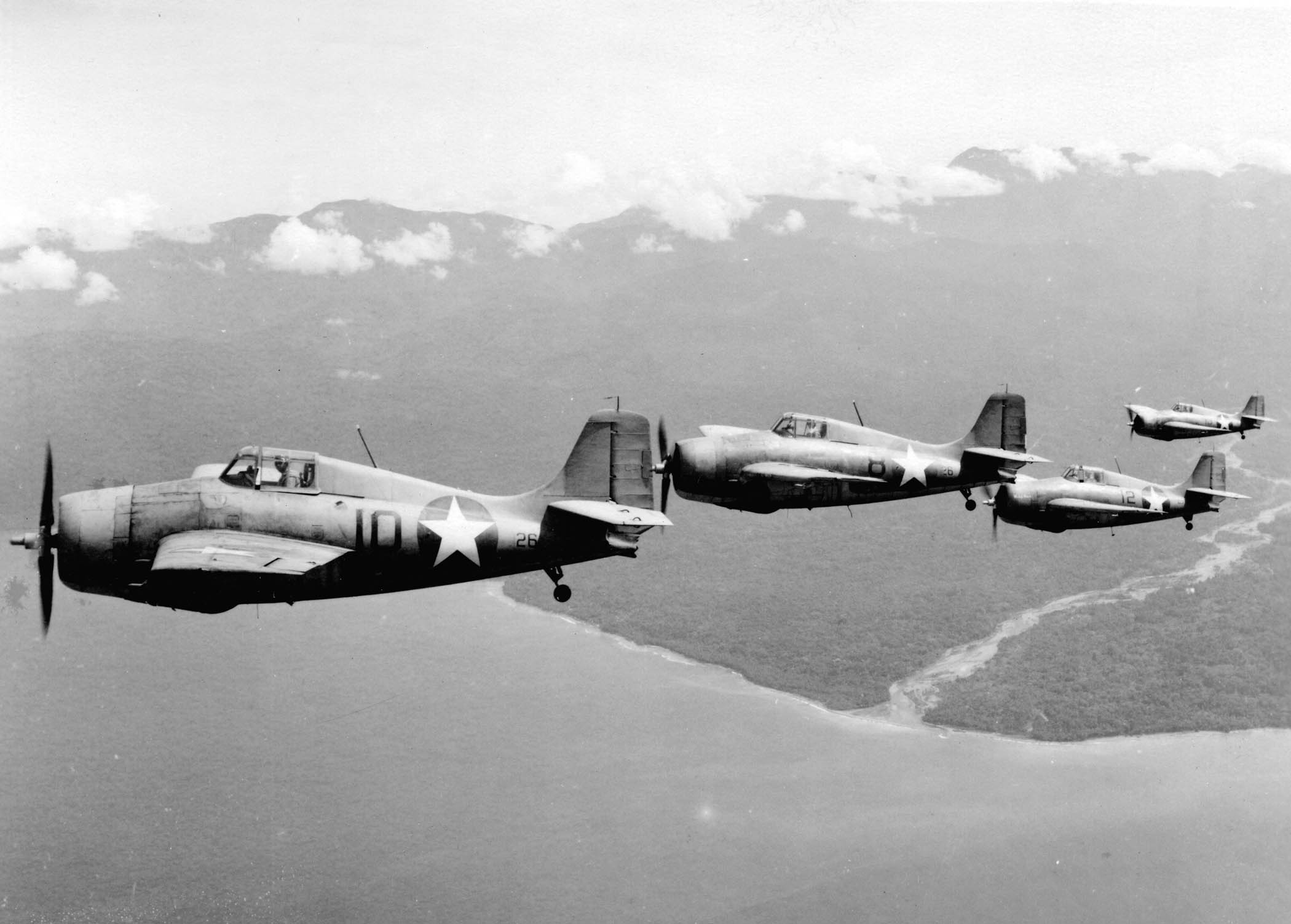
f4f usmc airborne 4037

F4F Wildcats airborne over the Southern Solomon Islands. The F4F was the primary air defense aircraft during the bitter struggle for Guadalcanal 42-43.

A squadron of F4F Wildcats was overhead that day, protecting the Allied vessels. The 582nd locked horns with the American fighters, and a dogfight raged over the ships.  At fifteen hundred feet, Saburo’s Zero was attacked by four Wildcats and shot up. He turned north and limped his crippled Zero for home, but over Russell Island, his engine seized. He ditched the Mitsubishi in shallow water right off the beach and waded ashore. Five foot four, one hundred and twenty pounds, Saburo Horita was now hundreds of miles from home, with no way to get back to Japanese lines.

He thought through his situation, and concluded his only hope lay in trying to steal a boat or canoe from the local natives. Exactly what he hoped to do with it is unknown, but perhaps he thought he could paddle the 30 miles to Guadalcanal where he could link up with the Japanese garrison there before it was evacuated.
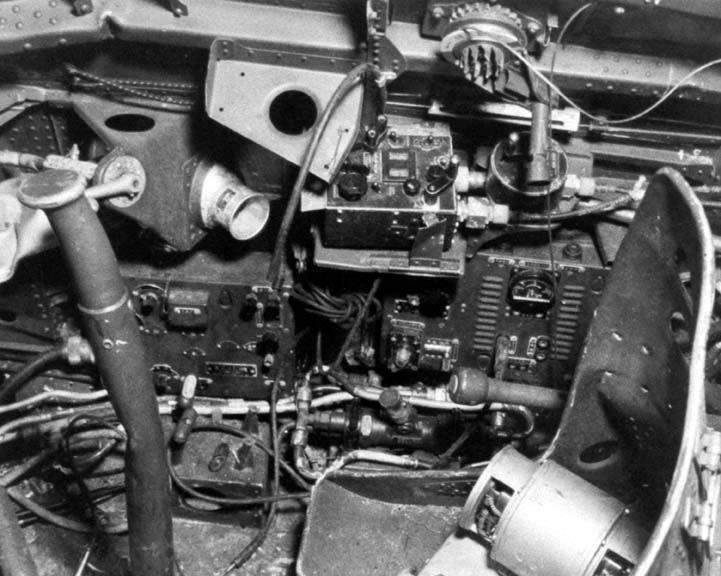
IMG0077 a6m zero cockpit from recovered from pearl harbor raid  8x10

Saburo Horita’s office–the cockpit of an A6M2 Zero. On long flights, he and his fellow pilots would carry a lunch composed of rice balls wrapped in seaweed.

Whatever his intent, he acquired a canoe from the natives at gunpoint, which earned him no friends. The natives eventually got the drop on him and took him prisoner. He was quickly delivered to Allied authorities, where he was interrogated by Colonel Sidney Mashbir’s  Allied Translator and Interpreter Section, SWPA (ATIS/SWPA). The Japanese-American who conducted the interrogation found Saburo Horita to be intelligent but poorly educated. His answers were cautious, and unlike many other POW’s, he was security conscious and did not reveal a lot of information. However, what he did say generally was believed to be accurate.


Categories: World War II in the Pacific | Tags: , , , , , , , , , , , , , , , , , | 2 Comments

Thanksgiving on Amchitka

Thanksgiving on Amchitka, November 25, 1943.


DD352 Aground off Amchitka Series  227 4x6

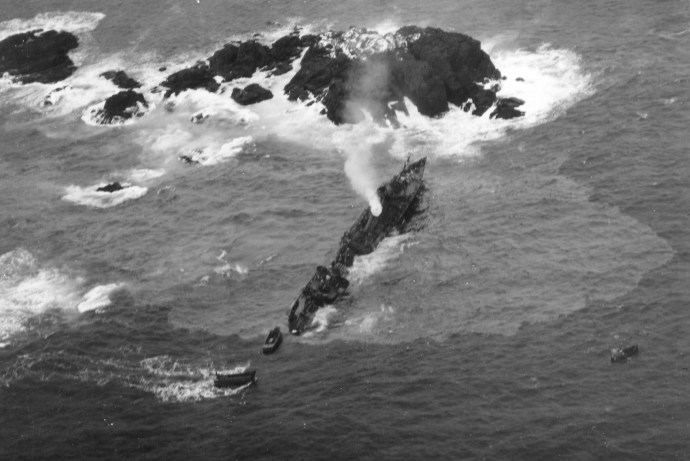
The Japanese did not oppose the American landing at Amchitka in January 1943, though the rough waters and dangerous shoals around the island claimed the USS Worden (DD-352). Fourteen of her crew died as their ship broke apart and sank on the rocks.

Amchitka was easily one of the most remote and inhospitable U.S. military outposts of World War II. It was so remote that during the Cold War, the U.S. detonated three nuclear warheads on the island in various underground tests. Located about 80 miles from Kiska Island in the Aleutian chain, American forces landed there unopposed in January 1943 and quickly built an airfield there to support the final stages of the campaign in the far north. Once the Japanese had been driven from Attu and Kiska, Amchitka-based Navy patrol bombers and 11th AF aircraft began periodic attacks on the Japanese Kurile Islands.

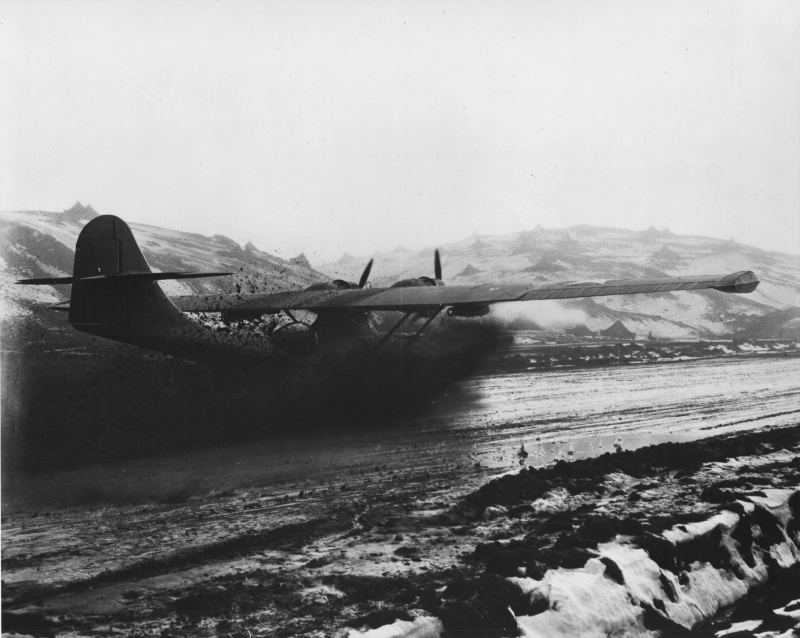
amchitka mud landing

A PBY from Fleet Air Wing Four operating from Amchitka’s mud and Marston Matting strip.


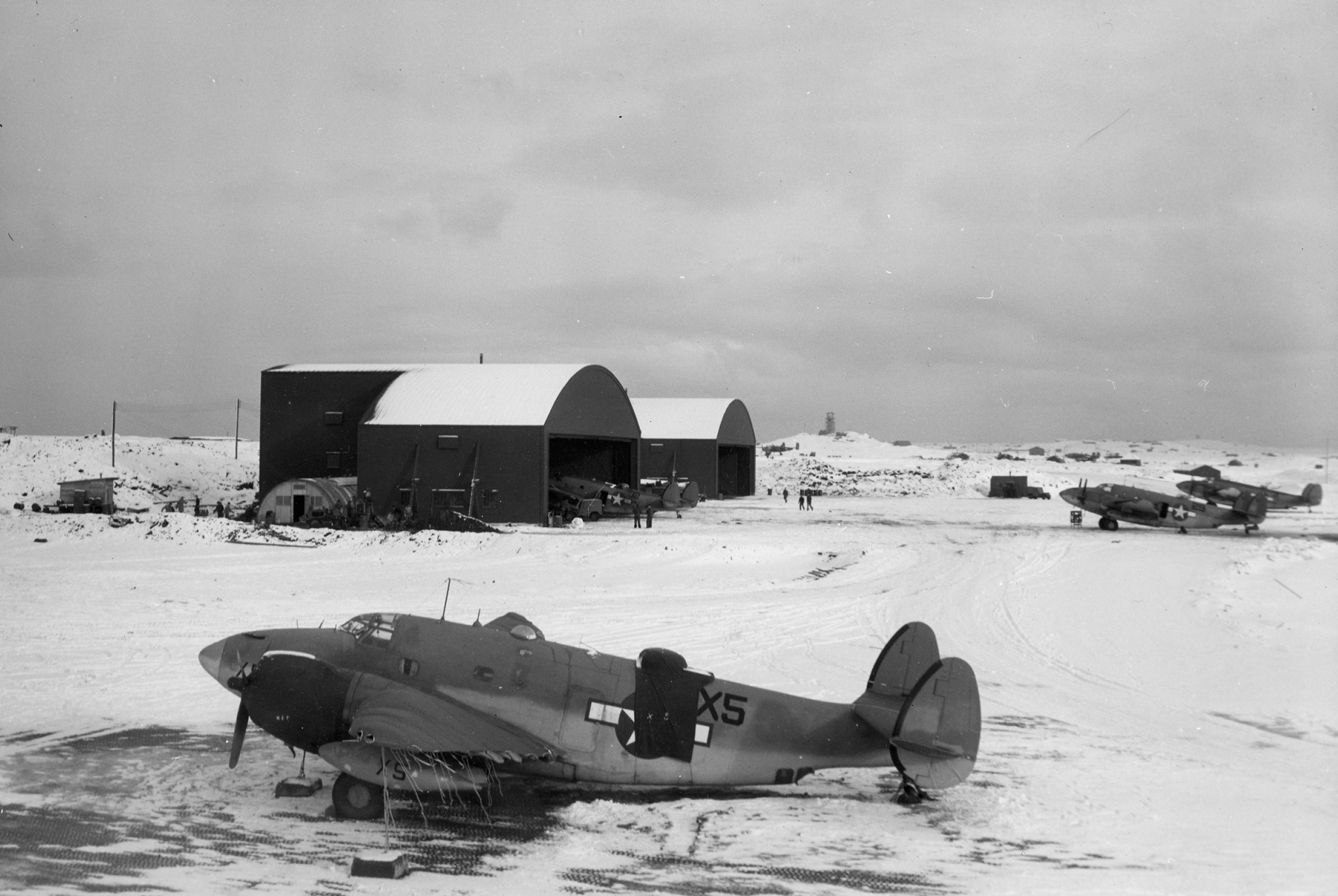
FAW4 PV1 Ventura Amchitka Dec 7 43 4x6

A squadron of PV-1 Venturas at Amchitka in late 1943.

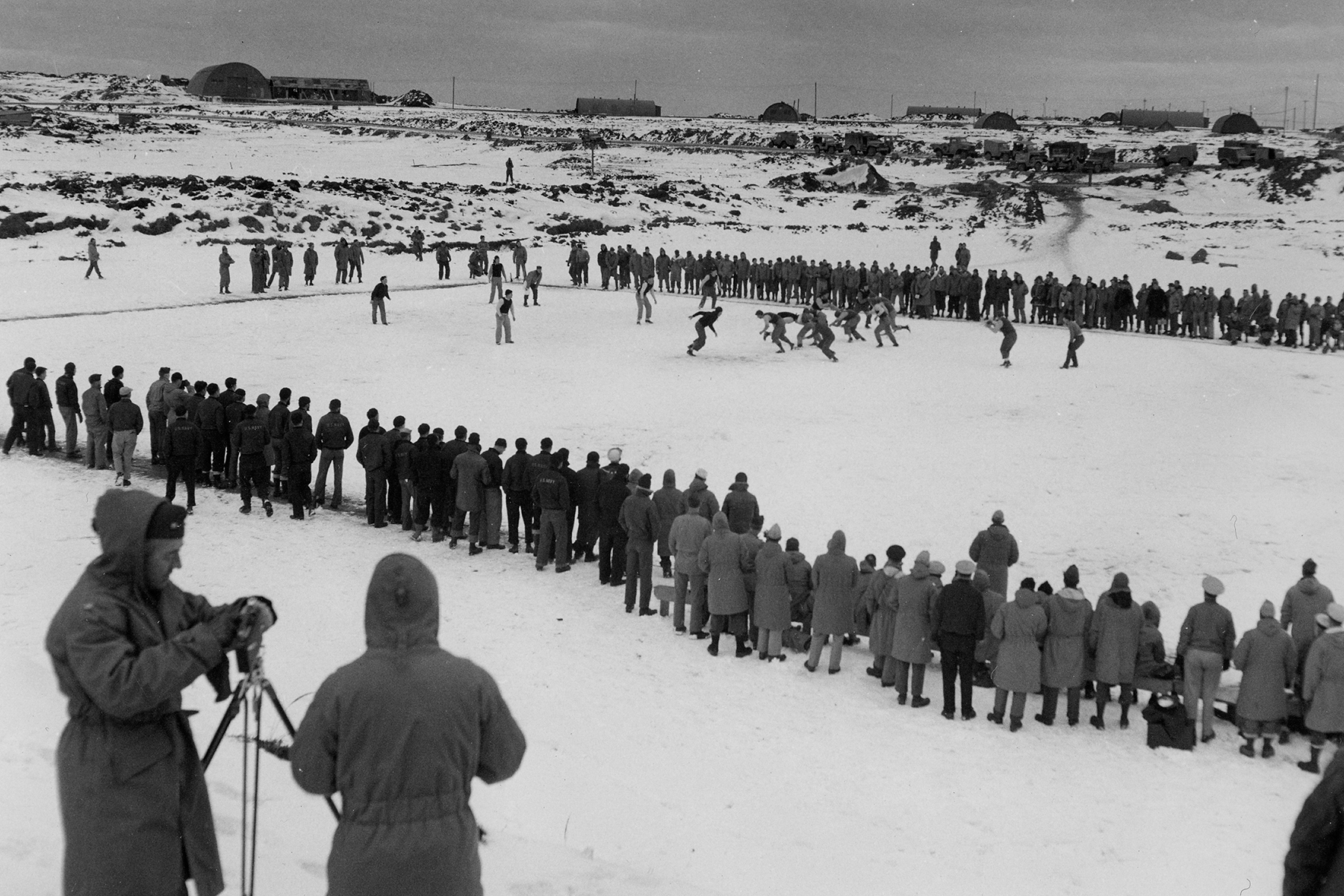
It was a dreary place to be stationed. The weather was awful, accidents frequent, mud or frozen snowdrifts the polarities of daily living. Yet, the men exiled to Amchitka did their best to make the place home. This included their own version of an American tradition–the Thanksgiving Day football game.

Amchitka Football Game in Snow Nov 25 43 Thanksgiving Day 039

The Thanksgiving game on Amchitka, 1943.


Categories: World War II in the Pacific | Tags: , , , , , , , , | 5 Comments

Moments with the 379th

b17 triangle k football game042 8x12

Men of the 379th take a break to play football beside the flight line at Kimbolton in the spring of 1944. The shadow of what the air crews faced lingers in the backstory of the B-17 parked nearby. That’s “Pansy Yokum,” a Douglas-built B-17G that joined the group right at the end of Big Week in February 1944. On March 8th, it was hit by enemy fire during the Berlin Raid and one of the waist gunners was killed in action. Shortly after this photo was taken, this B-17 vanished on July 9, 1944. The crew failed to form up as the 379th assembled for the mission, but apparently the pilot, Lt. Hugh Frye, decided to press on. They either joined up with another group, or went off in search of the 379th. Either way, the Fort was hit by flak over France, limped back toward England, only to crash at sea off Le Havre. All nine aboard perished, including the 23 year old bombardier, Lt. Orval Epperson, a small town kid from Neosho, Missouri. He was his family’s only son.

In November 1942, the 379th Bomb Group was activated at Gowen Field Idaho, just outside of Boise. The crews trained incessantly through the winter and early spring, then deployed to England in April 1943. The group arrived just as the 8th Air Force was ramping up for the ’43 strategic bombing effort against Germany.

Men of the 379th entertaining local English kids and their families at Kimbolton. The B-17 was “Tampa Tornado,” a battered Fort that had first seen service with the 303rd Bomb Group before joining the 379th in September ’43. It was retired from combat service in October, and was the aircraft the group used for tours when civilians came on post.


Commanded by LTC Maurice A. Preston, a Class of ’37 graduate of West Point, the 379th was a sharp, well-disciplined outfit that would soon prove to be one of the elite groups of 8th Bomber Command. Preston held command until October 1944 when he moved up to take over the 41st Wing. He was a combat leader all the way, flying forty-five missions through the worst phase of the air war over Europe. He led the 379th during the August ’43 Schweinfurt raid, and returned to that city the following spring. He went on to have a very successful USAF career, ultimately commanding both the 5th Air Force in the Pacific and all USAF forces in Europe during the height of the Cold War.

The group performed so well in combat that it earned two Presidential Unit Citations, and was recognized for its bombing accuracy, low abort rates, tight formation flying and bomb tonnage delivered on targets. The aircrews pioneered new formations and new bombing tactics that were later adopted throughout VIIII Bomber Command, and completed 300 combat missions faster than any other USAAF heavy bombardment group in England. The group paid a brutal price during its two years in combat. Altogether, 141 of the 379th’s Forts went down over Europe.


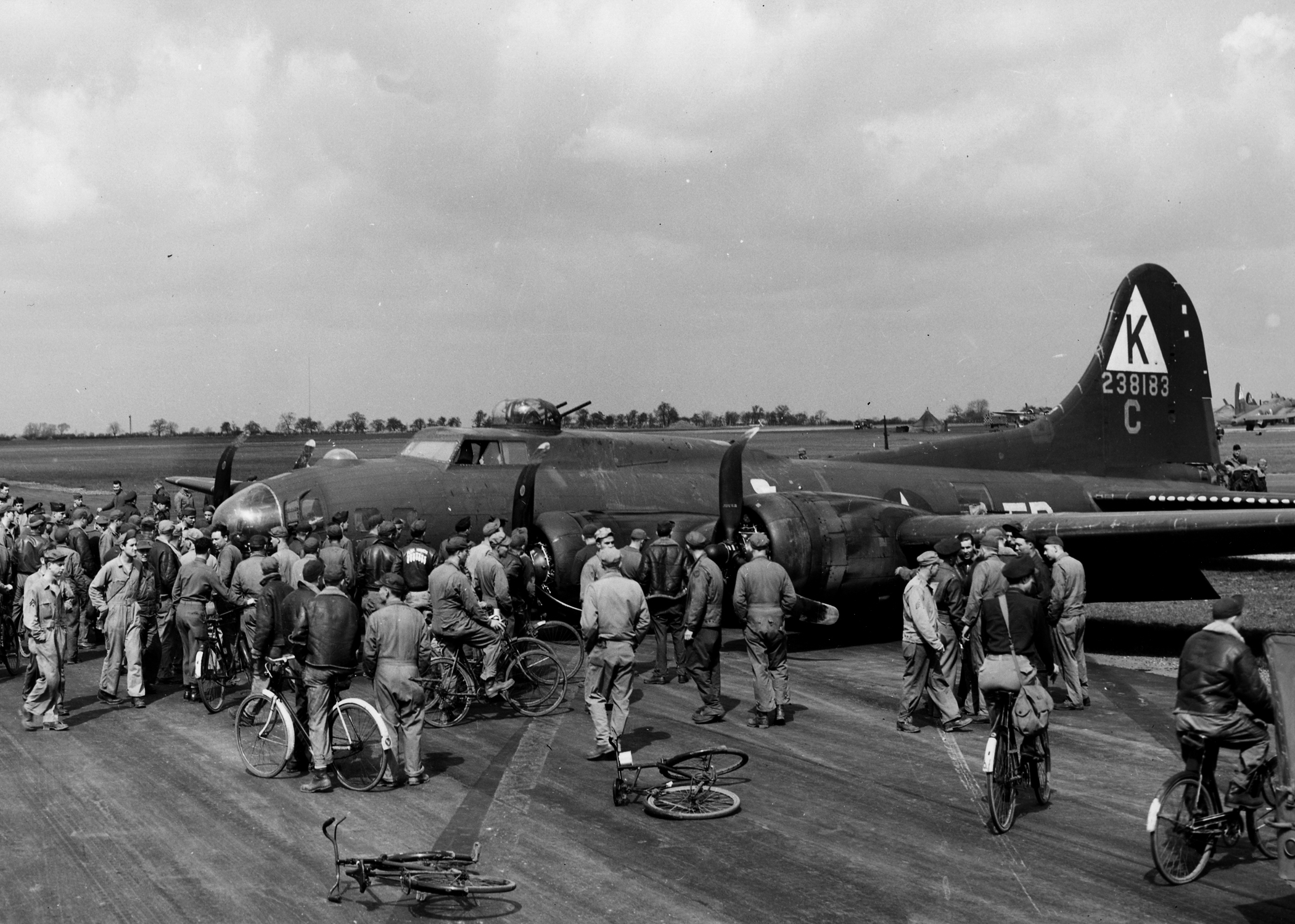
“Lost Angel” returns to Kimbolton on April 10, 1944. This Fort joined the 379th in February ’44, and this crash landing was one of at least two crews of the group experienced in her. On September 28, 1944, Lost Angel and the rest of the 379th ran into scores of German fighters on a mission to Magdeburg. During the bomb run, another nearby B-17 (Queen of Hearts) took a direct AA hit that touched off one of its fuel tanks. As it fell, the tongue of flame it trailed engulfed Lost Angel so completely that the tail gunner thought their B-17 had been hit as well. He bailed out and was taken prisoner. Just after the bomb run, the fighters struck. Lost Angel’s navigator later wrote, “Most horrible sight I’ve seen. Sky filled with burning planes. Too many to count. Had to look away.” For details on that mission, see, “http://b17navigator.com/dads-log-book/mission-no-seventeen-september-28-1944/” Lost Angel was repaired repeatedly and sent back into battle. After the September mission, it was sent to the 384th Bomb Group. Miraculously, it survived the war, only to be scrapped in October 1945.


Categories: Uncategorized, World War II Europe, World War II in Europe | Tags: , , , , , , , , , , , , , | 6 Comments

Photo of the Day: Marine M5 Stuart Tank Crew 1944

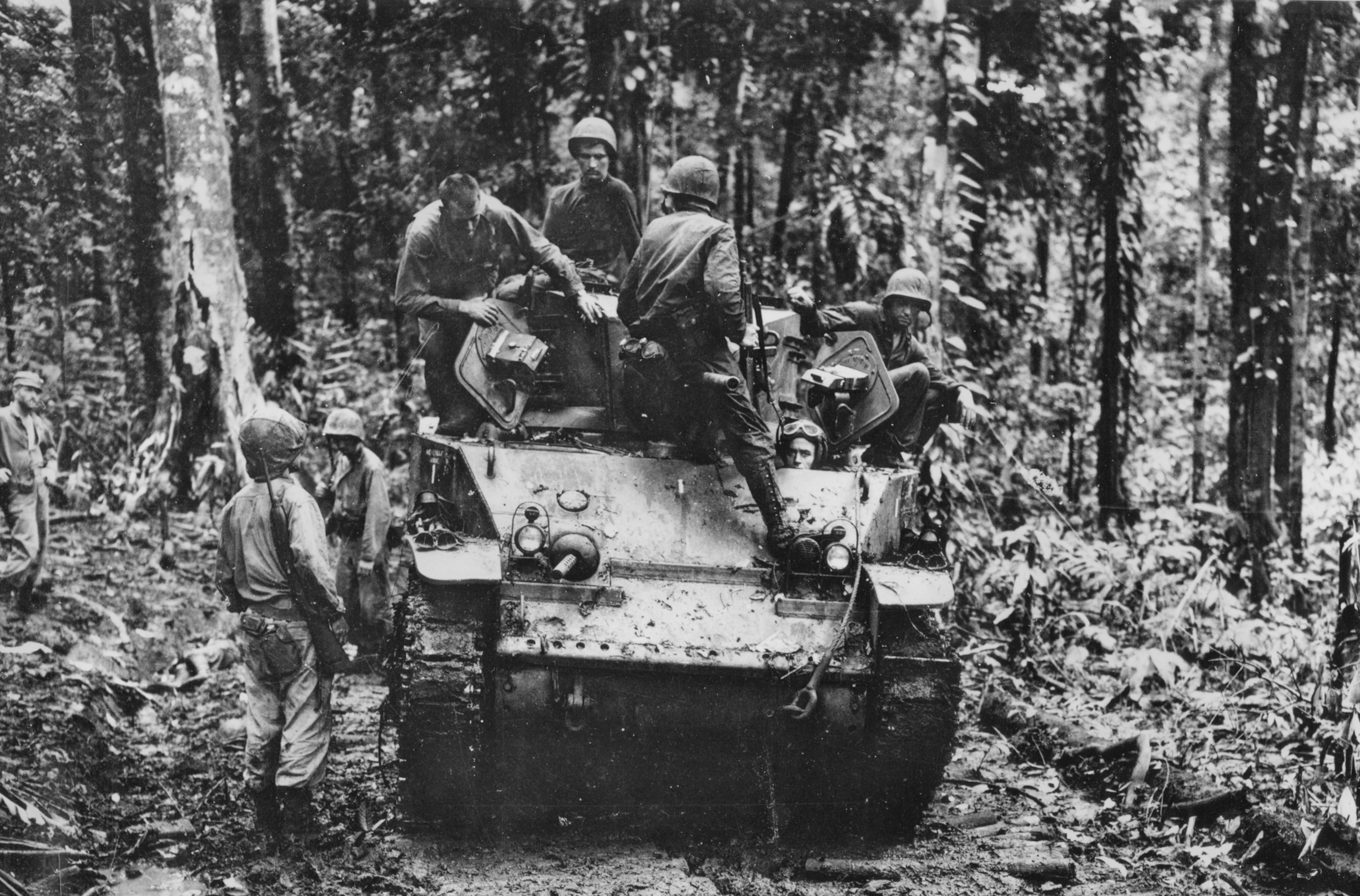
1st Marine Division M3 Stuart Cape Gloucester New Britain 011644  (1 of 1)

1st Marine Division M5 Stuart light tank crew taking a short break during the brutal fighting at Cape Gloucester, New Britain. January 16, 1944.


Categories: World War II in the Pacific | Tags: , , , , , , , , , | Leave a comment

Across the Rhine: The Remagen Bridge in Color

On March 7, 1945, Combat Command B of the 9th Armored Division reached the west bank of the Rhine River across from the German city of Remagen. To the surprise of all the Americans there that day, they found the Ludendorff Rail Bridge intact. The Germans had blown nearly every other bridge spanning the Rhine as they retreated behind the river to make a last stand for the Fatherland.

The Americans seized the bridge by coup de main, then reinforced their tenuous hold on the east bank in the days that followed. The bridge was severely damaged, and engineers went to work trying to shore it up. At the same time, pontoon bridges were constructed on either side to increase traffic flow to the east bank. The Germans repeatedly attacked the bridge with air, artillery and even V-2 rockets. They also sent underwater demolitions teams after the bridge, and attempted to use floating mines to destroy it.

These three film clips were taken from the west bank during the struggle to shore up the bridge. The cameramen were part of SFP-186, a special project commissioned by General Marshall to document the final months of the war with color film. The footage ended up classified for decades, and it was only in the late 1990’s that it began to filter out of the National Archives for public viewing. The scenes show the Ludendorff Bridge from different angles, plus some of the U.S. Army’s anti-aircraft defenses arrayed around it. There are also some scenes showing USAAF P-38’s patrolling over the bridge, as well as the wreckage of a downed German aircraft.

On March 17, 1945, the badly damaged Ludendorff Bridge suddenly collapsed, killing eighteen American engineers who were working on it at the time. Though the bridge was gone, the drive into the Reich from the Remagen area was already well underway. Pontoon bridges kept the traffic and supplies flowing to the front line troops.


A few post-war notes:

Aces_Over_Europe_A

Roger Smith’s original box art for Aces Over Europe. To assist Roger, designer Chris Shen built a 1/72nd scale replica of the Ludendorff Bridge, which was then photographed from the angle Roger used for the composition. Model aircraft of the Arado 234 and Tempest were also constructed by members of the Aces Team.

Today, one of the original bridge’s towers houses a peace museum.  In 1993, American computer game company  Dynamix Inc. produced a PC-based flight simulator called Aces Over Europe. The game’s box cover, an original piece by noted artist Roger Smith, depicted an Arado 234 Blitz jet bomber attack on the Ludendorff Bridge during the fighting around Remagen that March. Ace Pierre Clostermann in his Hawker Tempest can be seen in the foreground pursuing the German jet. When the mayor of Remagen learned that the bridge and part of his town would be depicted on the box of a computer war game, he threatened to sue the U.S. company. As a result, the European release of the game used a different piece of art for the box cover.

56082_front

The European box art. Note Dynamix had to delete the swastika on the Fw-190A’s tail in order to conform to German law.


Categories: World War II in Europe | Tags: , , , , , , , | Leave a comment

The 185th Infantry’s “Boys from Hell”

40th inf div thompson submachine gunner m1 carbine two of the four boys from hell  185th Inf Regt Panay Philippines Campaign 072745 (1 of 1)

Two of the 40th Infantry Division’s famed, “Boys From Hell.”  Assigned to the Bravo Company, 1st Battalion, 185th Infantry Regiment (California National Guard), PFC Ray Hughes (left holding Tommy Gun) and Sergeant Erwin Hinds (right) took point on almost every operation conducted by their unit during the Philippines Campaign. While fighting on Panay Island, their four-man fire team killed fifty-nine Japanese Soldiers in the summer of 1945. The men of the 185th Regiment nicknamed Sergeant Hinds’ fire team the “Four Boys From Hell” after a particularly brutal series of attacks and counter-attacks on the island. Both men photographed here received Bronze Stars for Valor for their actions on Panay. The other two men in the fire team were wounded in combat and sent home by the time this photo was taken. Hughes grew up in Battle Creek, Michigan and Hinds was a native of Kenosha, Wisconsin.

Categories: World War II in the Pacific | Tags: , , , , , , | Leave a comment

Blog at WordPress.com.