
French commandos support a 5th French Armored Division M4 Sherman tank during the liberation of Belfort, France on November 20, 1944.

French commandos support a 5th French Armored Division M4 Sherman tank during the liberation of Belfort, France on November 20, 1944.

En route to England, the men of the 2nd Battalion, 503rd Parachute Infantry found and rescued this pup, Smokey, seen here in Iceland. The troops brought him to England, and he’s seen here with one of the 503rd’s members as he chats with Lt. John Timothy, the British liaison officer to the 2/503. The 503rd was the first American ground unit to reach England after Pearl Harbor. There is some confusion over 2/503rd’s history these days. The battalion took part in Operation Torch and executed the U.S. Army’s first combat jump. During the African campaign, however, the Army redesignated 2/503rd to the 509th Parachute Infantry. Apparently, the members of the battalion didn’t get that memo until after the war. Meanwhile, a new 503rd Parachute Infantry Regiment was formed and sent to the Pacific, where it joined the 11th Airborne Division and took part in the New Guinea and Philippines Campaign. That 503rd made the jump on Corregidor in February 1945.
 In just two hours on June 15, 1944, three hundred amphibious tractors (LVT’s) carried over eight thousand heavily armed U.S. Marines onto Saipan Island in the Marianas Chain. It was a masterful display of amphibious warfare tactics and doctrine, but it also set the stage for a brutal, close range battle for control of Saipan’s sandy west coast. In places, the Marines found themselves pinned down by intense mortar, artillery and automatic weapons fire, and it took hours just to claw a foothold ashore. But by nightfall, the Marines had established themselves enough to repel the first of many Japanese counter-attacks.
This short film clip is raw footage shot by one of the Marine combat cameramen who went ashore with one of the first waves. It is silent, as was most of the footage shot, but that only adds to the poignancy of these scenes. The images are striking, not only for the chaos and carnage they reveal, but also for the film’s clarity. Much of the Marine Corps color footage has deteriorated over the years so that they are predominately reddish or blue. It makes for muddy looking scenes, and in many cases the more common black & white film has stood up better over the years. This clip is stark, clear and the colors have survived the decades in remarkably good shape.
Recently, we’ve received a lot of traffic from the Russian Federation. Today’s photo is in honor of all of our Russian readers:

April 30, 1945. Russian Soldiers liberate weary Australian troops who’d been POW’s of the Germans in a camp near Wittenberg. The photo was taken as the 9th U.S. Army linked up with the Red Army’s units around that city. The photo was taken by the 168th Signal Corps Company’s George J. Barry.
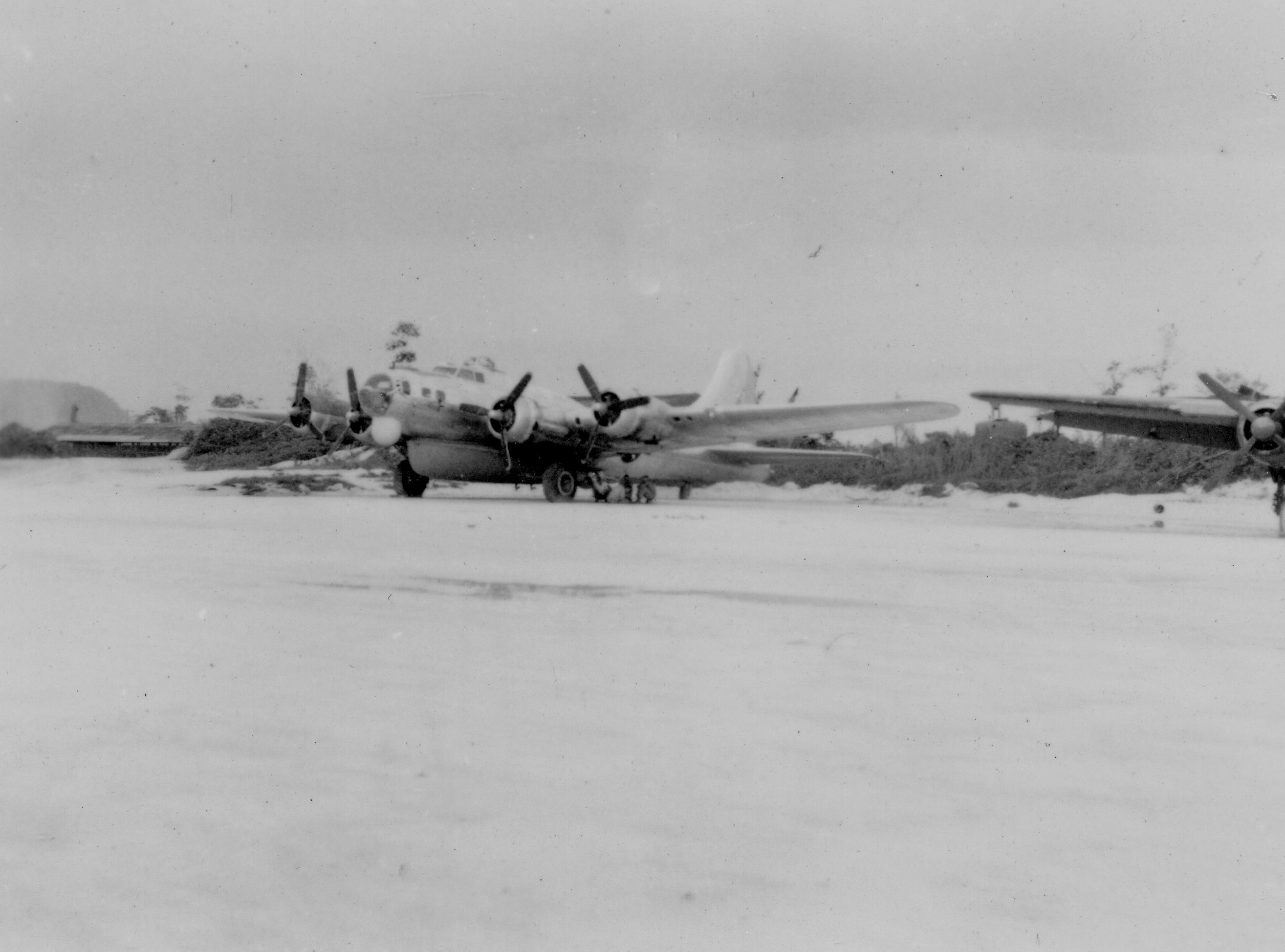
A Flying Dutchman B-17 awaiting its next mission at Ie Shima in August 1945. 5th Rescue Group.
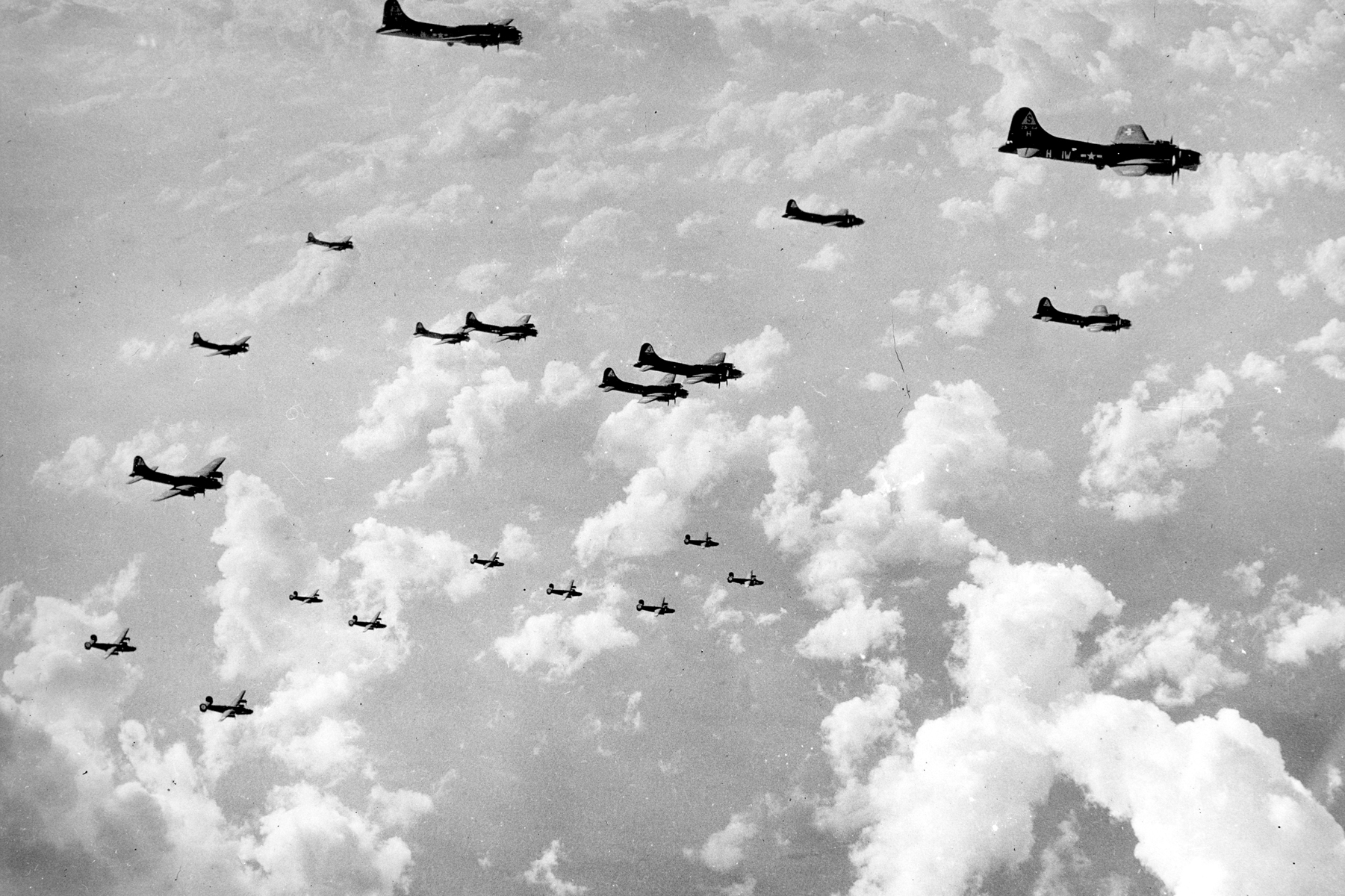
The 401st Bomb Group over Germany, December 30, 1943.
As the war ended in Europe and the air offensive against Japan became the focus of the USAAF’s last efforts in WWII, the B-17’s day as America’s work horse bomber came to an end. Most of the Forts still remaining in service with the 8th and 15th Air Forces would soon be scrapped or sent to bone yards. A few dodged that fate when the USAAF converted about 130 to perform a much needed and unheralded role in the Pacific.
The vast distances between targets in Japan and the B-29 bases in the Marianas assured that many crippled Superforts would end up in the Pacific.
 Submarines were posted along the strike routes to help save the crews that went into the drink, but the USAAF needed their own Search And Rescue squadrons to help find those men. A number of air rescue squadrons were already in service in the Pacific, mainly flying the venerable PBY Catalina. In the final months of the war, the USAAF began employing modified Forts in the SAR role.

A 5th Rescue Group B-17H at Ie Shima, July 27, 1945
Dubbed the B-17H “Flying Dutchmen,” the planes carried an A-1 Higgins lifeboat under the fuselage. Twenty-seven feet long, self-bailing and self-righting, these boats could be dropped by the Forts to downed crews bobbing on the Pacific swells. Three parachutes would deploy and help ensure the boat landed in the water safely. Once aboard, the wet airmen would find blankets, provisions and survival gear waiting for them, all carefully stowed in the A-1.
The Flying Dutchmen also carried search radars in place of chin turrets. Operating from Ie Shima Island in the final weeks of the war, the Flying Dutchmen of the 5th Air Rescue Group saved a number of B-29 crews before the Japanese surrender. They continued in USAAF and USAF service, performing their vital duties in the Korean War and beyond until 1956. After 1948, they were redesignated SB-17G’s.
Professor Edward Mooney has shared a link that shows how the Higgins Boat was deployed. Thank you Dr. Mooney!
http://members.peak.org/~mikey/746/boat.htm
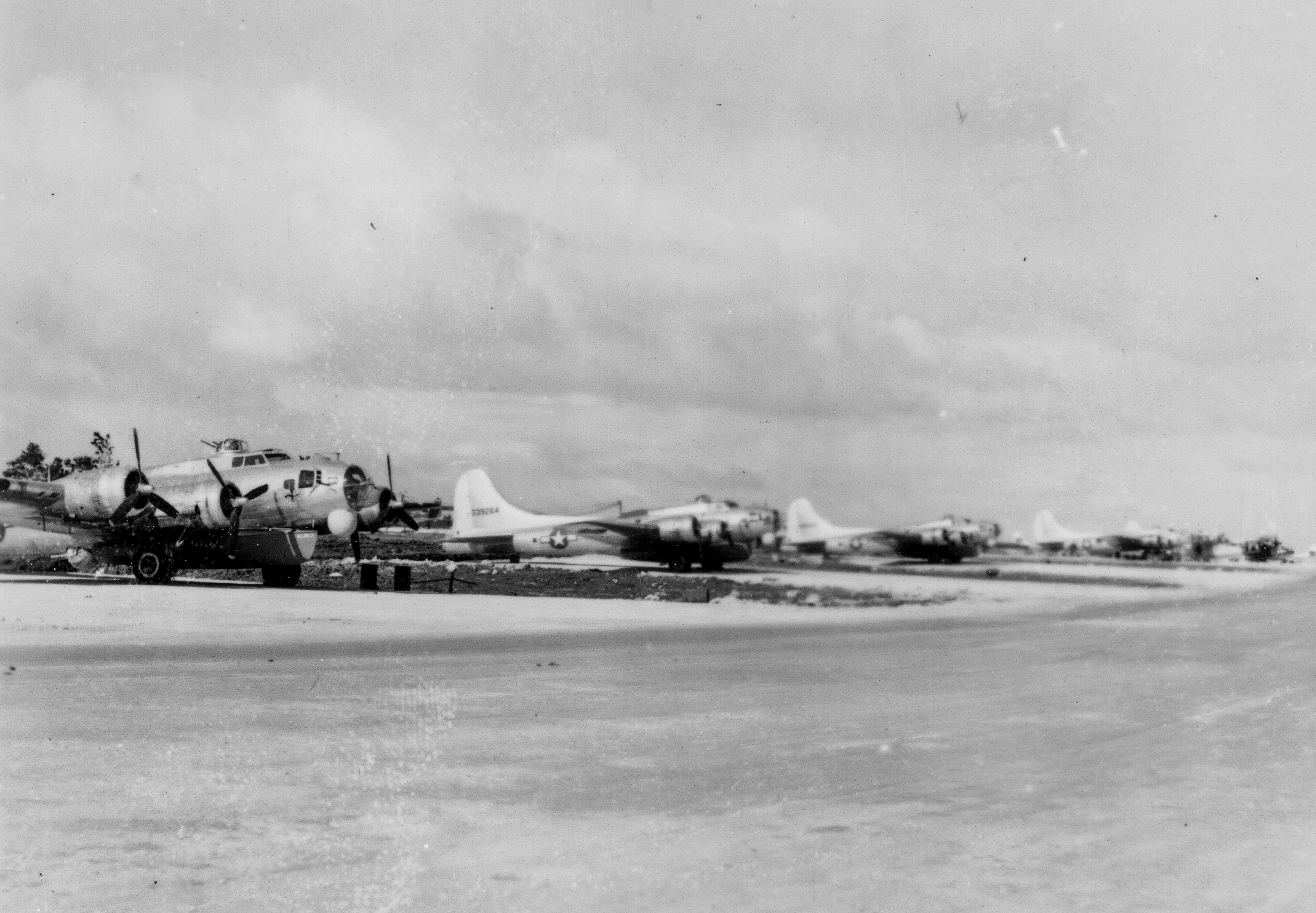
The 5th Rescue Group’s B-17H’s at Ie Shima Island, near Okinawa. Seen in August 1945.
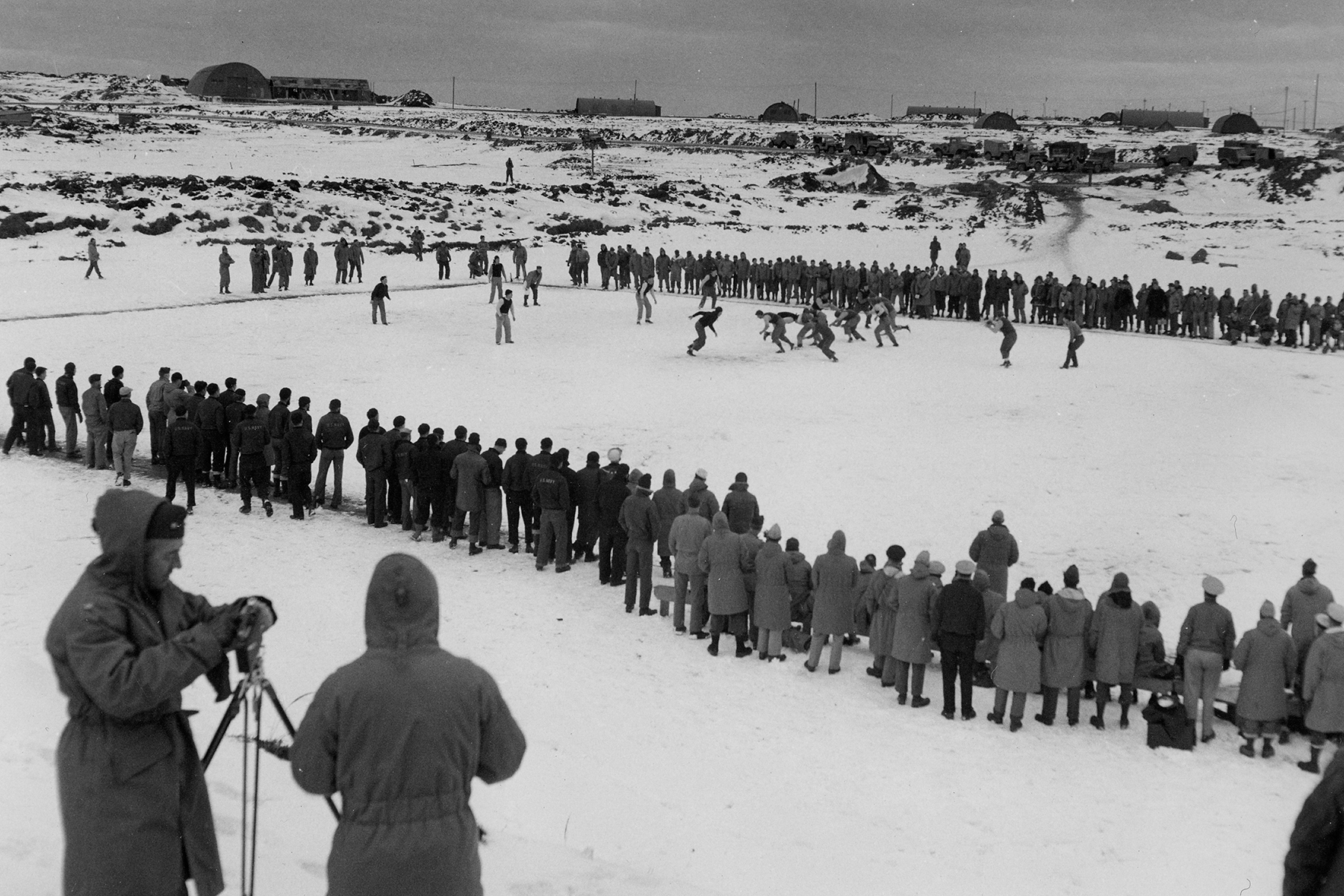
Thanksgiving on Amchitka, November 25, 1943.
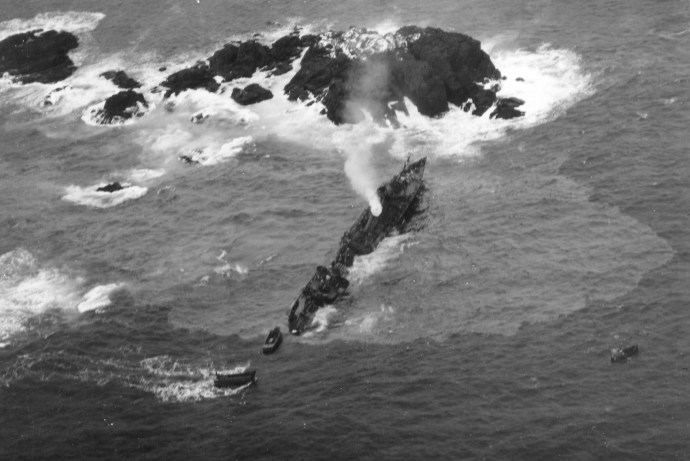
The Japanese did not oppose the American landing at Amchitka in January 1943, though the rough waters and dangerous shoals around the island claimed the USS Worden (DD-352). Fourteen of her crew died as their ship broke apart and sank on the rocks.
Amchitka was easily one of the most remote and inhospitable U.S. military outposts of World War II. It was so remote that during the Cold War, the U.S. detonated three nuclear warheads on the island in various underground tests. Located about 80 miles from Kiska Island in the Aleutian chain, American forces landed there unopposed in January 1943 and quickly built an airfield there to support the final stages of the campaign in the far north. Once the Japanese had been driven from Attu and Kiska, Amchitka-based Navy patrol bombers and 11th AF aircraft began periodic attacks on the Japanese Kurile Islands.
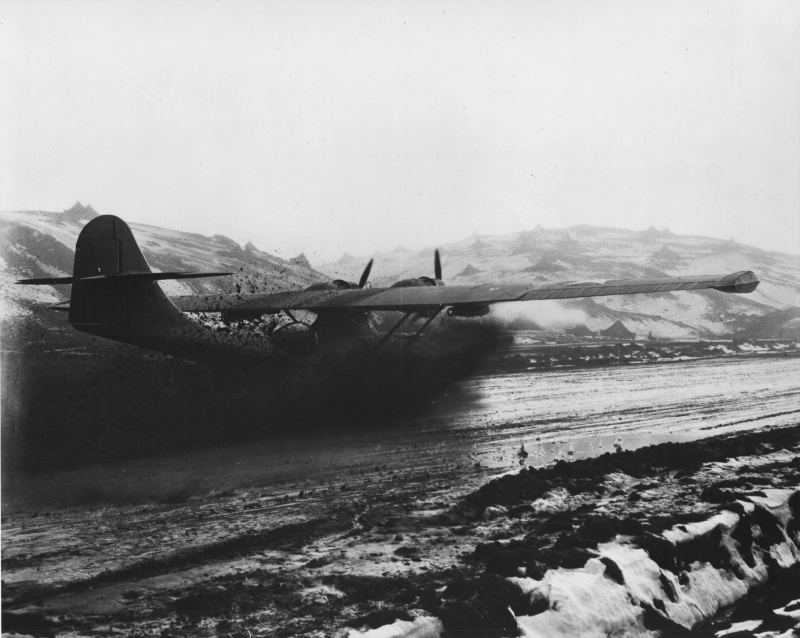
A PBY from Fleet Air Wing Four operating from Amchitka’s mud and Marston Matting strip.
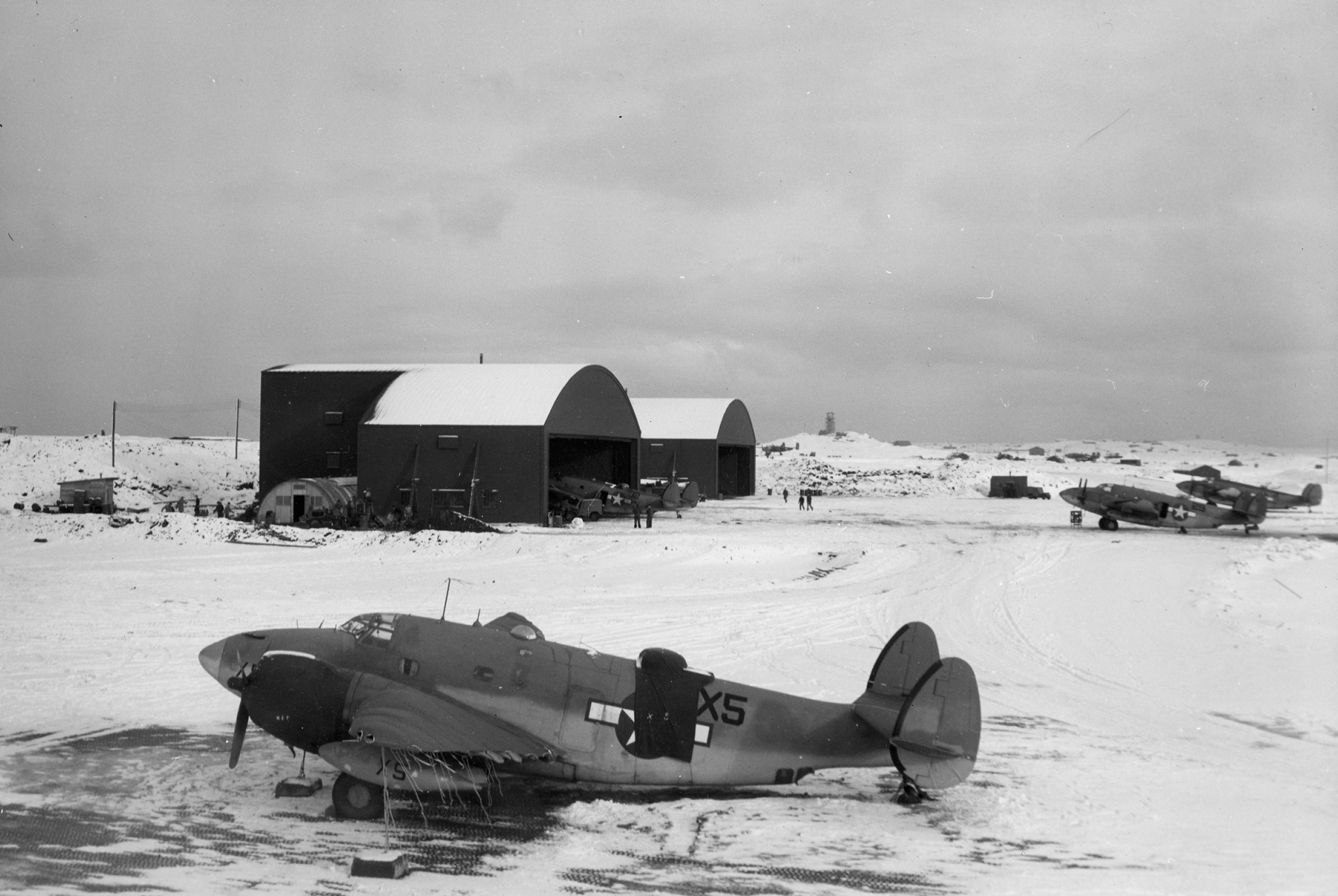
A squadron of PV-1 Venturas at Amchitka in late 1943.
It was a dreary place to be stationed. The weather was awful, accidents frequent, mud or frozen snowdrifts the polarities of daily living. Yet, the men exiled to Amchitka did their best to make the place home. This included their own version of an American tradition–the Thanksgiving Day football game.

The Thanksgiving game on Amchitka, 1943.

Men of the 379th take a break to play football beside the flight line at Kimbolton in the spring of 1944. The shadow of what the air crews faced lingers in the backstory of the B-17 parked nearby. That’s “Pansy Yokum,” a Douglas-built B-17G that joined the group right at the end of Big Week in February 1944. On March 8th, it was hit by enemy fire during the Berlin Raid and one of the waist gunners was killed in action. Shortly after this photo was taken, this B-17 vanished on July 9, 1944. The crew failed to form up as the 379th assembled for the mission, but apparently the pilot, Lt. Hugh Frye, decided to press on. They either joined up with another group, or went off in search of the 379th. Either way, the Fort was hit by flak over France, limped back toward England, only to crash at sea off Le Havre. All nine aboard perished, including the 23 year old bombardier, Lt. Orval Epperson, a small town kid from Neosho, Missouri. He was his family’s only son.
In November 1942, the 379th Bomb Group was activated at Gowen Field Idaho, just outside of Boise. The crews trained incessantly through the winter and early spring, then deployed to England in April 1943. The group arrived just as the 8th Air Force was ramping up for the ’43 strategic bombing effort against Germany.

Men of the 379th entertaining local English kids and their families at Kimbolton. The B-17 was “Tampa Tornado,” a battered Fort that had first seen service with the 303rd Bomb Group before joining the 379th in September ’43. It was retired from combat service in October, and was the aircraft the group used for tours when civilians came on post.
Commanded by LTC Maurice A. Preston, a Class of ’37 graduate of West Point, the 379th was a sharp, well-disciplined outfit that would soon prove to be one of the elite groups of 8th Bomber Command. Preston held command until October 1944 when he moved up to take over the 41st Wing. He was a combat leader all the way, flying forty-five missions through the worst phase of the air war over Europe. He led the 379th during the August ’43 Schweinfurt raid, and returned to that city the following spring. He went on to have a very successful USAF career, ultimately commanding both the 5th Air Force in the Pacific and all USAF forces in Europe during the height of the Cold War.
The group performed so well in combat that it earned two Presidential Unit Citations, and was recognized for its bombing accuracy, low abort rates, tight formation flying and bomb tonnage delivered on targets. The aircrews pioneered new formations and new bombing tactics that were later adopted throughout VIIII Bomber Command, and completed 300 combat missions faster than any other USAAF heavy bombardment group in England. The group paid a brutal price during its two years in combat. Altogether, 141 of the 379th’s Forts went down over Europe.
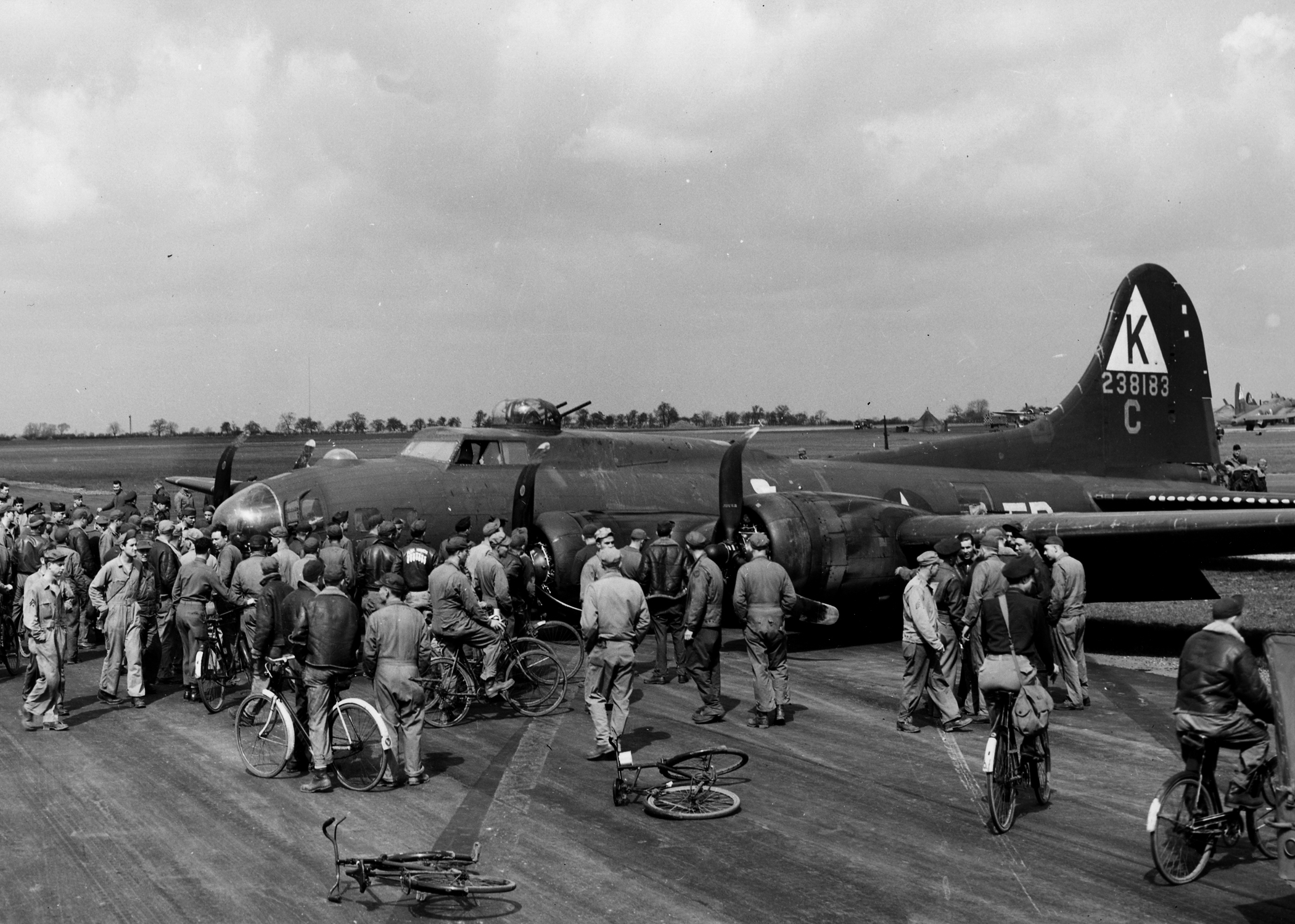
“Lost Angel” returns to Kimbolton on April 10, 1944. This Fort joined the 379th in February ’44, and this crash landing was one of at least two crews of the group experienced in her. On September 28, 1944, Lost Angel and the rest of the 379th ran into scores of German fighters on a mission to Magdeburg. During the bomb run, another nearby B-17 (Queen of Hearts) took a direct AA hit that touched off one of its fuel tanks. As it fell, the tongue of flame it trailed engulfed Lost Angel so completely that the tail gunner thought their B-17 had been hit as well. He bailed out and was taken prisoner. Just after the bomb run, the fighters struck. Lost Angel’s navigator later wrote, “Most horrible sight I’ve seen. Sky filled with burning planes. Too many to count. Had to look away.” For details on that mission, see, “http://b17navigator.com/dads-log-book/mission-no-seventeen-september-28-1944/” Lost Angel was repaired repeatedly and sent back into battle. After the September mission, it was sent to the 384th Bomb Group. Miraculously, it survived the war, only to be scrapped in October 1945.
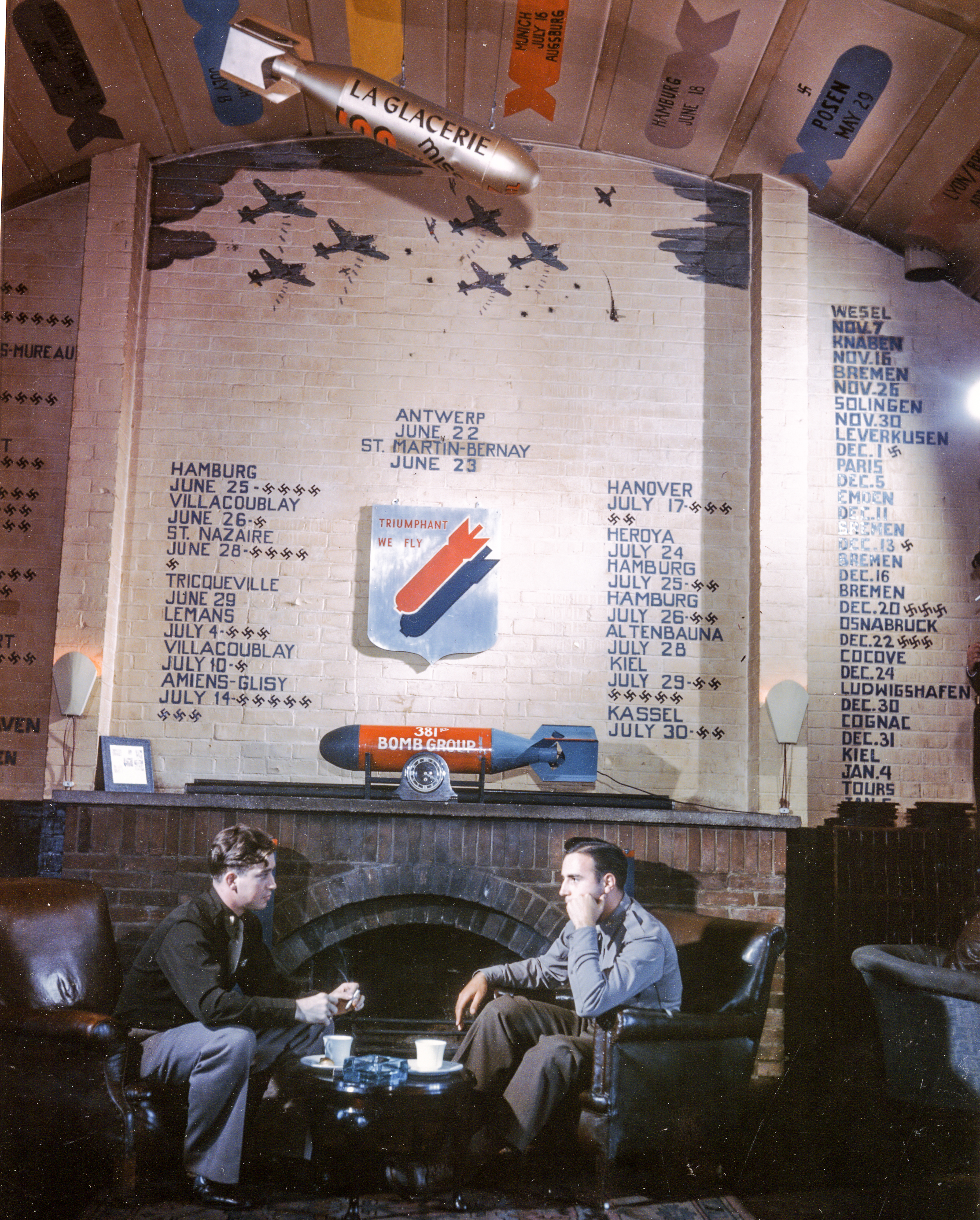
The 381st Bomb Group’s O Club at Ridgewell.
In May of 1943, the 381st Bomb Group reached England. It had been formed and activated in January that year, undergoing a short, intensive training cycle that included a full formation leaflet dropping exercise over Denver. Led by the legendary bomber pilot Colonel Joseph Nazzaro, the 381st was a tight, disciplined organization. Nazzaro would go into combat for the first time with his beloved 381st, and his tenure with the group led to an extraordinary career that culminated with him commanding SAC in the late 1960’s.

The 381st climbing out over the channel.
The group set up shot at Station 167, RAF Ridgewell in Essex. After a few weeks of settling in and local training flights, the group flew its first mission on June 22, 1943. Two of its B-17’s were shot down by flak and fighters on that first combat run, and two others came home battered and damaged with wounded aboard. It was a tough indoctrination to the air war over German-held Europe.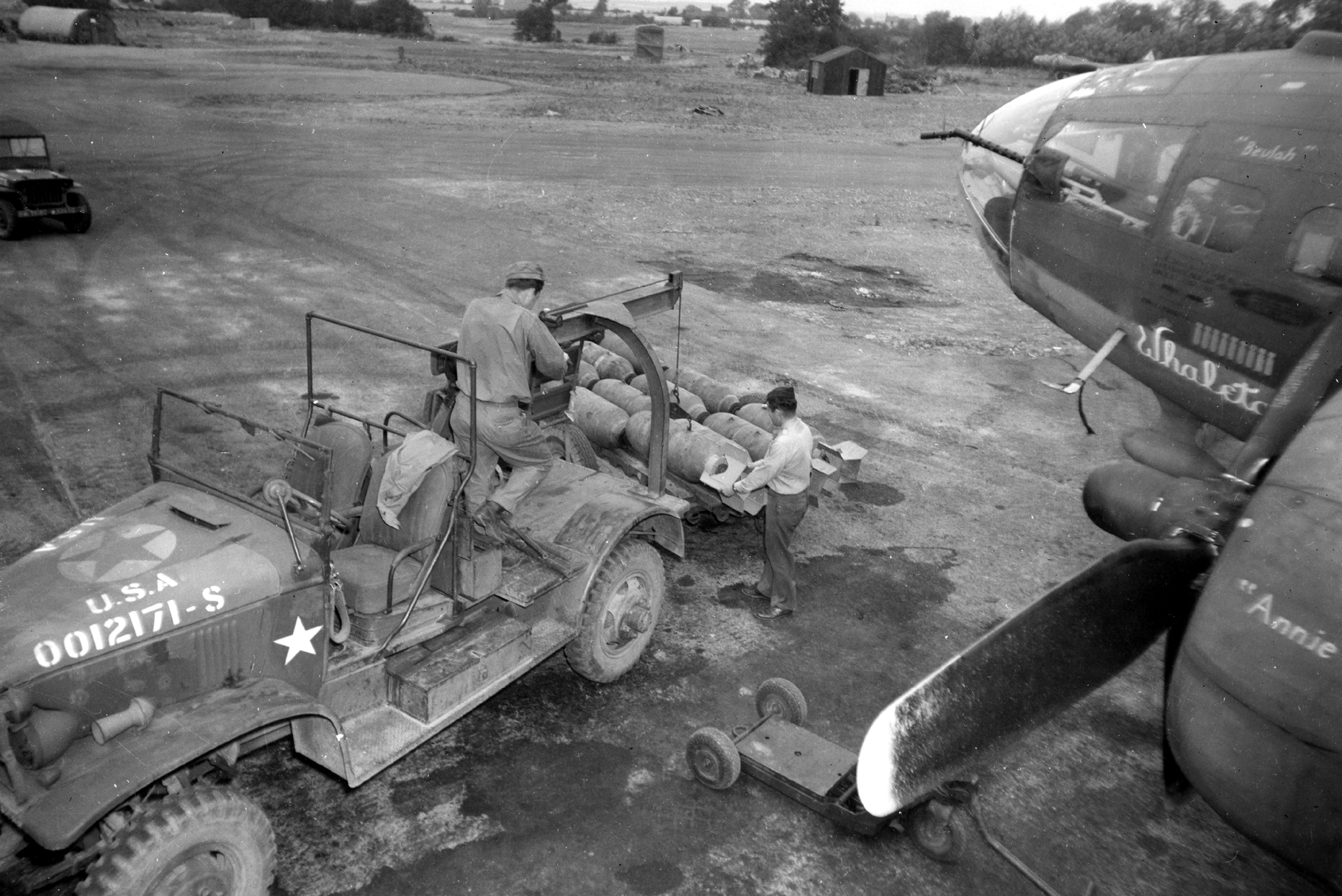
The following day, the ground crews were busily preparing the Forts for their second mission when a bomb exploded on the flight line. The blast killed twenty four men, yet the 381st joined the rest of the 8th Air Force and continued on to fly that day.
During the August 17, 1943 Schweinfurt raid, half of the group’s bombers went down under the onslaught of determined Luftwaffe fighters and massive flak barrages. Ten crews went with those birds, but one crew returned home after being fished out of the English Channel. Colonel Nazzaro personally led the mission that day, flying the lead Fort in the formation.
The 381st went on to fly a total of 296 missions–over 9,000 sorties against German targets. It came at a terrible cost–over a thousand combat crews went missing, were killed or wounded during those vicious two years of flying. One hundred and thirty one B-17’s belonging to the 381st never made it back to station 167, which represented roughly 500% of the group’s established strength.

The 381st over Germany, February 5, 1945.

 During the Second World War, Brazil served as the critical partner in the Allied alliance in Latin America. Brazilian troops served in combat in Italy, as did one of their fighter groups. Brazilian Naval Aviation also played a an important role in anti-U-boat patrols in the South Atlantic. Flying Lockheed Hudson’s and Consolidated PBY Catalinas, Brazilian air crews scoured the seas in search of the ever-elusive German submarines that were taking such a heavy toll on Allied shipping.
On July 31, 1943, a Brazilian PBY crew discovered U-199 on the surface east of Rio de Janeiro. Along with a Brazilian Hudson and a USN PBM Mariner, the PBY crew attacked the U-boat with depth charges. Second Lieutenant Alberto M. Torres and his Catalina crew received credit for sinking her.Twelve German sailors, including U-199’s skipper, were able to escape their doomed boat. When Torres spotted them helpless in the water, he ordered his men to drop them a lifeboat. The Germans clambered aboard and were subsequently rescued by a U.S. Navy seaplane tender, USS Barnegat.
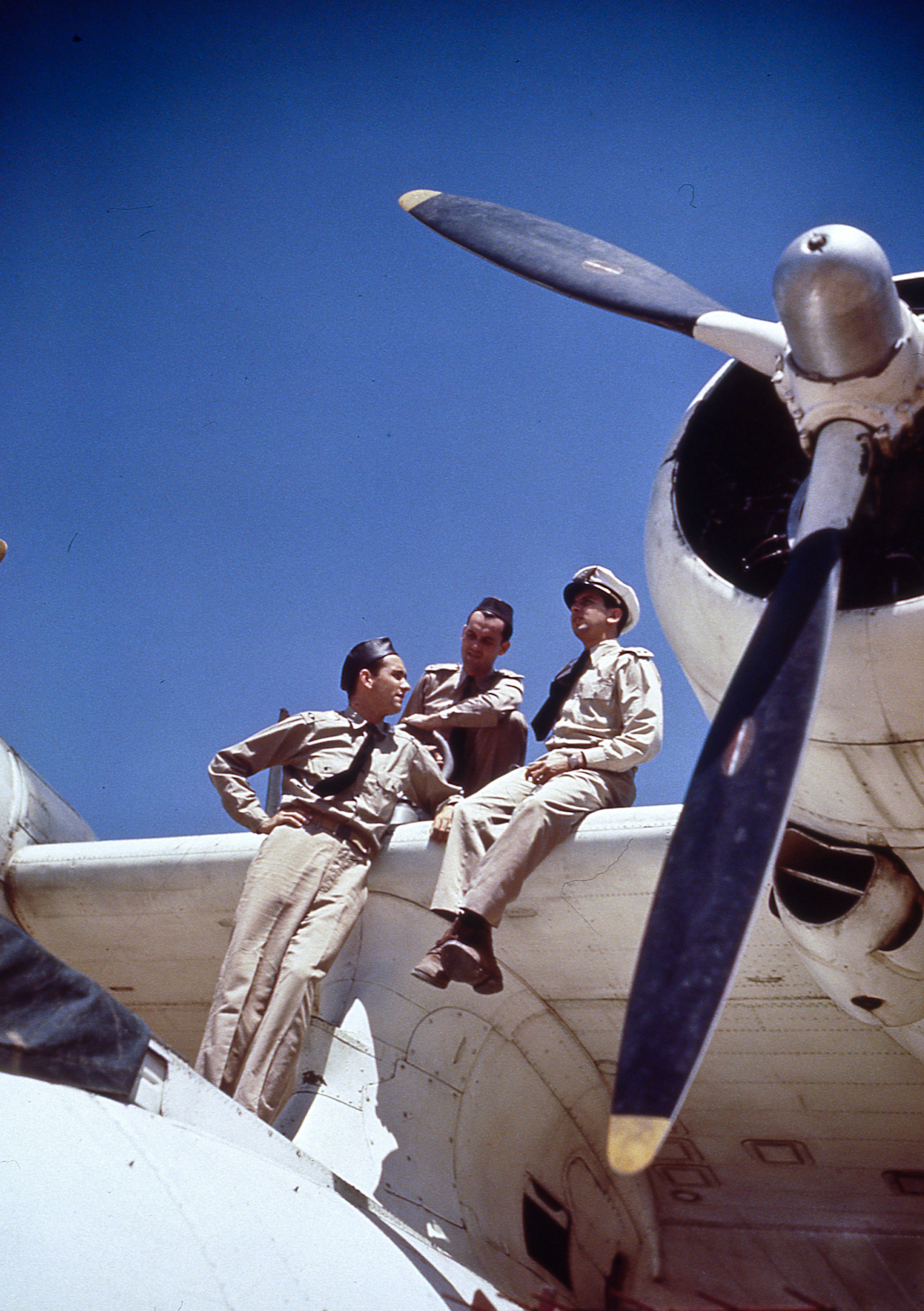

Piccadilly Queen returns home to Great Ashfield with wounded aboard on June 14, 1943. This Fort was a B-17F and was part of the 385th Bomb Group’s original contingent of aircraft. It soldiered through the harshest air battles of the 1943 campaign only to be shot down by Luftwaffe fighters during a raid on Frankfurt on January 29, 1944. Piccadilly Queen crashed near Kaiserlautern, where about half the crew survived to be taken prisoner.
 The American Warrior