Posts Tagged With: #PTO

348th Fighter Group Air-to-Air Kills Over New Britain 1943

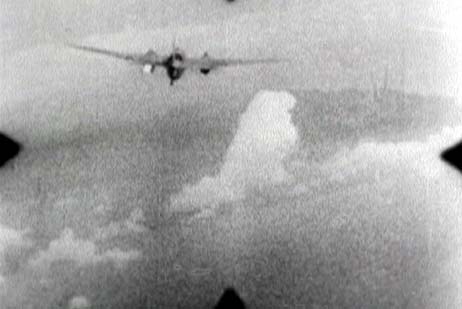
348th fg val 12 27 43 arawe 4x6

An Aichi D3A Val under the guns of a 348th Fighter Group P-47 pilot over Arawe, New Britain, December 27, 1943.

348th fg robert sutcliffe gloucester 12 26 43 ki 49 4x6

Robert Sutcliffe, a Thunderbolt pilot assigned to the 348th Fighter Group, makes a pass on a formation of Japanese bombers over Cape Gloucester, New Britain on Boxing Day 1943.

348th fg robert sutcliffe gloucester 12 26 43 ki 43 4x6

Sutcliffe cripples a Japanese Army Air Force Ki-43 over Cape Gloucester on December 26, 1943.

348th fg lawrence oneil bombers gloucester 12 26 51 4x6

Lawrence O’Neil, another 348th Fighter Group P-47 pilot, making a low side pass on the same bomber formation Sutcliffe attacked on December 26, 1943.

348th fg george orr bombers gloucester 12 26 47 4x6

George Orr, 348th FG, making a stern attack on a Japanese bomber over Cape Gloucester, December 26, 1943.


Categories: World War II in the Pacific | Tags: , , , , , , , , , , , , | Leave a comment

The Cumberland Clerk of Clark Field

Confession: Part of the perils of conducting archival research far from home is that I get easily distracted. I’ll be plowing through piles of government documents looking for nuggets relevant to my next book, then I’ll stumble across an insanely cool story that I can’t help but to track down. This was the case this week while working at the MacArthur Memorial archives in search of material related to Paul “Pappy” Gunn. There I was, digging around in the collection when I came across a debriefing document related to a clerk named Corporal Joseph Boyland. So I love stories about unlikely folks who step up in moments of great turmoil and crisis to become bigger characters than their rank and role might lead you to believe. In Afghanistan in 2010, I met a quartermaster named Captain Andrew Alvord–who happened to be out commanding an air assault platoon composed of support troops like fuelers and clerks. He led the platoon on many patrols, fought several sharp engagements during Taliban ambushes, and made friends out of local villagers. That is the kind of American who makes our nation great.

Which leads me back seventy years to a Cumberland, Maryland factory worker who, in the throes of the Depression, sought service in the Army Air Corps as a way out of his small town circumstances. Enlisting in 1937, he trained as a clerk and was sent to the Philippines in 1941 to be a paper-pusher in the newly established V Bomber Command Headquarters. In four years, promotion had come slowly for him, and when  Japanese aircraft  appeared over Clark Field on December 8, Boyland was a corporal.  He was at Clark when the attack came and destroyed most of MacArthur’s air force on the ground, and in the chaotic days that followed, he was culled from the HQ element and sent to the 192nd Tank Battalion, where he trained as an M3 Stuart gunner for six weeks at the start of the Bataan Campaign.

In February, he received a week’s worth of infantry training, then was posted at Cabcaben Airfield, where he manned a .50 caliber anti-aircraft machine gun. Between standing watch over the field, he participated in dismounted patrols around Mariveles, and did such an impressive job that he received a spot commission to 2nd Lieutenant by the 31st Infantry’s Major Miller. Along with most of the other marooned FEAF ground and air personnel, he served in combat with the 71st Infantry Division (Philippine Army) until malaria and dysentery knocked him out of action.

As the situation on Bataan began to collapse in early April 1942, he was ordered to Corregidor, but the FilAmerican Army surrendered while he was trying to find passage to the Rock. The Japanese captured him at Mariveles. With twenty other American POW’s, he was pressed into service as a truck driver for the Japanese. Under guard, he drove around Bataan, Guagua, and Pampanga, forced to do whatever the Japanese demanded of him. Yet, his experience was easy compared to what thousands of other half-starved, sick POW’s faced on the Death March. Boyland and his crew of truck drivers often were allowed to go into Manila to purchase food and even alcohol. This comparatively easy life changed later that spring when and thirteen other American drivers were taken to Olongapo and crammed aboard a Japanese transport vessel. The ship took them to Negros Island, where he and his fellow POW’s drove and repaired trucks for the next year.

On Negros, Boyland experienced the opposite extreme of the Japanese occupation. In the months that followed, beatings became increasingly frequent, and he bore witness to the full horrors inflicted on the Filipino population, especially after the Kempeitai showed up on Negros. One Kempeitai Lieutenant in particular terrorized the inhabitants of Bacolod, killing civilians with his sidearm.

Towns suspected of supporting the growing guerrilla movement were dealt with harshly. Several times, Boyland witnessed Japanese troops pour into this villages and massacre the residents with machine guns and bayonets. Other times, the Japanese would capture a group of Filipino males, tie them up and spend days torturing them. They’d be left in the sun without food and water, burned with cigarettes, and mutilated with scissors. Afterwards, Boyland and his fellow Americans would be ordered to bury the bodies.

Sometimes, the Japanese made clumsy attempts to connect with the Filipino population. In April 1943, Boyland was ordered to drive in a two truck convoy. In back, instead of just bayonet-armed Japanese Soldiers, he and the other driver transported a brass band, a singing trio, two Filipino nurses and a couple of doctors. With music merrily playing, they rolled through the countryside, visiting hamlets around Bago. They would stop, hand out candy, cigarettes and donated clothing to the impoverished populace while the medical staff tended to the sick. Sometimes, they’d host dances and games, complete with prizes.

The pistol-fond Kempeitai lieutenant went along on the sojourns, keeping a watchful eye on the spectacle. The Japanese called these Peace and Relief Missions.

Such tactics couldn’t sway the Filipinos, who remained fiercely loyal to the United States despite the reign of terror unleash on them behind the facade of brass bands and free shirts. That point was driven home to Boyland once day when his truck broke down during a Peace and Relief run to Ponte Verde. As he worked to repair it, the locals came out to him, and when the Japanese weren’t looking slipped him fresh fruit and eggs. The mayor even gave him some money.

Enough was enough. Beaten almost every day for months, bearing witness to horrific atrocities then burying the victims, all while driving around a traveling road show with the sadistic Kempeitai officer was too much for Joe Boyland. In April 1943, a Japanese officer smacked him across the face and that humiliation became the final straw.

The next day, he was in the market place at Bago, paused between runs in his truck. His Japanese guard walked across the street to buy cigarettes, and Boyland saw his chance. He slipped into a nearby shop and bolted out the back door. He linked up with a local guerrilla cell, which took him up into the mountains to escape the Japanese.

For most of the next year, Joe lived the life of an American insurgent, operating with the guerrillas of Northern Negros. They carried out ambushes, sometimes attacking the very trucks that he’d been driving. By July, all but two of the American drivers he’d been with had escaped and linked up with various guerrilla groups as well.

Boyland soon found the shadow war on Negros had an ugly underbelly. The Filipinos in the movement hated the local Spanish aristocracy. They represented the elite of the old colonial order, and they took out centuries of pent-up resentment on them through midnight raids and violence. The Spanish left their outlying properties and moved to Bacolod where the Japanese could better protect them, and many openly collaborated with the occupation force as a result.

Martinez Godinez was an exception. He and Boyland had become friends after Martinez provided food, whiskey and safe places to crash. He was officially the Spanish Consul for Negros, and despite his nation’s neutrality in the war, he played an important role in keeping Boyland’s guerrilla cell in the fight. Despite this, other insurgent groups considered him an enemy, and they marked him for death. Boyland protected him as much as he could, but eventually convinced Martinez to send his family to Manila, where they would be (at least for the time) safer.

Then there were the anti-American guerrillas. The most notorious, at least to Boyland, was a former sergeant in the army named De Asis. Reputed to have gone on a blood-feud killing frenzy that claimed the lives of some twenty-seven Filipinos, De Asis was all about settling scores and exercising grudges. He had a deep seated hatred of Americans, and was rumored to have killed several. In January 1944, Boyland went in search of De Asis, probably to try and halt his depredations, but he proved elusive and Joe never found him.

Bacolod, the largest city on the island, teamed with intrigue. Plenty of the locals supported the guerrillas, but there were always fifth columnists, spies and sympathizers working with the Japanese. A German named Weber was one of the most aggressive pro-Japanese civilian in the city. He would strut through the streets in shorts, armed with a pistol and would “arrest” anyone he suspected of supporting the insurgency, then turn them over to the Japanese authorities.

In February 1944, after months of shadowy operations, ambushes, near misses with Japanese patrols and rival guerrillas, Boyland was evacuated off Negros and taken to Australia, where he was debriefed then sent home to Maryland.  When he returned to Cumberland, he learned that one of his brothers had joined the Navy and was serving in England. He later took part in D-Day as part of a landing craft crew.

Joe was given a hero’s welcome in his hometown. So few had escaped from the Philippines that the local papers celebrated his arrival, but noted repeatedly that he wouldn’t talk about his experiences. It later came out that he’d been thoroughly interrogated at the Pentagon after his return from the Philippines. Once he was given 30 day leave and came home to Cumberland, the Secret Service kept him under constant surveillance to ensure he did not speak of what was happening in the Philippines. That level of paranoia was also experienced by other escapees, including the legendary Ed Dyess.

Boyland went to OCS and stayed in the military after the war, learning to fly and serving as a pilot in the Air For Parce before finally retiring as a lieutenant colonel. In December 1975, his car got stuck in soft mud on the side of Route 301 in North Carolina, outside of Rocky Mount. While walking along the shoulder to a nearby gas station to get help, he was hit by a passing car and tragically killed, a terrible end for the warrior clerk.

He never spoke to the press about his wartime experiences in detail, honoring the order given to him during his Pentagon debriefing to keep his mouth shut. But he did tell his hometown paper once of a poignant moment after he was captured that haunted him through his captivity.

While being taken to a POW camp, he spotted a billboard on the side of the road advertising Kelly-Springfield tires.  Cumberland was home to an 88 acre Kelly-Springfield factory, completed in 1921 when Joe was just four years old. The company employed much of the town, and was a pride of the city until it was purchased by Goodyear the year Joe graduated from high school.

The billboard brought him back to his hometown, and as he watched the advertisement pass by, he was filled with memories of City Hall Plaza, Bedford street and all the little shops in downtown Cumberland. As it slipped past his truck, the billboard served as a reminder to all he’d lost, and all he’d fight to regain in the difficult years to come.



Categories: American Warriors, World War II in the Pacific | Tags: , , , , , , , , , , , , | 6 Comments

Most. Unusual Distinguished Flying Cross. Ever.

The Philippine Air Lines hangar at Nielson Field in 1941. PAL flew Beech 18's and a Staggerwing (at right).

The Philippine Air Lines hangar at Nielson Field in 1941. PAL flew Beech 18’s and a Staggerwing (at right).

When the Pacific War broke out in December 1941, thirty-three year old Harold Slingsby was employed as a pilot with Philippine Air Lines, working for the legendary Paul “Pappy” Gunn from the company’s hub at Nielson Field outside of Manila. Far Eastern Air Forces had no transport force in 1941, and in those dark December days, the huge hole that left in MacArthur’s air capabilities was keenly felt. With no way to move personnel or supplies around by air, General Louis Brereton drafted Philippine Air Lines’ pilots and aircraft into the USAAF. Slingsby became an instant captain.*

At the end of December, it was decided to move General Brereton’s headquarters to Australia. Key staff officers were ordered out of the Philippines to help establish the new HQ. Slingsby was one of the pilots who flew those officers to Northern Australia. Upon arrival, he was pulled into the nascent Air Transport Command as part of the 21st Troop Carrier Squadron (the only cargo squadron in theater at that point) and spent much of the rest of 1942 flying the PAL Beech 18’s, Lockheed Lodestars and C-47’s around from base to base before returning to the States in early 1943.

The 5th Air Force was just being set up, and things were pretty chaotic in Australia in early 1942, so these transport missions were often anything but routine. On February 23, 1942, he was tasked with flying to Brisbane to haul back to Batchelor FIeld the intact wing of a Boeing B-17 Flying Fortress. Pappy Gunn, who commanded the 21st, was probably on this flight with “Buzz” Slingsby and took photos of this remarkable salvage job. They arrived at Brisbane and somehow shoehorned the wing under the fuselage of their transport. Exactly what aircraft Slingsby was flying is unknown, but it was probably an ancient B-17D the ATC pilots had been using since it had been flown out of the Philippines. The  B-17 wing was lashed to the underside of the fuselage, and they took off the following night to get it back up to Northern Australia where ground crews were waiting to pair the salvaged wing with another damaged Fort so it could be returned to service.

In times of great peril, the men of the 5th Air Force rose to the occasion and figured out a way to stay in the fight without adequate supplies, spare parts or aircraft. If Buzz and Pappy had been flying the old 19th Bomb Group B-17D’s that day, and nothing else in theater could have handled such a load, they were piloting an aircraft whose engines were so worn out and unreliable that the 19th had cast it off as uncombat worthy at a time when they were desperate for flyable bombers. Every minute in the air must have been a gut-check for them, but Slingsby made three landings and take-offs with the heavy, awkward load and got the vital wing up to the Darwin area.

For this incredible feet of ingenuity, Pappy put Slingsby in for a DFC. Here is his award citation:

G86A5185


*Kenney’s book, The Saga of Pappy Gunn states that Slingsby was a Consolidated employee ferrying PBY Catalina flying boats to the Dutch East Indies when the war broke out, but other sources state he was an employee of PAL in December 1941.

Categories: World War II in the Pacific | Tags: , , , , , , , , , , , , , , | 21 Comments

The Fate of the Oklahoma

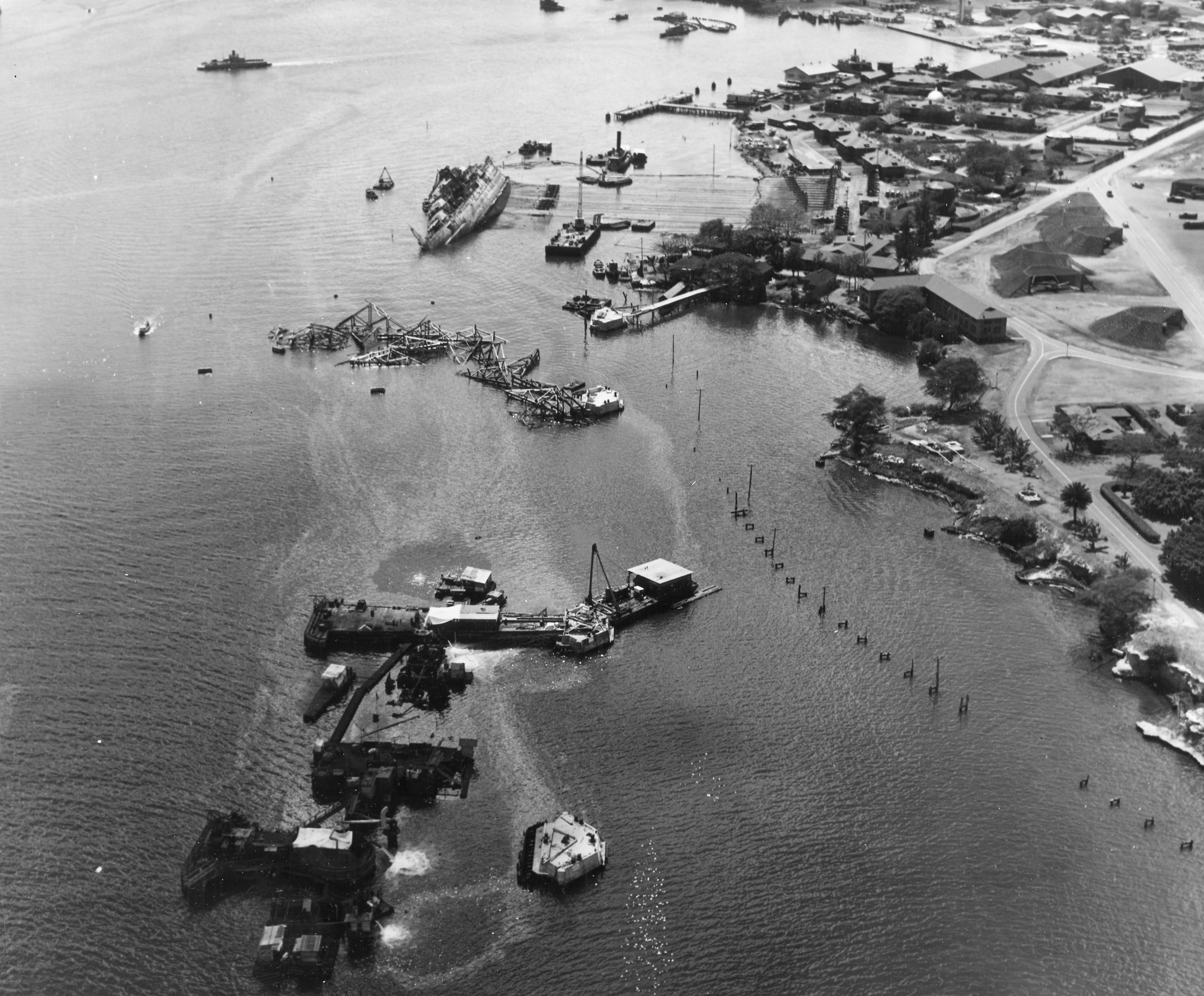
raising the oklahoma257

Righting the Oklahoma took almost 3 months. At bottom of the photo is the wreck of the Arizona, still leaking fuel. May 1943

During the Pearl Harbor attack on December 7, 1941, Japanese B5N “Kate” bombers scored five torpedo hits on the USS Oklahoma’s port side. The massive damage to this aged battleship prompted her to begin listing to port. Within minutes, she had turned turtle, trapping hundreds of sailors in her hull. In the hours and days after the attack, civilian shipyard workers and other sailors worked furiously to cut openings in the Oklahoma’s exposed keel in order to rescue the men still alive inside the ship. The effort saved thirty-two men. Stephen Young, one of those rescued, later wrote a gripping account of what he and his fellow sailors endured during those horrific hours after the ship turned turtle. Find his book here:

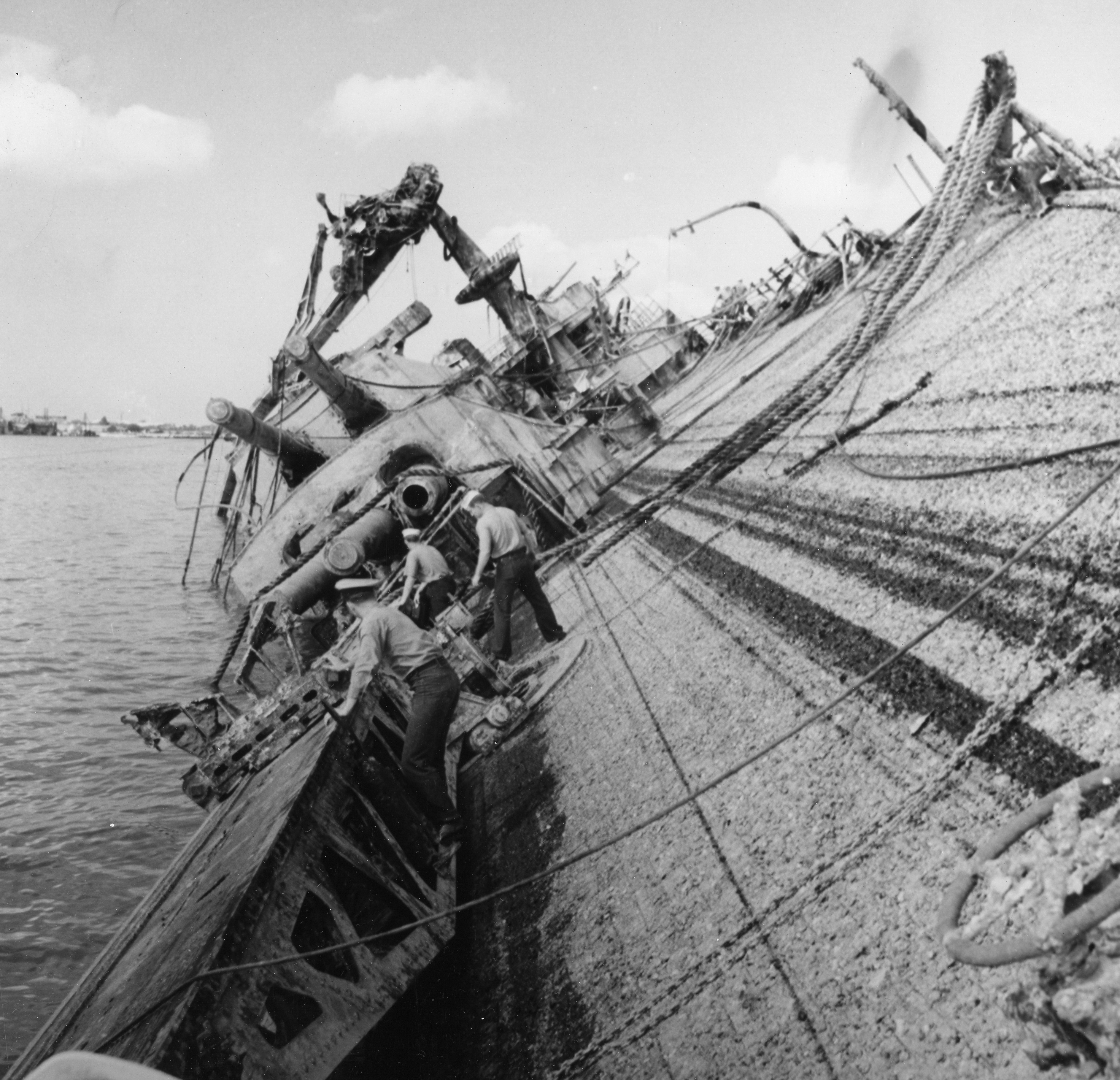
raising the oklahoma249

The cable system employed to right the Oklahoma had to be reset every few days as the ship began to roll. It was slow work and took months to complete.

Four hundred and twenty-nine men died aboard the Oklahoma. Only the Arizona‘s destruction cost more American lives on December 7th. Most of those sailors died within her hull, and as salvage work began on her in mid-1942, one of the first tasks was to recover those remains. For the sailors, divers and civilian contractors assigned to the vessel, the work was gruesome, dangerous and emotionally taxing to the utmost.


raising the oklahoma258

From the spring of 1942 to the summer of 1943, the salvage operation continued. Patches needed to be welded to the hull to cover the torpedo damage and make the ship watertight again. Teams of divers and workers cleared out ammunition, cut away damage and pumped out the thousands of gallons of fuel still remaining in the battleship’s tanks. As that work continued, other teams emplaced twenty-one massive winches on Ford Island. The salvage team rigged cables between the ship and the winches, and these were used to gradually pull the Oklahoma upright. It was a slow task that required intricate engineering work. After three agonizing months, the winches finally righted the wrecked battleship.

Hawaiian Female Salvage Worker Pearl Harbor 43 943

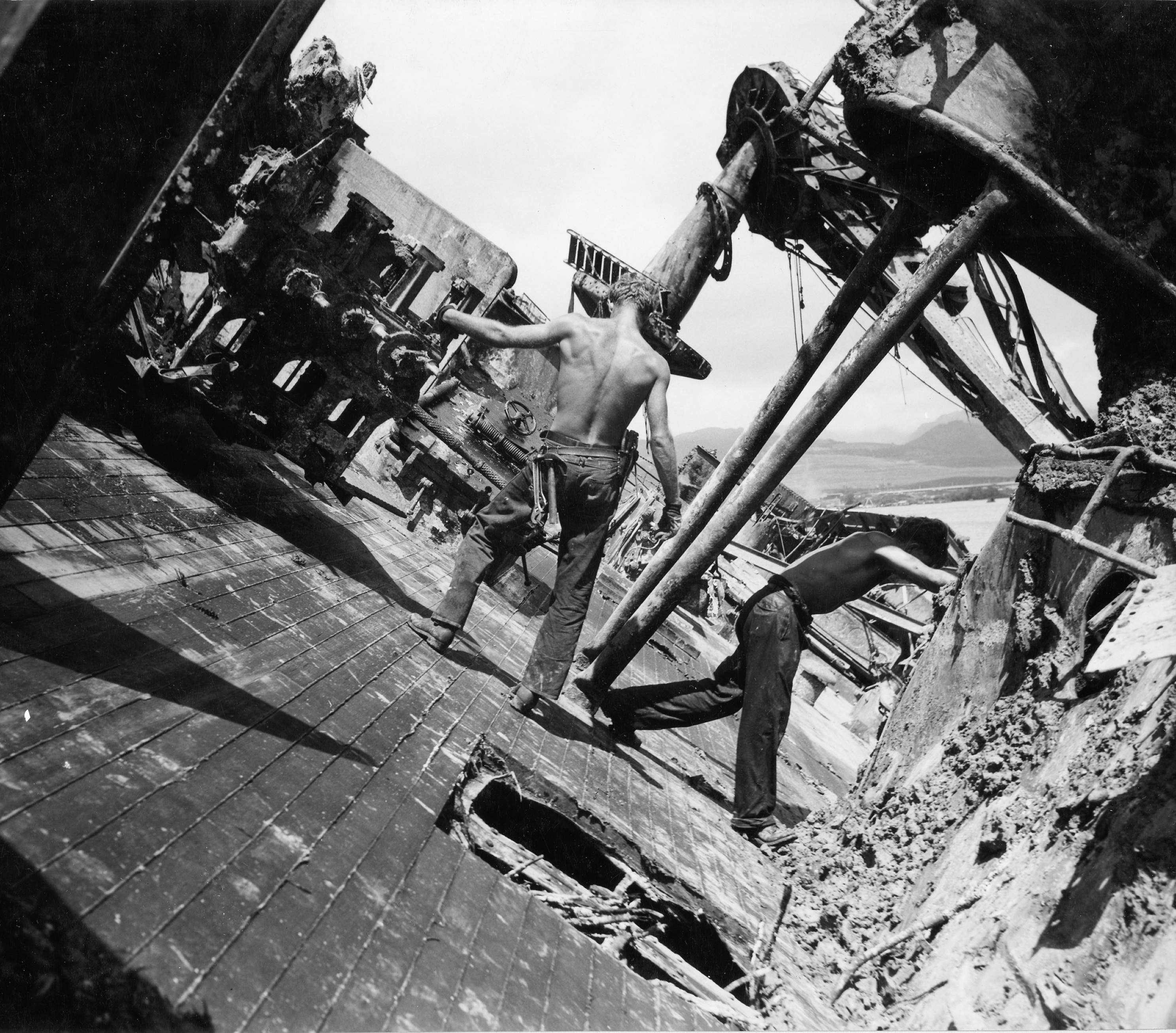
A civilian salvage worker aboard the Oklahoma in 1943. This was grueling, dangerous work which included having to recover the remains of hundreds of fallen sailors who’d been trapped aboard the battleship when she turned turtle.

Oklahoma Salvage May 43 941

Almost righted, May 1943.

Once back on an even keel, the work to make her watertight was finished. Machinery, the rest of her ammunition and weaponry were pulled off and she was basically stripped to await scrapping. She was eventually towed to drydock where the work was finished. She spent the rest of the war moored in the harbor as a silent reminder of that terrible day in December 1941.Oklahoma Salvage May 43 937raising the oklahoma252

She was sold for scrap after the war, but while under tow to San Francisco in May 1947, she and her two tugs encountered a heavy storm. The battered old battlewagon couldn’t take the rough seas. She began to take on water, and a dangerous list developed. As she began to sink, the Oklahoma nearly dragged both tugs down with her. Fortunately, quick action on the part of the tugs’ crews prevented such a disaster. Oklahoma went to the bottom some five hundred miles east of Pearl Harbor. Her hull may lay in an anonymous Pacific grave, but her heart was torn out on Battleship Row in 1941.

raising the oklahoma254


Categories: World War II in the Pacific | Tags: , , , , , , , , , | 1 Comment

Warrior Adversary: Saburo Horita’s Story

Tone

The Imperial Japanese Navy heavy cruiser Tone. Saburo Horita was assigned to a 25mm anti-aircraft gun crew located near the ship’s bridge.

Saburo Horita grew up on a five acre plot of land his father farmed in Toyama prefecture on the west coast of Honshu. They were a poor family that included three sons (Saburo was the youngest). When Saburo was fourteen, his oldest brother died. Not long after, his mother died as well. He and remaining brother, who had been a porter in a Tokyo bath house until their mom’s death, worked the land together, raising vegetables and rice.

japanese cadet training652 4x6

Japanese pre-war flight training was among the most rigorous in the world, but as the war continued and losses mounted, the Japanese were forced to cut their program short in order to get pilots into the field as quickly as possible.

In June, 1939, Saburo joined the Imperial Japanese Navy, and after six months of training at Yokosuka, joined the complement of the heavy cruiser Tone. He served as a 25mm anti-aircraft gunner and part of the deck crew for the next year. In January 1941, he decided to try and become a naval aviator, hoping he’d be able to fly bombers someday. He passed his physical and all the necessary exams, and received orders sending him to flight school Kasumigaura. He learned to fly on the venerable Type 93 “Willow” biplane, and then later got stick time in a Type 95 “Dave” two-seat biplane.

After he graduated from flight training, the Imperial Navy sent Saburo to Takao, Formosa, where he joined the 3rd Air Group as a reserve pilot. He’d had no time in advanced fighters, so the group put him through an intensive, crash course on the Mitsubishi A6M2 “Zero” fighter they had been flying in combat against the USAAF units in the Philippines. Horita arrived in January 1942, just as air campaign over Luzon was drawing to a close.

Japanese Air Cadets Training 2

Saburo Horita trained on Type 93 and 95 biplanes before graduating to the legendary A6M2 Zero fighter, which he first flew when he arrived on Formosa in early 1942.

After ground instruction, he and his fellow replacement pilots were strapped into Zeroes and sent aloft to get familiar with the aircraft. On those early training flights, the fledglings were told to leave the landing gear down, as none had ever flown a craft with a retractable undercarriage. Saburo and others found the Zero tricky to land, and often they would “kangaroo” across the strip at Takao, bouncing the Zero on and off the runway as they tried to execute a touch-and-go.

Zero over Mt Fuji 8x10

A Mitsubishi A6M Zero fighter with Mt. Fuji in the background. When questioned on the Zero’s performance, Saburo told his Japanese-American interrogator that its top speed was 340 mph and could climb at 3,000 feet a minute.

After they worked through getting his Zero back on the ground consistently, Saburo underwent formation flying and aerobatics instruction with more senior 3rd Air Group pilots. But all too soon, the pressing need for combat pilots forced this first contingent of replacement pilots into battle. Along with six other aviators, Horita boarded a Type 96 “Nell” bomber in February 1942 and flew down to Mindanao. From there, they made the jump to Kendari Airdrome on the Celebes Island in the Dutch East Indies. From there, the 3rd Attack Group had been operating against the Allied air units fighting in the Java campaign. Once Java fell to the Japanese, the 3rd Air Group, based now on Timor, escorted G4M “Betty” bomber raids against northern Australia.

It was during those attacks that Saburo Horita first flew in combat. He took part in at least one raid on Port Darwin in June 1942 before being transferred to Rabaul in November 1942. At Rabaul, he joined the freshly redesignated 582nd Kokutai, which had been the 2nd Air Group up until that time. Before he had a chance to fly in the Guadalcanal campaign, he was stricken with malaria and spent about six weeks recovering. While in the hospital, some of his comrades were posted at Lae and thrown into the fight against the 5th Air Force while others stayed at Rabaul to fly missions against the Allies in the Southern Solomons.

After returning to flight status, Horita had between 300-400 hours in Zeroes, Type 93’s and 95’s. He’d been promoted to lead a three-plane formation, known as a Shotai. It was as a Shotai leader that he flew his final combat mission on January 31, 1943.

Sec 4 IC F A translated document detailing the Japannese side of the sinking of the USS Chicago in January 1943

A translated intercept of a Japanese message detailing the loss of the Chicago during the Battle of Rennell Island.

On that day, the 582nd received orders to escort a squadron of bombers against Allied warships at Tulagi Harbor. The previous two days had been furious ones over the Southern Solomons. Japanese airstrikes had sunk a destroyer and the heavy cruiser Chicago in a debacle later known as the “Battle of Rennell Island.” On the 31st, IJN reconnaissance had detected three warships near Tulagi, and they would be the raid’s primary targets.

nick philippines596

During his interrogation, Horita was shown a drawing of a new Japanese twin-engine fighter that the Allies knew little about. This was probably either the Kawasaki Ki-45 Toryu (Nick) (pictured here), or the Nakajima Gekko (Irving) night fighter. Horita had known nothing about the new plane, and while admiring the sketch he muttered that he would have liked to have had a chance to fly it.

Over the target area, the Japanese strike failed to locate any Allied ships. Without radios in their Zero fighters, the 582nd could not converse with the bomber crews, so they simply stayed with them and followed wherever they went. In this case, they began searching to the south of Tulagi and Guadalcanal. The search yielded results: two destroyers were soon sighted, and the bombers dove to the attack.

f4f usmc airborne 4037

F4F Wildcats airborne over the Southern Solomon Islands. The F4F was the primary air defense aircraft during the bitter struggle for Guadalcanal 42-43.

A squadron of F4F Wildcats was overhead that day, protecting the Allied vessels. The 582nd locked horns with the American fighters, and a dogfight raged over the ships.  At fifteen hundred feet, Saburo’s Zero was attacked by four Wildcats and shot up. He turned north and limped his crippled Zero for home, but over Russell Island, his engine seized. He ditched the Mitsubishi in shallow water right off the beach and waded ashore. Five foot four, one hundred and twenty pounds, Saburo Horita was now hundreds of miles from home, with no way to get back to Japanese lines.

He thought through his situation, and concluded his only hope lay in trying to steal a boat or canoe from the local natives. Exactly what he hoped to do with it is unknown, but perhaps he thought he could paddle the 30 miles to Guadalcanal where he could link up with the Japanese garrison there before it was evacuated.

IMG0077 a6m zero cockpit from recovered from pearl harbor raid  8x10

Saburo Horita’s office–the cockpit of an A6M2 Zero. On long flights, he and his fellow pilots would carry a lunch composed of rice balls wrapped in seaweed.

Whatever his intent, he acquired a canoe from the natives at gunpoint, which earned him no friends. The natives eventually got the drop on him and took him prisoner. He was quickly delivered to Allied authorities, where he was interrogated by Colonel Sidney Mashbir’s  Allied Translator and Interpreter Section, SWPA (ATIS/SWPA). The Japanese-American who conducted the interrogation found Saburo Horita to be intelligent but poorly educated. His answers were cautious, and unlike many other POW’s, he was security conscious and did not reveal a lot of information. However, what he did say generally was believed to be accurate.


Categories: World War II in the Pacific | Tags: , , , , , , , , , , , , , , , , , | 2 Comments

The Last Jump: Task Force Gypsy at Aparri

Gen Kruger with 511th PIR 11th Airborne 45 4x6

General Walter Krueger with men of the 511th Parachute Infantry, seen in the Philippines 1945.


During the bitter fighting for Northern Luzon, Philippines in the final months of World War II, the 37th Infantry Division (Ohio National Guard) was tasked flanking the main Japanese positions and seizing the coastal town of Aparri. This was the scene of one of the first Japanese amphibious landings in the 1941-42 campaign.  General Walter Krueger decided to commit elements of the 11th Airborne Division to the attack, which he hoped would ultimately surround one of the last major Japanese army formations on the island (Shobu Group with about 50,000 men).

11th Airborne Div 503rd PIR Landing on Corregidor Aerial View Philippines 021645 ix (1 of 1)

The 503rd Parachute Infantry Regiment, 11th Airborne, landing on Corregidor, February 16, 1945.

The storied 11th Airborne Division was the only air assault unit available to General MacArthur’s Sixth and Eighth Armies. The men of the 11th had executed airborne landings at Nadzab, New Guinea, Noemfoor, New Guinea and had dropped on Corregidor Island right atop a garrison that significantly outnumbered them. Elements of the division at taken part in the Los Banos Raid, the liberation of Manila and had fought on Leyte and Negros Islands as well.

The 1st Battalion, 511th Parachute Infantry formed the core of the task force assembled for this new mission, but men from the 187th Infantry, the 127th Engineers and the 457th Parachute Field Artillery also joined what would be known as TF-Gypsy. The plan called for a drop and glider landing on an airfield just out side of Appari. Once on the ground, the task force would push south while the Ohio National Guard advanced north to effect the link up.

The operation began on June 21, 1945 when a small group of Pathfinders air assaulted onto Camalaniugan Airfield to prep the LZ. Two days later, on the morning of June 23rd, the men of Task Force Gypsy climbed into sixty-seven C-47’s and C-46 transports for the short flight to the LZ. As the aircraft arrived overhead, the Pathfinders on the group popped colored smoke to mark the drop zones.

11th airborne division airborne assault on aparri field 1945948 5x7

Four of the six Waco CG-4’s that took part in the Aparri landing are seen here in the LZ. June 23, 1945.

Heavy winds hampered the parachutists. Two were killed and at least another seventy suffered injuries as they were buffeted by the winds and thrown into trees or other terrain features on the ground. The airfield itself was poorly developed and the uneven ground proved treacherous.

A half dozen Waco CG-4 gliders landed after the parachutists got on the ground. They carried the task force’s heavy weapons and jeeps, giving Gypsy a bit of mobility.

11th airborne paradrop june 45 Luzon 8x10

Task Force Gypsy jumps at Appari, 0900 June 23, 1945

The task force quickly assembled and began patrolling south of the airfield, where the paratroops ran into determined resistance. For three days, the men of the 511th and 457th Parachute Field Artillery Bn (attacked to TF Gypsy), burned out bunkers with flame throwers, destroyed pillboxes with 75mm pack howitzer fire and waited for the 37th to reach them. It took until June 26th for the two American elements to link up, but when they did, the Shobu Group’s escape route to the coast had been cut off. The Japanese troops faced a grim fate: starvation, death or surrender.

5th af series swpa appari drop 560 4x6

TF Gypsy forming up and moving south from the LZ, June 23, 1945.

The Aparri operation was the last American combat air assault operation of WWII. A number of combat cameramen joined the mission, taking extensive film and photographs while in the LZ. Below is one reel of uncut, unedited footage shot by one of those men on June 23, 1945.

This post is dedicated to the memory of Everett “Smitty” Smith, 187th Infantry, who was part of TF-Gypsy that June. His son has a fantastic blog that chronicles his father’s experience during the war. Find it at: https://pacificparatrooper.wordpress.com

Rakkassans!


Categories: World War II in the Pacific | Tags: , , , , , , , , , , , , , , , , , , , , | 3 Comments

Saipan Beach H-Hour, in Color

USMC Series WWII Saipan 1st wave hits beach LVT 061544  (1 of 1)In just two hours on June 15, 1944, three hundred amphibious tractors (LVT’s) carried over eight thousand heavily armed U.S. Marines onto Saipan Island in the Marianas Chain. It was a masterful display of amphibious warfare tactics and doctrine, but it also set the stage for a brutal, close range battle for control of Saipan’s sandy west coast. In places, the Marines found themselves pinned down by intense mortar, artillery and automatic weapons fire, and it took hours just to claw a foothold ashore. But by nightfall, the Marines had established themselves enough to repel the first of many Japanese counter-attacks.Marines struggling on the beach at saipan 5x7

This short film clip is raw footage shot by one of the Marine combat cameramen who went ashore with one of the first waves. It is silent, as was most of the footage shot, but that only adds to the poignancy of these scenes. The images are striking, not only for the chaos and carnage they reveal, but also for the film’s clarity. Much of the Marine Corps color footage has deteriorated over the years so that they are predominately reddish or blue. It makes for muddy looking scenes, and in many cases the more common black & white film has stood up better over the years. This clip is stark, clear and the colors have survived the decades in remarkably good shape.


Categories: World War II in the Pacific | Tags: , , , , , , , , | 3 Comments

The Last Photographs

During the final months of the Pacific War, MacArthur tasked the Eighth Army under Lt. General Robert Eichelberger with liberating the Central Philippines. The 40th Infantry Division, a National Guard unit from California, Nevada and Utah, played a key role in this all but forgotten campaign. In March 1945, the “Sunshine Division” landed on Panay, encountering stiff resistance in places during a ten day battle to clear the island.


On the first day of the landing, March 18th, two Signal Corps photographers followed an infantry company from the 185th Infantry Regiment ashore to photograph the fighting and their advance. A company of M4 Sherman tanks spearheaded the push into Panay’s jungle interior, and the men of Alpha Company, 1st Battalion, 185th Infantry followed cautiously behind. The photographers, Lt. Robert Fields and T/5 Howard Klawitter, ignored Japanese incoming machine gun and light artillery fire and stayed right with the GI’s of Alpha Company, snapping photos as they dashed forward with them.

As the combined force pushed up along a dirt road, they encountered heavy resistance and Alpha Company took cover behind the tanks. The Shermans blasted away at the Japanese defenders while Fields and Klawitter, standing a few yards apart, snapped pictures of the firefight.

Both photographers went down within minutes of each other. Fields was killed and Klawitter wounded. These two photos are the last ones they took.

40th inf div 185th inf regt m4 sherman and troops panay island philippines photographer kia 031845 (1 of 1)

Howard Klawitter’s final photo before he was wounded in action while attached to Alpha Company, 185 Infantry, 40th Infantry Division, California National Guard.


40th inf div 185th inf regt m4 sherman and troops panay island philippines  031845  (1 of 1)

This is the last photo taken by Signal Corps photographer Lt. Robert Fields. We was killed by incoming Japanese fire moments later. His camera was recovered and the film developed. He’d snapped four photos on the roll before his death while chronicling Alpha Company, 1st Battalion, 185th Infantry.


Categories: World War II in the Pacific | Tags: , , , , , , , , , , , , , , , , , , | Leave a comment

Photo of the Day: 1st Marine Division, Peleliu 1944

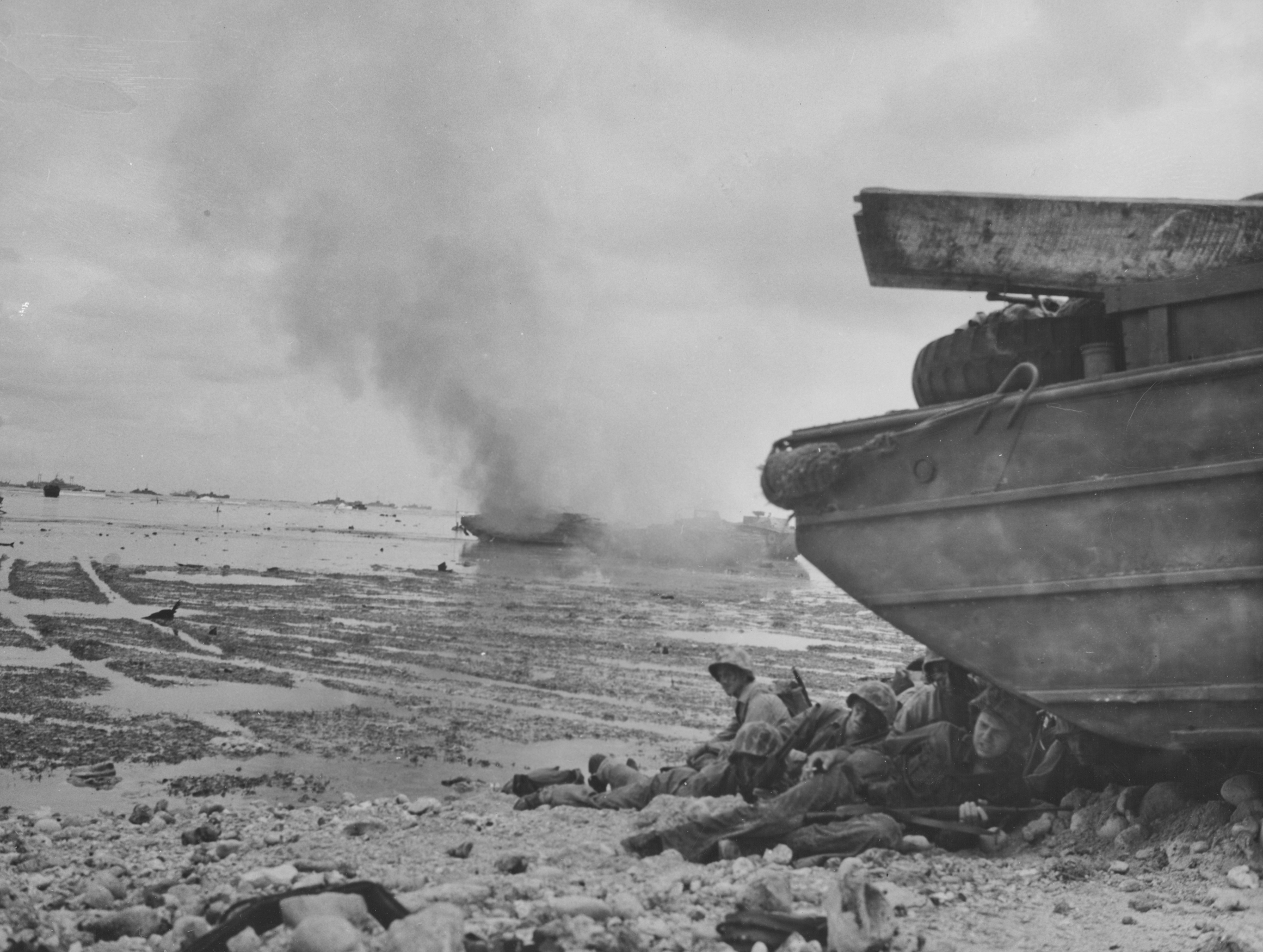
1st Marine Div Wrecked DUKW Beachhead men pinned down 091544 no caption (1 of 1)

Men of the 1st Marine Division take cover behind a destroyed DUKW amphibious truck on the beach at Peleliu during the first day’s landings, September 15, 1944.

Categories: World War II in the Pacific | Tags: , , , , , | Leave a comment

Blog at WordPress.com.