Got to hang out with Jake Suggs the other day and talk about the amazing Marines & Americans who helped turn history’s tide at Guadalcanal. Thank you, Jake for the opportunity to chat about these men!
Jake runs The American History Gazette Podcast, and is one of the next generation of historians who will be carrying forward the legacy and heritage of our nation. I love his podcast, it gives me hope that our past will not be forgotten in the future!
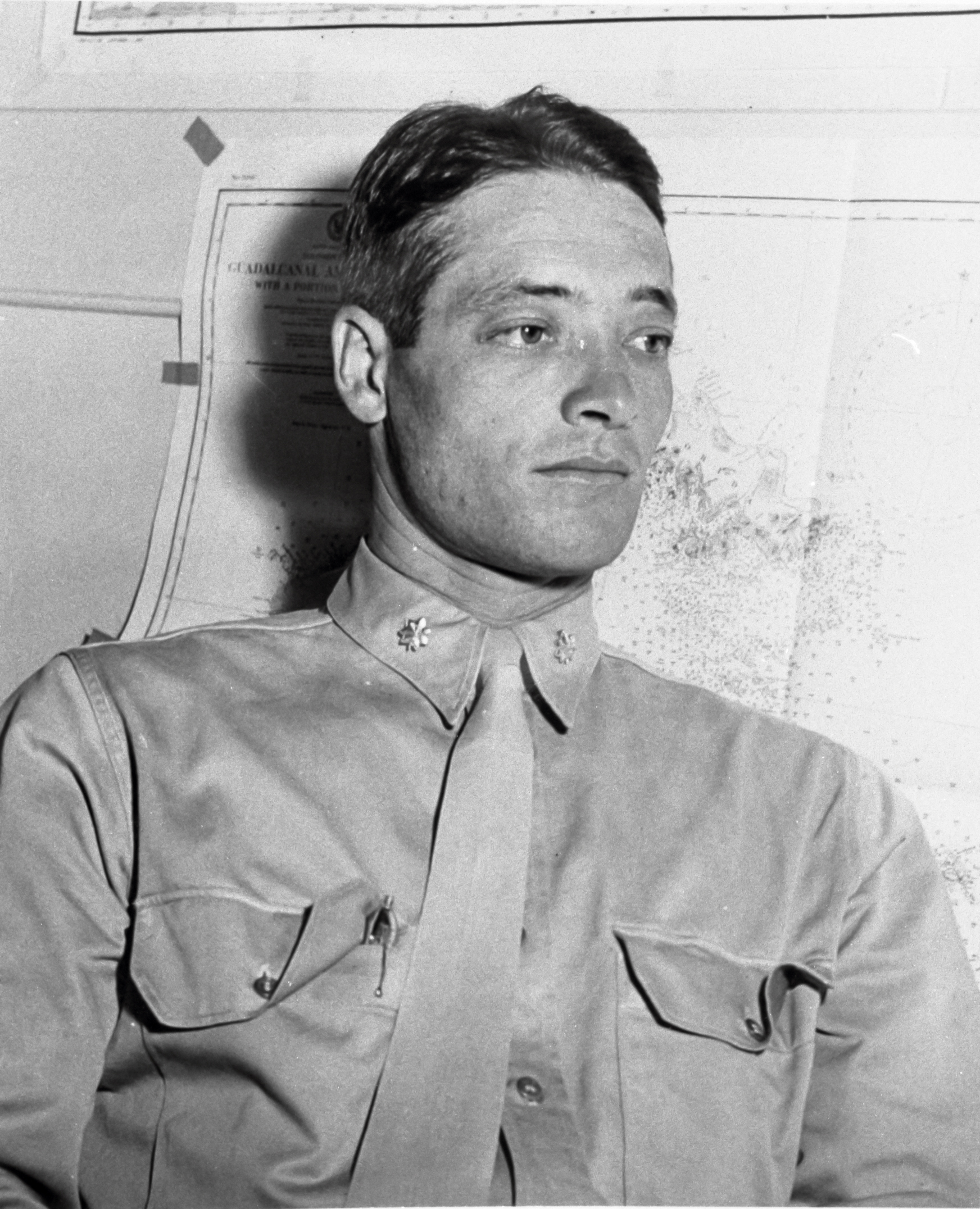
Major John L. Smith, skipper of VMF-223, America’s Ace of Aces in 1942, and one of the greatest Marine leaders of his era. Relentless, aggressive, fiercely loyal to his men, he is seen here in October 1942, just after arriving on Oahu from Guadalcanal. He was a man haunted by the deaths of the young pilots under his command, desperately uncomfortable with the media spotlight shining his way. A decade later, when Hollywood told John L’s story, John Wayne played the great Marine ace, turning him into a ruthless taskmaster whose men resented him.
In reality, the men of VMF-223 loved their skipper. He was demanding, emotional, prone to outbursts of anger, but so clearly loved & looked after his green 2nd Lts that they followed him into every fight for fifty-three of the toughest days any Marine squadron has endured.
The movie, which came out in 1951, is worth a watch. It contains considerable actual combat footage and gun camera clips, some of which no longer exists at NARA.
On this Memorial Day, I want to honor the men from VMSB-232 lost on Guadalcanal. Aboard the USS Long Island (CVE-1), the 12 pilots and 12 gunners of 232 were told to buy time with their lives so America could bring up more men & planes.
Two survivors of 232. Art O’Keefe & Dick Mangrum, 1943.
They did far more than just that. They saved America’s first offensive of WWII.
The cost:
Pilots
Fletcher Brown
Larry Baldinus
Oliver Mitchell
Charley McAllister
Don Rose
Leland Thomas
Gunners:
W.R. Proffitt
R.S. Russell
P.O. Schackman
Nine of 24 KIA. Half the pilots lost. The others were all either wounded or medically evacuated, except for Dick Mangrum. After 53 days, he was last man standing, a skipper without a squadron.
Marion Carl grew up on a dairy farm outside of tiny Hubbard, Oregon. He squeaked through Oregon State, then went on to be one of the 50 fighter pilots in the pre-war Marine Corps. He was one of the 9 pilots to survive the Battle of Midway from his squadron, VMF-221.
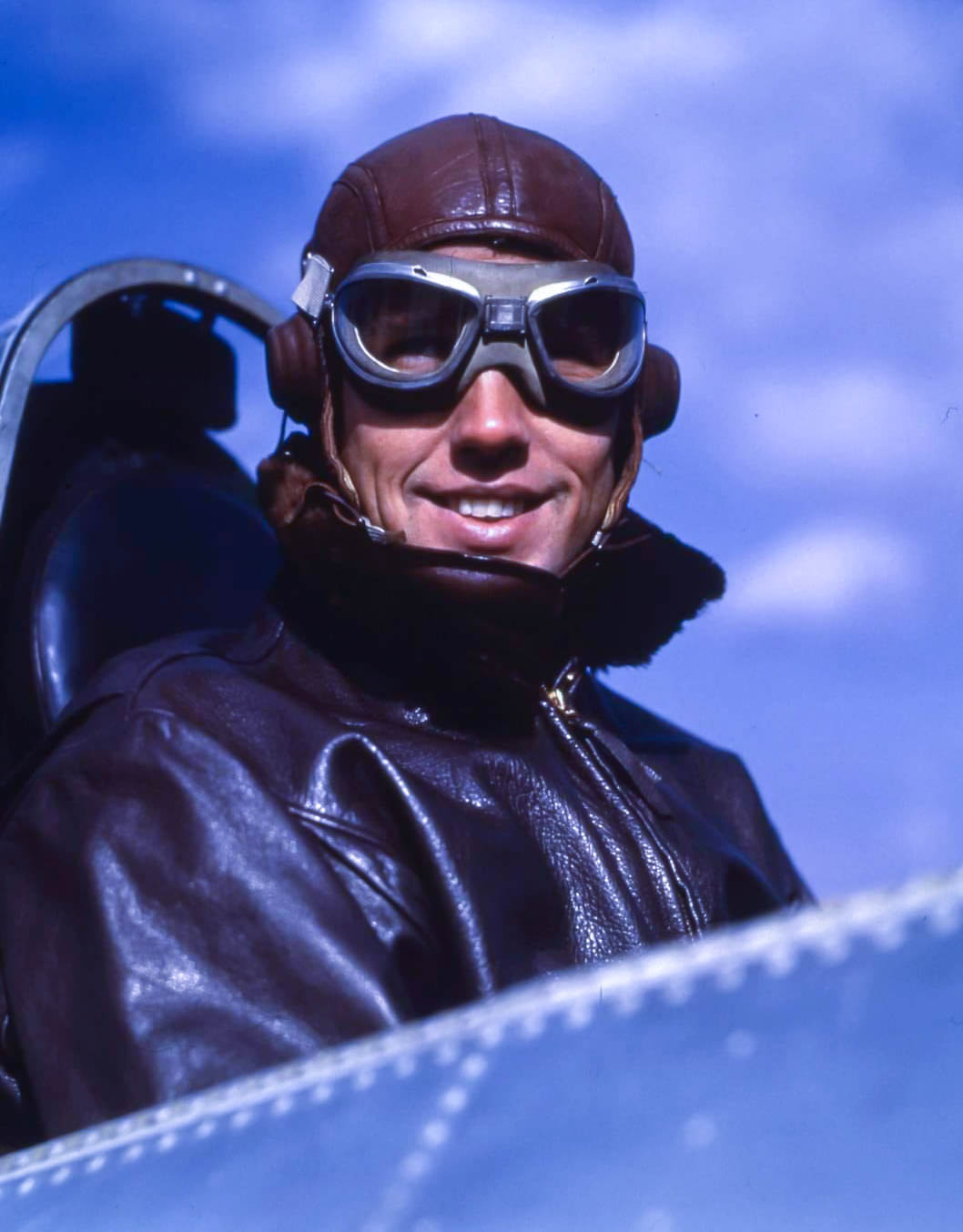
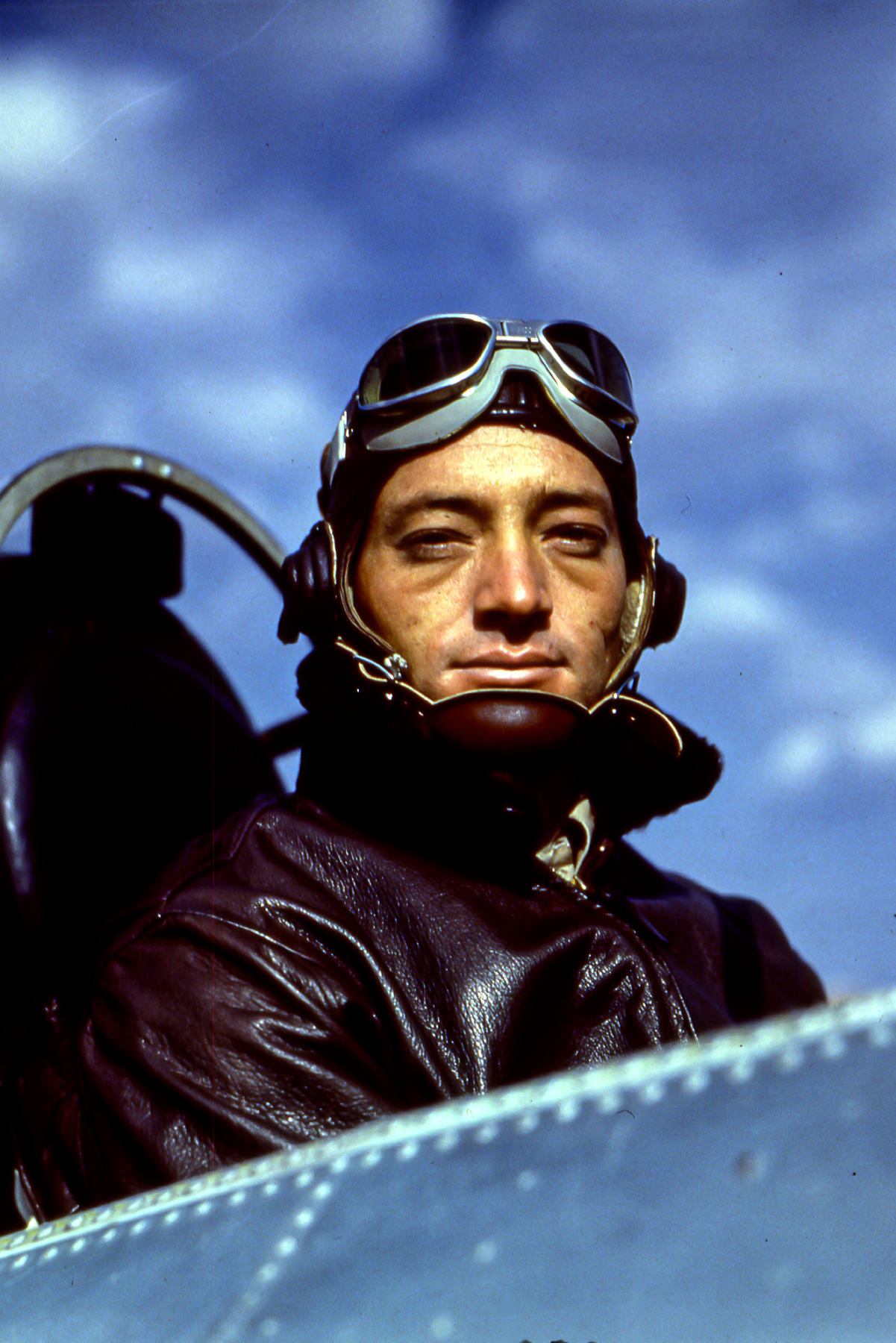
Two months later, he became the first Marine Corps ace while flying with John L Smith and VMF-223 at Guadalcanal. He returned to the U.S. to be feted as the hero of the hour, and the PR guys had high hopes for Marion, since he was tall, charismatic and possessed the winning mile you see in the photo here.
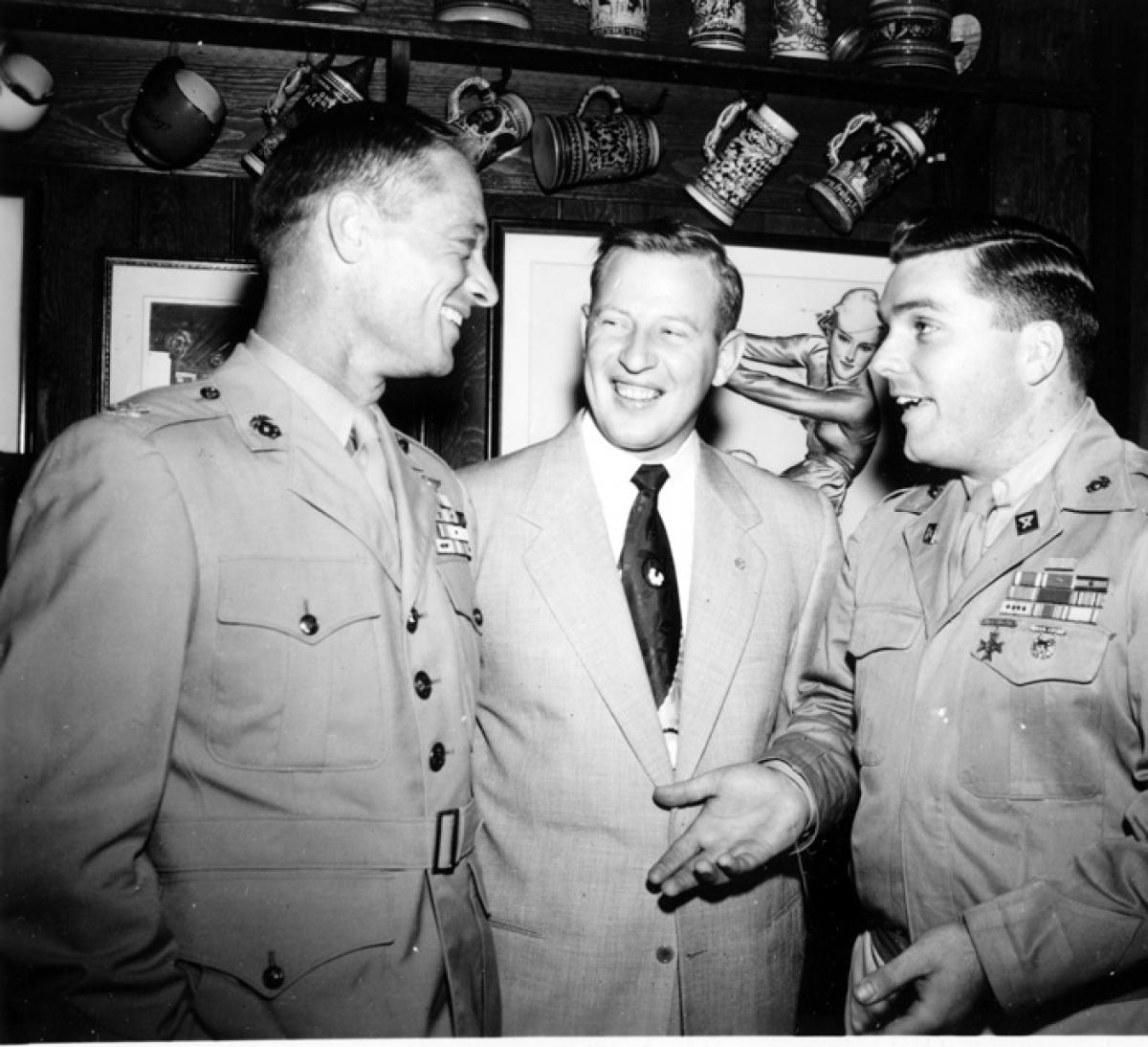
They sent him out on tour with John L and LTC Richard Mangrum, skipper of the first dive bomber unit to fight at Guadalcanal. He hated the press tour. Loathed it. The reporters annoyed him, the attention annoyed him. He fell asleep in press conferences. Sat and said as little as possible in other ones, chewing his nails and counting the seconds he could get away. He wasn’t made to be a celebrity. He was meant to fly and fight.
In early 1943, he returned to VMF-223 as its skipper and took it out to the Solomons for a second combat tour. He should a couple more planes down, returned to the States to become one of the legendary test pilots in American history.
He flew and fought through the rest of his career, from secret recon runs over China in the 1950s, to taking the 1st Marine Brigade into Vietnam in 1965, where as a brigadier general he flew combat missions in support of his men in both jets and helicopters. He retired as a major general in 1973, with over 13,000 hours in his logbook and is considered one greatest military aviators in American history. His story formed the basis of Fifty-Three Days on Starvation Island.
Happy to report I’ll be signing books at Powell’s Cedar Hills store in Beaverton, Oregon on June 5th! If you’re in the area, please drop by and say hello!
When you’re a year removed from lecture halls and your fraternity house, and you find yourself 180 miles south of nowhere in the middle of the Pacific, told to launch off a make-shift aircraft carrier with a catapult that will fire you off the deck at a 45 degree angle into a crosswind while piloting a combat aircraft you’ve had less than 30 days to learn to fly…and if you survive the launch, you’ll fight the best combat aviators in the world who have been shooting down planes since you were on your high school JV teams.
You’re going to be living in the jungle, slowly starving on captured food stocks. You may be five ten, a buck fifty now, but if you survive, you’ll be lucky to be a hundred and twenty pounds. When you’re not in the air every day, you’ll be sniped, bombed, shelled, strafed, and mortared. The enemy’s ground troops are a few thousand yards away, preparing to overrun your make-shift, shell-pocked airfield that in itself is a hazard to use. You’ll be exposed to jungle diseases not even known to Western medicine yet. You’ll be wracked with malaria, doubled over with dysentery.
Your aircraft’s oxygen system will fail and poison you. A hit in the wrong place, and you’ll be covered in superheated engine oil. If you get shot down, you’ll face sharks at sea and death by torture at the enemy’s hands in the jungle.
And some light bird who doesn’t know the basics of overwater navigation, who refuses to share your circumstances, has just told you your mission: buy time with your lives. Die hard. You have one ace in the hole: USMC Captain John L. Smith is your commanding officer. With him at the tip of your spear? All the other stuff is just noise.
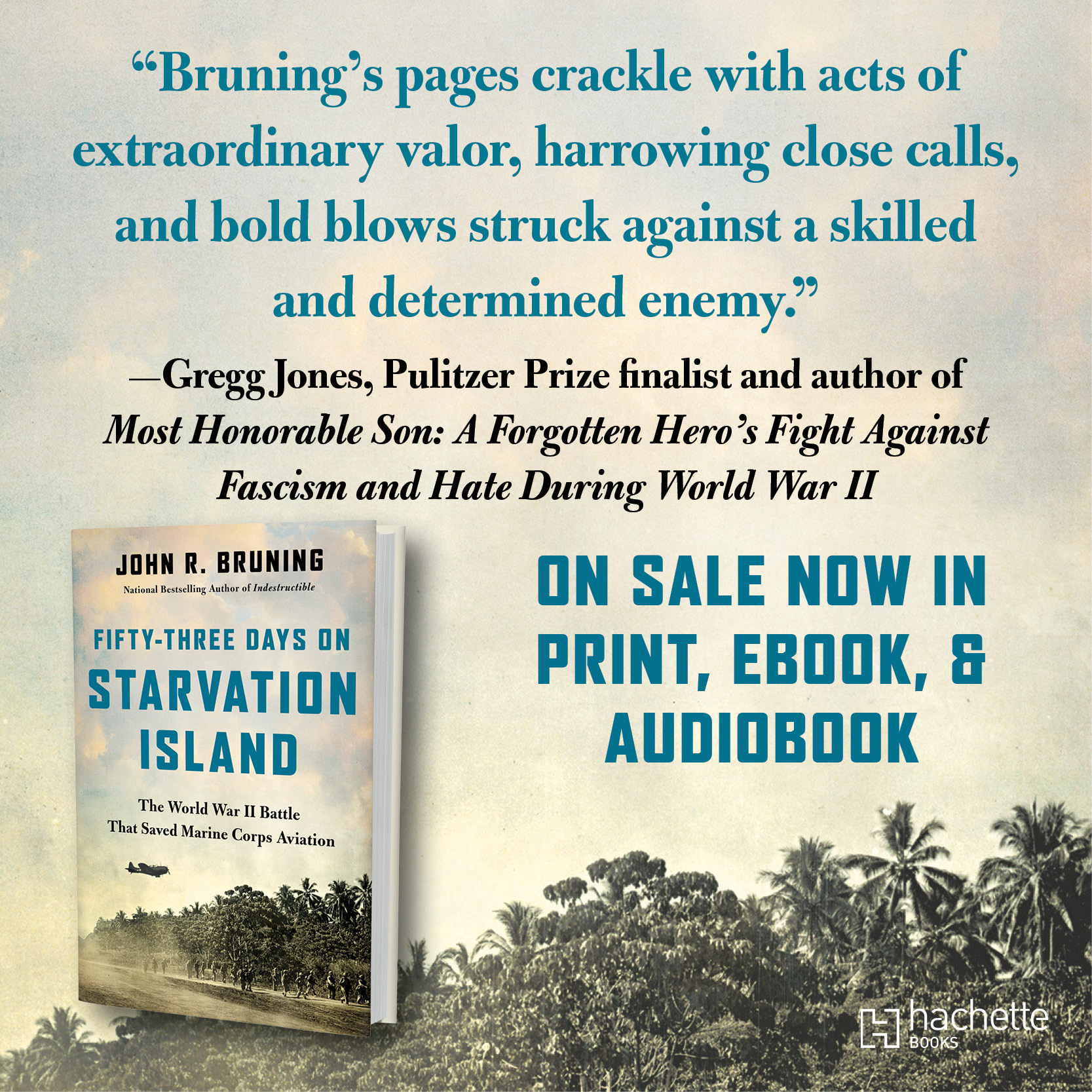
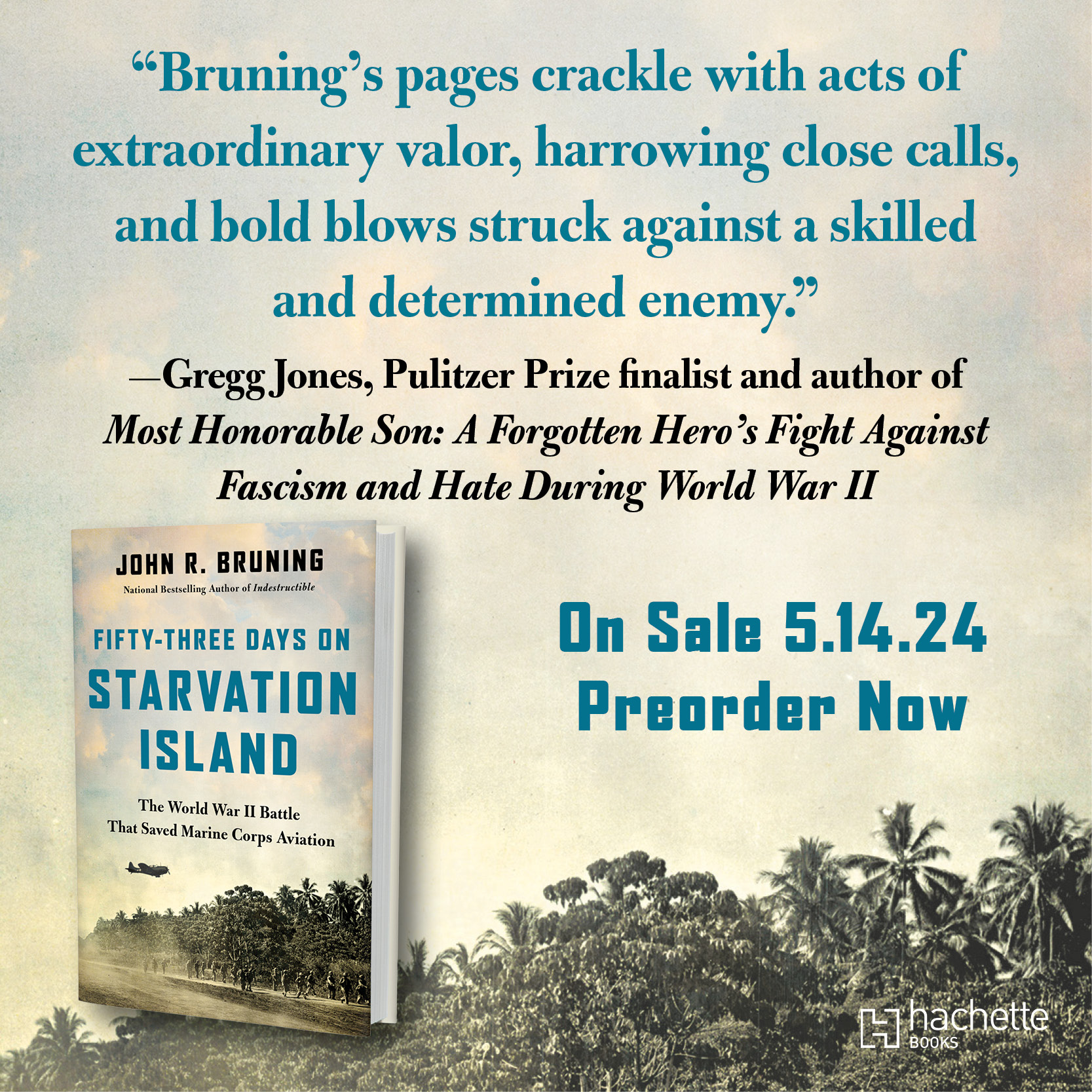
Fifty-three days of this to go…then you can go home. For thirty-four years, I’ve wanted to tell this story. Thanks to Hachette, it’ll be in bookstores everywhere, Audible and Amazon this May 14.
Back in the fall of 2016, I recorded a series of clips of myself in the Oregon Cascades reading excerpts from Indestructible, the first book I wrote for Hachette. Indestructible is the story of P.I. “Pappy” Gunn and his family during the Pacific War, and Pappy’s frantic efforts to liberate his wife and children from Japanese captivity in the Philippines.
Interviewing Nathan Gunn, Pappy’s youngest son, in 2014-15, the story I read in this clip came up. We talked about it at length. Neither of us ever figured out what happened to the boy in the leg braces, and I still wonder if he made it through the war and the final weeks before liberation.
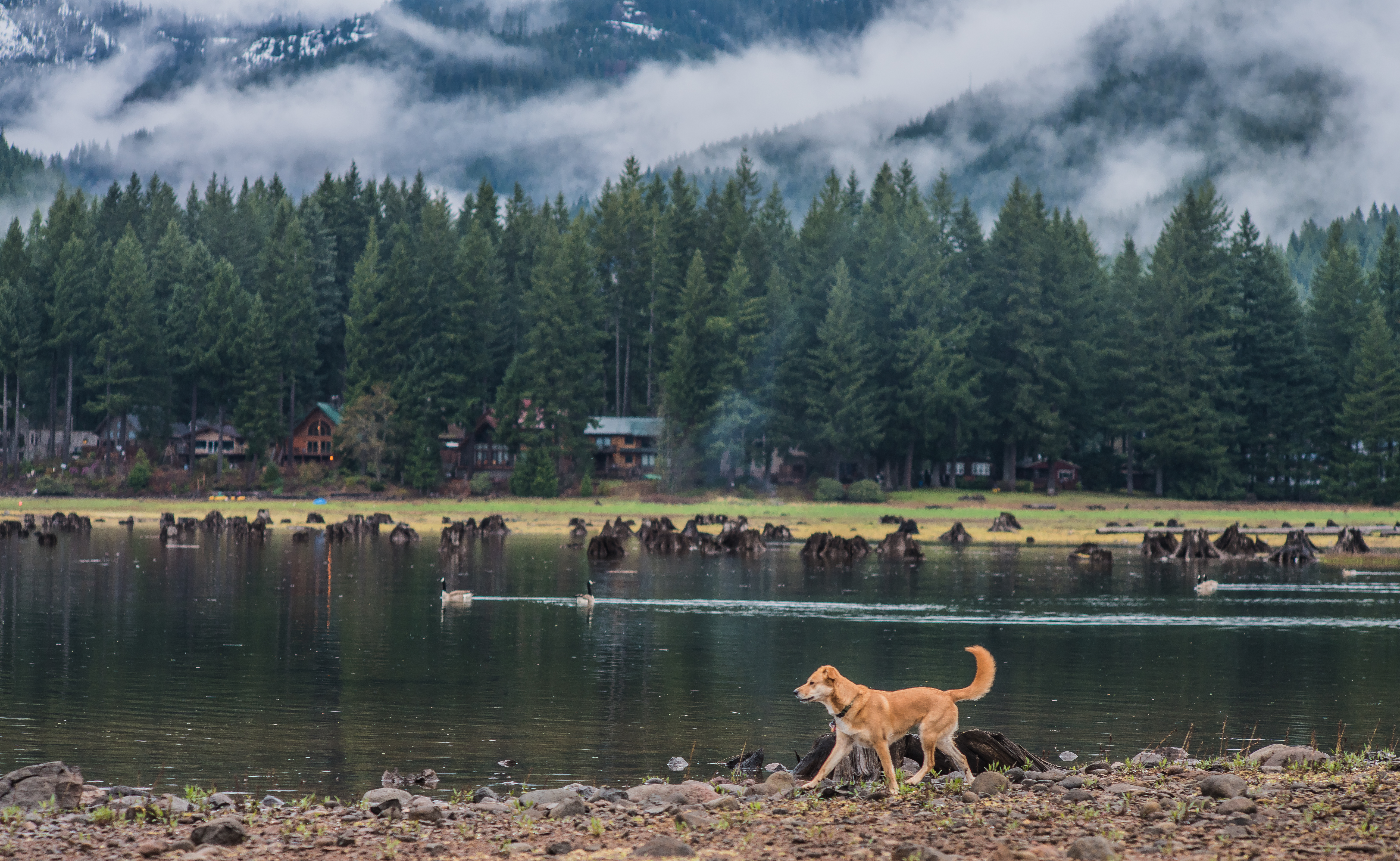
Writing military history from the perspective of personal experiences–not the macro level grand strategy & movement of armies or navies, but how such things impacts human beings caught up in such machinations– it takes a lot out of me, especially since we lost Taylor Marks in Iraq in August of 2009. The pain families and friends go through after the contact team arrives in their community is one I know all too well. To counter the rugged subject matter, I write in the woods above a lake in the Oregon Cascades. There’s something about our forests and mountains that is just chicken soup for the soul.
I never posted these little clips–too self conscious at the time. Eight years later, I look at them with a different eye. The bridge I’m on in this clip is gone now. In fact, two weeks ago, I was crossing the stream below it, slipped and knocked myself out. Kinda wish we still had the bridge. 🙂
Digby, the cat in the frame with me, was my writing cat from 2012 to 2017 when he passed while I was on the road doing research for Race of Aces. His full name was an homage to RAF Fighter Command during the Battle of Britain: Digby Baxter Boscombe Downe–all names of Fighter Command airfields during the summer of 1940. He and I and Gwen, my Jordanian dog, would spend weeks at a time up there in the woods, writing Indestructible. They ate very well as I often forgot dog/cat food. So, Gwen got a lot of pork chops and Digby dined on grilled chicken.
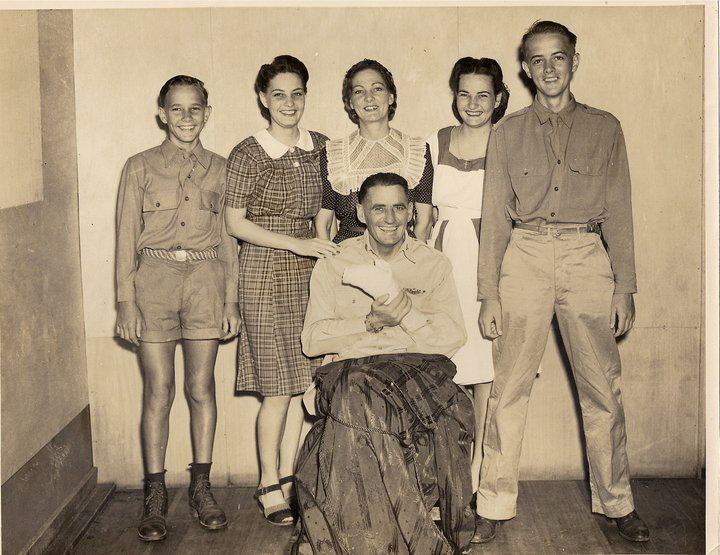
Gerald R. Johnson, Oregon’s top ace who left the University of Oregon to join the Air Corps during his junior year in 1941.
A Tuesday morning tale.
In 1991, I sat in a house in Eugene, Oregon and peered into a USAAF locker box filled with letters, diaries, photo albums, home movies and personal effects of a fighter pilot long forgotten by the state he loved. In all those letters, and through his writing, I met an entire cast of kids from Eugene’s west side who grew up in the Depression, started school at the University of Oregon and ultimately ended up scattered all over the globe as a result of WWII.
I wrote a grad school paper on the kids in this neighborhood, and how the war affected this little community around West Broadway. The war was brutal to this neighborhood and the friends who bonded playing together as kids. It destroyed the pre-war social fabric. In its place, a new one gradually was cobbled together as some of them came home. Others were killed in action. Others found careers elsewhere. One ended up as a 3rd world dictator’s personal pilot. Some stayed in the military, returning to Eugene only after they did their 20 years.
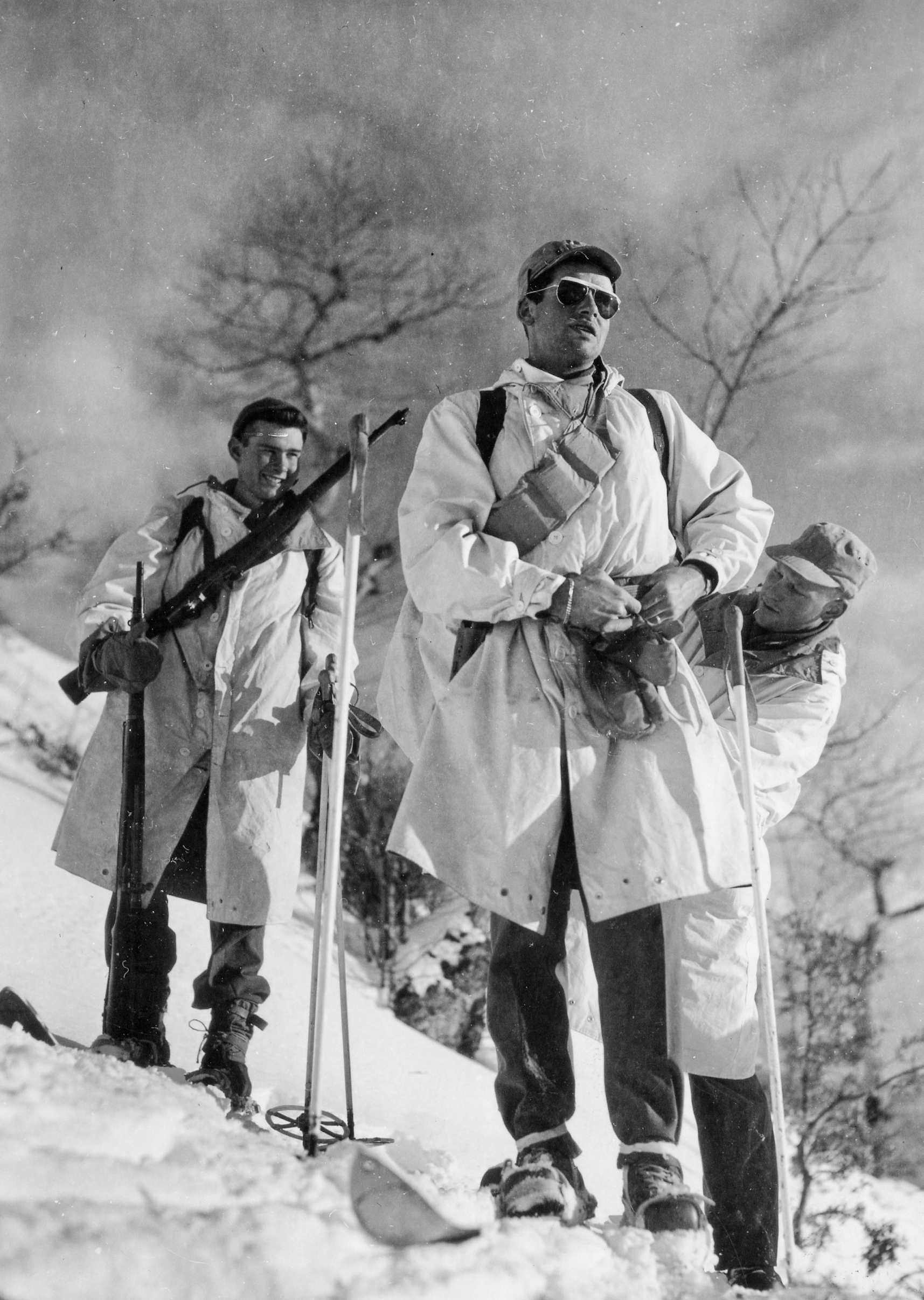
John Skillern, who lived behind Gerald Johnson in Eugene, served in the 10th Mountain Division as a ski and climbing instructor. When the division deployed to Italy, he served in the front lines in combat as an infantryman through the final, climactic battles of the war.
All that became the basis for my M/A thesis, then eventually my second book, Jungle Ace. For the book, I had to strip out most of the stories from the neighborhood to concentrate just on one of its sons, Gerald R. Johnson.
Today, I head back down to Eugene to give a speech about these kids. Some of them I never met, some of them became dear friends in the 1990s. One was in my wedding party. Preparing for this speech as been like returning to a part of me I’d left behind sometime after I wrote the Sandbox in 2005.
Major Tom Taylor’s bomb group, the 305th was one of the first to see combat from England at the start of the strategic bombing campaign against Germany.
So. today I’ll be talking about men like Major Tom Taylor, commander of the 364th Bomb Squadron, 305th Bomb Group, killed in action in early 1943 over German-held Europe. Aaron Cuddeback, killed in action during a raid on Germany in March 1943, Jim Bennett, killed by a kamikaze in the Pacific while serving aboard a PT-Boat. Joe Jackson and Brian Flavelle, killed a year apart during raids on the Ploesti oil fields, and Gerald Johnson, Oregon’s ace of aces who vanished in a typhoon in October 1945.
Brian Flavelle’s bomb group training for Operation Tidal wave, the low altitude raid on Germany’s vital oil facilities in Ploesti, Romania. Brian’s aircraft crashed en route to target with a loss of everyone on board.
The U of O is a very different place than it was in 1941. There were over 220 alumni killed in WWII. If there was a battle, a U of O Duck was almost certainly somewhere in the mix. From the first days of the war in the Philippines, to the final shots in the Pacific, kids who once were chatted up by recruiters in Eslinger Hall bore witness to history, and often helped make it.
Jim Bennett initially couldn’t get into the military, as he was working at Boeing in Seattle in a job considered vital to the war effort. In 1942, during a short family vacation to Utah, people on the street spit on him for not being in uniform. The humiliation drove him to do everything he could to get out of his work at Boeing. He ended up in the Navy, serving aboard PT-Boats. He was killed in the summer of 1945 in a Kamikaze attack.
Telling these stories, keeping their memories alive? That’s why I’m here.
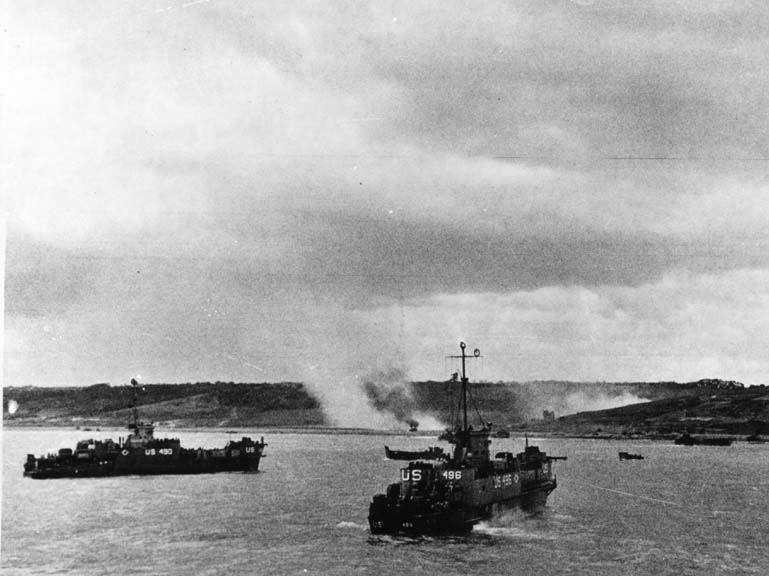
Val C. Pope served with a U.S. Army Signal Corps company during World War II. He was one of the first combat cameramen to make it ashore on D-Day. He landed on Omaha Beach with still photographer Walter Rosenblum sometime during the morning of June 6th. Armed only with a movie camera, Val and Walter set about capturing the chaos on Omaha as it unfolded around them. One of the most gripping movie clips Val shot that survived the landing was the rescue of several drowning GI’s. Their landing craft was hit and sinking, and as they ended up in the water floundering, a young lieutenant saw their plight from shore. He grabbed a cast away life raft, jumped into the surf and swam out to them. Val’s footage shows the men being helped ashore.
For the next several days, Val remained right in the thick of the fighting, filming some of the iconic scenes of the early days of the invasion. While walking past a couple of buildings in search of a Red Cross aid station, he was ambushed by a German machine gun team. Hit in the head, he fell back unconscious as a fellow combat camerman dove for cover. A few minutes later, a group of GI’s rushed out and pulled Val out of the line of fire. He died as medics worked furiously to save his life.
Today, as we remember the June 6th landings, let us not forget those who carried cameras instead of guns, whose images have become a timeless–and priceless–part of our national heritage. Without them and their selfless spirit to capture history as it unfolded, future generations would have had no window into those momentous events in 1944.












 Val C. Pope served with a U.S. Army Signal Corps company during World War II. He was one of the first combat cameramen to make it ashore on D-Day. He landed on Omaha Beach with still photographer Walter Rosenblum sometime during the morning of June 6th. Armed only with a movie camera, Val and Walter set about capturing the chaos on Omaha as it unfolded around them. One of the most gripping movie clips Val shot that survived the landing was the rescue of several drowning GI’s. Their landing craft was hit and sinking, and as they ended up in the water floundering, a young lieutenant saw their plight from shore. He grabbed a cast away life raft, jumped into the surf and swam out to them. Val’s footage shows the men being helped ashore.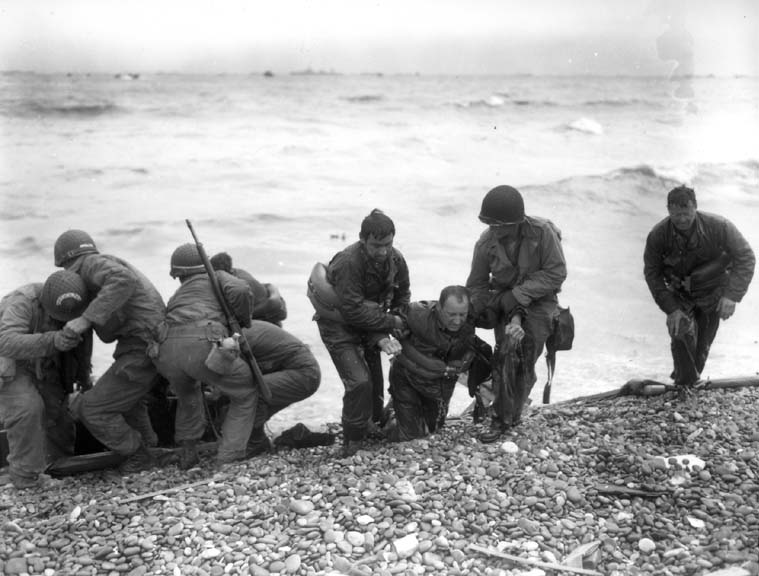




 The American Warrior