Posts Tagged With: World War II

The Ardennes Offenisive Begins

59th signal ban rail jeep 1st army bastogne belgium 121644 (1 of 1)December 16, 1944, the German Army launched the largest offensive operation ever conducted against United States ground forces. Known as the Battle of the Bulge, the fighting raged for over a month and consumed most of the Third Reich’s remaining reserves of fuel and oil. Somewhere between 65,000-125,000 Germans troops were killed, wounded, captured or missing during those furious six weeks of fighting. The U.S. Army suffered more than 89,000 casualties and the loss of over eight hundred armored vehicles and tanks.

Photos from the early days of the German offensive are few and far between, but here are some shots taken on December 16, 1944 throughout the Western Front by U.S. Army Signal Corps photographers. Over the next few weeks, we’ll be posting more photos that captured key moments during the Ardennes Offensive and the subsequent Allied counter-offensive.

1st Inf Div 26th Inf Regt V Corps 1st Army 57mm AT Gun Germany Belgium Border 121744 (1 of 1)

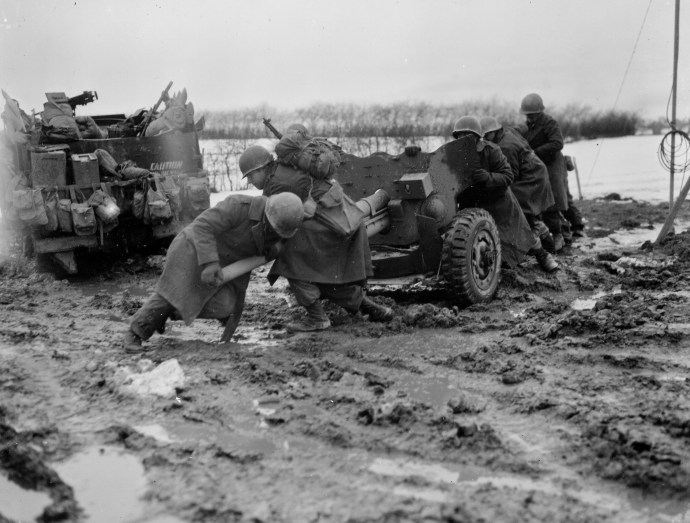
Men of the 26th Infantry Regiment, 1st Infantry Division, muscle a 57mm anti-tank gun into position at what became known as the Hot Corner, a patch of ground the division denied to the advancing Germans which ensured the North Shoulder of the Bulge would hold. The photo was taken on December 17, 1944.


German Employed Captured M8 Greyhound Armored Car Knocked Out at St Vith Belgium Bulge Seen 020345 (1 of 1)

Some German units employed American vehicles during the Ardennes offensive. This captured M8 Greyhound armored car was knocked out during the pivotal fighting for St. Vith, Belgium.


45th Inf Div 180th Inf Reg Bobenthal Germany Counter Sniper 121644 (1 of 1)

Fighting along the Western Front did not stop with the German offensive in the Ardennes. Here, a patrol from the 45th Infantry Division’s 180th Regiment fights house to house in Bobenthal, Germany under sniper fire on December 16, 1944.

90th Inf Div 807th TD Bn 3 inch 90mm AT gun St Barbara Germany 121644 (1 of 1)

Men of the 807th Tank Destroyer Battalion, 90th Infantry Division, rain shells down on German positions near St. Barbara, Germany on December 16, 1944. The 90th would later be thrust into the American counter-attack and ended up fighting around Bastogne.

A Waffen SS soldier with Kampfgruppe Hansen seen after elements of the 14th Cavalry Group were ambushed and destroyed outside of Poteau, Belgium on December 18, 1944.

Categories: War in Europe, World War II Europe, World War II in Europe, WW2, WWII | Tags: , , , , , , , , , , , , , , , , | 1 Comment

The Curious Case of the Ohio National Guard’s 147th Infantry

147th inf Regt Japanese MMG with M1917 30 cal MMG on range at New Caledonia 112444 (1 of 1)

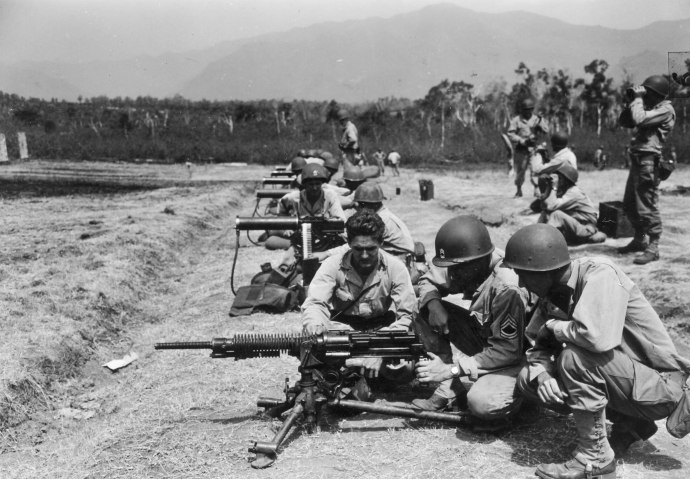
Men of the 147th on a heavy weapons range learning how to fire a captured Japanese Nambu machine gun. The photo was taken on New Caledonia Island in November 1944.

During the Second World War, the Ohio National Guard’s division, the 37th, served in the 1943 Solomons campaign before playing a key role in the liberation of Manila during the 1945 battle for Luzon. The division was one of the only National Guard units to be commanded by the same general through the entire war.

The 37th Infantry Division’s service was exemplary, and its courageous Soldiers earned seven Medal of Honors and a hundred and sixteen Distinguished Service Crosses during its two years in island combat.

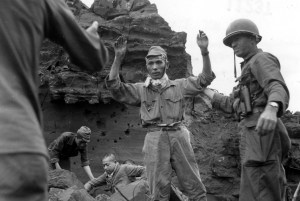
Men of the 147th capture a Japanese hold out on Iwo Jima during their three month long ordeal on the volcanic island.

Men of the 147th capture two Japanese hold outs on Iwo Jima during their three month long ordeal on the volcanic island.


37th Inf Div M-4 Sherman and GI's Drive on Manila Luzon Philippines Campaign 01--45 no cap-1

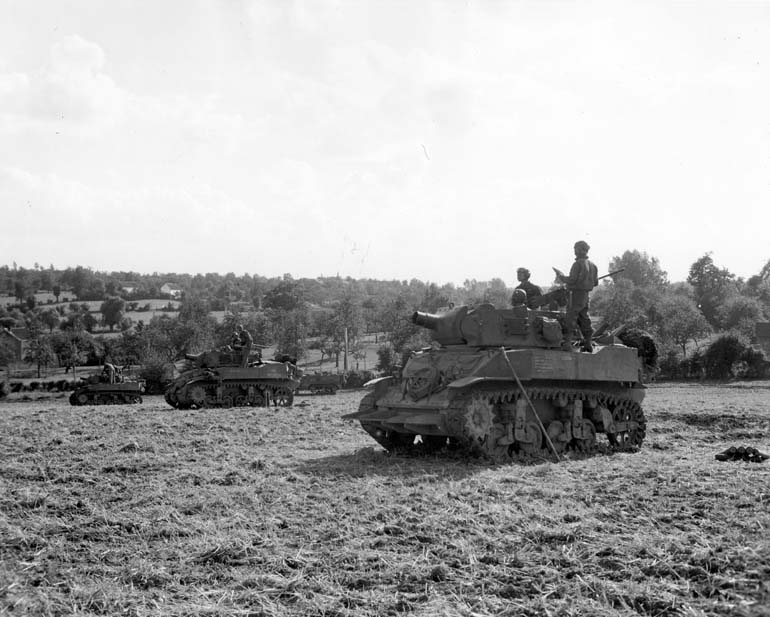
While the 147th Infantry battled against the Japanese on Iwo Jima, the rest of the Ohio National Guard was fighting to liberate Luzon during the 1945 Philippines campaign.

This post is about the division’s lost regiment, the 147th Infantry.  The 37th had been organized as a square division during World War I which meant it had four infantry regiments. The 147th became the odd unit out when the Army reorganized to the triangular division.  In 1942, the 147th was pulled from the 37th. It spent the entire Pacific War as an independent regiment, bouncing from campaign to campaign and doing heavy fighting that has been all but forgotten to history.

To clear the caves and tunnels, the 147th's infantry platoons went into action with an exceptional level of firepower, including extra BAR's, bazookas and flame throwers.

To clear Iwo Jima’s caves and tunnels, the 147th’s infantry platoons went into action with an exceptional level of firepower, including extra BAR’s, bazookas and flame throwers.

The 147th first saw combat on Guadalcanal in 1942-43, taking part in the U.S. Army’s bloody counter-offensive that ultimately forced the Japanese to abandon the island in February 1943. The regiment then pulled garrison duty on Emiru, later serving on Saipan and Tinian in the wake of the Marine Corps’ landings.

147th Inf Regt Flame Thrower Attack on Japanese Cave Iwo Jima Bonin Islands 040845 (1 of 1)

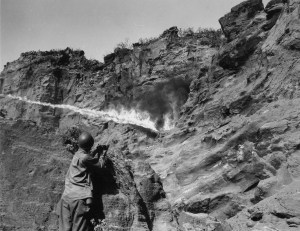
An infantry platoon from the 147th attacking a Japanese-held cave with a flame thrower during a firefight on April 8, 1945–months after Iwo had been declared secure.

In the spring of 1945, the 147th landed on Iwo Jima, ostensibly to perform more garrison duty. Instead, they found themselves locked in a bitter and thankless battle with thousands of Japanese hold-outs waging a desperate guerrilla campaign against the Americans on the island from well-supplied caves and tunnels.

For three months, the regiment slogged across the island, digging out these Japanese with explosives, flame throwers and satchel charges. Some sources credit the regiment with killing at least six thousand Japanese soldiers in those anonymous and merciless small unit actions.

Always serving in the wake of the Marines, the regiment’s service in the Pacific has been virtually lost to history, yet this National Guard unit was the only one in the Army to fighting in the Solomons, the Marianas and Iwo Jima.

I first came across the 147th while scanning photos at the National Archives a few years back. I came across these combat scenes from Iwo Jima and was absolutely stunned to learn the Ohio National Guard had taken part in what is remembered as the quintessential Marine Corps battle.

If anyone has further information about this regiment, please feel free to post. These men need some recognition for what they did during WWII.

147th Inf regt Soldiers Exhausted on March in Burma CBI 120444 (1 of 1)

If being overlooked by history is not painful enough, the Signal Corps also misidentified this group of GI’s in Burma as being part of the regiment. The combat cameraman’s caption says these men belonged to 2nd Battalion, 147th Infantry, and the shot was taken 30 miles behind Japanese lines in Burma following a night patrol on December 4, 1944.


Categories: National Guard, World War II in the Pacific | Tags: , , , , , , , , , | 5 Comments

Photo of the Day: Prelude to Operation Grenade

4th inf div in bunker near prum germ feb 45 4x6

Soldiers of the 4th Infantry Division hunkered down in a cellar near Prum, Germany just before Operation Grenade, the crossing of the Roer River in February 1945.

Categories: World War II, World War II Europe, World War II in Europe | Tags: , , , , , , , | Leave a comment

Iowa’s Red Horse in Action

113th cav recon reg m8 tanks heure le remam belgum sept 9 44

M8 75mm gun motor carriages of the 113th Cavalry, Iowa National Guard, conduct a fire mission with their 75mm guns outside of Heure le Romain, Belgium on September 9, 1944.


Categories: National Guard, War in Europe, World War II Europe, World War II in Europe | Tags: , , , , , , , , , , , | Leave a comment

Beer Bombing in B-17’s

b17 buzzing base late 1942 swpa099 5x7Over the years, I’ve come across interesting things American air crews have thrown out of their planes during bombing missions. One of the more famous was a donkey that was a B-17 group’s mascot. They’d picked the donkey up in North Africa and brought it back to England, where the local kids were given rides on it. The donkey kicked the bucket one day, so the guys in the bomb group somehow put it in an NCO’s uniform, gave it a set of dogtags and dropped it over Germany during their next mission. You know that somewhere, in some archive, is a report of finding a flattened, uniformed donkey in some poor German farmer’s field.

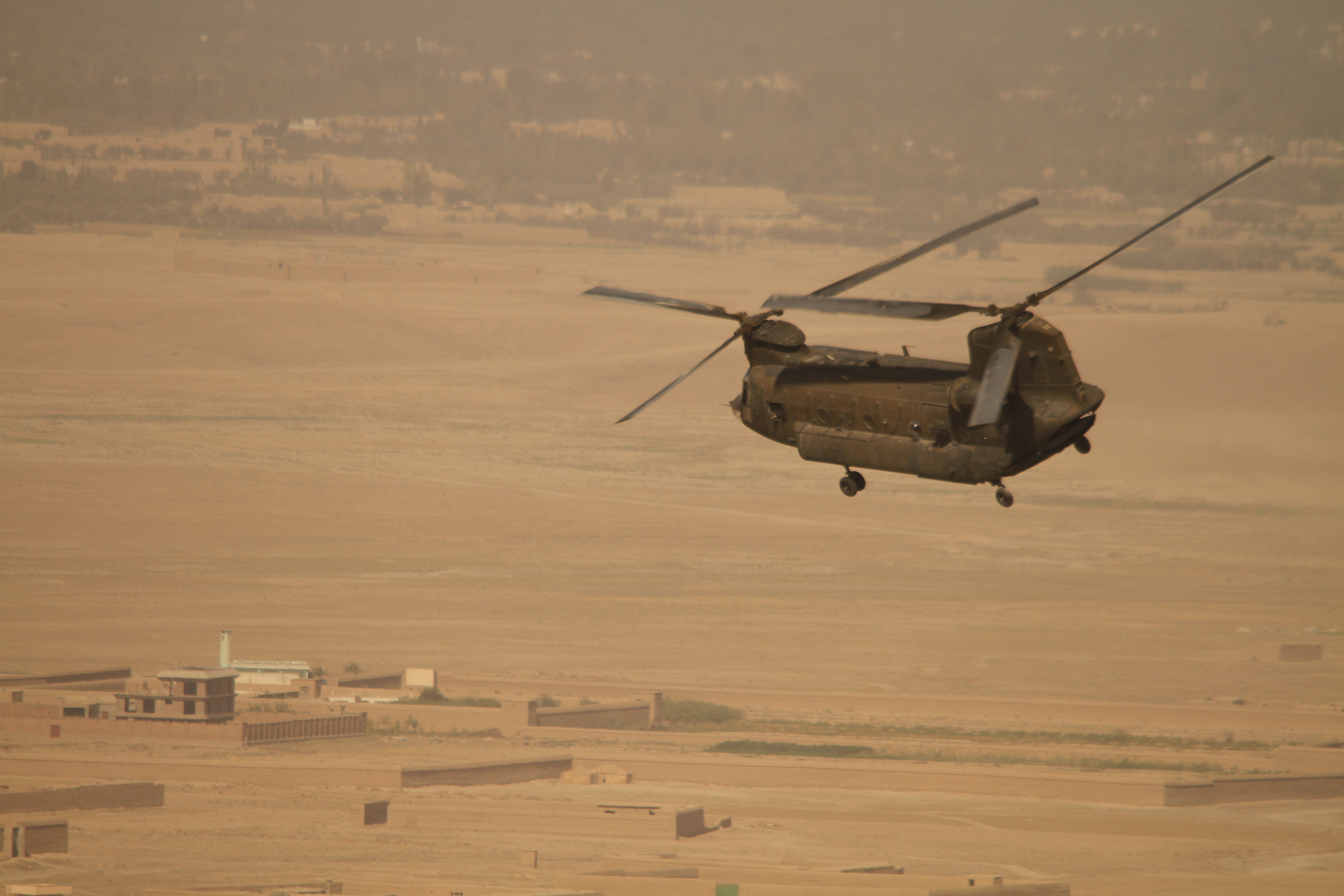
In 2010, while I was with TF Brawler at FOB Shank, Afghanistan, I was on a Chinook that was near-missed by an RPG as we were coming into land at COP Tangi. The village by the COP was pretty hostile, and aircraft often took fire getting into that outpost. I wanted to take pee-filled Gatorade bottles and drop them on that village the next time we had to get out to Tangi Valley. Unfortunately, the prudent Chinook company’s commander nixed that idea. Apparently, raining pee down on the populace doesn’t really lend itself to the whole hearts-and-minds thing. Still, it would have been good for morale.IMG_7484

Anyway, I was reminded of that suggestion today while reading through a Boeing tech rep’s report from the SWPA.  He’d been hanging out with the 43rd Bomb Group “Ken’s Men” in Australia and New Guinea, and had written a report home on how the B-17’s were holding up in the tropics. The author of the report, R.L. Stith took detailed notes on what was one of the largest heavy bomber raids launched in the Pacific to date.

On February 13, 1943, the 43rd Bomb Group put aloft thirty-five B-17’s so heavily laden that Stith remarked, “How can one talk balance when they get away with this and worse?” The main force of thirty-three Forts carried sixteen three hundred pound demolition bombs that had been wrapped with wire to create more shrapnel when they detonated. Alongside those three hundred pounders, the ground crews stuffed the bays with sixty incendiary clusters each weighing twelve pounds. In the radio compartments of each plane, four twenty-two pound flares were stashed. And just forward of the waist guns, the Forts carried more than a dozen twenty pound fragmentation bombs. Somehow, another three hundred pounds of emergency gear was stashed throughout the fuselage of each aircraft as well.

5th af series swpa rabaul oct 28 43 411

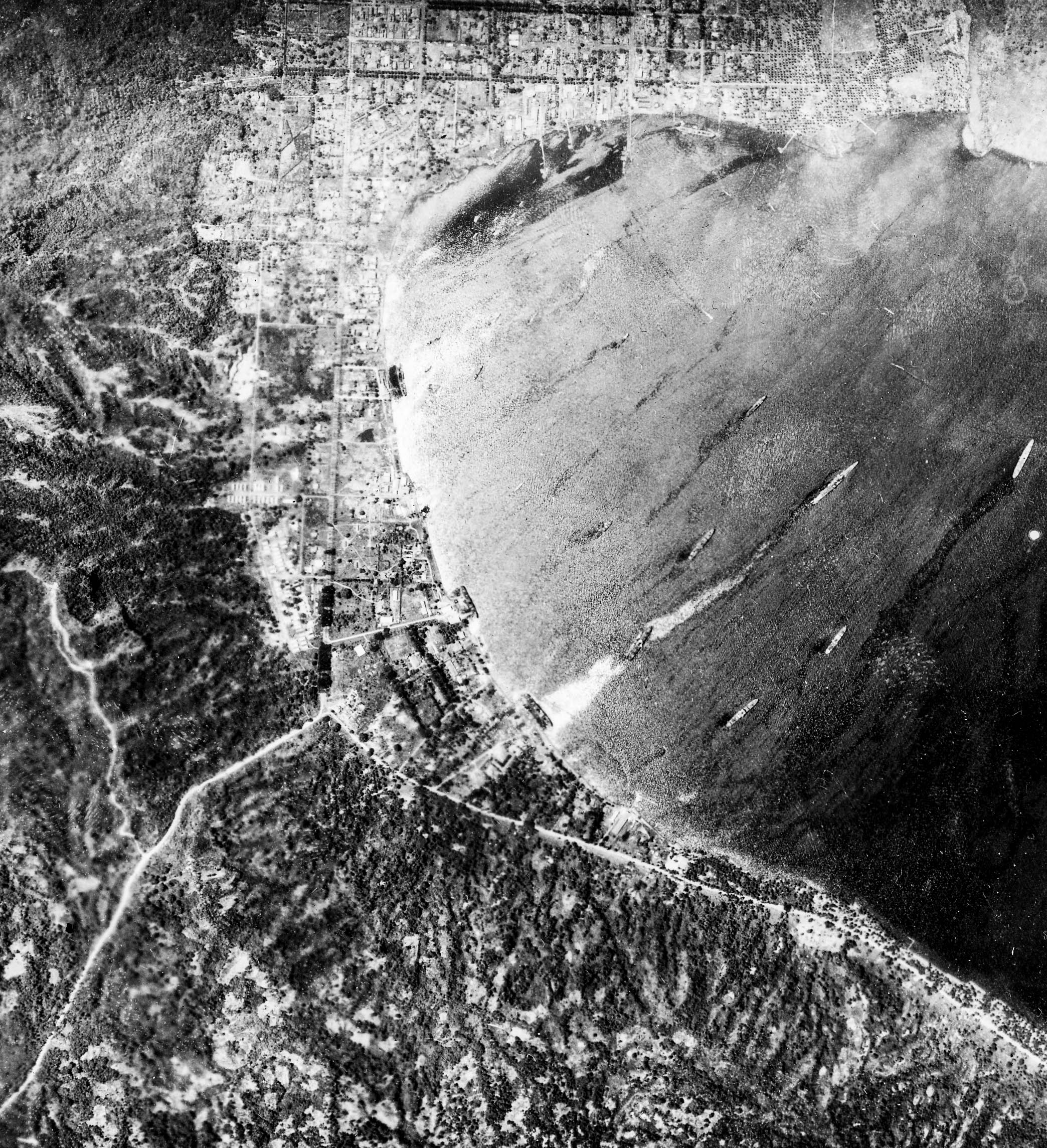
Rabaul and Simpson Harbor.

The plan called for a night attack on Rabaul with the intent of setting parts of the town afire with the incendiary bombs. The main force would hit the target area sometime after 0300 on February 14th. Two other B-17’s had been assigned to go in ahead of the main force, and it was their load-out that got my attention.

The two B-17s were supposed to keep the Japanese awake and in their slit trenches for hours so that by the time the main effort reached Rabaul, they would be worn out and demoralized. To do this, Stith noted they had been loaded with a mix of incendiary clusters, fragmentation bombs–and beer bottles.5th af b17 at port morebsy 1943 4x6

Americans. Piss us off, and we’ll rain our empties down upon you without remorse. Go us.

5th af series swpa b17 rabaul raid january 43 374I did a double take when I saw that in an official report. Beer bottles? They seriously dropped Coors Light on the Japanese at Rabual?  Then it dawned on me: an empty bottle dropped from 6,000 feet has got to make the mother of all whistling sounds. That kept with the mission profile for those those B-17’s–keep the Japanese awake and in their trenches. The beer bottles were a cheap, field expedient noise maker that didn’t take up much space or weight and could be hurled out of the waist positions at the crew’s leisure. In a theater known for its innovation, this small one was nothing short of brilliant.

That night, the first two Flying Forts reached Rabaul and began trolling back and forth over the target area. Searchlights speared the sky around them, anti-aircraft fire peppered the night’s sky, and the the American pilots changed the pitch on their propellers to maximize their noise signature. They gradually released their bombs. Between them, the beer bottles came shrieking down on the Japanese.

At 0340,  main effort arrived in four waves, flying at altitudes ranging from four to nine thousand feet. Over the next several hours, the 43rd Bomb Group dropped sixty-nine tons of bombs on Rabaul, sparking a massive conflagration among known supply dumps around Rabaul, destroying searchlights, food stockpiles, oil tanks and grounded aircraft. The 3,700 incendiaries dropped on the target created a sea of fire a half mile long and a quarter mile wide. The flames were estimated to be two hundred feet tall, and the plume of smoke from the attack towered ten thousand feet over the target area. The conflagration could be seen from the air for a hundred miles.5th af series swpa rabaul367

Surviving Japanese documents describe the attack as a costly one and very damaging. Some fifteen aircraft were destroyed, as were ammunition dumps and other installations. Total casualties have been lost to history, but the Japanese sources mention a heavy loss of life.

There is no record of their response to the beer bottle barrage, but the attack (and another one the following night) clearly had an impact on the garrison’s morale. Bruce Gamble, in his outstanding work, Fortress Rabual,  notes that one illness-plagued petty officer assigned to Air Group 705 later wrote, “I felt beaten physically and emotionally. I tossed and turned to ease the suffering, but the nightmares kept possessing me with no break.”

One has to wonder if he heard those beer bottles shrieking earthward in his nightmares.
What’s the most unusual thing you’ve heard about dropped during a bombing raid?


Categories: Afghanistan, World War II in the Pacific | Tags: , , , , , , , , , , , , , , , , , , | 8 Comments

The Lost, Last Letter

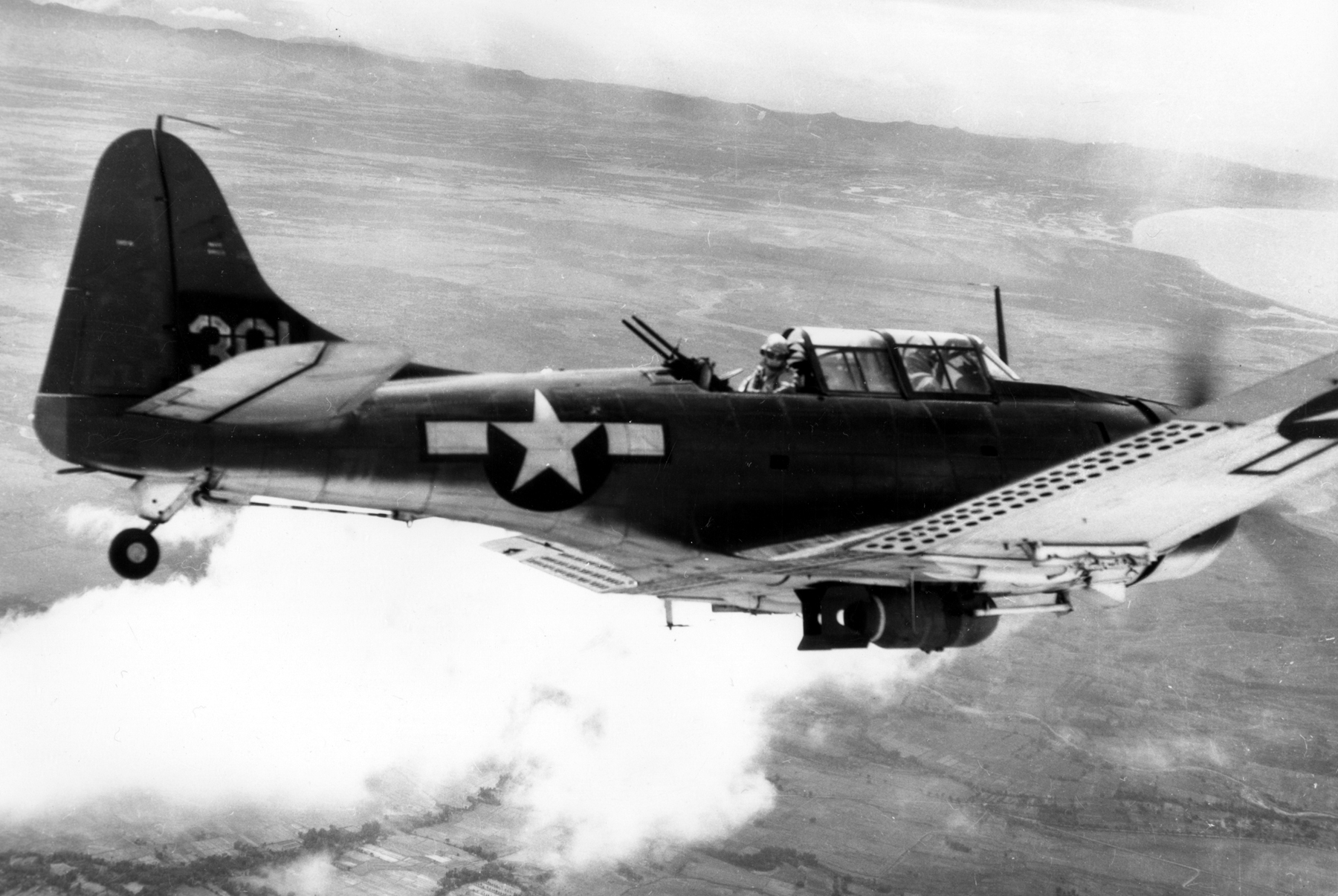
Guadalcanal SBD VMSB-231 4x6

A VMSB-231 SBD over Guadalcanal, late 1942.

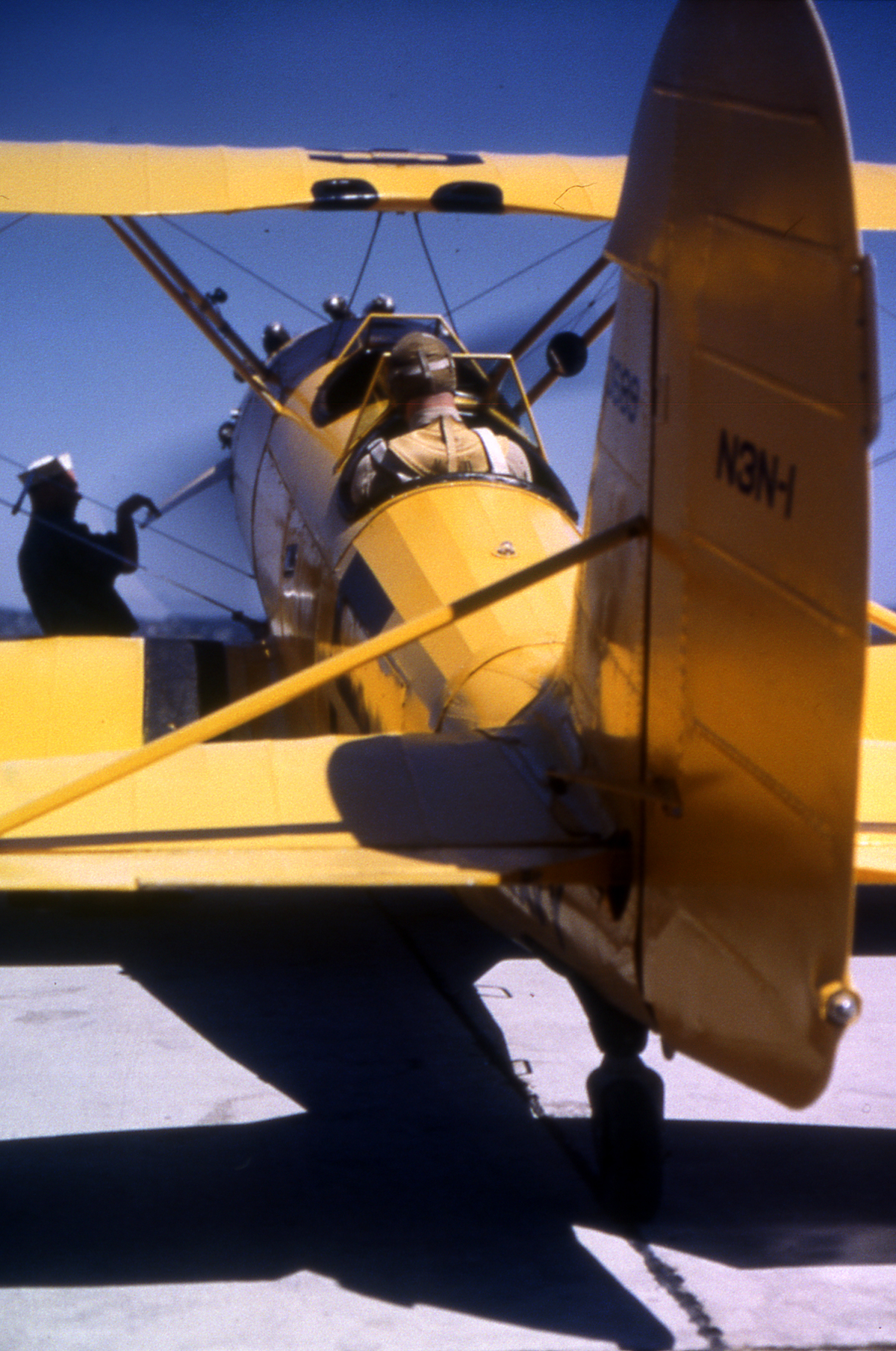
Frank Christen grew up on a Depression-Era farm just outside of tiny Jerseyville, Illinois, graduating from the high school there in 1938 at age 19. He scraped enough together to continue his education at Washington College in St. Louis, then transferred to the University of Texas at Austin. In June 1941, he enlisted in the USNR and was accepting into the flight training program. He learned to fly at Grand Prairie, Texas and graduated the following year from NAS Corpus Christi on May 20, 1942. He was commissioned a 2nd Lieutenant in the Marine Corps and assigned to VMSB-142, a Douglas SBD Dauntless dive bombing squadron.n3n corpus christi color 4x6

While at the University of Texas, Frank had met Ruth Clark of Corning, New York. He and Ruth were married on July 30, 1942 just before he was assigned to NAS Coronado in San Diego.  The couple lived together there in Southern California for a brief few months before Frank shipped out to the South Pacific in early November.

He reached Guadalcanal several weeks later with VMSB-142 while the fighting in the southern and central Solomons still raged fiercely. He twenty-three years old and flung to the farthest reaches of the planet, far from friends and family. Like the others in his squadron, he did his duty to the utmost.

Henderson Field

Guadalcanal.

On December 16, 1942, he was ordered to strike targets around Munda, New Georgia. Four SBD’s took off from Henderson Field, Guadalcanal at 2105 hours. This was Christen’s third combat mission in two days. He’d bombed Munda with his squadron the day before, and attacked a Japanese vessel early that day on the 16th. This was a mixed force of Dauntlesses from both VMSB-132 and VMSB-142.

During the flight through the growing darkness, the formation ran into a rain storm.  Christen and his section leader, Lt. Jackson Simpson, lost the rest of their flight. The other two SBD’s continued on and made a night bombing attack on the Japanese-held airfield at Munda.ijn dd under attack sbd palau 44 300 dpi c

Christen and Simpson discovered a Japanese destroyer in the waters off New Georgia. Christen made the initial run on the destroyer and illuminated it with flares. Fully alerted, the Japanese anti-aircraft crews poured fire up into the night. Simpson rolled in on the ship and scored a direct hit. Christen followed a moment later.

That was the last Simpson saw of the Jerseyville native’s SBD. It vanished in the attack.

Fourteen days later, a War Department telegram arrived at Ruth Clark’s place in Austin and delivered the news that Frank was missing in action. She packed up and headed straight for Frank’s family in Illinois to await further word. Weeks passed. Nothing. At the end of January, she returned to Austin for the next school term.

Months passed without any word. One can only imagine the family’s torment. In August, 1943 Ruth received a letter informing her that Frank had been awarded the Distinguished Flying Cross for his attack on the destroyer that night. After that, there was no further word.

sbds iv 300 dpi cin the fall of 1943, Ruth returned to Illinois and spent time with the Christens. Then she went home to Corning to see her own parents. Waiting for her in Texas was a letter from a stranger with an overseas APO address. The day she returned to Austin, she tore it open and read the words every devoted wife longed to read. The letter came from an American serviceman somewhere out in the Pacific who had tuned into a Japanese short wave radio broadcast. The announcer was reading in English the names of Americans captured in the South Pacific. Included in that list was Frank Christen and the Japanese even read out Ruth’s address during the broadcast.  Ruth called Frank’s family in Illinois and related the incredible news.

Three weeks later, the War Department declared him killed in action.

Frank Christen never returned home. His body was never located, and his fate was never learned. There is a plaque honoring him in the MIA section of the American cemetery in Manila, PI.

henderson field series sbd over guadalcanal 4x6

An SBD over Guadalcanal late 1942.


Today, I was sitting in a coffee shop in Dallas, Oregon and reading through a pile of documents in hopes of finding another story for this website. I tumbled across a translated Japanese report captured in Manchuria in May 1943. It included Frank Christen’s interrogation report. With considerable help from my Marine Corps historian friend, Mark Flowers, we identified Frank (his name was not included in the document, just his date of birth and educational background) and we were able to find out more about his life and last mission.

He’d been shot down during his bomb run over the Japanese destroyer. His SBD crashed into the water and his tail gunner, PFC Glenn Shattuck from Granby, CT, was killed. Though wounded by anti-aircraft shrapnel, Frank got out of the aircraft and discovered the plane’s life raft floating nearby. He inflated it, got in and began rowing toward the nearest island. It was 2300 hours, December 16, 1942.

sbds cent sol bulldog sqn 300 dpi c 8x10

Marine Dauntlesses over the Central Solomons.

He paddled ashore and looked for help. Calling out in the night, he failed to find any locals. Concluding that the island was uninhabited, he decided to keep moving.

He set out to sea again in his raft, intending to make it to another nearby island. For 18 hours he bobbed in the waves, paddling as his waning strength allowed. Finally, he made it on the afternoon of December 18th. He came ashore and found some coconuts to eat. Not long after, two Japanese soldiers walked out of the jungle and spotted him. They ordered him to surrender, but he bolted and ran.

A search ensued. Later that day, the Japanese found Frank high in a large tree next to the island’s jetty.

He surrendered and was taken to Rabaul, New Britain and interrogated. Christen was asked about his family–he had five brothers and two sisters–where he attended school, how he joined the Marine Corps and even what he thought of African-American military personnel.

The interrogation was thorough and probably brutal. He was asked about the number of aircraft at Guadalcanal, the performance and bomb loads of his SBD Dauntless. He was asked about the resentment between Marines and the Army, and about the morale of the forces on Guadalcanal in general. He answered the questions.

At one point, his captors wanted to know what Americans thought of the Japanese. He answered honestly: that he and his comrades had little understand or knowledge of Japan before the war. After Pearl Harbor, they had no doubt the United States would prevail. But then, in the South Pacific, they discovered the true strength of the Japanese. He felt that America had completely underestimated the power and capabilities of the Japanese Navy.

5th af b25 raid rabaul mar 5 44 4x6

Rabaul under 5th Air Force B-25 attack, March 1944. Most of the POW’s at Rabaul did not survive the war.

Toward the end of the interrogation, Frank was asked if he’d seen any Japanese prisoners of war himself while on Guadalcanal. He told them that there were a few kept near Lunga Point. One Japanese soldier was captured after he’d been badly wounded. The Marines had taken him to an aid station, where a doctor had been working on him. The soldier had not been properly searched, and while on the table, he pulled out a grenade and detonated it, killing himself and the doctor trying to tend to his wound. The interrogation report added, “In general as soon as a Japanese soldier is captured, he commits suicide. For this reason, it seems that there are only a few PW’s.”

After the pulled all the information they could out of Frank Christen, he asked if he could write a letter home to his wife. His captors agreed and promised him they would deliver it.

It never reached Ruth.

I read the brief letter today seventy-three years after this scared, traumatized young American wrote it and I wondered if there is still anyone out there who loved him and would want to see it. So, in case there is, here it is.  The last letter home of an American doomed to die as a prisoner of war somewhere in the South Pacific.

To My Beloved Wife,

I am writing you a short note to let you know that I am a Prisoner of War. They (The Japanese Army) are hoping that this letter will be able to reach you, and I of course am hoping this reaches you. Please let my mother know as soon as possible. You can send me packages through the International Red Cross.

They (The Japanese Army) are very kind to me. You will undoubtedly hear many things, but don’t ever believe them. I was injured by shrapnel but it was mostly a case of fright.

I must close now. I love you. I will be able to return when this war is over. My love for you will never change.

Frank


sbds ii 300 dpi c

Please forward this story far and wide. Share it on as many forums and sites you can think of so, if Ruth is still alive, we can get her Frank’s final words.


Thank you,


John R Bruning


Categories: The Missing, World War II in the Pacific | Tags: , , , , , , , , , , , , , , , , , , , , , , , , , , , , | 17 Comments

The Toy Salesman

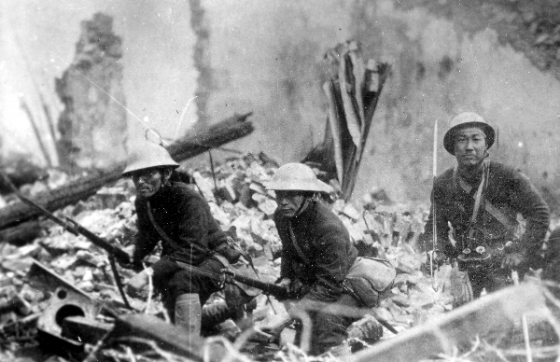
JS 7 Chinese Troops

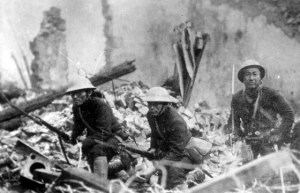
Chinese troops in action against the Japanese Army. The fighting had raged in China for almost five years when Prisoner 529 joined his cavalry brigade there.

On July 7, 1944, an emaciated, fever-wracked twenty-three year old Japanese aviator crept into an Allied camp near Maffin, New Guinea in search of food.  He’d been part of about three thousand survivors of the 6th Flying Division, based at Hollandia who had tried to escape the Allied cordon through a torturous overland retreat to Sarmi. For most who set out on this desperate bid for survival, the trek became a death march. Disease, starvation and hostile New Guineans thinned the ranks, and the weak were left behind.

Though his name has been lost to history–we’ll call him Prisoner #529, the five foot four native of Okayama-Ken was one of the lucky few who fell into American hands and survived that crucible in the jungle.

Grateful for food and decent treatment, he spoke freely to the Japanese-Americans who interrogated him after his capture. 529 had been fortunate to have finished twelve years of education, the last three at a commercial school that proved to be a stepping-stone to his first career. He became a wholesale toy salesman until he was conscripted into the Japanese Army at age 20. AS he was leaving to report for duty, his mother wished him farewell with one final order: at all costs, do not allow yourself to be captured.

chinese troops314

Chinese troops man a .30 caliber machine gun.

He was called up at Osaka, where with several hundred other conscripts, he was put on a ship and sent to Korea. From there, they were put on trains to northern China and assigned to the Sakuma Cavalry school for basic training. The cavalry was considered one of the elite arms of the Japanese Army, and Prisoner #529’s intelligence and education probably earned him that coveted slot.

It was hard transition going from the toy business to the cavalry, to say the least. The training was brutal and very intense. He was beaten almost every day, and once his jaw was so badly injured he could barely move it for a week. Another time, three of his squad mates were caught violating rules and the entire squad was assembled and forced to beat each other. Prisoner #529 was slapped by officers, hammered across the back with a wooden cane, whipped with belts and beaten with shoes. Most of the time, 529 felt the punishments were wanton, cruel and unjust. He and his fellow recruits were beaten whether they had did anything wrong or not. Sometimes, infractions were fabricated to justify otherwise inexcusable beatings.

After he told his interrogators about the physical abuse, he added that at times it did work. After all, it “knocked the sloppiness” of the men.

Later that spring, he was assigned to the 1st Cavalry Brigade’s Koike Regiment. One day, #529 and twenty-four other fresh-faced replacements reported for bayonet training near Kitoku, China. When they assembled, five Chinese prisoners were led out to the training ground. Hands bound and blindfolded, their Japanese guards gave them each a drink of water and a cigarette.

Then Colonel Koike ordered the new recruits to bayonet the prisoners.

bayonetting prisoners

Bayonet training with live Chinese POW’s was not uncommon during the war. Some twelve million Chinese were killed between 1937-45.

529 had never killed before. He watched as his fellow replacements took turns bayoneting the Chinese prisoners and was deeply moved by the stoic calm of their victims. They didn’t scream, and remained steady and courageous until the end. And the end was not always very fast. Those who survived the initial bayonetings were stabbed repeatedly as each replacement took his turn. The Toy Salesman took his turn with the bayonet, too. Later, he told his interrogators that no Japanese Soldier could have match the quiet resolve of the five Chinese prisoners killed that day.

That moment in Kitoku was a turning point for 529. His quiet life back home spent trying to bring a little happiness into the lives of children was forever behind him. In the months ahead, he watched as his unit and others beheaded and bayoneted Chinese prisoners and those suspected of anti-Japanese activities. Such episodes were common.

In January 1943, he transferred out of the cavalry brigade and joined the 41st Division at Soken (still in Northern China). He remained there for only a short time before being ordered to New Guinea.  On May 1, 1943, he reached Wewak in the Zuisho Maru (which would be torpedoed and sunk a few months later off the Borneo coast by the American submarine Ray).
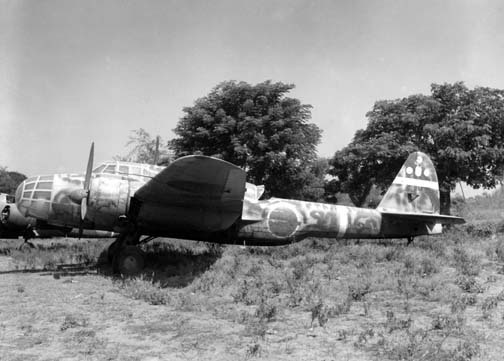
ki48 clark field 300 dpi c

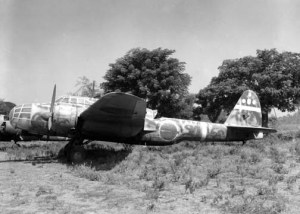
A Kawasaki Ki-48 “Lilly” found at Clark Field, Philippines, spring 1945.

From the cavalry to the infantry and now in New Guinea, Prisoner 529 became an aerial gunner. He went through a crash, ten week course at Hollandia before joined the 208th Sentai, a Kawasaki Ki-48 “Lilly” medium bomber regiment.

It was at Hollandia he came to realize the hopelessness of Japan’s situation in New Guinea. He’d gone to China, an eager and willing recruit. who viewed the war as a titanic clash between races. He was anxious to prove himself and serve his country in this epochal moment in history. Even the atrocities to which he bore witness and participated in during his time in China did not diminish that sentiment. When he received orders to the Southwest Pacific Area, he looked forward to carrying his nation’s flag to new, exciting and distant places.
ki48 nose filipino inside clark field551 5x7

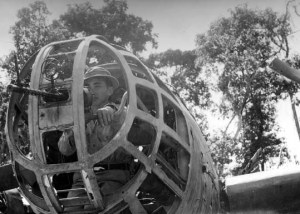
The nose gun mount in a Ki-48. Prisoner 529 told his interrogator that the mount was so restrictive that it only had a 45 degree field of fire.

In New Guinea, the constant air attacks, the lack of supplies and rare mail deliveries drove that eagerness out of him. The war devolved into a bitter struggle for survival on an alien island while increasingly surrounded by Allied forces. Disease became an ever present enemy. The men cleared brush from around their quarters in hopes of deterring insects and slept under mosquito nets at night. During Allied air raids, they would take to their bomb shelters wearing nets over their heads and gloves. To stave off malaria, the men took daily doses of both quinine and atebrin. Despite their best efforts, the men were plagued by tropical infections and fungus. By early 1944, almost everyone in 529’s squadron suffered from ringworm and other skin diseases.

529’s squadron included fifteen Ki-48 Lilly’s, fifteen pilots and radio operators, sixty gunners and about a hundred and twenty ground crewmen. The regiment had forty planes total, half of which were destroyed in a series of Allied raids in the spring of 1944 at both Wewak and Hollandia.

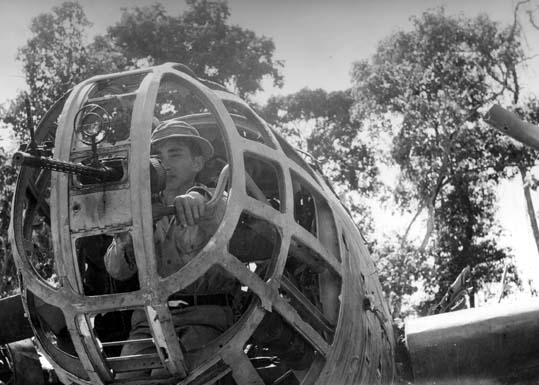
ki48 nose filipino inside clark field552 8x10

The dorsal gunner’s position in a Ki-48.

While other Ki-48 units had new models with heavier armament, the 208th’s planes were equipped with only five machine guns–one 7.9mm in the nose, another in the ventral position, a pair of 7.7mm waist guns and a single 13mm for the dorsal gunner. That latter position was a tricky one, and the gunners had gone through extra training for it since it was very easy to accidentally shoot the tail off. Prisoner 529 had been told cautionary tales of dorsal gunners who sawed their vertical fins and rudders off in their eagerness to hit an incoming enemy fighter. The result was usually fatal.

During daylight missions, the 208th flew with five men in each aircraft: a pilot (who also doubled as navigator), a radio operator, waist gunner, nose and dorsal gunners. The radioman also manned the ventral gun. At night, they left the waist gunner on the airfield and flew with four. They had no trained bombardiers ala the USAAF. Usually, either the pilot or the nose gunner would toggle the aircraft’s six 50 kg bombs that composed its normal load out. Exactly who did that was left to the individual crews to decide, but usually the senior or more experienced man got the job.

p39 shoots down a ki48 lilly gsap 4x6

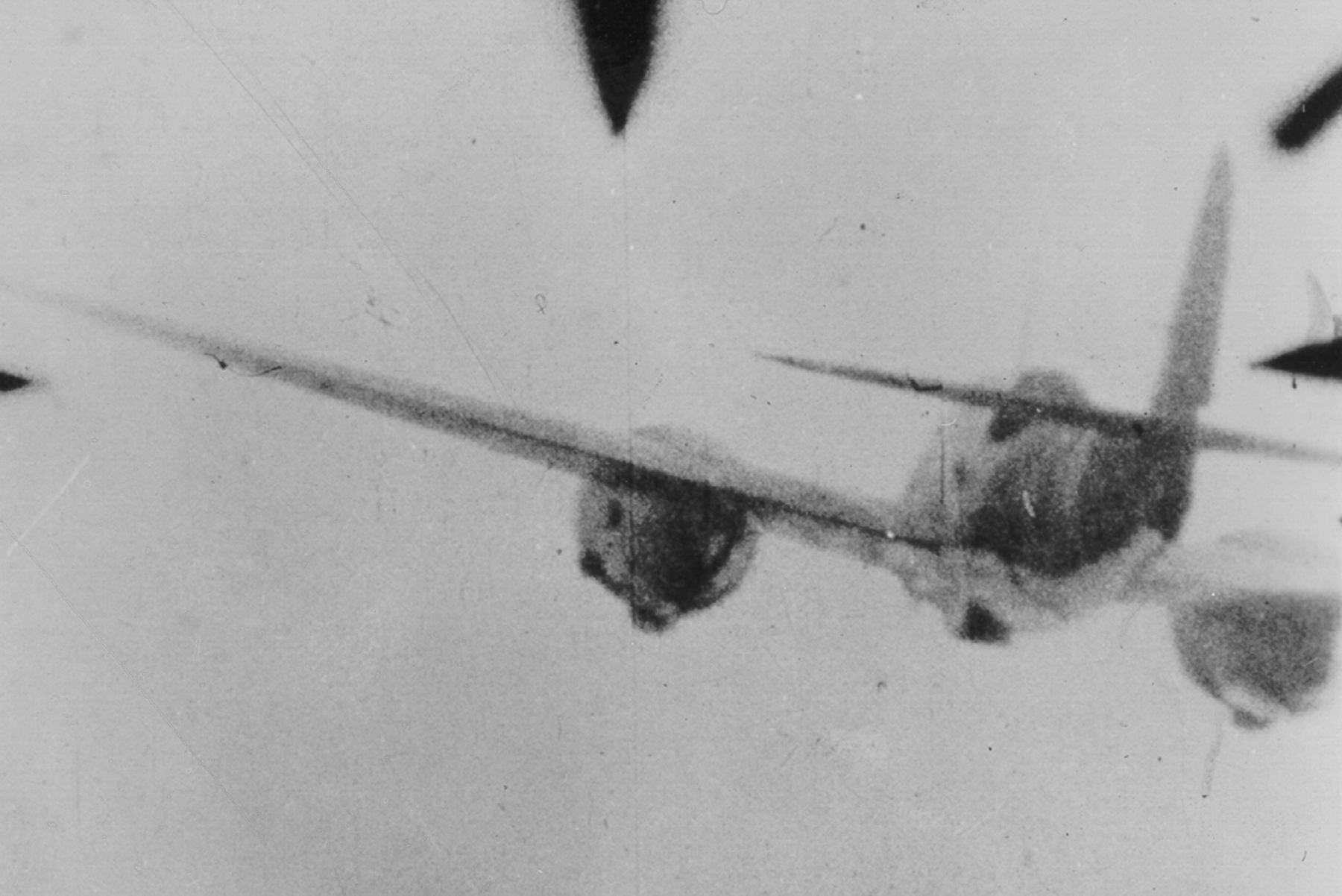
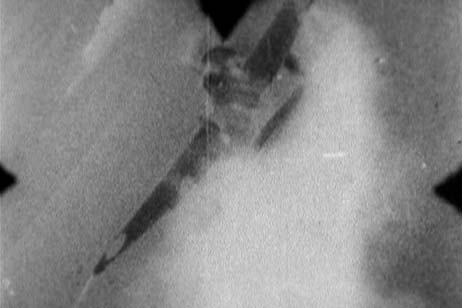
A 5th Air Force P-39’s gun camera film records the final moments of a KI-48. The radio operator’s ventral gun position can be seen under the fuselage.

To increase the Lilly’s range, the 208th Sentai’s bombers had an additional fuel tank mounted inside the fuselage in front of the radio operator’s seat. Three feet long, three feet high and about twenty inches wide, it was not armored and not self-sealing. This meant a single bullet strike could have ignited the tank, bathing the radio operator in flaming gasoline.

On missions, the 208th carried out most of its attacks at between ten and twelve thousand feet. On a few knuckle-biting ones, however, the crews used their Ki-48’s like dive bombers, nosing over and making steep angle descents to three thousand feet before pickling their loads.

Mission briefings were far more informal than in the USAAF. Usually, the squadron commander would select the aircraft and crews the night before the attack. In the morning, just before take-off, the aviators would be given the target, the approach to it and any special instructions specific to the mission. When they returned, each plane captain would give an oral report to the squadron commander.

Intelligence on the Allies was minimal and very restricted. Prisoner #529 rarely even saw a map while he was in New Guinea, as those were reserved for the officers. Most of the time, they did not even know what their targets looked like.

5th af raid on lilly bombers hollandia 44 4x6

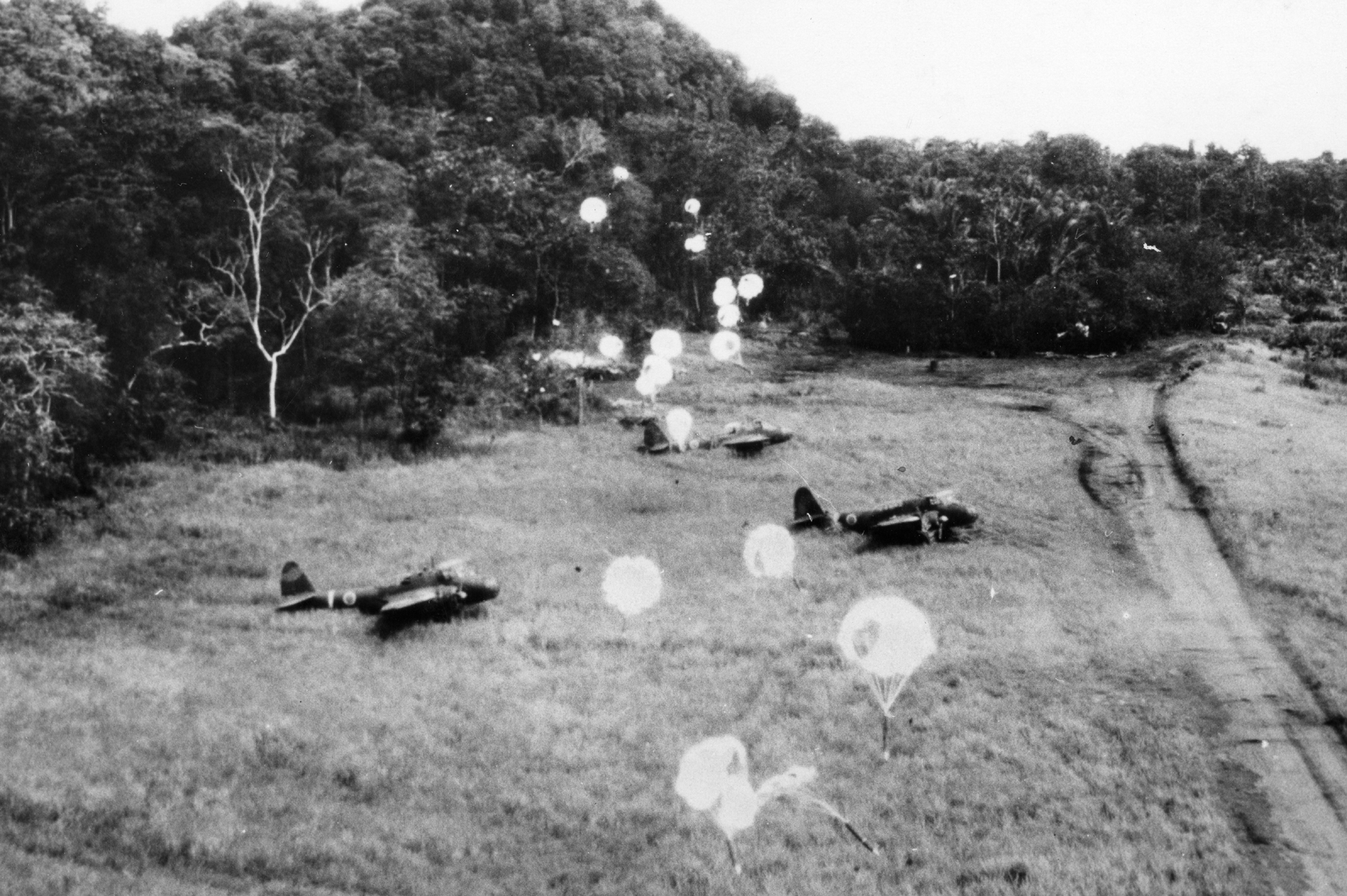
Ki-48’s under parafrag attack by 5th Air Force B-25’s. Hollandia, spring 1944.

To #529, defeat looked inevitable. Yet, he also believed that no matter what followed, the Japanese people would fight to the last man, and woman.

During the spring of 1944, Allied air attacks repeatedly struck the 208th airfields at both Hollandia and Wewak. At Hollandia, the raids seemed particularly accurate, as if the Allies knew the exact location of every building, revetment and aircraft. (Thanks to the 5th Air Force’s reconnaissance efforts, they did). By April, every facility on the strip at Hollandia had been bombed to splinters, though the 208th did not lose many men in these attacks thanks to the many shelters and slit trenches constructed for them.

The B-25 Mitchell was particularly feared.  Racing in at low altitude with their nose guns blazing, dropping parafrags in their wake, these American bombers destroyed fuel dumps, blew up grounded aircraft, wiped out anti-aircraft positions and terrified all those exposed to their strafing. With eight to twelve .50 caliber machine guns in the nose of each B-25, the gunships were devastating weapons.
sallies at hollandia

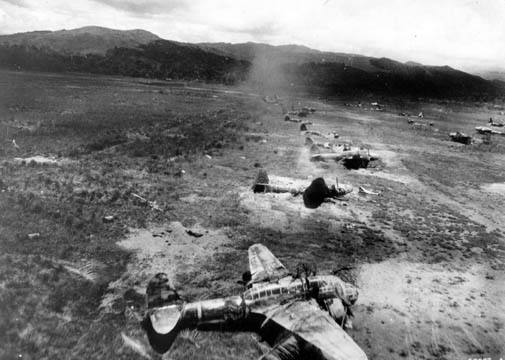
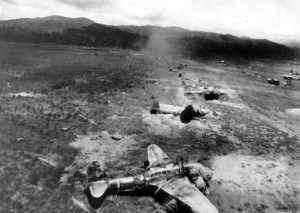
Another Ki-48, along with the wrecks of Ki-21 “Sally” bombers at Hollandia.

The 5th Air Force’s B-24’s were also greatly feared. Though they made their attacks from higher altitudes, their accuracy astonished the Japanese. The 208th concluded that the Liberators had to have had bomb sights far superior to what Japan had produced.

In April 1944, the Allies launched a surprise amphibious invasion at Hollandia. The  Oregon and Washington National Guard division, the 41st, quickly stormed ashore and secured the airfields there. There were few Japanese combat troops in the area, and Prisoner 529 fled into the jungle with the rest of his unit when the landings began.

Chased by American patrols, without food or good weapons or supplies of any kind, the three thousand survivors from 529’s air division attempted to make it to Sarmi, a small Japanese outpost on the coast, some one hundred fifty miles west of Hollandia. For months, the survivors plodded through the jungle, only to discover the Americans had outflanked them again at Wakde and Maffin Bay. The altogether, there were probably about twenty thousand Japanese on this trek for survival, including the remains of the 224th Infantry Regiment.

In mid-June, a battle raged for almost two weeks around a six thousand foot tall mountain overlooking Maffin Bay. Known as the Battle of Lone Tree Hill, the Japanese lost over a thousand men in direct combat with the Americans—and at least another eleven thousand to starvation. Afterwards, the Japanese retreating from Hollandia had little hope left. With Americans behind them, the ocean to their right flank, the inhospitable mountains on their left, they’d come through the jungle only to find the path ahead firmly in American hands.

5th af raid on hollandia april 44 4x6

The 5th Air Force raids on Wewak and Hollandia between August 1943 and the spring of 1944 broke the back of the Japanese Army Air Force. Most of its units in the SWPA were completely wiped out, with few of the air or ground crews escaping to fight another day.

The survivors scattered, breaking into small groups to forage for food and try to find some friendly garrison to join. Most died of disease or starvation. Some resorted to cannibalism, preying on other Japanese or on local New Guinea natives.

Prisoner #529 remained in the Maffin Bay area after Lone Tree Hill ended, hoping to steal food from an American encampment. Instead, he was caught and captured, a source of utter humiliation to him. He felt he’d let his mother down, and that if he were to ever return to Japan, he would be court-martialed for allowing himself to become a prisoner. To his surprise, he found Americans to be jovial and mostly friendly toward him. In training, he had been told the Americans would kill him if he ever surrendered. Instead, he found them “outgoing, liberal and happy.”

After reconciling himself with his situation, his sense of humiliation at his capture gradually drained away. He began to dream of life post-war, and he hoped that he could settle in Australia and become a farmer.

Of the 250,000 Japanese troops, aviators and sailors sent to New Guinea during the war, less than 15,000 survived the war and returned to Japan. In 1949, eight Japanese hold-outs were discovered living in a village a hundred miles from Madang, New Guinea. They surrendered and returned to Japan in February 1950, possibly the last survivors from the New Guinea campaign to do so.


Categories: America's Opponents; The View from the Other Side, World War II in the Pacific | Tags: , , , , , , , , , , , , , , , | 7 Comments

Without Norway, No Normandy: The Hidden Role the Norwegians Played in WWII

North Atlantic079This week, Bloomberg News reported that the new Secretary General of NATO, Jens Stoltenberg, was in Washington D.C. for meetings and asked the White House for some time with the President while he was here. According to reports, the White House staff did not even respond. This broke with a long standing tradition that when the Secretary General of NATO was in D.C., the President always made time to see him. Full article is here: http://www.bloombergview.com/articles/2015-03-24/obama-snubs-nato-chief-as-crisis-rages.

norway guerillas in action 300 dpi bw

Norwegian Resistance fighters played a well-known role in stopping the Nazi atomic bomb program by destroying the only available heavy water and heavy water production facility available to the Germans. Those attacks, carried out with help from the British SOE, are considered the most effective guerrilla operations in Western Europe during WWII.

At this perilous moment in history, with so many challenges facing our brothers and sisters in Europe, it is important to remember the historical bonds our nations have forged in the defense of common principles. It is also important for Americans to remember that the contributions made by every nation, especially during WWII, all played important roles in the ultimate victory that restored peace to Europe for a generation.

Jen Stoltenberg is Norwegian. He served as Prime Minister and as the head of the Labor Party, as well as in many other positions since his election to Parliament in the early 1990s. Today’s post is an homage to the Secretary General’s nation and its vital (if virtually unknown) contribution to the victory in Europe during WWII. I


The Ships that Saved the Cause

North Atlantic071

In the spring of 1940, as Norway succumbed to the German onslaught, the Royal Navy evacuated King Haakon VII and much of his government’s senior leadership. The fight would continue, despite the conquest of their homeland. Setting up in London, the Norwegian government-in-exile possessed an ace-in-the-hole that soon played a crucial role in the ultimate defeat of the Third Reich.

North Atlantic228

In 1939, though Norway’s population barely topped three million people, the country boosted the world’s fourth largest merchant marine force.  With a thousand, modern vessels, the Norwegians could haul more cargo than just about anyone else on the planet. Want oil moved across the Atlantic? Call the Norwegians. Their fleet included a whopping twenty percent of all tankers on the planet in 1939. The Norwegians were the masters of the seafaring arteries between Europe and the rest of the world.7655 atlantic convoy bound for sicily (1 of 1)

North Atlantic054Despite the German invasion and the Luftwaffe’s depredations, the fleet survived virtually intact. When King Haakon reached London, he delivered the 4.8 million ton Norwegian merchant marine to the Allied cause. This was manna from heaven for Great Britain, whose survival soon depended on these ships. By 1942, forty percent of Britain’s oil rode to the Home Islands aboard Norwegian tankers. Without their contribution, England would surely have been doomed, but the Norwegian crews never received credit for this crucial component to the Allied victory.
The price paid to keep Britain in the war was a steep one. Fully half of the Norwegian merchant fleet was destroyed by U-boats, mines and the Luftwaffe. These five hundred ships took three thousand unheralded, heroic men down with them.North Atlantic194

Though the German conquest of Norway seemed at the time to be a tremendous victory, there was a hidden dimension the Third Reich never envisioned. The Nazi invasion in the north ultimately delivered to the British the very means of their salvation.


Categories: Allies, World War II Europe, World War II in Europe | Tags: , , , , , , , , , | 7 Comments

348th Fighter Group Air-to-Air Kills Over New Britain 1943

348th fg val 12 27 43 arawe 4x6

An Aichi D3A Val under the guns of a 348th Fighter Group P-47 pilot over Arawe, New Britain, December 27, 1943.

348th fg robert sutcliffe gloucester 12 26 43 ki 49 4x6

Robert Sutcliffe, a Thunderbolt pilot assigned to the 348th Fighter Group, makes a pass on a formation of Japanese bombers over Cape Gloucester, New Britain on Boxing Day 1943.

348th fg robert sutcliffe gloucester 12 26 43 ki 43 4x6

Sutcliffe cripples a Japanese Army Air Force Ki-43 over Cape Gloucester on December 26, 1943.

348th fg lawrence oneil bombers gloucester 12 26 51 4x6

Lawrence O’Neil, another 348th Fighter Group P-47 pilot, making a low side pass on the same bomber formation Sutcliffe attacked on December 26, 1943.

348th fg george orr bombers gloucester 12 26 47 4x6

George Orr, 348th FG, making a stern attack on a Japanese bomber over Cape Gloucester, December 26, 1943.


Categories: World War II in the Pacific | Tags: , , , , , , , , , , , , | Leave a comment

Photo of the Day: The Shepherds of the Arctic Sea

208 aa for uboat series235

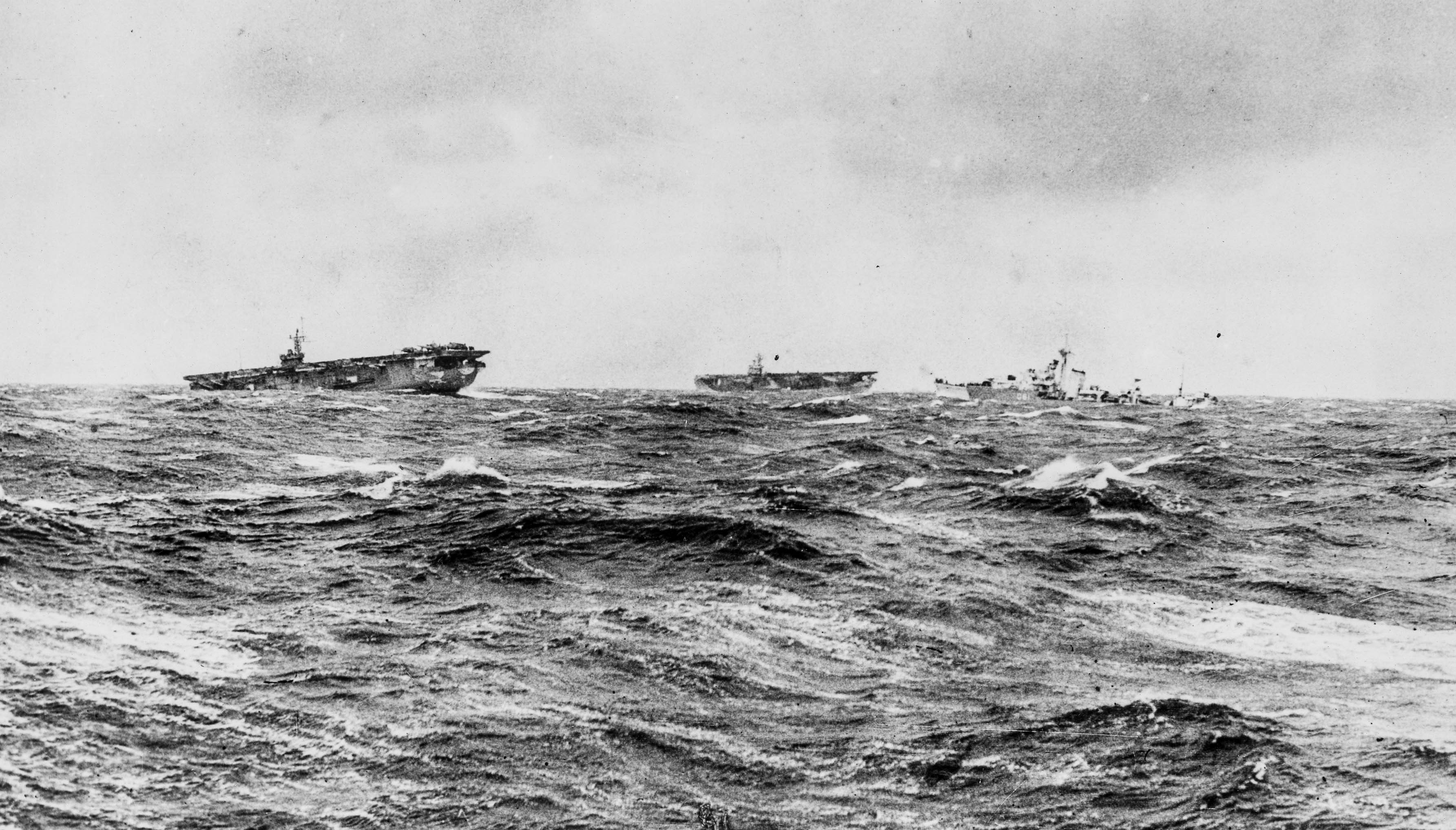
Two Royal Navy escort carriers, HMS Emperor and HMS Strike pitch in the heavy swells of the Arctic Sea during a convoy escort operation to the Soviet Union. An RN destroyer can be seen at right, providing the carriers with an anti-submarine screen.


Categories: Allies, World War II Europe, World War II in Europe | Tags: , , , , , , , , , , , , | Leave a comment

Blog at WordPress.com.