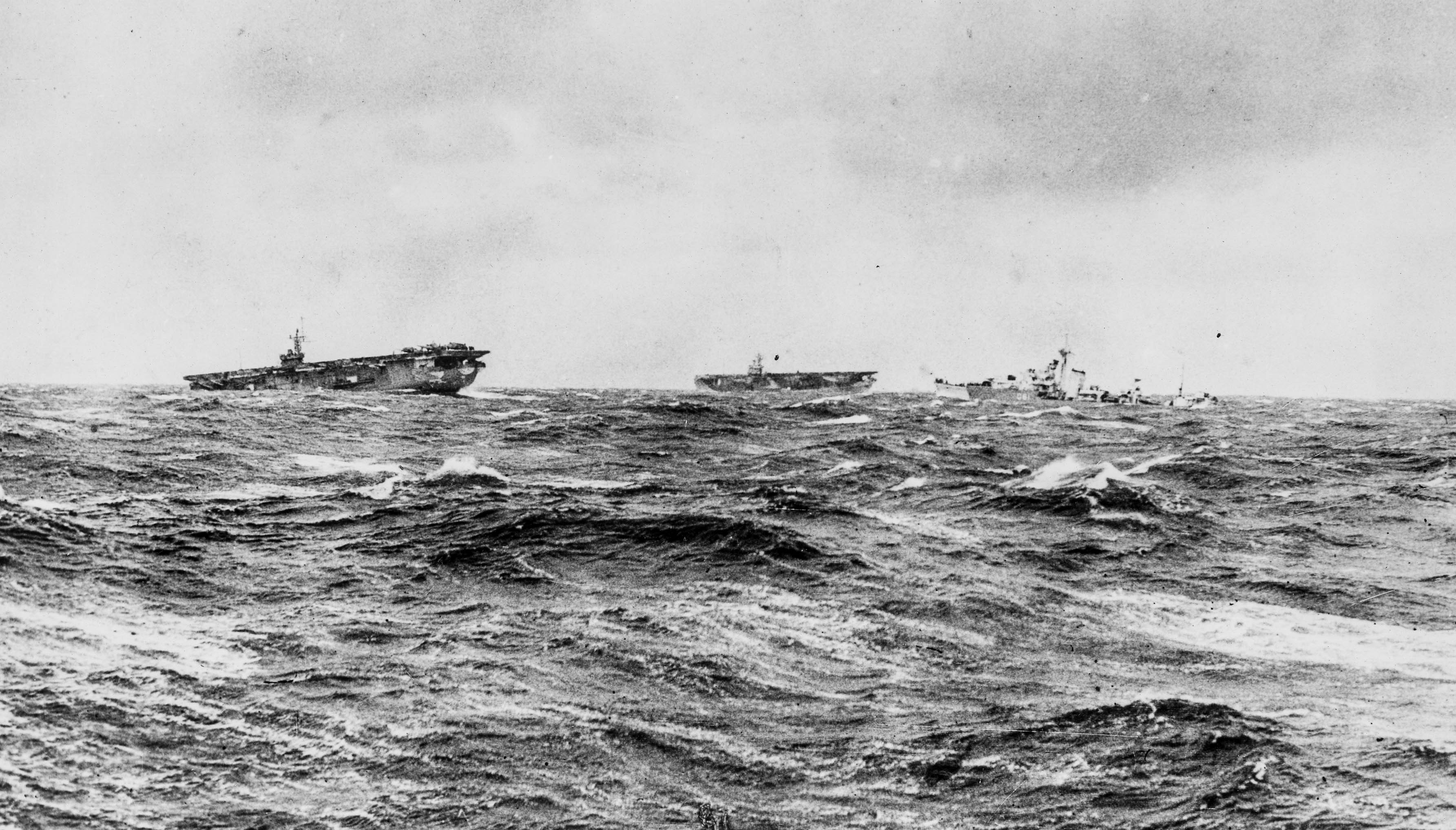
Two Royal Navy escort carriers, HMS Emperor and HMS Strike pitch in the heavy swells of the Arctic Sea during a convoy escort operation to the Soviet Union. An RN destroyer can be seen at right, providing the carriers with an anti-submarine screen.

Two Royal Navy escort carriers, HMS Emperor and HMS Strike pitch in the heavy swells of the Arctic Sea during a convoy escort operation to the Soviet Union. An RN destroyer can be seen at right, providing the carriers with an anti-submarine screen.

Two American M3 Stuart light tanks support a company of British infantry during the fighting in Tunisia in early 1943.

Memo: Before bombing Yap Island, always remember to feed your monkey.
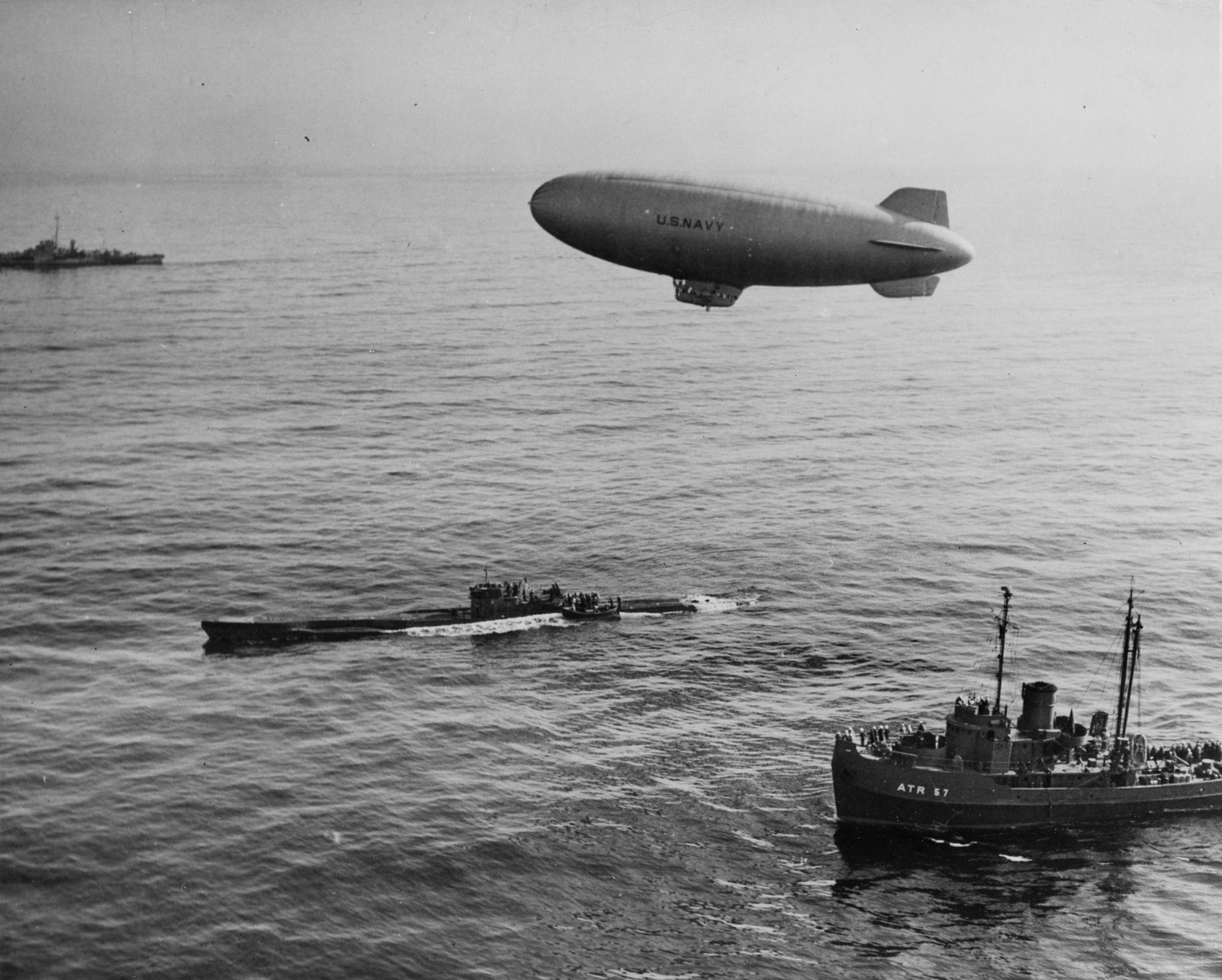
U-858, under close escort, steams for Delaware after surrendering off Cape May in May 1945.
In the final weeks of the War in Europe, the German Navy sought to repeat the successes of 1942’s Operation Drumbeat by sending U-boats to intercept and sink merchant shipping along the American eastern seaboard. Kapitanleutnant Thilo Bode and the crew of U-858 was assigned a role in this operation. U-858 was a Type IXC/40 submarine that had only one previous war patrol to its credit. Bode’s crew had not sunk or damaged any Allied vessels in that initial patrol, and even getting to the East Coast was a tremendous gamble, given the depth and power of the Allied anti-submarine defenses in the North Atlantic by 1945.
Bode was an intelligent officer, a tall Bavarian who stayed clean shaven while the rest of his crew grew beards. When he left on this last desperate mission, he knew Germany was doomed to defeat. For six weeks, he played cat-and-mouse games with Allied anti-submarine patrols, but failed to attack any vessels.
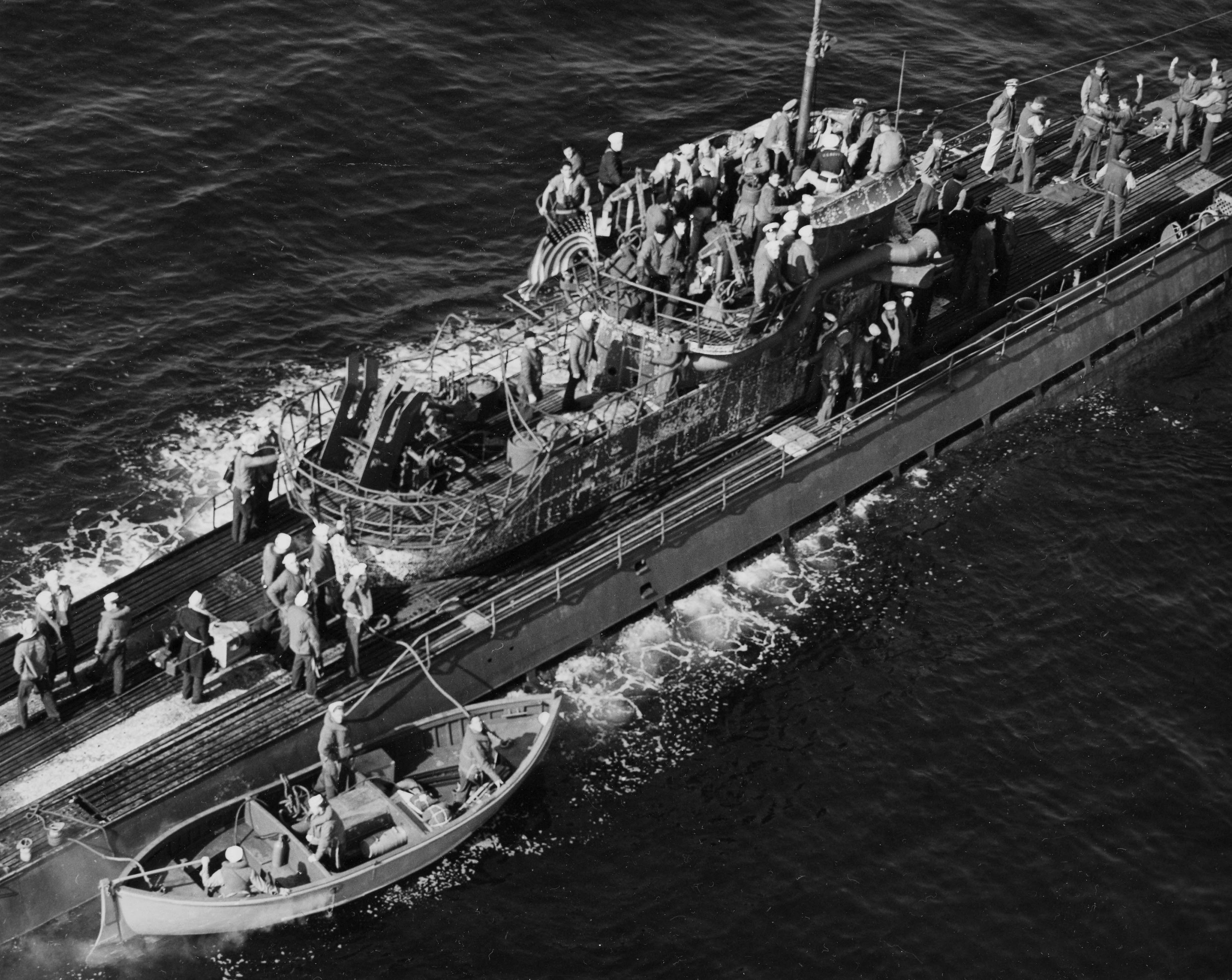
The Pillsbury’s boarding party aboard U-858.
On May 14, 1945, after receiving a radio message from Germany ordering all warships to stand down and surrender, he and his crew surrendered to the destroyer escort, U.S.S. Pillsbury off Cape May, New Jersey. An American boarding party went aboard and took control of the U-boat, raising the Stars & Stripes over her conning tower. Bode and most of the crew were then taken off the U-boat, but a few were kept aboard as prisoners, just to ensure there had been no effort to sabotage the vessel with timed charges.
U-858 became a celebrated prize of war in the United States. She was taken to Fort Miles, Delaware, where Bode officially surrendered his command to the United States Navy in a ceremony that has subsequently been recreated on the event’s anniversary by local reenactors.
After the surrender, Bode offered to take his U-boat and join the U.S. Navy’s fight against Japan in the Pacific. The U.S. Navy refused, and the boat was to never see combat again. In 1947, it was sunk during a live fire torpedo exercise by the USN submarine, Sirago.
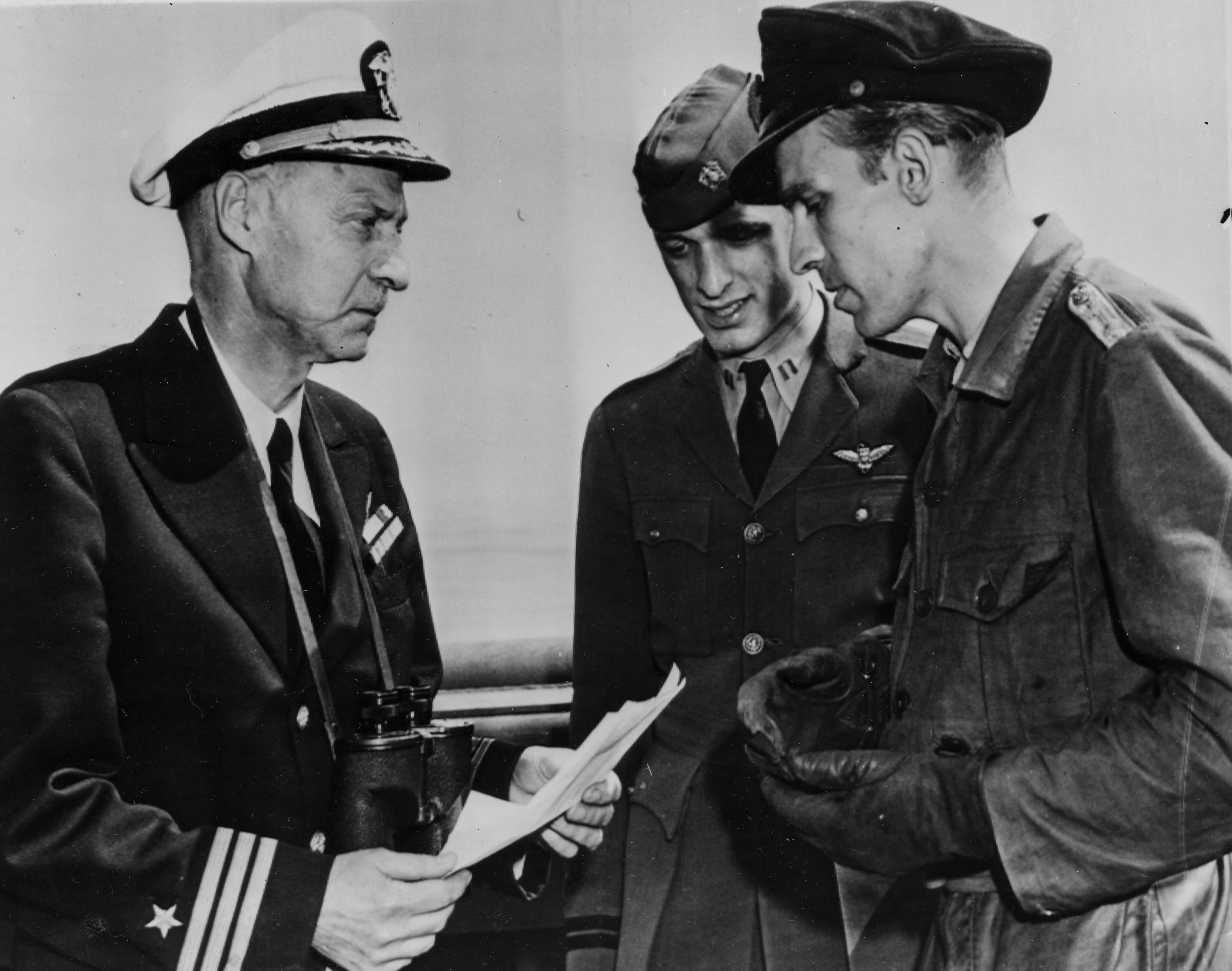
Commander J.P. Norfleet (left) (USN), accepts 27 year old Captain-Lieutenant Bode’s surrender on May 14, 1945.
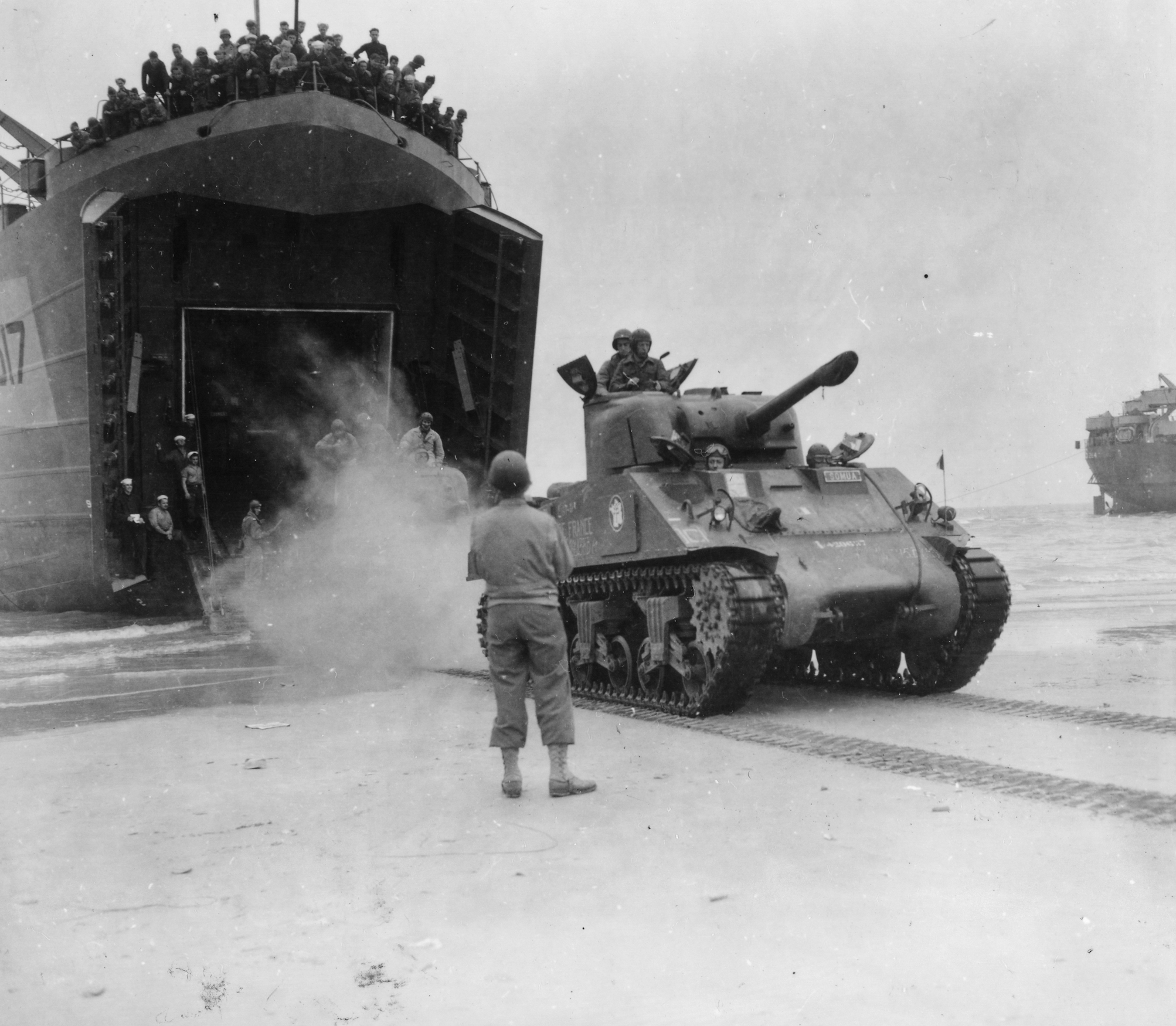
The 2nd Free French Armored Division comes ashore at Utah Beach.
Perhaps no French unit achieved the level of fame during World War II that the 2nd Free French Armored Division did. Formed from about 15,000 men from different Free French units that had been fighting in North Africa since 1940, the 2nd included some 3,600 Colonial troops, primarily Moroccans and Algerians, along with a contingent of Spanish Republican volunteers. The rest of the division was drawn from French troops and citizens who had escaped France proper during the German invasion, or who had been out of the nation when the 3rd Republic sued for peace in June 1940.
Organized and equipped like a U.S. Army armored division, the 2nd included three tank regiments, a tank destroyer regiment and three mechanized infantry regiments, along with engineers, artillery, truck and logistical support units. The division employed M4 Sherman tanks, American halftracks, M8 75mm motor gun carriages and other American vehicles. The Soldiers were equipped with standard U.S. Army gear, including M1 rifles, M1919 light machine guns, etc.
The division rejoined the fight in July 1944 when it landed at Utah Beach. The 2nd was thrown straight into the fray and ended up in the middle of the Falaise Pocket battle, forming the crucial hinge between Canadian and American units. During the fighting that August, the French tankers and armored infantry all but destroyed the remnants of the German 9th Panzer Division, knocking out over a hundred armored vehicles and taking almost nine thousand prisoners. But by the end of the battle, the 2nd had paid a steep price–about a thousand killed, wounded and missing.
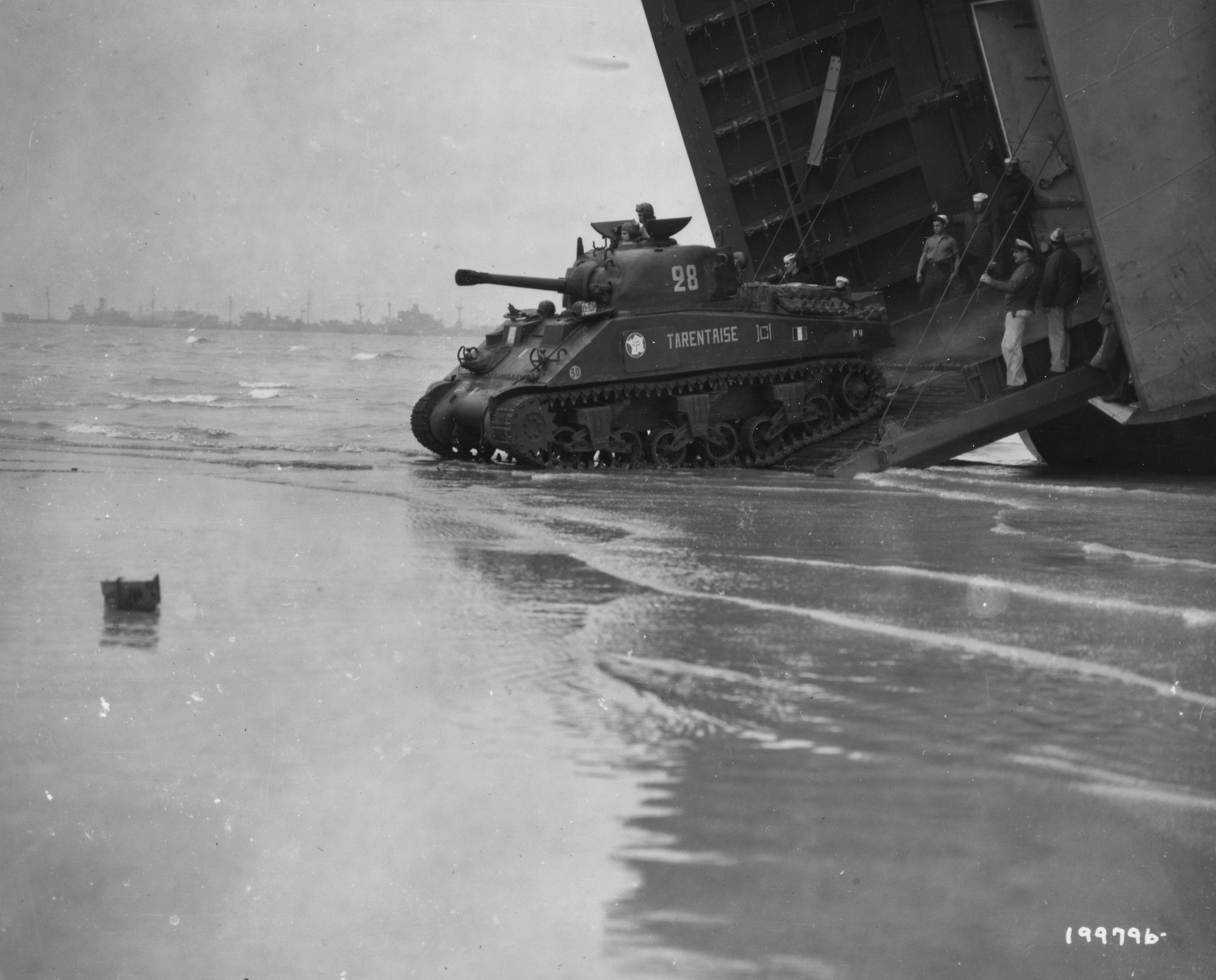
Another shot of the division’s M4 Shermans coming ashore at Utah.
At the end of the month, General Philippe LeClerc, the divisional commander, was ordered to drive on Paris with the U.S. 4th Infantry DIvision. What followed was the unit’s most lasting moment. Fighting side by side with American troops, the Free French could sense their hour of redemption was at hand. They fought like banshees, pushing toward their capital with impassioned fury, taking heavy losses at times. Some five hundred more men from the 2nd were killed and wounded, but the division forced its way into Paris and accepted the German surrender. The moment triggered a national catharsis, with French citizens celebrating in the streets and showering the Allied troops with tokens of their appreciation. France’s national honor had been restored, but much fighting lay ahead.
The 2nd pushed on East, destroying the 112th Panzer Brigade the following month in a chaotic battle at Dompaire. They liberated parts of the Vosges Mountains and wrested Strasbourg from German control at the end of November 1944 in daring actions that later led the division to be awarded an American Presidential Unit Citation. During this phase of its combat career, the 2nd fell under the U.S. Army’s XV Corps.

Paris, August 26, 1944. The 2nd Free French Armored DIvision’s most famous hour.

An M10 Wolverine tank destroyer from the Régiment Blindé de Fusiliers Marins, 2nd Free French Armored Division, outside Halloville, France on November 13, 1944.
After Strasbourg, the 2nd was shifted west to clear out German pocket of resistance along the coast, but it was transferred back to the main front in April 1945 in time to strike deep into the heart of the 3rd Reich. Soldiers of the 2nd were among the first Allied troops to reach Hitler’s Eagles Nest, and ended the war in Bavaria.
From July 1944 through May 1945, the division suffered about six thousand casualties out of approximately 15,000 men. It was deactivated in 1946 after serving France and the cause of Freedom with great and courageous distinction.

French troops and Maquis fighters, armed with British weapons including a Sten gun and a Bren light machine gun, cover a major intersection in Belfort, France during the battle to liberate the city on November 21, 1944.
John Buford’s Ghost:
Day One in the Ardennes
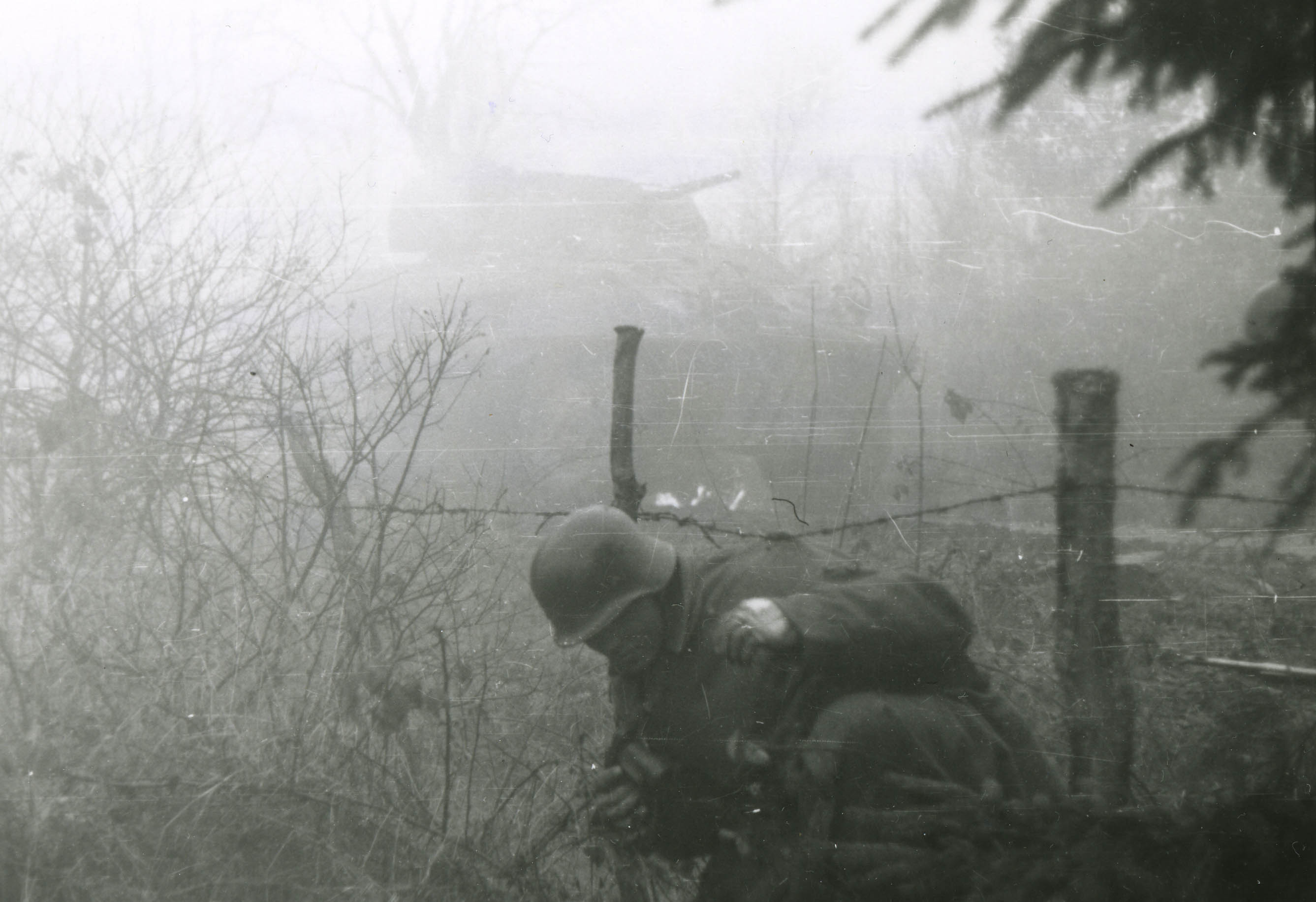 In mid-December 1944, Lieutenant Colonel Robert E. O’Brian Jr. had a hunch. As commander of the 38th Cavalry Reconnaissance Squadron, he’d been tasked with defending the ancient city of Monschau, which served as an important part of the local road network. One north-south road passed through town, intersecting with an eastward running route that could take the traveler to Rohren (still held by the Germans) or southeast to Hofen and the 3rd Battalion, 395th Infantry.
O’Brian held an important part of the line, and his hunch led him to believe that the Germans might counter-attack him. As a result, in the final days before Watch on the Rhine began, he kept his troopers busy digging trenches, clearing fields of fire, laying mines and trip flares. He brought in eighty truck loads of barbed wire and made sure that all of his platoons and troops were wired in tight. For additional support, he placed a platoon of tank destroyers to overwatch the main roads leading into town. His M5 Stuart light tank company covered the town itself and the route leading east, while his troopers dug in on the hills and slopes east of town, scraping their fighting positions out of hip-deep snow and frozen ground in places. The work was hard and rugged, but O’Brian’s men would be prepared. On the night of December 15, 1944, his troopers hunkered down in their holes, waiting to see if the squadron commander’s hunch would play out.

The venerable M5 Stuart light tank served throughout the campaign in Western Europe despite being undergunned and vulnerable to German anti-tank fire. This one belonged the 3rd Armored Division, and the crew is watching a German air attack on December 18, 1944, two days into the Battle of the Bulge.
Across No-Man’s Land, the men of Sepp Dietrich’s Sixth SS Army made their final preparations for Operation Watch on the Rhine.

Sepp Dietrich.
Sepp Dietrich was a street fighter. An NCO during World War I, he returned home and embraced the chaos of post-war Germany. He became one of the earliest Nazi adherents, and one of Hitler’s oldest confederates. As a combat leader, he was despised and derided by the blue-blooded Prussian elite that formed the nexus of the Werhmacht’s officer corps. They thought he owed his position entirely to his relationship with Hitler, and that anyone with his luddite level of intelligence was best left in the NCO corps, not commanding entire SS armies. Perhaps so, but the fact was Dietrich commanded almost reverence among his men. Time and again, he inspired them with his front-line example as well as his refusal to live better than they did. He shared their hardships and privations, and the Waffen-SS soldiers loved him for it.
But by 1944, Dietrich’s heart wasn’t in it anymore. After Normandy, he knew the war was lost, and Hitler’s insistence to continue it only got more of his men killed. After learning of Operation Watch on the Rhine that fall, he approached the Ardennes counter-offensive with a very pessimistic view of how things would go.
He was not disappointed.
The Sixth SS Army was supposed to attack after a heavy initial bombardment along a front that ranged from about ten miles north of Monschau south to the Losheim Gap. The terrain here was low and swampy—impossible tank country. Behind and to the south of Monschau stretched the high ground of the Elsenborn Ridge. That ridge was the key to the Sixth SS’s initial attack. Take it, and the roads to the south the panzers needed to get to the Meuse would be opened up. The Sixth SS Army had been assigned five main roads that would hopefully carry the panzers west to the Meuse River. Taking Elsenborn Ridge would open up three of those five routes to the river.
Dietrich assigned his LXVII Corps to launch the initial attack around Monschau. This would be the hinge of the entire Sixth SS Army’s assault, and was designed to protect the right flank of Dietrich’s main effort.
Originally, it was supposed to be carried out by the 272nd and 326th Volksgrenadier Divisions, supported by a battalion of behemoth Jagdtiger tank destroyers. Fate threw the first curveball of the game, though, when the Jagdtigers failed to arrive before December 16th. They’d been loaded aboard trains and sent forward. On the way, Allied fighter bombers shot up the tracks. The Jagdtigers could not get forward in time to support the initial blows. The volksgrenadiers would make their attack unsupported.
The LXVII Corps faced another problem on the morning of the 16th. The Americans had been driving forward with the 2nd, 9th, 78th and part of the 99th Infantry Division right on the north side of the Ardennes, intending to grab the Roer River dams before Christmas. Three days before the offensive’s scheduled start, the 272nd Volksgrenadier divisions had been sucked into a furious house-to-house urban battle in Kesternich. Part of the 326th had to actually go and reinforce it, which bled away much of the corps’ initial strength in its own assault.
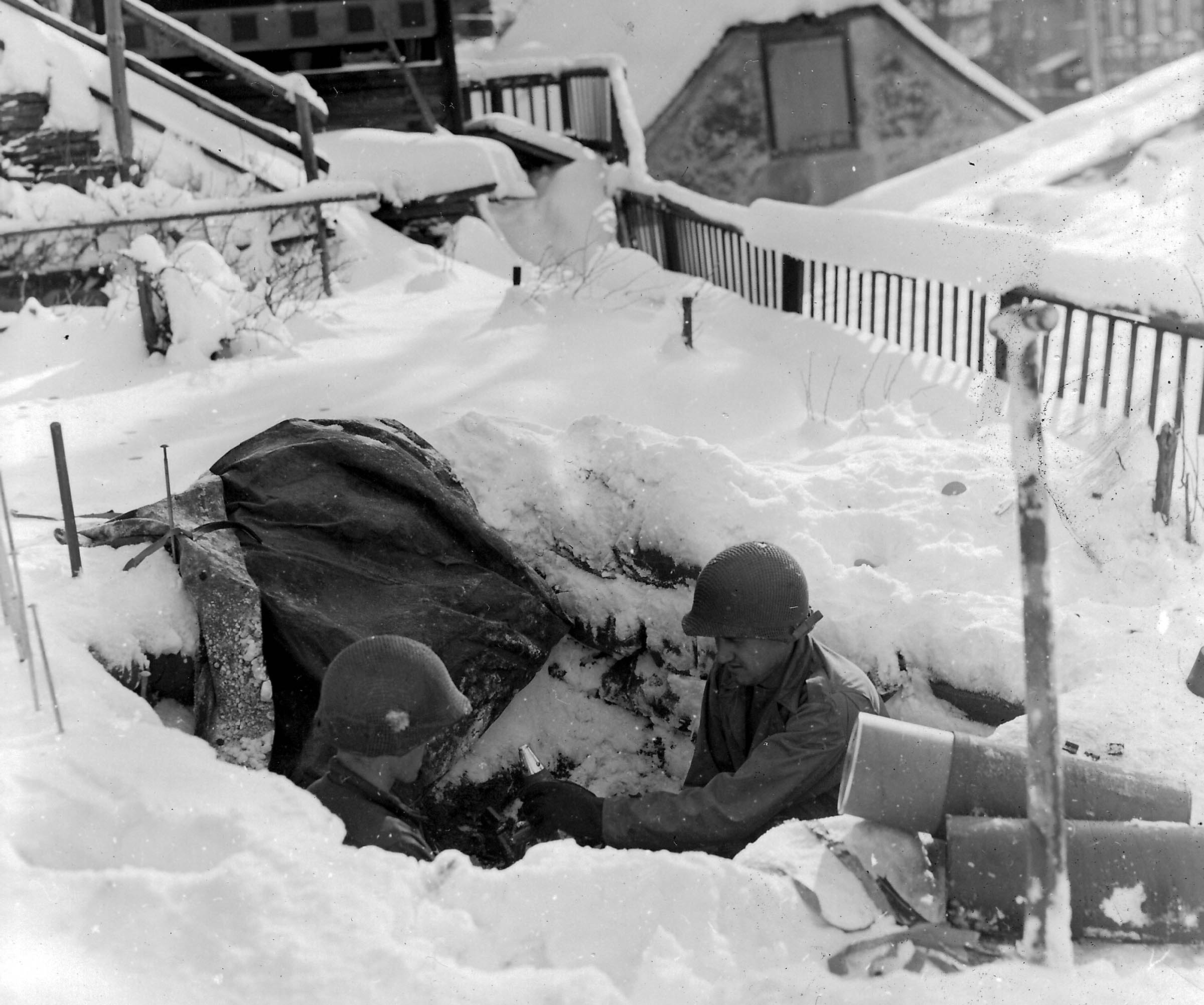
An American 60mm mortar team in Monschau.
None of this mattered to the men in the frozen foxholes east of Monschau when the first German shells began to fall at 0530. All up and down the ninety miles Ardennes front line, over a thousand German guns roared to life. Everything from mortars to 14 inch naval guns rained high explosive death down on the American positions. Within minutes, the shells severed most of the communication lines that ran between the front line units and their headquarters, or the artillery units. )
Twenty minutes later, at Monschau, Sepp Dietrich’s Volksgrenadiers padded across the snow-covered forested hills and slammed into O’Brian’s defenses. The American cav troopers were waiting, virtually unscathed by the opening bombardment thanks to their defensive preparations. In fact, O’Brian had ordered wire parties out to restore communications with their assigned field artillery battalions in the rear before the barrage had even ended.
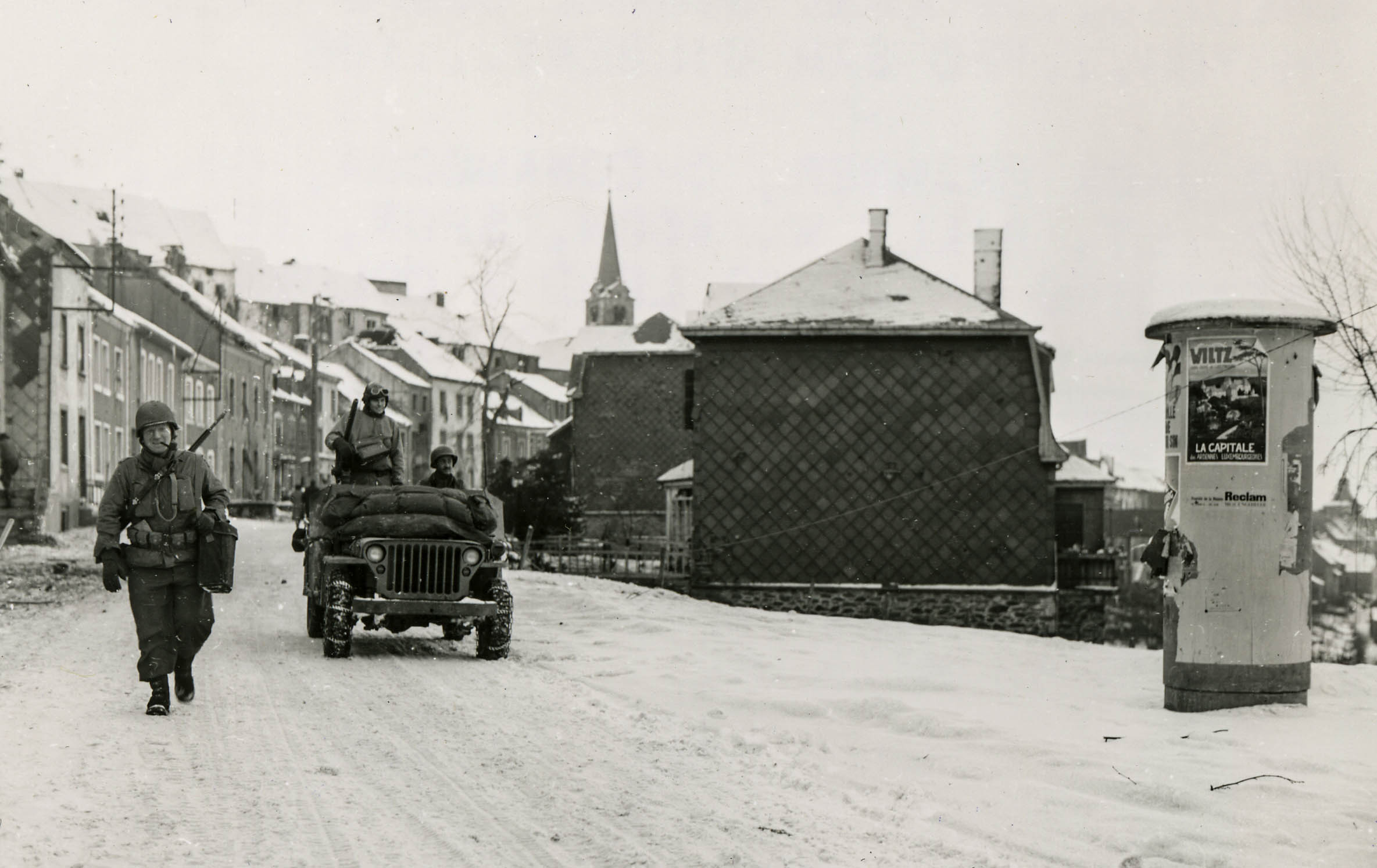
Lightly armed and equipped, the cav units in the Ardennes faced overwhelming odds in the first days of the Battle of the Bulge. These troopers belonged to the 28th Cav and are seen in Wiltz, Luxemburg later on during the battle.
They had not yet finished repairing the lines when the first Volksgrenadiers from the 751st Regiment slipped into view. If the 38th Cav folded, V Corps headquarters would be vulnerable to an attack from the rear and flank. It was a seminal moment for the American cavalry, and like General John Buford’s troopers on Gettyburg’s Seminary Ridge two generations before, they more than rose to the challenge.
The first wave of Germans reached the outskirts of Monschau and ran right into the waiting M5 Stuarts from F Company. The tankers loaded their guns with 37mm canister shells, and when they opened fire, the massed effect of these gigantic shotgun-like blasts tore apart an entire Volksgrenadier company. The survivors recoiled as their comrades, so vibrant a moment before, lay in gruesome horror around them. They left behind at least fifty, probably more like seventy-five dead and dying men.
The 38th Cav suffered seven casualties. Sepp Dietrich’s far north assault had failed completely.
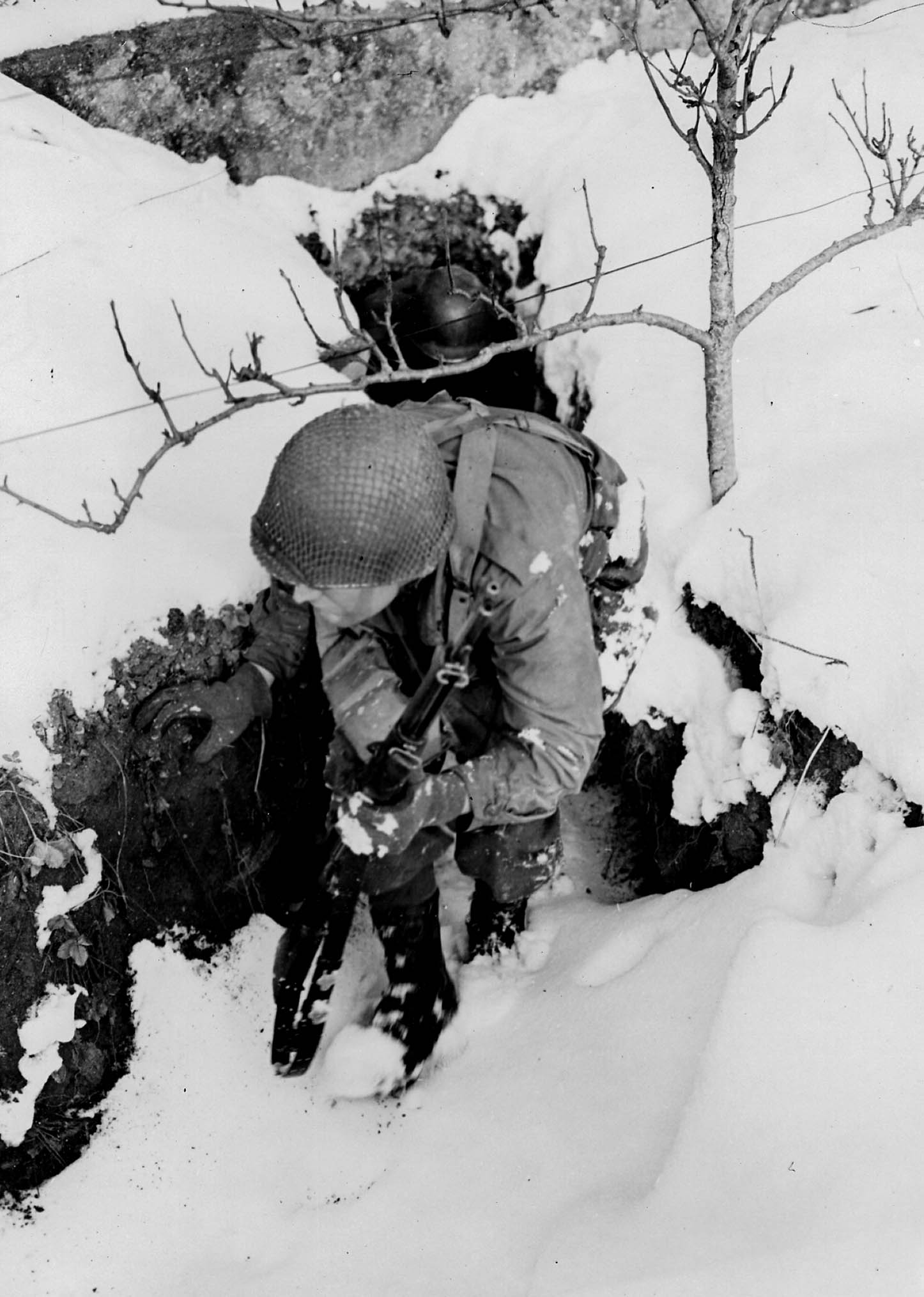
A typical snow covered entrenchment in the Ardennes that December.
A few miles to the south, the 99th Infantry Division’s 3-395 had weathered a dreadful barrage that saw at least two hundred and fifty shells land in the battalion’s area of operations around Hofen. At ten minutes to six, the 2nd Battalion, 751st Volksgrenadiers, 326th VG Division charged through the morning fog across broken terrain and hit the 3-395 Infantry at five points almost simultaneously. The German main effort slammed into the junction between I and K Companies, which happened to be just east of Hofen. Without communications re-established with the artillery units in the rear, the battle that unfolded here pit a green U.S. infantry battalion against a green German Volksgrenadier Division.
The Volksgrenadiers surged for the American lines and ran straight into point-blank small arms fire. Some of the U.S. BAR men held their fire until the Germans were not even ten feet away from their camouflaged foxholes. The dead heaped around these positions, and some of the stricken grenadiers actually tumbled into the BAR men’s foxholes. Mortars shells fell and machine guns unleashed their fearsome destructiveness, and the grenadiers died in the snow. The attack continued, but each successive rush was stopped by American gunfire.

One of the 99th Infantry Division’s defenders of Elsenborn Ridge.
At 0650, an hour after the attack began, the battalion restored communication with the artillery units I the rear. Within minutes, the forward observers in the trenches called down hell itself on the Germans. Multiple battalions of 105mm howitzers and the massive 155mm Long Tom cannons joined the battle.
The grenadiers attacked with desperate bravery, and in some places they made it through the curtain of artillery to battle the Americans with bayonets and butt stocks. The men of the 3-395 held firm, refusing to be driven from their foxholes even as heaps of German dead piled around them. By 0745, the attack had failed. Almost half the 2nd Battlion, 751st Grenadiers lay dead or dying in the snow. 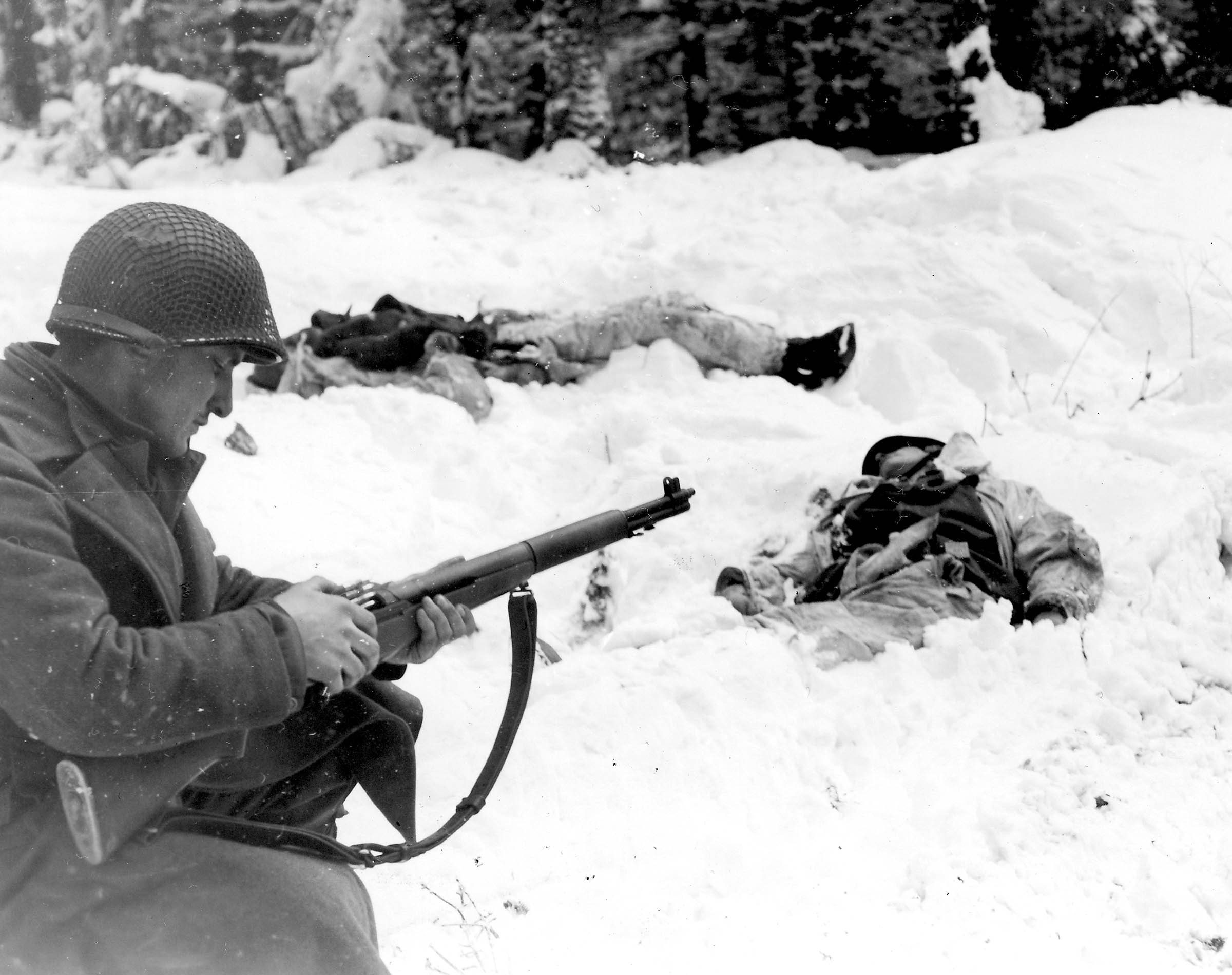
As the grenadiers withdrew and regrouped, they left behind over a hundred and fifty wounded men. Some lay as close as two hundred feet from 3-395’s foxholes. Throughout the day, they groaned, and cried out in agony, unable to move. In places, the lesser wounded men scrabbled through the snow to give what succor they could to their dying comrades. Here and there, a German medic would brave American fire to rush forward, administer some morphine and first aid. But there weren’t enough brave medics that day, and by nightfall, the moans and pleas grew steadily weaker. By morning, the battlefield was silent; the wounded had frozen to death.
Excerpted from my book:

Men of Company I stand guard over exhausted and cold German veterans of the Hurtgen Forest campaign. Captured at Jungersdorf on December 12, they were organized and marched out of the front lines that morning by the equally exhausted survivors of Company I, 39th Infantry Regiment.
The Battle of the Hurtgen Forest remains one of the longest, and bloodiest, battles fought by the United States Army. Through the fall of 1944, two American offensives into the hilly, heavily wooded terrain cost tens of thousands of casualties for little territorial gain. German defenders mined the forest, booby trapped entire sections, and covered all avenues of approach with snipers, automatic weapons and artillery. Attacking into the dense woods led American units to get lost, then pinned down and destroyed by German fire. Many historians have concluded that the fighting in the Hurtgen was among the most needless battles of the war, arguing that the U.S. First Army should have gone around it instead of trying to batter its way headlong through it. Altogether, the U.S. Army lost over 30,000 men; the Germans 28,000. Though most of the fighting ended in December, 1944, some firefights continued to flare up in the area until February 1945.

An American Soldier from Company I, 2-39th Infantry speaks to a hollow-eyed German prisoner of war. Jungersdorf, December 12, 1944.
Though the story of the 8th and 28th Division’s maulings in the Hurtgen have been the subject of numerous books, less well known is the 9th Infantry Division’s contribution to the battle. The Old Reliable Division was actually the first American unit to advance into the Hurtgen Forest in mid-September. They fought through the worst portion of the campaign in October, then participated in the final 1944 offensives in the woods in November and December, losing thousands of men killed, wounded and missing. Non-battle losses were also very high in the division–trench foot, psychological shock and frostbite took a significant toll as the weather dropped and the point-blank carnage day after day wore the men down.
On December 12, 1944, the 39th Infantry Regiment, 9th ID, captured the village of Jungersdorf, a hamlet not far from the Roer River near Dueren. A Signal Corps photographer named Cravens was with I Company, 39th Infantry on that day to capture these scenes of the aftermath of a long and traumatic fight, the cost of which can be seen in the eyes of the men Cravens photographed.

The veterans of Company I slog through the mud and ruins of Jungersdorf at the end of their tenure in the Hurtgen Forest. There would be no respite for these men. Fresh from the horrors of the Hurtgen campaign, they were thrust into the path of the 6th SS Panzer Army and played a key role in the defense of the Bulge’s North Shoulder during the German Ardennes Offensive–which started less than a week after this photo was taken.
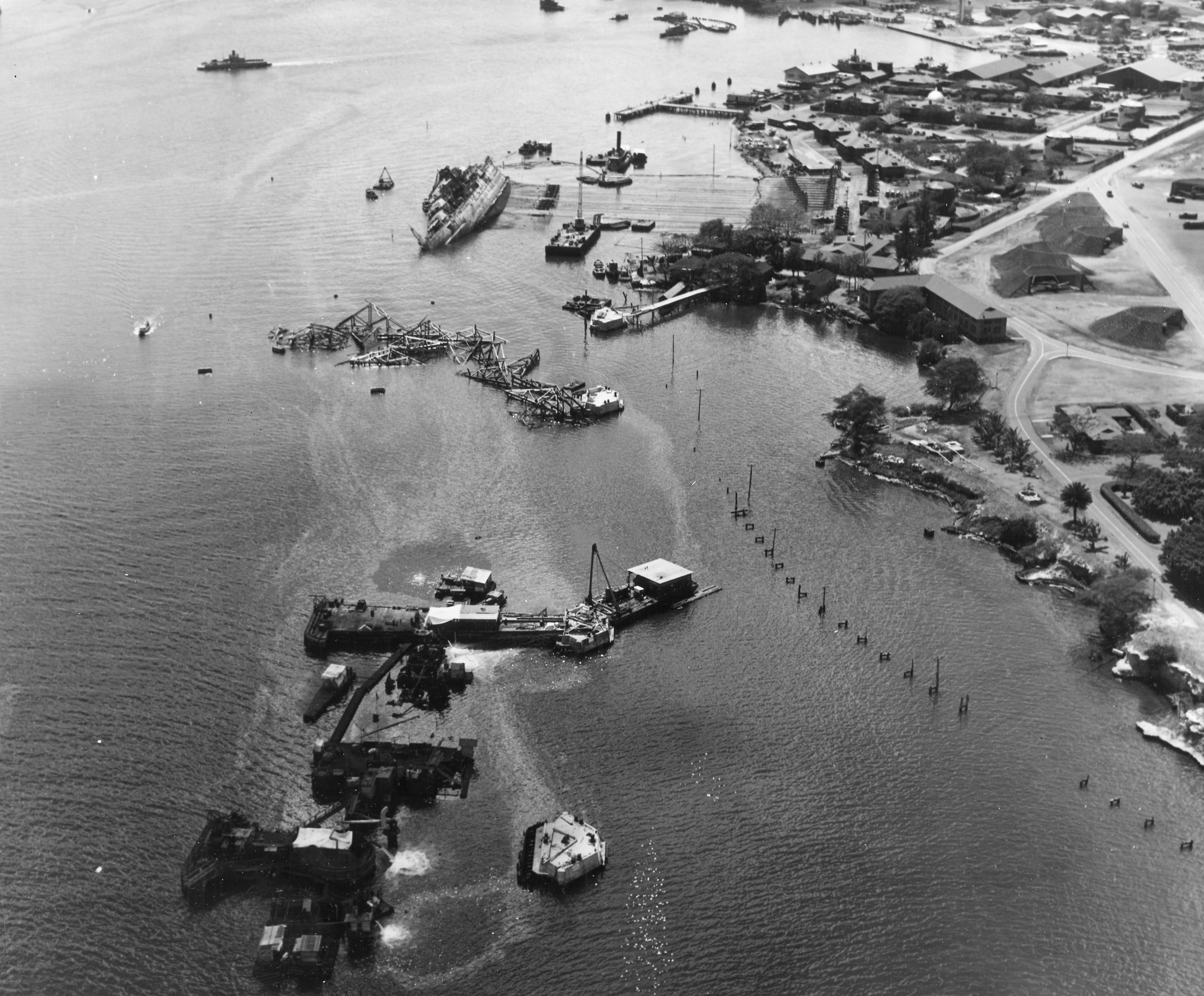
Righting the Oklahoma took almost 3 months. At bottom of the photo is the wreck of the Arizona, still leaking fuel. May 1943
During the Pearl Harbor attack on December 7, 1941, Japanese B5N “Kate” bombers scored five torpedo hits on the USS Oklahoma’s port side. The massive damage to this aged battleship prompted her to begin listing to port. Within minutes, she had turned turtle, trapping hundreds of sailors in her hull. In the hours and days after the attack, civilian shipyard workers and other sailors worked furiously to cut openings in the Oklahoma’s exposed keel in order to rescue the men still alive inside the ship. The effort saved thirty-two men. Stephen Young, one of those rescued, later wrote a gripping account of what he and his fellow sailors endured during those horrific hours after the ship turned turtle. Find his book here:

The cable system employed to right the Oklahoma had to be reset every few days as the ship began to roll. It was slow work and took months to complete.
Four hundred and twenty-nine men died aboard the Oklahoma. Only the Arizona‘s destruction cost more American lives on December 7th. Most of those sailors died within her hull, and as salvage work began on her in mid-1942, one of the first tasks was to recover those remains. For the sailors, divers and civilian contractors assigned to the vessel, the work was gruesome, dangerous and emotionally taxing to the utmost.

From the spring of 1942 to the summer of 1943, the salvage operation continued. Patches needed to be welded to the hull to cover the torpedo damage and make the ship watertight again. Teams of divers and workers cleared out ammunition, cut away damage and pumped out the thousands of gallons of fuel still remaining in the battleship’s tanks. As that work continued, other teams emplaced twenty-one massive winches on Ford Island. The salvage team rigged cables between the ship and the winches, and these were used to gradually pull the Oklahoma upright. It was a slow task that required intricate engineering work. After three agonizing months, the winches finally righted the wrecked battleship.

A civilian salvage worker aboard the Oklahoma in 1943. This was grueling, dangerous work which included having to recover the remains of hundreds of fallen sailors who’d been trapped aboard the battleship when she turned turtle.
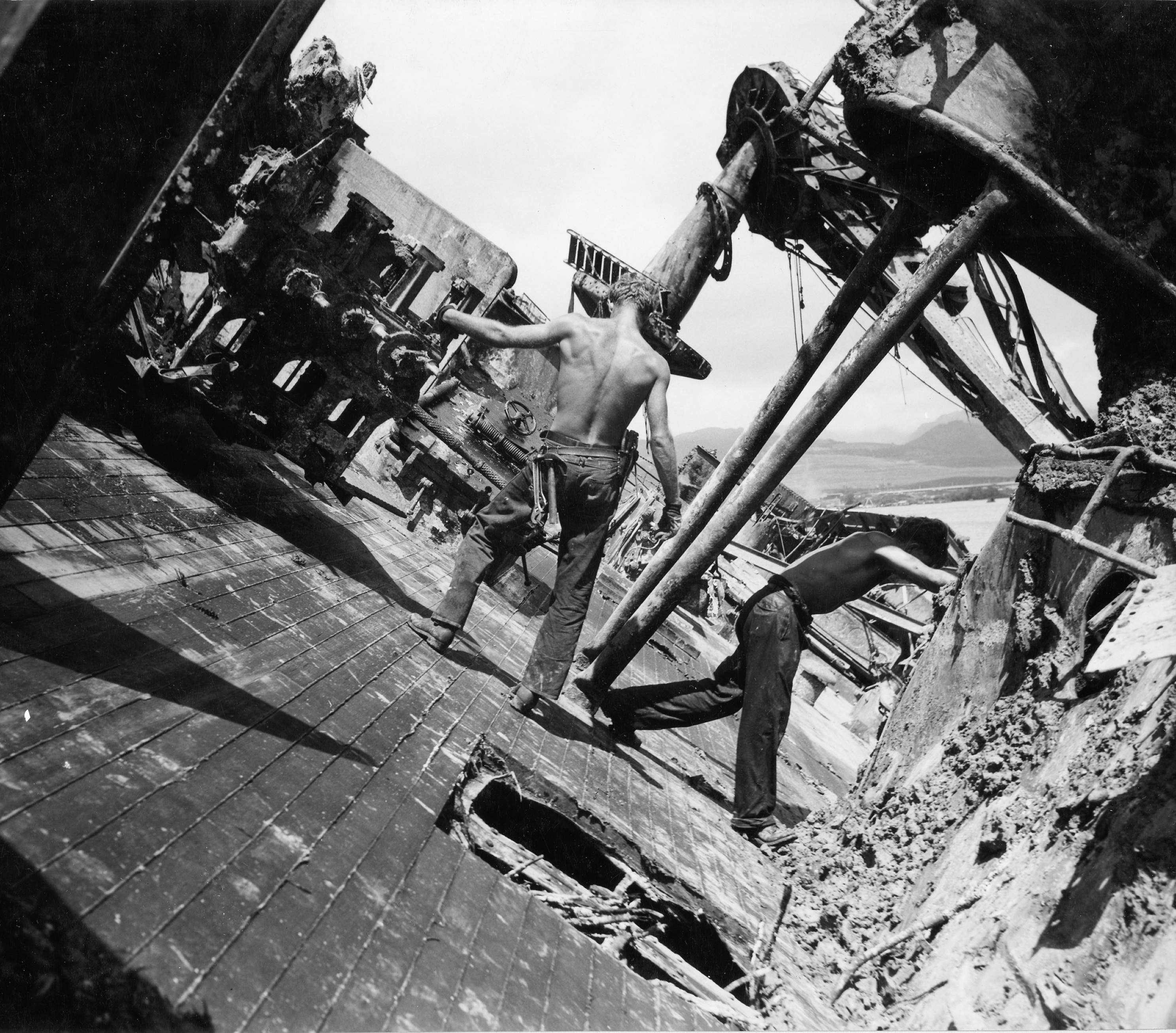
Almost righted, May 1943.
Once back on an even keel, the work to make her watertight was finished. Machinery, the rest of her ammunition and weaponry were pulled off and she was basically stripped to await scrapping. She was eventually towed to drydock where the work was finished. She spent the rest of the war moored in the harbor as a silent reminder of that terrible day in December 1941.
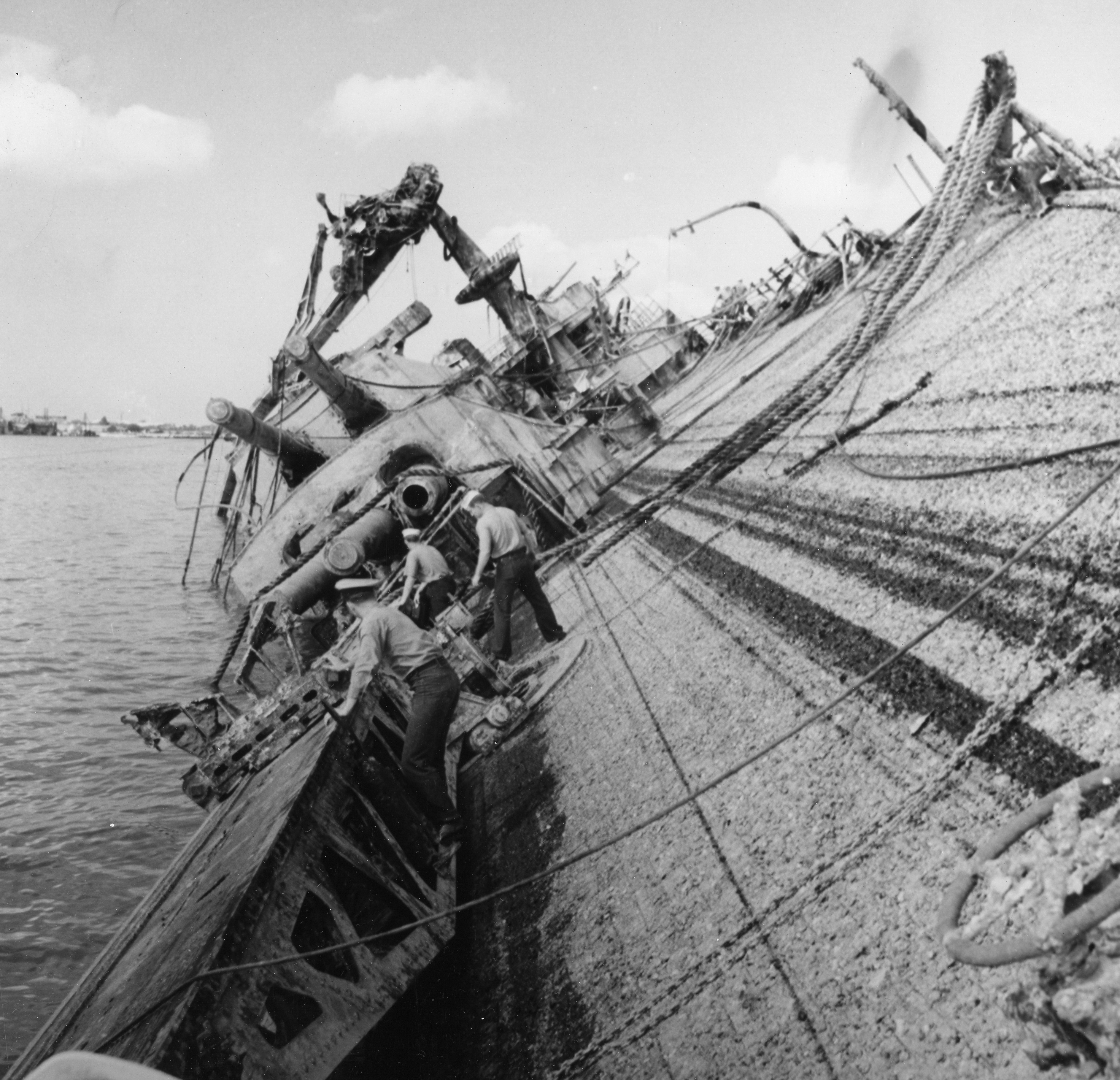
She was sold for scrap after the war, but while under tow to San Francisco in May 1947, she and her two tugs encountered a heavy storm. The battered old battlewagon couldn’t take the rough seas. She began to take on water, and a dangerous list developed. As she began to sink, the Oklahoma nearly dragged both tugs down with her. Fortunately, quick action on the part of the tugs’ crews prevented such a disaster. Oklahoma went to the bottom some five hundred miles east of Pearl Harbor. Her hull may lay in an anonymous Pacific grave, but her heart was torn out on Battleship Row in 1941.


The Imperial Japanese Navy heavy cruiser Tone. Saburo Horita was assigned to a 25mm anti-aircraft gun crew located near the ship’s bridge.
Saburo Horita grew up on a five acre plot of land his father farmed in Toyama prefecture on the west coast of Honshu. They were a poor family that included three sons (Saburo was the youngest). When Saburo was fourteen, his oldest brother died. Not long after, his mother died as well. He and remaining brother, who had been a porter in a Tokyo bath house until their mom’s death, worked the land together, raising vegetables and rice.

Japanese pre-war flight training was among the most rigorous in the world, but as the war continued and losses mounted, the Japanese were forced to cut their program short in order to get pilots into the field as quickly as possible.
In June, 1939, Saburo joined the Imperial Japanese Navy, and after six months of training at Yokosuka, joined the complement of the heavy cruiser Tone. He served as a 25mm anti-aircraft gunner and part of the deck crew for the next year. In January 1941, he decided to try and become a naval aviator, hoping he’d be able to fly bombers someday. He passed his physical and all the necessary exams, and received orders sending him to flight school Kasumigaura. He learned to fly on the venerable Type 93 “Willow” biplane, and then later got stick time in a Type 95 “Dave” two-seat biplane.
After he graduated from flight training, the Imperial Navy sent Saburo to Takao, Formosa, where he joined the 3rd Air Group as a reserve pilot. He’d had no time in advanced fighters, so the group put him through an intensive, crash course on the Mitsubishi A6M2 “Zero” fighter they had been flying in combat against the USAAF units in the Philippines. Horita arrived in January 1942, just as air campaign over Luzon was drawing to a close.

Saburo Horita trained on Type 93 and 95 biplanes before graduating to the legendary A6M2 Zero fighter, which he first flew when he arrived on Formosa in early 1942.
After ground instruction, he and his fellow replacement pilots were strapped into Zeroes and sent aloft to get familiar with the aircraft. On those early training flights, the fledglings were told to leave the landing gear down, as none had ever flown a craft with a retractable undercarriage. Saburo and others found the Zero tricky to land, and often they would “kangaroo” across the strip at Takao, bouncing the Zero on and off the runway as they tried to execute a touch-and-go.

A Mitsubishi A6M Zero fighter with Mt. Fuji in the background. When questioned on the Zero’s performance, Saburo told his Japanese-American interrogator that its top speed was 340 mph and could climb at 3,000 feet a minute.
After they worked through getting his Zero back on the ground consistently, Saburo underwent formation flying and aerobatics instruction with more senior 3rd Air Group pilots. But all too soon, the pressing need for combat pilots forced this first contingent of replacement pilots into battle. Along with six other aviators, Horita boarded a Type 96 “Nell” bomber in February 1942 and flew down to Mindanao. From there, they made the jump to Kendari Airdrome on the Celebes Island in the Dutch East Indies. From there, the 3rd Attack Group had been operating against the Allied air units fighting in the Java campaign. Once Java fell to the Japanese, the 3rd Air Group, based now on Timor, escorted G4M “Betty” bomber raids against northern Australia.
It was during those attacks that Saburo Horita first flew in combat. He took part in at least one raid on Port Darwin in June 1942 before being transferred to Rabaul in November 1942. At Rabaul, he joined the freshly redesignated 582nd Kokutai, which had been the 2nd Air Group up until that time. Before he had a chance to fly in the Guadalcanal campaign, he was stricken with malaria and spent about six weeks recovering. While in the hospital, some of his comrades were posted at Lae and thrown into the fight against the 5th Air Force while others stayed at Rabaul to fly missions against the Allies in the Southern Solomons.
After returning to flight status, Horita had between 300-400 hours in Zeroes, Type 93’s and 95’s. He’d been promoted to lead a three-plane formation, known as a Shotai. It was as a Shotai leader that he flew his final combat mission on January 31, 1943.

A translated intercept of a Japanese message detailing the loss of the Chicago during the Battle of Rennell Island.
On that day, the 582nd received orders to escort a squadron of bombers against Allied warships at Tulagi Harbor. The previous two days had been furious ones over the Southern Solomons. Japanese airstrikes had sunk a destroyer and the heavy cruiser Chicago in a debacle later known as the “Battle of Rennell Island.” On the 31st, IJN reconnaissance had detected three warships near Tulagi, and they would be the raid’s primary targets.
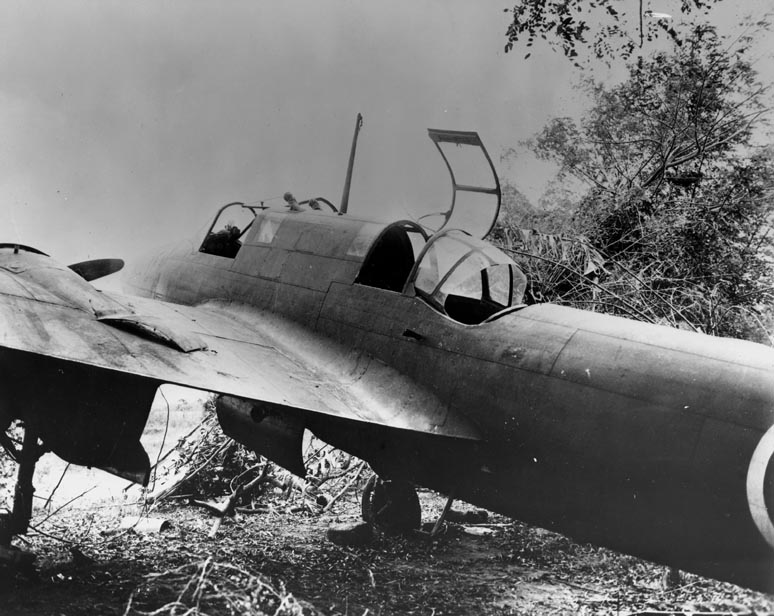
During his interrogation, Horita was shown a drawing of a new Japanese twin-engine fighter that the Allies knew little about. This was probably either the Kawasaki Ki-45 Toryu (Nick) (pictured here), or the Nakajima Gekko (Irving) night fighter. Horita had known nothing about the new plane, and while admiring the sketch he muttered that he would have liked to have had a chance to fly it.
Over the target area, the Japanese strike failed to locate any Allied ships. Without radios in their Zero fighters, the 582nd could not converse with the bomber crews, so they simply stayed with them and followed wherever they went. In this case, they began searching to the south of Tulagi and Guadalcanal. The search yielded results: two destroyers were soon sighted, and the bombers dove to the attack.
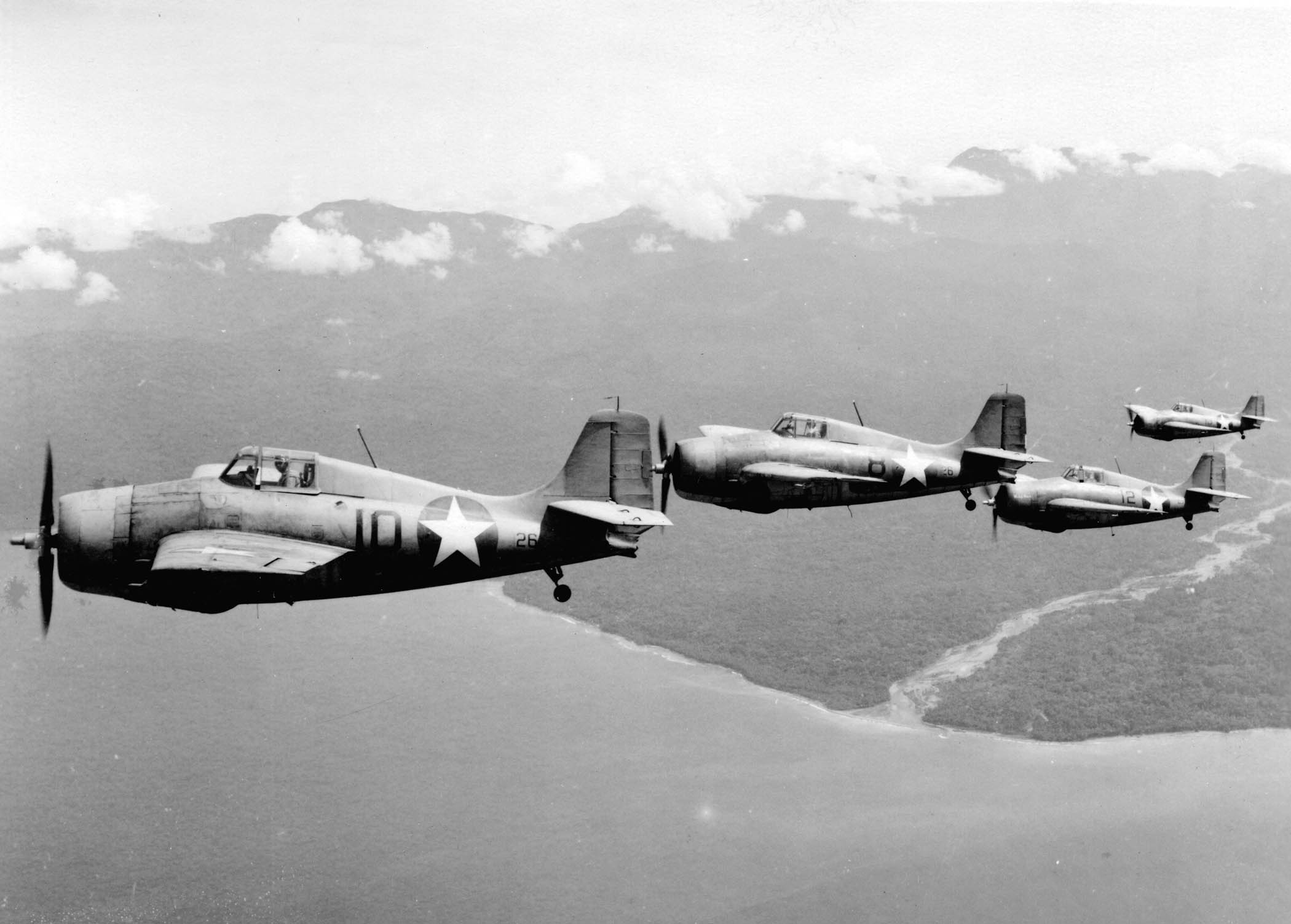
F4F Wildcats airborne over the Southern Solomon Islands. The F4F was the primary air defense aircraft during the bitter struggle for Guadalcanal 42-43.
A squadron of F4F Wildcats was overhead that day, protecting the Allied vessels. The 582nd locked horns with the American fighters, and a dogfight raged over the ships. At fifteen hundred feet, Saburo’s Zero was attacked by four Wildcats and shot up. He turned north and limped his crippled Zero for home, but over Russell Island, his engine seized. He ditched the Mitsubishi in shallow water right off the beach and waded ashore. Five foot four, one hundred and twenty pounds, Saburo Horita was now hundreds of miles from home, with no way to get back to Japanese lines.
He thought through his situation, and concluded his only hope lay in trying to steal a boat or canoe from the local natives. Exactly what he hoped to do with it is unknown, but perhaps he thought he could paddle the 30 miles to Guadalcanal where he could link up with the Japanese garrison there before it was evacuated.
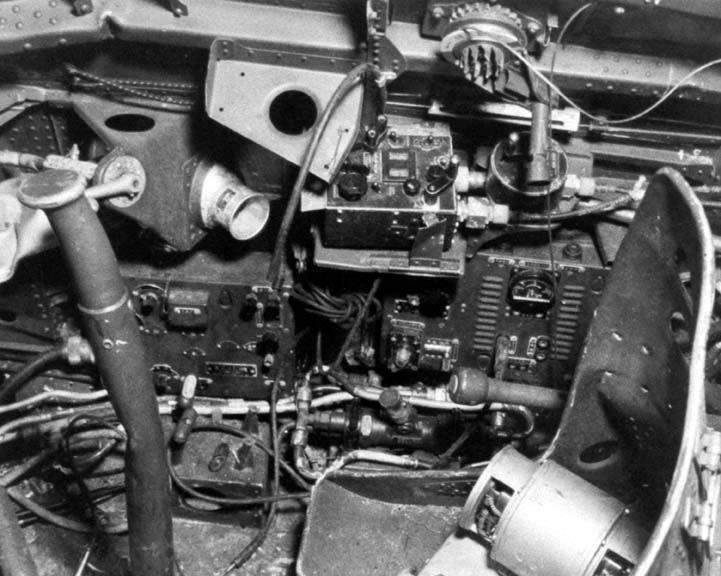
Saburo Horita’s office–the cockpit of an A6M2 Zero. On long flights, he and his fellow pilots would carry a lunch composed of rice balls wrapped in seaweed.
Whatever his intent, he acquired a canoe from the natives at gunpoint, which earned him no friends. The natives eventually got the drop on him and took him prisoner. He was quickly delivered to Allied authorities, where he was interrogated by Colonel Sidney Mashbir’s Allied Translator and Interpreter Section, SWPA (ATIS/SWPA). The Japanese-American who conducted the interrogation found Saburo Horita to be intelligent but poorly educated. His answers were cautious, and unlike many other POW’s, he was security conscious and did not reveal a lot of information. However, what he did say generally was believed to be accurate.
 The American Warrior